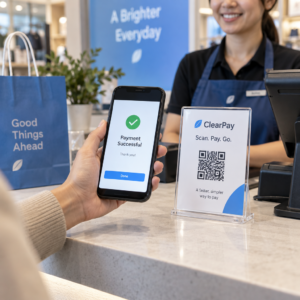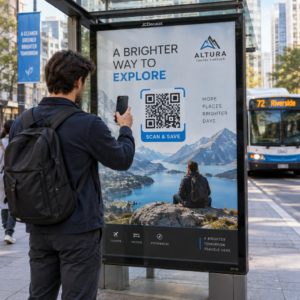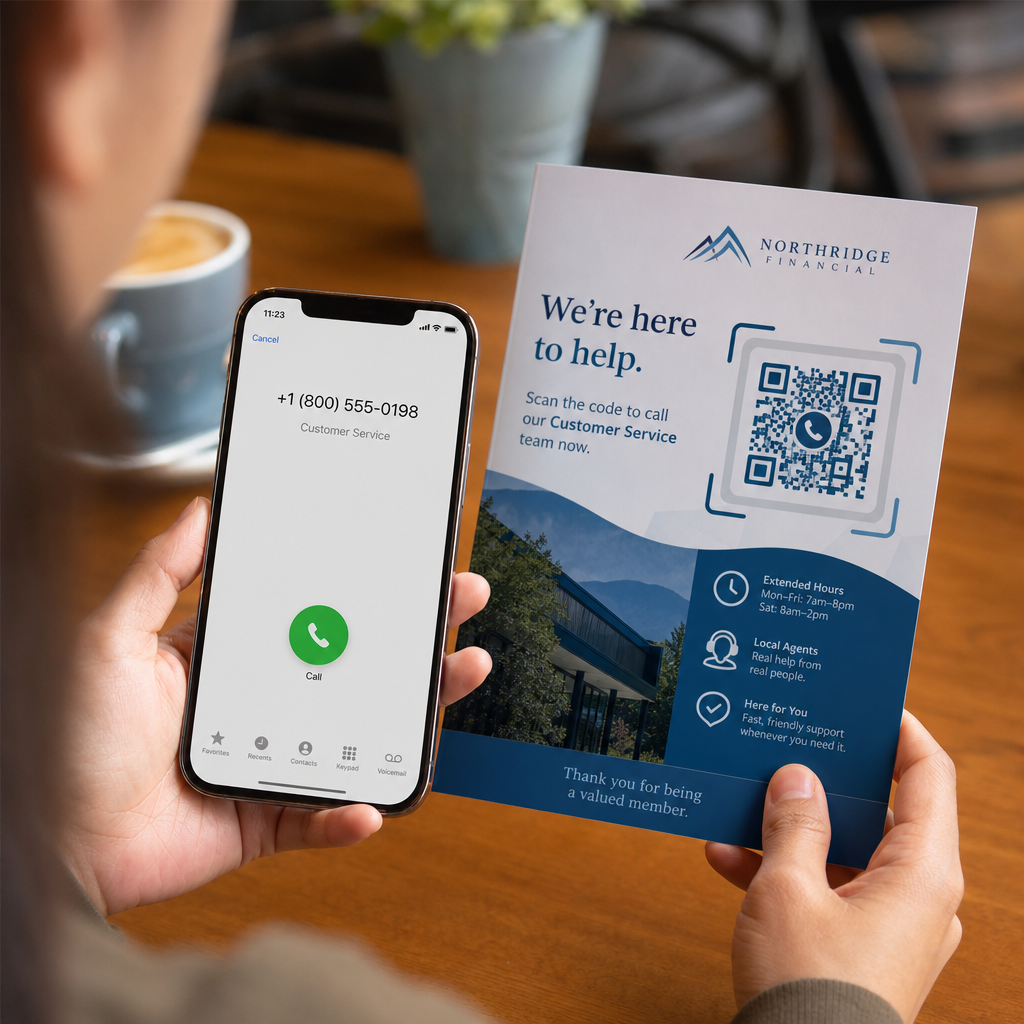
Are your prospective customers abandoning calls because typing a long phone number from print media is frustrating? Manual dialing errors directly reduce inbound sales leads and support inquiries. Creating a phone number QR code lets prospects instantly populate their mobile dialer with your number in a single scan.
How Phone Call QR Codes Work
When a smartphone camera scans a phone call QR code, it reads a standardized communication protocol known as a `tel:` Uniform Resource Identifier (URI). Defined by the IETF RFC 3966 standard, this string encodes the telephone number into a structure that mobile operating systems immediately recognize as a phone call request.
To ensure your code works seamlessly across all mobile carriers and international networks, always format your number using the E.164 international standard. This format starts with a plus sign (`+`), followed by the country code, area code, and subscriber number with no spaces, hyphens, or parentheses (for example, `+12025550123`).
Security and Operating System Behavior
Mobile operating systems deliberately prevent QR codes from placing calls automatically without direct user interaction. This built-in security layer protects users from accidental dialing or malicious toll charges:
- iOS (iPhone): Scanning the code displays an on-screen prompt showing the phone number and asking for explicit confirmation before dialing.
- Android: Scanning the code opens the device’s native Phone app with the number pre-filled in the dialer, requiring the user to tap the call button.
Both platforms require a final manual tap from the user, ensuring full control over the call process.
Step-by-Step Guide to Generating a Call QR Code
Generating a high-resolution phone QR code requires no technical expertise. Follow these straightforward steps to build your code:
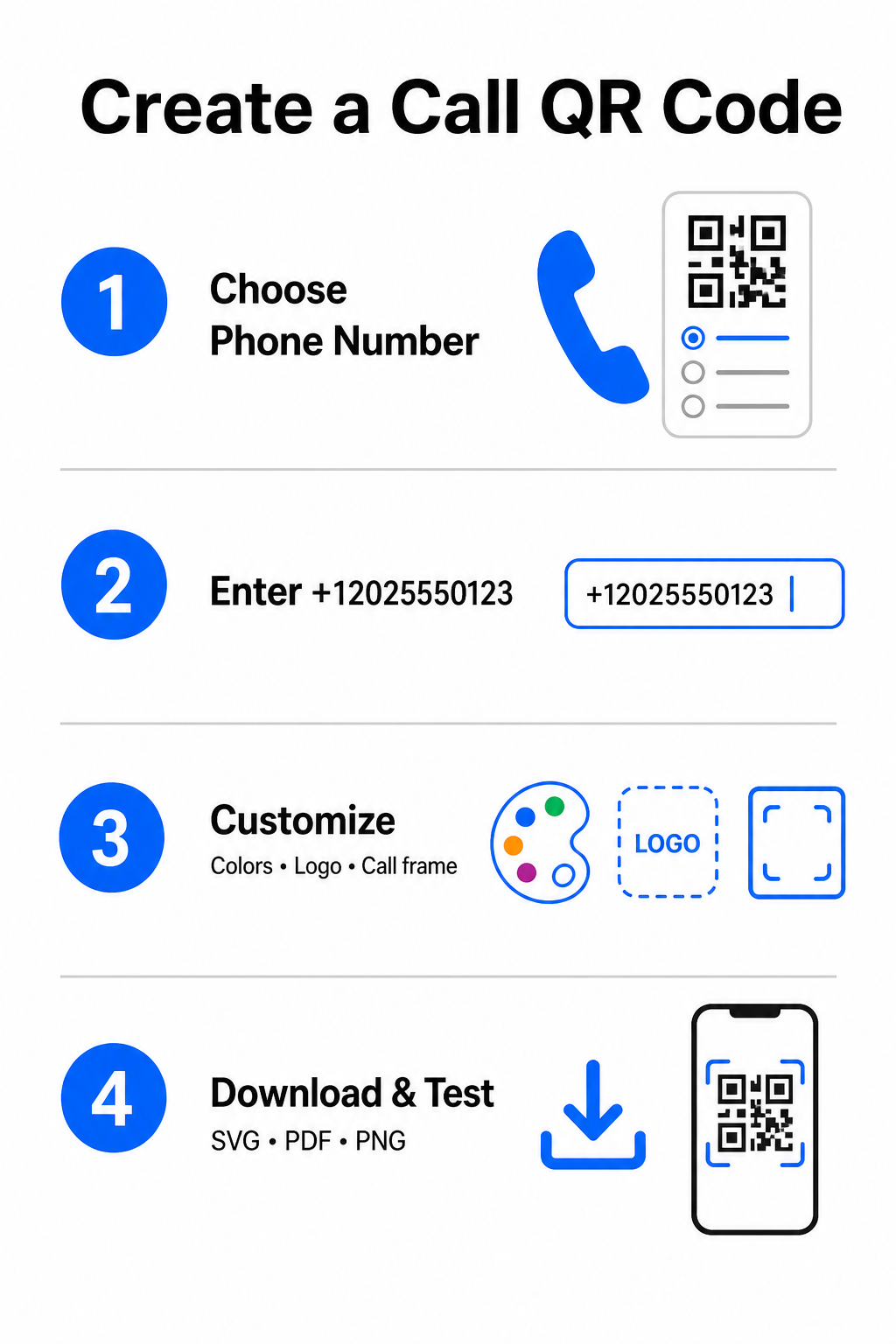
- Open the generator: Go to the online Pageloot QR Code Generator.
- Select the phone option: Choose the Phone Number or Call option from the available code types.
- Input the phone number: Enter your full contact number in E.164 format, including your country code (such as `+1` for North America).
- Customize the visual design: Select custom brand colors, upload a company logo, or add a protective frame with a clear call-to-action phrase.
- Download the finished file: Download your code in vector formats like .SVG or .PDF for commercial printing, or .PNG for digital displays.
If you need to share a broader set of professional details – including your full name, email address, physical address, and job title – use a dedicated vCard QR code generator instead. You can also explore our guide on how to share contact info using QR codes to decide which format fits your promotional campaign.
Static vs. Dynamic Phone QR Codes
Selecting the right underlying structure for your QR code depends on whether you need to update your phone number or track engagement over time.
| Feature | Static Phone QR Code | Dynamic Phone QR Code |
|---|---|---|
| Data Storage | Number encoded directly into code pattern | Short intermediate URL hosted on a server |
| Post-Print Editing | Permanent (Cannot be changed after creation) | Update destination phone number anytime |
| Scan Analytics | Not supported | Track total scans, locations, and time patterns |
| Recommended Use | Permanent contact lines (Main office, toll-free desks) | Marketing campaigns, seasonal call centers |
Start Driving Instant Phone Calls Want to track how many scans convert into actual customer calls? Use the Pageloot QR Code Generator to create customizable, trackable call codes today.
Best Practices for Print and Scannability
A phone QR code only generates inquiries if smartphone cameras can scan it reliably under realistic conditions. Adhere to these core print standards before sending your designs to production:
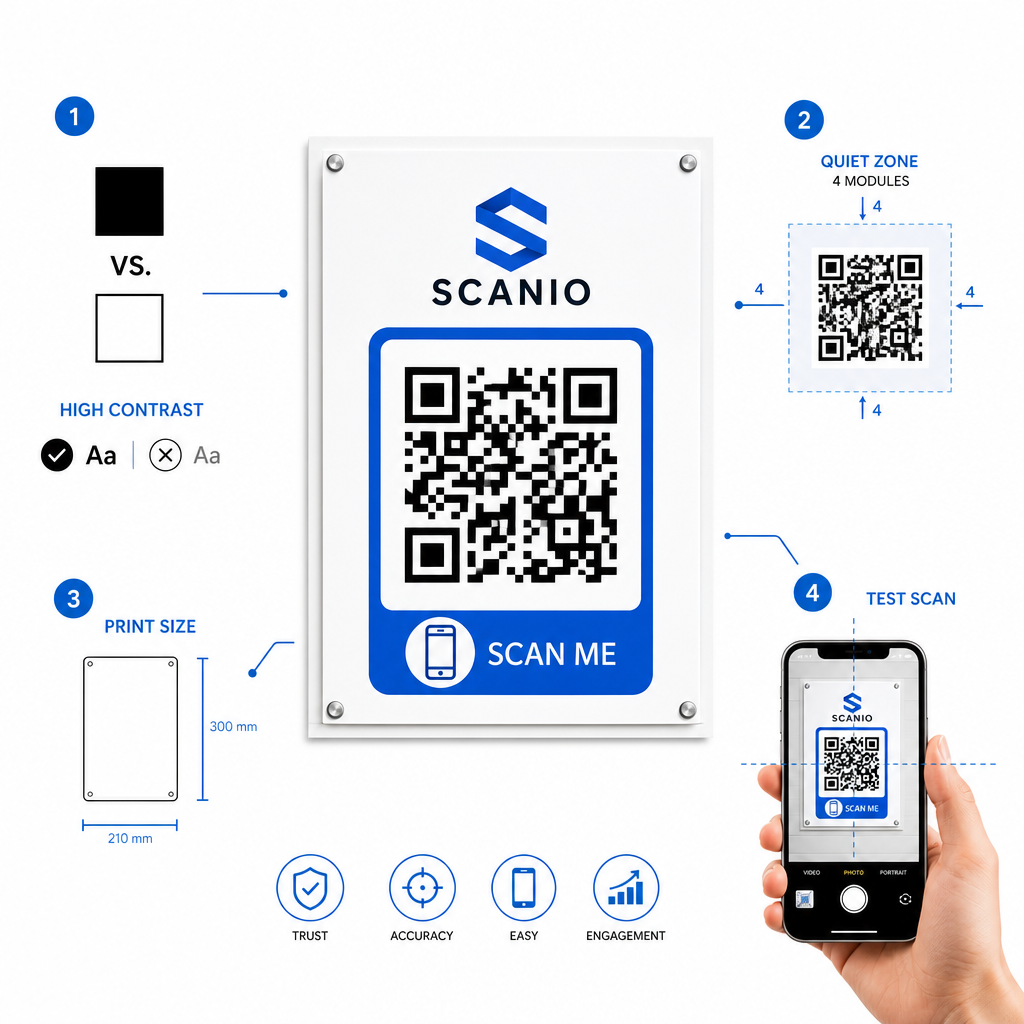
- Maintain high color contrast: Choose dark modules on a light background, such as black on white. Scanners struggle to read inverted colors or low-contrast combinations like light gray on white.
- Maintain the quiet zone: Keep a clear margin equal to at least 4 modules (the individual squares in the code pattern) completely free of text, borders, or graphics on all four sides.
- Scale for viewing distance: Print close-range materials (like business cards or table tents) at a minimum size of 0.8 × 0.8 inches (2 × 2 cm). For distant signage, apply the 10:1 distance rule, meaning a code scanned from 10 feet away should measure at least 1 foot wide.
- Perform real-world testing: Print a physical test proof on the target substrate and attempt to scan the QR code with smartphones on both iOS and Android platforms under different lighting conditions.
Connecting Offline Audiences to Your Phone Lines
By eliminating manual typing errors, phone number QR codes remove friction from offline marketing channels and connect interested prospects directly to your team. Whether you deploy a static code on permanent office signage or rely on dynamic tracking for seasonal advertising campaigns, keeping your design scannable ensures a smooth path from physical touchpoint to phone conversation.
Ready to simplify customer outreach? Visit the Pageloot QR Code Generator today to create, customize, and deploy your custom call QR code.
Frequently Asked Questions
No. Operating systems like iOS and Android require user confirmation to prevent accidental or unauthorized calls. Scanning pre-fills the native phone dialer or displays a confirmation prompt, but the user must tap the call button.
Use the E.164 international standard, which starts with a plus sign (+), followed by the country code, area code, and subscriber number without dashes, spaces, or parentheses (for example, +12025550123).
Yes, if you create a dynamic QR code. Dynamic codes route traffic through a short link, allowing you to edit the destination phone number at any time without reprinting physical materials.