vCard QR Code Generator
This vCard QR code generator makes a QR code with contact information that phones can save as a new contact. Enter your name, phone, email, company, website and address, and anyone can save you with one scan. It works with the camera on iPhone and Android. Download the static code as a PNG for free. Print-ready SVG, PDF and EPS files come with a free 14-day Pageloot trial.

Style


Frame
Text above

Background color

Text above color
Body


Body color
Edges
Frame type


Edge frame color
Ball type


Edge ball color








What is a vCard QR code?
A vCard QR code is a QR code that stores a contact card. vCard, also called VCF, is the standard file format for a contact. Apple Contacts, Google Contacts and Outlook all use it. You may also hear it called a virtual contact card, a QR code contact card, a contact QR code or a contact information QR code.
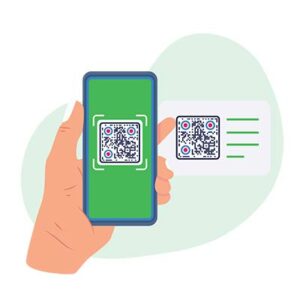
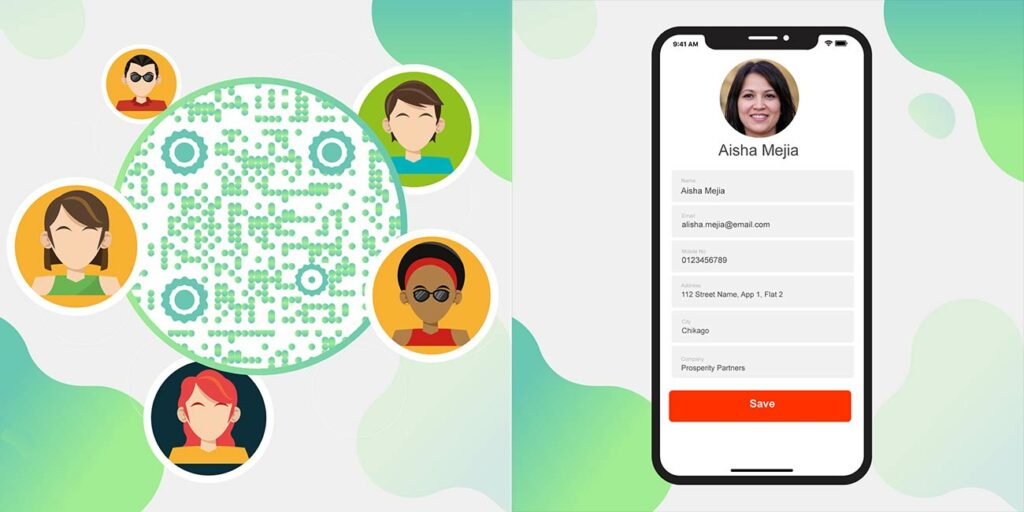
It works as a QR code to add contact details to a phone. The code can hold your name, job title, company, phone numbers, email addresses, website and street address. When someone scans it with the phone camera, the phone shows your details and offers to save them. Nobody has to type your number or email by hand.
In a static vCard code, the contact data sits inside the pattern itself. The phone does not need to load a web page first.
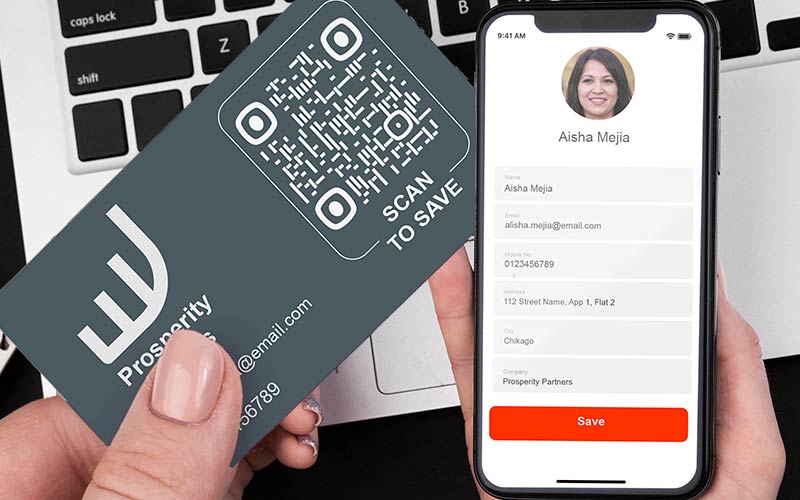
Create vCard QR Codes Examples
Tap on the images to zoom in
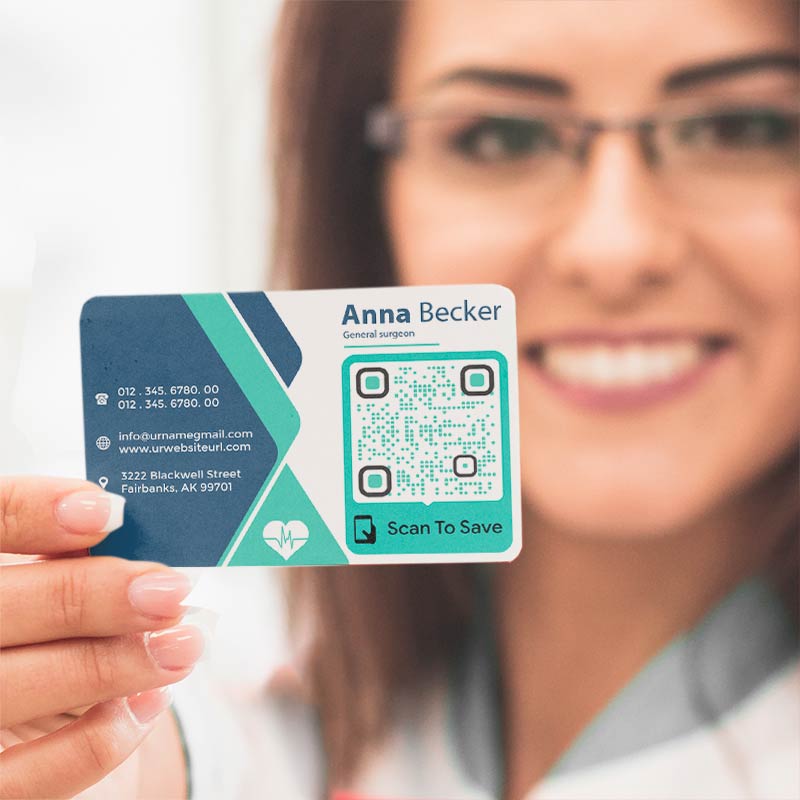

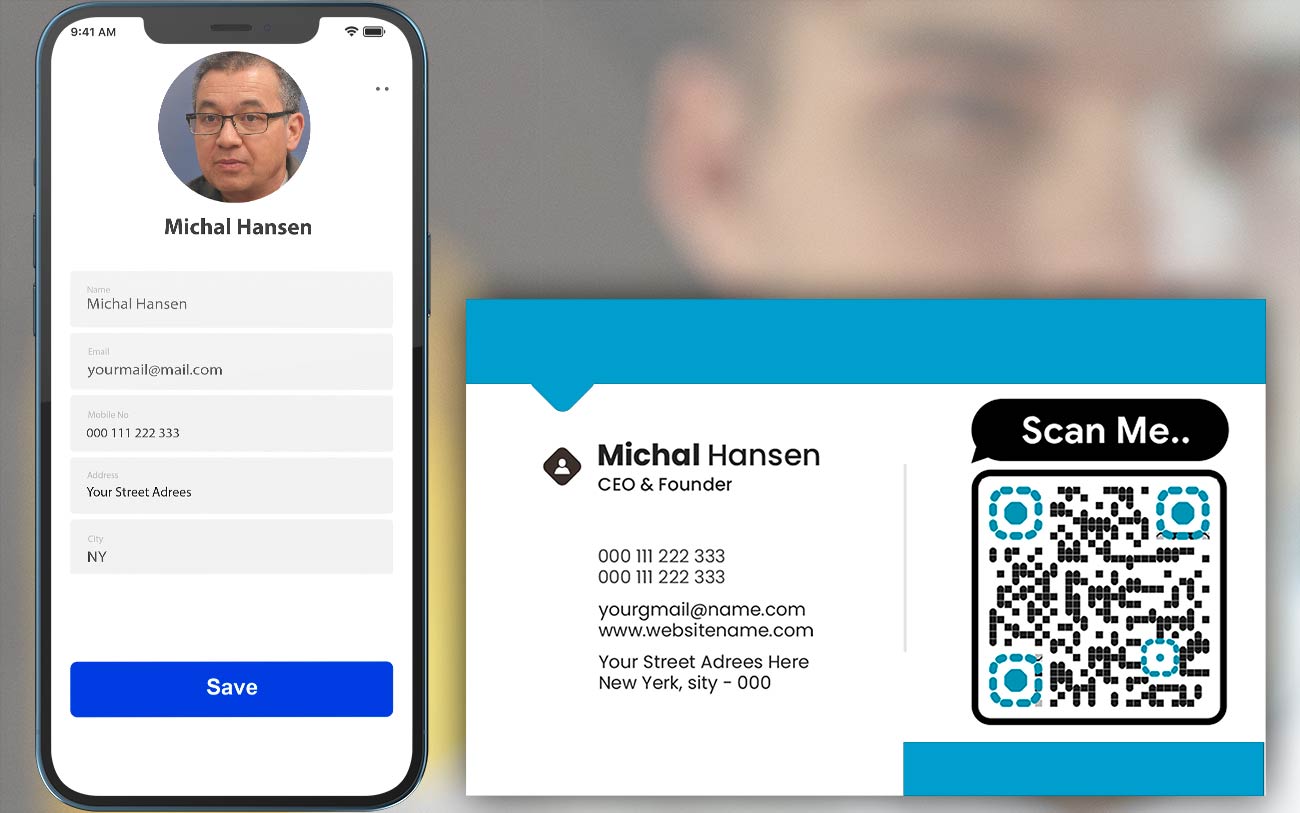
How a vCard QR code adds a contact to a phone

Enter your name, phone, email, company and website in the contact QR code generator on this page. Pick colors and a shape, then download the static code as a PNG for free. Print-ready SVG, PDF and EPS files come with a free 14-day Pageloot trial.
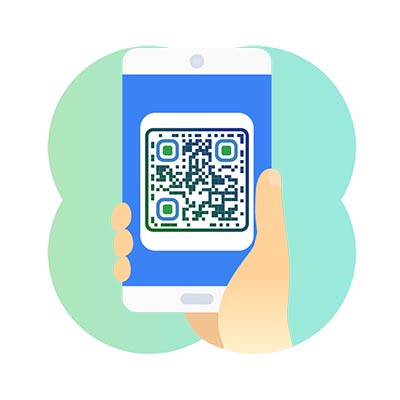
Open the phone camera and point it at the code. No app is needed on iPhone or most Android phones. A banner appears with the contact name. Tap it.

On iPhone, the contact card opens. Tap Create New Contact or Add to Existing Contact, then Done. On Android, the Contacts app opens with the fields filled in. Tap Save. The exact wording depends on the phone and its software version.

Before you print, scan the code with one iPhone and one Android phone. Check every digit of the phone number, the email and the website.
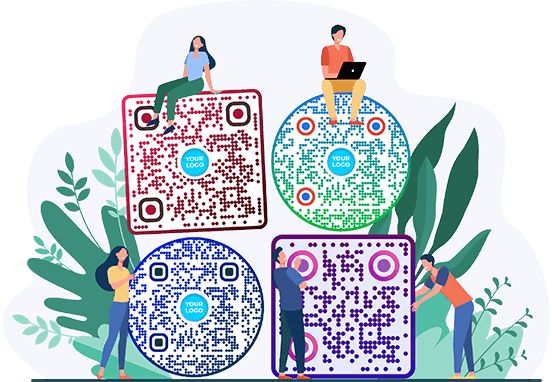
How to create a vCard QR code for your contact info

Use the free vCard QR code generator on this page and fill in your contact details. At minimum, add your name and one contact method such as a phone number or email.
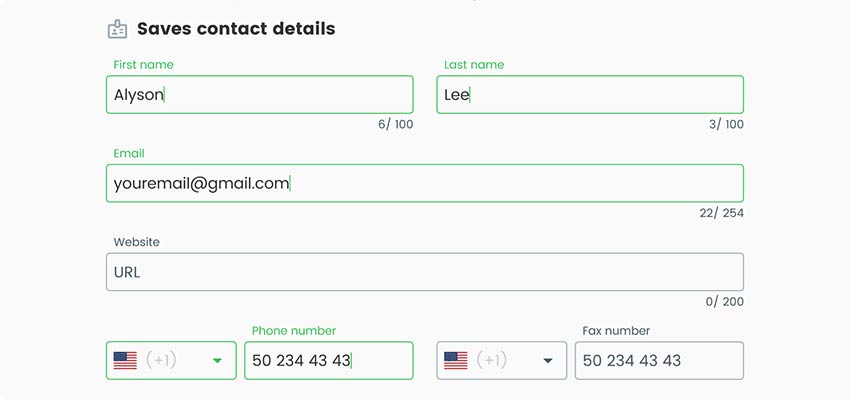

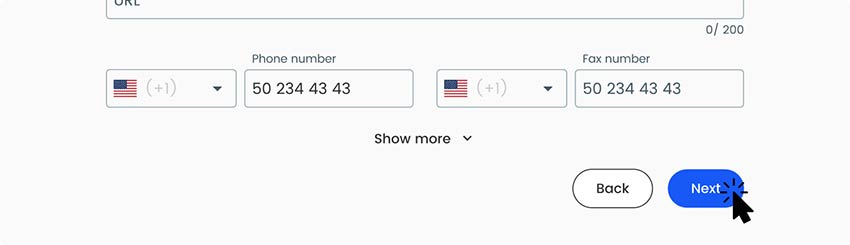
Click the "Next" button to create a v Card QR code.

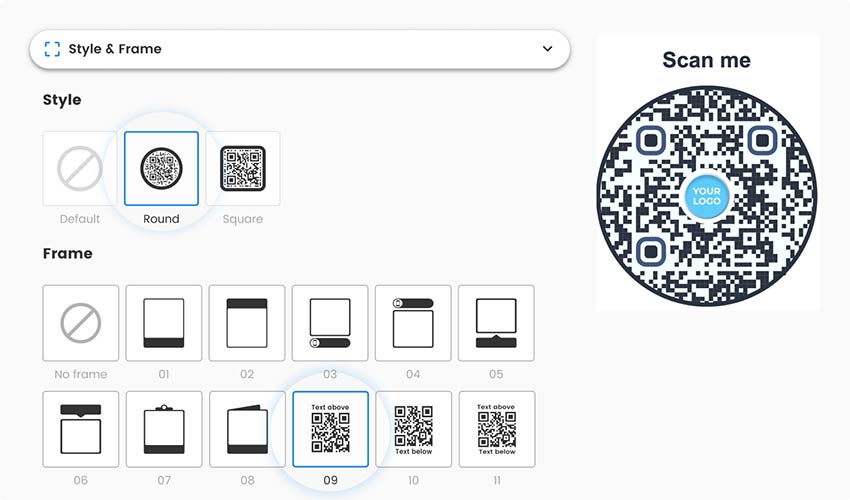
Customize the design and style of the QR code, if desired.

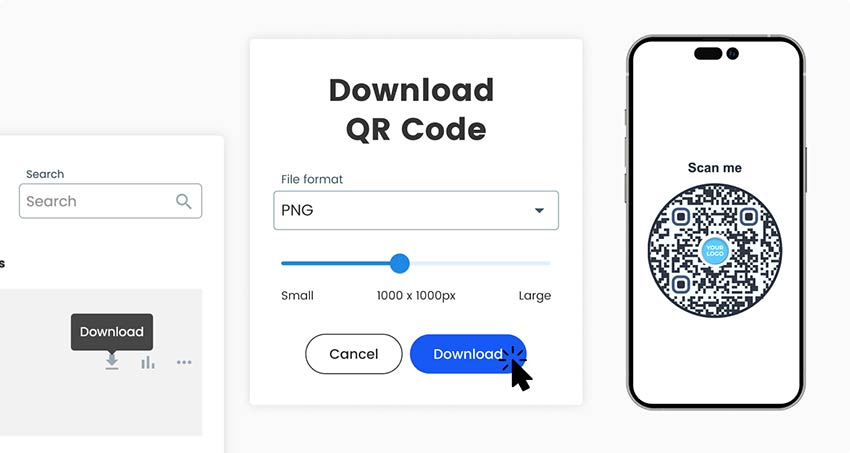
Download your vCard QR code in high-quality format and use it on business cards, email signatures, or websites.

Which fields to put in a vCard QR code for contact information
Every field you add makes the code denser. A denser code has smaller squares, and small squares are harder for a phone camera to read. Add what people need to reach you and leave the rest out.
Always include: your name, one mobile number with the country code (for example +1 415 555 0123) and one email address.
Good extras: company, job title and website.
Only if you need it: street address, a second phone number and a short note. Leave out your home address and anything you would not say to a stranger.
As a guide, a vCard with name, phone and email is about 90 characters and makes a code about 40 squares wide. Add company, job title and website and it is about 170 characters and about 50 squares wide. Add a street address and a note and it is about 300 characters and about 65 squares wide. A short web address of 25 characters makes a code only 25 squares wide. These sizes vary a little with the error correction level.
Static or dynamic vCard QR code: which one to choose
Both types save a contact when scanned. The difference is where your details live.
- Static vCard code. The details are inside the code. It works without an internet connection and has no page that can go offline. You cannot change it after printing, you cannot count scans, and every extra field makes the code denser.
- Dynamic vCard code. The code opens a short link, and the link gives the phone your contact card. The pattern stays small and simple however many details you add. You can edit the details after printing, show a landing page before the contact file downloads (for example with a photo and social links), and see when, where and on which device people scanned. It needs an internet connection and a Pageloot account, and it works only while your plan is active, so keep a plan active for as long as the code is printed. You can try it free for 14 days.
Static is enough if your details will stay the same for years, you only need the basic fields, and you do not need scan numbers.
Dynamic is worth paying for if people change numbers or jobs (for example a team that prints 200 staff cards), if you want a photo or social links with your contact, or if you want to know which event or flyer brings scans. A printed static code cannot be fixed. A dynamic one can.
To start the trial, tick Track scans or Edit later in the generator above.
Frequently asked questions

A vCard QR code, also called a contact details QR code, can hold a name, company name, job title, phone numbers (work, home, mobile), email addresses, website, and a street address. All fields are optional. A photo does not fit in a printed static code. For a vCard QR code with photo, use a dynamic code with a landing page. More fields make a denser code, so keep it to what people need.
Open the phone camera and point it at the code. Hold still for a second, then tap the banner that appears. On iPhone, tap Create New Contact or Add to Existing Contact. On Android, the Contacts app opens with the fields filled in, and you tap Save. If nothing happens on iPhone, check that Settings > Camera > Scan QR Codes is on.
A static vCard QR code can’t be edited after it has been created. Make a new one and replace the old one. A dynamic vCard QR code lets you change your contact details without reprinting the code. Tick Edit later in the generator to start the free 14-day trial.
A static vCard code holds your details in the pattern, so anyone who scans it can read them. Only include what you are happy to give to anyone who sees the code, such as a work phone and work email. Leave out your home address. With a dynamic code you can change the details later, for example when a number is no longer used.
You can design a vCard QR code here and download the static code as a PNG for free. You can also try everything free for 14 days, which adds print-ready SVG, PDF and EPS files, editing after printing and scan tracking. To keep a dynamic code active after the trial you need a plan, and the Starter plan is EUR 7 per month, billed yearly. Keep a plan active for as long as a dynamic code is printed. Code NEW30 takes 30% off your first purchase.
Yes. The static code is free to make and download as a PNG, with your logo and colors. The free 14-day Pageloot trial adds print-ready SVG, PDF and EPS files, editing after printing and scan stats. After the trial you need a plan (Starter is EUR 7 per month, billed yearly) to keep a dynamic code active. See how to add a logo to your QR code.
Yes, with a dynamic code. People who scan it see a landing page first, and the contact file downloads from there. This gives you room for a photo, social links and branding that a static code cannot hold. The scan needs an internet connection and takes one extra tap.
The code was probably made as a Text type, or the scanner app does not read vCards. Scan with the built-in camera first. Then make a new code with the vCard option on this page. If it still shows text, open Show More in the generator, switch the vCard version to 3.0 and test again.

Contact us and we’ll be happy to help!
4.86 / 5 stars rating



Where to use a vCard QR code? Examples
Tap on the images to zoom in
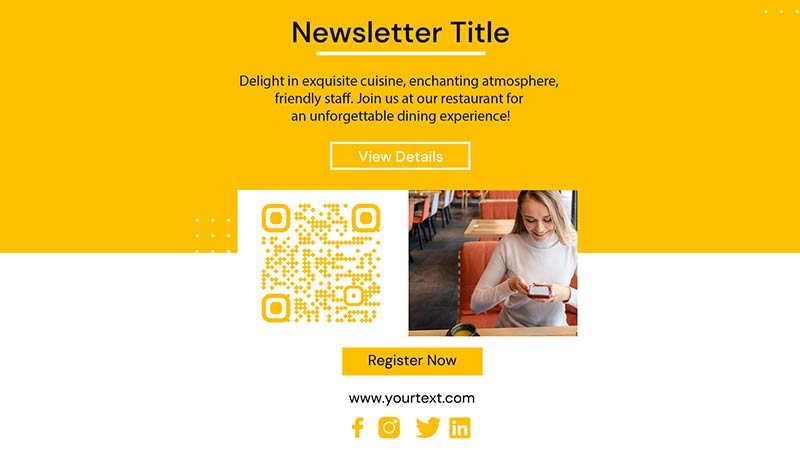
Add the code as an image in your email signature. People reading on a computer scan it with their phone and save you. The image is small on a screen, so use a short vCard (name, phone, email, website) or a dynamic code.
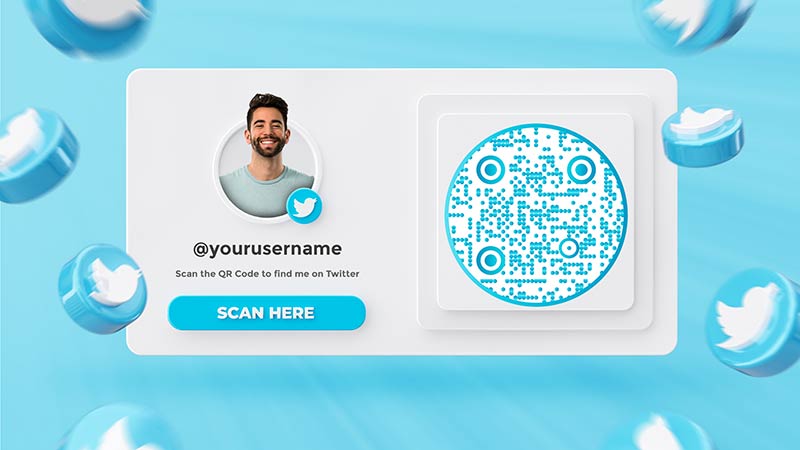
Put the code in the header of your resume. A recruiter can save your phone number and email in one scan, and your website field can point to your portfolio or LinkedIn page.

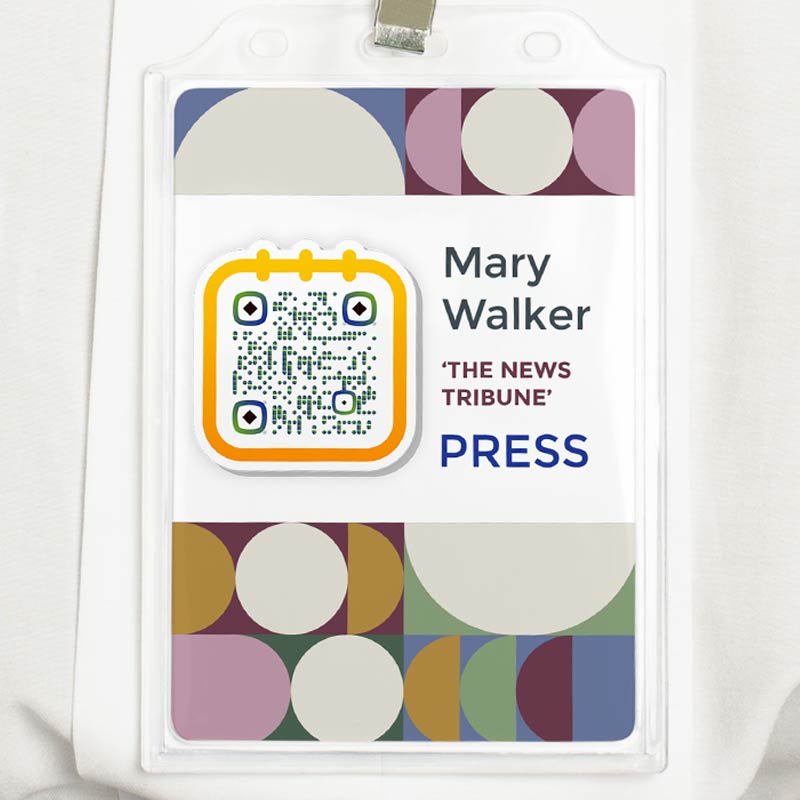
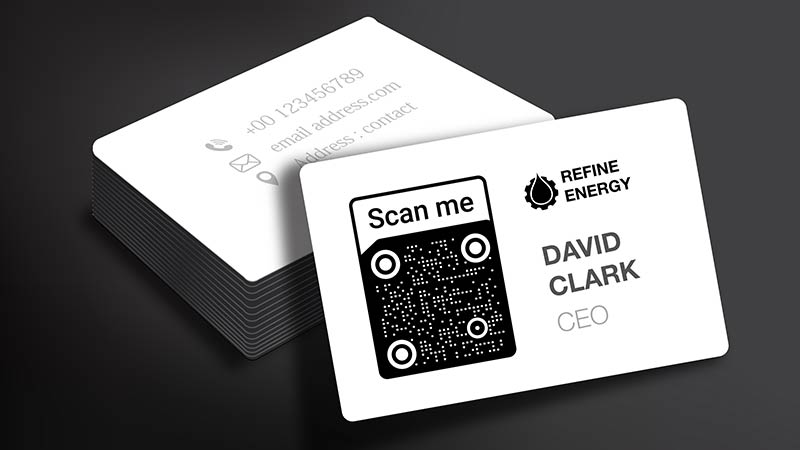
Print the code on the badge so people you meet at a conference can save you without swapping cards. If badges are printed before the event and details might change, use a dynamic code.

A real estate agent can put the code on a for-sale sign, a contractor on a yard sign or a van. For signs, make the code larger: roughly 1 cm of code for every 10 cm of scanning distance.
How to keep your vCard QR code scannable
-
Start with five fields
Name, a mobile number with country code, email, company and website cover what most people need. Add a street address only if customers visit you. -
Skip photos and long notes in a static code
A photo is far too big to fit in a printed code, and a long note makes the code dense. For a photo, use a dynamic code with a landing page.
-
Print it big enough
Make a full contact code at least 1 x 1 inch (2.5 cm) wide, and larger if it holds an address and a note. Keep a plain white border around it. -
Use strong contrast
Dark code on a light background scans best. If you add a logo, keep it small, because it covers part of the pattern.
vCard QR code not working? Check these first
A vCard code should offer to add a contact. If you see plain text, the code was probably made as a Text type, or the scanner app cannot read vCards. Try the built-in camera first. Make the code with the vCard option on this page. In the generator, open Show More, switch the vCard version to 3.0, which more phones accept, and test again.
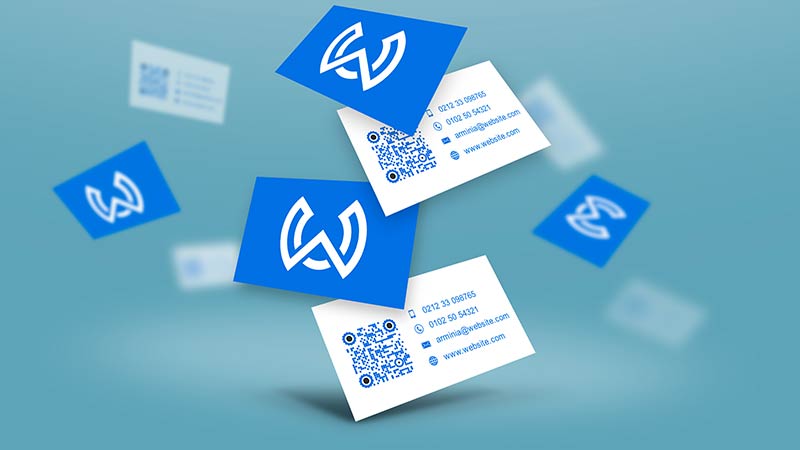
Names with letters such as é, ü, ø or ñ can show as strange symbols on some phones. Type them directly in the generator instead of pasting from Word or a PDF, and replace curly quotes with plain ones. Avoid semicolons and line breaks inside a field, such as in a company name or address, because they can split the field in a vCard. Test with a phone set to your language.
A dense code is slow to read or fails to focus. Remove the street address, second phone number and notes. Print the code larger, at least 1 inch (2.5 cm) wide. Or use a dynamic code, which stays small however many details you add.

Write phone numbers with the country code, for example +1 415 555 0123, so they work for someone in another country. Check the email and website for typos, because a static code cannot be fixed after printing. Scan a printed proof with an iPhone and an Android phone before you order a full run.
Why use a vCard QR code for contact information
A static vCard code holds the details itself. The phone reads it and can save the contact without a data connection.
The phone copies your number and email exactly. Nobody mishears or mistypes a digit.

Both read vCard codes with the built-in camera. VCF is a standard format, so the contact also imports into Google Contacts, Apple Contacts and Outlook.

Design your code here and download the static code as a PNG for free. The free 14-day Pageloot trial adds print-ready vector files, editing after printing and scan stats.

With a dynamic code you can change a phone number, email or website after printing, without making new cards or signs.

A dynamic code shows when, where and on which device people scanned it. A static vCard code cannot be tracked.
vCard related topics