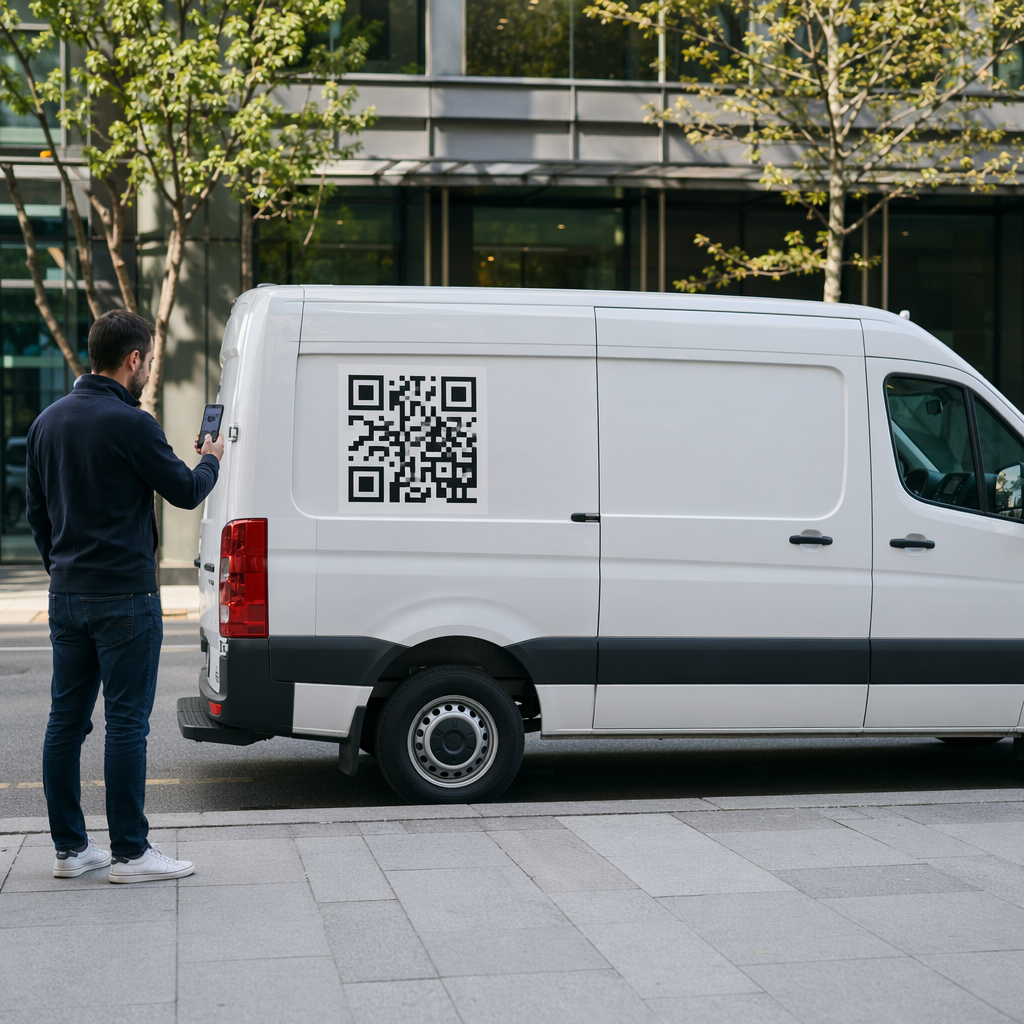
Are you looking for a way to turn your company fleet into a lead-generation machine? Most traditional vehicle branding fails to bridge the gap between a passing glance and a measurable digital interaction. This guide explains how to design and implement scannable QR codes on vehicles to capture leads and drive customer engagement.
Choosing the Right Material for Vehicle QR Codes
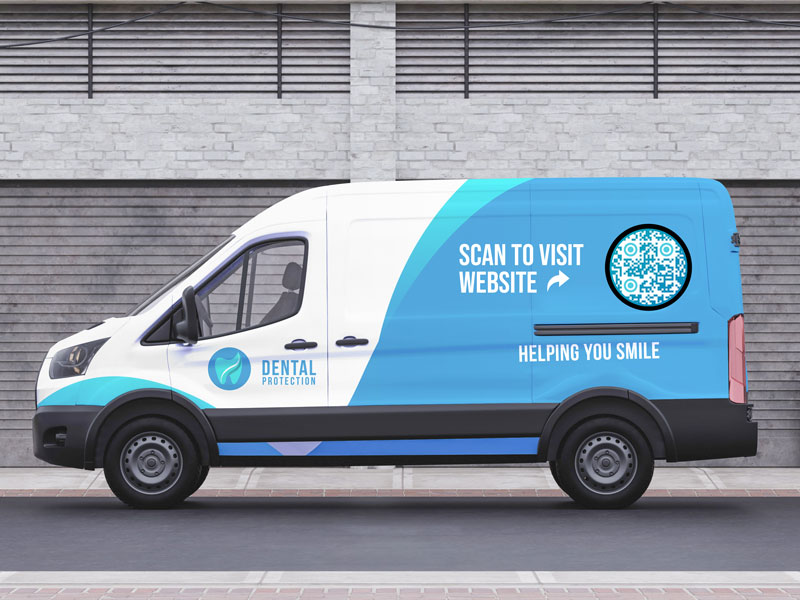
The environment where a vehicle operates is harsh, involving high speeds, fluctuating temperatures, and UV exposure. Selecting the correct material is the first step in ensuring your QR code remains functional over time. If a code fades or peels, the scanner will be unable to distinguish the modules, rendering your mobile advertisement useless.
- Vinyl Decals: These are the most common choice for permanent branding. High-quality exterior vinyl with a UV-protective laminate is recommended to prevent fading and cracking. These decals are designed to withstand car washes and high-speed wind resistance.
- Vehicle Magnets: Magnets are a flexible solution for entrepreneurs who use personal vehicles for business. They can be easily removed or repositioned, though they require a flat metallic surface to stay secure during transit.
- Window Clings and Perforated Film: Placing codes on windows can provide high visibility. Perforated vinyl allows the driver to see out while displaying a solid-looking QR code to those outside.
- Roof and Side Signs: For service vehicles often parked at job sites, elevated signs provide maximum visibility from a distance, turning a parked truck into a stationary billboard.
Technical Requirements for Mobile Scannability
Once you have selected your material, you must account for the unique physics of scanning a moving or large-scale object. A small code that works on a business card will fail on the side of a van. You must follow specific QR code sizing rules to ensure people can scan from a safe distance.
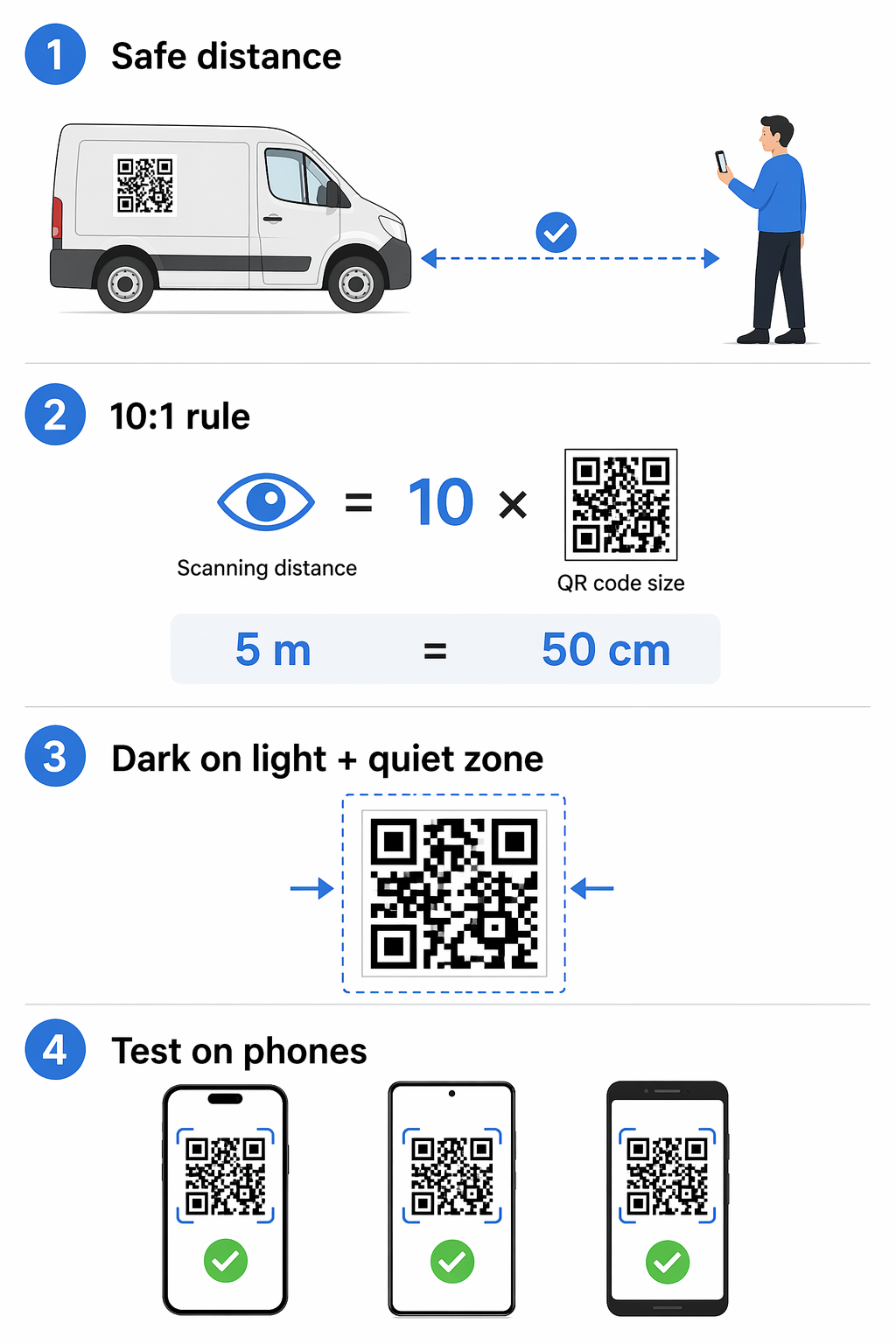
The 10:1 Sizing Rule
For vehicle applications, the 10:1 ratio is a standard benchmark. This means the QR code should be approximately 1 cm wide for every 10 cm of distance between the scanner and the vehicle. If you expect a potential customer to scan your truck from 5 meters away, your QR code should be at least 50 cm wide. For close-range interactions, such as a code on a bumper at a red light, never go smaller than 2 x 2 cm.
Contrast and the Quiet Zone
Scanners rely on the difference between light and dark modules to interpret data. According to readability guidelines, you should always use a dark foreground on a light background. Black on white remains the most reliable combination. You must also maintain a “quiet zone,” which is a clear border of empty space around the code at least four modules wide. Think of the quiet zone like a frame that helps the scanner focus solely on the data pattern without being confused by the vehicle’s wrap design or paint color.
Error Correction and Logos
When using a branded QR code generator, you can incorporate your company logo into the center of the code. This builds trust and increases scan rates because users recognize the source. However, you must use a high error correction level (Level Q or H). This technology allows the code to remain scannable even if up to 30% of the image is obscured or damaged by road debris, provided the logo does not cover the three large position markers in the corners.
Strategy for High-Visibility Placement
The effectiveness of a vehicle QR code depends heavily on where it is placed. You want to target locations where viewers have a moment to pause. Scanning a code on a car traveling 60 mph is dangerous and technically difficult, so focus on placements that work best in traffic or when parked.
- The Rear Window or Bumper: These are ideal for capturing the attention of drivers stopped behind you at traffic lights. This “captive audience” has the time and stability to scan the code safely.
- Side Panels: Large-scale codes on the driver or passenger sides are best for pedestrians and parked environments. These are particularly effective for delivery vans that spend significant time parked in residential or commercial zones.
- Avoid Contoured Surfaces: Never wrap a QR code around a deep curve, door handle, or body line. Distorting the square shape of the code makes it impossible for the camera to decode the information.
Why Dynamic QR Codes are Essential for Fleets
Using dynamic QR codes is a critical requirement for vehicle marketing. Unlike static codes, which have a fixed destination, dynamic codes use a redirect URL. This allows you to change the destination link at any time without removing and re-wrapping your vehicle. If your promotion ends or your website URL changes, you simply update the link in your dashboard.
Beyond flexibility, dynamic codes provide QR code tracking capabilities. You can see exactly how many people scanned the code, what time of day they engaged, and their general geographic location. By using UTM parameters, you can even integrate this data with Google Analytics to see how vehicle scans contribute to your overall conversion goals.
Maximize Your Mobile Marketing ROI Want to track every lead your vehicle generates and update your offers without reprinting? Use a Link QR Code Generator to create dynamic, trackable codes for your entire fleet today.
Converting Scans into Customers
The destination of your QR code should be optimized for a mobile user standing on a sidewalk or sitting in a car. Sending a user to a generic homepage is a common mistake that leads to high bounce rates. Instead, guide them toward a specific action.
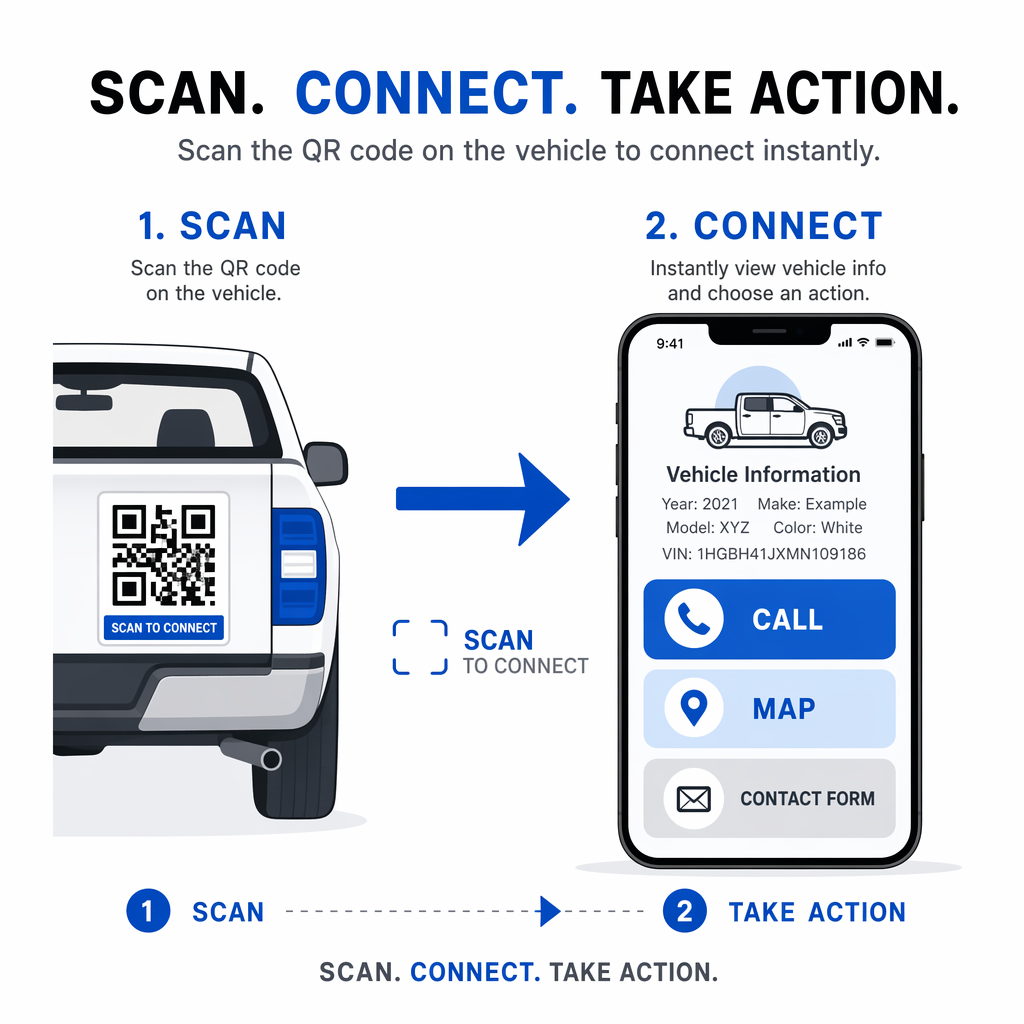
If you are a service professional, a vCard QR code allows potential clients to save your contact details directly to their phones. For local businesses, a Google Maps QR code can lead them straight to your storefront. If your goal is lead generation, a Google Form QR code generator can help you create a short, mobile-friendly contact form that takes less than 30 seconds to fill out. Regardless of the destination, ensure your landing page loads in under three seconds and uses large, easy-to-tap buttons.
To maximize engagement, always include a clear call to action (CTA) near the code. A simple frame that says “Scan for a Free Quote” or “Scan to See Our Portfolio” provides the user with a reason to engage. This small addition can significantly increase the total number of scans your vehicle generates during its daily route.
Frequently Asked Questions
High-quality exterior vinyl decals are designed for automotive use and should not damage the paint if applied and removed correctly. For a completely non-permanent solution, use a vehicle magnet.
Follow the 10:1 rule: 1 cm of width for every 10 cm of scanning distance. Always test the printed code with multiple smartphone models from the intended distance before applying it to the entire fleet.
Yes, if you use a dynamic QR code. This allows you to access analytics such as total scans, unique users, and the time and location of each scan.