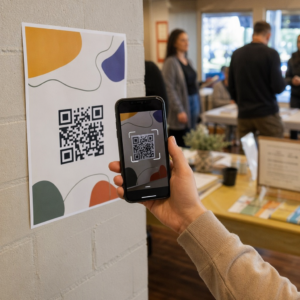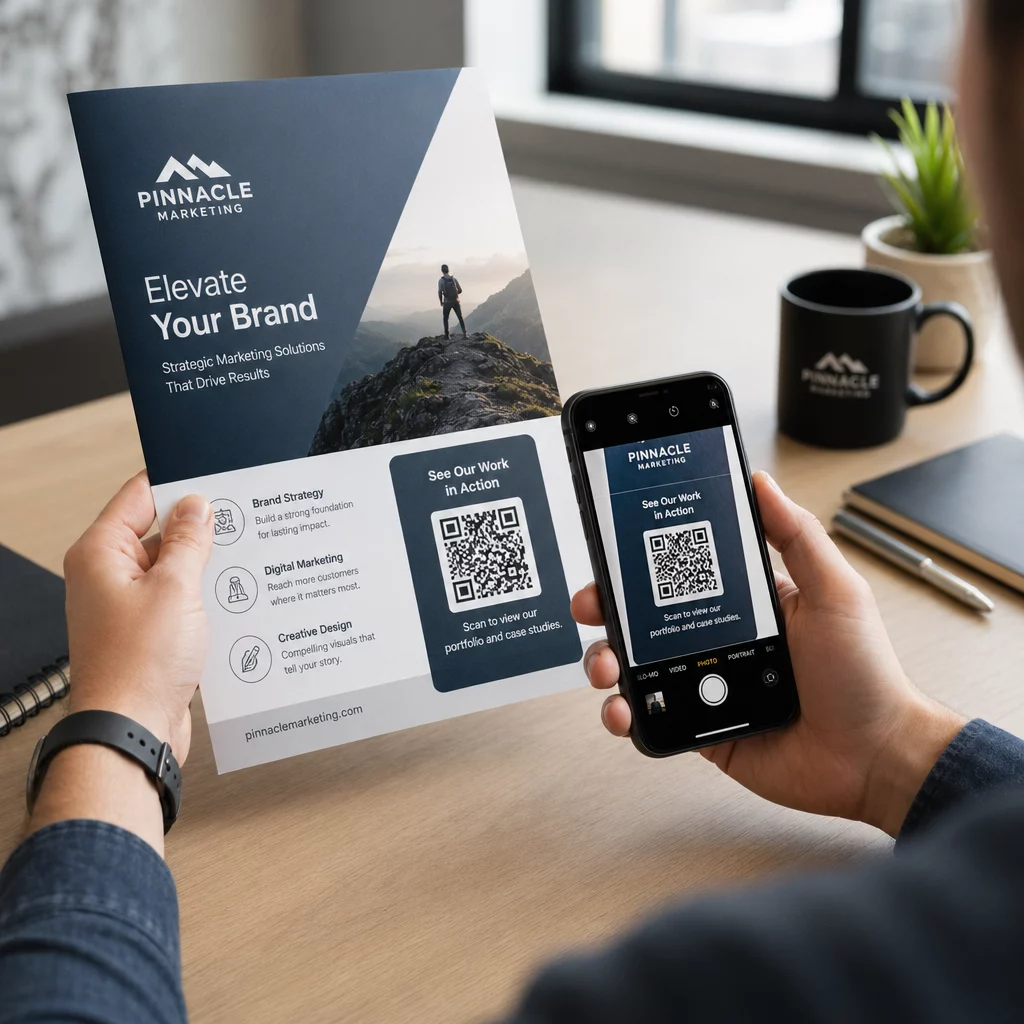
Unsure how to add a QR code to a brochure that people will actually scan? A poorly placed or poorly designed code can go unnoticed – or worse, fail to scan entirely. This guide covers everything you need: where to place your code, how to size and design it correctly, and how to track its performance.
Why QR Codes Belong on Brochures
A brochure has limited space, yet your audience may want more than it can hold – a product video, a booking page, a full catalog, or contact details they can save instantly. A QR code solves this by connecting the printed piece to any digital destination without asking the reader to type a URL.
Beyond convenience, QR codes make your print materials measurable. With a dynamic QR code, you can track how many people scanned, when, where, and on what device – turning a static handout into a data source for your campaign.
Choosing the Right QR Code Type
Before you design anything, decide whether you need a static or dynamic QR code.
A static QR code permanently encodes a URL or other data. It works forever without a subscription, but you cannot change the destination after printing. If your link is permanent – say, a company homepage – static is a reasonable choice.
A dynamic QR code points to a short redirect link that you control. This means you can update the destination at any time without reprinting the brochure. If a landing page changes, a promotion expires, or you want to redirect users to seasonal content, a dynamic code handles it without any physical rework. Dynamic codes also unlock scan analytics – something static codes cannot provide.
For most marketing brochures, dynamic is the better investment.
Track Every Scan From Your Brochures See exactly when and where your brochures are driving engagement. Use the QR Code Generator to create a dynamic, trackable code for your next print run.
What Content to Link From a Brochure
The destination matters as much as the code itself. Link to content that is mobile-friendly and adds genuine value beyond what the brochure already says. Common and effective destinations include:
- A website or landing page using a link QR code to drive traffic to a product page, special offer, or contact form
- A PDF using a PDF QR code to share a full catalog, specification sheet, or brochure supplement
- A vCard using a vCard QR code so readers can save your contact details directly to their phone
- A video to show a product demonstration, customer testimonial, or event recap
- A registration or booking page for events, appointments, or consultations
Avoid linking to pages that are not optimized for mobile. A reader scanning your brochure with a smartphone will abandon a desktop-only page almost immediately.
Where to Place QR Codes on a Brochure
Placement determines whether your QR code gets noticed and scanned. The ultimate guide to QR code placement identifies visibility, flat surfaces, and clear context as the core requirements.
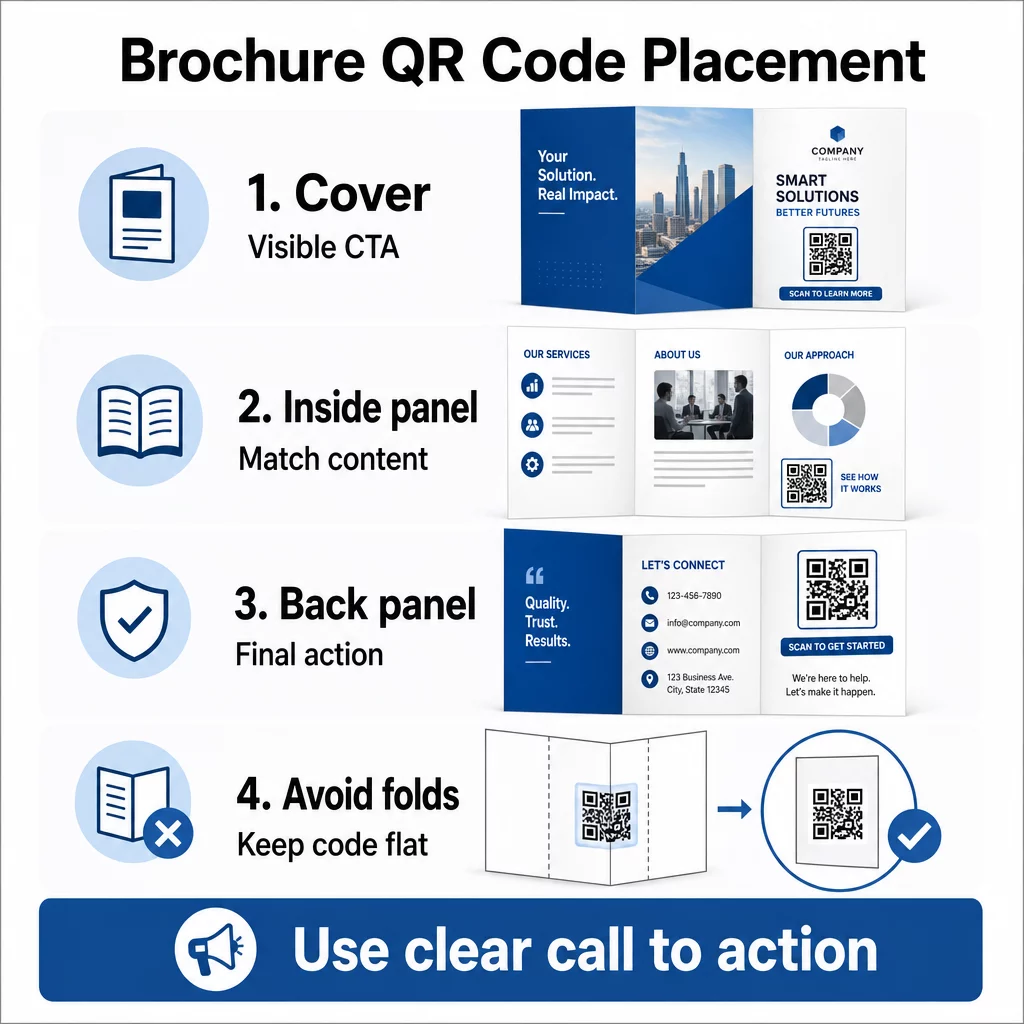
The cover is a high-impact placement when the QR code is paired with a compelling call to action. Readers decide within seconds whether to engage, so a code on the cover captures attention before the brochure is even opened.
Inside panels work well when the QR code complements specific content – for example, a code next to a product description that links to a demo video, or one beside a service overview that links to a booking form. In a property brochure, a code beside the room descriptions can open interior renderings of each room, so buyers see the finished space before a viewing. This placement feels contextually relevant rather than tacked on.
The back panel functions as a natural closing step. After a reader finishes the brochure, a QR code on the back invites them to take action – visit a website, claim an offer, or save contact details.
For trifold brochures, place codes on flat panels rather than near folds. A fold can distort the code geometry and cause scan failures. Always leave clear space around the code – no text or images cutting into it.
Wherever you place the code, add a short call to action nearby. “Scan to book a free consultation” or “Scan for today’s specials” tells the reader exactly what they’ll get, which meaningfully increases the likelihood they’ll scan.
Sizing Your QR Code for Reliable Scanning
Size is one of the most overlooked factors in QR code design, yet it directly determines whether a code scans reliably. The QR code size guide recommends a minimum of 3 × 3 cm (1.2 × 1.2 inches) for most printed brochures, with 2 × 2 cm (0.8 × 0.8 inches) acceptable for smaller formats where space is tight.
A useful rule of thumb is the 10:1 ratio: the code’s width should be approximately one-tenth of the expected scanning distance. If someone is likely to scan from about 30 cm (12 inches) away while holding the brochure, the code should be at least 3 cm wide. This scales logically – a code on a poster viewed from across a room needs to be much larger than one on a brochure held in hand.
For more detail on how size interacts with material and use case, see the guide on QR code sizing for different print materials.
Design Guidelines for a Scannable QR Code
Contrast and Color
Contrast is the single most important visual factor. A QR code scanner reads the difference between dark modules and light background – without sufficient contrast, the camera simply cannot decode the pattern. Pageloot recommends a minimum 4.5:1 contrast ratio, with dark-colored modules on a light or white background as the most reliable combination.
You can use brand colors, but test carefully. Light-on-dark or low-contrast color combinations regularly cause scan failures. If you are unsure, default to black on white and introduce color only after confirming scannability on the actual printed material. For detailed guidance, see QR code color contrast best practices.
Quiet Zone
Every QR code requires a quiet zone – a clear border of empty space around the entire code. The standard is at least four modules wide on all sides. Think of it as the visual breathing room that helps a scanner detect where the code begins and ends. Printing text, graphics, or design elements inside this zone will cause scan failures, even if the code itself looks intact.
Resolution and File Format
For print, export your QR code at 300 DPI or higher. Lower resolutions produce pixelated edges that cameras struggle to resolve, especially on smaller codes. For print-ready files, use vector formats such as SVG, EPS, or PDF, which scale without quality loss regardless of print size. Learn more about how to use QR codes in print media.
Error Correction
QR codes include built-in error correction that allows them to remain scannable even if part of the code is damaged or obscured. There are four levels: L (roughly 7% data recovery), M (15%), Q (25%), and H (30%). If you plan to add a logo in the center of your QR code, use a higher error correction level – H is recommended – so the logo does not compromise scannability. Pageloot’s QR code generator with logo handles this automatically.
Adding a Logo or Brand Colors
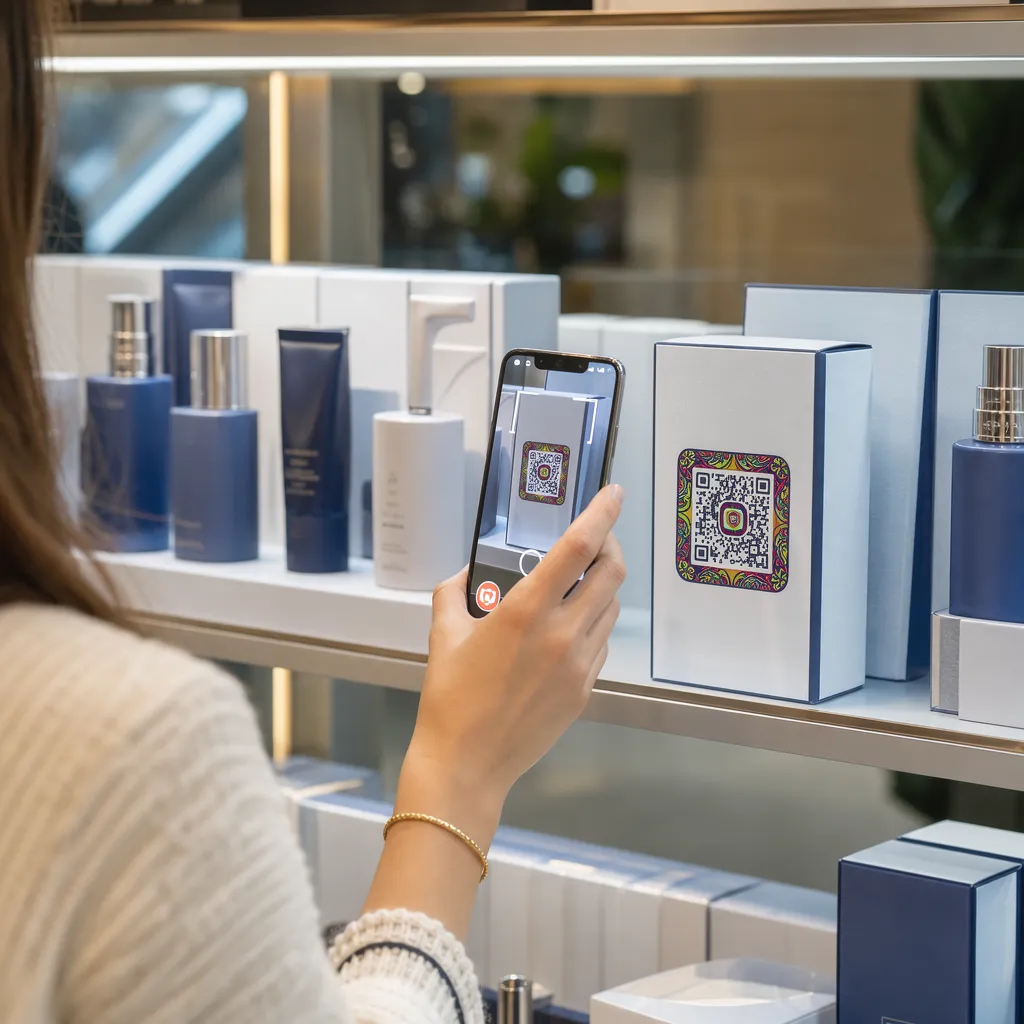
A branded QR code is more visually distinctive and can drive higher scan rates than a plain black-and-white code. You can incorporate your logo, brand colors, and custom shapes while keeping the code scannable – as long as you maintain adequate contrast, preserve the quiet zone, and use sufficient error correction. Always test a branded code on the actual printed material before committing to a full print run.
Build a Branded QR Code for Your Brochure Add your logo, choose your brand colors, and customize the code shape with the QR Code Generator with Logo.
Using Multiple QR Codes on One Brochure
A brochure with multiple panels can reasonably carry more than one QR code – if each code serves a distinct purpose and the layout remains uncluttered. For example, a trifold might include one code linking to a product video, a second linking to a booking form, and a third linking to a PDF catalog.
The key constraint is spacing. Each code needs its own quiet zone, a clear call to action, and enough physical separation that a smartphone camera does not accidentally frame two codes at once. If the brochure feels crowded, consolidate. One well-placed code with a strong destination is more effective than three codes competing for attention. For a practical walkthrough, see the guide on how to add QR codes to flyers and brochures.
Tracking QR Code Performance From Print
One of the strongest arguments for using dynamic QR codes on brochures is the ability to measure real-world engagement. Static codes produce no data – you have no way of knowing how many people scanned, when, or where.
Dynamic QR codes, by contrast, capture scan counts, geographic locations, device types, and time-of-day patterns. This data tells you which brochure placements are working, which campaigns are driving traffic, and whether your digital destination is converting visitors. For campaigns running across multiple locations or events, this visibility is essential for optimization. Read more about how QR codes track print ad engagement.
Testing Before You Print
Always test your QR code before the brochure goes to press. Print a proof at the intended size, on the intended paper stock, and scan it using multiple smartphones – both iOS and Android, and at least one older model. Test in different lighting conditions, including lower light environments where the brochure might realistically be read.
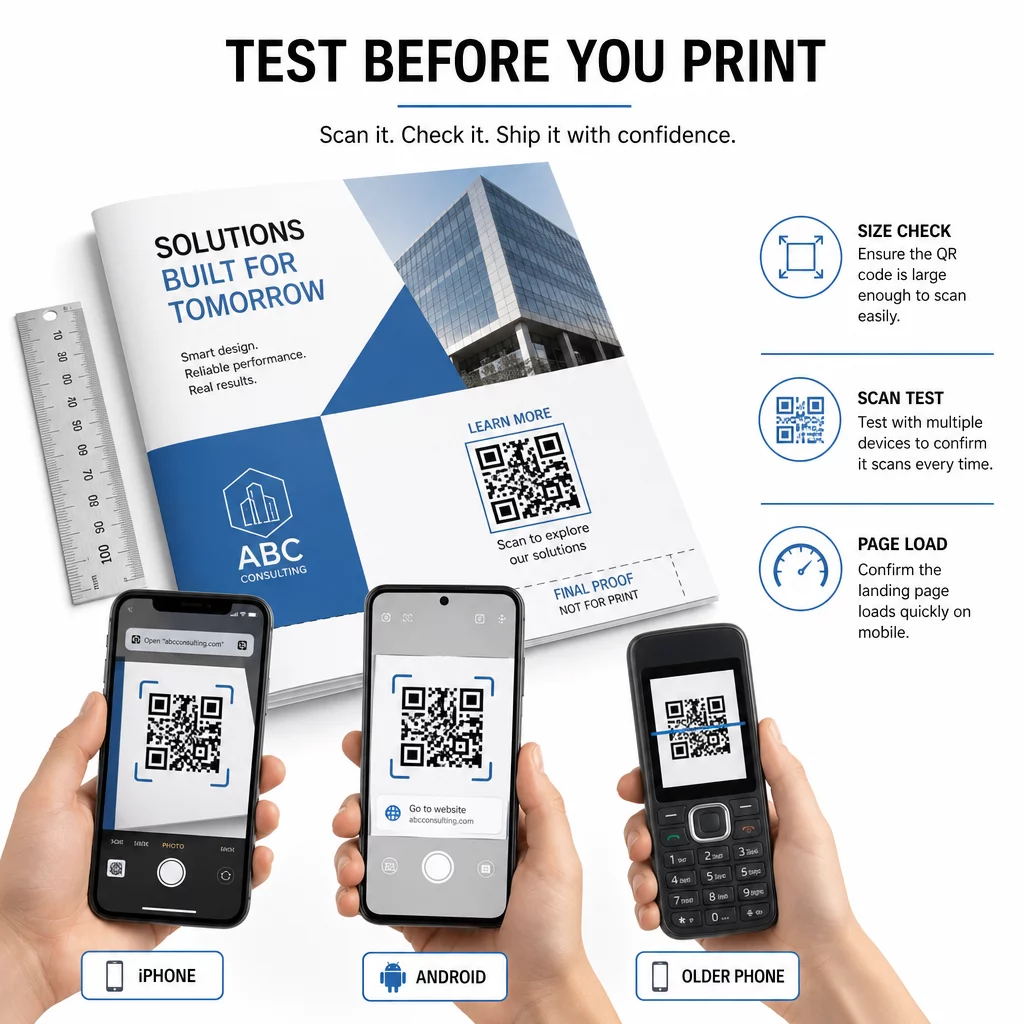
Confirm that the destination loads correctly, is mobile-friendly, and loads quickly. A code that scans but leads to a broken link or a slow-loading page wastes the opportunity. For guidance on what can go wrong at the printing stage, see how printing techniques impact QR code scannability.
QR Code Use Cases by Industry
Different industries use brochure QR codes in different ways, but the underlying logic is the same: give the reader a reason to scan and a destination worth visiting.
| Industry | Destination | Suggested Placement |
|---|---|---|
| Real estate | Virtual property tour or listing page | Inside panel beside property details |
| Events | Registration or schedule page | Cover or back panel |
| Restaurants | Digital menu or loyalty program | Back panel or inside panel |
| Healthcare | Appointment booking or patient resources | Inside panel |
| Retail | Product catalog or promotional offer | Back panel or inside panel |
Frequently Asked Questions
For most brochures, aim for at least 3 × 3 cm (1.2 × 1.2 inches). A practical minimum for tight layouts is 2 × 2 cm (0.8 × 0.8 inches). Use the 10:1 rule to scale up if the brochure will be read from a greater distance – the code width should be roughly one-tenth of the expected scanning distance.
Only if it is a dynamic QR code. Dynamic codes use a redirect link you control, so you can change the destination at any time without reprinting. Static QR codes encode the destination permanently and cannot be edited after generation.
Use a dynamic QR code from a platform that includes analytics. Pageloot’s dynamic codes track scan counts, locations, times, and device types so you can measure engagement from your printed materials in real time.