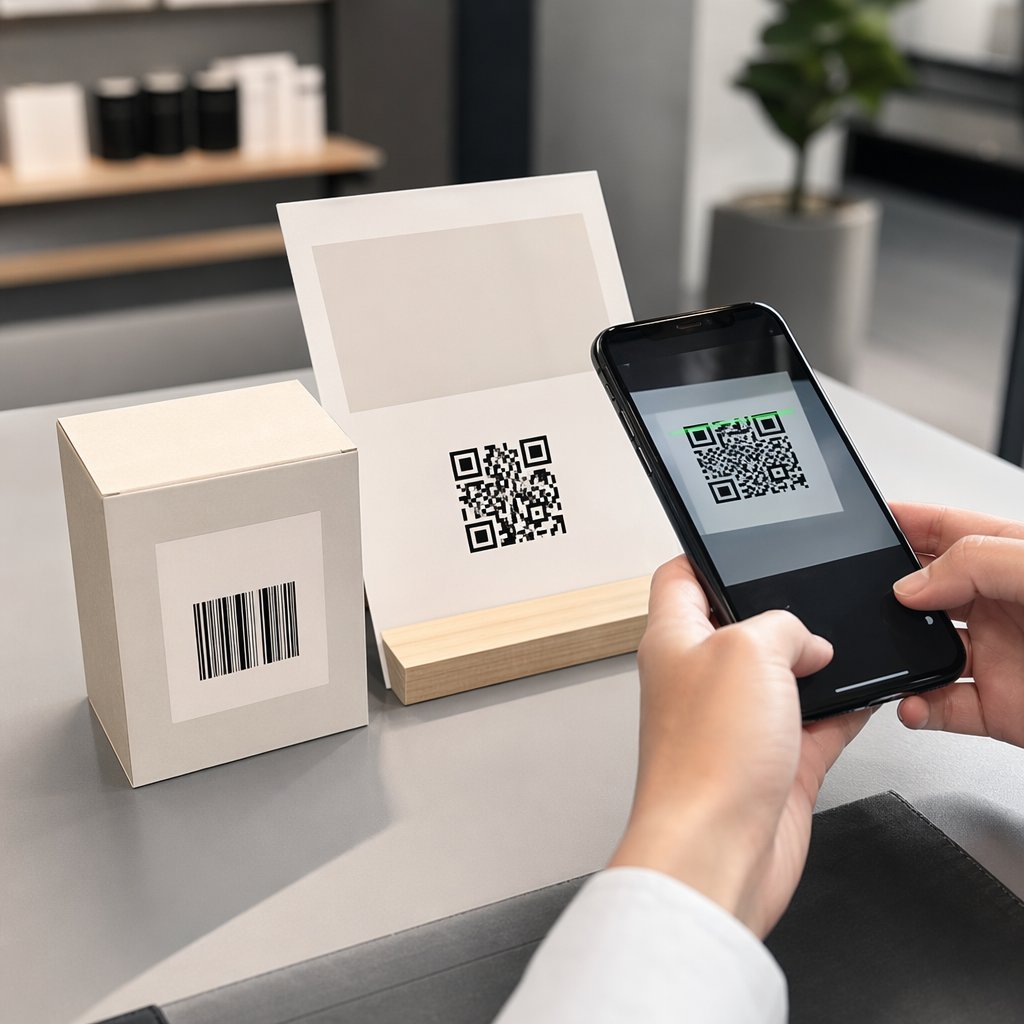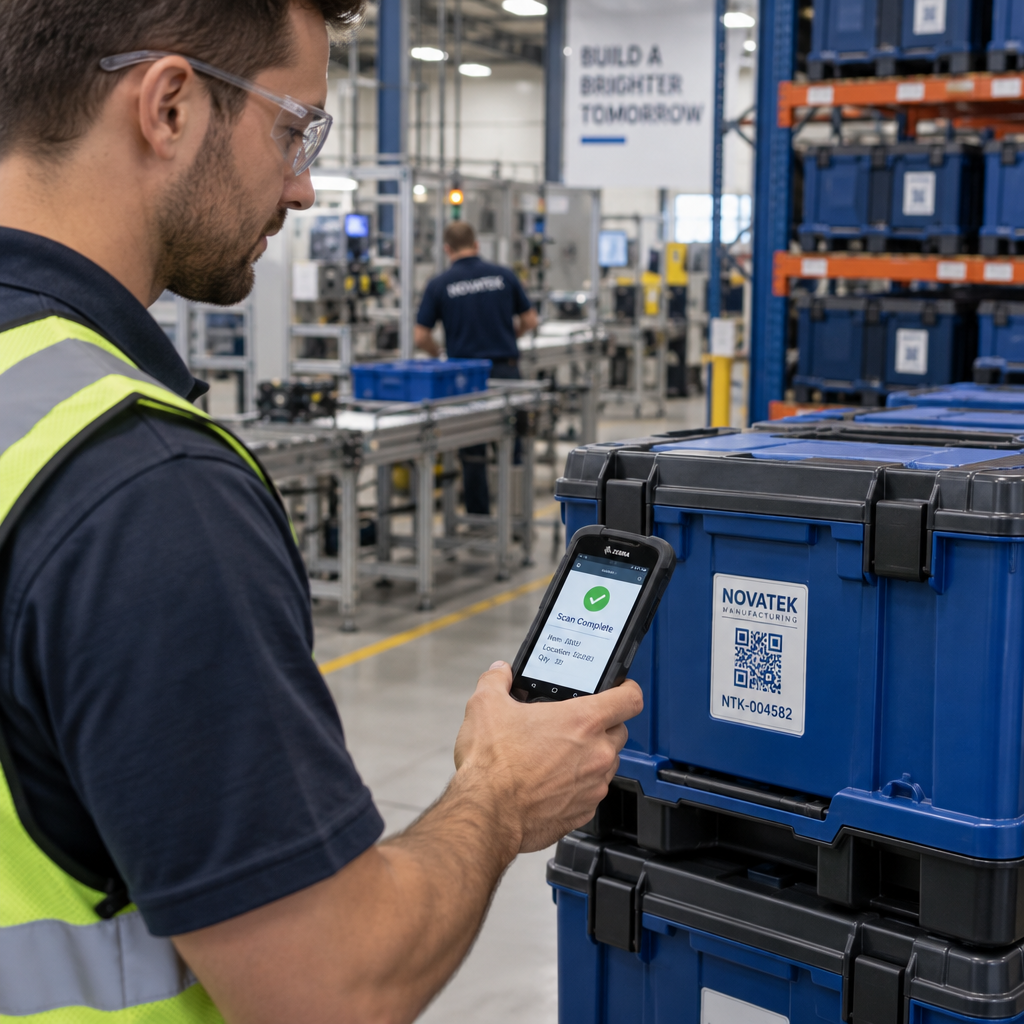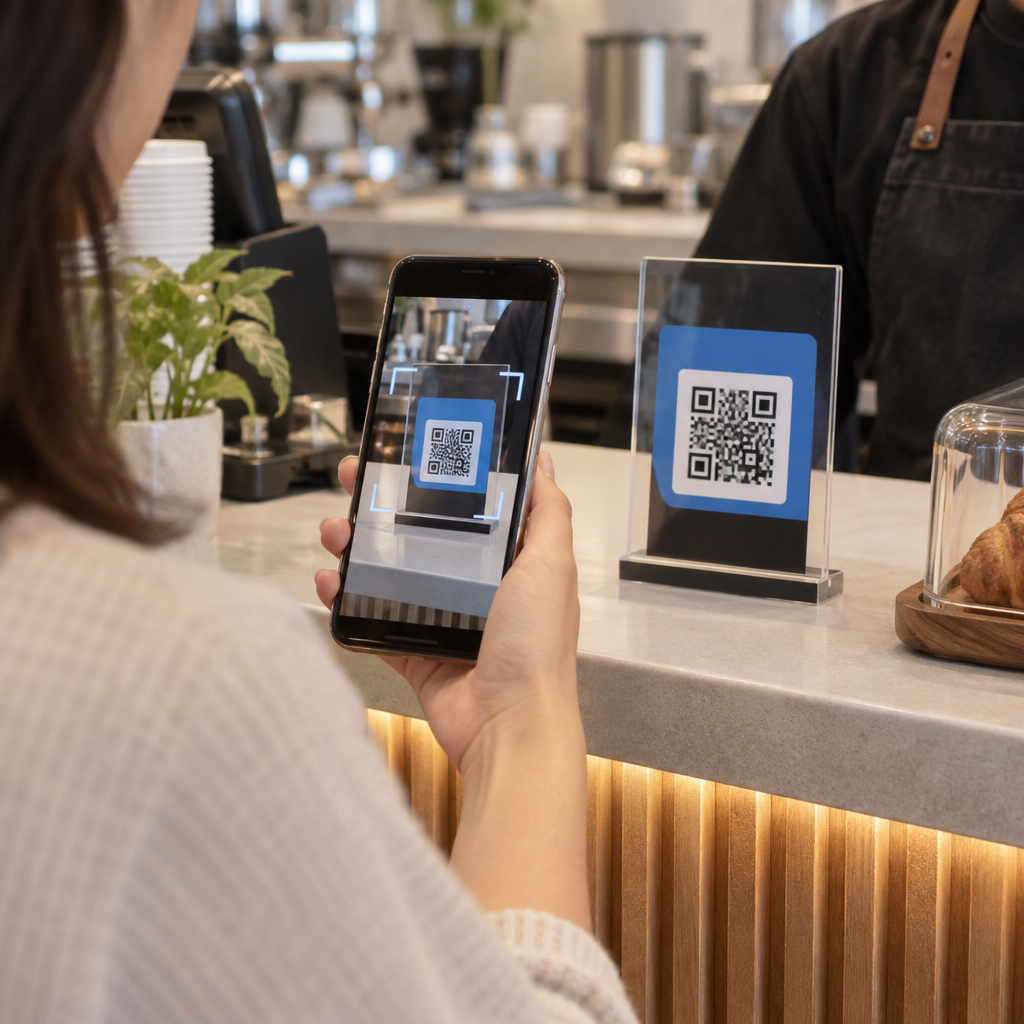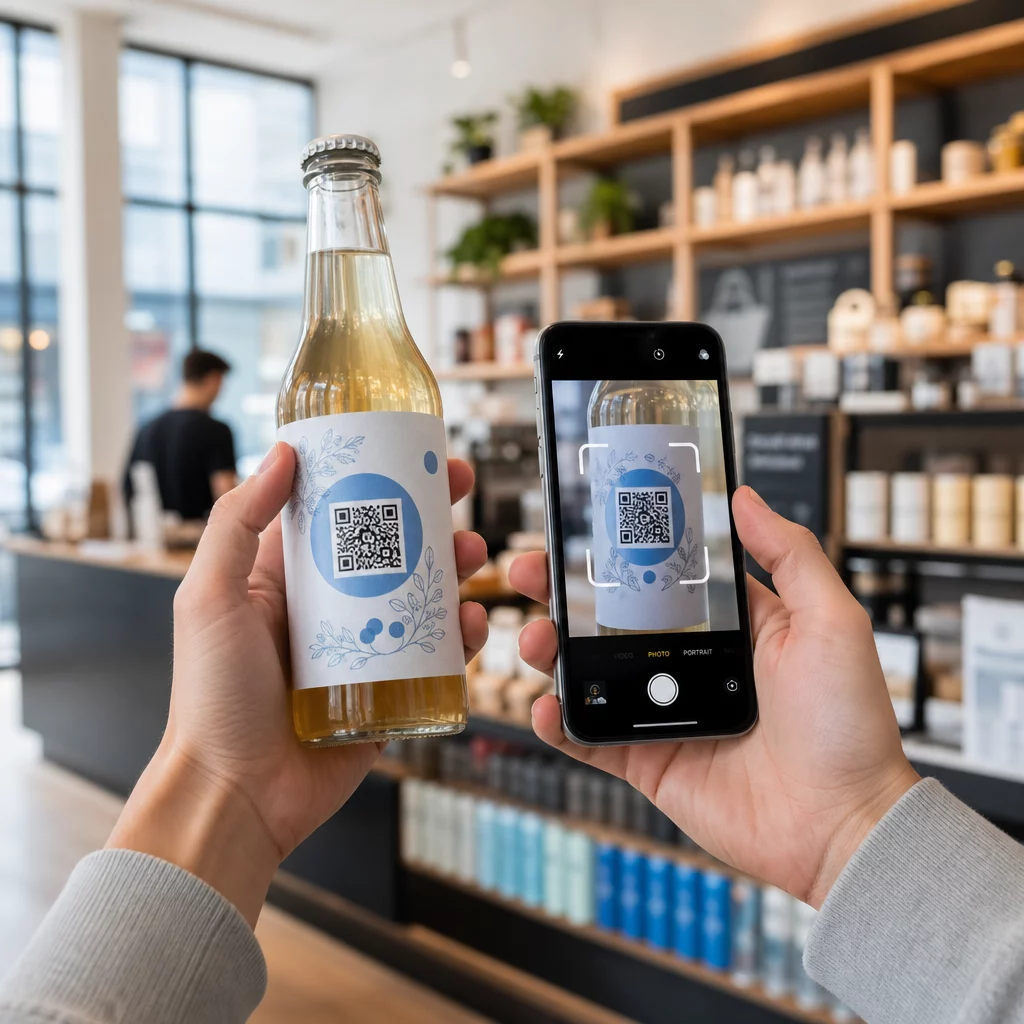
Are your bottles and cans doing all the work they could be? Physical packaging has limited label space, but the customers holding your product are already reaching for their phones. A QR code bridges that gap – turning a can or bottle into a direct channel for engagement, information, and repeat purchases.
Why QR Codes Belong on Beverage Packaging
Beverage packaging is one of the most competitive surfaces in retail. You have a few square inches to capture attention, communicate your brand, and move a customer toward a second purchase. A printed label alone can’t do all of that.
QR codes solve this by extending your packaging into a full digital experience without adding clutter. According to available consumer research, 64% of shoppers have scanned a QR code on a product while shopping in stores, and 61% have done so after purchase. Getting more information is the top reason consumers use them – which makes bottles and cans a natural fit.
The practical value is two-sided. Customers get instant access to content that matters to them: nutritional details, origin stories, recipes, or promotions. You get a direct, measurable connection to a customer who is already engaged with your product in hand.
For a broader view of how this applies across product lines, see QR codes for products and brands.
Practical Use Cases for Bottles and Cans
The most effective QR codes on packaging serve a clear purpose that matches what a customer would actually want to know or do at that moment. Here are uses that work well for beverage and food containers:
- Product information: Link to a page with full nutritional facts, ingredient sourcing, allergen details, or certifications – information that matters to health-conscious buyers but won’t fit on a label
- Recipe and serving ideas: A QR code linking to a recipe PDF or video gives your product added value and keeps customers engaged with your brand after purchase
- Promotional offers: Route customers to a coupon, discount code, or loyalty reward redeemable on their next purchase
- Social proof: Direct customers to a review page or social media channel where they can read what others say – and leave their own feedback
- Video content: A behind-the-scenes video about your brewing process, vineyard, or sourcing story can turn a casual buyer into a loyal customer
- Sweepstakes and contests: Brands like Capri Sun have used packaging QR codes to drive sweepstakes entries, generating hundreds of thousands of landing-page visits and tens of thousands of subscription sign-ups
- Reorder or purchase links: Send repeat buyers directly to your online store product page, removing the friction between intent and purchase
- Subscription enrollment: Add customers to a subscription list or loyalty program directly from the scan
For more ideas on what works across different packaging formats, the ultimate guide to QR codes for product labels is a useful reference.
Turn Every Bottle Into a Marketing Channel Use the QR Code Generator to create customized, trackable codes for your beverage packaging in minutes – no design experience required.
Placement and Design on Curved Surfaces
Bottles and cans present a specific technical challenge: curved surfaces distort QR codes in ways that flat packaging does not. A code that scans perfectly on a paper proof can fail once it wraps around a cylindrical can. Getting placement and sizing right before printing prevents this.
Where to place the code
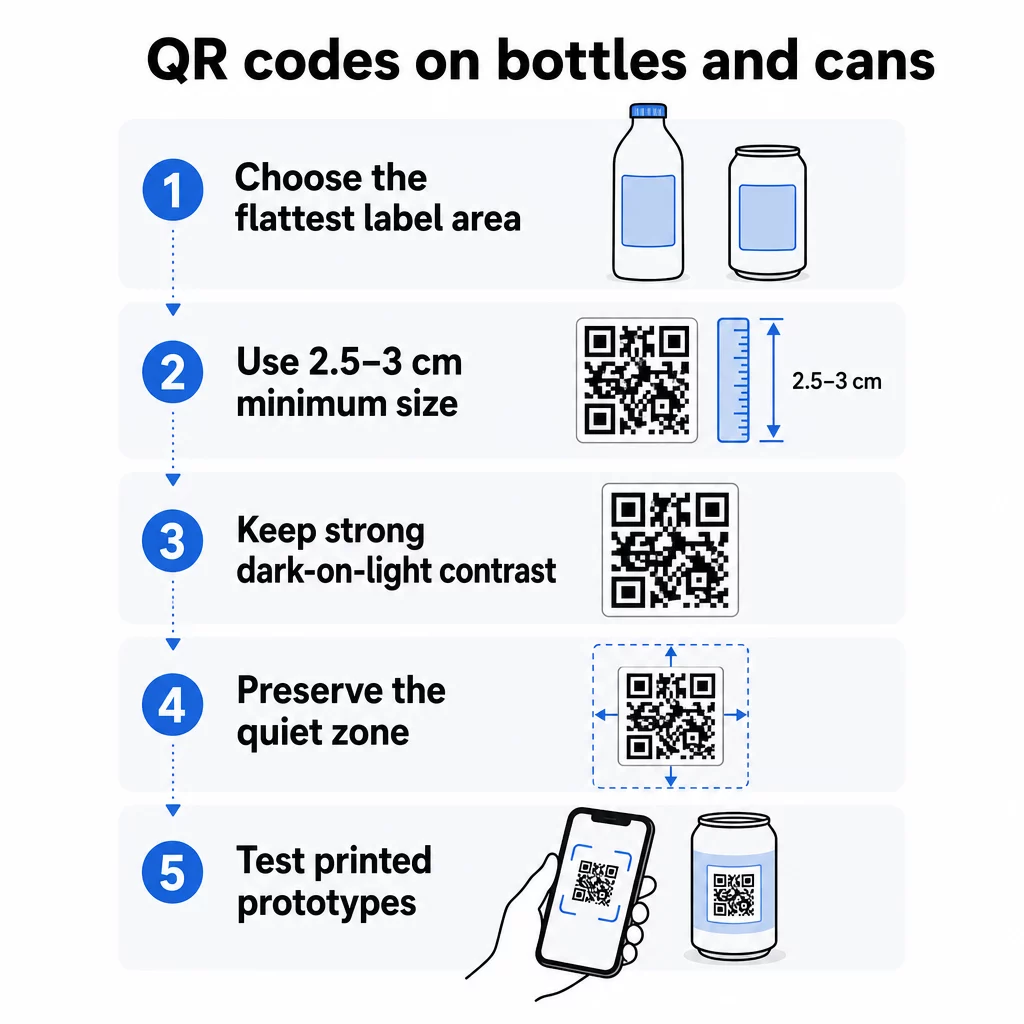
Use the flattest surface available. On bottles, this is typically the front or back label panel. On cans, a flat panel or the portion of the label with the least curvature works best. Avoid placing codes near seams, folds, the neck of a bottle, or label edges – all of these introduce distortion that can prevent a successful scan.
Size guidelines for curved packaging
The standard minimum for close-range scanning is 2 cm × 2 cm (about 0.8 in × 0.8 in). For bottles and cans specifically, a slightly larger size – around 2.5–3 cm wide – is recommended because the curved surface effectively reduces the readable area. A useful rule of thumb: the maximum scanning distance in centimeters should be roughly 10 times the code width in centimeters. If you expect customers to scan from 30 cm away, your code should be at least 3 cm wide.
Contrast and color
Dark modules on a light (ideally white) background remain the most reliable combination. Aim for at least a 4.5:1 luminance contrast ratio. Avoid using red or orange as the foreground color – some smartphone cameras struggle to read these hues reliably. Gradients and low-contrast combinations create similar problems.
The quiet zone
The clear border around the code – called the quiet zone – must be at least 4 modules wide on all sides. Cutting into this space, even slightly, can cause scan failures regardless of how large or high-contrast the code is.
Test on physical prototypes
Always test your QR code on an actual printed and wrapped prototype before committing to production. Test under real-world conditions: retail lighting, glare, condensation on cold cans, and various angles. What works in a digital proof may not survive the physical environment.
For more detail on sizing and readability, see the guides on QR code sizing for different print materials and best practices for QR code readability.
Why Dynamic QR Codes Make More Sense for Packaging
Static QR codes encode a fixed destination. Once your labels are printed, that destination is locked in. If you need to change the linked page – update a promotion, fix a broken URL, or refresh campaign content – you have to reprint.
Dynamic QR codes work differently. They point to a short redirect URL that you can update at any time, even after the codes are already printed and distributed. This matters for packaging because print runs are expensive and lead times are long. A dynamic code means your labels stay current even as your campaigns evolve.
There are other advantages specific to beverage brands:
- Seasonal promotions: Swap out a summer campaign for a fall one without any reprinting
- Regulatory updates: Update linked content if labeling requirements change or product details are revised
- A/B testing: Test different landing pages to see which drives better engagement
- Analytics: Track which SKUs get the most scans, where customers are scanning, and how they engage with linked content
Update Your Campaign Without Touching the Label With the Dynamic QR Code Generator, you can change your linked destination anytime – no reprinting needed. Ideal for seasonal beverage campaigns and limited-edition releases.
Tracking Performance After Launch
One of the advantages QR codes have over traditional packaging is measurability. Every scan produces data you can act on.
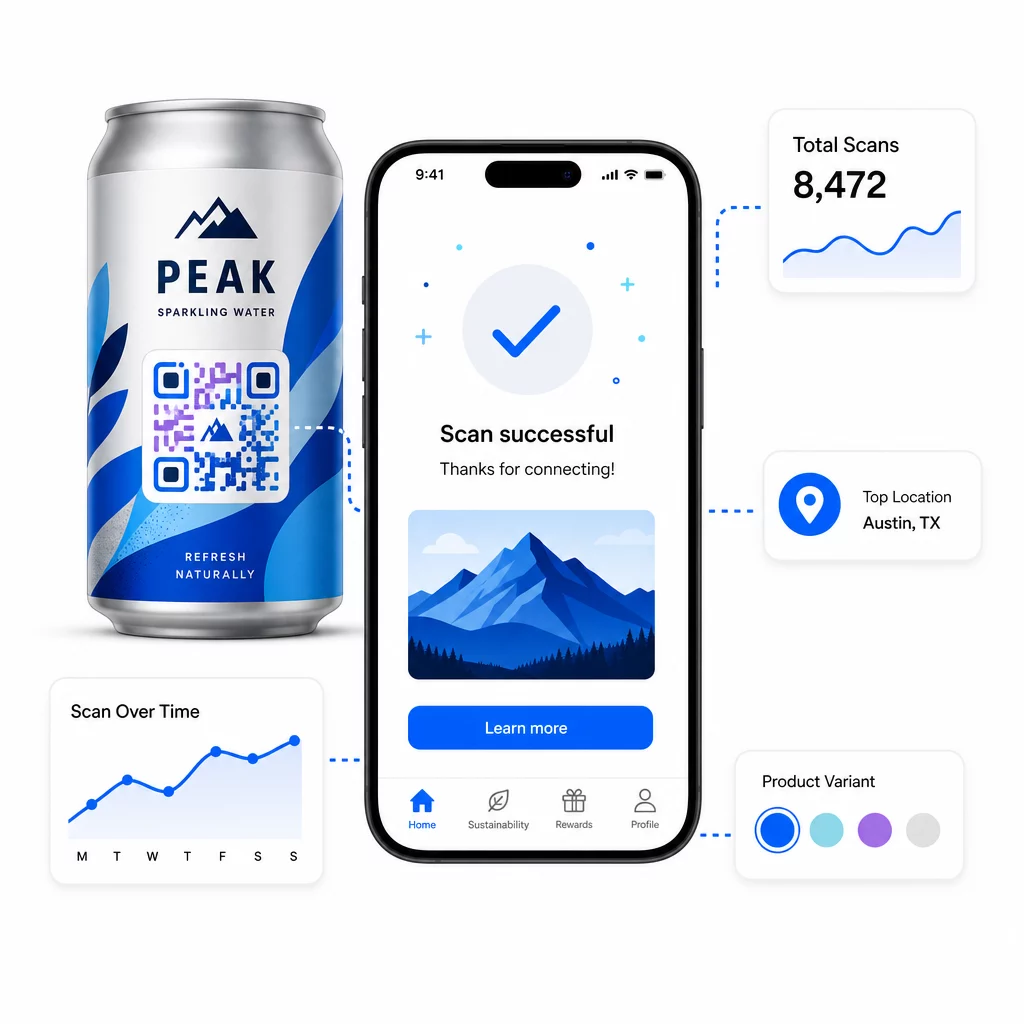
With dynamic codes and built-in analytics, you can track:
- Total scan volume and unique scans per SKU
- Geographic data showing where customers are scanning
- Scan timing – which days and times see the highest engagement
- Device type and operating system of scanning customers
- Performance differences across product variants or campaigns
This data helps you understand which products generate the most post-purchase curiosity, which campaigns are resonating, and where your most engaged customers are located. For more on what you can measure and how to set it up, see the guide to tracking QR code scans and analytics.
Regulatory and Compliance Considerations
QR codes on beverage packaging can extend your label, but they cannot replace it. Required disclosures – nutrition facts, allergens, ingredients, certifications – still need to appear in physical form on the package itself. These cannot be moved exclusively into QR-linked digital content.
For alcoholic beverages, the Alcohol and Tobacco Tax and Trade Bureau (TTB) treats QR code additions or changes as allowable label revisions, evaluated as advertising content rather than replacements for required text. Any mandatory labeling information remains subject to existing regulations regardless of what a linked QR code contains.
It is also worth noting that the industry is moving toward GS1 Digital Link standards, with Sunrise 2027 serving as a key readiness milestone for retailers to process 2D barcodes (including QR codes) at point of sale. This is an industry-driven standard – not a regulatory mandate – but beverage brands planning new packaging should be aware of it, particularly if their QR codes will eventually need to carry GS1 Digital Link data including a product GTIN.
Keeping QR Codes Trustworthy for Consumers
Consumer confidence in scanning is partly a function of trust. QR code scams exist – attackers create fake codes or place stickers over legitimate ones to redirect users to malicious sites. While this is primarily a consumer-awareness issue, brands can take steps to make their codes more recognizable as legitimate.
A few practical measures:
- Brand your QR code: A QR code with your logo embedded in the center is harder to mistake for a fraudulent overlay and reinforces that the code belongs to your product
- Use a recognizable domain: When consumers preview the URL before tapping through, a branded short link or your own domain is far more reassuring than an anonymous redirect
- Include a clear CTA: Label the code with what it does – “Scan for nutrition info” or “Scan to claim your discount” – so customers know what they’re getting before they scan
These steps also improve scan rates, since customers are more likely to engage with codes they recognize and trust.
Applying QR Codes Across Packaging Types
Bottles and cans represent the primary packaging layer – the direct product container. If you also use secondary packaging (cartons, multipacks, gift boxes), those surfaces offer additional space for QR codes with a different purpose. A multipack, for example, might link to a bulk ordering page or a loyalty program, while the individual can links to a recipe or social channel.
For a full breakdown of how to approach QR codes across packaging levels, see the guide to QR codes on product packaging and the overview of QR codes on food packaging.
You can also explore how other industries are applying these tools through QR code solutions by industry or dive into the specific benefits of QR codes on retail packaging. The bottles and cans your customers pick up every day are already doing the hard work of getting noticed. A well-placed, dynamic QR code turns that moment of attention into a lasting digital connection – and gives you the data to keep improving it.
Start Building Smarter Packaging Create branded, trackable QR codes for your bottles and cans with the Dynamic QR Code Generator. Free 14-day trial, no credit card required.
Frequently Asked Questions
For curved packaging like bottles and cans, a minimum of 2.5–3 cm wide (about 1 inch) is recommended. Standard flat-surface minimums of 2 cm × 2 cm can be unreliable on cylindrical surfaces where curvature reduces the readable area. Always test on a physical prototype before printing your full run.
Yes, but only if you use a dynamic QR code. Dynamic codes point to a short redirect URL that you can update at any time without changing the printed code itself. Static QR codes encode a fixed destination and cannot be changed after printing. For packaging – where reprinting is expensive – dynamic codes are the practical choice.
QR codes can supplement label content but cannot replace mandatory disclosures. Nutrition facts, allergens, ingredients, and certifications must still appear in physical form on the packaging. For alcoholic beverages in the US, the TTB treats QR code additions as advertising content rather than replacements for required label text. Brands should also be aware of GS1’s Sunrise 2027 initiative, which is an industry readiness milestone for 2D barcode adoption at retail point of sale – not a legal mandate, but relevant for future packaging planning.