PNG QR Code Generator
Use this free QR code generator PNG tool to make a QR code PNG with a transparent background. Paste your link, choose colors, add a logo if you want, set the size from 200 to 2000 pixels and click Download PNG. No account is needed to download.
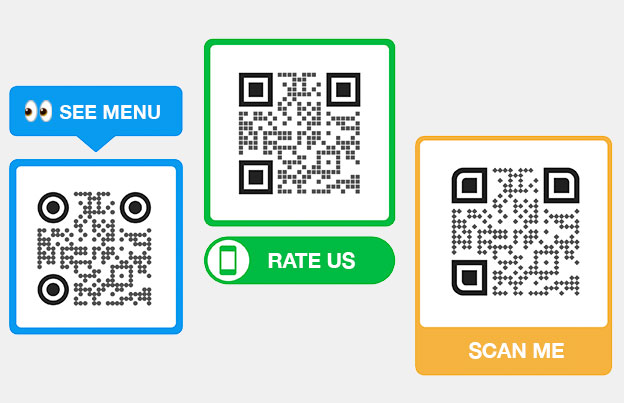
Create a PNG QR Code Examples
Tap on the images to zoom in
What is a PNG QR code?
A PNG QR code is a QR code saved as a PNG image file. PNG (Portable Network Graphics) is a common image format that can have transparent pixels. That is why people look for a transparent QR code, or a QR code without background: the white square around the code is removed, so the code sits directly on your design.
The format does not change how the code works. A phone camera reads a PNG QR code the same way it reads one saved as SVG or PDF. What changes is the file. A PNG has a fixed number of pixels, so you choose the size when you download it.


QR code generator with transparent background: 4 steps


Paste the link you want the code to open into the generator at the top of this page. Use the full address, starting with https://. Open it in a browser first to make sure it loads.


Open Background color and click Transparent, next to Solid and Gradient. Then choose the color of the code itself. You can also add a logo or a frame with a short call to action.


Drag the size slider under the preview. It runs from 200 x 200 to 2000 x 2000 pixels and starts at 1100 x 1100. Use the size guide below to choose for web or print.


Click Generate QR, then Download PNG. You may be asked for your email first. Place the file in your design, then scan it with two phones before you print or publish.
How to create a PNG QR code and use it in your design
You should have a document that you want to use for your QR code with a transparent background. Consider which colors will be suitable for the QR code.


Open the QR code Generator on top of this page. You can now add all your details and info that you need in the QR code.


You can add branding elements, change frames, add a call to action, and more. Keep your design document in mind which QR code colors will work for your needs.


Click on the green ‘Download’ button to save your QR code. Then print your PNG QR code on brochures and other materials with a clear background for easy access and a clean view.


You can easily add the QR code without background on your design now. Use Photoshop, Canva, or any other tool you wish. Then you are all ready to print.


PNG, SVG or PDF: which file do you need?


Choose the format by where the code will end up.
PNG is made of pixels. Use it for websites, email, slides, social posts, documents and small print such as business cards, flyers and stickers. It supports a transparent background. Do not enlarge a PNG after you download it, because it gets blurry. Pick the final size first.
SVG is a vector file. It is made of shapes instead of pixels, so it stays sharp at any size. Use it for posters, signs, vehicle wraps, packaging, and any file a designer will open in Illustrator, Figma or Inkscape. It has no background unless you add one.
PDF is the file most print shops ask for. A vector PDF prints sharp at any size. Use it when your printer requests a PDF or a vector file.
JPG cannot be transparent. A JPG QR code always has a solid background, usually white. Do not use JPG if you want a QR code without a background.
A simple rule: use PNG when the code is shown on a screen or printed smaller than about 15 cm (6 in). Use SVG or PDF for anything larger, or when the printer asks for vector files. Pageloot also offers SVG and PDF downloads for print.
What size should a QR code PNG be?
The slider under the preview sets the width and height of the PNG in pixels, from 200 to 2000 in steps of 50. The default is 1100 x 1100 pixels. That prints about 9.3 cm (3.7 in) wide at 300 DPI, which is enough for most flyers, menus and packaging.
A PNG has no fixed DPI. DPI only appears when you place the file at a print size. Divide the pixels by the DPI to get inches. Print shops usually want 300 DPI for things people hold. Use these sizes:
- Website or email, shown at 300 px wide: download 600 px. Twice the display size keeps it sharp on high-density screens.
- Business card or small label, 2 cm (0.8 in): 250 px.
- Flyer, sticker or packaging, 3 cm (1.2 in): 400 px.
- Brochure page or menu, 5 cm (2 in): 600 px.
- Poster, 10 cm (4 in): 1200 px.
- Large poster, 15 cm (6 in): 1800 px.
The slider stops at 2000 px, which is 17 cm (6.7 in) at 300 DPI. For larger prints, download SVG or PDF. Signs that people read from a distance can also use a lower DPI: 2000 px at 150 DPI covers 34 cm (13 in).
A frame or text around the code takes space inside the image, so the code itself comes out smaller. Choose one step higher when you use a frame. Whatever the size, print the code itself at 2 x 2 cm (0.8 in) or more, and add about 1 cm of code for every 10 cm of scanning distance.
Frequently asked questions


Paste your link into the generator at the top of this page. Open Background color, click Transparent, then choose a size and click Download PNG. The file has no background, so the code sits directly on your design.
It depends on where it goes. At 300 DPI, use about 250 px for a 2 cm (0.8 in) code, 600 px for 5 cm (2 in) and 1200 px for 10 cm (4 in). For a website, download twice the display size. The default here is 1100 x 1100 px. See the size guide above.
Use PNG for screens, documents and small print. Use SVG or PDF for large print or when your printer asks for vector files, because they stay sharp at any size. Do not use JPG if you need a transparent background.

The PNG is still transparent. Your viewer is filling the empty area with its own color. Place the file on your design to check. If a social or messaging app shows it, the app flattened the image. Share the file as a document or put the code on a solid light box first.

Yes. You can make and download a PNG for free. A static code cannot be edited or tracked after printing. Dynamic codes need a Pageloot plan, and you can try them with a free 14-day trial. Code NEW30 gives 30% off your first purchase.
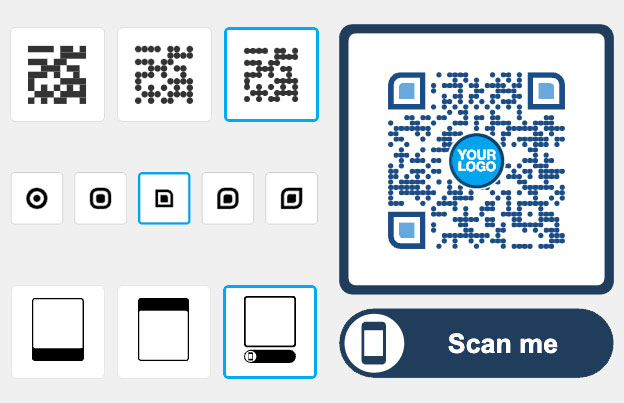
Not with a static code. Make a new one. With a dynamic QR code you change the destination in your Pageloot account, and the printed code keeps working.
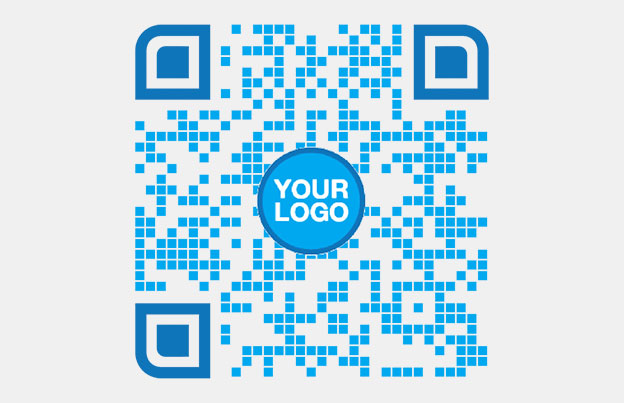
To put your logo inside the code, use Add Logo in the generator (more on the QR code with logo page). To open an image when someone scans, upload the image to a public web address and use that link, or try the image QR code generator.
Open the camera app on your phone and point it at the code, on a screen or on paper. No extra app is needed. If the PNG is saved on your phone, open it in your photo app or Google Lens, which can scan codes in saved images on many phones.


Contact us and we’ll be happy to help!
Transparent PNG QR code not scanning? Check these
-
The code sits on a busy or dark background
A transparent code shows whatever is behind it. On a photo, a pattern or a dark color, the code loses contrast and the camera cannot find the squares. Place it on a flat, light area, or set the background to Solid white. -
The file was saved as JPG or flattened by an app
JPG cannot be transparent. Some social platforms, messaging apps and email tools also re-compress images and fill transparent areas with white or black. Share the PNG as a file, or place the code on a solid light box first. -
The link has a typo or the page is gone
Open the link in a browser. A single wrong character breaks the code. A static code cannot be fixed after printing, so make a new one.
-
Light code on a dark background
Most current phone cameras read light-on-dark codes, but not every scanner does. Test with an older phone. For the widest support, use a dark code on a light area. -
The code is too small, blurry or covered
Printed under 2 cm (0.8 in), or enlarged from a small PNG, the edges turn soft. A very large logo or a heavy frame also hides squares. Download a bigger size from the guide above, or use SVG or PDF. -
A dynamic code was switched off
A dynamic code depends on your Pageloot plan. If the plan ends, the code stops redirecting. Check your account. A static code does not depend on a plan.
4.86 / 5 stars rating


Where to use a transparent background QR code Examples
Tap on the images to zoom in


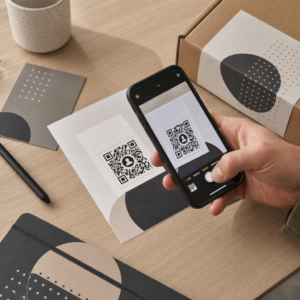
Drop the PNG onto a slide and move it over a pale corner or a white panel. With a transparent background there is no white box around the code. Download at 600 px or more so it stays sharp on a projector.


Place the PNG in your design software, such as Illustrator, InDesign or Canva, on a light panel of the box or label. Send the printer the file at 300 DPI, and ask whether they prefer an SVG or PDF.


Put the code on a plain area of the layout, next to a short call to action such as “Scan to book a table”. For anything larger than a flyer, use SVG or PDF.


Transparent PNGs work on sticker sheets, hang tags and video overlays, where you layer the code over other content. Check the contrast on every frame it appears on, and keep it on screen for several seconds so people can scan it.
Get more scans from your PNG QR code
-
Add a call to action
A code with no explanation gets skipped. Put a short line next to it, such as "Scan for the menu" or "Scan to register". -
Keep a quiet margin
Leave an empty border around the code, about the width of four of its small squares. With a transparent background, keep text, lines and images out of that border.
-
Use strong contrast
Dark squares on a light area scan best. Avoid pale colors, and avoid red on pink or yellow on white, even if they look good. -
Put it where people can scan it
Place it at eye level, away from glare, folds and curved surfaces. Scanning from a distance needs a bigger code, as shown in the size guide.
Static or dynamic PNG QR code: what to choose
A PNG file is only the picture. Whether the code can change later depends on the code type. A static code opens one fixed link, and it keeps opening it as long as that page exists. If the link will not change, a static PNG is all you need.


Choose dynamic if you print a lot, such as packaging, signs or menus, if the destination may change, or if you want scan stats: when, where and on which device. You change the destination in your Pageloot account and the printed code follows. Tick Track scans or Edit later in the generator to start a free 14-day trial. The Starter plan is EUR 7 per month, billed yearly.
Do not test only on the white preview. Place the PNG on the final design, then scan it on screen and on a printed proof with two different phones, from the distance people will use.


A transparent code takes on the color behind it. Pick a dark code color, and check it against the lightest and darkest parts of the area where the code will sit.
Why use Pageloot as your transparent QR code generator


Make and download a PNG without creating an account. You may be asked for your email before the download starts.


For a QR code with transparent background, choose Transparent next to Solid and Gradient in the background options. The code then sits directly on your design.


Set the pixel size with the slider, from small web images to large print files.


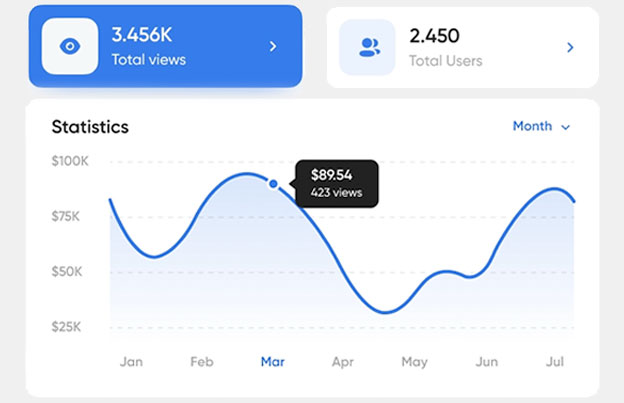
A dynamic code shows how many people scanned it, when, where and on what device. It needs a Pageloot account, and you can start with a free 14-day trial.


With a dynamic code you can point the printed code to a new page later, in your Pageloot account.


Upload your logo, change colors and shapes, and add a frame with a call to action.