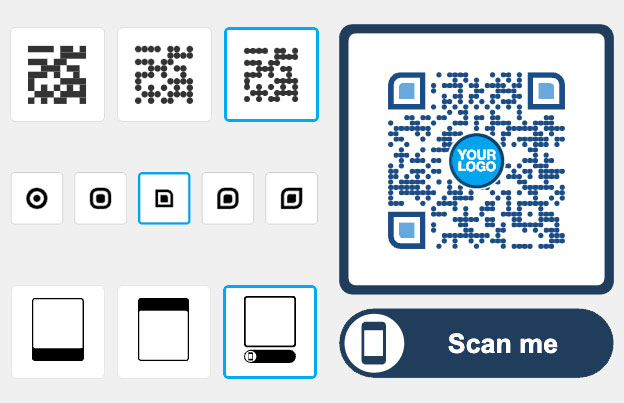
Google Calendar QR code Generator
Create a QR Code for Google Calendar Examples
Tap on the images to zoom in
What is a Google Calendar QR code?
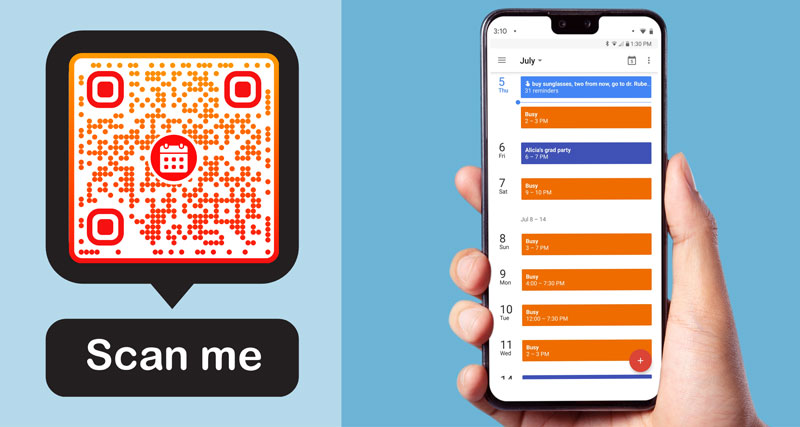
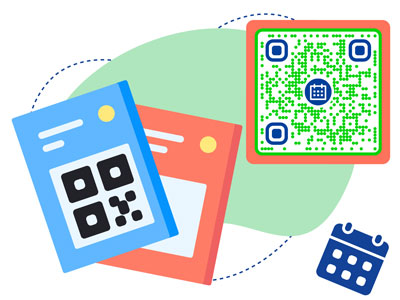
A Google Calendar QR code is a QR code that holds the link to a Google Calendar. When someone scans it with the phone camera, Google Calendar opens in the app or the browser and shows the calendar. Nobody has to type a long web address. Paste your calendar link above, add your logo and colors, and download the code as PNG, SVG or PDF. Free to download.
The code points to the live calendar. When you add or change events, the printed code shows the new times, so a QR code schedule on a notice board or office door stays current. Teams, schools, clubs and clinics use a QR calendar like this to share timetables, opening hours and event dates.
This generator makes link codes: you paste a link and get a code. The link decides what people see. It can be a whole public calendar or one published event. The sections below show how to get each link, what it shows, and how to keep a public calendar private enough.


How to make a QR code for Google Calendar


On a computer, open Google Calendar and click Settings. Under Settings for my calendars, select the calendar you want to share. Under Access permissions for events, tick Make available to public. Choose between See only free/busy (hide details) and the option that shows event details. Google lets you change sharing settings only on a computer, not in the phone app.


On the same settings page, under Access permissions for events, click Get shareable link and then Copy link. To share one event instead, open it in your public calendar, click More actions, then Publish event, and copy the link. Google says Publish event links work best in desktop browsers. Do not copy the address from your browser bar: that opens each person’s own calendar, not yours.


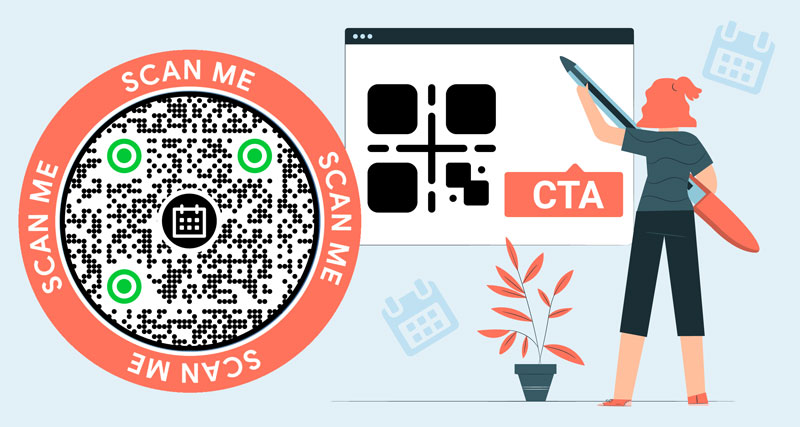
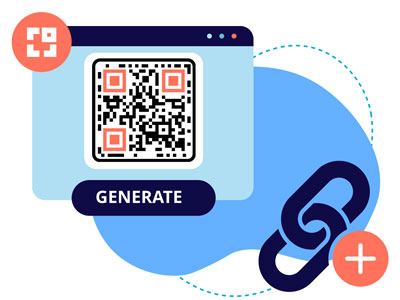
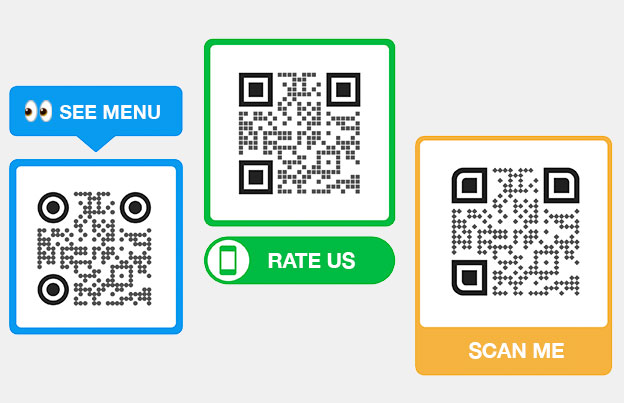
Paste the link into the generator at the top of this page. Add a frame with a short call to action such as “Scan to see the schedule”, choose your colors and upload your logo. Download PNG for screens, or SVG or PDF for print.


Scan the code with a phone that is not signed in to your Google account, or open the link in a private browser window. If you see the calendar, everyone will. If you see a sign-in or request-access page, go back to step 1.
How to create a QR code for Google Calendar with Pageloot
Begin creating your Calendar Event QR code by using the free tool on this page. If you want to explore advanced functionality, you can opt in for our 14-day free trial.


On the website choose the calendar QR code creation tab.


As you enter editing mode, you’ll first need to include the link to the Google Calendar. This link can be changed over time without having to create a new QR code.


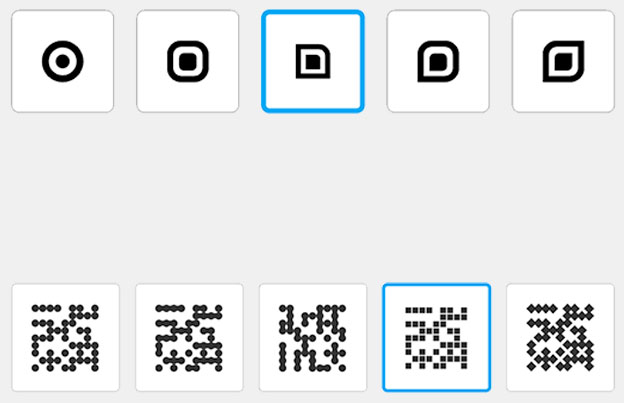
Once you have finished with the filling of the QR code you will need to choose what the QR code will look like. In this section, you can change its color, and frame, add logos, and play with its shape.
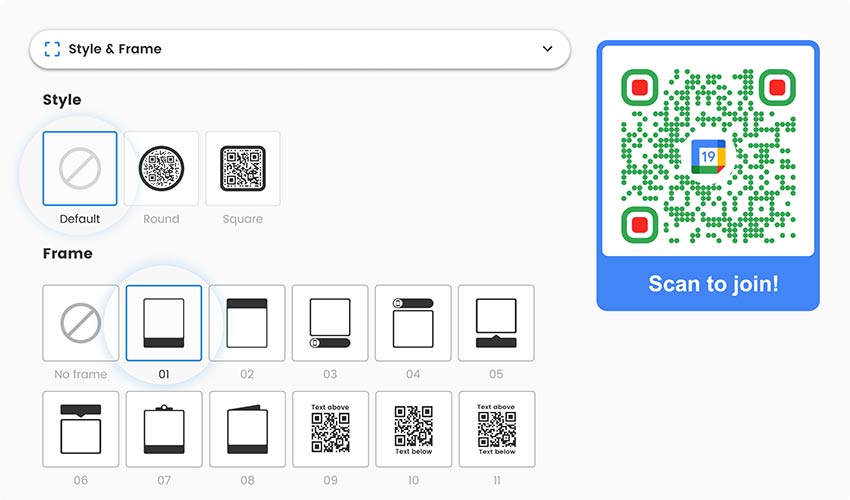

Make sure you then save and download your Google Calendar QR code and check out whether it's scannable.


Calendar link or event data: what can the code do?


Search for a calendar QR code and you find two different things.
- A link code. This is what the generator on this page makes. Scanning it opens Google Calendar with the public calendar or the published event. People read the schedule, and they can subscribe to a public calendar in Google Calendar.
- An event-data code (iCalendar). The code itself holds the event: title, date, time and place. Some phones offer to save it to the calendar when scanned. Pageloot’s free generator does not make this type, so a scan here does not add an event to the phone on its own.
Searches such as “QR code for calendar event”, “QR code to add calendar event” and “QR code add to calendar” usually mean this second type. To get close, put a link to an add-to-calendar page or a hosted .ics file in the generator instead. Our event QR code page explains it. Phones differ in how they open these files, so test on an iPhone and an Android phone.
A simple rule: to show people a schedule, use the calendar link. To save one date, use an add-to-calendar link for that event.
Frequently asked questions


In Google Calendar on a computer, open Settings, select your calendar, tick Make available to public, then click Get shareable link and Copy link. Paste the link into the generator at the top of this page, add your logo or colors, and download the code. Test it on a phone that is not signed in to your Google account.
Not with the link codes this generator makes. A scan opens Google Calendar or the event page. A code that saves an event on its own needs event data (iCalendar) inside the code. To get close, link to an add-to-calendar page or a hosted .ics file, and test it on iPhone and Android.
Not for a public calendar. Google’s public calendar link needs no login. A private calendar asks people to sign in and request access, so the code looks broken to them.
That is your choice. You can show only free and busy times, or event details such as titles, times and descriptions. Anyone with the link can see what you allow. Use a separate calendar for sharing and keep private details out of event titles.
Yes. Adding, moving or deleting events does not change the calendar link. The code stops working only if you stop sharing the calendar, delete it, or switch to a different calendar.
Making and downloading the code is free as PNG, SVG or PDF, and we may ask for an email. Edit later and Track scans need a Pageloot account, with a 14-day free trial.
Not with a static code. A dynamic Pageloot code shows scans with time, place and device. Tick Track scans above to start a free 14-day trial.
Google lets you change calendar sharing settings only on a computer. After you have the link, you can paste it into this generator on any phone or computer and download the code.


Contact us and we’ll be happy to help!
4.86 / 5 stars rating


Where to use a Google Calendar QR code? Examples
Tap on the images to zoom in


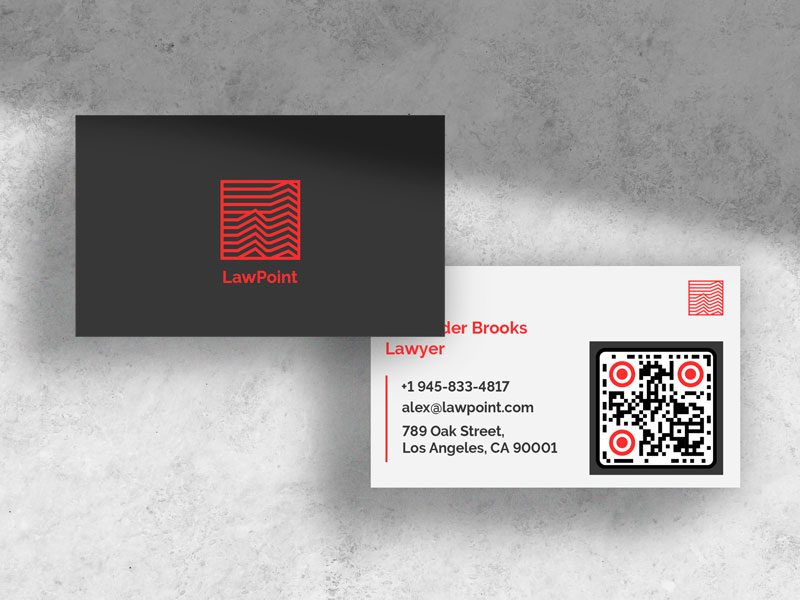
Put a code on the back of the card that opens a public calendar set to free/busy only. Clients see when you are free without seeing who you meet. In email, use the plain calendar link instead of a code: a phone cannot scan its own screen.


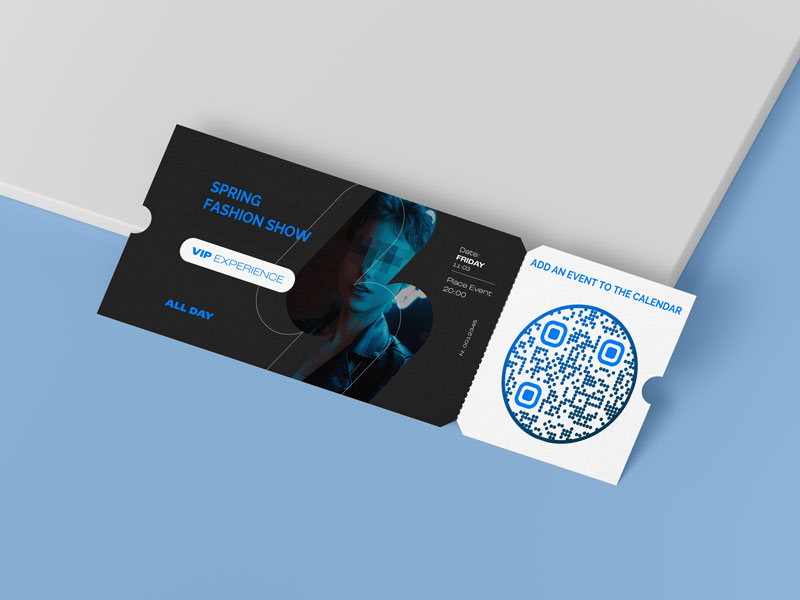
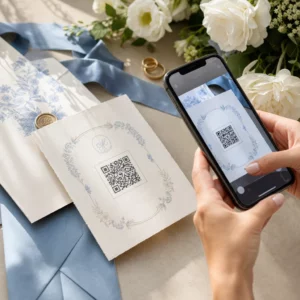
Print the published event link on the ticket or invitation so guests can find the date, time and place again. For a series of dates, link to one public calendar that lists all of them.


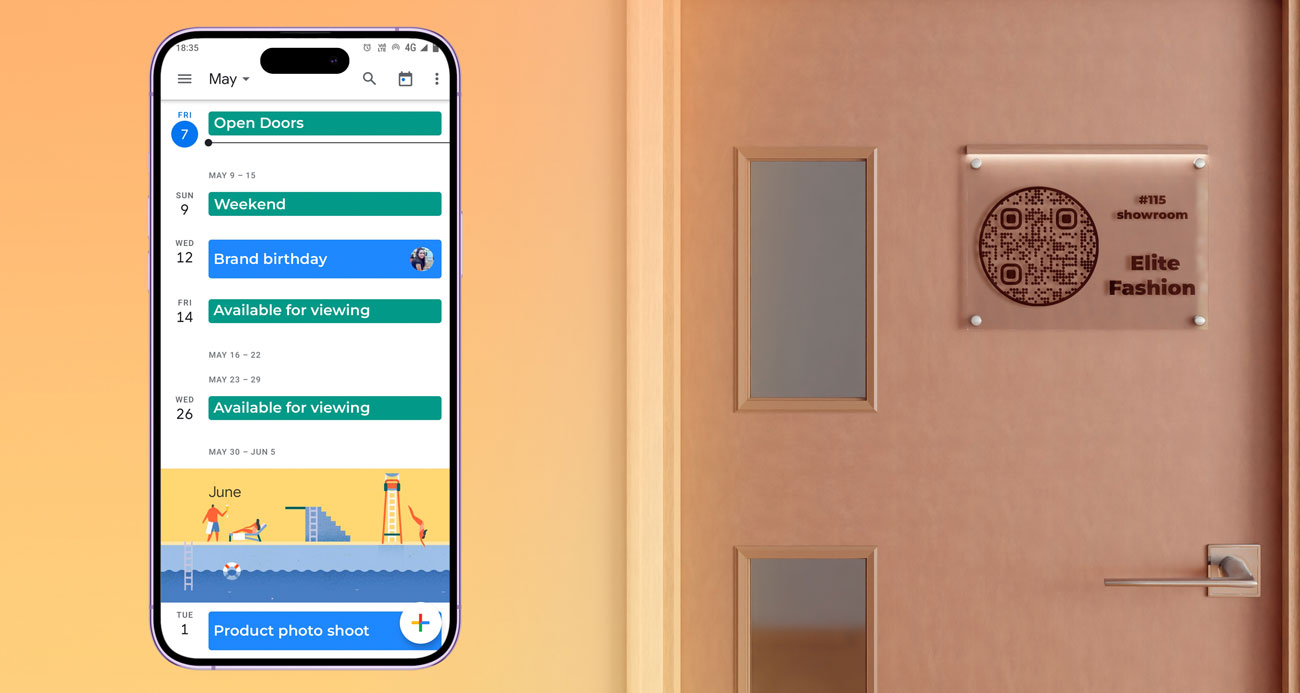
A QR code schedule works well for class timetables, room bookings, gym sessions, clinic hours and community center events. The printed sheet never goes out of date because the code opens the current calendar.


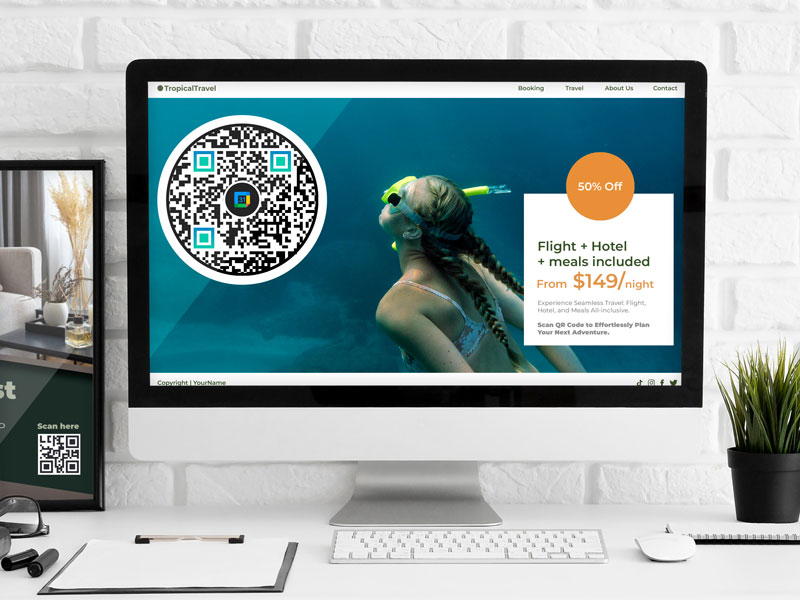
Add the code to a poster or a slide for “all upcoming dates”. On a website a normal link is easier for visitors than a QR code, so use the code on print or on a second screen.
How to get more scans for a Google Calendar QR code
-
Say what is behind it
Add a frame with a short call to action, such as "Scan to see our schedule" or "Scan to see free times". A bare code gives no hint of what happens next. -
Put it where the schedule matters
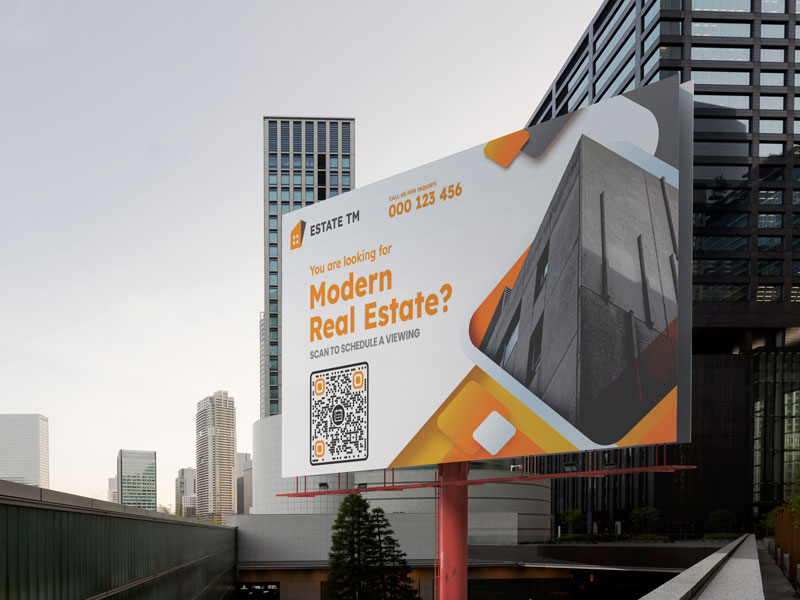
Place it on the door, the notice board, the front desk or the class room wall, at eye level and away from glare.
-
Print it big enough
Use at least 2 x 2 cm (0.8 in). Use a dark code on a light background and keep a white border. Make it bigger if people scan from a distance. -
Keep your brand, keep the contrast
A logo in the middle and your brand colors help people trust the code. Test it again after every design change.
Privacy and sharing tips for a Google Calendar QR code
Create a new calendar for what you want to share (Add other calendars > Create new calendar) and make only that one public. Keep private meetings in your main calendar, so they can never appear through the QR code.


Anyone who gets the link can open a public calendar. Google notes that if a website that links to it is searchable, people can find the calendar in search results. Do not put names, phone numbers, home addresses or private meeting links in event titles or descriptions.
To close a calendar, open the same settings page and clear Make available to public. The printed code then no longer shows the calendar. Do this for one-off events once they are over.


Editing events does not change the calendar link, so a static code is enough for one calendar. A dynamic code is worth it if you may switch to a new calendar later, or want to see when and where people scan. Tick Edit later or Track scans above to start a 14-day free trial. Starter is EUR 7 per month billed yearly, and code NEW30 gives 30% off your first purchase.
Google Calendar QR code not working? Check these first


The calendar is not public, or you copied the link of a private calendar. Open Settings for that calendar and tick Make available to public. If the calendar belongs to a work or school account, your administrator may block public sharing.


The access setting is See only free/busy (hide details). Change it to the option that shows event details if people should see titles and times. Keep free/busy if you only want to show when you are free.


The address in your browser bar opens each viewer’s own calendar. The embed code from Integrate calendar is HTML, not a link. Use Get shareable link for a calendar, or Publish event for one event, and make a new code.


Google says Publish event links work best in desktop browsers. If scans on phones fail, link to the public calendar instead, or to a page of your own with an add-to-calendar button, and test with an iPhone and an Android phone.


A new calendar has a new link. A printed static code keeps opening the old one. Either reprint, or use a dynamic code and change the destination in your Pageloot account.


Check the size (at least 2 x 2 cm / 0.8 in), the contrast (dark code, light background) and the white border. Glossy paper, creases and a very large logo in the middle also stop scans.