Are you risking your marketing budget on a free QR code generator? Choosing the wrong tool can lead to dead links on printed collateral and zero visibility into customer engagement. This guide breaks down the technical and operational differences between free and paid QR code generators to help you select the right solution for your campaigns.
Understanding the Difference Between Static and Dynamic Codes
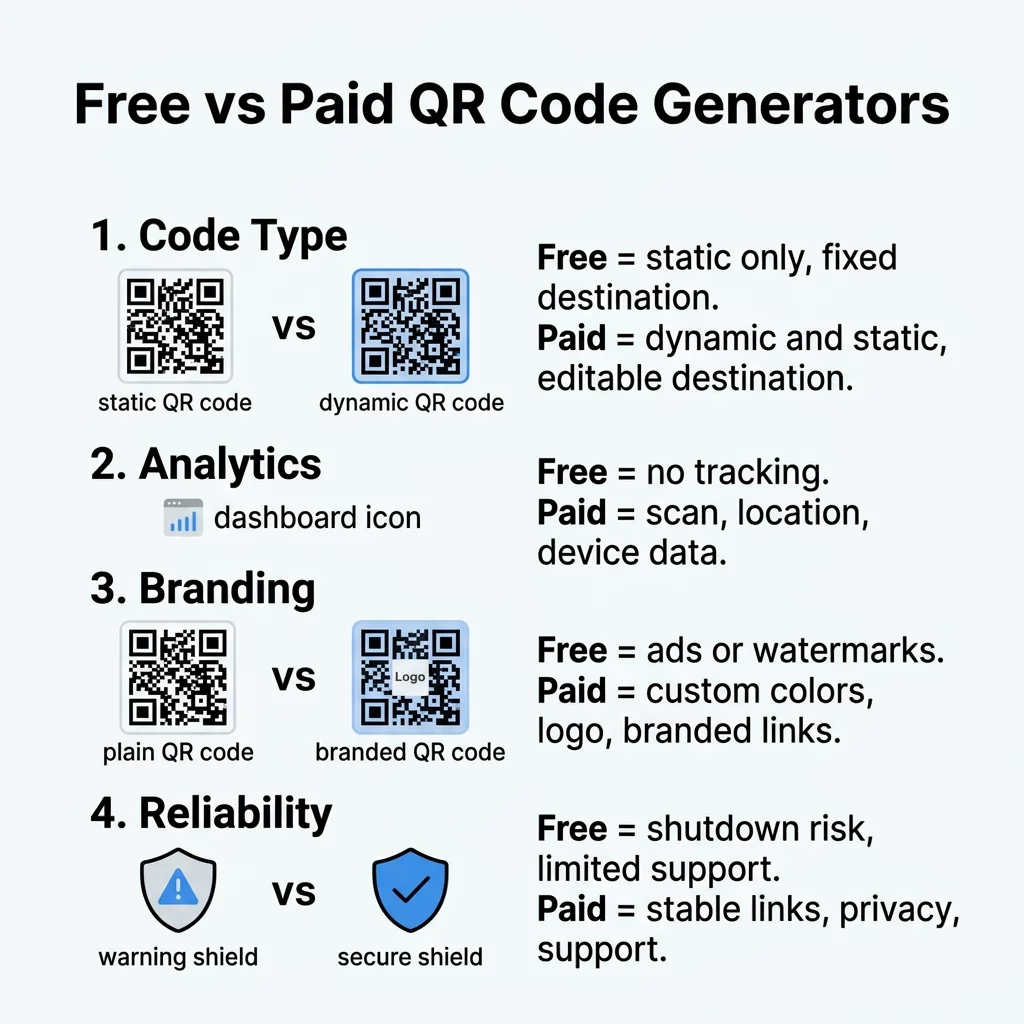
The core distinction between free and paid tools lies in how data is stored. Most free platforms provide static QR codes, which encode destination data directly into the black-and-white module pattern. Because the information is hardcoded into the graphic, it is permanent. If the destination URL breaks, changes, or requires an update, the printed code stops working, forcing an expensive reprint of physical materials. Adding extensive data to a static code also increases pattern density, which can make the code slower or harder for mobile cameras to read.
Paid subscriptions center on dynamic QR codes, which function as an editable bridge between physical collateral and digital destinations. A dynamic code embeds a lightweight short URL that redirects the user to your intended destination on the provider’s server. When you compare static vs dynamic QR codes, the primary benefit of dynamic architecture is that you can edit a QR code destination at any time through an administrative dashboard without changing the printed image. For businesses managing ongoing promotions, this flexibility prevents costly mistakes. While a basic free QR code generator is useful for fixed data, dynamic codes provide the infrastructure needed for active commercial campaigns.
Measuring Campaign Performance with Scan Analytics
Print collateral has historically suffered from an attribution blind spot. Marketers distribute flyers, packaging, or direct mail without knowing whether prospects take action. Free QR code generators route scanners straight to the target address, bypassing any tracking mechanism. This lack of visibility makes calculating campaign return on investment impossible.
Paid platforms solve this problem by incorporating comprehensive tracking QR code scans into dynamic redirects. Every time a customer scans a dynamic code, the platform records actionable data points before delivering the content:
- Total scan volume to measure broad campaign reach over time.
- Unique scan counts to evaluate individual audience interest.
- Geographic distribution down to the country and city level to identify top-performing markets.
- Operating system and device types to help optimize mobile landing pages.
- Timestamps to determine peak interaction hours and days.
Monitor Your Campaign in Real-Time Want to see exactly where and when your customers are scanning your materials? Use the Dynamic QR Code Generator to create trackable codes and access a full performance dashboard today.
Protecting Brand Identity and Visual Customization
Standard black-and-white QR codes often look utilitarian on polished marketing materials and can fail to inspire consumer trust. Many free generators introduce third-party logos, watermarks, or even ad screens between the scan and the destination. These interruptions detract from your brand presence and create friction for users.
Professional tools let you build trust by using a dedicated QR code generator with logo to incorporate your brand elements. You can integrate company logos into the center of the code, adjust edge patterns, apply specific color palettes, and frame codes with call-to-action prompts. To maintain scannability, ensure high contrast between foreground patterns and the background, keeping the background light rather than inverted. Codes intended for print should measure at least 0.8 x 0.8 inches so that phone sensors can resolve the data modules quickly.
Evaluating Platform Reliability, Security, and Code Lifespans
Free generators introduce hidden operational risks that can disrupt business continuity. If an unvetted free site goes offline, changes its business model, or removes its redirect service, every printed code associated with that platform becomes useless.

Security is an equally vital factor. Because QR codes mask their destination until scanned, bad actors can exploit unmonitored links for phishing or malicious redirects. Following secure QR code best practices requires using platforms that support HTTPS encryption, password protection for sensitive files, and link health monitoring.
Furthermore, many providers lure users into trial traps. In evaluations of the best QR code generators and tools like QRCode Monkey, users often report generating what they believed were free dynamic codes, only to find the links deactivated behind a paywall once marketing materials were already printed. Choosing an established provider with transparent pricing ensures your assets remain active throughout their entire lifecycle.
Comparing Free and Paid Generator Features
Before deciding on a plan, evaluate how free tools compare with professional tiers across core functional categories.
| Feature | Free Static Generators | Paid Dynamic Subscriptions |
|---|---|---|
| Content Editability | Permanent data hardcoded into pattern | Destination editable anytime via dashboard |
| Scan Analytics | No tracking or scan data recorded | Scan volume, location, device, and time metrics |
| Design Customization | Standard patterns and limited colors | Custom brand logos, shapes, colors, and frames |
| Export File Types | Standard raster image files (PNG) | Scalable vector files (SVG, EPS, PDF) for print |
| Code Lifespan | Permanent for static; trial limits for dynamic | Guaranteed uptime backed by paid account tiers |
| Data Protection | Basic open redirection | HTTPS encryption and optional access passwords |
Selecting the Right Tool for Your Specific Use Case
Neither solution is universally right for every scenario. Reviewing your technical needs helps you compare QR code platforms effectively and invest where it matters most.
Scenarios Suited for Free Static Generators
- Sharing fixed credentials such as internal office Wi-Fi network passwords.
- Printing personal stationery, wedding invitations, or single-day event materials.
- Displaying permanent plain text or fixed contact cards that will never change.
- Publishing static documentation pointing to permanent URLs that will remain stable indefinitely.
Scenarios Requiring Paid Dynamic Features
- Updating seasonal restaurant menus without incurring reprint costs, an approach that saved Marriott Aruba $150,000.
- Running multi-channel advertising campaigns that require conversion attribution and performance data.
- Managing packaging and retail merchandise where destination links need ongoing updates.
- Directing app users to either iOS or Android marketplaces using smart device detection.
- Exploring advanced QR code features like password protection and file sharing for corporate documentation.
Making the Right Investment for Your Business
Free static QR codes are dependable for simple, unchanging information where data collection is irrelevant. However, running commercial marketing campaigns without dynamic links leaves your physical assets vulnerable to broken URLs and robs your team of valuable customer insights.
Investing in a professional dynamic platform protects your printed collateral from obsolescence, safeguards user trust through branded designs, and provides the scan data required to optimize your marketing spend. Evaluate your campaign duration, print volume, and tracking needs to choose the tier that supports your long-term operational goals.
Frequently Asked Questions
Static QR codes encode data permanently into their visual matrix and never expire. However, dynamic codes generated through free trials will stop working once the trial period ends or the scan limit is reached, which deactivates the printed link.
You can only edit the destination URL if you generated a dynamic QR code. Static QR codes encode the raw destination directly into the image pattern, meaning any change requires generating and printing an entirely new code.
Free generators produce static codes that send scanning devices directly to the end destination without passing through an intermediate routing system. Dynamic codes route through a management server that logs timestamps, device operating systems, and geographic locations before redirecting the user.