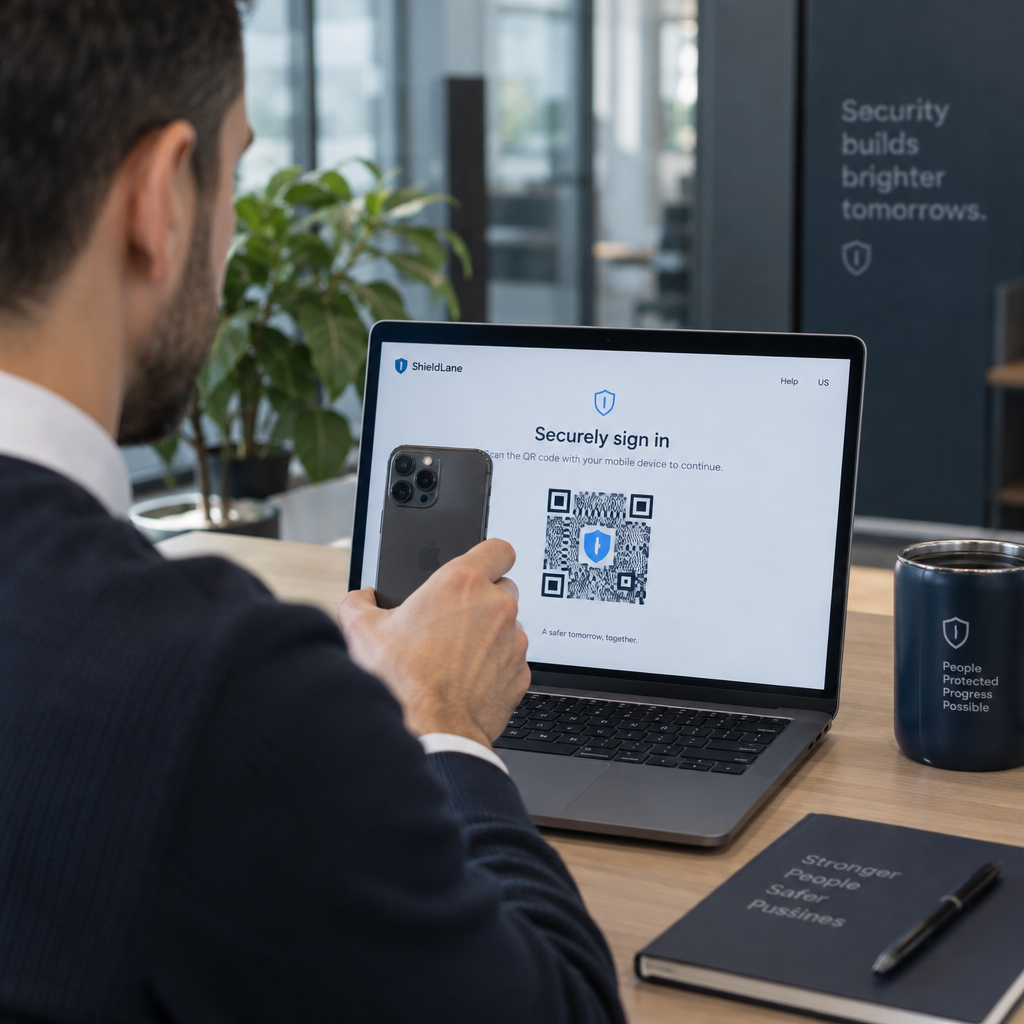
Are your new hires struggling to find training manuals and HR forms during their first week? This friction often leads to slower ramp-up times and administrative bottlenecks for your HR team. Implementing QR codes across various industries can provide instant access to essential onboarding resources and streamline the new-hire experience.
Retail and Rapid Staff Training
Retail environments often face high employee turnover, making rapid onboarding a significant competitive advantage. According to QR code industry scanning trends, this sector is a leader in adoption because digital codes bridge the gap between physical stores and training resources. By placing codes on breakroom bulletin boards or near POS systems, managers ensure that staff can access training videos and digital handbooks without searching for physical copies.
Retailers benefit specifically from:
- Linking to role-specific training videos for cashiers and floor staff.
- Providing instant access to digital HR forms and policy acknowledgments.
- Displaying codes in common areas that link to current product catalogs and promotional details.
Healthcare Protocols and Compliance
In the healthcare sector, 72% of organizations are either using or planning to use QR codes to manage complex compliance requirements. Hospitals integrate these codes into employee badges and medical equipment to provide instant access to digital libraries of step-by-step procedure guides. This ensures that staff can review emergency protocols and hygiene standards in real-time, which is critical for patient safety.
Because these codes often handle sensitive information, following secure QR code generation is vital. Boston Children’s Hospital has used this technology to facilitate telehealth visits and provide employees with procedure guides. Using secure generators allows healthcare providers to add password protection or encryption to sensitive internal documents.
Manufacturing Safety and Equipment Manuals
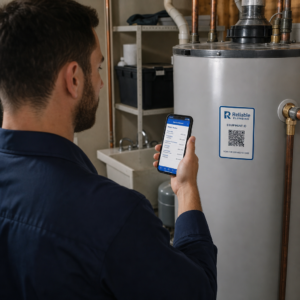
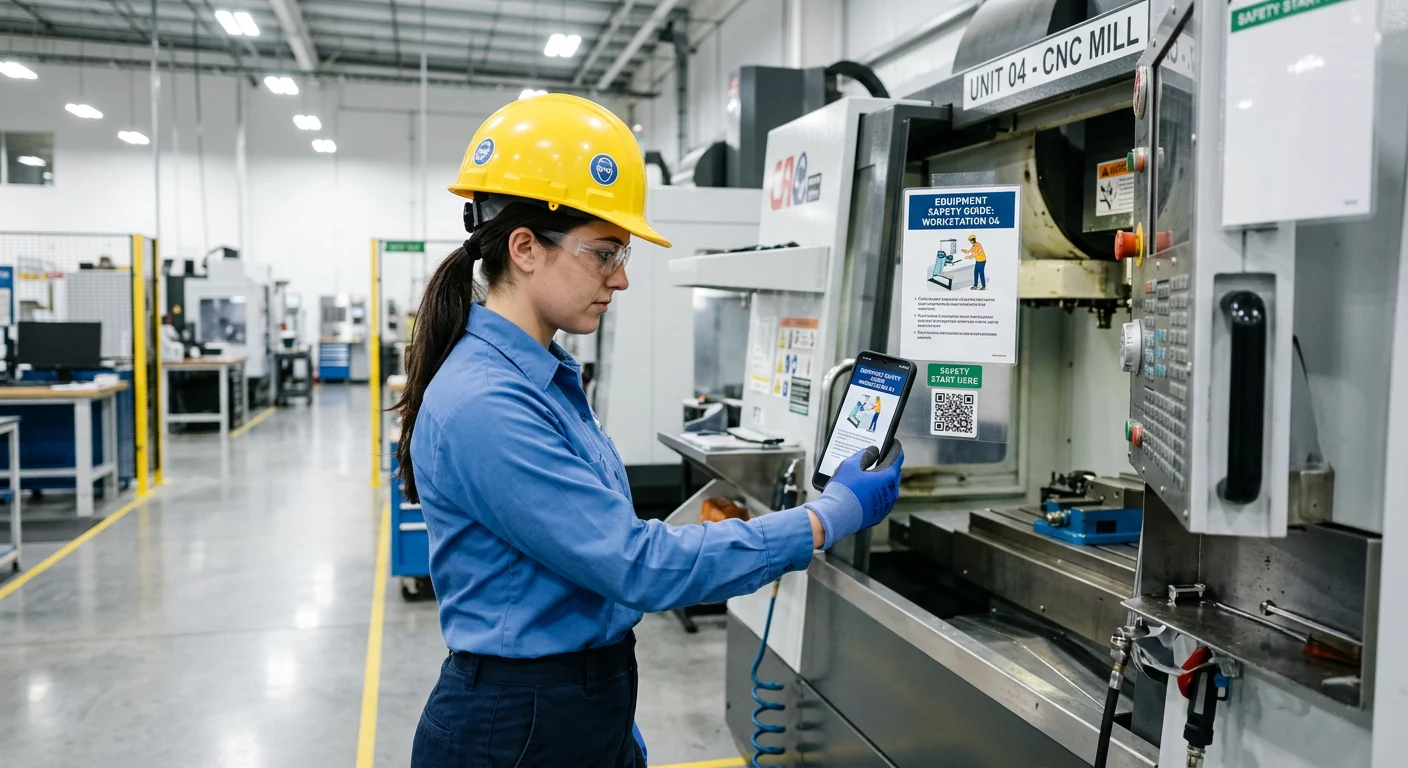
Manufacturing firms place codes directly on machinery to provide instant access to operation manuals and safety guidelines. For example, Coca-Cola embeds Standard Operating Procedures (SOPs) on equipment to provide real-time training. This “just-in-time” learning helps new hires master complex machinery while maintaining strict safety standards.
Beyond machinery, companies like Sargon equip workers with QR code stickers on their hard hats. These link directly to the company’s Injury and Illness Prevention Program and Safety Data Sheets (MSDS). This ensures that every worker has essential safety information literally on their person at all times.
Digitize your documentation Use a PDF QR code generator to host your training manuals and safety guides so new hires can view them on any mobile device.
Hospitality Standards and SOPs
The hospitality industry uses QR codes in kitchens and service stations to replace outdated and unhygienic training binders. For instance, a restaurant chain in Sydney placed codes near espresso machines to give baristas quick access to coffee-making technique videos. This ensures consistency across different locations and shifts.
Common applications in hospitality include:
- Food safety checklists and cleaning schedules accessible in the kitchen.
- Digital guides on table settings and wine pairings for waitstaff.
- Bulletins that link to the latest shift schedules or seasonal menu changes.
Logistics and Mobile Resource Access
Logistics companies use these tools to support mobile workforces like drivers and warehouse pickers. Around 43% of businesses in this sector use QR codes to enhance tracking and training workflows. Drivers can scan codes located in truck cabs to view route guides, vehicle inspection checklists, and emergency contact information instantly.
Because these environments can be fast-paced, logistics firms often use dynamic codes to update route information or safety protocols without needing to replace the physical stickers in every vehicle. This significantly reduces printing costs and administrative overhead.
Financial Services and Identity Verification
Banks and financial firms are rapidly adopting this technology, with plans for usage growing from 12% to 60% in recent years. These organizations utilize QR codes in identity and access management to help new hires set up secure accounts, upload documents, and complete ID verification. This digital-first approach reduces the administrative burden on HR departments while maintaining high security standards.
Education and Campus Orientation
Educational institutions place QR codes around campus during orientation to help new staff and students navigate their surroundings. These codes often link to interactive campus maps, administrative forms, and policy documents. In specialized environments like nursing programs, students use codes on mannequin wristbands to practice medication schedules, creating an interactive and safe learning environment.
Simplify data collection Create a Google Form QR code generator to collect employee signatures and policy acknowledgments without the paperwork.
Best Practices for Implementation
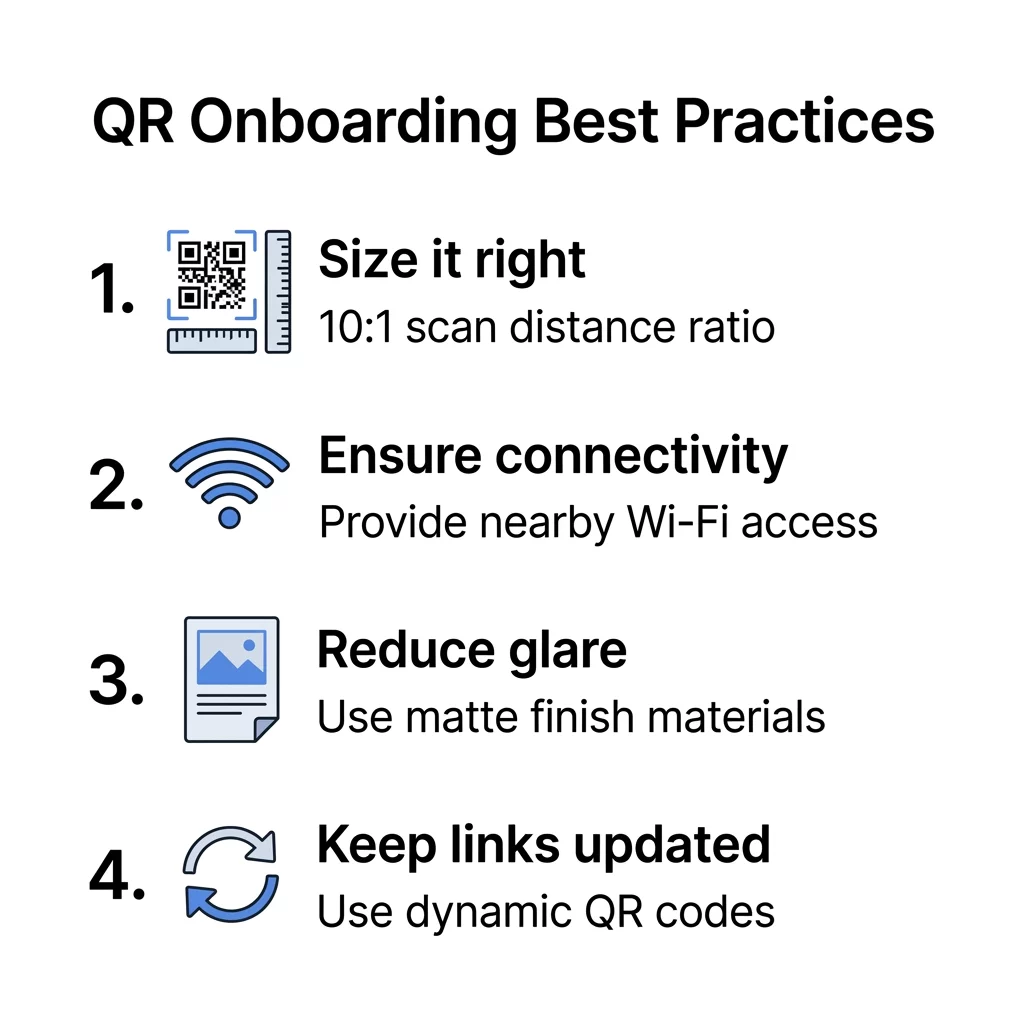
To ensure your onboarding materials are accessible and effective, follow QR code usability best practices regarding design and placement. High-contrast designs, such as dark patterns on light backgrounds, are essential for reliable scanning across various mobile devices.
| Feature | Guideline |
|---|---|
| Sizing | Follow a 10:1 ratio (e.g., 1 inch wide for every 10 inches of scanning distance). |
| Connectivity | Provide a WiFi QR code nearby to ensure users can access the content. |
| Durability | Use matte finishes on printed materials to reduce glare from overhead lighting. |
| Data Integrity | Use dynamic codes to update links without reprinting physical materials. |
For more technical details on ensuring your codes work in every environment, refer to best practices for QR code readability.
FAQ
Yes, by using dynamic QR codes, you can access real-time analytics that show scan frequency, location, and device type. This data helps HR managers identify which departments are completing their training and where engagement gaps may exist.
If you use dynamic QR codes, you can update the destination link or the uploaded file without reprinting the physical code. This is particularly useful in industries like manufacturing or healthcare where safety protocols change frequently.
You should choose a generator that offers password protection and encryption features. Directing users to a secure Google Drive QR code generator with specific permission settings allows you to maintain control over who can view or download sensitive documents.
Streamline Your Onboarding Today
Transitioning to QR-based onboarding reduces administrative costs and improves new-hire engagement by providing instant access to digital resources. By empowering your employees to learn at their own pace in the flow of work, you decrease ramp-up time and improve overall operational efficiency.
Explore our QR code management software to start creating trackable, editable, and secure onboarding tools for your organization today.