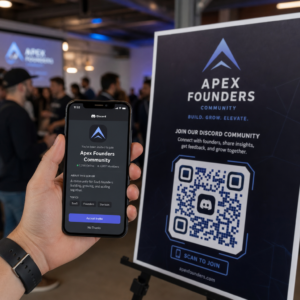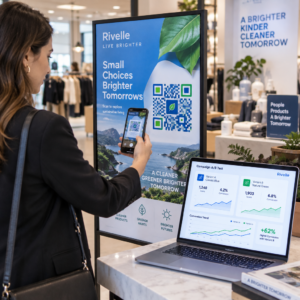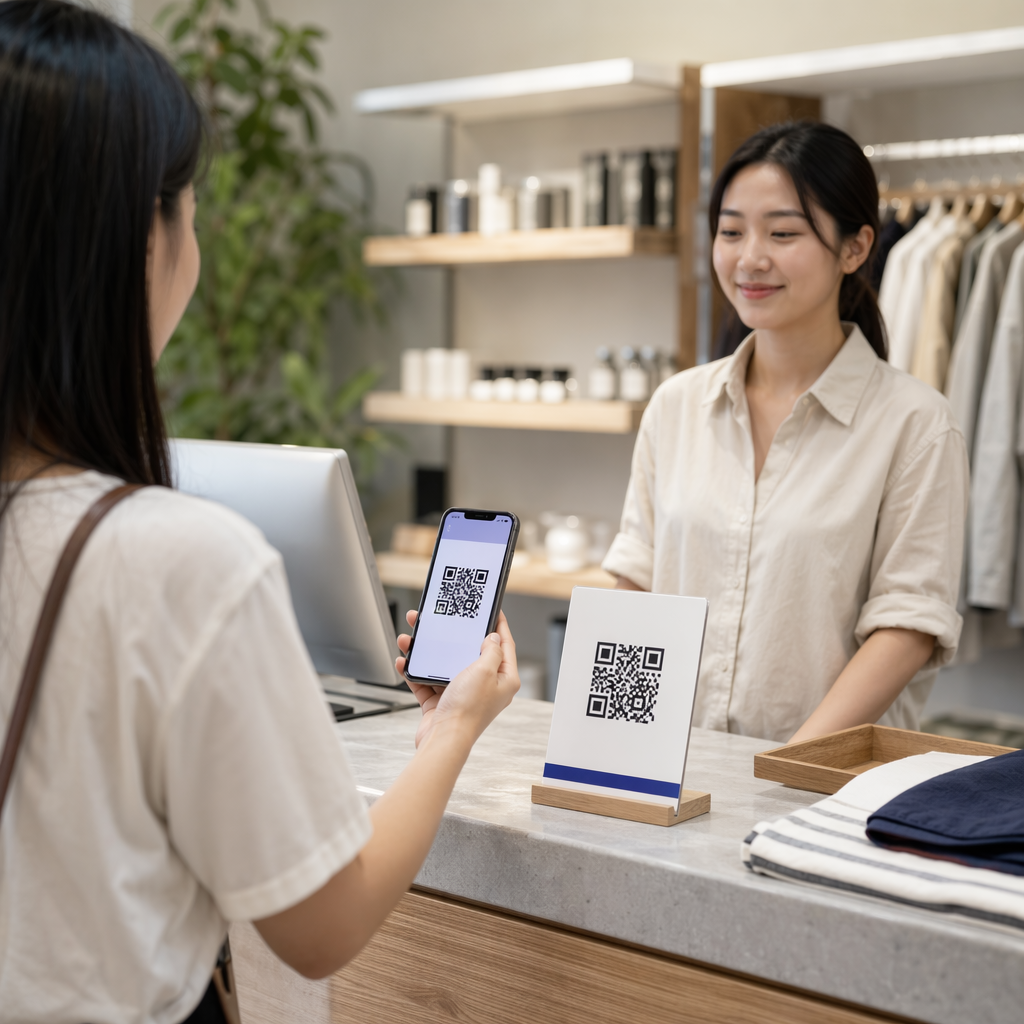
Are your customers frustrated by slow checkout lines and the friction of manual card entry? Transaction delays at the point of sale often lead to abandoned purchases and decreased customer satisfaction. Implementing payment QR codes provides a contactless, efficient solution that streamlines payments across physical storefronts, digital invoices, and mobile platforms.
Understanding How QR Codes Facilitate Transactions
A payment QR code serves as a digital bridge between a customer’s mobile device and a payment processor. When a customer scans the code, their smartphone decodes the pattern into a specific URL or payment command, instantly opening a secure checkout page or mobile wallet. This technology supports a wide range of methods, including mobile wallets, bank apps, and even cryptocurrencies.
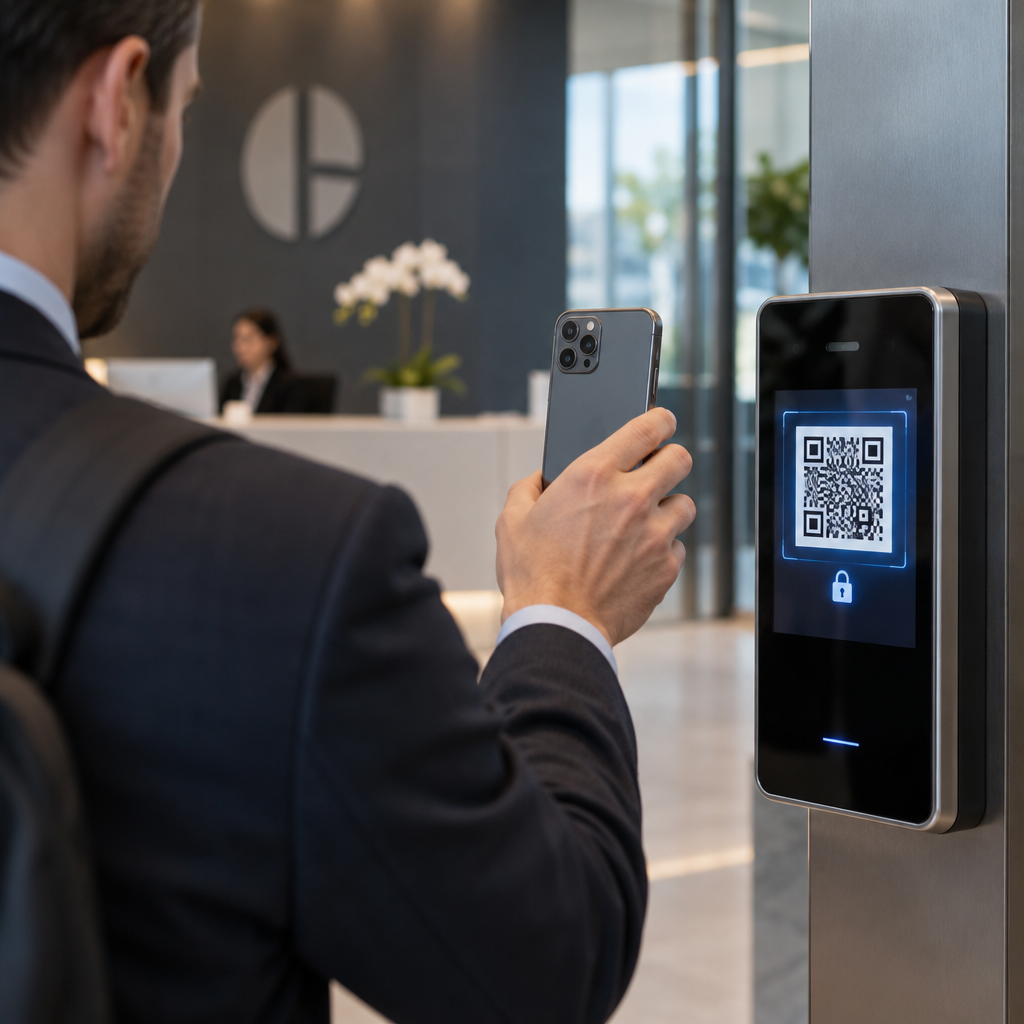
According to EMVCo standards, there are two primary ways these transactions occur. In merchant-presented mode, the business displays a QR code – on a screen, printed sign, or invoice – for the customer to scan. Conversely, in consumer-presented mode, the customer displays a code from their own mobile app for the merchant to scan using a point-of-sale system. Both methods eliminate the need for physical contact and reduce the hardware requirements typically associated with traditional credit card terminals.
How to Generate a Payment QR Code
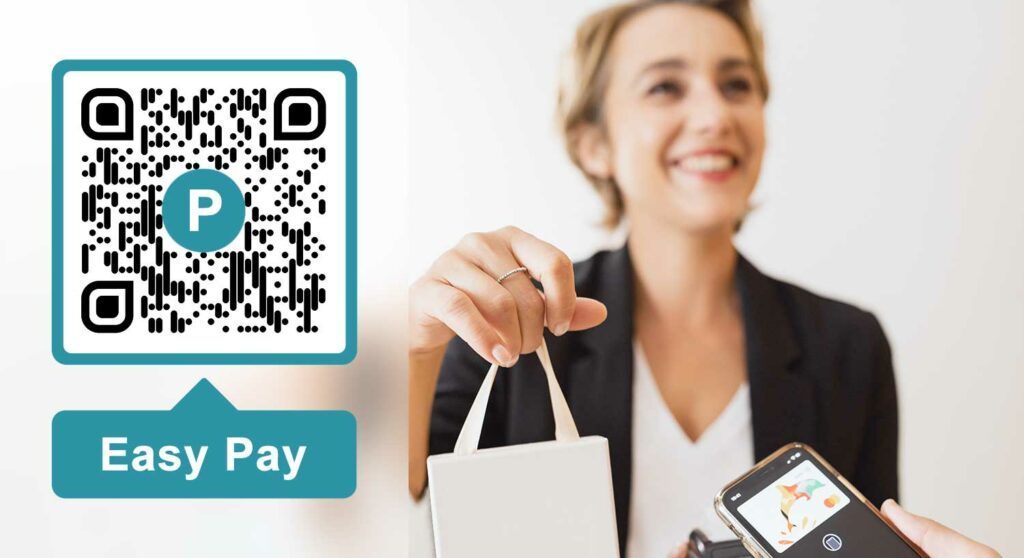
Creating a custom code for your business is a straightforward process that requires no specialized technical skills. By using a free QR code generator, you can transform a payment link from your preferred processor into a scannable asset.
- Generate a unique checkout or payment link through your provider, such as a PayPal.me link or a Stripe checkout URL.
- Paste this URL into the generator tool and select the payment or link category.
- Customize the design by adding your business logo and selecting brand colors to build customer trust.
- Download the final image in a high-resolution format like SVG or PDF to ensure it remains clear when printed.
- Test the code with multiple devices to confirm it directs users to the correct payment portal.
Start Accepting Payments Instantly Ready to simplify your checkout process? Use our PayPal QR code generator to create a custom, branded payment code for your business in minutes.
Static vs. Dynamic QR Codes: Choosing the Right Format
When setting up your system, you must decide between static and dynamic formats. Static QR codes encode the payment information directly into the pattern, meaning the destination cannot be changed once the code is printed. If your payment URL changes or you switch processors, you must reprint all your materials.
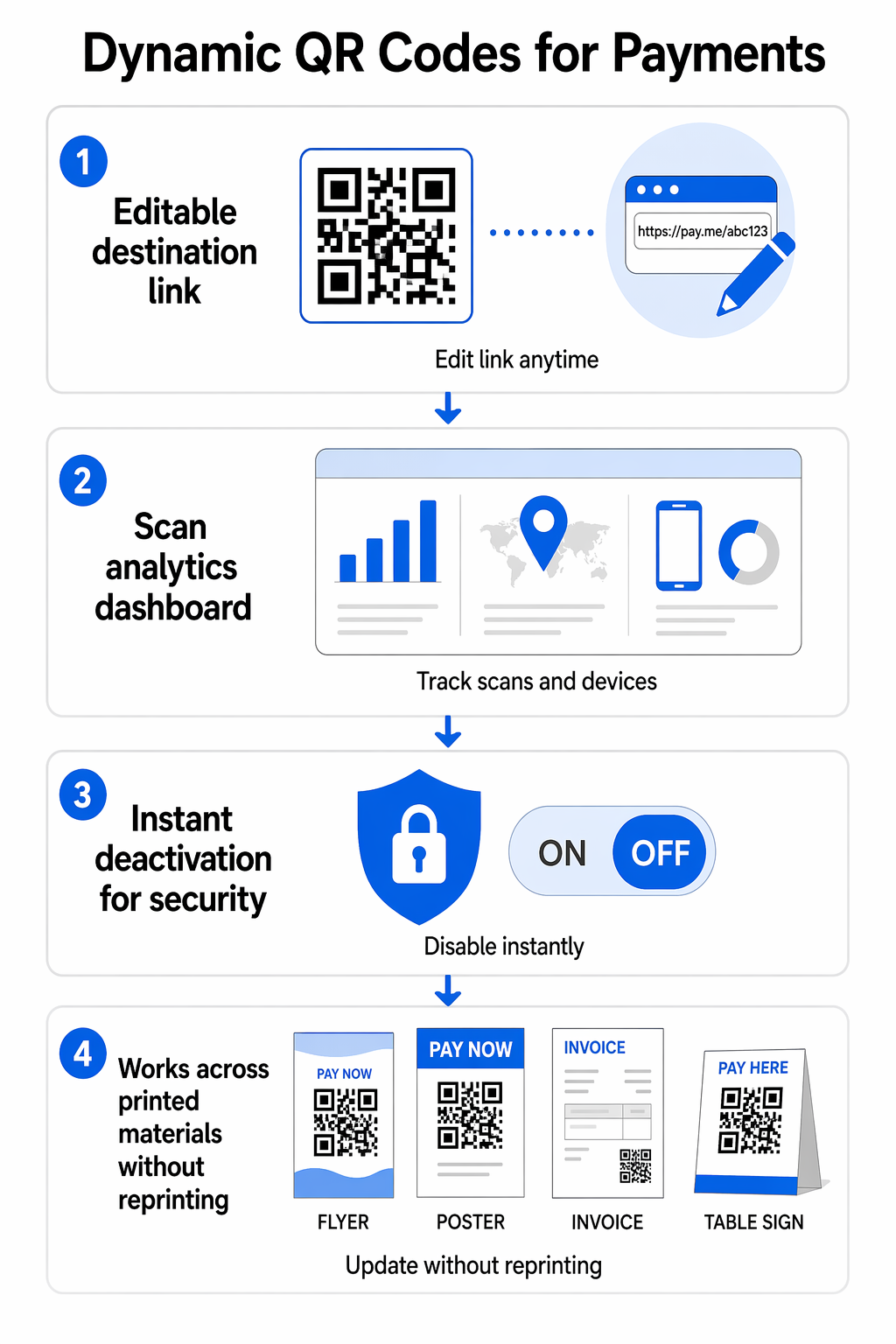
Dynamic QR codes are significantly more versatile for growing businesses. These codes use a redirection URL stored on a server, allowing you to update the destination link at any time without changing the physical QR code. Beyond flexibility, dynamic codes provide essential scan analytics and tracking, such as scan counts, geographic locations, and device types. This data allows you to monitor which storefront locations or marketing materials are driving the most revenue.
Enhancing Security and PCI-DSS Compliance
Security is a primary concern for any digital transaction. To protect cardholder data, businesses should follow the QR code payment PCI-DSS compliance guide, which outlines requirements for securing networks and encrypting data transmission. Using a payment processor that offers tokenization ensures that sensitive card details are never stored directly on your systems.
Dynamic QR codes also offer superior security features compared to static versions. You can set expiration dates for specific codes – such as those on an invoice – to prevent unauthorized use after a bill is paid. Furthermore, if you detect suspicious activity, dynamic codes can be deactivated instantly from a central dashboard. To protect your customers, it is also vital to mitigate QR code risks by regularly inspecting physical codes for tampering or unauthorized stickers.
Accessibility and Placement Guidelines
For a payment system to be effective, it must be usable by all customers regardless of their physical abilities or lighting conditions. Following QR code payment accessibility best practices ensures that your system is inclusive.
- Ensure a high contrast ratio between the QR code and its background; darker patterns on light backgrounds are the easiest for cameras to read.
- Include clear text labels, such as “Scan to Pay,” to guide users who may have visual impairments or are unfamiliar with the technology.
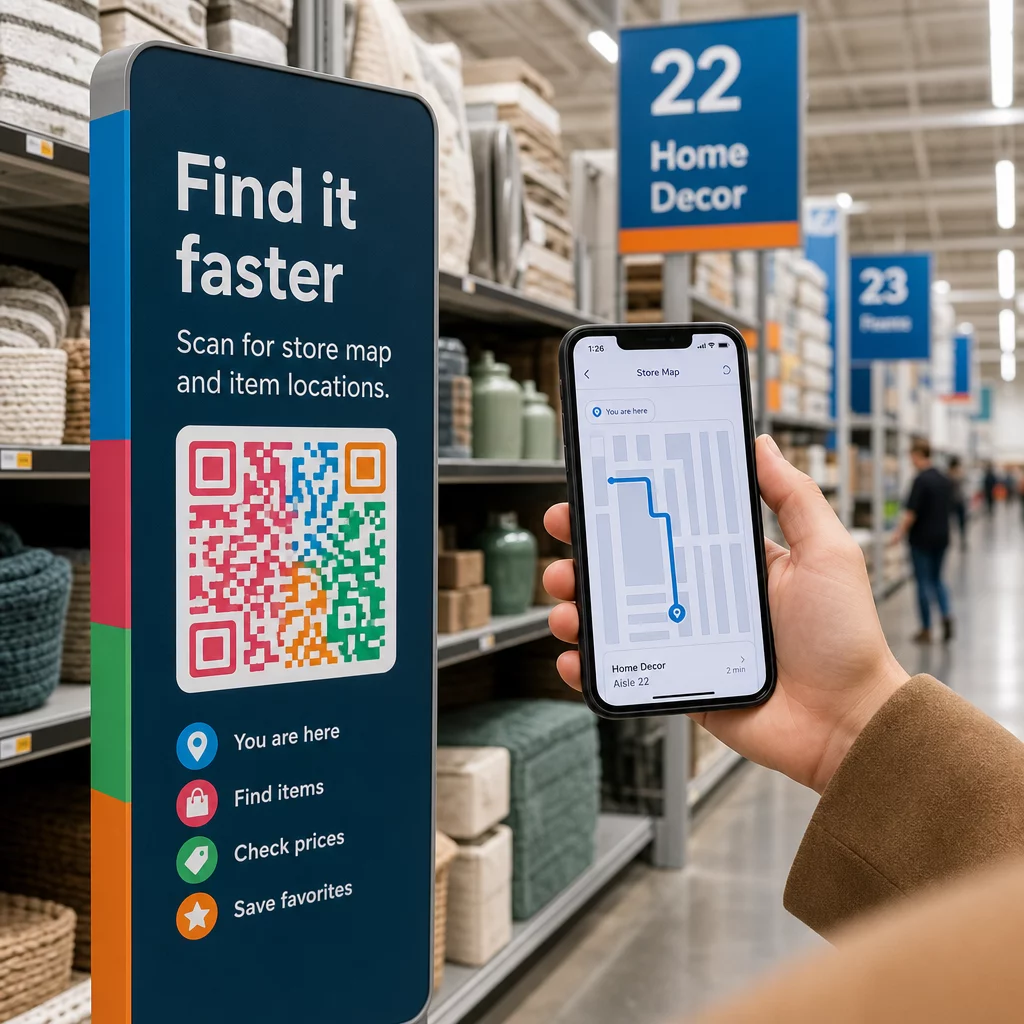
- Print codes at a minimum size of 2 x 2 inches for storefront displays to ensure they can be scanned from a comfortable distance.
- Position wall-mounted codes between 15 and 48 inches from the ground so they are reachable for wheelchair users.
- Place codes in well-lit areas to prevent shadows or glare from interfering with the scanner’s ability to read the pattern.
Benefits for Retailers and Service Providers
Integrating these codes into your workflow can significantly simplify retail payments by reducing wait times and overhead costs. Because the customer handles the data entry on their own device, the risk of employee error during the checkout process is minimized. This is particularly useful for small businesses or mobile vendors who may not want to invest in expensive, bulky card readers.
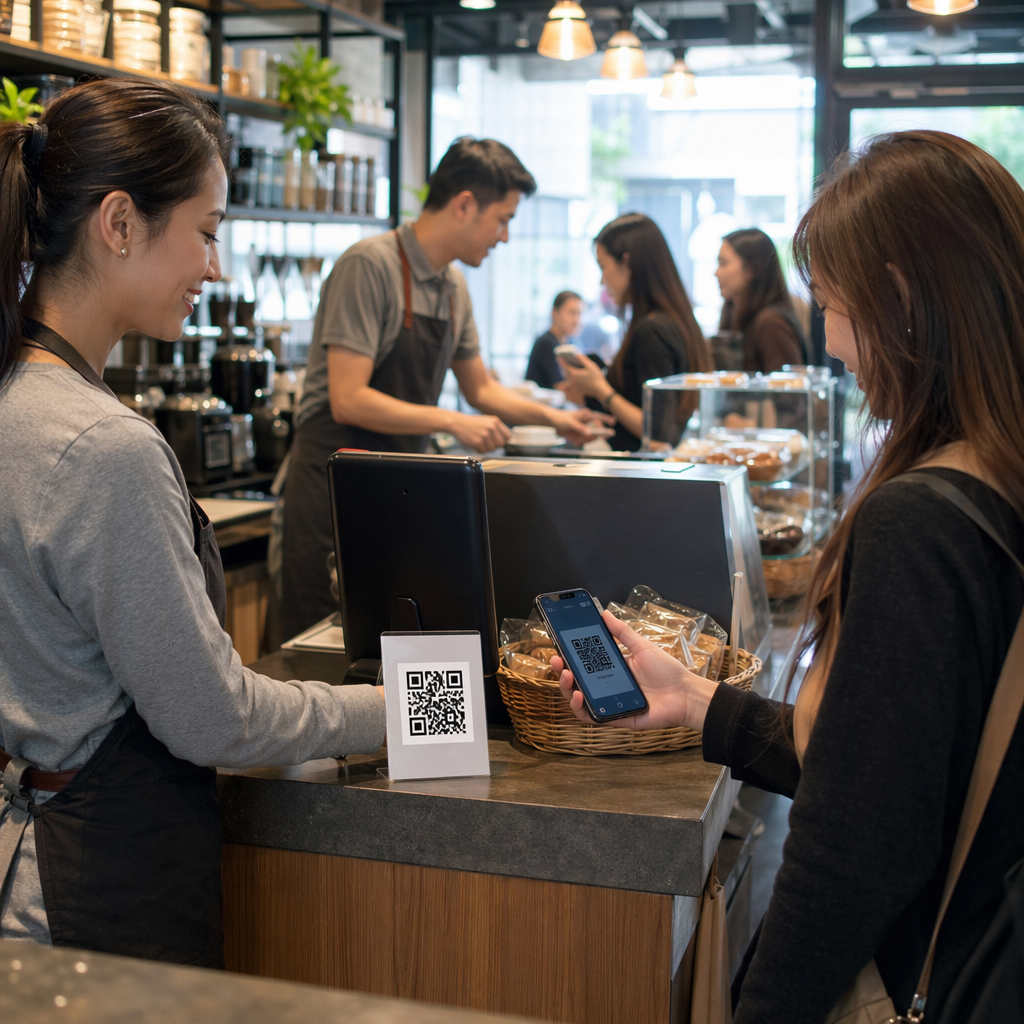
In addition to storefront use, QR codes are highly effective for professional services and peer-to-peer transactions. Many businesses use QR codes for peer payments to facilitate quick transfers for services like freelancing or consulting. By placing a QR code on a digital or printed invoice, you remove the barriers to payment, often resulting in faster settlement of accounts.
Frequently Asked Questions
Payment QR codes are highly versatile and can support mobile wallets like Apple Pay and Google Pay, traditional bank apps, retailer-specific apps, and even various cryptocurrencies.
No, most modern smartphones have a scanner built directly into the native camera app. Users simply point their camera at the code, and a notification will appear to open the payment link.
Yes, if you use a dynamic QR code generator, you can access a dashboard that shows real-time analytics, including the number of scans and the locations where the codes were used.
Adopting QR code payments allows your business to meet the modern consumer’s demand for speed and safety. By choosing the right tools and following security best practices, you can create a seamless checkout experience that encourages repeat business. Start optimizing your transaction flow today by generating a custom link QR code for your most frequent payment destinations.