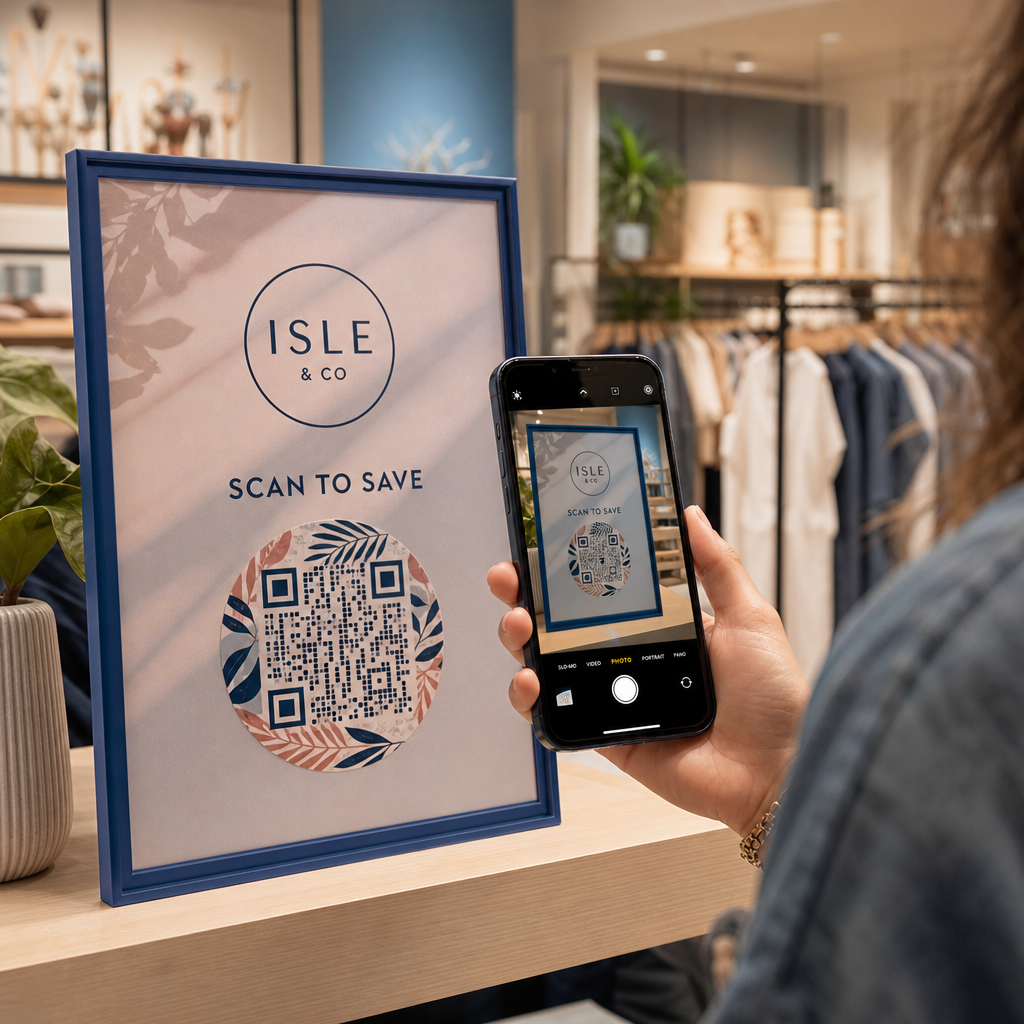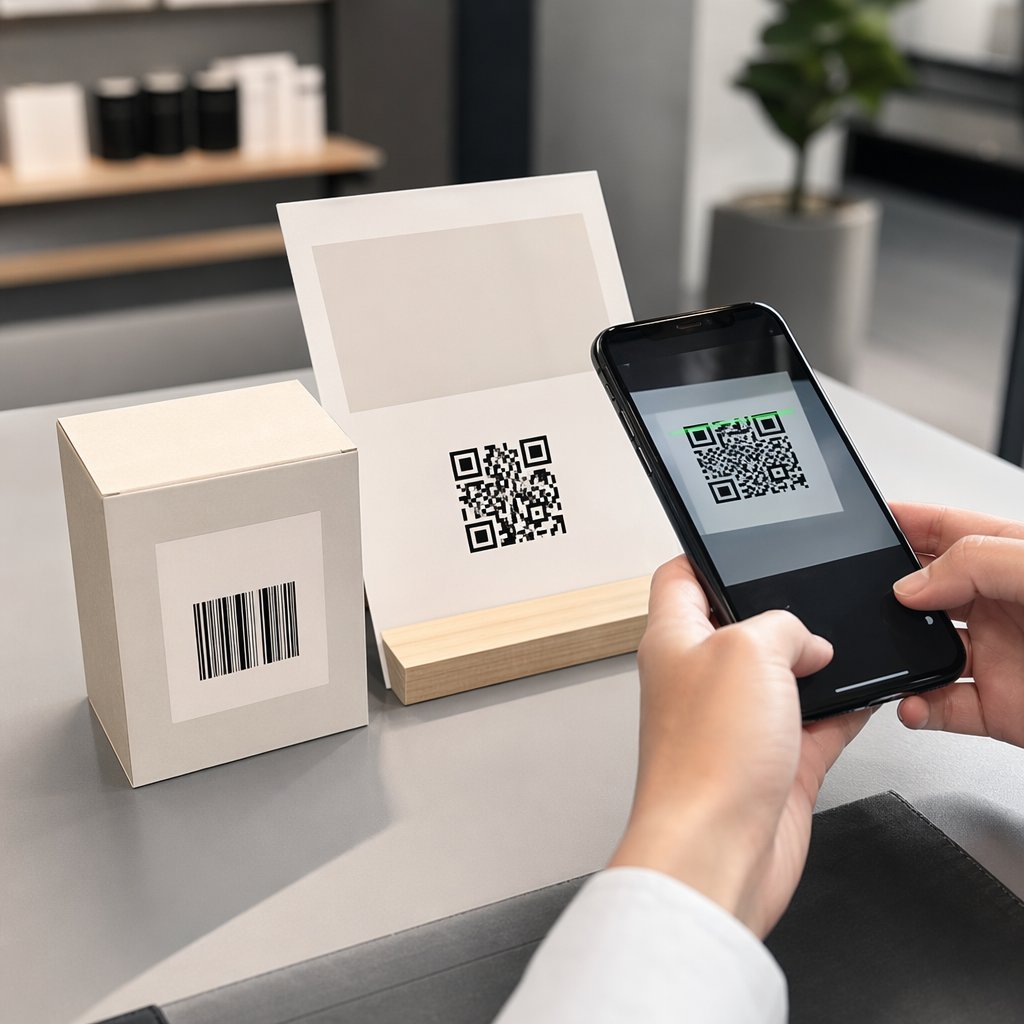
Are you struggling to decide between the classic barcode and the modern QR code for your business operations? Relying on the wrong format can lead to scanning errors, limited data sharing, and a disconnect with your mobile-savvy customers. This guide clarifies the technical differences and practical applications of both formats to help you choose the right tool.
Understanding the Foundation of Barcode Technology
A barcode is a one-dimensional (1D) pattern consisting of parallel black lines and white spaces of varying widths. These “linear” barcodes are primarily used to identify items in a database rather than storing deep information themselves. When you see a barcode on a cereal box, it represents a simple string of numbers that a retail system uses to look up the product name and price.
The technology relies on light reflection to interpret data. To get an accurate reading, you must understand how barcode scanners work, as they typically project a red light across the lines. The dark bars absorb the light while the white spaces reflect it back to the sensor. Because the data is only encoded horizontally, the scanner must be aligned perfectly with the code to process the information. While this technology has been a retail standard since the 1970s, many businesses still wonder if barcodes are dead or if they remain relevant for modern inventory needs.
The Evolution of the 2D Matrix QR Code
Quick Response (QR) codes represent the next generation of data storage. Unlike linear barcodes, QR codes are two-dimensional (2D), meaning they encode data both horizontally and vertically within a square grid. This matrix structure allows them to hold significantly more information in a much smaller physical footprint. While a standard barcode might only store 20 characters, a QR code can store thousands of characters, including URLs, contact information, and even small images.
The complex internal structure of a QR code includes specific markers, such as the three large squares in the corners, which help devices find the correct orientation. This allows you to scan the code from any angle – even upside down – making it much more user-friendly for consumers using smartphones. If you want to dive deeper into the technical specifications, you can understand QR code data limits to see how different versions affect storage capacity.
Key Technical Differences Between Formats
When evaluating these two technologies, the choice often comes down to the volume of data you need to communicate and the environment in which the code will be used. Linear barcodes are excellent for high-speed, repetitive tasks where the scanner is fixed, such as at a grocery store checkout. QR codes, however, offer a level of resilience and versatility that linear codes cannot match.
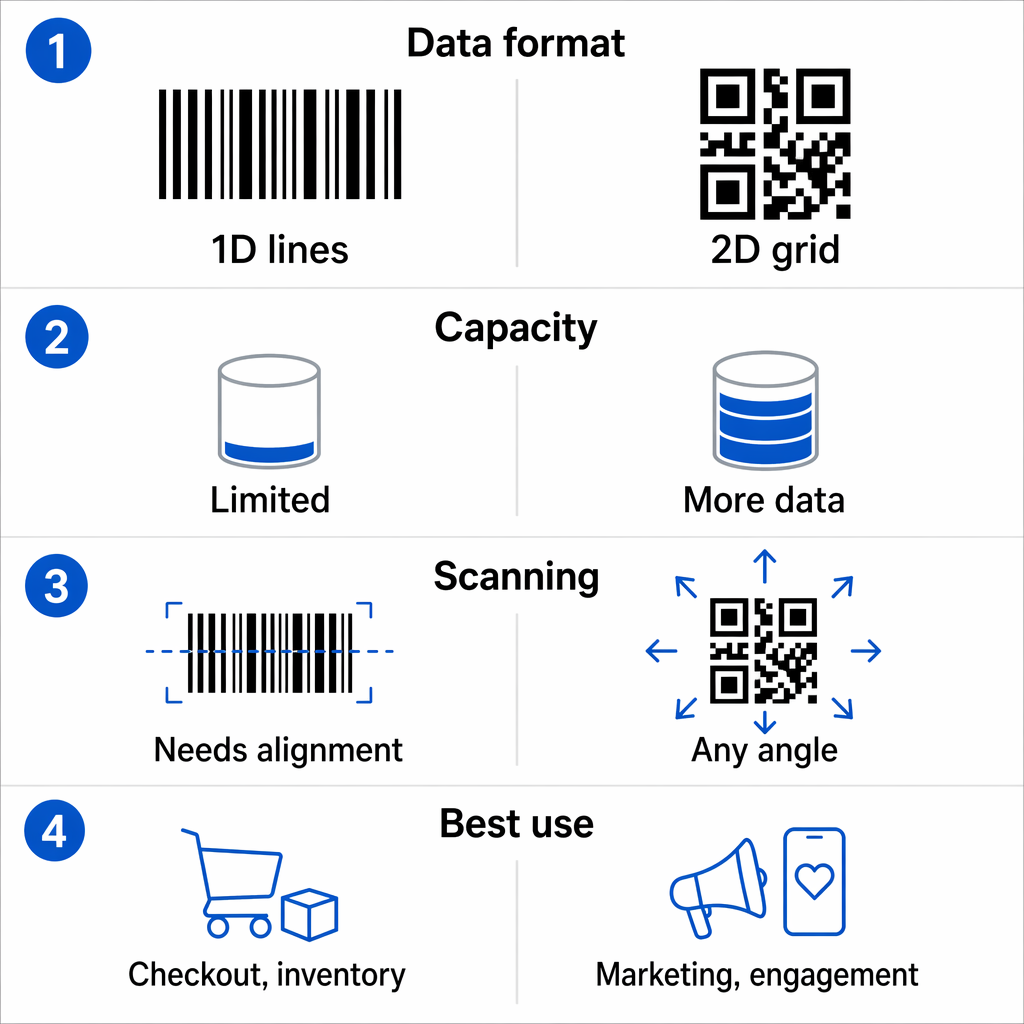
| Feature | Barcode (1D) | QR Code (2D) |
|---|---|---|
| Data Dimension | One-dimensional (Horizontal) | Two-dimensional (Horizontal & Vertical) |
| Data Capacity | Limited (approx. 20-25 characters) | High (up to 7,089 numeric characters) |
| Scanning Angle | Precise horizontal alignment needed | 360-degree scanning from any angle |
| Error Correction | None (must be fully intact) | High (up to 30% damage recovery) |
| Device Support | Dedicated laser scanners | Smartphones and 2D imagers |
One of the most significant technical advantages of the QR code is its built-in error correction. Think of the scanner like a high-speed reader that can piece together a story even if some pages are missing. Because the data is duplicated within the grid, a QR code can remain scannable even if up to 30% of it is obscured by dirt or physical damage. Standard barcodes do not have this feature; if a single line is smudged or scratched, the entire code usually becomes unreadable.
Use Cases for Inventory and Retail Operations
In the world of logistics, barcodes remain the dominant force for tracking goods through the supply chain. They are highly efficient for warehouse tasks such as receiving shipments, picking orders, and performing stock checks. Because barcode systems are deeply integrated into existing warehouse management software, they provide a cost-effective way to keep inventory records accurate without needing complex data storage at the item level.
However, many modern facilities are beginning to use the online barcode scanner on mobile devices to replace expensive dedicated hardware. This shift is also paving the way for QR codes in specialized inventory situations. For example, if you need to track high-value enterprise assets that require a detailed maintenance history or a link to a digital manual, a QR code is superior because it can point the employee directly to a web-based database or a PDF file.
Driving Consumer Engagement with QR Codes
While barcodes are built for internal efficiency, QR codes are built for customer interaction. Brands frequently use QR codes on product packaging to bridge the gap between physical items and digital experiences. By placing a code on a label, you can provide customers with instant access to ingredient lists, allergy warnings, or instructional videos. This transparency helps build trust and can significantly boost customer engagement by turning a passive product into an interactive gateway.
The accessibility of QR codes is their greatest strength in marketing. Since nearly every modern smartphone can read them through the native camera app, there is no barrier to entry for the consumer. You can easily how to make a barcode for internal use, but for any campaign facing the general public, a QR code is the standard. It allows you to track campaign performance, distribute digital coupons, and even facilitate peer-to-peer payments in a retail setting.
Flexibility Through Dynamic Content and Tracking
A major limitation of traditional barcodes is that they are “static.” Once you print a barcode, the data it represents is permanent. If the product information in your database changes, the barcode itself cannot be updated. This is where the dynamic QR code generator provides a massive advantage for businesses.
Dynamic QR codes allow you to change the destination URL or linked content even after the code has been printed and distributed on thousands of flyers or packages. This flexibility prevents the frustration of “dead links” and allows you to update your marketing message in real-time. Furthermore, dynamic codes provide detailed analytics, showing you exactly where, when, and with what device your customers are scanning. This data is essential for calculating the return on investment for physical marketing materials.
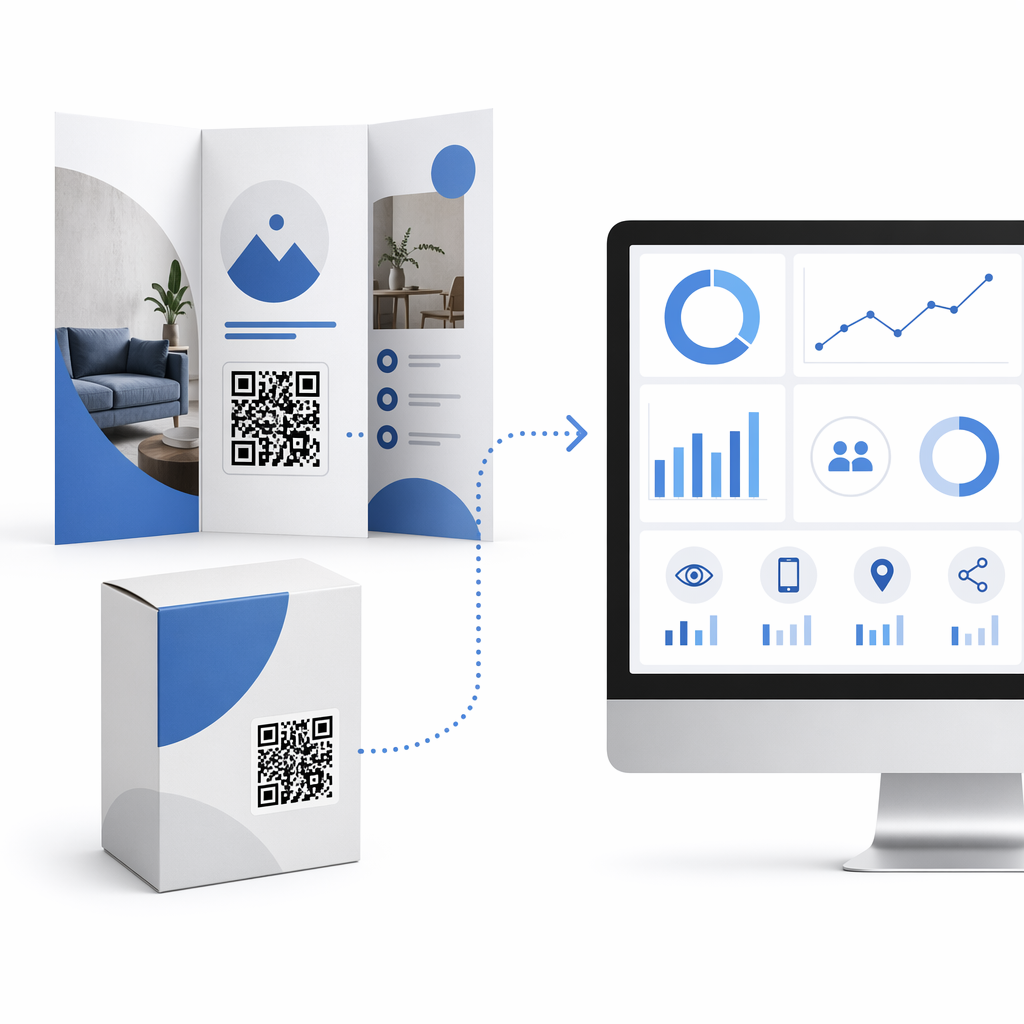
Manage Your Codes with a Centralized Dashboard Want to update your links without reprinting your marketing materials? Use the QR Code Generator to create dynamic codes and track customer engagement in real-time.
Choosing the Right Solution for Your Business
To decide which format is best for your specific needs, you should first identify your primary goal. If you are running a high-volume retail shop and only need to identify products at a checkout counter, the traditional barcode remains the most efficient and cost-effective choice. Its simplicity is an asset in environments where speed and database lookups are the only requirements.
If your goals include engaging with customers, sharing complex data like PDFs or URLs, or tracking the performance of your marketing materials, the QR code is the superior tool. Its high data capacity, error correction, and 360-degree scannability make it the most versatile option for the modern digital landscape. By integrating both formats where they perform best – barcodes for internal logistics and QR codes for customer-facing touchpoints – you can create a more efficient and interactive business model.
Frequently Asked Questions
Yes. A standard barcode is limited to about 20–25 alphanumeric characters, whereas a QR code can store up to 7,089 numeric characters or 4,296 alphanumeric characters, allowing for complex data like URLs and contact files.
No. While barcodes often require dedicated laser scanners, QR codes can be read by almost any modern smartphone camera or a web-based QR code scanner without installing additional software.
Yes, QR codes feature built-in error correction. Depending on the setting used during creation, a QR code can remain fully functional even if up to 30% of the code is dirty, scratched, or obscured.