Is your restaurant struggling with slow table turnover or rising labor costs? This friction often leads to frustrated guests and lost revenue during peak hours. Modernizing your service with a digital ordering workflow helps you automate manual tasks while providing the convenience customers now expect.
Understanding the QR Code Ordering Workflow
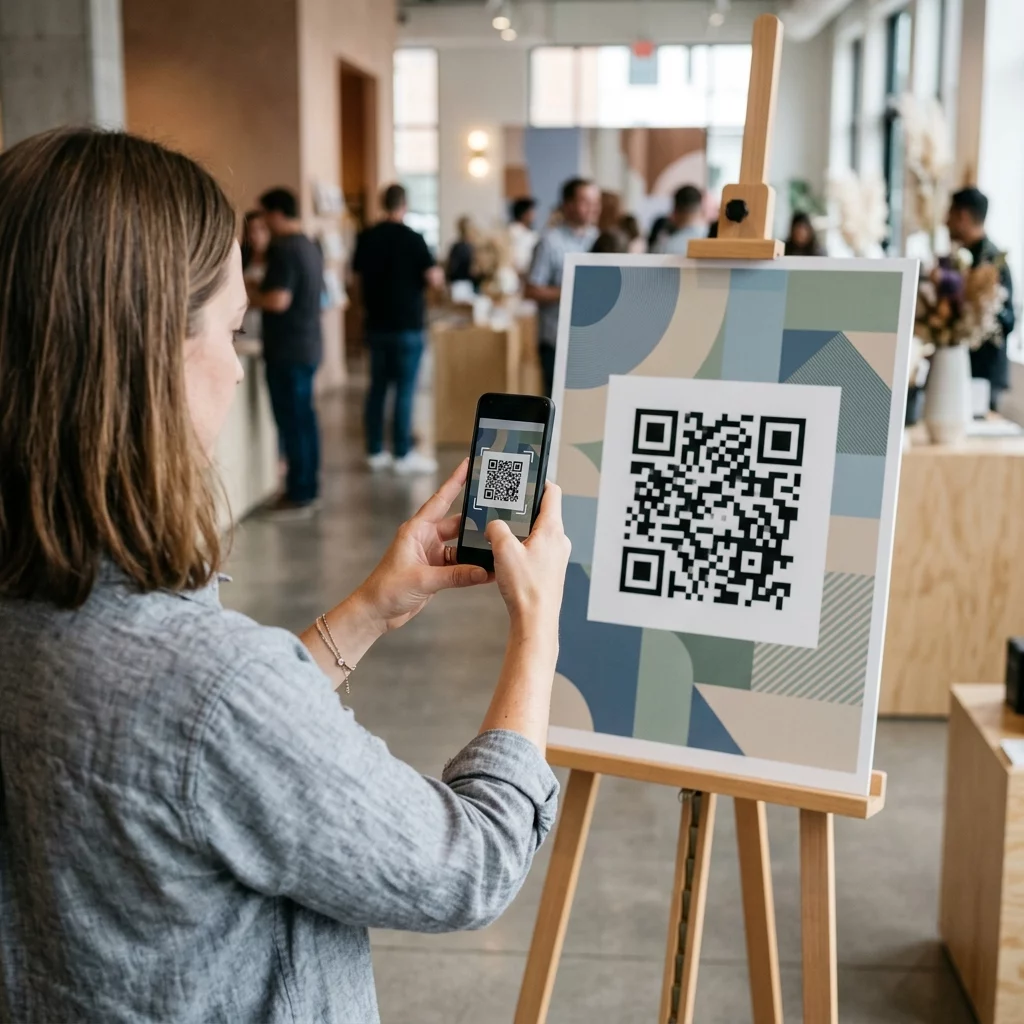
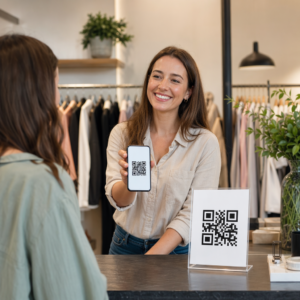
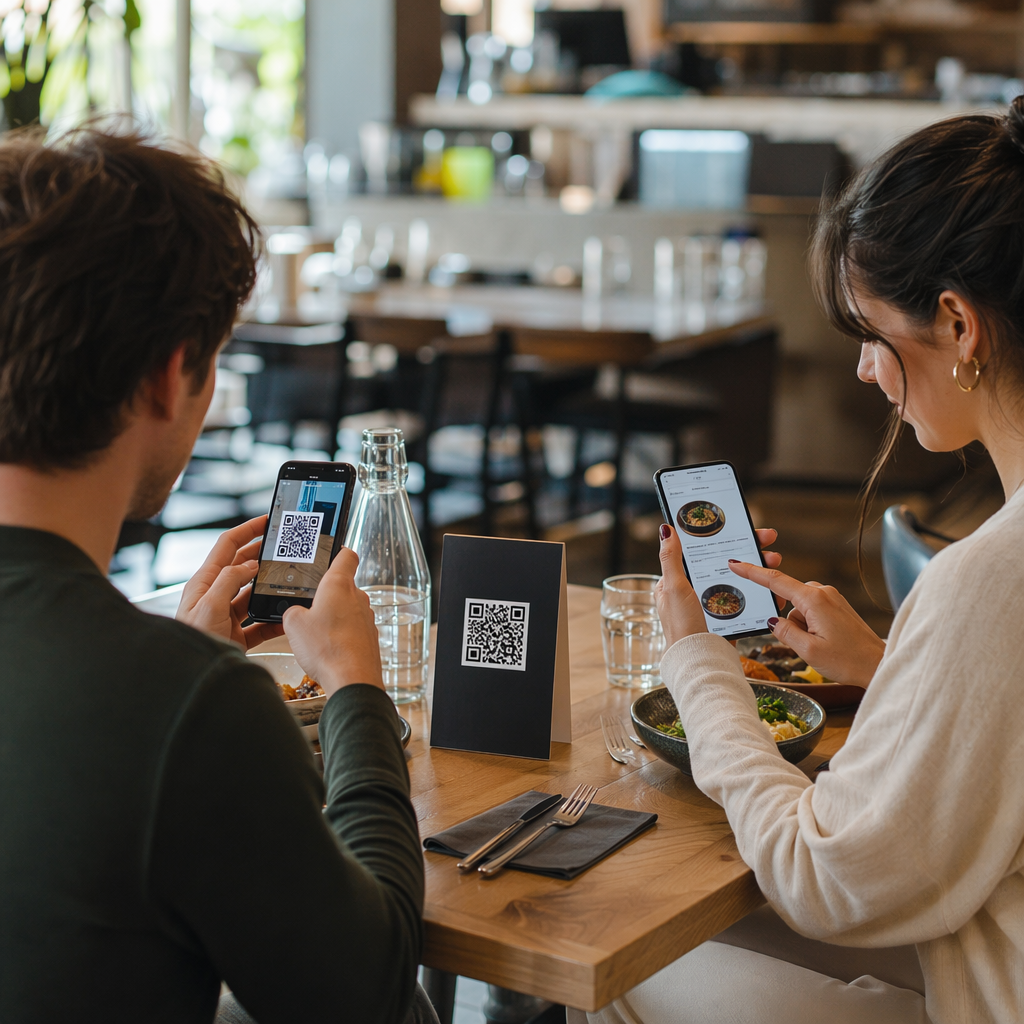
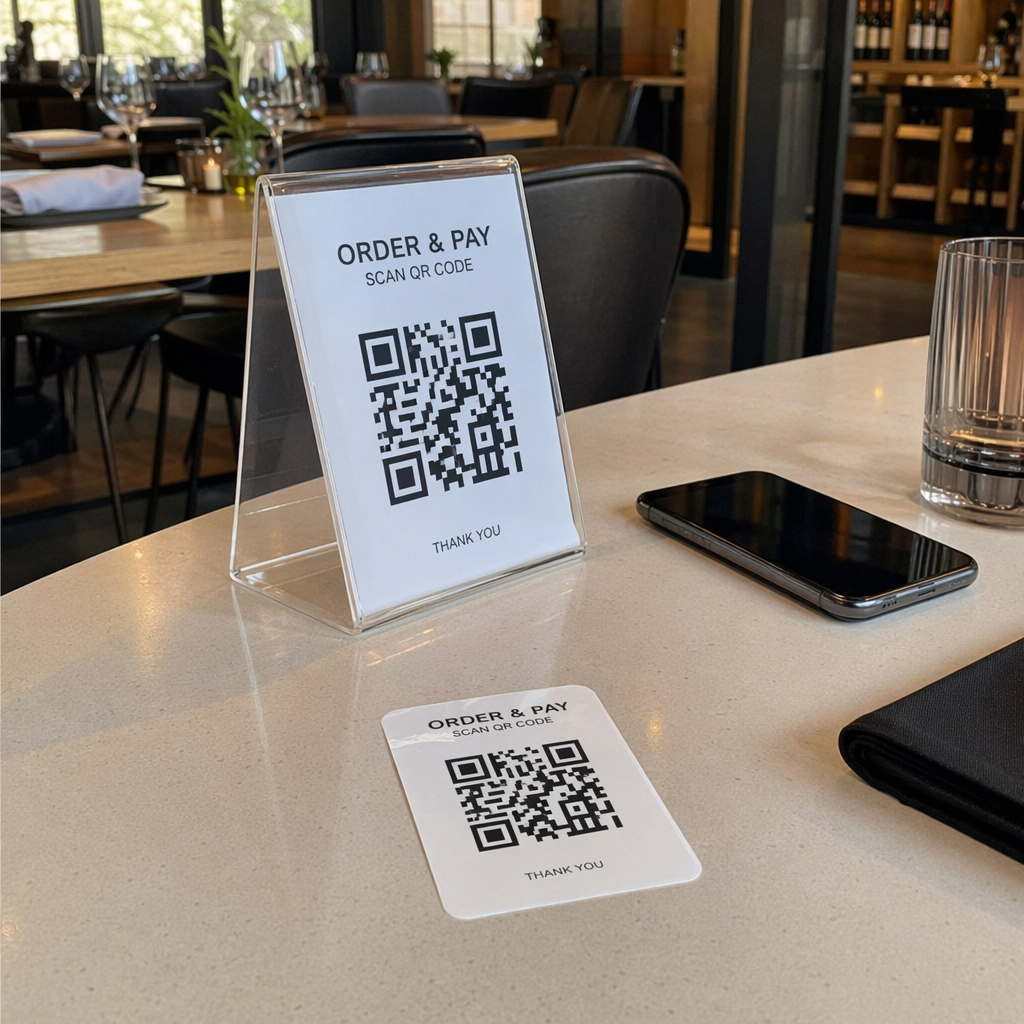
A QR code ordering system serves as a bridge between your physical dining room and a digital storefront. The process begins when a guest scans a code placed on their table using their smartphone camera. Think of the scanner like a high-speed reader that instantly translates a printed pattern into a functional digital menu. Once scanned, the customer can browse items, customize their order with modifiers, and submit it directly to your kitchen or point-of-sale (POS) system.
This technology is particularly effective for cafes and small businesses looking to optimize limited staff. By letting diners handle the data entry of their own orders, you reduce the risk of miscommunication and human error. Furthermore, digital menus allow for instant updates to pricing or item availability, which eliminates the ongoing expense of reprinting physical menus every time you change a seasonal ingredient.
Preparing Your Restaurant Infrastructure
Before generating your first code, you must ensure your technical foundation is reliable. A successful rollout depends on consistent internet connectivity for both your staff and your guests. If your kitchen printer or POS system relies on a local network, any downtime can halt the ordering process. It is also important to verify that your current POS hardware is compatible with third-party ordering integrations so that orders appear automatically on your kitchen display rather than requiring manual entry by a server.
Staff preparation is just as critical as the hardware. Even though the system is designed to be self-service, your team should be trained to assist guests who may be unfamiliar with the technology. Servers transition from order-takers to hospitality facilitators, focusing on food quality and guest satisfaction while the system handles the administrative task of recording the bill.
Creating and Digitizing Your Menu
The heart of your system is the digital menu itself. You can choose to upload an existing design using a PDF QR code generator or build a more interactive web-based landing page. While a PDF is quick to set up, a mobile-responsive landing page offers a superior user experience, allowing guests to scroll through categories easily and see high-resolution photos of your dishes.
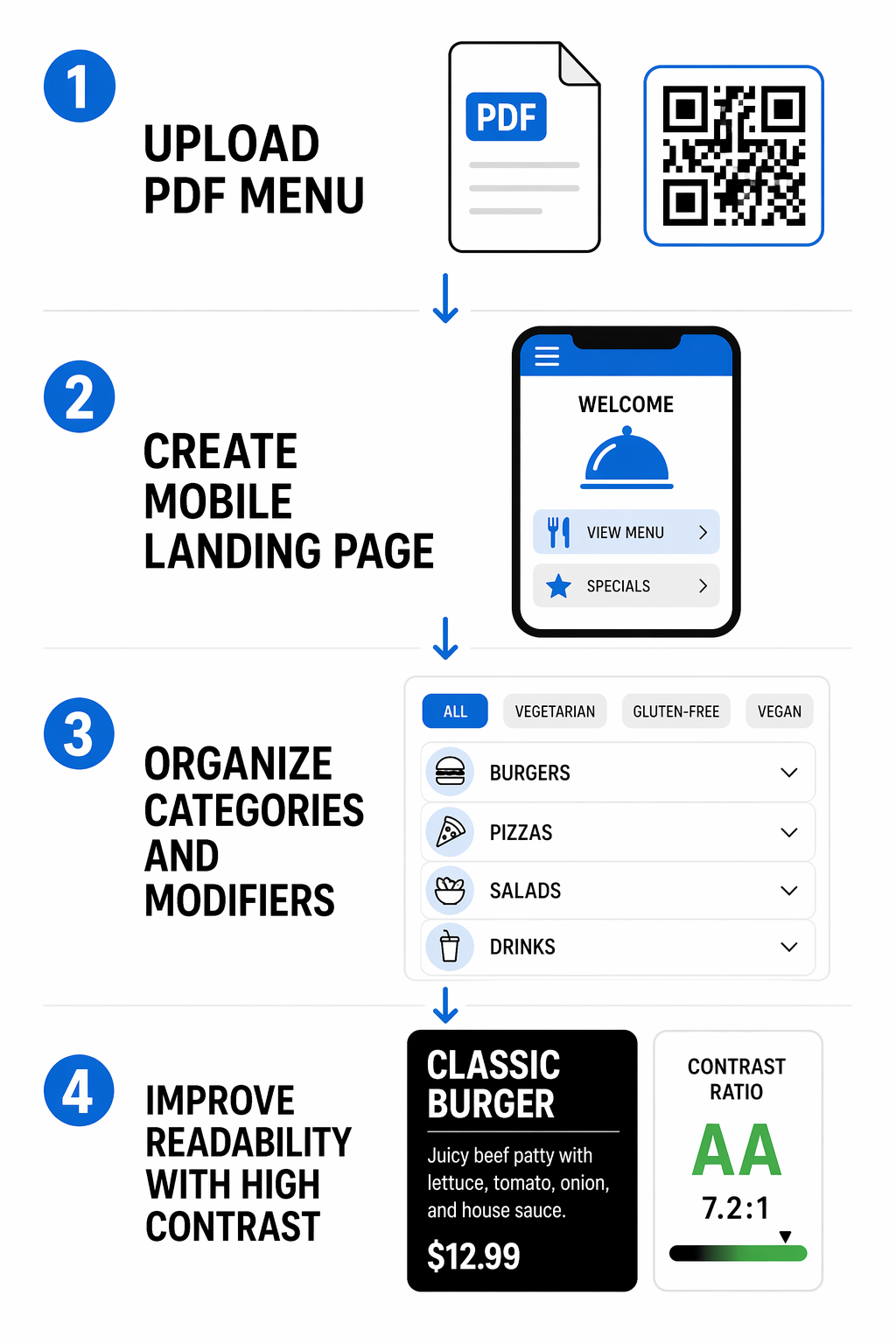
When designing the digital interface, prioritize readability and high contrast. Following a 4:1 contrast ratio between text and background ensures that all guests, including those with visual impairments, can navigate your offerings. Using a menu QR code generator allows you to categorize items logically, highlight allergens, and even suggest pairings to encourage upselling.
Generating and Branding Your QR Codes
When you are ready to create the physical codes, you must choose between static and dynamic QR codes. Dynamic codes are generally preferred for businesses because they allow you to change the destination URL or menu file without ever having to replace the printed stickers or table tents. They also provide valuable analytics, showing you which tables are most active and what times of day see the highest engagement.
To maintain professional branding, your codes should be customized with your brand logo and colors. Branded codes often see higher scan rates because they look more trustworthy than generic black-and-white squares. However, always ensure the logo does not obstruct the essential patterns of the code, as this can prevent the camera from decoding the information.
Proper sizing is essential for a frustration-free experience. According to the QR code size guide, you should follow a 1:10 ratio for scanning distance. For a QR code placed on a table where the guest is scanning from about 10 inches away, the code should be at least 1 inch square. At a minimum, never print a code smaller than 0.8 x 0.8 inches to ensure compatibility across all smartphone models.
Testing and Deploying at the Table
Before a full public launch, conduct a soft launch or a thorough end-to-end test. Scan every unique table code to ensure it maps to the correct table number in your system. This prevents orders from being sent to the wrong station. You should also test the checkout process to ensure that QR code payment benefits like faster transaction speeds and lower fees are functioning as intended.
Place your codes in highly visible, durable formats. Acrylic table tents or high-quality vinyl stickers are popular choices because they withstand spills and frequent cleaning. To further enhance the guest experience, you can also include codes that simplify table reservations or direct customers to leave a review after their meal.
Create Your Digital Menu in Minutes Ready to streamline your service and reduce wait times? Use the Pageloot QR Code Generator to create customizable, dynamic codes for your restaurant today.
Frequently Asked Questions
No, most modern smartphones can scan QR codes directly through the native camera app. Once scanned, the menu opens in the phone’s mobile web browser, making it a frictionless experience for the guest.
Yes, if you use dynamic QR codes, you can update the linked menu or website at any time. The physical code printed on your tables remains the same, but it will redirect guests to the updated information instantly.
These systems can be integrated with payment gateways, allowing guests to pay via Apple Pay, Google Pay, or credit card directly on their phones. The transaction is then recorded in your POS system for easy reconciliation.