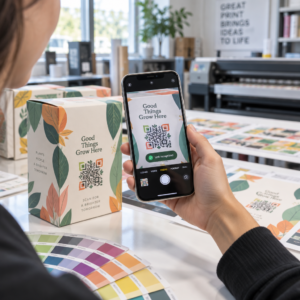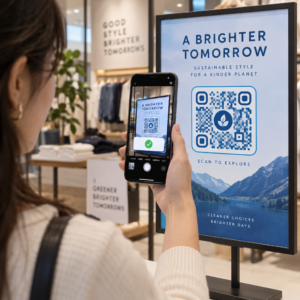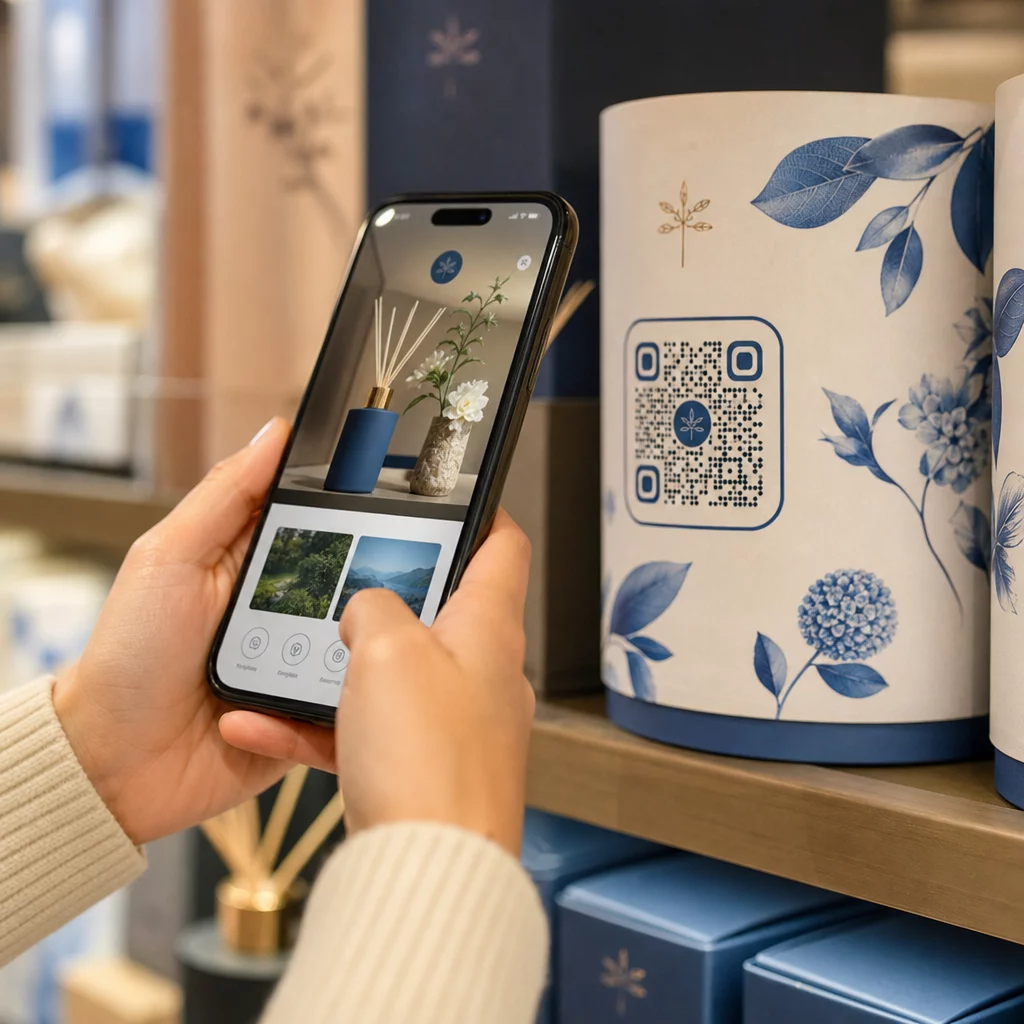
Does your packaging, signage, or print materials do enough work between the shelf and the sale? Static surfaces can only carry so much information – and most of it goes unread. This guide shows you how to turn every physical touchpoint into an interactive chapter of your brand story using QR codes.
Why QR Codes Are a Storytelling Tool, Not Just a Link
A QR code is more than a shortcut to a URL. It is the bridge between a physical moment – holding a product, reading a flyer, attending an event – and the deeper brand experience that lives online.
Consumer behavior reflects this shift. According to a 2024 World Sync Consumer Product Content Benchmark, 64% of shoppers have scanned a QR code on a product while in a store, and 42% say QR codes have meaningfully improved their in-person shopping experience. A 2024 GS1 Pulse Survey found that 79% of consumers are more likely to purchase a product when a scannable QR code provides additional information. Over 94 million U.S. consumers used smartphone QR scanners in 2024, and that number is projected to reach 102.6 million by 2026.
Brands that treat QR codes as a storytelling layer – not just a functional feature – are the ones getting those scans.
Connecting Packaging to a Deeper Brand Narrative
Product packaging is one of the most overlooked storytelling surfaces a brand owns. A QR code printed on a box, bottle, or tag can transform a static container into an interactive experience the moment a customer picks it up.
QR codes on product packaging can direct customers to a range of content depending on where the code appears:
- Primary packaging (the actual product holder) works well with codes that link to product usage videos, detailed product pages, social media profiles, or even a direct add-to-cart action.
- Secondary packaging (display or shelf packaging) is a natural fit for coupons, how-to videos, or prompts to share product quality on social media.
- Tertiary packaging (shipping boxes) can carry codes linking to business contact details or a company website.
The storytelling possibilities extend well beyond basic product information. Brands use packaging QR codes to share ingredient sourcing and farm-to-table narratives, introduce the people behind the product, highlight sustainability credentials, and invite customers into exclusive content they would never find on a label alone.
Real brands have leaned into this approach in creative ways. Patagonia uses QR codes on its products to give customers access to materials sourcing information, manufacturing processes, and environmental initiatives. KitKat placed QR codes on packaging as part of a Candy Crush collaboration, turning the wrapper into a gateway to interactive entertainment. Puma added codes to shoe tags that launched an augmented reality experience featuring its feline mascot. IKEA and Samsung have both used small packaging QR codes to replace printed manuals with digital versions.
For a deeper look at how packaging QR codes support retail engagement, see the guide to QR codes on packaging for retail.
Turn Your Packaging Into a Brand Experience Ready to connect your physical products to digital storytelling? The product packaging QR code solution from Pageloot makes it straightforward to set up, customize, and track.
Delivering Personalized, Multimedia Experiences
Once a physical touchpoint is connected to a digital destination, the real storytelling begins. The content behind a QR code can range from a simple product page to a rich multimedia experience – and the format you choose shapes how well your story lands.
Video is one of the most effective formats. Beauty brands use QR codes on packaging to link to tutorial videos featuring real customers, building trust through demonstration rather than description. Automotive companies place codes at dealerships that launch augmented reality experiences, letting potential buyers explore interior features or visualize custom colors before committing. Non-profits use codes on donation materials to share video testimonials, real-time campaign updates, and interactive maps showing how funds are used.
AR-enabled QR codes are an especially powerful format for storytelling. A wine brand called 19 Crimes pioneered this approach by letting the historical figures on their labels come to life and narrate their own stories. For more examples of how augmented reality and QR codes work together, explore AR QR code use cases in marketing.
Personalization adds another dimension. Dynamic QR codes can serve different content based on the time of day, the user’s location, or past scan behavior. A retailer might show a seasonal promotion near the entrance and product comparisons deeper in the store – from the same physical code. A restaurant chain can use a single QR design across all locations while showing region-specific menu stories at each one.
For QR codes that link to landing pages, mobile optimization is essential. Pages should load in under three seconds, display cleanly on small screens, and present a clear call to action. The best practices for mobile QR code landing pages guide covers this in detail.
Designing QR Codes That Reflect Your Brand
A QR code that looks like every other black-and-white square on the shelf is a missed opportunity. Branded QR codes – with your logo, colors, and visual identity built in – perform better and signal professionalism. Research cited on branded QR code examples suggests that codes with logos can boost scan rates by 30% to 70% compared to generic versions.
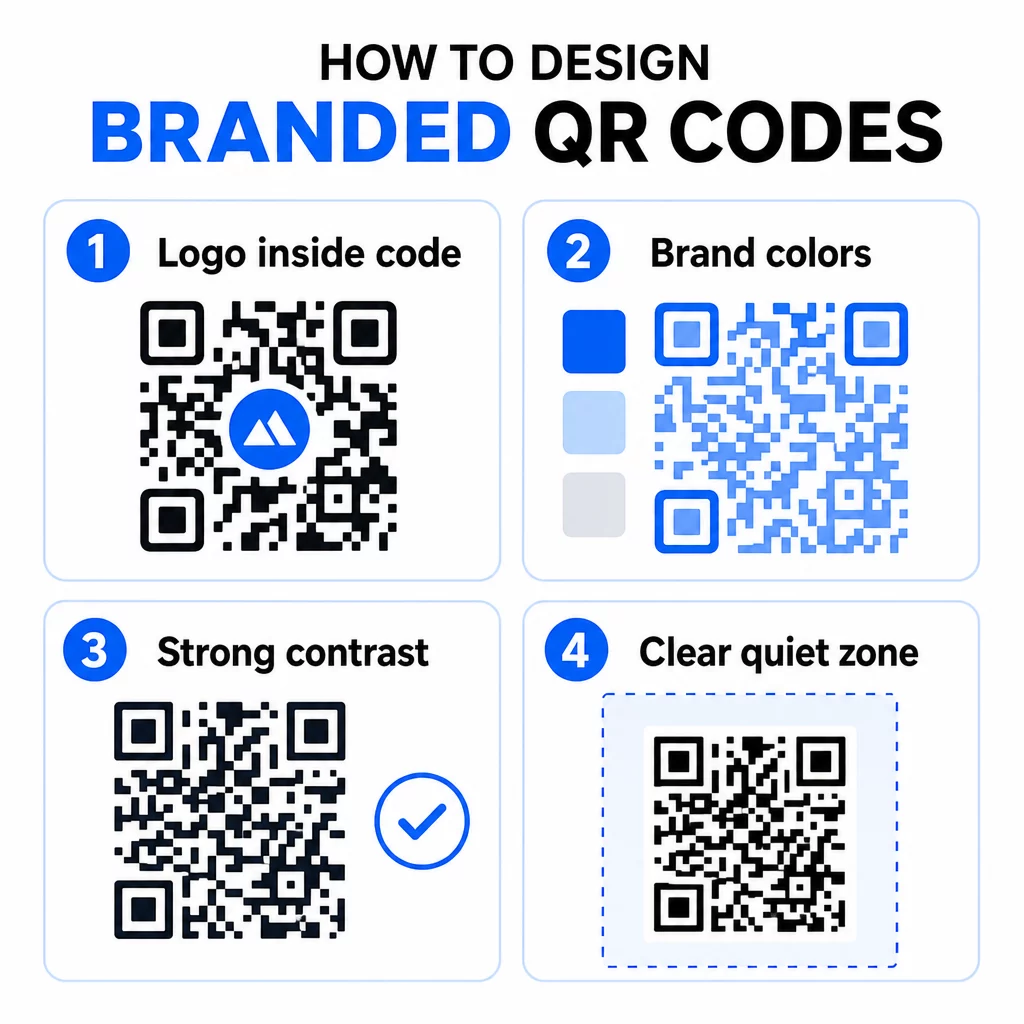
The QR code generator with logo from Pageloot lets you customize colors, upload your brand logo, and create codes that feel like part of your design rather than an afterthought. A few technical principles make the difference between a beautiful code that works and one that doesn’t scan:
- Keep the logo to no more than 20–30% of the code’s total area to maintain scannability.
- Use a minimum 4:1 contrast ratio between dark modules and a light background – darker colors for the data squares, lighter shades for the background.
- Size the code at a minimum of 0.8 × 0.8 inches (2 × 2 cm) for simple data; increase to at least 1.2 × 1.2 inches for complex data.
- Maintain a quiet zone of at least four module-widths around the code’s perimeter.
- Place codes away from package folds, rims, or curved surfaces where distortion affects scannability.
- Position physical codes at eye level – between 3.5 and 5.5 feet from the ground – for the highest likelihood of being scanned.
For teams managing multiple brands or campaigns, QR code templates make it easier to maintain a consistent look across materials without rebuilding each design from scratch. A full walkthrough of the customization process is available in the guide to creating a custom QR code.
You can also see real-world examples of branded QR codes to understand how other brands have applied these principles.
Build a QR Code That Looks Like Your Brand Use the QR Code Generator with Logo to add your colors, upload your logo, and create codes that earn attention before a scan even happens.
Using Dynamic QR Codes Across a Campaign Arc
Static QR codes encode a fixed destination and cannot be changed after printing. Dynamic QR codes work differently – they point to a short redirect URL that you control, which means the destination can be updated anytime without changing or reprinting the physical code.
This flexibility is what makes dynamic codes valuable for storytelling campaigns with a narrative arc. A product launch might start with a teaser countdown, switch to a product demo on launch day, and later surface customer testimonials – all from the same printed code. A conference badge might link to early registration details months before the event, then switch to schedules and live updates on the day itself.
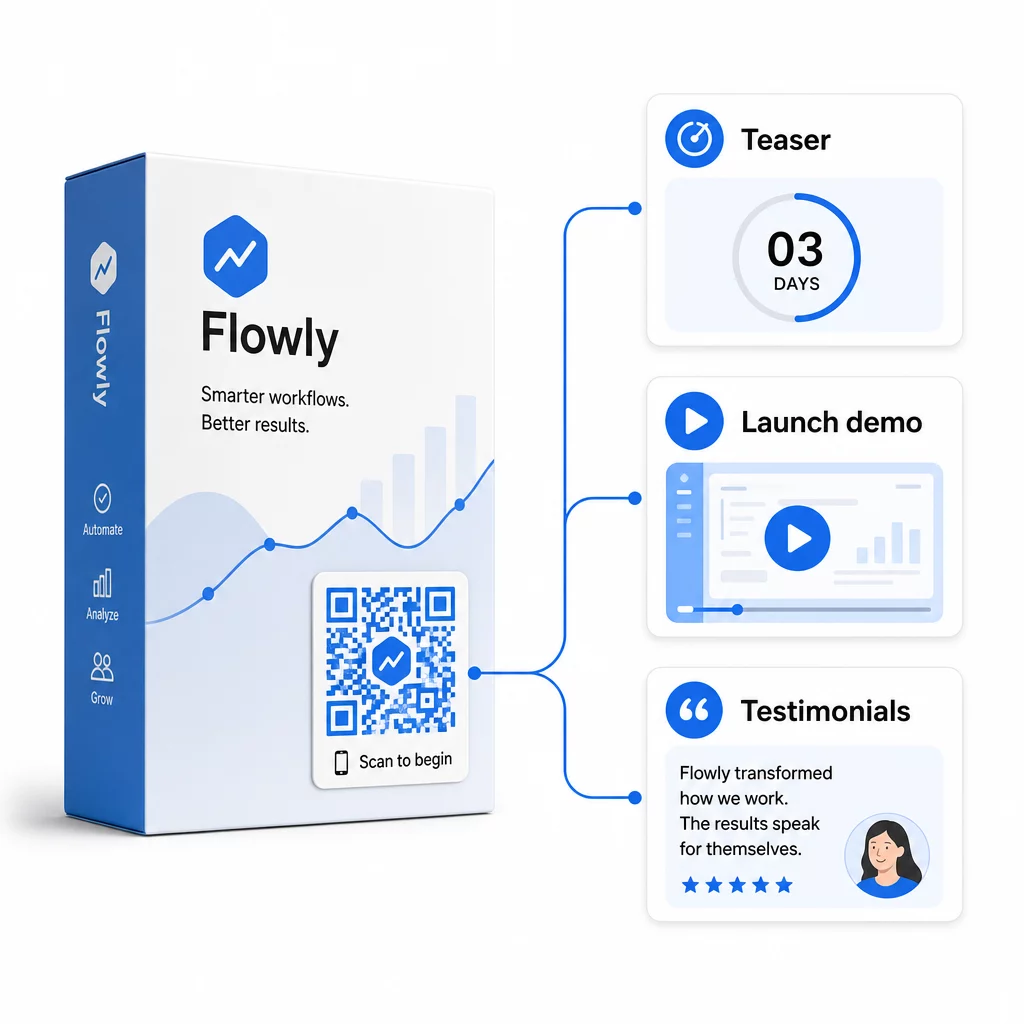
The dynamic QR code generator from Pageloot supports these kinds of evolving campaigns and includes built-in tracking so you can monitor performance at every stage.
Other practical applications include:
- Retail packaging: A skincare brand can use a single dynamic code to deliver monthly content – tips, tutorials, or seasonal promotions – to customers who already purchased the product.
- Localized content: A national chain can display the same code design at every location while serving region-specific stories and offers at each one.
- Seasonal campaigns: Holiday displays can evolve from decoration ideas to party planning content to post-season storage tips, all without reprinting signage.
- Interactive storytelling: Mystery or episodic campaigns can update weekly with new content, encouraging repeat scans and building anticipation.
Security is another advantage. Because the content is hosted on your servers rather than embedded in the code, you retain full control. If content needs to change for compliance or accuracy reasons, updates happen instantly – even for materials already in circulation.
Measuring Storytelling Impact Through Analytics
Counting scans is only the starting point. The real value of QR code analytics is understanding how people engage with your content after they scan – and using that information to make your storytelling sharper.
QR code tracking with dynamic codes captures metrics including:
- Scan volume and timing: Identify peak engagement windows. A fitness brand might find that morning and evening scans dominate, pointing to the best times to update content or run promotions.
- Geographic data: Discover where your storytelling resonates most. If codes on product packaging outperform those on shelf displays in certain cities, that signals where location-specific narratives could have the most impact.
- Device type: If older smartphones represent a significant share of scans, lightweight content that loads quickly will serve that audience better than video-heavy pages.
- Conversion tracking: Connect scans to purchases, sign-ups, or time-on-page to understand which stories drive action.
- Return visitor rates: High return rates indicate content that keeps people coming back. Low rates may signal that your landing page or call to action needs refinement.
- User journey mapping: Understand whether viewers finish your videos or leave after a few seconds, and use that to improve content length and structure.
A/B testing becomes significantly more effective when backed by this kind of data. You can experiment with different headlines, content formats, or calls to action by directing users to different versions through the same code. Platforms that include a real-time analytics dashboard make it easy to monitor what is working and adjust without waiting for a campaign to end.
One craft brewery used QR code engagement data to discover that behind-the-scenes brewing stories drove significantly more taproom visits than generic promotional content. A boutique clothing retailer found that short styling videos linked from product tags increased average transaction value. These are the kinds of insights that analytics make visible – and that can reshape a brand’s broader content strategy, not just a single campaign.
Track What Your Story Is Doing Use QR code analytics and tracking to see when, where, and how customers engage with your content, then refine your campaigns with real data.
Extending Brand Storytelling Across Channels
QR codes are not limited to packaging. The same principles – connecting a physical touchpoint to an evolving digital story – apply across marketing channels, and the strongest brand storytelling programs use QR codes consistently across all of them.
Brochures and print collateral become interactive when QR codes are placed on the cover, inside panels, or back page with a clear call to action and enough white space around the code to make it easy to spot. Event tickets and badges can unlock exclusive content, backstage access, or downloadable materials before, during, and after the event. Business cards can link directly to a portfolio, contact page, or brief brand overview.
For marketing agencies managing campaigns across multiple clients, the ability to maintain consistent branding, update content without reprinting, and access campaign analytics from a centralized dashboard is what separates a professional QR code strategy from a basic one. The marketing agency QR code solution from Pageloot is built around exactly these needs.
If you are looking to understand how QR codes fit into a broader multichannel strategy, the guide to how to use QR codes covers the fundamentals across different campaign types and industries.
Putting It All Together
Effective QR code storytelling is not about adding a scannable square to your packaging and hoping for the best. It is about designing a connected experience – where the physical object earns attention, the digital destination delivers something worth finding, and analytics close the loop between what you create and how it performs.
Start with one touchpoint where you know customers are paying attention. Design a branded code that earns the scan. Link it to content that adds genuine value. Use dynamic codes so the story can evolve. Measure what resonates, and build from there.
The Pageloot QR code generator gives you everything you need to create, customize, and manage that experience from one platform – with real-time analytics, dynamic code editing, branded designs, and support for every stage of a campaign.
Frequently Asked Questions
Dynamic QR codes let you update the destination content anytime after the code has been printed. This means a single code on product packaging can serve a product teaser early in a launch, switch to a demo video on release day, and later show customer testimonials – without any reprinting. The same flexibility applies to seasonal campaigns, event marketing, and any story that needs to evolve over time.
Keep your logo to no more than 20–30% of the code area, maintain a contrast ratio of at least 4:1 between dark modules and the background, and size the code at a minimum of 0.8 × 0.8 inches for print use. Avoid placing codes on curved or folded surfaces, and always test across multiple devices before distributing materials.
Beyond raw scan counts, focus on conversion tracking (purchases, sign-ups, or content completions), return visitor rates (which indicate how engaging your content is), geographic data (to understand where stories resonate most), and time-based trends (to identify when your audience is most active). These metrics let you refine both the content and the placement of your QR codes over time.