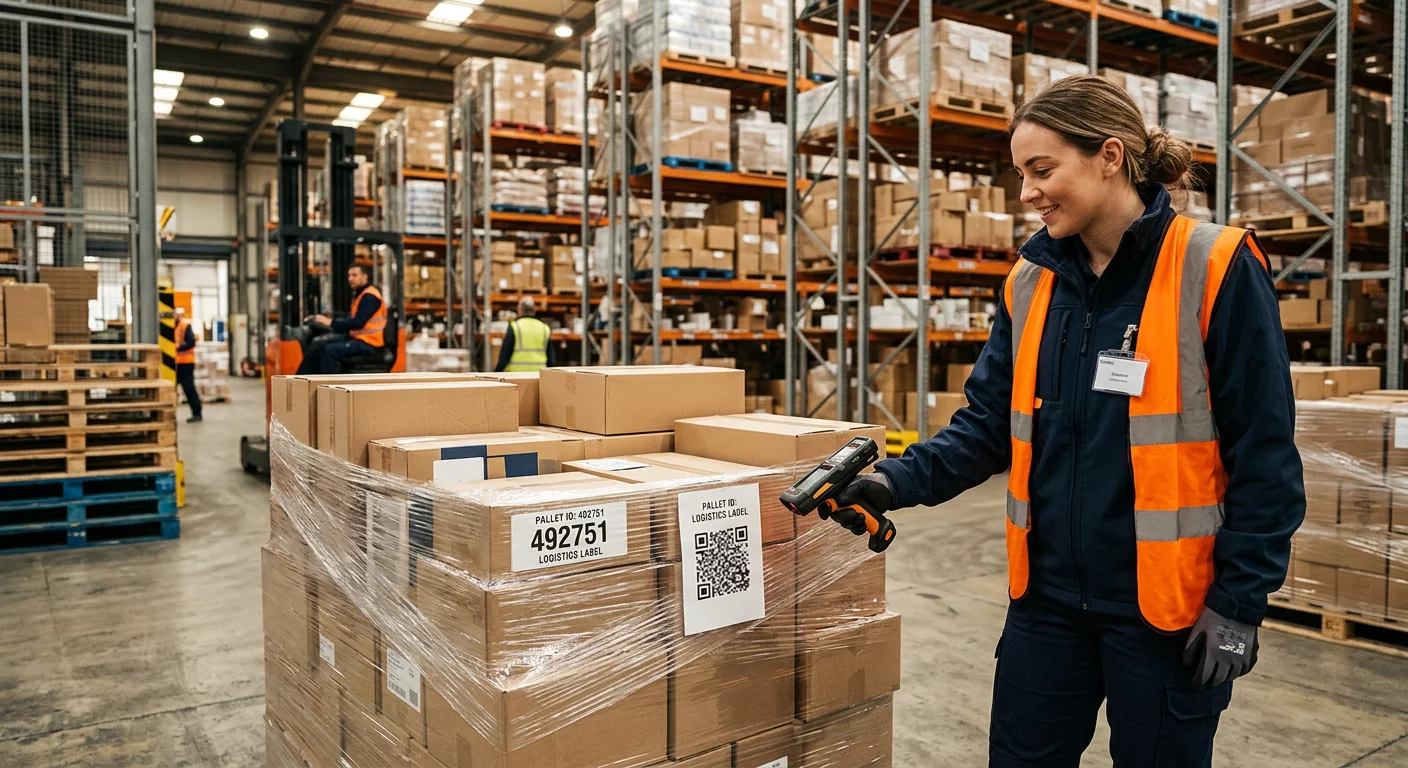
Are you struggling with blind spots in your warehouse or delays across your distribution network? Manual data entry errors often stall operations and increase overhead costs by up to 25%. Implementing QR codes connects your physical inventory to real-time digital databases, ensuring up to 99% accuracy across the entire supply chain.
Closing the Visibility Gap in Modern Logistics
Maintaining a clear chain of custody becomes increasingly difficult as products move through multiple stakeholders. Without a centralized way to capture data at every touchpoint, businesses face high shrinkage, slow picking speeds, and a lack of transparency during recalls. Traditional methods often rely on 1D barcodes, which have limited data capacity and require perfect line-of-sight for scanning. If a label is slightly smudged or torn in a high-intensity warehouse environment, the tracking process grinds to a halt. QR codes solve these issues by offering high data density and structural duplications that allow the code to remain readable even if a portion of the symbol is damaged.
Why QR Codes Outperform Traditional Barcoding
When comparing tracking technologies, QR codes offer a balance of cost-efficiency and data depth that 1D barcodes or RFID cannot match. While 1D barcodes generally store 20–85 characters, a QR code can hold over 7,000 characters, allowing for the inclusion of batch numbers, expiration dates, and origin data in a single scan. This significantly enhances traceability throughout the supply chain by providing granular details at every stop.
Technology Comparison for Logistics
| Feature | QR Codes | 1D Barcodes | RFID | Data Matrix |
|---|---|---|---|---|
| Data Capacity | 7,000+ characters | 20–85 characters | 128 bits+ | 2,000 characters |
| Scan Reliability | Omnidirectional; works when dirty | Line-of-sight only | Non-line-of-sight | High density |
| Cost | Low (print-based) | Lowest | High (tags/readers) | Moderate |
| Implementation | Easy (standard scanners) | Simple | Infrastructure-heavy | Specialized |
For a deeper dive into which technology fits your specific warehouse layout, you can review our comparison of barcodes vs. QR codes.
Real-World Gains in Inventory Management
Integrating QR codes into your Warehouse Management System (WMS) or ERP provides immediate operational gains by automating data capture. By removing the human error associated with manual typing and “clipboard” tracking, you ensure that your digital records perfectly mirror your physical stock.
- Warehouses using QR codes report accuracy rates reaching 99% because scans provide instant validation against the database.
- Order fulfillment speed increases by 20–30% when workers use a barcode scanner to verify items quickly.
- Automated verification during intake can reduce receiving time by up to 40%, moving goods from the dock to the shelf faster.
- Real-time tracking helps identify where losses occur, leading to a 15–25% reduction in inventory shrinkage.
Optimize your logistics workflow today. Use our Dynamic QR Code Generator to create trackable, editable codes that connect your physical products to real-time digital insights.
Achieving Regulatory Compliance and Recall Readiness
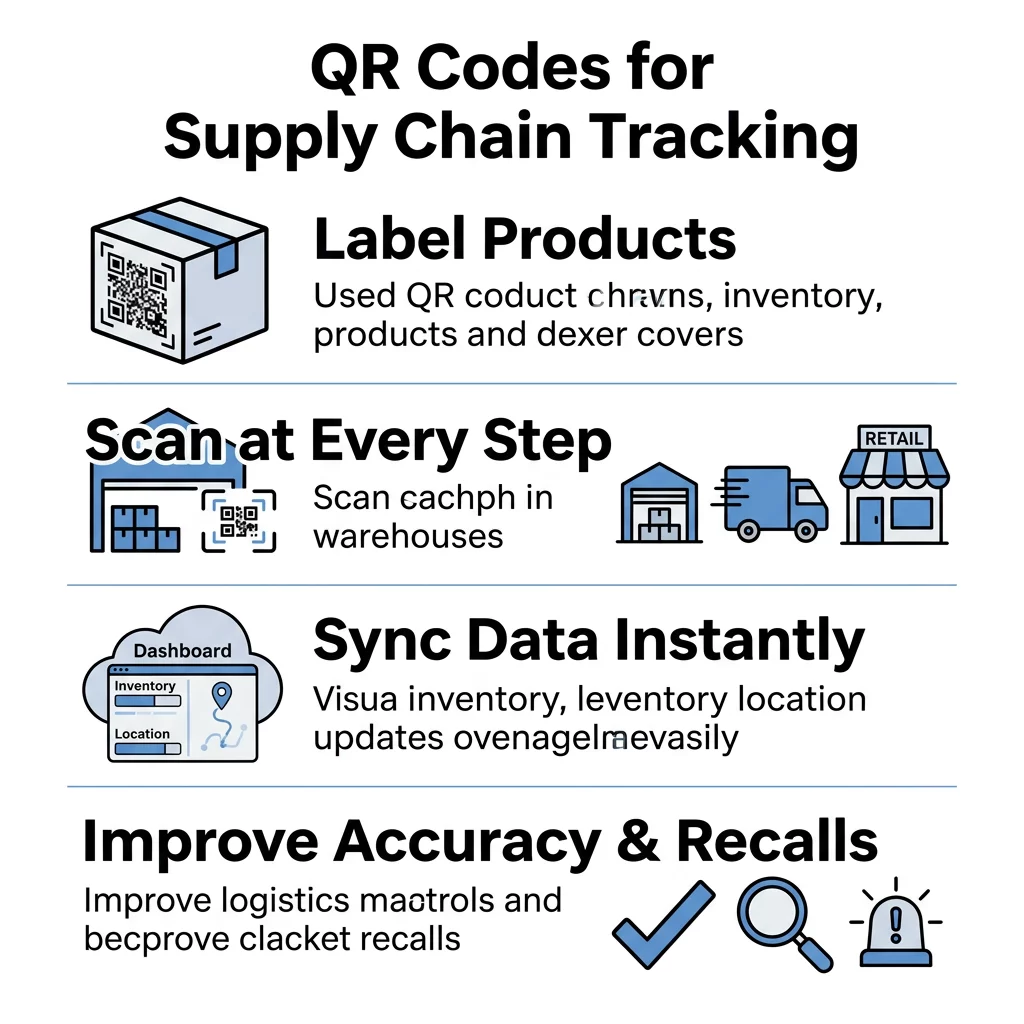
In industries like food and pharmaceuticals, traceability is a legal requirement rather than just a benefit. QR codes are instrumental in meeting FDA FSMA 204 and other FDA compliance standards. By linking a unique QR code to specific lots or batches, companies can respond to safety incidents in hours rather than days. During a recall, a logistics manager can scan a code to see exactly which customers received items from a specific batch, preventing the need for a total market withdrawal. This level of product lifecycle tracking protects both the consumer and the brand’s bottom line.
Technical Guidelines for Successful Implementation
To ensure your tracking system remains reliable in rugged logistics environments, you must follow specific technical standards. Use high-contrast printing, ideally black on white, at a minimum of 300 DPI. For warehouse labels, thermal transfer printing is recommended to ensure the code does not fade under harsh lighting or temperature changes.
The modules within the code should be at least 0.5mm, and for standard warehouse scanners, the overall label should be at least 1 x 1 inch to ensure quick reads from a distance. Apply labels to flat, unobstructed surfaces, avoiding curves or corners where the geometry may distort the pattern for the QR code scanner. Finally, ensure your QR codes link to a system with API capabilities, allowing the scan data to automatically update stock levels and shipping status across all platforms. For a detailed walkthrough, see our guide on how to create QR codes for product inventory.
Connecting Physical Goods to Digital Systems
The transition from physical movement to digital data is most effective when using dynamic QR codes. Unlike static codes, dynamic versions point to a redirect link that allows you to update the destination URL or document file without reprinting the label. This flexibility is essential when using QR codes in manufacturing to track raw materials that eventually become finished goods.
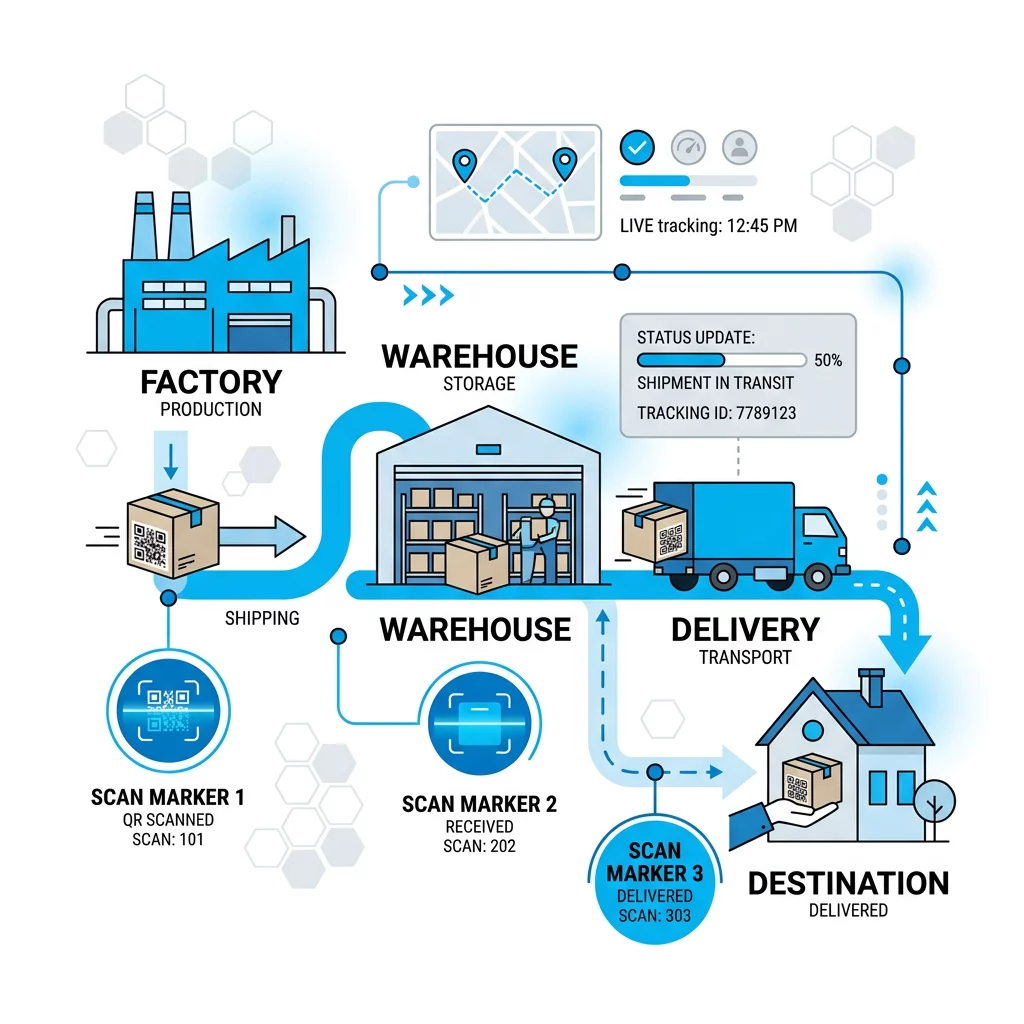
By capturing the location, time, and device type of every scan, your team gains a narrative of the product’s journey. This data allows for bottleneck identification and more accurate freight tracking across your distribution network. Start modernizing your tracking infrastructure by implementing a pilot program on a single product line using a professional QR code generator to see immediate improvements in visibility.
Frequently Asked Questions
QR codes eliminate the need for manual data entry, which is the primary source of inventory errors. A single scan instantly matches the physical item to its digital record, which can reduce error rates from roughly 25% to less than 5% in real-time inventory tracking environments.
Yes, QR codes feature built-in error correction levels that allow them to remain readable even if up to 30% of the surface area is smudged, torn, or obscured. This makes them significantly more durable than traditional 1D barcodes in rugged warehouse conditions.
No specialized industrial hardware is strictly necessary. While dedicated scanners are efficient for high-volume warehouses, QR codes can be read using standard smartphones and tablets, allowing smaller operations to implement high-level tracking with minimal upfront investment.