How can your ministry stay connected with a congregation that increasingly relies on mobile technology? When physical barriers like missing cash or lost paper bulletins prevent engagement, your church loses vital opportunities for growth and support. This guide demonstrates how QR codes simplify donations, streamline event check-ins, and modernize your communication strategy.
The Growth of Digital Engagement in Worship
The way congregants interact with their communities is shifting rapidly as mobile technology becomes a central part of daily life. Research indicates that the number of smartphone users scanning QR codes in the United States is expected to reach 99.5 million by 2025. This trend is particularly evident in religious settings, where digital giving has already overtaken traditional cash and checks in many organizations. In fact, approximately 61% of surveyed churches reported an increase in digital giving throughout 2024.
Adopting digital tools is no longer just an option for tech-savvy ministries; it is a necessity for maintaining a connection with younger generations and those who prefer cashless transactions. Between 2015 and 2023, the number of congregations offering online giving options rose from one-third to over two-thirds. By utilizing a link QR code generator, church administrators can bridge the gap between physical worship spaces and digital platforms, making it easier for members to participate in the church’s mission at any moment.
Modernizing Tithes and Offerings
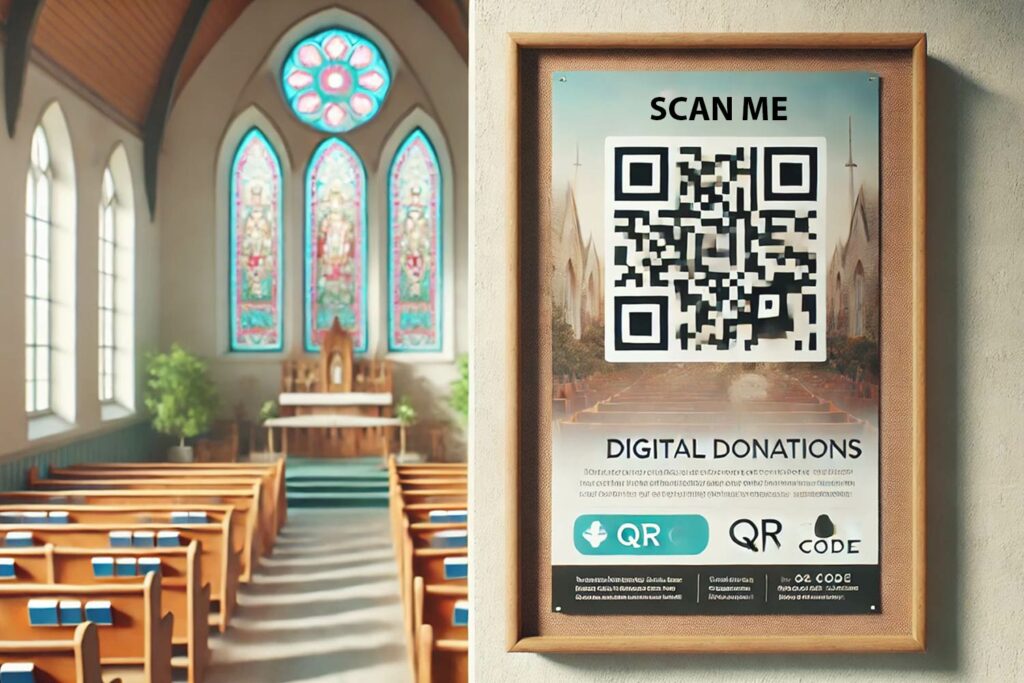
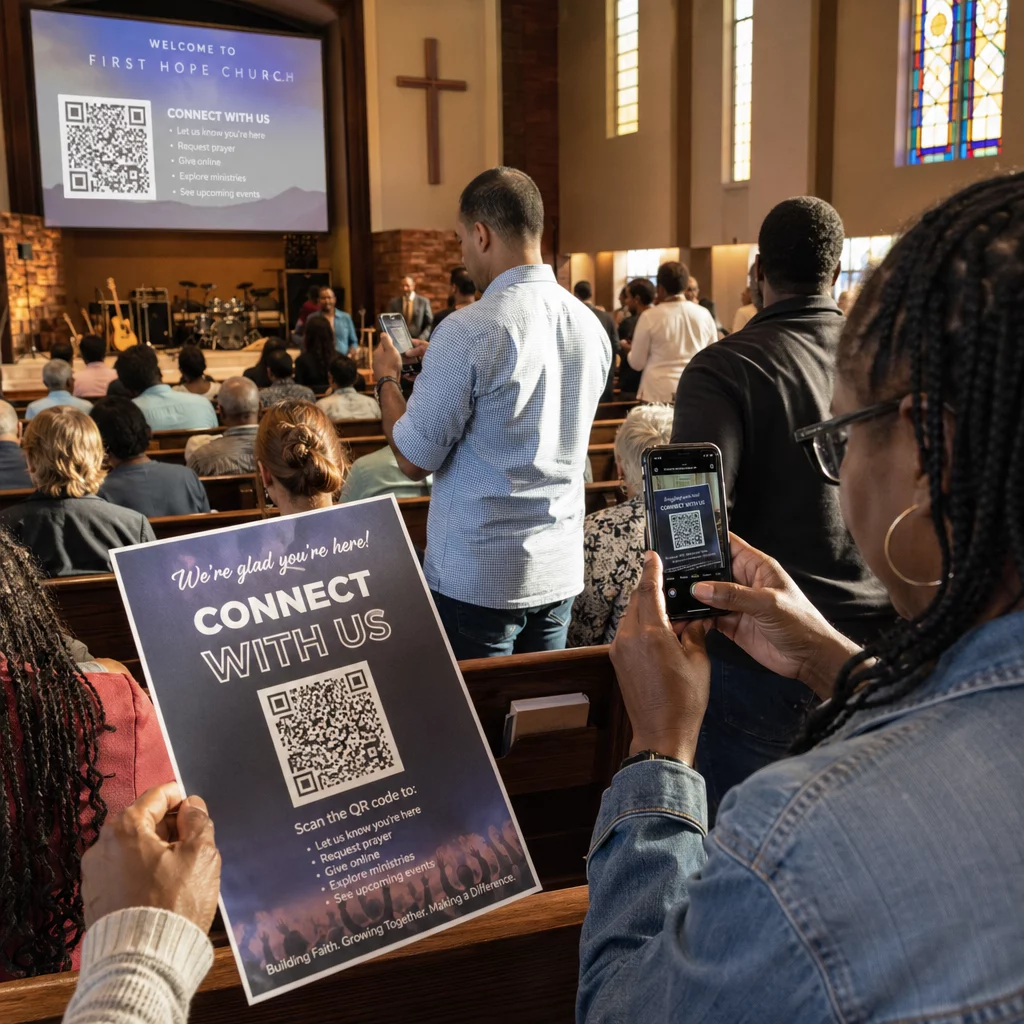
One of the most immediate benefits of this technology is the simplification of church giving. Traditional passing of the plate often excludes individuals who do not carry physical currency, but a QR code placed on the back of pews or displayed on a sanctuary screen provides an instant solution. To begin, administrators can use their organization’s donation landing page URL and a QR code generator to create a scannable link.
Effective digital tithing depends on making the process as frictionless as possible. Following best practices for nonprofit donation QR codes ensures that the scanning experience is secure and intuitive. Beyond standard weekly offerings, these codes are highly effective for specific charity fundraisers or community support programs. Providing a direct path to a giving page helps convert the impulse to help into immediate action, supporting the church’s financial health and outreach efforts.
Replacing Paper Bulletins with Digital Resources
Printing hundreds of weekly bulletins is both expensive and environmentally taxing, especially when much of the information changes from week to week. A more sustainable alternative is to provide a digital bulletin through a PDF QR code generator. By uploading a document, you allow parishioners to access sermon notes, scripture readings, and weekly announcements directly on their devices.
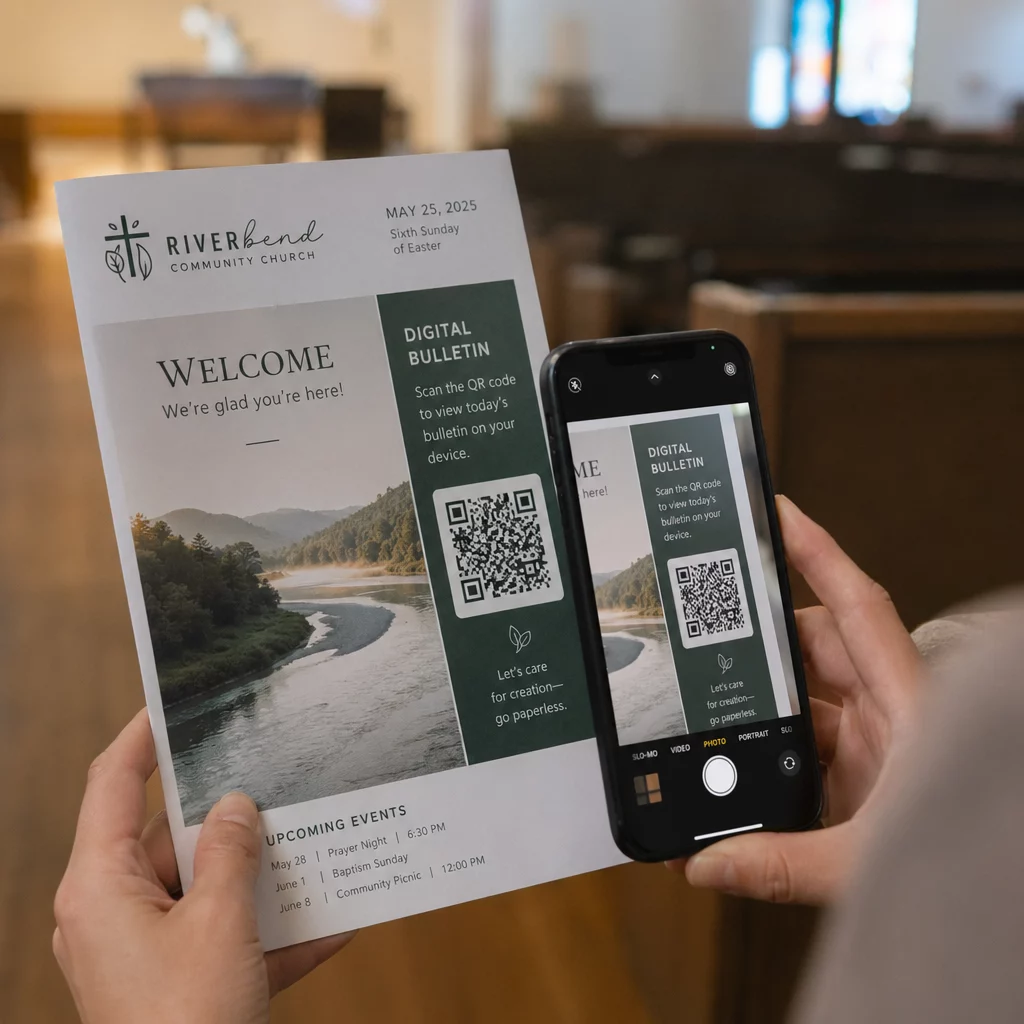
This digital approach also allows for richer content than a standard paper handout. For example, a QR code in the bulletin can link to a Google Form QR code generator to collect prayer requests or mass intentions. Additionally, QR codes for non-profits can be used on flyers to share video recaps of past sermons or links to live streams, ensuring that those who cannot attend in person remain engaged with the message.
Simplify Your Church Operations Want to see how your congregation is interacting with your digital content? Use the Dynamic QR Code Generator to create trackable codes that you can update anytime without reprinting your materials.
Streamlining Events and Attendance
Managing church events, from Sunday School to seasonal festivals, requires efficient organization and clear communication. Implementing RSVP QR codes for events allows leaders to track expected attendance and manage resources effectively. Once the event begins, a digital system can further accelerate the process. Digital check-ins can reduce processing time to under two seconds per person, significantly cutting down on wait times at the door.
For recurring activities, QR codes for attendance tracking provide a reliable way to monitor participation in small groups or volunteer shifts. Instead of manual sign-in sheets, participants scan a code upon arrival, which can automatically log their presence in a digital database. This data helps leadership understand engagement levels and identify areas where additional outreach might be needed.
Technical Standards for Scannability
To ensure that every member of the congregation can easily use the technology, church administrators must follow specific design and placement guidelines. Readability is influenced by several factors, including size, contrast, and the material on which the code is printed.
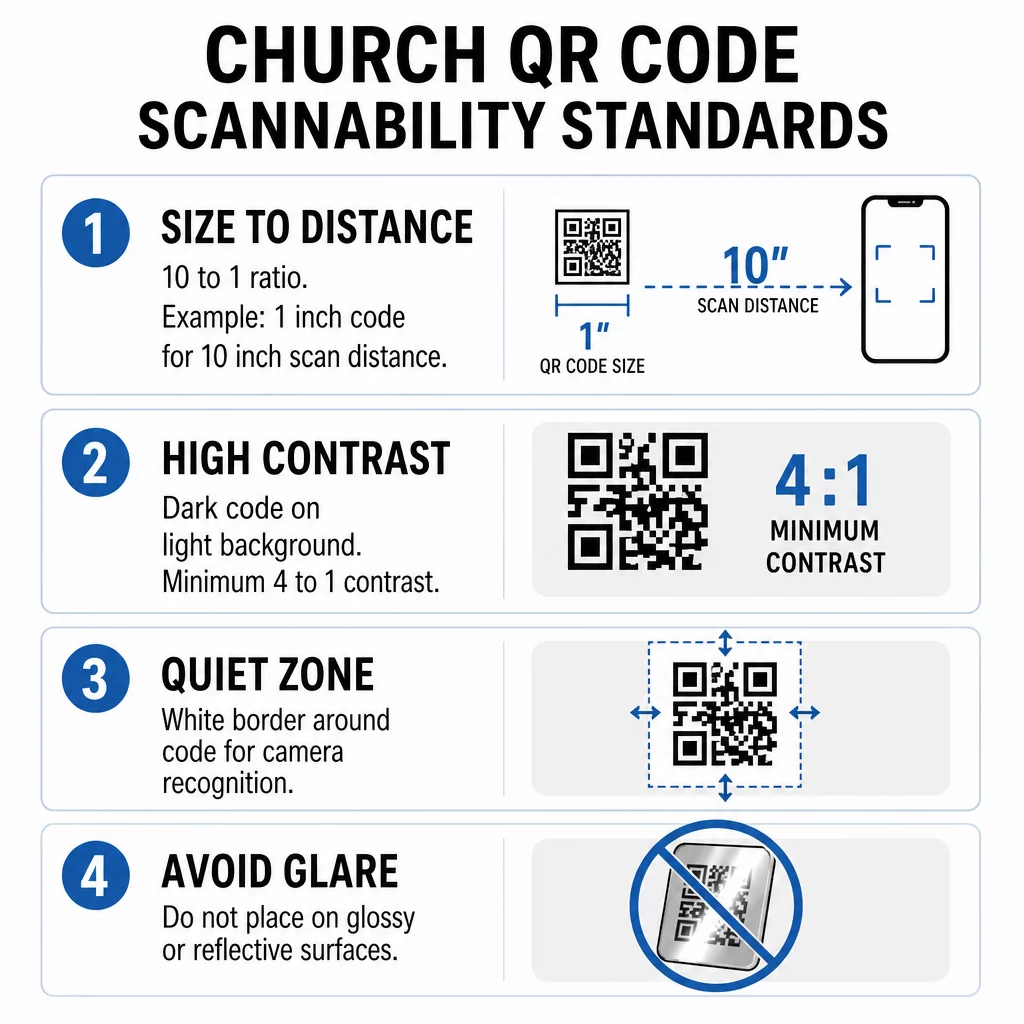
- Maintain a 10:1 size-to-distance ratio, meaning a code scanned from 10 inches away should be at least 1 inch wide.
- Ensure a high contrast ratio of at least 4:1 by using dark patterns on a light background.
- Use vector formats like SVG or EPS for printed materials to prevent blurriness or pixelation.
- Preserve a “quiet zone” or clear white border around the code to help smartphone cameras identify the pattern.
- Avoid placing codes on glossy or reflective surfaces that might create glare and prevent a successful scan.
For long-term use, choosing the right type of code is essential. While static codes are permanent, dynamic QR codes allow you to change the destination URL or linked file even after the code has been printed and distributed. This flexibility is invaluable for weekly bulletins or seasonal event posters, as it eliminates the need for constant reprinting. Furthermore, using a QR code generator with logo allows you to incorporate church branding, which builds trust and encourages more scans from the congregation.
Frequently Asked Questions
Yes. Most modern smartphones have built-in QR scanning capabilities directly in the camera app. Users simply point their camera at the code, and a notification will appear to open the link in their web browser.
If you use a dynamic QR code, you can update the destination URL or file in your management dashboard at any time. The physical code remains the same, but it will redirect users to the new content instantly.
QR codes are simply a shortcut to a URL. As long as the code links to a secure, encrypted donation platform (HTTPS), the transaction is as safe as any other online payment made through a browser.
By integrating these digital tools into your ministry, you create a more accessible and efficient environment for your congregation. Whether you are simplifying the way members give or providing easy access to spiritual resources, QR codes serve as a powerful bridge between your physical sanctuary and the digital world. Start enhancing your church’s engagement today by creating your first customized codes through the Pageloot QR code generator.