QR-Code-Etiketten ermöglichen es Kunden, mit einem Scan vom Paket in ihrer Hand zu einer Produktseite, einem Handbuch, einem Nachbestellungslink oder einem Support-Chat zu gelangen. Dieser Leitfaden zeigt, wie man ein QR-Produktetikett erstellt, das beim ersten Versuch scannt: welchen Codetyp man verwenden sollte, wie groß man ihn drucken sollte, wo man ihn platzieren sollte und was vor einem vollständigen Drucklauf zu testen ist.
QR-Code auf Produktetiketten: Die Kurzversion
- Größe: Drucken Sie den Code mindestens 2 x 2 cm groß (0,8 x 0,8 Zoll). Verwenden Sie 2,5 bis 3 cm, wenn Kunden von einem Regal oder einer Theke scannen.
- Ruhezone: Halten Sie einen leeren Rand von mindestens 4 Modulen (ca. 4 bis 8 mm auf einem Etikett) an allen vier Seiten ein.
- Farben: Dunkler Code auf hellem Hintergrund. Schwarz auf Weiß ist am sichersten.
- Auflösung: Verwenden Sie eine Vektordatei (SVG, PDF oder EPS) für den Druck. Wenn Sie PNG verwenden, exportieren Sie es in der endgültigen Druckgröße mit 300 dpi.
- Typ: Verwenden Sie einen statischen Code für einen Link, der sich nie ändern wird. Verwenden Sie einen dynamischen Code, wenn sich das Ziel ändern könnte oder Sie Scan-Statistiken wünschen.
- Testen: Drucken Sie einen auf das echte Etikettenmaterial und scannen Sie ihn mit zwei oder drei Telefonen, bevor Sie die gesamte Auflage bestellen.
Warum QR-Codes auf Produktetiketten gehören
Ein bedrucktes Etikett hat begrenzten Platz und kann nach dem Druck nicht aktualisiert werden. Ein QR-Code schafft mehr Raum: Zutaten- und Herkunftsdetails, Einrichtungsvideos, Garantieregistrierung, Benutzerhandbücher und Ersatzteillisten können alle hinter einem kleinen Quadrat verborgen sein.
Typische Anwendungen eines QR-Codes auf einem Produkt:
- Produktinformationen: Spezifikationen, Inhaltsstoffe, Allergene oder Pflegehinweise, die nicht auf das Etikett passen.
- Handbücher und Einrichtung: Ein PDF-Handbuch oder ein kurzes Video, sodass Sie ein kleineres oder gar kein Faltblatt drucken können.
- Nachbestellung: Ein direkter Link zur Produktseite, nützlich für Verbrauchsmaterialien wie Filter, Kaffee oder Reinigungsmittel.
- Support: Ein Link zu einer Hilfeseite, einem Formular oder einem WhatsApp-Chat.
- Recycling und Rücksendungen: Entsorgungsanweisungen oder ein Rücksendeformular.
- Angebote und Treue: Ein Rabattcode, eine Anmeldeseite oder eine Bewertungsanfrage nach dem Kauf.
Für einen umfassenderen Blick auf Verpackungsarten und das Kundenerlebnis, siehe die Leitfaden zu QR-Codes auf Produktverpackungen.
Wählen Sie einen dynamischen QR-Code oder einen statischen.
EIN statischer QR-Code speichert das Ziel direkt im Muster. Er ist kostenlos zu erstellen, verfällt nie und funktioniert, solange die Seite, auf die er verweist, existiert. Wenn sich diese URL ändert, verweist der gedruckte Code auf die falsche Stelle, und Sie müssen ihn neu drucken.
EIN dynamischer QR-Code speichert einen kurzen Weiterleitungslink, sodass Sie das Ziel jederzeit ändern können, ohne den gedruckten Code zu ändern. Bei Produktetiketten hilft dies auf dreierlei Weise:
- Sie können eine saisonale Aktion oder Landingpage austauschen, ohne einen neuen Druckauftrag zu benötigen.
- Sie können einen defekten oder verschobenen Link sofort beheben.
- Sie können Scan-Statistiken einsehen: wann, wo und mit welchem Gerät Personen gescannt haben.
Verwenden Sie einen statischen Code, wenn der Link dauerhaft ist, zum Beispiel eine Anleitung, die auf Ihrer eigenen Website gehostet wird. Verwenden Sie einen dynamischen Code, wenn Etiketten monatelang im Regal bleiben und sich das Ziel ändern kann. Sie können einen QR-Code für Ihr Produktetikett erstellen mit dem kostenlosen Pageloot-Generator. Dynamische Codes werden mit einer 14-tägigen kostenlosen Testphase geliefert, und die Pläne sind auf der Pageloot-Preisseite.
Verfolgen Sie jeden Scan Ihrer Produktetiketten. Um zu sehen, wo und wann Kunden Ihre Verpackung scannen, erstellen Sie einen dynamischen Code mit dem Pageloot QR-Code-Generator und nutzen Sie das Scan-Dashboard.
QR-Code-Etiketten erstellen: Schritt für Schritt
- Entscheiden Sie, wohin der Code führen soll. Wählen Sie eine mobilfreundliche Seite und achten Sie darauf, dass sie kurz und schnell geladen wird.
- Öffnen Sie die QR-Code-Generatorwählen Sie den Typ (URL, PDF, Video oder anderes) und geben Sie das Ziel ein.
- Wählen Sie statisch oder dynamisch. Aktivieren Sie die dynamische Option nur, wenn Sie das Ziel später bearbeiten oder Scans verfolgen möchten.
- Halten Sie das Design einfach: dunkler Code, heller Hintergrund, keine Verläufe hinter dem Muster.
- Laden Sie eine Vektordatei (SVG oder PDF) für den Etikettendesigner herunter, oder eine PNG in der endgültigen Größe.
- Platzieren Sie den Code auf dem Etikettendesign in der geplanten Größe, mit der Ruhezone und einem kurzen Call-to-Action daneben.
- Drucken Sie ein Testetikett auf dem echten Material und scannen Sie es vor dem gesamten Durchlauf.
Größe: Wie groß muss der Code sein?
Die Größe ist der häufigste Grund, warum ein QR-Code auf einem Etikett nicht gescannt werden kann. Ist der Code zu klein, kann die Handykamera die einzelnen Module (die kleinen Quadrate, aus denen das Muster besteht) nicht auseinanderhalten.
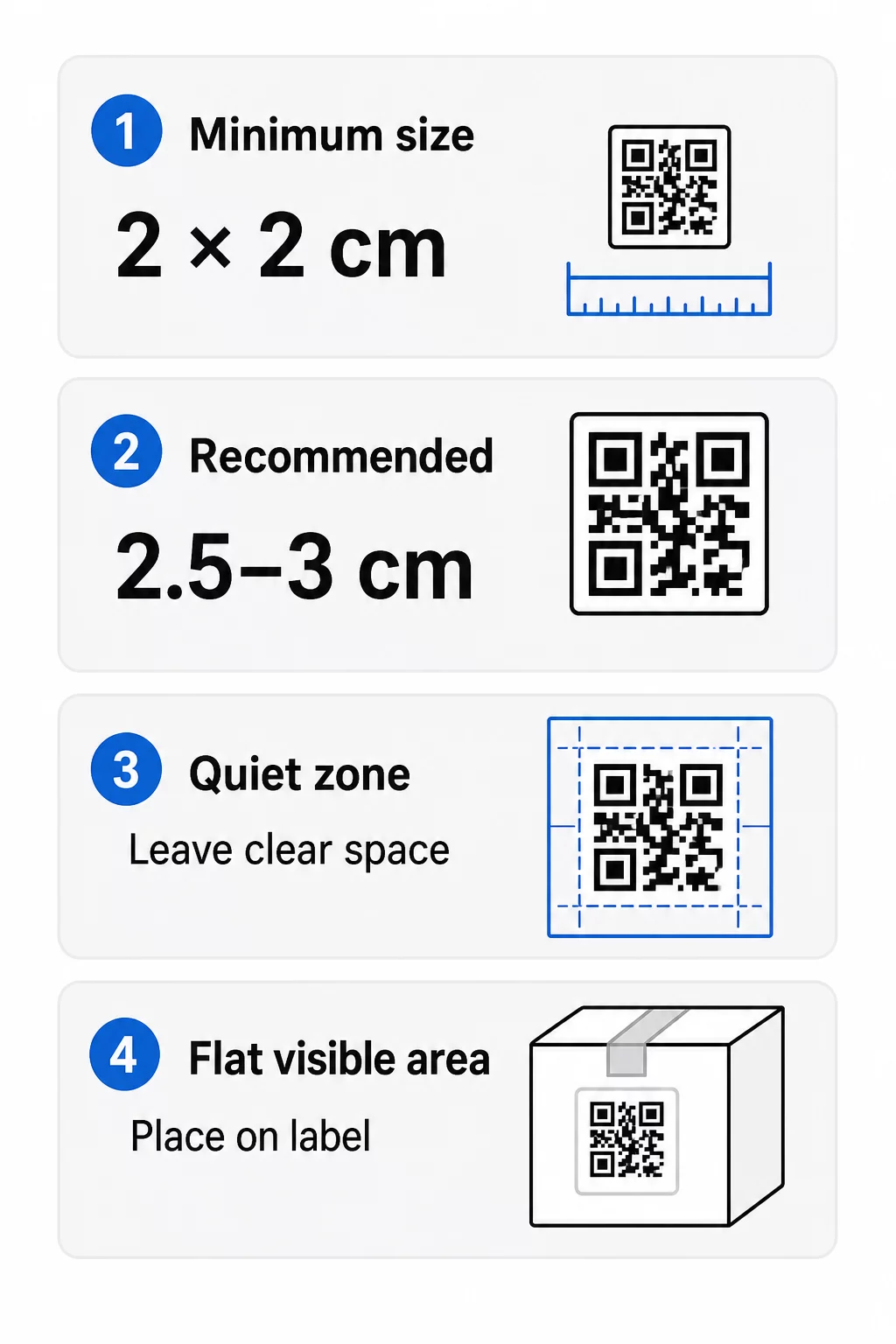
- Absolutes Minimum: 2 x 2 cm (0,8 x 0,8 Zoll) für einen Code, der aus Armlänge gescannt wird.
- Empfohlen für Produktverpackungen: 2,5 bis 3 cm pro Seite.
- Abstandsregel: Ein Telefon liest einen Code aus etwa der 10-fachen seiner Breite. Ein 3 cm Code scannt aus etwa 30 cm (12 Zoll); ein 10 cm Code aus etwa 1 m.
- Dichte Codes benötigen mehr Platz: Eine lange URL erzeugt ein dichteres Muster mit kleineren Modulen. Verwenden Sie einen kurzen Link oder einen dynamischen Code, um das Muster einfach zu halten.
Wenn Sie ein Logo hinzufügen, erhöhen Sie die Größe um 20 bis 30 Prozent. Wenn Sie benutzerdefinierte Farben verwenden, erhöhen Sie um 10 bis 15 Prozent. Betrachten Sie dies als Ausgangspunkte und bestätigen Sie dies mit einem Testdruck. Für verschiedene Druckmaterialien, siehe die QR-Code-Größenleitfaden für Druckmaterialien.
Platzierung: Wo der Code auf dem Etikett platziert werden sollte
- Platzieren Sie den Code auf einer flachen Fläche, nicht über Falten, Nähten, Kanten oder Perforationen.
- Wählen Sie eine sichtbare Fläche. Das Vorder- oder Rückseitenetikett ist besser als die Unterseite der Verpackung.
- Verwenden Sie einen Code pro Fläche, damit Scanner nicht verwirrt werden.
- Halten Sie die Ruhezone leer. Kein Text, Rahmen oder Kunstwerk darin.
- Fügen Sie einen kurzen Call-to-Action neben dem Code hinzu, wie z.B. „Für das Handbuch scannen“ oder „Zum Nachbestellen scannen“.
- Platzieren Sie den Code nicht unter Schrumpffolie, einer Heißsiegelung oder einer Lackkante, die Blendung erzeugt.
Gekrümmte Oberflächen benötigen besondere Sorgfalt. Auf Flaschen, Gläsern und Tuben biegt sich das Muster von der Kamera weg. Halten Sie den Code klein im Verhältnis zur Krümmung, platzieren Sie ihn auf dem flachsten Teil und testen Sie aus verschiedenen Winkeln. Das Drucken des Codes auf einem flachen Etikett, das auf der Krümmung sitzt, funktioniert besser als das Drucken auf einer stark gekrümmten Schulter.
Für weitere Informationen zur Platzierung, lesen Sie die Leitfaden zur QR-Code-Platzierung für Marketing.
Die Ruhezone: Der leere Rand, der das Scannen ermöglicht
Jeder QR-Code benötigt einen Ruhezone: ein leerer Rand um das gesamte Symbol. Er teilt dem Scanner mit, wo der Code beginnt und endet.
Die Standard-Ruhezone ist mindestens 4 Module breit auf allen vier Seiten. Ein Modul ist die Breite eines kleinen Quadrats. Bei einem typischen Etikettencode sind dies etwa 4 bis 8 mm. Drucken Sie Ihren Markennamen, einen Rahmen oder Etikettentext nicht darin. Wenn das Etikett auf einem belebten Hintergrund gedruckt wird, platzieren Sie den Code auf einem einfarbigen hellen Feld.
Kontrast: Dunkler Code, Heller Hintergrund
Scanner lesen den Unterschied zwischen dunklen Modulen und einem hellen Hintergrund. Ohne ausreichenden Kontrast wird das Muster nicht erkannt.
- Verwenden Sie einen dunklen Vordergrund auf einem hellen Hintergrund. Schwarz auf Weiß ist am zuverlässigsten.
- Streben Sie ein Kontrastverhältnis von mindestens 4:1 an.
- Vermeiden Sie ähnliche Farbtöne für Vorder- und Hintergrund, wie z.B. Dunkelgrün auf Mittelgrün.
- Vermeiden Sie helle auf dunkle (invertierte) Codes. Einige Scanner können diese nicht lesen, testen Sie sie daher vor der Verwendung.
- Vermeiden Sie Farbverläufe und Schatten über dem Muster.
- Vermeiden Sie das Drucken des Codes auf einer stark glänzenden, gerippten oder unebenen Oberfläche.
Individuelle Markenfarben können funktionieren, wenn Sie diese unter realen Lichtverhältnissen testen. Die Leitfaden für Best Practices zum Farbkontrast von QR-Codes enthält eine Vergleichstabelle gängiger Paarungen.
Fehlerkorrektur: Integrierter Beschädigungsschutz
QR-Codes haben vier Fehlerkorrekturstufen. Sie legen fest, wie viel des Codes beschädigt oder abgedeckt sein darf und trotzdem noch gelesen werden kann:
| Stufe | Wiederherstellungskapazität | Am besten für |
|---|---|---|
| L (Niedrig) | etwa 7% | Saubere Oberflächen, keine Logo-Überlagerung |
| M (Mittel) | etwa 15% | Allgemeine Produktetiketten |
| Q (Quartil) | etwa 25% | Etiketten mit einem Logo oder Markenelementen über dem Code |
| H (Hoch) | etwa 30% | Oberflächen mit Kratzer- oder Abnutzungsgefahr oder komplexe Designs |
Für die meisten Produktetiketten ist Stufe M oder Q eine gute Wahl. Bei einem Logo in der Mitte verwenden Sie Q oder H. Höhere Stufen machen das Muster dichter, sodass Sie möglicherweise eine etwas größere Druckgröße benötigen.
Druckauflösung und Dateiformate
- Vektordateien (SVG, PDF, EPS) lassen sich ohne Qualitätsverlust auf jede Größe skalieren. Verwenden Sie sie, wann immer Ihr Drucker oder Etikettendesigner sie akzeptiert.
- PNG oder JPEG: exportieren Sie in der endgültigen Druckgröße mit 300 dpi. 200 dpi können für kleine Codes auf glattem Papier funktionieren.
- Vergrößern Sie kein kleines PNG für ein größeres Etikett. Die Ränder werden unscharf und der Code könnte nicht mehr gescannt werden.
- Überprüfen Sie den Andruck. Tintenverlauf kann kleine Module auf saugfähigem Papier füllen.
Sowohl der QR-Code Generator mit Logo und der QR-Code-PNG-Generator können Dateien für den Druck exportieren. Überprüfen Sie die Download-Optionen im Tool für das benötigte Format.
Praktische Anwendungsfälle für QR-Codes auf Produktetiketten
Wählen Sie das Ziel danach aus, was der Kunde beim Halten des Produkts benötigt:
- Essen und Trinken: eine Seite mit Zutaten, Allergenen und Herkunft oder ein Rezept.
- Elektronik und Werkzeuge: ein Einrichtungs-Video, das Handbuch als PDF und ein Garantieformular.
- Kosmetik: Anwendungsschritte und eine vollständige Zutatenliste.
- Verbrauchsmaterialien: eine Nachbestellseite mit einem Fingertipp.
- Hardware und Verpackung: Recycling- oder Rückgabeanweisungen.
- Jedes Produkt: eine kurze Bewertungsanfrage oder ein Rabatt für die nächste Bestellung.
Die meisten davon profitieren von dynamische QR-Codes, da die Seite nach dem Druck des Etiketts aktualisiert werden kann. Beispiele nach Branchen finden Sie unter QR-Code-Lösungen nach Branche. Für Kundenbindung, Verpackung und Engagement, siehe Produkt-QR-Code-Lösungen.
Immer vor dem Druck in großem Maßstab testen
Vor einem vollständigen Drucklauf:
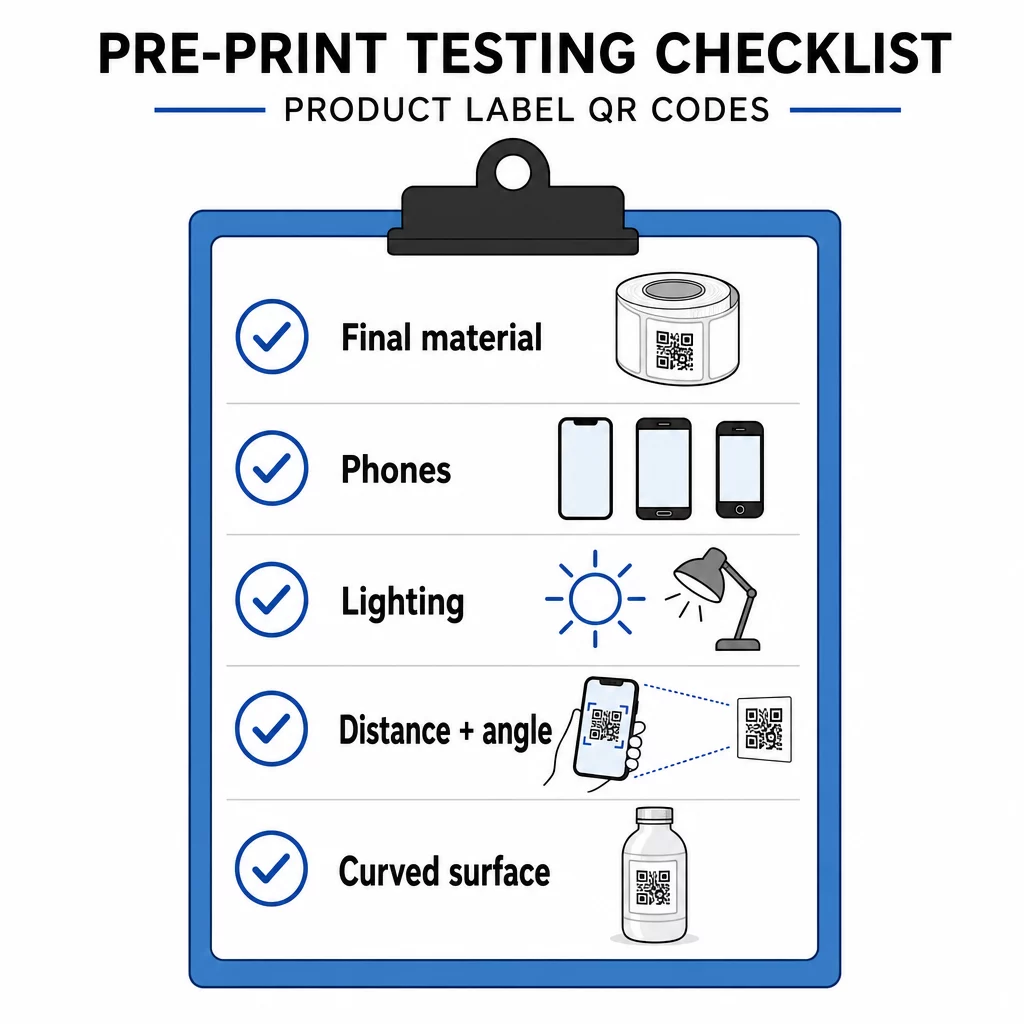
- Drucken Sie den Code in seiner endgültigen Größe auf das tatsächliche Etikettenmaterial.
- Scannen Sie mit mindestens zwei oder drei Telefonen, sowohl iPhone als auch Android.
- Scannen Sie bei hellem Licht, Tageslicht und gedämpftem Licht.
- Scannen Sie aus der Entfernung und dem Winkel, den ein Kunde verwenden würde.
- Auf einer gekrümmten Oberfläche scannen Sie von links, der Mitte und rechts.
- Öffnen Sie das Ziel auf einem Telefon mit mobilen Daten, nicht nur über WLAN.
QR-Code auf einem Produkt scannt nicht? Überprüfen Sie diese Punkte
- Zu klein: Vergrößern Sie den Code oder kürzen Sie den Link.
- Ruhezone zu schmal: Text oder Grafik berührt den Code.
- Geringer Kontrast: helle Farben, Farbverläufe oder ein invertierter Code.
- Blendung: glänzende Folie oder Lack reflektiert Licht. Verwenden Sie eine matte Oberfläche oder verschieben Sie den Code.
- Unscharfer Druck: geringe Auflösung oder Farbverlauf. Verwenden Sie eine Vektordatei und überprüfen Sie den Proof.
- Gekrümmte oder zerknitterte Oberfläche: Verschieben Sie den Code auf eine flachere Fläche.
- Falsches Ziel: der Link hat sich geändert. Bei einem dynamischen Code bearbeiten Sie das Ziel. Bei einem statischen Code müssen Sie neu drucken.
Für weitere Prüfungen, siehe die Leitfaden für bewährte Verfahren zur Lesbarkeit von QR-Codes.
Häufig gestellte Fragen
Das übliche Minimum beträgt 2 x 2 cm (0.8 x 0.8 Zoll) für Codes, die aus Armlänge gescannt werden. Für Verpackungen sind 2.5 bis 3 cm pro Seite sicherer. Als Richtwert liest ein Telefon einen Code aus etwa der 10-fachen seiner gedruckten Breite.
Wählen Sie das Ziel, erstellen Sie den Code in einem QR-Code-Generator, laden Sie eine Vektordatei oder ein hochauflösendes PNG herunter, fügen Sie es Ihrem Etikettendesign mit einer Ruhezone und einem kurzen Call-to-Action hinzu, drucken Sie dann ein Testetikett und scannen Sie es auf mehreren Telefonen, bevor Sie die gesamte Auflage drucken.
Nur mit einem dynamischen QR-Code. Ein dynamischer Code speichert einen kurzen Weiterleitungslink, sodass Sie das Ziel ändern können, ohne den gedruckten Code zu ändern. Ein statischer Code kann nach dem Drucken nicht mehr geändert werden.
Ein statischer Code läuft nie ab, da das Ziel im Muster gespeichert ist. Ein dynamischer Code funktioniert, solange Ihr Plan aktiv ist. Überprüfen Sie also Ihren Plan, bevor Sie Etiketten drucken, die jahrelang in Gebrauch bleiben werden.
Verwenden Sie ein Vektorformat: SVG, PDF oder EPS. Diese bleiben in jeder Größe scharf. Wenn Sie PNG verwenden müssen, exportieren Sie es in der endgültigen Druckgröße mit 300 dpi und vergrößern Sie es nicht.
Ja. Verwenden Sie die Fehlerkorrekturstufe Q oder H für ein Logo, vergrößern Sie den Code um 20 bis 30 Prozent, sorgen Sie für einen starken Kontrast zwischen Dunkel und Hell und testen Sie das gedruckte Etikett vor dem vollständigen Durchlauf.
Auf einer flachen, sichtbaren Fläche, wie z. B. dem Vorder- oder Rückseitenetikett, fern von Falten, Nähten und Rändern, mit einer leeren Ruhezone und einem kurzen Call-to-Action daneben.