Are you unsure which QR code type will best support your business goals? Choosing the wrong format can lead to broken links and high reprinting costs once your campaign is already in the hands of customers. This guide explains the functional differences between static and dynamic options to help you choose the right QR code for your campaign objectives.
How Static QR Codes Store Permanent Information
Static QR codes function as a digital version of printed text. They encode information directly into the visual pattern of the square, meaning the data becomes a permanent part of the image. Because the information is hard-coded, you cannot edit QR codes of this type once they are generated. If the destination URL changes or contains a typo, the existing code will become useless, and you must print an entirely new one.
These codes are most effective for information that will never need to change. Think of them like a stone engraving; once the pattern is set, it remains there for the life of the material. Common examples include sharing a home Wi-Fi password, linking to a permanent technical manual, or creating a vCard QR code for a business card where the contact details are unlikely to shift.
While static codes are often free to create and do not expire, they offer no way to see if anyone is actually scanning them. They do not support any form of tracking or scan metrics. Additionally, because the entire URL is stored in the pattern, a long web address will result in a very dense, complex-looking code that can be more difficult for older smartphones to scan quickly.
Why Dynamic QR Codes Offer Flexibility and Control
Dynamic QR codes act as a bridge rather than a direct container. Instead of encoding your final destination directly into the pattern, they use a short redirect URL. This intermediate link allows you to change the final destination at any time through a management dashboard without ever changing the physical appearance of the QR code.
The primary advantage here is the ability to fix errors or update content after printing. If you print a code on a thousand flyers and later realize the landing page has changed, you can simply update the redirect link. This provides significant benefits for marketing because it eliminates the waste and expense of reprinting physical materials.
Dynamic codes also feature a much simpler visual design. Because they only store a short redirect link, the pattern remains clean and high-contrast regardless of how long your actual destination URL is. This simplicity ensures faster scanning and a more professional appearance on branded materials.
Key Differences in Performance and Editability
Understanding the technical variations between these two types helps you avoid common implementation mistakes. While both look similar to the naked eye, their utility in a professional environment differs significantly.
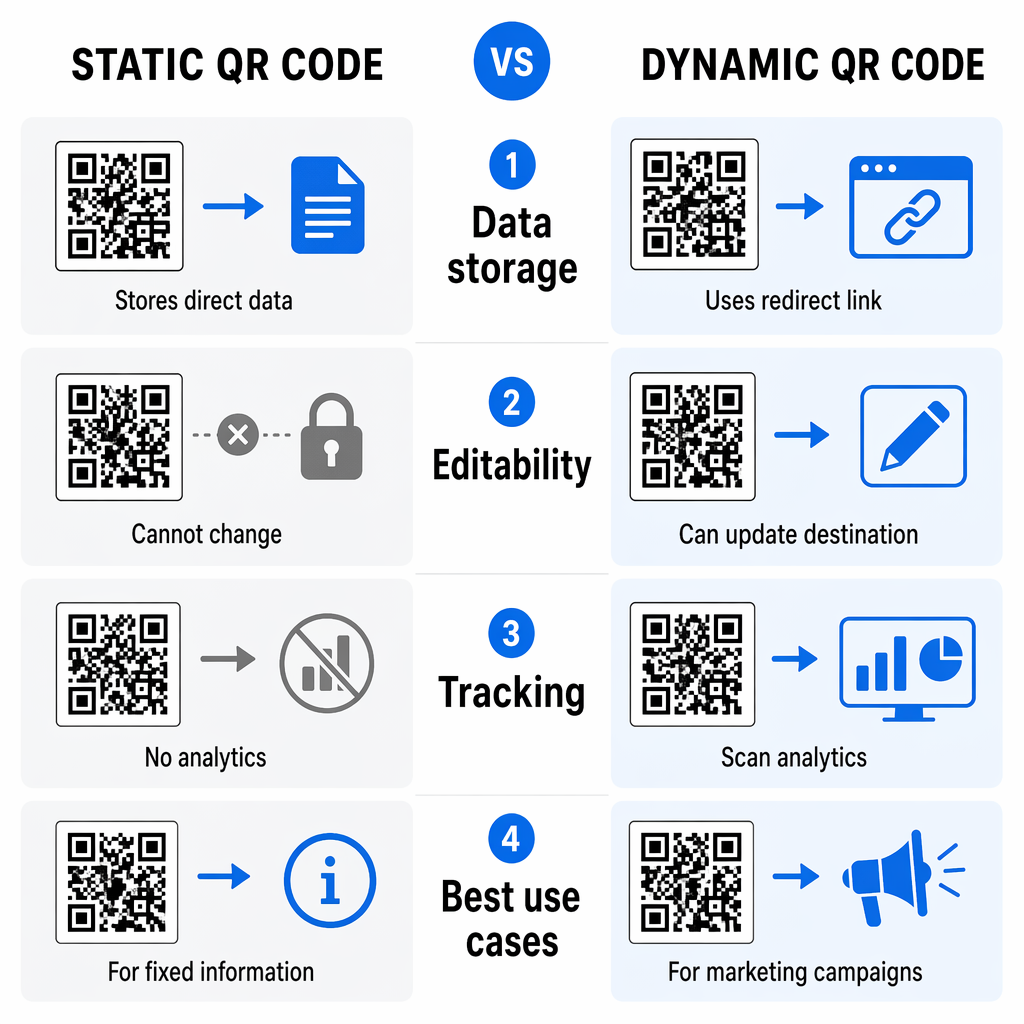
| Feature | Static QR Codes | Dynamic QR Codes |
|---|---|---|
| Editability | Cannot be changed after creation | Destination can be updated anytime |
| Tracking | No analytics available | Real-time scan data and insights |
| URL Structure | Encodes the full, direct URL | Uses a short redirect URL |
| Scanning Speed | Slower with complex data | Consistently fast and reliable |
| Cost Structure | Usually free | Subscription-based (saves reprinting) |
The lack of flexibility in static codes can be a major hurdle for growing businesses. For example, a restaurant using a static code for a digital menu would have to reprint every table sticker just to change a single price. In contrast, using a PDF QR code generator to create a dynamic code allows the owner to swap out the entire menu file in seconds.
Leveraging Tracking and Analytics for Campaign Growth
One of the most compelling reasons to choose dynamic technology is the ability to track QR code scans in real-time. Static codes are “dark” touchpoints; you have no way of knowing if your flyer in the subway is performing better than your poster in the mall. Dynamic codes turn every scan into a measurable data point.

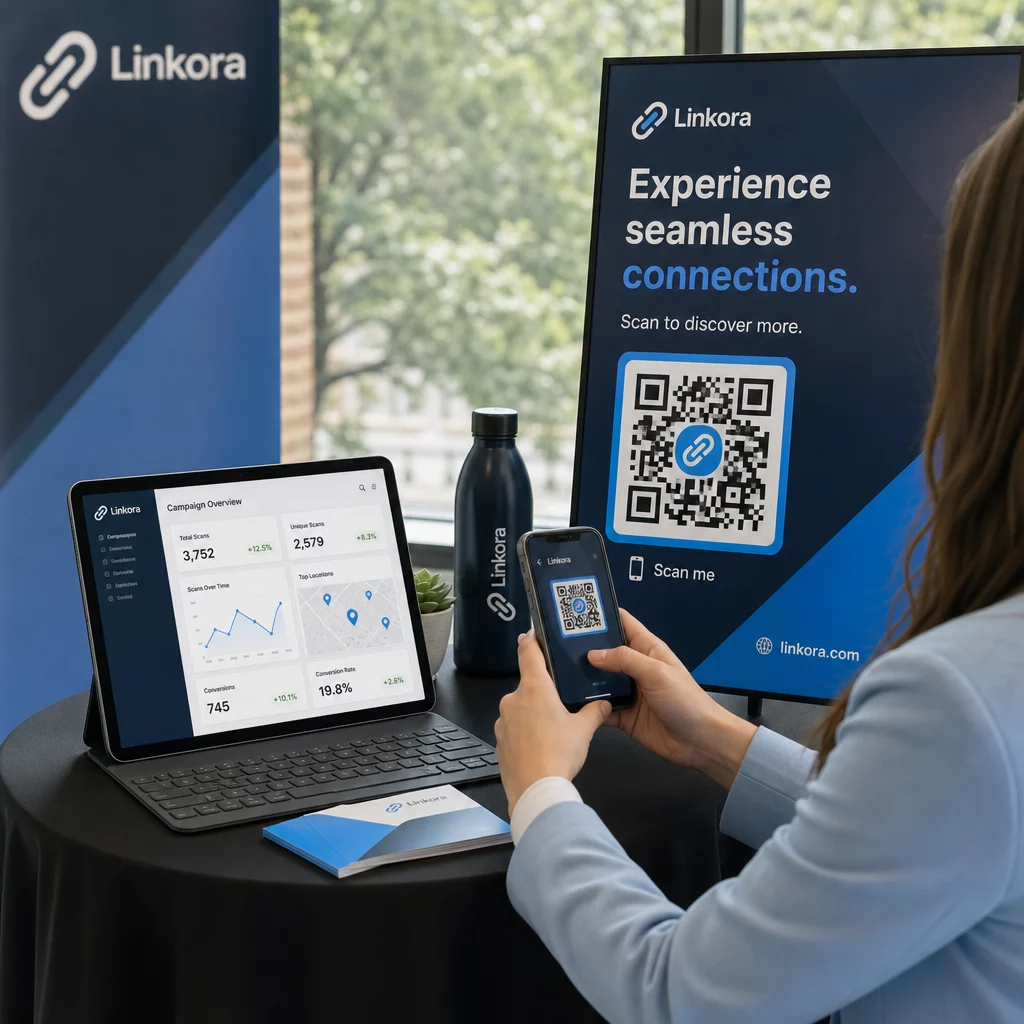
When you use a professional QR code generator, you can see exactly what data is collected from each interaction. This typically includes the total number of scans, the time of day the scan occurred, the geographic location of the user, and the type of device they used. This data allows marketers to calculate ROI accurately and optimize their physical placements based on actual engagement.
Monitor Your Campaign Performance Today Want to see exactly where and when your customers are scanning your materials? Use the Dynamic QR Code Generator to create trackable codes and access a full performance dashboard.
Selecting the Best Type for Your Campaign Objectives
The decision between static and dynamic formats should be based on your long-term needs for the specific asset. Before you generate your next code, consider the following environmental factors and goals.
- Fixed Information: Use static codes for permanent assets like Wi-Fi access in a lobby, business cards, or one-time personal events where tracking is unnecessary.
- Marketing and Retail: Use dynamic codes for any material that has a printing cost. This includes product packaging, billboards, and flyers.
- Data-Driven Decisions: Choose dynamic codes if you need to report on campaign success or if you plan to A/B test different landing pages.
- Technical Constraints: Be aware of QR code data limits when using static codes, as very long URLs can make the code unreadable at small sizes.
For many businesses, the choice eventually comes down to a comparison between free and paid tools. While free static generators are useful for simple tasks, the professional features of dynamic codes – such as password protection and scheduled redirection – provide a level of security and versatility that static codes cannot match.
Frequently Asked Questions
No. Because a static QR code has the data hard-coded into its pattern, it cannot be converted into a dynamic code later. You must choose the dynamic format before you print the code to ensure you have editing and tracking capabilities.
Dynamic QR codes depend on a redirect service provided by a generator platform. If your subscription to that platform ends or the service is discontinued, the redirect may stop working. Static codes, however, will work as long as the destination URL remains active.
Most professional platforms allow you to change the destination URL as often as you like. This makes them ideal for seasonal promotions or daily restaurant specials where the content needs to be refreshed frequently without changing the physical display.