Are you unsure what information your marketing campaigns collect every time a customer scans a printed code? Operating without tracking data leaves campaign performance completely blind, while tracking indiscriminately can trigger severe privacy compliance violations. Here is an overview of what dynamic QR codes track, how geolocation operates, and how to maintain full data compliance.
How Dynamic Routing Enables Data Collection
To understand data collection, you must first distinguish between static and dynamic codes. A static QR code stores destination data directly within its visual black-and-white pattern. Because a scanner reads that information directly and opens the link without intermediate steps, static codes cannot log user metrics or provide marketing feedback.
Dynamic QR codes operate differently by encoding a short redirect link rather than the final web address. When a user scans the code, their device contacts a secure redirect server before forwarding to the intended destination. This split-second intermediary stop allows the system to register essential technical metadata about the request. Evaluating static vs dynamic QR codes illustrates why dynamic architecture is essential for measuring campaign performance.
| Feature | Static QR Codes | Dynamic QR Codes |
|---|---|---|
| Data Storage | Encoded directly into the visual pattern | Encoded as an updateable redirect URL |
| Destination Updates | Impossible after printing | Editable at any time via dashboard |
| Analytics Tracking | Zero data collected | Comprehensive real-time interaction logs |
| Privacy Compliance | No data collected to govern | Requires responsible data handling |
Technical Data Points Captured During a Scan
When a user scans a dynamic code, the routing server captures standard web request headers. These records provide actionable diagnostic metrics without harvesting sensitive contact details.
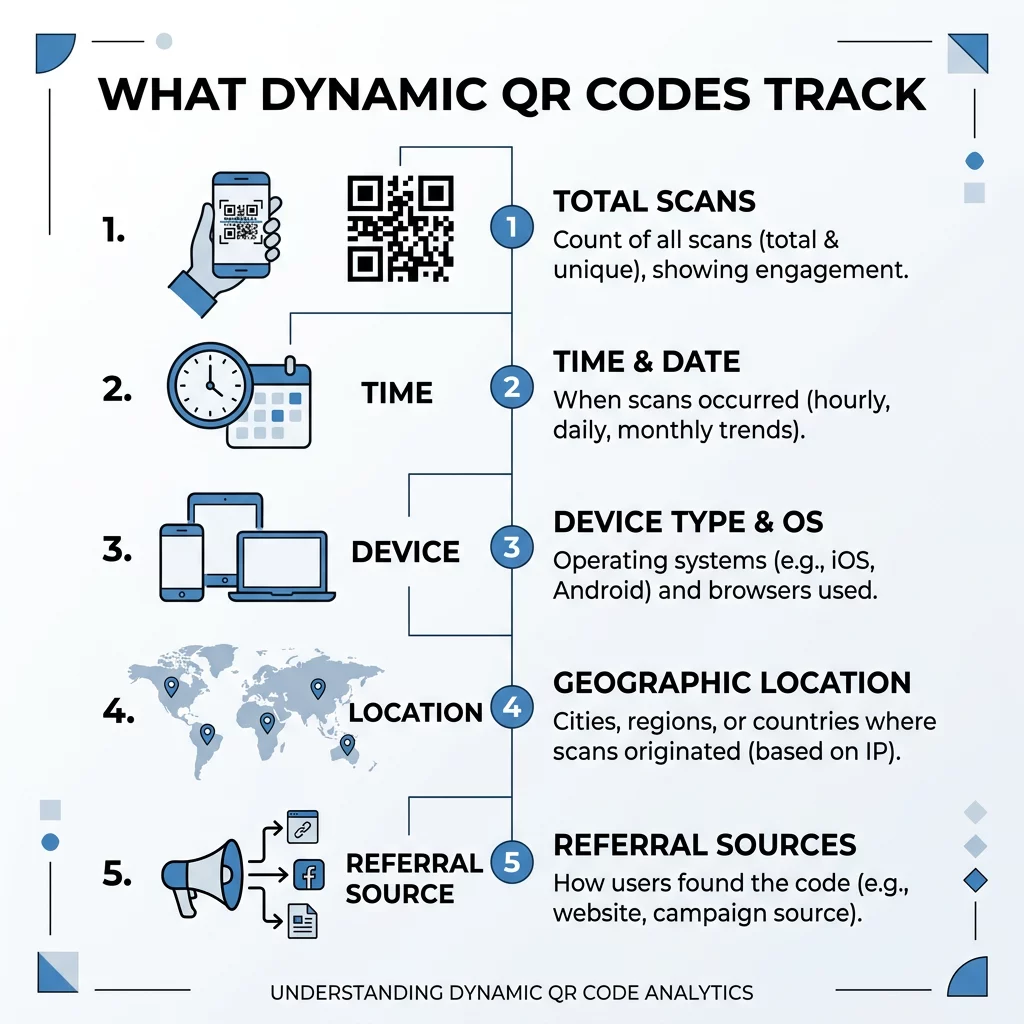
Platforms that provide tracking QR codes aggregate several specific data points:
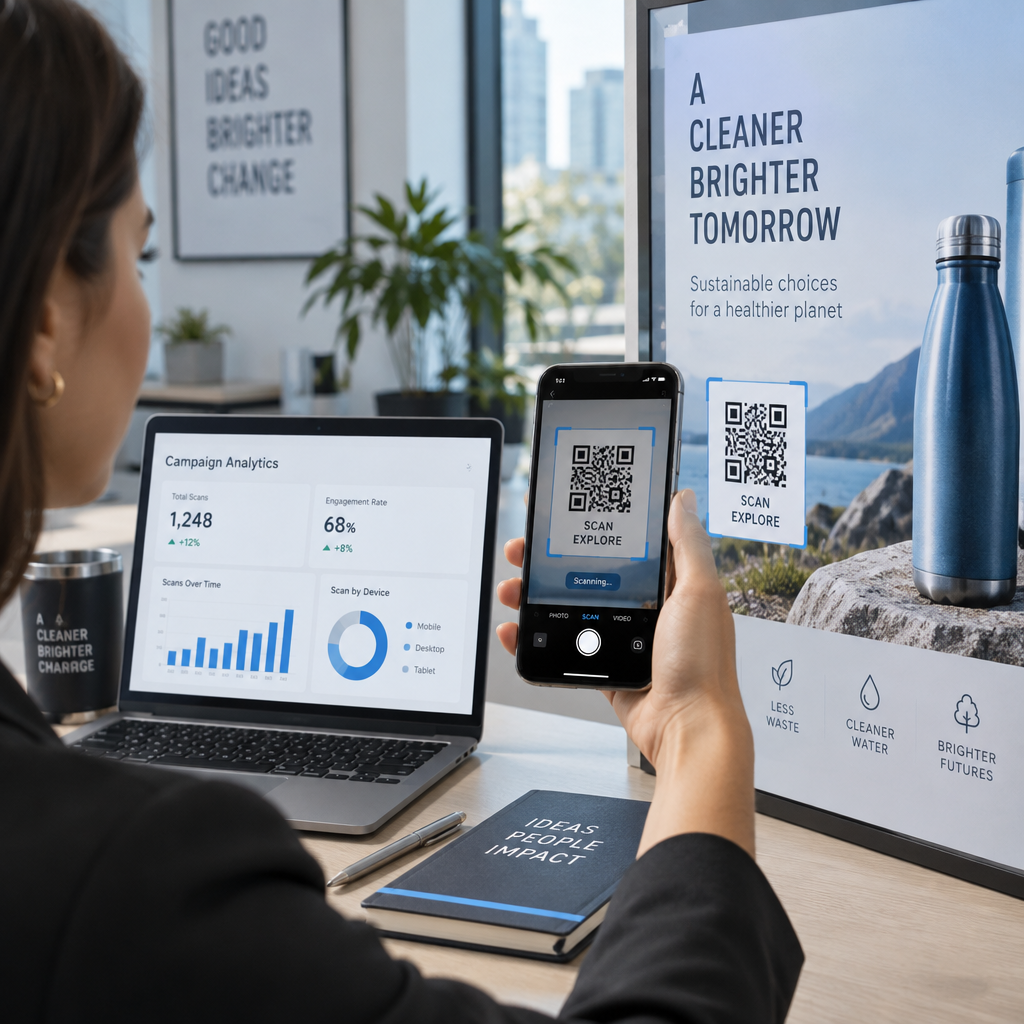
- Scan counts and frequency, distinguishing between total overall scans and unique individual interactions to evaluate audience expansion versus repeat visits.
- Precise timestamps, documenting the exact date and hour of each scan to reveal peak engagement windows throughout the day or week.
- Operating systems and device models, identifying whether visitors browse on iOS, Android, or desktop platforms alongside their specific browser versions.
- Placement paths and referral tags, utilizing custom UTM parameters embedded in destination links to separate traffic from flyers, window displays, direct mailers, or packaging.
Personal identifying details like legal names, phone numbers, or email addresses remain inaccessible during a standard scan. Such information is only captured if visitors voluntarily submit contact forms on your destination page.
Monitor Your Campaign in Real-Time Want to see exactly where and when your customers are scanning your materials? Use the Dynamic QR Code Generator to create trackable codes and access a full performance dashboard today.
How Geolocation Tracking Works and Its Limitations
Dynamic QR codes establish geographic location by evaluating the internet protocol address attached to the user’s mobile data connection or Wi-Fi network. The tracking server maps that network gateway to approximate regional boundaries.
This IP-lookup method generally produces city-level or regional accuracy, reaching roughly 50% to 70% accuracy for specific municipalities. It functions effectively for identifying which cities, states, or markets generate engagement without exposing private residences. Under major privacy statutes such as the California Consumer Privacy Act, standard IP addresses and broad regional data can still qualify as personal information if they can reasonably link to an individual household.
Precise geolocation tracking requires direct GPS coordinates, which pinpoint physical locations within a radius of 1,850 feet or less. Standard dynamic codes do not automatically access device GPS sensors. Accessing device-level precision requires the web browser to trigger an explicit permission prompt asking users to share exact coordinates. Because collecting precise geolocation without affirmative express consent violates regulatory standards, reputable platforms rely on aggregated, city-level IP analytics.
Privacy Regulations and Data Protection Standards
Because tracking systems process IP addresses and technical identifiers, organizations must align scanning implementations with major data protection frameworks. The EU General Data Protection Regulation and US state laws mandate clear disclosures regarding what metrics servers gather and why.
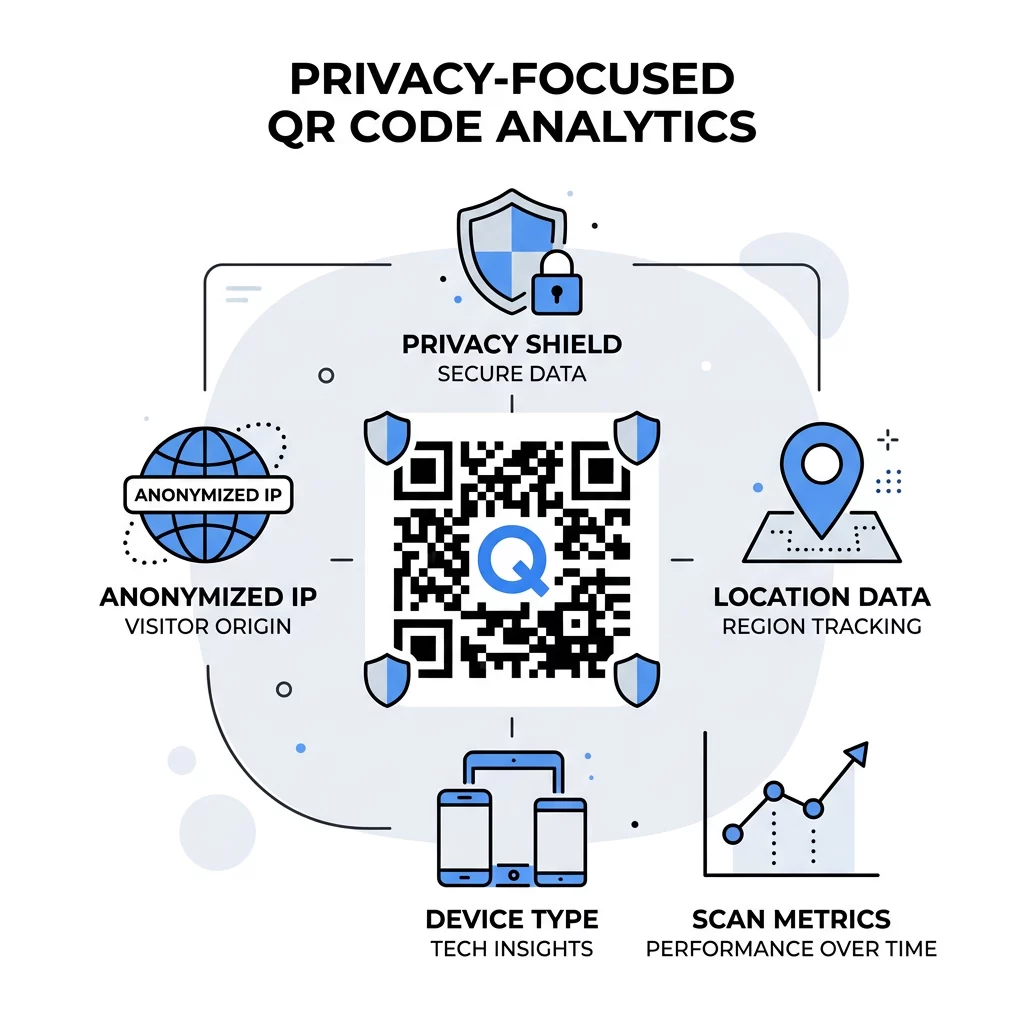
Complying with modern QR code privacy laws requires proactive data governance:
- Implement data minimization by gathering only the analytical parameters strictly necessary to evaluate campaign performance, as detailed in our guide to design QR codes with minimal data collection.
- Apply technical obfuscation by truncating or masking IP addresses and reducing timestamp precision to prevent individual identification through anonymization methods for QR code data.
- Establish defined schedules to securely purge historical scan records according to established data retention rules for QR code analytics.
- Provide upfront transparency by placing a concise notice alongside physical codes or on the landing page, directing users to your comprehensive privacy policy.
- Offer opt-out controls if scan metrics are shared with third-party advertising networks, honoring required consumer choices regarding data sales or sharing.
Transforming Scan Metrics into Marketing Results
Gathering scan metrics provides the quantitative foundation for refining offline marketing investments. Rather than guessing whether a print ad drove foot traffic or sales inquiries, you can evaluate real-world engagement immediately.
Accessing detailed QR code analytics enables marketing teams to:
- Compare placement performance by printing distinct dynamic codes across different physical collateral to identify which marketing channels drive conversions.
- Schedule contextual activations by analyzing peak scanning hours and matching digital offers to times when consumers engage most frequently.
- Optimize landing page experiences by detecting dominant mobile operating systems and screen sizes, ensuring destination pages load smoothly for your primary audience.
- Test messaging effectiveness through creative A/B testing, keeping printed codes identical while adjusting redirect destinations behind the scenes.
Combining these operational insights with other built-in QR code features turns printed assets into responsive, measurable customer touchpoints.
Frequently Asked Questions
No. Standard dynamic QR code scans only transmit technical connection metadata like device models, browser types, timestamps, and network-level IP addresses. Personal identifying details such as names, phone numbers, or email addresses remain inaccessible unless a visitor deliberately enters them into a web form on the destination site.
Standard dynamic QR scans deliver regional or city-level location accuracy based on the user’s internet connection, typically reaching 50% to 70% city accuracy. Street-level or GPS precision is not collected automatically because accessing exact coordinates requires explicit user permission through the mobile browser.
No. Static QR codes encode the destination URL directly into their visual graphic without routing through an intermediate server. Because the scanner opens the destination directly, static codes cannot log timestamps, unique scan numbers, device categories, or location estimates.
Making Data-Driven Decisions Responsibly
Dynamic QR codes bridge the gap between offline physical touchpoints and digital analytics. Understanding the precise data points these codes collect – from device types to regional connection areas – allows you to optimize marketing spend while safeguarding user privacy. Selecting platforms that support IP masking, clear retention rules, and secure HTTPS redirection ensures your measurement strategy stays fully compliant with evolving global standards. Explore our QR code analytics to discover how real-time scan metrics can transform your next campaign.