Are you losing marketing budget to expensive print runs that provide zero performance data? Investing in traditional vouchers without knowing which promotions actually drive foot traffic leaves your store guessing at true profitability. Evaluating the operational costs, user engagement, and attribution of QR codes versus paper coupons reveals which format delivers the strongest return.
Shifting Consumer Habits: Digital Adoption vs. Tangible Circulars
Shopper habits have evolved as mobile devices become central to everyday shopping routines. Research indicates that 43% of U.S. adults use digital coupons at local grocery stores through smartphone apps, compared to just 23% who physically cut vouchers from paper circulars. Consumers increasingly favor convenience, preferring digital discounts stored on devices rather than carrying physical clippings that are easily misplaced or left behind.
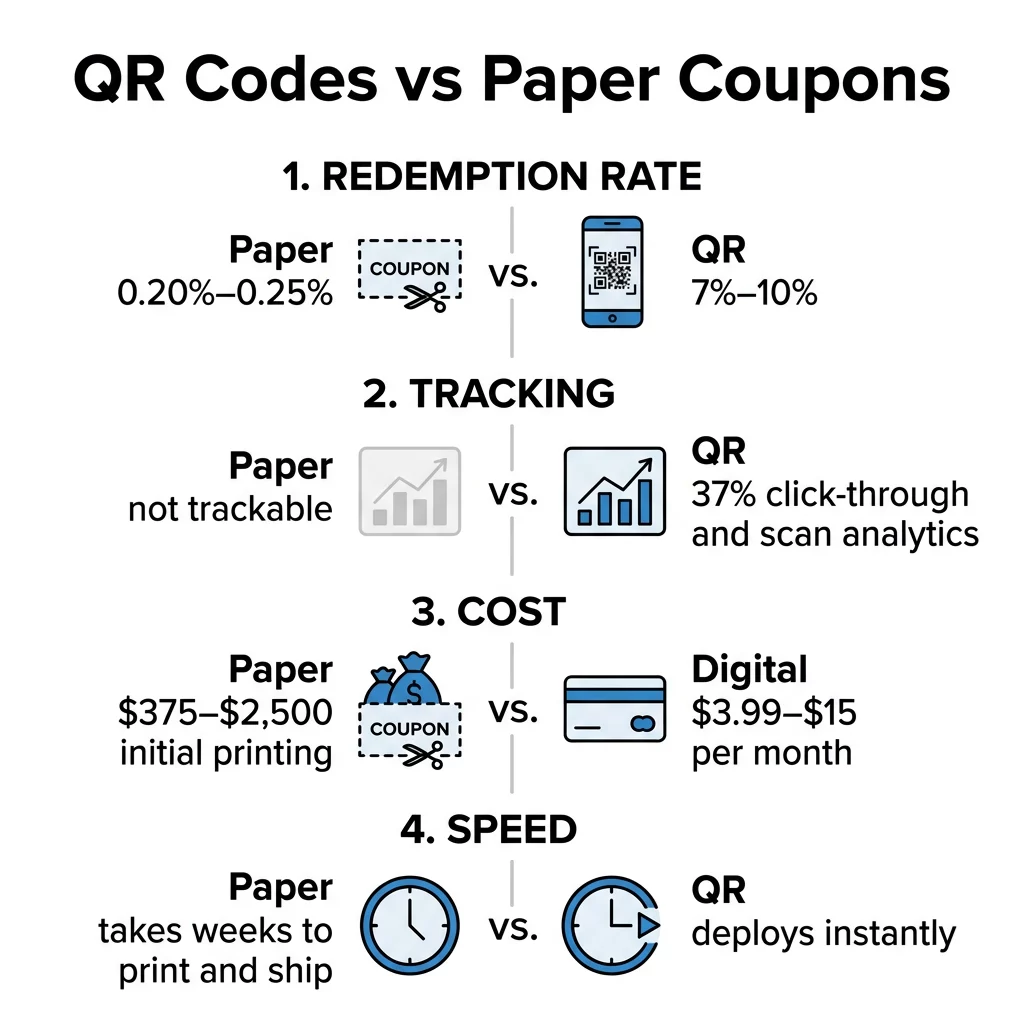
Despite this shift, physical media still maintains a footprint in specific retail scenarios. Printed vouchers offer tactile immediacy, which can benefit luxury gift packaging or promotions targeting audiences with limited digital connectivity. In the United States, roughly 16% of adults rely entirely on smartphones for internet access, and digital device adoption is uneven across demographics. The following breakdown highlights how the operational capabilities of both coupon formats compare:
| Operational Feature | Traditional Paper Coupons | QR Code Digital Coupons |
|---|---|---|
| Material Costs | Recurring design, paper, and distribution fees | Digital hosting and platform management |
| Campaign Agility | Fixed once printed; requires full reprinting | Updates links and values instantly in real time |
| Performance Tracking | POS redemption count only | Scans, timestamps, locations, and conversion events |
| Data Capacity | Limited to visible print space | Encodes rich links, multi-offer pages, and media |
| Hardware Needs | Standard visual cashier check or 1D barcode scanner | 2D optical scanner or customer smartphone camera |
Launch Interactive Mobile Promotions Ready to modernize your store offers without printing physical vouchers? Use the coupon QR code generator to build mobile-friendly discount pages your customers can access instantly.
Operational Costs and Campaign Flexibility
The ongoing expense of managing promotional campaigns differs substantially between physical media and dynamic digital codes. Paper campaigns involve substantial upfront investments in layout design, material stock, and distribution logistics. If a printed offer contains a typo, an incorrect expiration date, or poor inventory planning, correcting the error requires pulling the stock and paying for an entirely new print run.
Digital promotions solve this inflexibility through adaptable routing. When you implement a dynamic QR code generator, the code directs scanners to a short redirect URL rather than a static destination. This infrastructure allows you to adjust the landing page, swap discount percentages, or update promotional terms on the fly while leaving the printed display in place. By implementing dynamic codes for QR codes for retailers, stores eliminate unnecessary reprinting cycles and adapt promotional incentives according to real-time sales volume.
Tracking and Attribution: Solving the Data Blindspot
Traditional paper vouchers create an informational blindspot between distribution and the checkout counter. Marketers can calculate the number of circulars mailed and the number handed back at checkout, but they cannot evaluate customer behavior between those two steps. This gap obscures which circular locations generated consumer interest, how long shoppers considered an offer, or which store displays drew attention without converting.
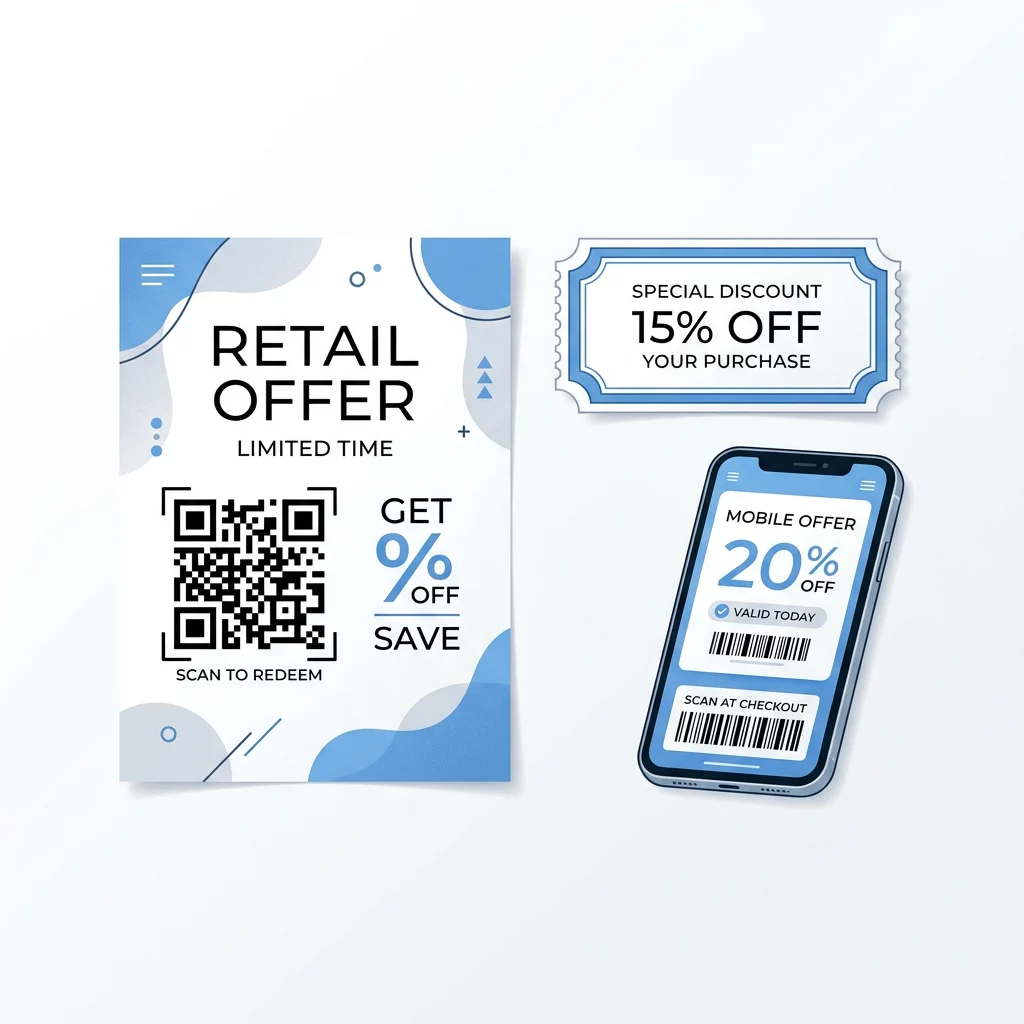
Digital codes transform offline marketing materials into measurable touchpoints. Through active tracking QR codes, businesses monitor scan frequencies, identify geographic trends at the country or city level, and discover peak shopping hours.
- Record aggregate scans and unique scans to evaluate actual consumer reach.
- Identify top-performing physical placements across banners, flyers, and windows.
- Combine codes with UTM parameters to track offline marketing ROI with QR codes inside web analytics platforms like Google Analytics.
- Run controlled tests comparing two offer variations to determine which discount drives higher redemption.
Security, Fraud Prevention, and Consumer Trust
Coupon fraud and duplicate redemptions cut directly into retail profit margins. Physical vouchers are vulnerable to photocopying, unauthorized duplication, and cashier oversight when checking expiration dates. While barcodes printed on paper add basic verification, they rarely stop customers from redeeming identical photocopies at separate registers or across multiple franchise locations.
Digital systems provide stronger operational barriers against abuse through automated redemption validation and expiration logic. However, digital delivery introduces distinct trust challenges:
- Tampering risks occur when malicious actors paste fraudulent codes over legitimate signage to initiate phishing schemes.
- Consumer hesitation can arise if shoppers encounter unbranded landing pages or unclear scanning instructions.
- Verification gaps appear if checkout registers rely on legacy laser scanners that cannot read 2D matrix codes directly from smartphone screens.
Maintaining brand trust requires printing codes with clear brand logos, testing scanning hardware across all checkout points, and providing distinct terms of use on the digital destination.
Strategic In-Store Execution and Placement
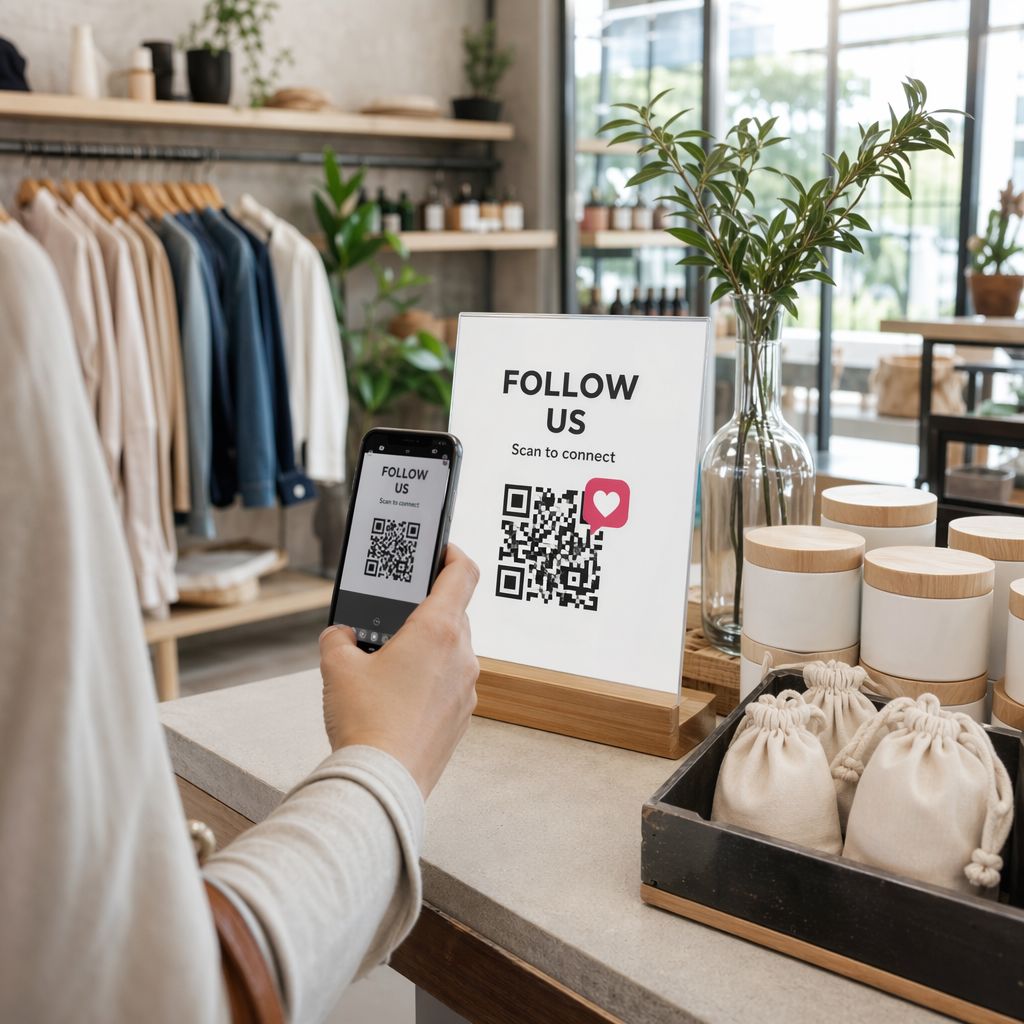
Maximizing the effectiveness of coupon campaigns requires proper physical deployment. A digital coupon is only as effective as the sign that carries it. If customers cannot scan the code quickly, they abandon the interaction entirely.
To improve visibility and redemption, explore top QR code placements for retail stores such as entrance displays, shelf talkers, and checkout aisles. Adhering to fundamental technical standards ensures smooth scanning across various mobile devices:
- Maintain a high-contrast ratio by placing dark code patterns against a plain, light background.
- Size printed codes at a minimum of 0.8 x 0.8 inches (2 x 2 cm) for arm’s length interactions on brochures or flyers.
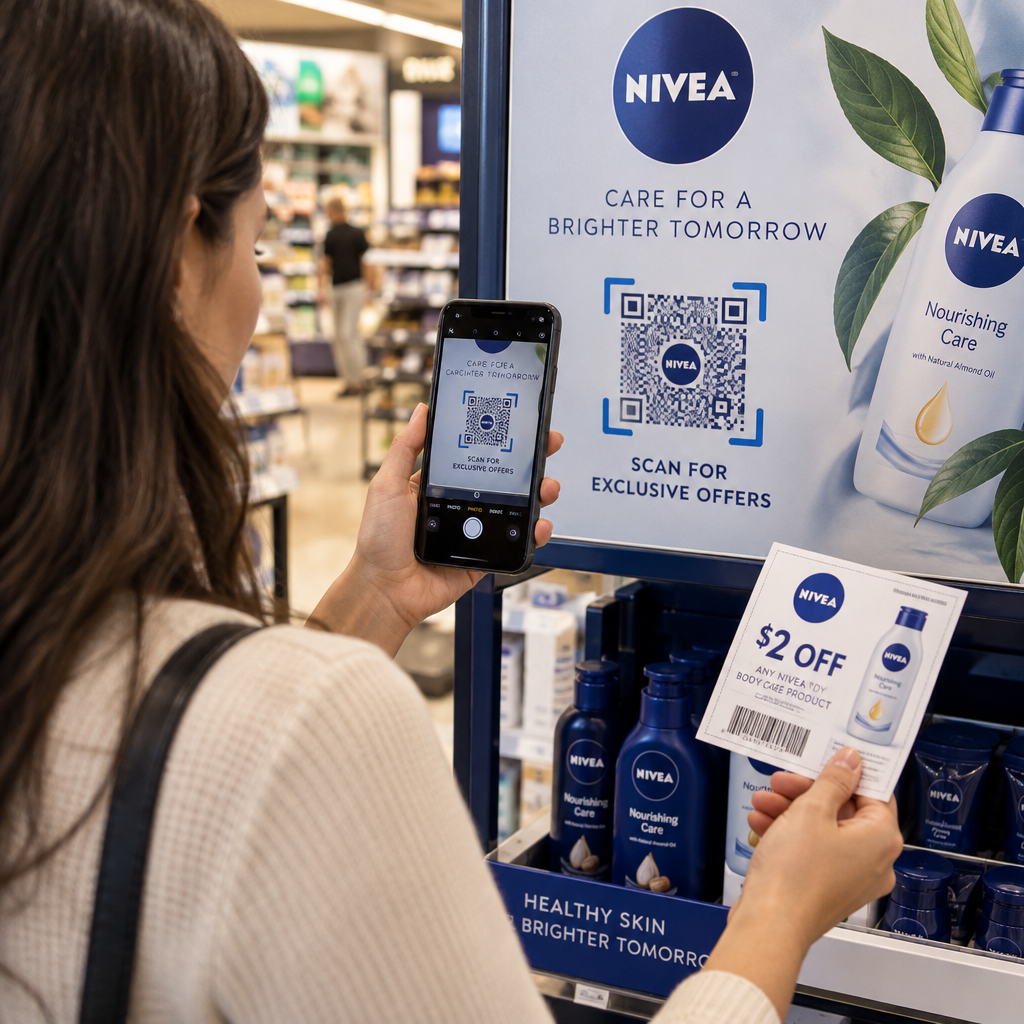
- Add clear call-to-action text around the code frame informing shoppers of the discount value they will receive.
- Explore broader QR code marketing possibilities by linking codes to multi-coupon bundles or loyalty sign-up portals.
Choosing the Best Promotion Strategy for Your Business
While paper vouchers retain utility for tactile mailers and demographics with low smartphone usage, digital QR code coupons deliver superior flexibility, cost efficiency, and performance tracking. The most effective retail strategy blends physical reach with digital intelligence: deploy eye-catching printed signage, but power that signage with dynamic codes that direct shoppers to mobile offers.
Start replacing static vouchers with trackable digital discounts today. Build mobile promotions that reduce print waste, protect your margins, and capture actionable customer insights on your store floor.
Frequently Asked Questions
Checkout lanes equipped with modern 2D optical image scanners can read QR codes off smartphone screens, but older 1D laser scanners cannot read 2D matrix barcodes.
You can update the discount value or destination link after printing only if you generate the campaign using a dynamic QR code rather than a static code.
QR codes designed to be scanned at arm’s length on promotional flyers or shelf talkers must measure at least 0.8 x 0.8 inches (2 x 2 cm) with strong visual contrast.