Are you looking for a simple way to modernize your rental property and improve guest reviews? Failing to provide easy access to essential information can lead to frustrated guests and lower ratings. Using QR codes allows you to digitize the guest experience and streamline communication from check-in to check-out.
Simplify Network Access with a Wi-Fi QR Code
Providing high-speed internet is a top priority for most travelers, and Airbnb recommends placing the Wi-Fi password first in your house manual. However, manually typing long, complex passwords often leads to typos and guest frustration. By using a WiFi QR code generator, you allow guests to scan and connect automatically without any manual data entry.
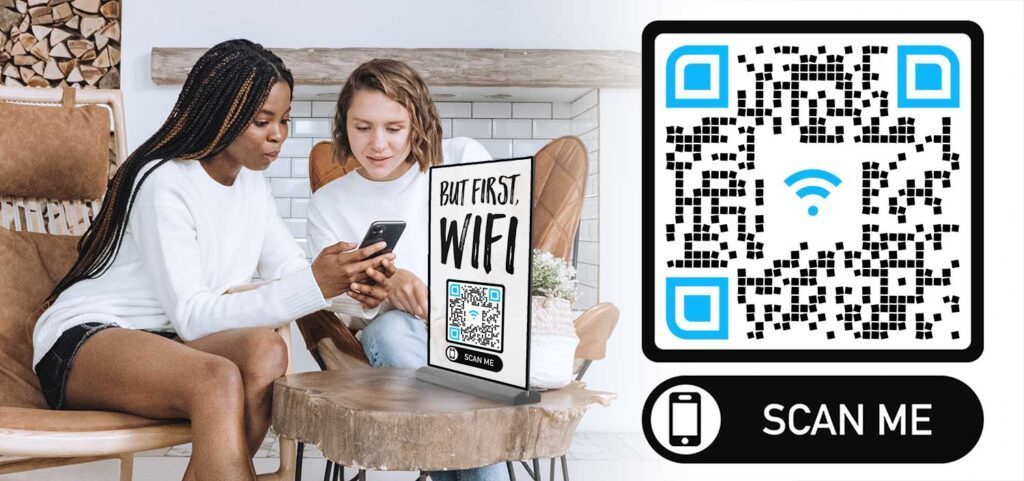
Think of the QR code as a digital key to your network; it removes the friction of technical setup. This approach also improves hygiene, as guests do not need to handle a physical card that has been touched by previous visitors. You can mount the code on a wall in a central location, such as the living room or entryway, to ensure it is the first thing guests see.
Connect Your Guests Instantly Want to eliminate the hassle of sharing network passwords? Use our WiFi QR code generator to create a scan-to-connect experience for your rental property.
Streamline House Manuals and Instructions
Every property has unique quirks, such as a specific way to start the dishwasher or a secret to locking the balcony door. While Airbnb suggests keeping a house manual short and easy to understand, physical booklets can become worn or misplaced over time. A PDF QR code generator allows you to link your instructions directly to a digital file that guests can save to their smartphones.
Sharing information digitally ensures your guests always have the latest version of your rules and safety protocols. This is particularly useful for explaining complex appliances or highlighting safety measures. Because these codes can be placed exactly where the information is needed – such as next to the coffee machine or on the thermostat – guests get the help they need without having to search through their email inbox.
Enhance Local Travel with Digital Guidebooks
Creating a guidebook saves you time by putting all your local suggestions in one accessible place. While Airbnb guidebooks are public and easily shared, a Google Maps QR code generator can provide instant navigation to your favorite local spots. You can place these codes in the kitchen or near the front door to help guests find the best nearby restaurants, grocery stores, or attractions.
Digital guidebooks are more interactive than traditional maps. When a guest scans a location-based code, it opens directly in their navigation app, providing real-time directions and business hours. This level of convenience often translates into better reviews and helps you stand out as a host who cares about the guest’s total experience in the city.
Modernize the Check-in Process
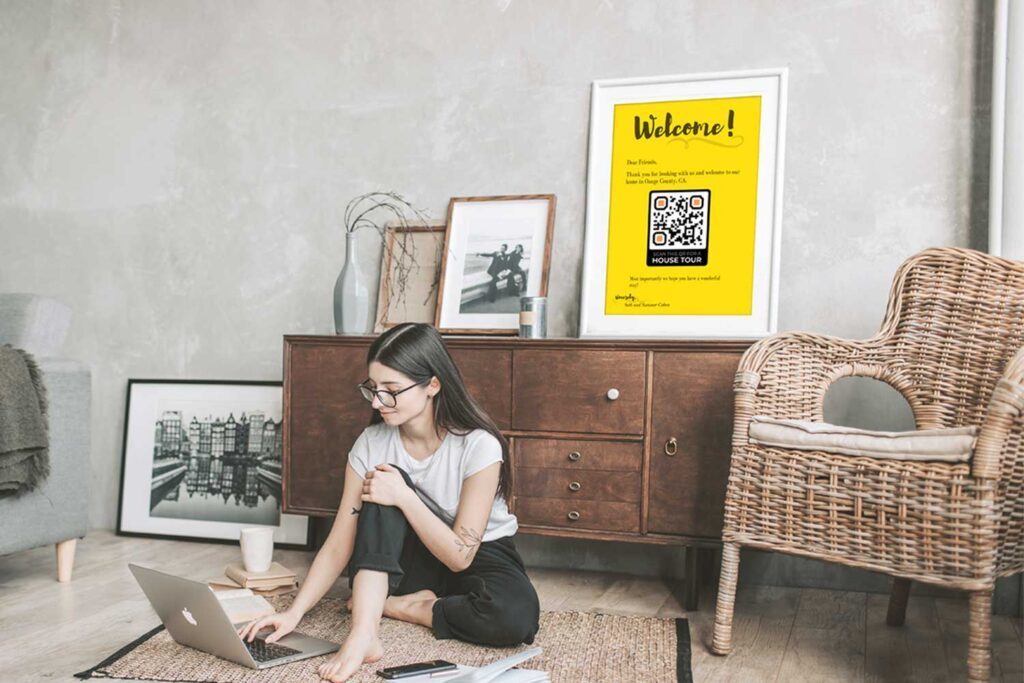
Self-check-in has become a standard expectation for many travelers, allowing guests to access the listing via smart locks or lockboxes at their convenience. You can further improve this experience by using a link QR code generator to provide a welcome video or a virtual house tour. A short video greeting can make a remote check-in feel more personal and welcoming.
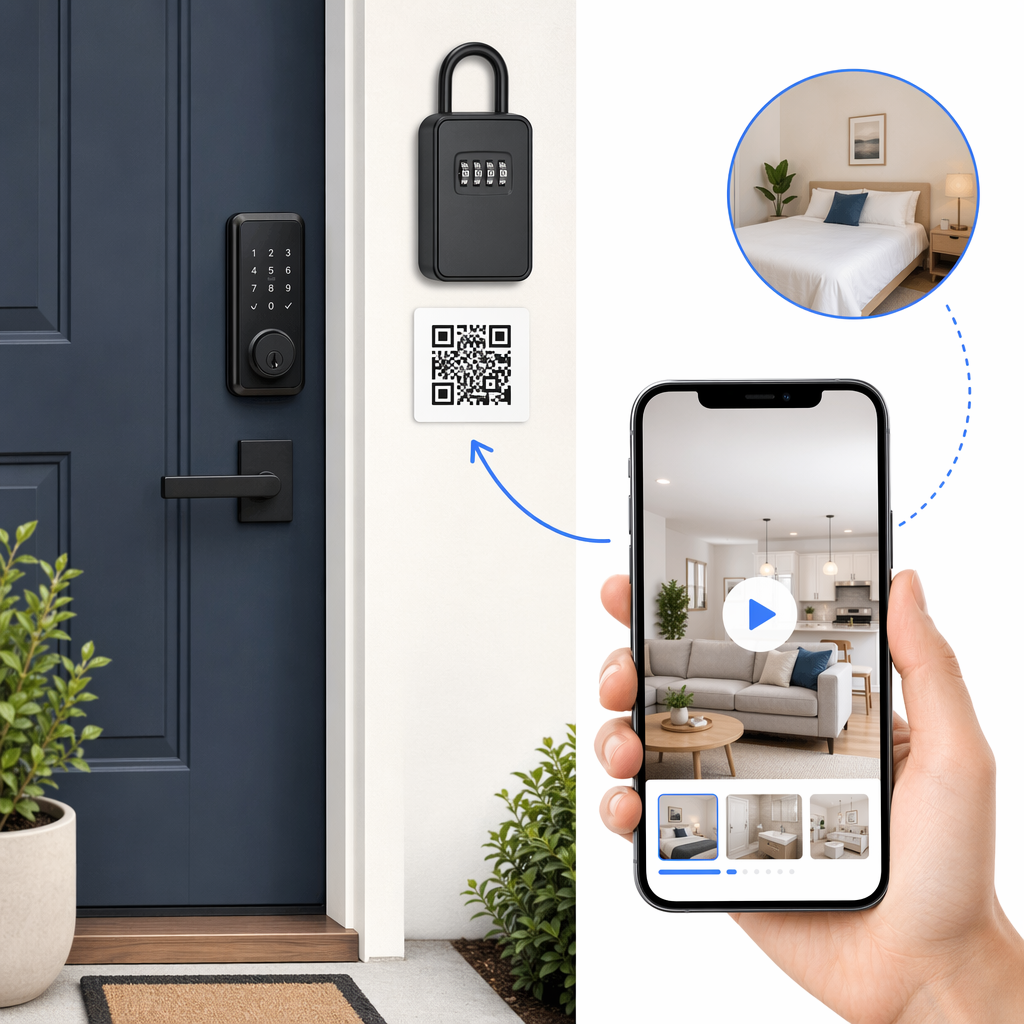
Using video content helps you point out specific details that might be difficult to explain in text, such as how to operate a specific keypad or where to find extra linens. This proactive communication reduces the number of repetitive questions you receive and ensures guests feel confident as soon as they step through the door.
Create Your Custom Airbnb QR Code Ready to streamline your guest check-in process and share your house manual digitally? Use our QR code generator to create a professional, branded code for your rental listing today.
Why Dynamic QR Codes are Better for Hosts
When creating codes for your property, it is important to understand the difference between static and dynamic options. A dynamic QR code generator creates a code with a short URL that acts as a redirect. This technical structure offers several practical benefits for property management:
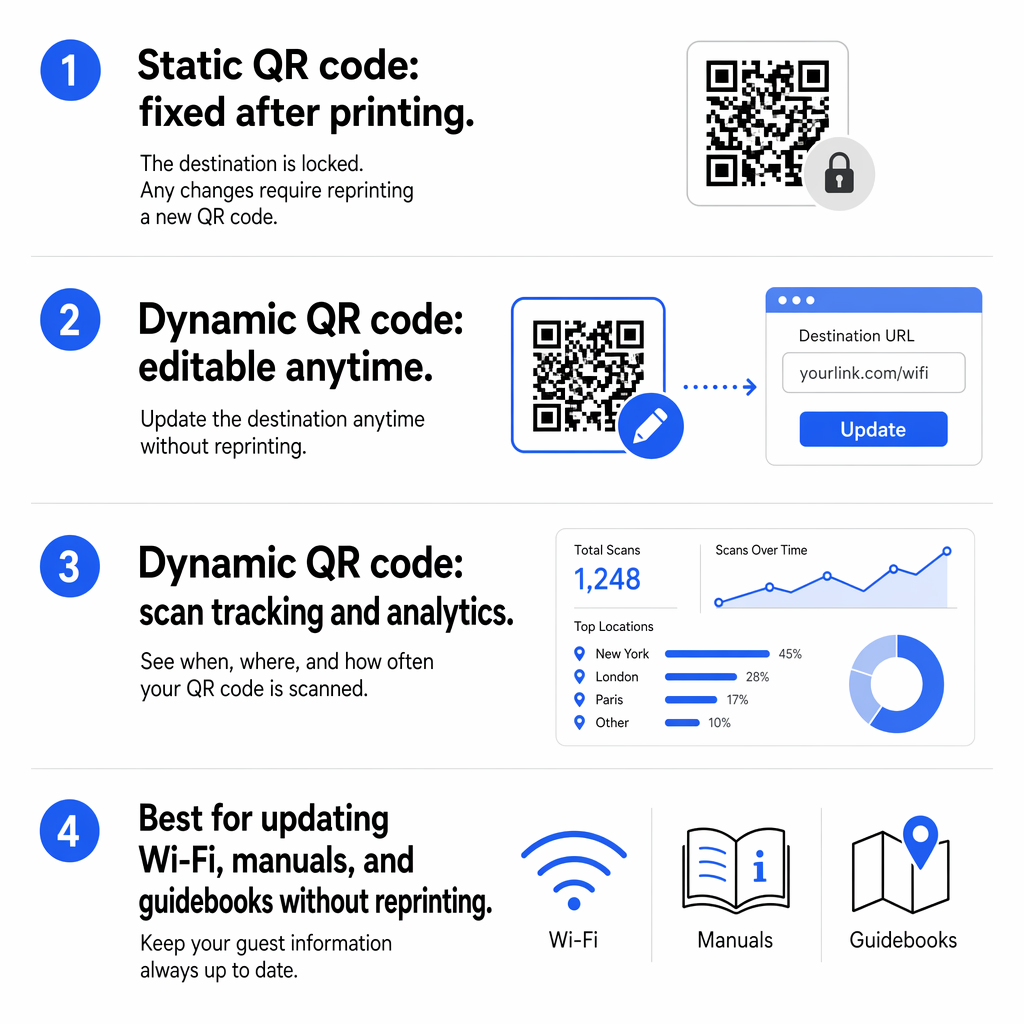
- You can edit the destination link at any time without having to reprint your physical signs or frames.
- The codes often feature a smaller data payload, making them easier for smartphones to scan from a distance.
- You gain access to scan tracking and real-time analytics, such as how many guests actually opened the house manual.
- If you change your Wi-Fi password or update your digital guidebook, you can update the code’s destination instantly from a central dashboard.
Best Practices for Scannable Placement
To ensure your codes are useful, they must be easy to find and scan. Following QR code usability best practices will help you avoid common technical issues that prevent guests from accessing your content.
- Maintain high contrast by using dark colors for the code on a light background so the scanner can clearly distinguish the modules.
- Ensure the code is printed at an appropriate size, generally at least 1 x 1 inch for items that will be scanned from a short distance.
- Avoid placing codes on highly reflective surfaces or in dark corners where glare or poor lighting could interfere with the scan.
- Include a clear call-to-action (CTA) near the code, such as “Scan for Wi-Fi” or “Scan for House Manual,” so guests know what to expect.
Implementing QR codes in your rental property is an efficient way to modernize your hospitality. By digitizing your Wi-Fi access, house manuals, and local recommendations, you provide a seamless experience that guests will appreciate. Start by identifying the most frequent questions your guests ask and replace those manual interactions with a scannable solution today.
Frequently Asked Questions
You can use a dedicated WiFi QR code tool by entering your network SSID (name) and password. Once generated, you can print the code and place it in a visible area like the living room or entryway.
Yes, if you use a dynamic QR code generator. This allows you to update the link or file behind the code at any time, which is helpful if you change your house manual or local recommendations.
Place them where they are most relevant: Wi-Fi codes in the living room, house manuals on the kitchen counter, and check-out instructions or guidebooks near the front door.