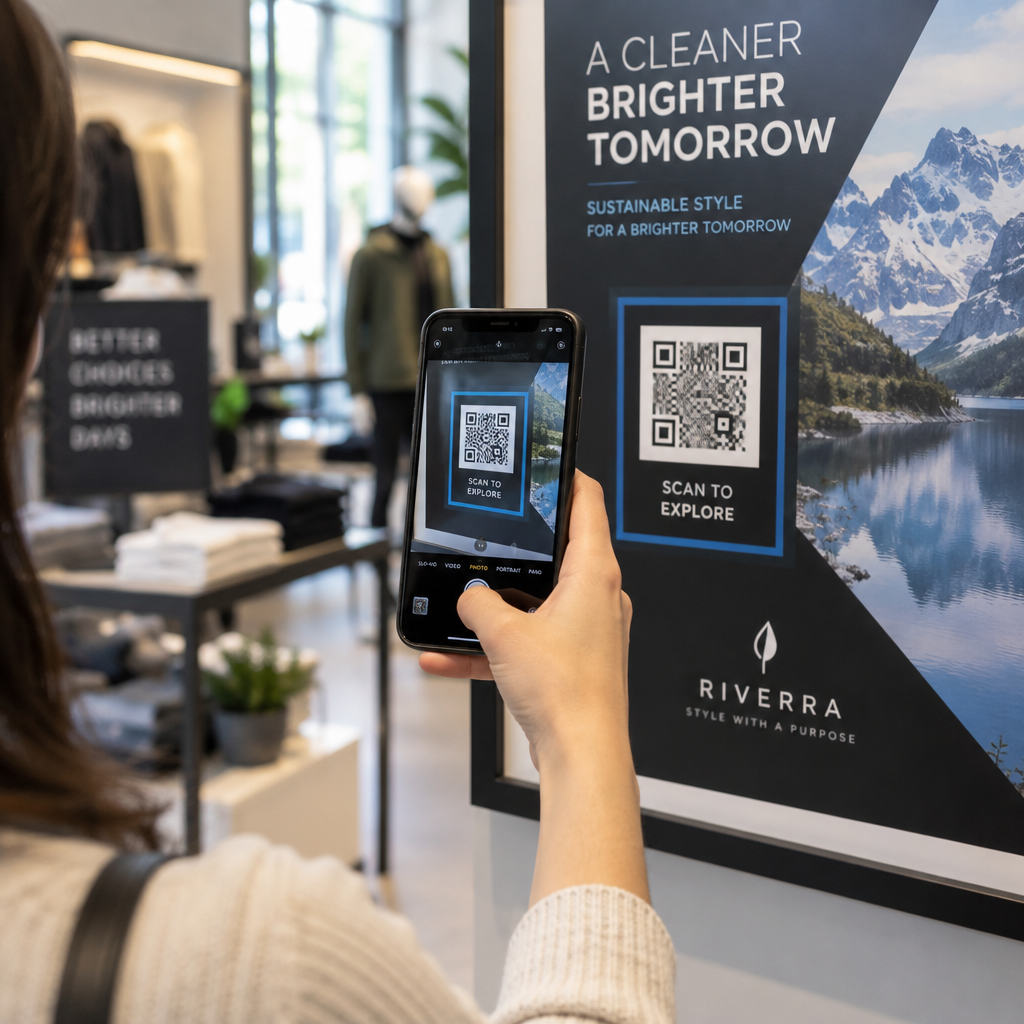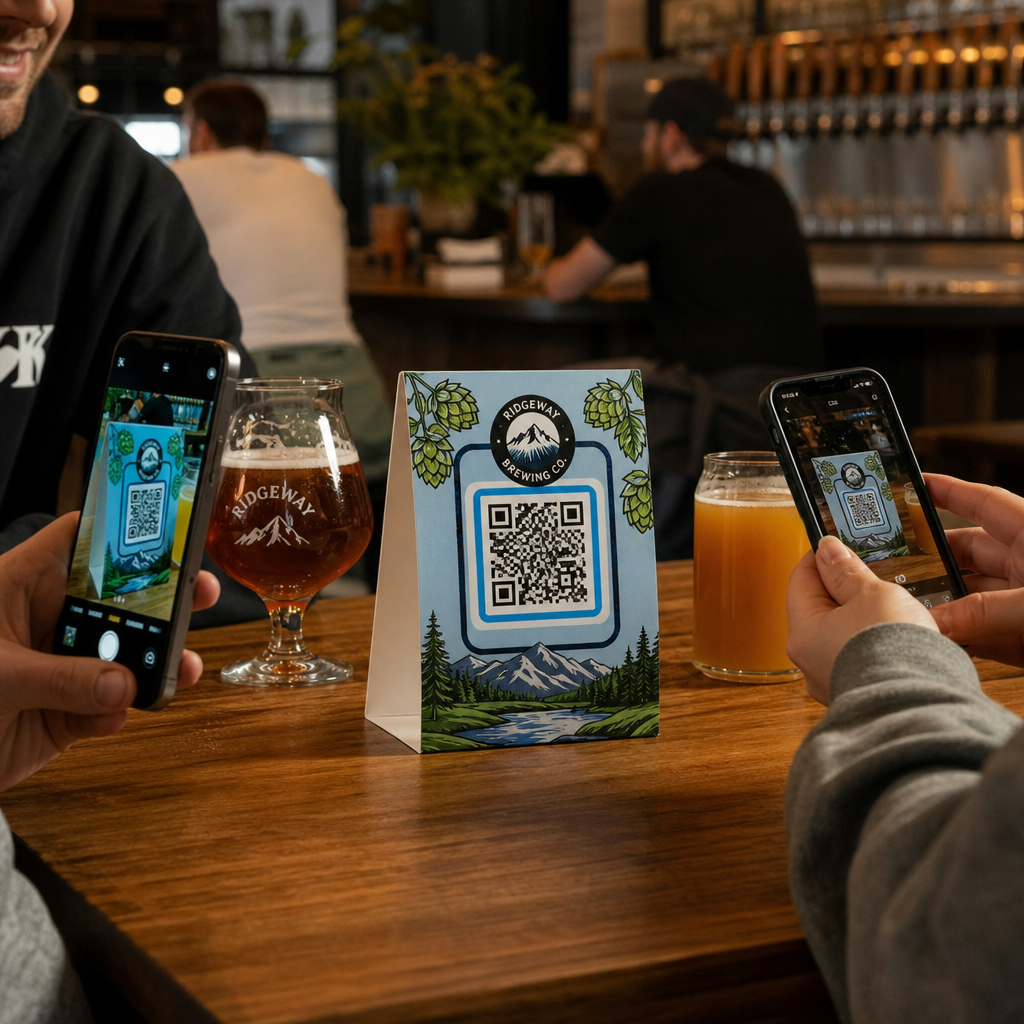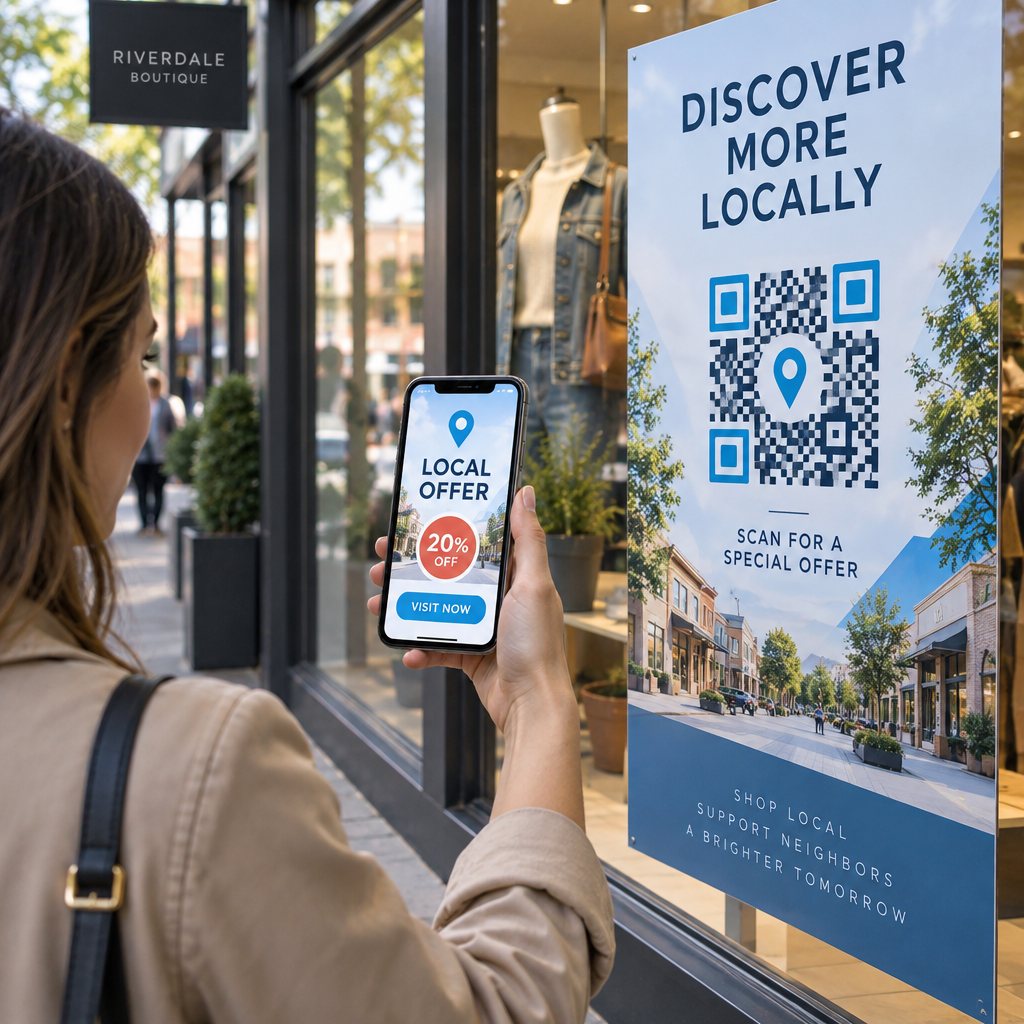
Are you struggling to bridge the gap between physical ads and local digital experiences? When customers see a generic landing page instead of an offer from the store they are standing in, engagement drops and potential sales vanish. Geotargeted QR codes create personalized, location-aware journeys that boost regional campaign performance.
Understanding Geotargeted QR Codes
A geotargeted QR code is a dynamic QR code configured with location-based redirection rules. While evaluating static vs dynamic QR codes reveals that static codes permanently store fixed data, dynamic codes route users through an updateable short link. Geotargeting builds upon this architecture by evaluating the scanner’s geographic origin before forwarding them to a specific URL.
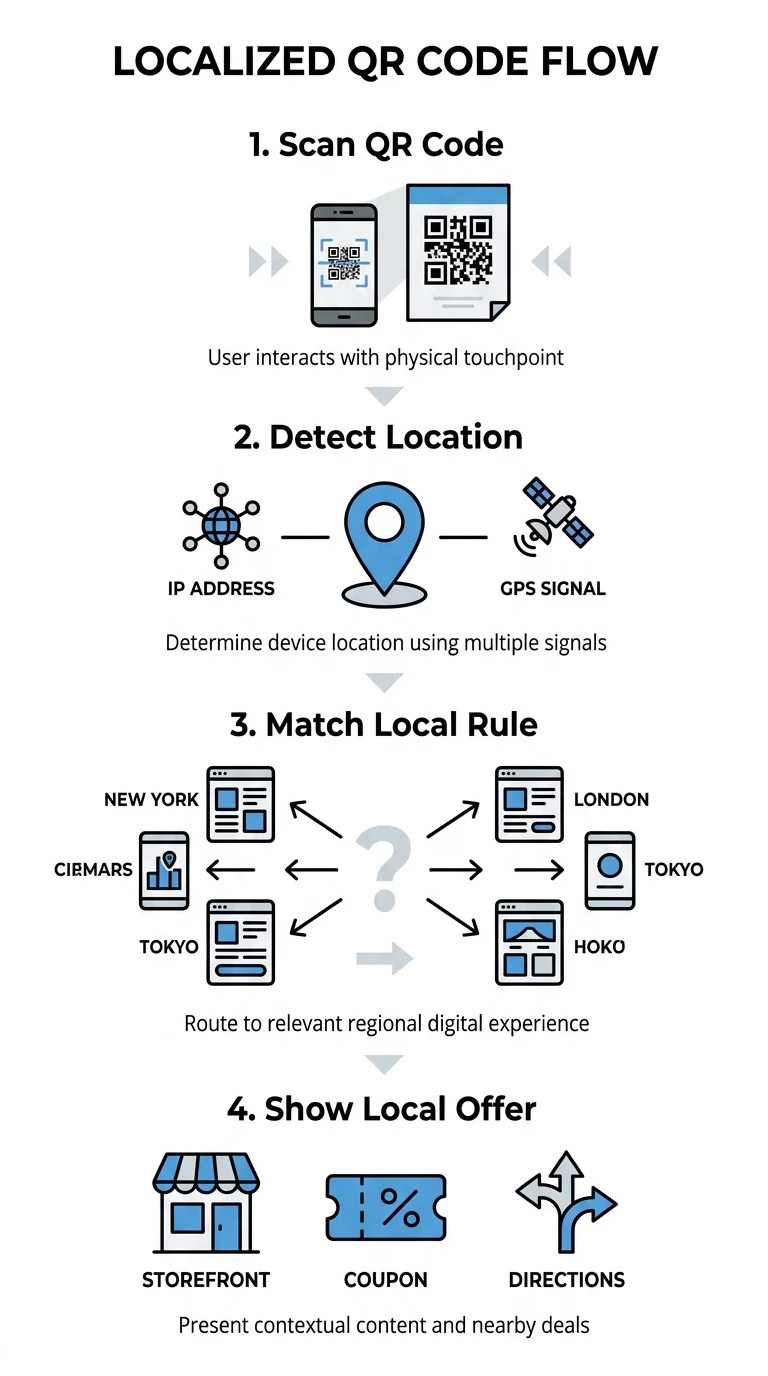
Standard QR codes send every user to identical content regardless of location. In contrast, a geotargeted code functions as an intelligent dispatcher. A national retail brand can print a single QR code on nationwide packaging; when scanned, a user in Chicago sees promotions for Illinois branches, while a user in Miami sees inventory for South Florida outlets.
How Location-Based Redirection Works
Understanding how to redirect QR code scans by location involves two main technologies: IP address lookup and GPS device coordinates. Both methods execute within milliseconds so the browsing experience remains fast and uninterrupted.
- IP-based redirection reads the user’s public IP address as the scan request reaches the server. The server cross-references this IP against a geolocation database to estimate the user’s country, state, or city. This process happens automatically without triggering browser permission prompts, though mobile carrier networks or VPNs can sometimes displace the estimated city.
- GPS-based redirection uses the browser Geolocation API to retrieve exact device coordinates. This method achieves precision within a few meters, making it ideal for geofencing specific retail plazas or event pavilions. However, it requires the scanner to grant explicit permission in their mobile browser before transmitting location data.
- Fallback routing ensures reliability when location data cannot be determined or when a scan occurs outside designated geographic zones. Platforms route these visits to a universal default page or offer an on-screen store selector so users never encounter a broken link.
Route Scanners to Local Landing Pages Ready to deliver localized promotions from a single printed code? Use the Dynamic QR Code Generator to set up conditional rules and route visitors to region-specific content.
Strategic Use Cases for Local Marketing
Local businesses and enterprise brands apply geotargeting to increase foot traffic and improve campaign relevance across physical touchpoints.
- Multi-unit restaurants place dynamic codes on promotional flyers and mailers. Scanning directs diners to the nearest branch menu, current lunch specials, or local online ordering portal.
- Retailers deploy geofencing across district stores to display live stock availability at the customer’s nearest outlet, preventing bounce rates caused by out-of-stock items.
- Real estate agencies display codes on regional yard signs and billboards. Scanners view listings and virtual property tours specifically situated within that neighborhood or ZIP code.
- Event organizers implement proximity routing across large stadiums and convention centers to guide attendees toward the nearest entry gate, concession stand, or information desk.
- Out-of-home advertising campaigns use location logic to serve municipal transit schedules or neighborhood service guides customized for specific commuter stations.
Guide Customers to Your Physical Store Help nearby shoppers navigate directly to your brick-and-mortar storefront. Use the Google Maps QR code generator to provide instant, turn-by-turn directions with a single scan.
Measuring Success with Geolocation Analytics
Geotargeted campaigns offer significant advantages in offline attribution. By studying geolocation analytics for QR codes, marketing teams can see where physical interest originates rather than relying on guesswork.
Learning the principles of tracking QR codes helps you monitor crucial performance indicators:
- Scan distributions across cities, regions, and configured geofence boundaries
- Unique versus total scan volumes over days, weeks, and promotional hours
- Device types, operating systems, and browser languages used by local audiences
- Conversion rates and on-page dwell times for each localized destination page
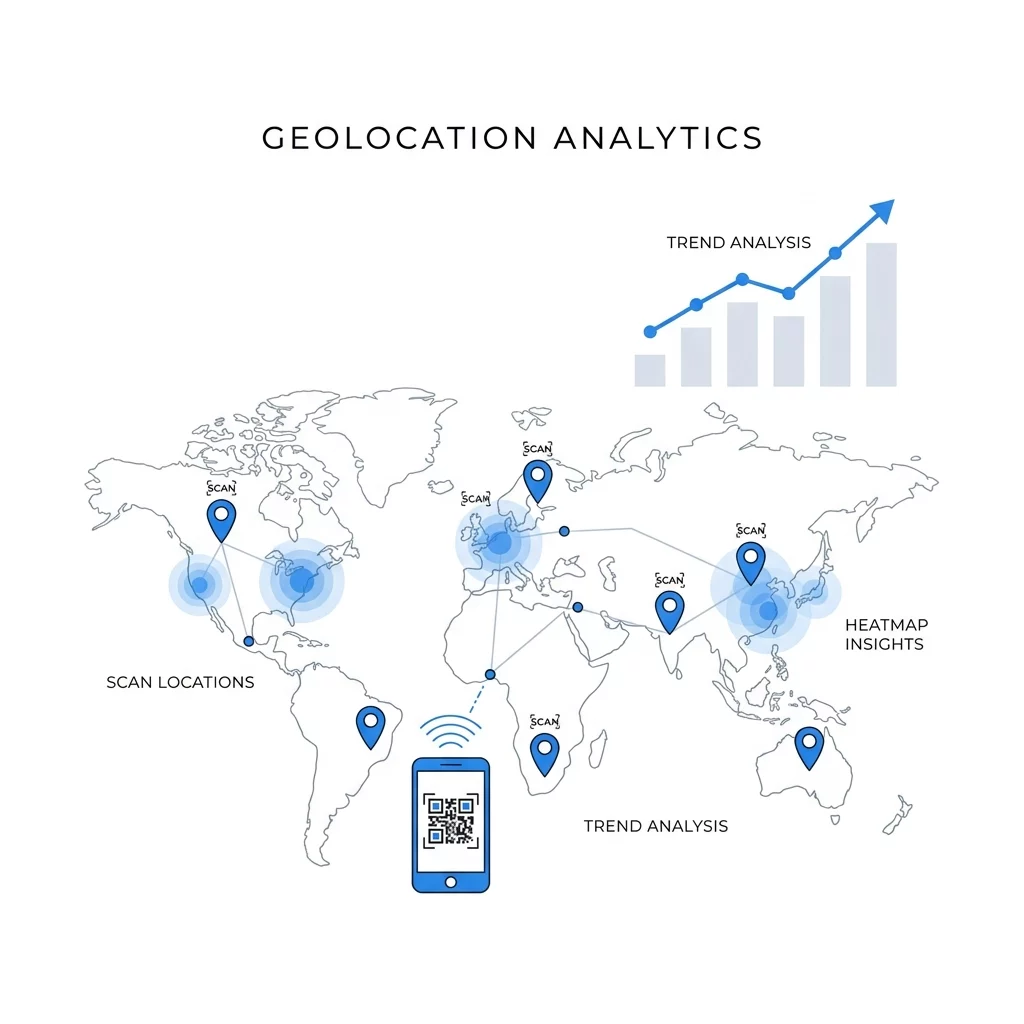
Reviewing these metrics reveals which physical locations generate the highest return on investment. If print posters in one transit hub produce high scan volume but low local redemptions, you can modify the destination offer in real time without replacing printed materials.
Privacy Compliance and Data Collection
Because location details can identify individuals, marketers must understand dynamic QR codes and what data is collected during every interaction. Collecting geographic data requires strict adherence to privacy regulations.
Familiarize your team with regional QR code privacy laws and regulations to keep campaigns fully compliant:
- The California Consumer Privacy Act classifies precise geolocation – defined as device-derived data pinpointing a consumer within an area of 1,850 feet or less – as sensitive personal information. Businesses must offer clear notices and methods to limit the use of sensitive personal data.
- Washington’s My Health My Data Act strictly prohibits establishing a geofence around healthcare facilities to track visitors, collect health data, or deliver related marketing.
- Federal Trade Commission enforcement mandates that precise consumer location cannot be gathered or shared for advertising purposes without affirmative, informed consent.
- Under international standards such as GDPR, consent for precise tracking must be freely given, specific, informed, and unambiguous. Always provide an alternative manual selection for users who decline location sharing.
Best Practices for Geotargeted Campaigns
Implementing tested guidelines for geofencing QR code campaigns ensures high readability and frictionless user routing.
- Maintain high visual contrast by keeping a ratio of at least 3:1 between the dark modules and the light background so smartphone lenses decode the code immediately.
- Adhere to the 10:1 distance-to-size ratio, making your code at least 1 inch wide for every 10 inches of expected scanning distance.
- Establish initial geofence perimeters between 100 and 200 meters to minimize errors caused by tall buildings, terrain, or cellular tower triangulation.
- Test routing flows across multiple real-world environments, verifying performance on 4G, 5G, and public Wi-Fi networks using both iOS and Android hardware.
- Ensure all target landing pages are mobile-responsive, secured with HTTPS encryption, and designed to load within three seconds.
Launching Your Location-Based QR Strategy
Geotargeted QR codes remove friction from local marketing by delivering relevant, localized landing pages directly from physical advertisements. Combining dynamic routing with rigorous testing and transparent privacy consent allows your business to drive meaningful in-person engagement while gathering actionable attribution data.
Take your local campaigns further by integrating dynamic redirect logic into your print collateral, transit displays, and point-of-sale materials. Explore Pageloot’s dynamic tools today to design custom, trackable codes that deliver the right message to the right neighborhood every time.
Frequently Asked Questions
No. Any standard smartphone camera can scan geotargeted QR codes. The redirection logic executes on the platform server during the connection process, so users do not need to install secondary applications to reach localized content.
Accuracy depends on whether the platform uses IP geolocation or browser GPS coordinates. IP-based lookup provides approximate city or regional accuracy without requiring user prompts, while GPS tracking delivers precision within a few meters once the user grants browser permission.
Yes. Because geotargeting relies on dynamic QR code architecture, destination URLs, fallback links, and geographic boundaries can be adjusted inside your platform dashboard at any time without replacing physical prints.