Vai esat kādreiz domājuši, kas patiesībā notiek pussekundes laikā starp tālruņa pavēršanu pret QR kodu un nonākšanu tīmekļa lapā? Process ir ātrāks, nekā šķiet, un tā izpratne palīdz jums izveidot kodus, kas katru reizi tiek droši skenēti.
Kas patiesībā ir QR kods
QR kods ir divdimensiju melnbaltu kvadrātu matrica, kas sakārtota unikālā veidā. Atšķirībā no tradicionālā svītrkoda, kas kodē datus vienā horizontālā līnijā ar mainīgu joslu platumu, QR kods glabā informāciju gan horizontāli, gan vertikāli. Tas tam piešķir daudz lielāku datu ietilpību un padara to nolasāmu no vairākām orientācijām.
Katrs QR kods ir veidots no vairākām funkcionālām zonām:
- Meklētāja raksti – trīs lieli kvadrāti stūros, kas palīdz skenerim atrast kodu, noteikt tā orientāciju un atrast tā malas, pat ja kods ir sasvērts
- Laika raksti – mainīgi melnbalti moduļi, kas atrodas starp meklētāja rakstiem un definē režģa struktūru, kā arī palīdz skenerim pareizi noteikt katra moduļa izmēru
- Klusā zona – tukšā baltā mala ap kodu, vismaz četru moduļu platumā, kas to atdala no apkārtējās grafikas, lai skeneris varētu noteikt tā robežas
- Formāta informācija – īpaša zona pie meklētāja rakstiem, kas glabā kļūdu labošanas līmeni un maskēšanas rakstu, lai skeneris precīzi zinātu, kā interpretēt datus
- Datu moduļi – atsevišķi melnbalti kvadrāti, kuros atrodas faktiskais kodētais saturs, nolasīti kā binārie vieninieki (melns) un nulles (balts)
Datus šajos moduļos var kodēt vairākos režīmos: tikai ciparu, burtciparu, 8 bitu bināros baitos vai kandži. 1. versijas QR kods ir 21×21 modulis; 40. versijas kods paplašinās līdz 177×177 un var saturēt līdz 7089 ciparu rakstzīmēm, 4296 burtciparu rakstzīmēm vai 2953 bināro datu baitiem. Uzziniet vairāk par to, kā šie kompromisi darbojas ceļvedī par QR koda datu ierobežojumi.
Skenēšanas process, soli pa solim
Kad pavēršat kameru pret QR kodu, daudzpakāpju process norisinās milisekundēs.
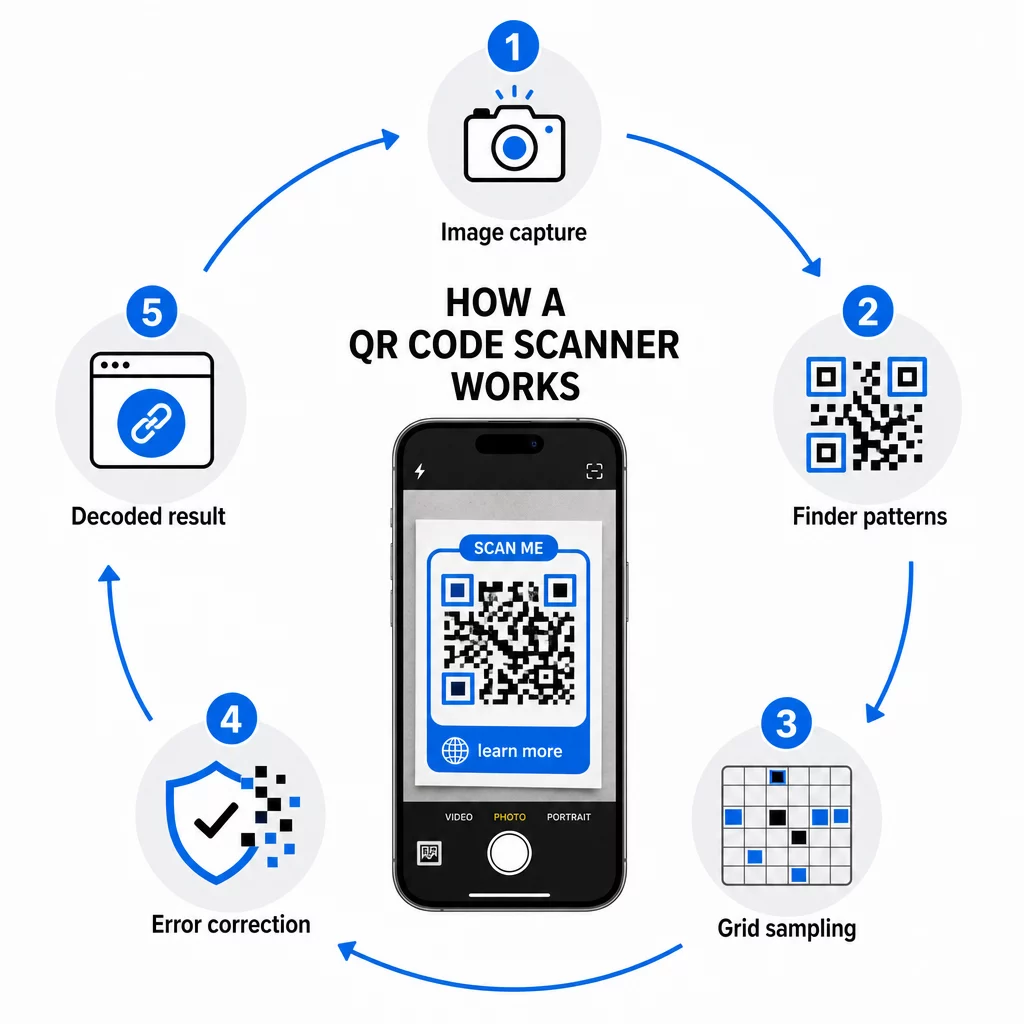
1. solis: Attēla uzņemšana
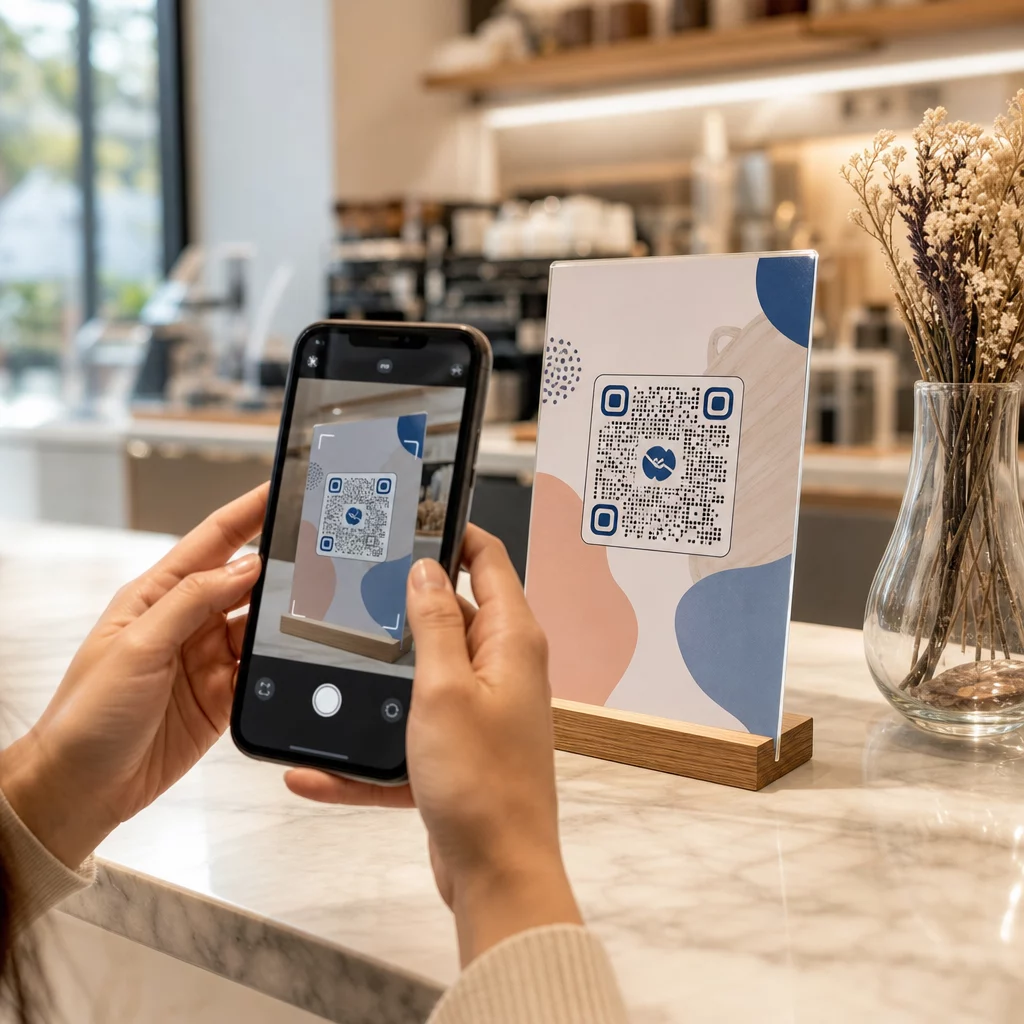
Kamera uzņem divdimensiju režģi kā vizuālu attēlu. Tas ir neapstrādāts ievads – melnbaltā raksta fotogrāfija. Lielākā daļa mūsdienu viedtālruņu kameru var to apstrādāt bez īpašas skenēšanas lietotnes. Ja vēlaties izprast pilnu veidu klāstu, kā aktivizēt skenēšanu dažādās ierīcēs, tad QR kodu skenēšanas ceļvedis detalizēti aptver iPhone, Android, planšetdatoru un galddatoru darbplūsmas.
2. solis: Raksta noteikšana
Skenētāja programmatūra izmanto rakstu atpazīšanu, lai attēlā atrastu QR kodu. Tā meklē trīs meklētāja rakstus stūros. Kad tie ir atrasti, skenētājs nosaka:
- Kur kods ir novietots kadrā
- Kādā virzienā tas ir orientēts (pat ja pagriezts vai nedaudz sagriezts)
- Kur atrodas koda malas
Šis solis ir iemesls, kāpēc QR kodi paliek nolasāmi leņķī – meklētāja raksti nodrošina algoritmam pietiekami daudz ģeometrijas, lai labotu kropļojumus.
3. solis: Režģa paraugu ņemšana un datu ieguve
Kad koda pozīcija un orientācija ir noteikta, skenētājs nolasa laika rakstus un izlīdzināšanas marķierus, lai izprastu režģa struktūru. Pēc tam tas ņem paraugus no katra moduļa pa noteiktu zigzaga ceļu – no labās uz kreiso pusi, uz augšu un pēc tam uz leju – sākot no zināmas pozīcijas un strādājot cauri katram datu modulim, līdz tiek sasniegts beigu indikators.
Šķērsojot šo ceļu, skenētājs nolasa:
- A režīma indikators (četri moduļi), kas norāda kodēšanas veidu – skaitlisks, burtciparu, baita vai kandži
- A rakstzīmju skaita indikators kas norāda, cik rakstzīmju ir kodētas
- Atlikušie datu kodvārdi līdz datu plūsmas beigām
4. solis: Kļūdu labošana
Pēc datu moduļu nolasīšanas skeneris apstrādā kļūdu labošanas kodvārdus. QR kodi izmanto Reed–Solomon kļūdu labošanu, kas iestrādā liekus datus, kas ļauj atjaunot sākotnējo saturu pat tad, ja daļa koda ir fiziski bojāta vai aizsegta.
Ir četri standartizēti kļūdu labošanas līmeņi:
| Līmenis | Atjaunošanas spēja | Vislabāk piemērots |
|---|---|---|
| L (zems) | ~7% | Tīrām iekštelpu vidēm |
| M (vidēja) | ~15% | Vispārīgiem mārketinga materiāliem |
| Q (kvartile) | ~25% | Rūpnieciskai vai āra lietošanai |
| H (augsts) | ~30% | Kodi ar logotipiem, skarbiem apstākļiem |
Augstāka kļūdu labošana nozīmē, ka kods var izturēt lielākus bojājumus, taču tas prasa arī vairāk moduļu, padarot kopējo simbolu blīvāku. Ja pievienojat logotipu QR kodam vai novietojat to vietā, kas pakļauta laikapstākļiem, H līmeņa izvēle ir pareizā. Lai dziļāk ieskatītos, kā šis kompromiss izpaužas praksē, skatiet rakstu par kā kļūdu labošana darbojas rediģējamos QR kodos.
5. solis: Atkodēšana cilvēkam salasāmā saturā
Kad datu biti ir rekonstruēti, skeneris atkodē bināro secību saskaņā ar QR koda kodēšanas režīmu. Melnie kvadrātiņi kļūst par vieniniekiem, un baltie kvadrātiņi kļūst par nullēm. Šī binārā virkne pēc tam tiek pārvērsta cilvēkam salasāmā saturā – URL, tālruņa numurā, teksta blokā, kontaktinformācijā vai jebkurā citā datu tipā, ko kods sākotnēji bija paredzēts pārnēsāt.
Ja kods satur URL, jūsu ierīce parāda uzaicinājumu to atvērt. Tas ir brīdis, kad skenēšanas process tiek nodots jūsu pārlūkprogrammai vai lietotnei.
Izmēģiniet Pageloot bezmaksas QR koda skeneri Nepieciešams atkodēt QR kodu tieši no attēla vai jūsu tīmekļa kameras? Šis Pageloot QR koda skeneris darbojas jebkurā modernā pārlūkprogrammā – nav nepieciešama lietotnes lejupielāde.
Kā QR skeneri atšķiras no svītrkodu skeneriem
Pamatā esošā fizika ir līdzīga: abi skeneru veidi izgaismo rakstu, atklāj atstaroto gaismu un atkodē rezultātu. Bet standarta lāzera svītrkodu skeneris nolasa vienā horizontālā līnijā, tāpēc tas var apstrādāt tikai 1D svītrkodus. 2D QR koda nolasīšanai nepieciešams uz attēlu balstīts sensors, kas vienlaikus uztver visu rakstu.
Lai tieši salīdzinātu, kā šie divi formāti atšķiras pēc iespējām un lietošanas gadījumiem, šis svītrkodu skenera skaidrojums detalizēti aptver apgaismojuma sistēmu, sensoru un dekodētāja komponentes – un svītrkodu un QR kodu salīdzinājums analizē, kurš formāts ir piemērotāks dažādām biznesa lietojumprogrammām.
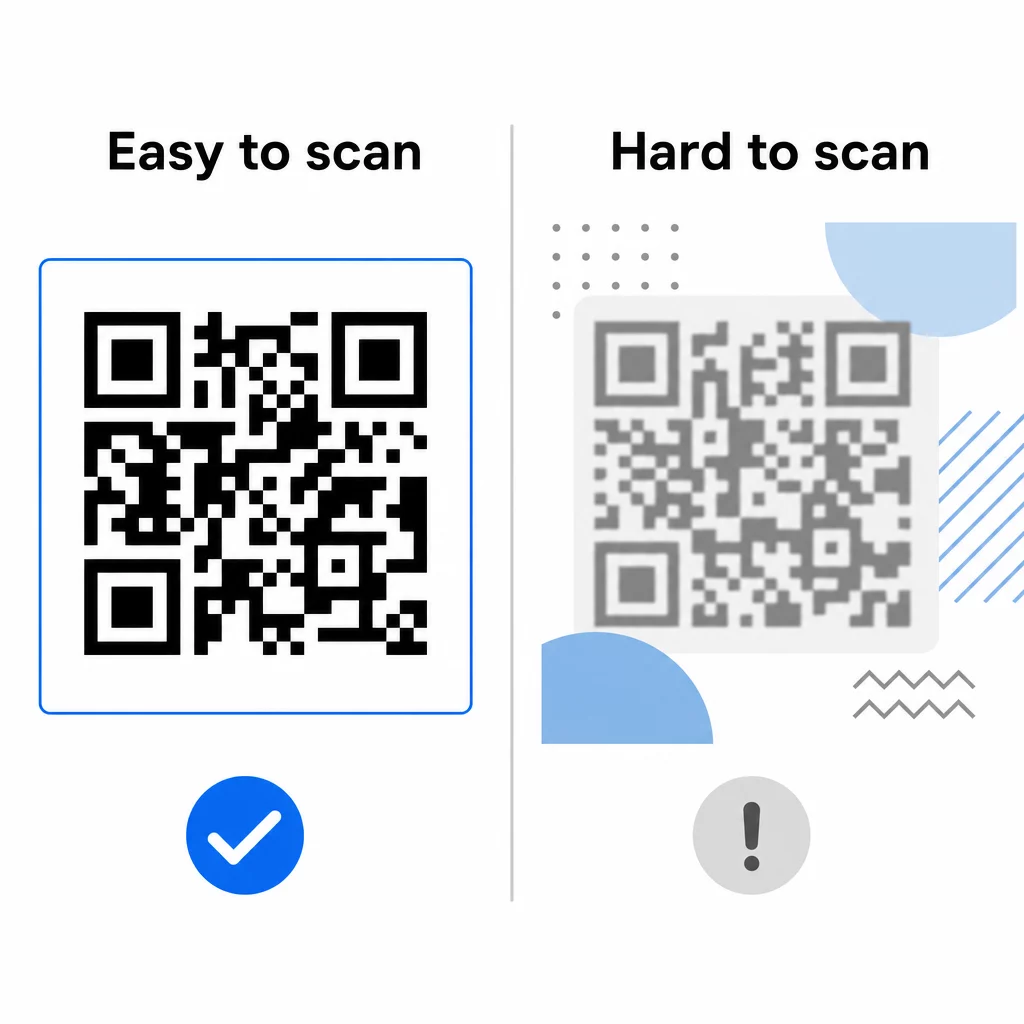
Kas padara QR kodu viegli (vai grūti) skenējamu
Skenēšanas procesa izpratne atklāj, kāpēc noteiktas dizaina izvēles pasliktina lasāmību:
- Zems kontrasts – skeneris atšķir moduļus pēc gaismas atstarošanas atšķirības starp melnajām un baltajām zonām; kods, kas drukāts pelēkā krāsā uz gaiša fona, šo testu neiztur
- Trūkst klusās zonas – bez skaidras baltas malas skeneris nevar droši noteikt koda malas, it īpaši, ja tuvumā ir apkārtējais teksts vai grafika
- Pārāk mazs skatīšanās attālumam – tiek piemērots likums 10:1: uz katriem 10 cm skenēšanas attāluma kodam jābūt vismaz 1 cm platam; praktiskais minimums tuvplāna drukāšanai ir 2×2 cm
- Invertētas vai netradicionālas krāsas – gaiši moduļi uz tumša fona var apmulsināt rakstu atpazīšanu dažos skeneros
- Izplūdis vai pikselizēts izvads – zemas izšķirtspējas rastra attēli drukāšanas mērogā sadalās; vektoru formāti, piemēram, SVG vai EPS, saglabā asumu jebkurā izmērā
Lai iegūtu visaptverošus norādījumus par izmēriem, kontrastu, izvietojumu un testēšanu, raksts par ar QR kodu lasāmības labāko praksi aptver katru faktoru ar īpašiem ieteikumiem.
Izveidojiet skenēšanai paredzētus kodus Portāls Pageloot QR kodu ģenerators ļauj jums veidot, pielāgot un testēt QR kodus ar pareizu kļūdu labošanu, kontrastu un formātu jūsu konkrētajam lietošanas gadījumam – un dinamiskos kodus var atjaunināt pēc drukāšanas, neģenerējot jaunu attēlu.
Statiskie pret dinamiskajiem QR kodiem: ko redz skeneris
No skenera viedokļa katrs QR kods izskatās vienādi: moduļu matrica, kas kodē datu virkni. Atšķirība starp statiskajiem un dinamiskajiem kodiem ir tajā, ko šie dati satur.
A statisks QR kods tieši kodē galīgo galamērķi – pilns URL, teksts vai kontaktinformācija tiek iebūvēta moduļos izveides brīdī. Satura maiņa nozīmē jauna koda ģenerēšanu.
A dinamiskais QR kods kodē īsu novirzīšanas URL, kas norāda uz serveri. Skenējot, šī novirzīšana pārsūta lietotāju uz jebkuru galamērķi, ko koda īpašnieks ir pašlaik iestatījis. Tas nozīmē, ka fiziskais kods nekad nemainās, bet tā uzvedību var atjaunināt nekavējoties. Dinamiskie kodi arī nodrošina skenēšanas izsekošanu – katra skenēšana reģistrē datu punktu, kas parāda, kad un kur kods tika skenēts, kādā ierīcē un cik bieži.
Ja QR koda kampaņai jābūt izmērāmai vai saistītais saturs var mainīties, dinamiskie kodi ir praktiska izvēle. Uzņēmumiem, kas salīdzina pilnu skenera lietotņu iespēju klāstu un ko meklēt skenēšanas rīkā, QR koda skenēšanas lietotņu salīdzinājums aptver galvenās iespējas.
Biežāk uzdotie jautājumi
Nē. Lielākā daļa viedtālruņu ar iOS 11 vai jaunāku versiju un modernās Android ierīces var skenēt QR kodus tieši, izmantojot iebūvēto kameras lietotni. Lai iegūtu lielāku kontroli – piemēram, skenēšana no saglabāta attēla vai skenēšanas vēstures pārbaude – īpašs rīks, piemēram, Pageloot QR skeneris, darbojas no jebkuras pārlūkprogrammas bez instalēšanas.
Visbiežākie cēloņi ir zems kontrasts, trūkstoša klusā zona, kods, kas ir pārāk mazs skatīšanās attālumam, vai attēls, kas ir pārāk izplūdis, lai atpazītu moduļus. Vecākas ierīces ar zemākas izšķirtspējas kamerām ir jutīgākas pret šīm problēmām. Testēšana vairākās ierīcēs pirms drukāšanas un augstāku kļūdu labošanas līmeņu (Q vai H) izmantošana samazina kļūmju iespējamību. Pilnu cēloņu un risinājumu sarakstu skatiet QR koda nedarbošanās rokasgrāmatā.
Versijas 40 QR kods ar zemāko kļūdu labošanas līmeni var kodēt līdz 7,089 ciparu rakstzīmēm, 4,296 burtciparu rakstzīmēm vai 2,953 bināro datu baitiem. Praksē īsākas URL adreses un vienkāršāks saturs rada mazāk blīvus kodus, kas skenējas ātrāk un uzticamāk. Pilnīgs sadalījums par versijas, ietilpības un kļūdu labošanas kompromisiem ir aplūkots QR kodu datu ierobežojumu ceļvedī.