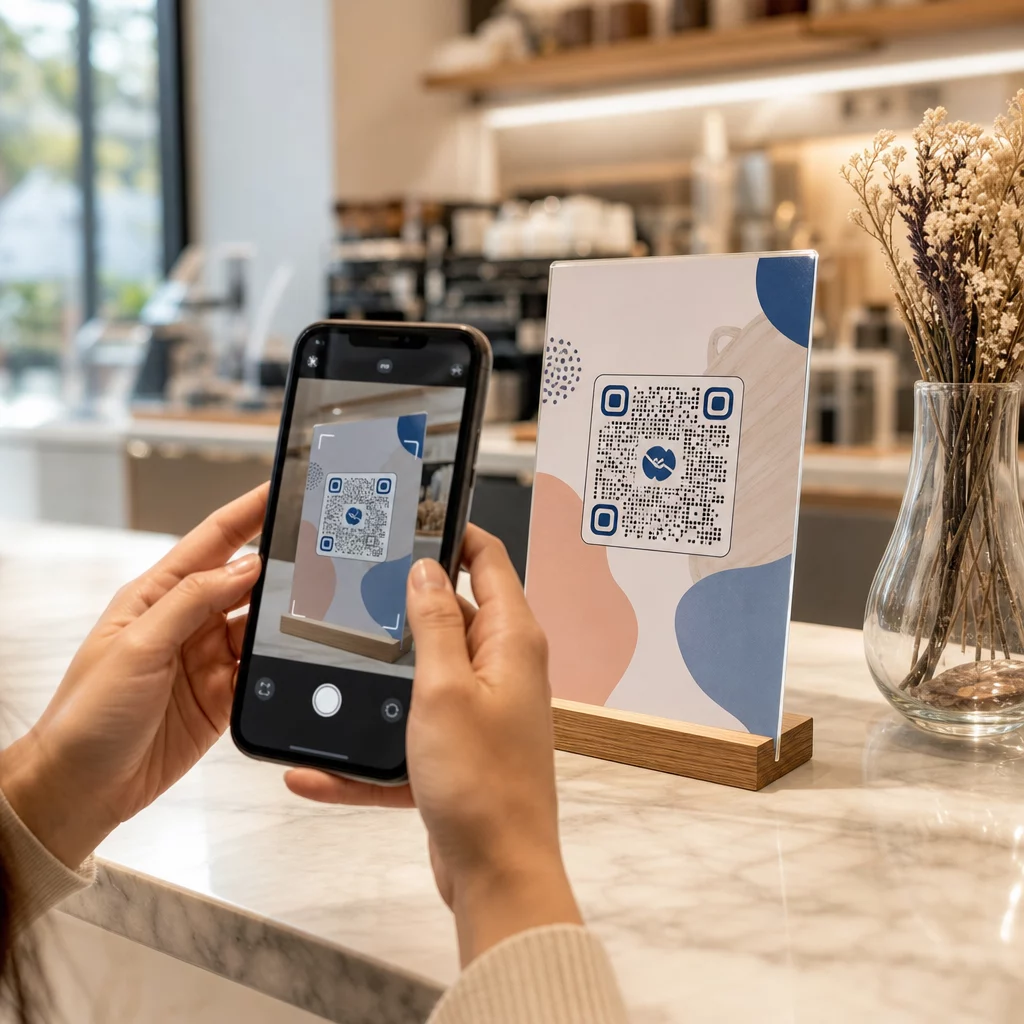
Har du någonsin undrat vad som faktiskt händer under den halva sekund det tar från att du riktar telefonen mot en QR-kod tills du landar på en webbsida? Processen är snabbare än den ser ut, och att förstå den hjälper dig att skapa koder som skannas tillförlitligt varje gång.
Vad en QR-kod faktiskt är
En QR-kod är en tvådimensionell matris av svarta och vita rutor arrangerade i ett unikt mönster. Till skillnad från en traditionell streckkod – som kodar data i en enda horisontell linje med varierande streckbredder – lagrar en QR-kod information både horisontellt och vertikalt. Det är det som ger den en mycket större datakapacitet och gör den läsbar från flera orienteringar.
Varje QR-kod är uppbyggd av flera funktionella regioner:
- Sökarmönster – de tre stora rutorna i hörnen som hjälper skannern att lokalisera koden, bestämma dess orientering och hitta dess kanter, även när koden är vinklad
- Tidsmönster – alternerande svartvita moduler som löper mellan sökarmönstren och definierar rutnätstrukturen samt hjälper skannern att korrekt dimensionera varje modul
- Tyst zon – den tomma vita marginalen som omger koden, minst fyra moduler bred, som skiljer den från omgivande grafik så att skannern kan upptäcka dess gränser
- Formatinformation – ett dedikerat område nära sökarmönstren som lagrar felkorrigeringsnivån och maskningsmönstret så att skannern vet exakt hur datan ska tolkas
- Datamoduler – de individuella svartvita rutorna där det faktiska kodade innehållet finns, lästa som binära ettor (svart) och nollor (vit)
Datan i dessa moduler kan kodas i flera lägen: endast numeriskt, alfanumeriskt, 8-bitars binära byte eller Kanji. En Version 1 QR-kod är 21×21 moduler; en Version 40-kod expanderar till 177×177 och kan rymma upp till 7 089 numeriska tecken, 4 296 alfanumeriska tecken eller 2 953 byte binär data. Läs mer om hur dessa avvägningar fungerar i guiden till QR-kodens datagränser.
Skanningsprocessen, steg för steg
När du riktar en kamera mot en QR-kod, utspelar sig en flerstegsprocess på millisekunder.
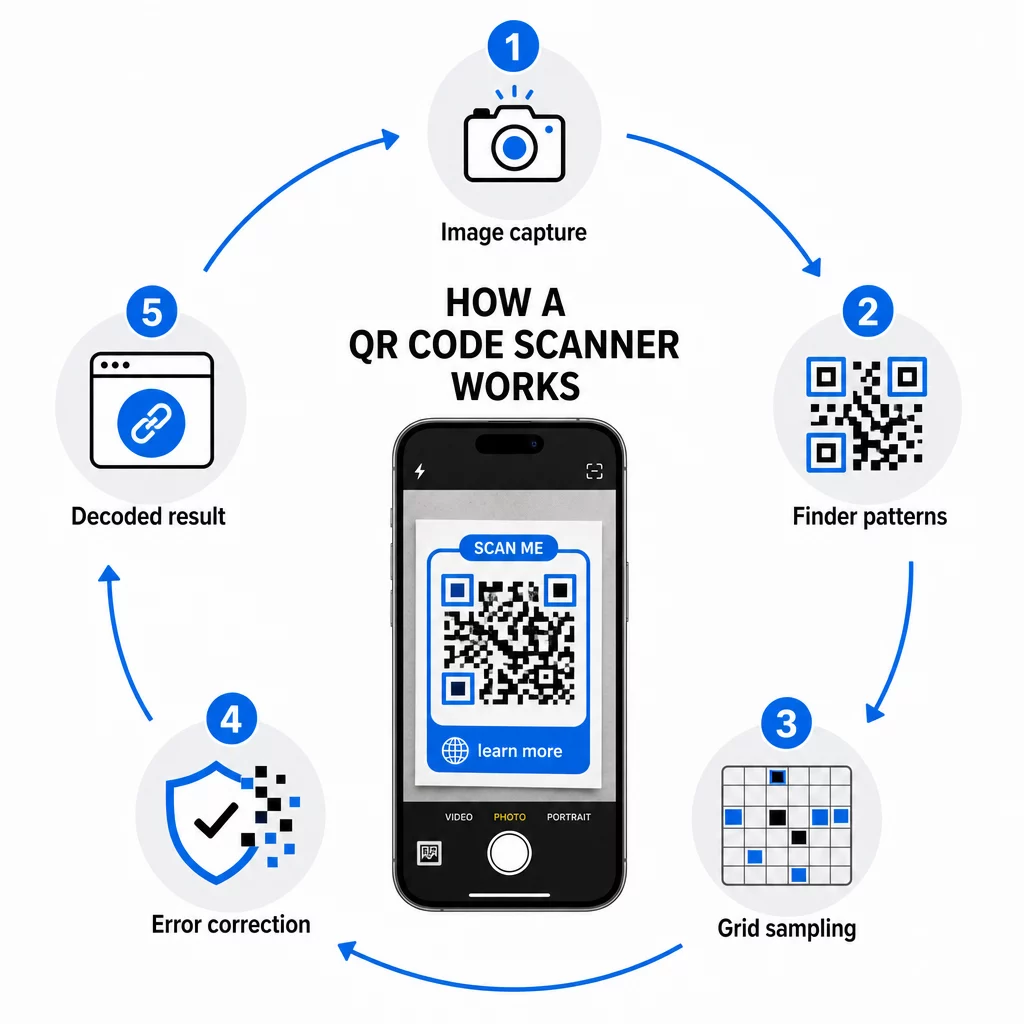
Steg 1: Bildfångst
Kameran fångar det tvådimensionella rutnätet som en visuell bild. Detta är den råa indatan – ett fotografi av det svartvita mönstret. De flesta moderna smartphonekameror kan hantera detta utan någon dedikerad skanningsapp. Om du vill förstå hela spektrumet av sätt att utlösa en skanning över olika enheter, är guiden för att skanna QR-koder täcker iPhone-, Android-, surfplatta- och datorarbetsflöden i detalj.
Steg 2: Mönsterdetektering
Skannerns programvara använder mönsterigenkänning för att lokalisera QR-koden i bilden. Den söker efter de tre sökarmönstren i hörnen. När de väl hittats bestämmer skannern:
- Var koden är placerad i ramen
- Vilken riktning den är orienterad (även om den är roterad eller något sned)
- Var kodens kanter är
Detta steg är anledningen till att QR-koder förblir läsbara i vinkel – sökarmönstren ger algoritmen tillräckligt med geometri för att korrigera för distorsion.
Steg 3: Rutnätsampling och dataextraktion
När kodens position och orientering har fastställts läser skannern tidsmönstren och justeringsmarkörerna för att förstå rutnätsstrukturen. Den samplar sedan varje modul i en specifik sicksackväg – höger till vänster, upp sedan ner – med början från en känd position och arbetar sig igenom varje datamodul tills slutindikatorn nås.
När den korsar denna väg läser skannern:
- A lägesindikator (fyra moduler) som specificerar kodningstypen – numerisk, alfanumerisk, byte eller Kanji
- A teckenräkningsindikator som anger hur många tecken som är kodade
- De återstående datakodord fram till slutet av dataströmmen
Steg 4: Felkorrigering
Efter att ha läst datamodulerna bearbetar skannern felkorrigeringskodorden. QR-koder använder Reed–Solomon felkorrigering, som bäddar in redundant data som gör att det ursprungliga innehållet kan rekonstrueras även när en del av koden är fysiskt skadad eller skymd.
Det finns fyra standardiserade felkorrigeringsnivåer:
| Nivå | Återställningskapacitet | Bäst lämpad för |
|---|---|---|
| L (låg) | ~7% | Rena inomhusmiljöer |
| M (medelstor) | ~15% | Allmänt marknadsföringsmaterial |
| Q (kvartil) | ~25% | Industriell användning eller utomhusbruk |
| H (hög) | ~30% | Koder med logotyper, tuffa förhållanden |
Högre felkorrigering innebär att koden kan överleva mer skada men kräver också fler moduler, vilket gör den övergripande symbolen tätare. Om du lägger till en logotyp i en QR-kod eller placerar den någonstans som utsätts för väder, är det rätt val att välja nivå H. För en djupare titt på hur denna avvägning fungerar i praktiken, se artikeln om Så fungerar felkorrigering i redigerbara QR-koder.
Steg 5: Avkodning till mänskligt läsbart innehåll
När databitsen har rekonstruerats, avkodar skannern den binära sekvensen enligt QR-kodens kodningsläge. Svarta rutor blir ettor och vita rutor blir nollor. Den binära strängen omvandlas sedan till mänskligt läsbart innehåll – en URL, ett telefonnummer, ett textblock, kontaktinformation eller någon annan datatyp som koden ursprungligen byggdes för att bära.
Om koden innehåller en URL, visar din enhet en uppmaning att öppna den. Det är då skanningsprocessen lämnar över till din webbläsare eller app.
Prova Pageloots gratis QR-kodskanner Behöver du avkoda en QR-kod direkt från en bild eller din webbkamera? Den Pageloot QR-kodskanner fungerar i vilken modern webbläsare som helst – ingen appnedladdning krävs.
Hur QR-skannrar skiljer sig från streckkodsskannrar
Den underliggande fysiken är liknande: båda typerna av skannrar belyser ett mönster, detekterar reflekterat ljus och avkodar resultatet. Men en standard laserstreckkodsskanner läser i en enda horisontell linje, vilket är anledningen till att den bara kan hantera 1D-streckkoder. Att läsa en 2D QR-kod kräver en bildbaserad sensor som fångar hela mönstret på en gång.
För en direkt jämförelse av hur dessa två format skiljer sig åt i kapacitet och användningsfall, den förklaringen av streckkodsskannern täcker belysningssystemet, sensorn och avkodarkomponenterna i detalj – och den jämförelsen mellan streckkod och QR-kod bryter ner vilket format som är mer meningsfullt för olika affärsapplikationer.
Vad som gör en QR-kod lätt (eller svår) att skanna
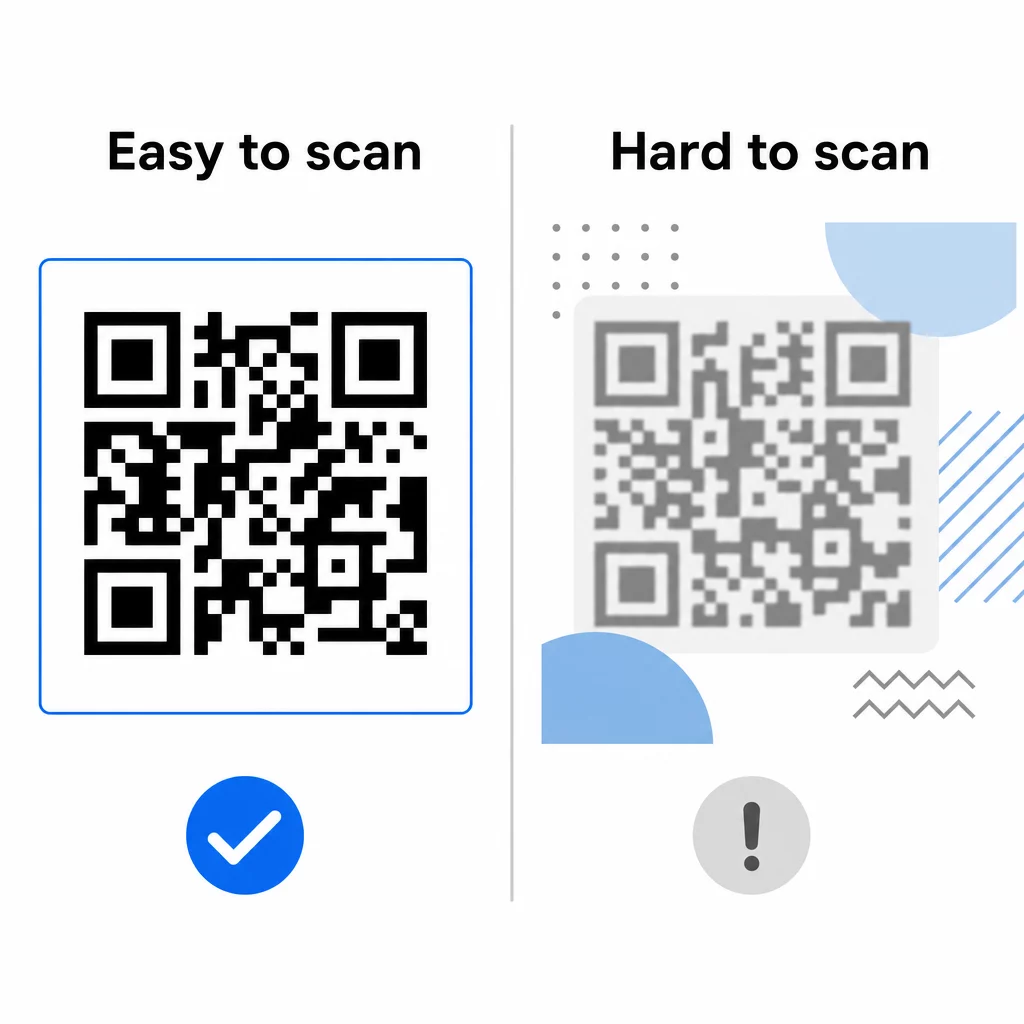
Att förstå skanningsprocessen avslöjar varför vissa designval skadar läsbarheten:
- Låg kontrast – skannern skiljer moduler åt genom skillnaden i ljusreflektion mellan svarta och vita områden; en kod tryckt i grått på en blek bakgrund klarar inte detta test
- Saknad tyst zon – utan en tydlig vit marginal kan skannern inte tillförlitligt lokalisera kodens kanter, särskilt om omgivande text eller grafik är nära
- För liten för visningsavståndet – en 10:1-regel gäller: för varje 10 cm skanningsavstånd bör koden vara minst 1 cm bred; det praktiska minimumet för utskrift på nära håll är 2×2 cm
- Inverterade eller okonventionella färger – ljusa moduler på en mörk bakgrund kan förvirra mönsterigenkänningen i vissa skannrar
- Suddig eller pixlad utdata – rasterbilder med låg upplösning faller isär vid utskriftsskala; vektorformat som SVG eller EPS förblir skarpa i alla storlekar
För omfattande vägledning om storlek, kontrast, placering och testning, artikeln om bästa praxis för läsbarhet av QR-koder täcker varje faktor med specifika rekommendationer.
Skapa koder byggda för att skannas De Pageloot QR-kodgenerator låter dig bygga, anpassa och testa QR-koder med rätt felkorrigering, kontrast och format för ditt specifika användningsfall – och dynamiska koder kan uppdateras efter utskrift utan att generera en ny bild.
Statiska vs. Dynamiska QR-koder: Vad skannern ser
Ur skannerns perspektiv ser varje QR-kod likadan ut: en matris av moduler som kodar en datasträng. Skillnaden mellan statiska och dynamiska koder är vad den datan innehåller.
A statisk QR-kod kodar den slutliga destinationen direkt – hela URL:en, texten eller kontaktinformationen är inbakad i modulerna vid skapandet. Att ändra innehållet innebär att generera en ny kod.
A dynamisk QR-kod kodar en kort omdirigerings-URL som pekar till en server. När den skannas, vidarebefordrar den omdirigeringen användaren till den destination som kodägaren för närvarande har ställt in. Detta innebär att den fysiska koden aldrig ändras, men dess beteende kan uppdateras omedelbart. Dynamiska koder möjliggör också skanningsspårning – varje skanning registrerar en datapunkt som visar när och var koden skannades, på vilken enhet och hur ofta.
Om en QR-kodkampanj behöver vara mätbar eller om det länkade innehållet kan ändras, är dynamiska koder det praktiska valet. För företag som jämför hela utbudet av skannerappalternativ och vad man ska leta efter i ett skanningsverktyg, är den Jämförelse av appar för QR-kodsskanning täcker de viktigaste alternativen.
Vanliga frågor
Nej. De flesta smartphones som kör iOS 11 eller senare och moderna Android-enheter kan skanna QR-koder direkt via den inbyggda kameraappen. För mer kontroll – som att skanna från en sparad bild eller kontrollera skanningshistorik – fungerar ett dedikerat verktyg som Pageloot QR-skanner från vilken webbläsare som helst utan installation.
De vanligaste orsakerna är låg kontrast, en saknad tyst zon, en kod som är för liten för visningsavståndet, eller en bild som är för suddig för att upplösa modulerna. Äldre enheter med kameror med lägre upplösning är känsligare för dessa problem. Att testa på flera enheter före utskrift, och att använda högre felkorrigeringsnivåer (Q eller H), minskar risken för misslyckanden. Se hela listan över orsaker och lösningar i guiden för QR-koder som inte fungerar.
En QR-kod av version 40 på den lägsta felkorrigeringsnivån kan koda upp till 7 089 numeriska tecken, 4 296 alfanumeriska tecken eller 2 953 byte binär data. I praktiken ger kortare URL:er och enklare innehåll mindre täta koder som skannas snabbare och mer tillförlitligt. Den fullständiga genomgången av avvägningarna mellan version, kapacitet och felkorrigering behandlas i guiden för QR-kodens datagränser.