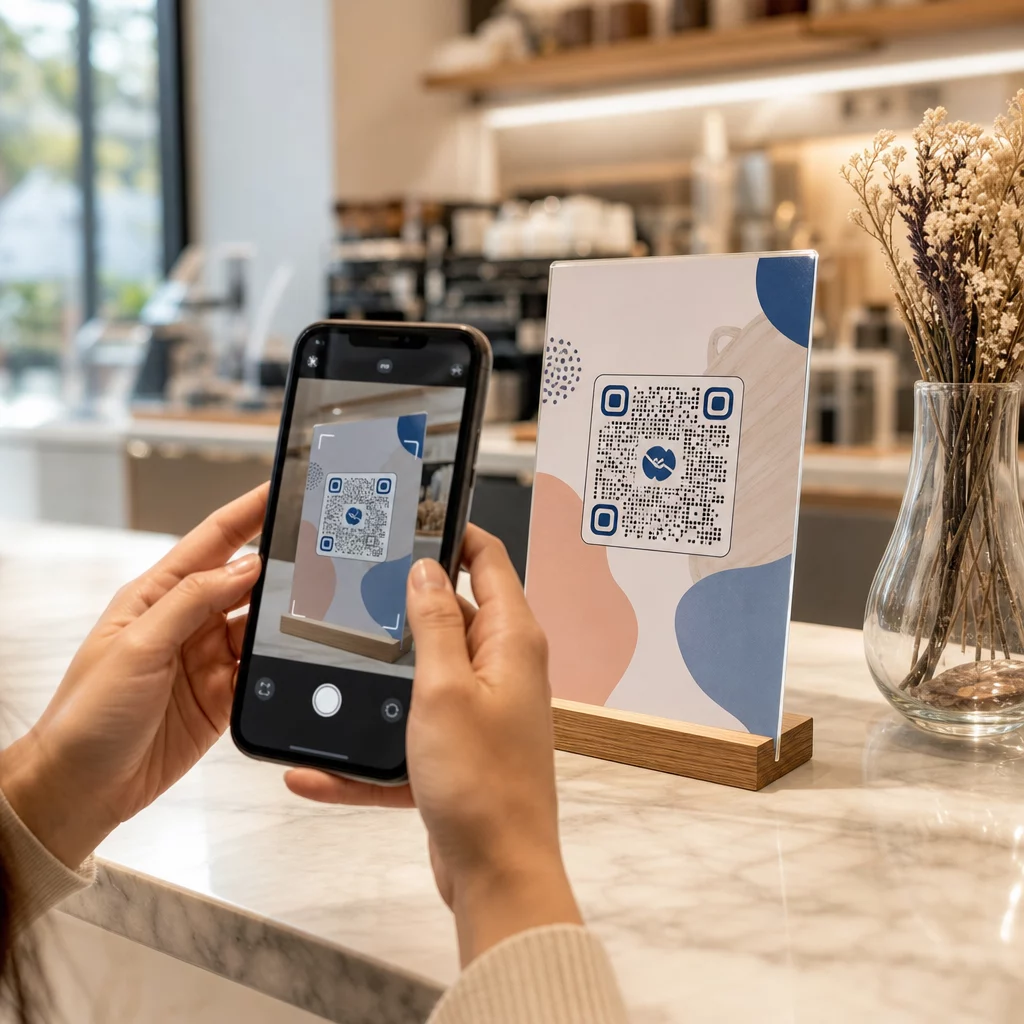
Har du nogensinde undret dig over, hvad der egentlig sker i det halve sekund mellem at pege din telefon mod en QR-kode og lande på en webside? Processen er hurtigere, end den ser ud, og at forstå den hjælper dig med at skabe koder, der scanner pålideligt hver gang.
Hvad en QR-kode egentlig er
En QR-kode er en todimensionel matrix af sorte og hvide firkanter arrangeret i et unikt mønster. I modsætning til en traditionel stregkode – som koder data i en enkelt vandret linje med varierende stregbredder – gemmer en QR-kode information både vandret og lodret. Det er det, der giver den en langt større datakapacitet og gør den læsbar fra flere retninger.
Hver QR-kode er bygget op af flere funktionelle områder:
- Søgemønstre – de tre store firkanter i hjørnerne, der hjælper scanneren med at lokalisere koden, bestemme dens orientering og finde dens kanter, selv når koden er vippet
- Timingmønstre – skiftende sort-hvide moduler, der løber mellem søgemønstrene, som definerer gitterstrukturen og hjælper scanneren med korrekt at dimensionere hvert modul
- Stillezone – den tomme hvide margen omkring koden, mindst fire moduler bred, som adskiller den fra omgivende grafik, så scanneren kan registrere dens grænser
- Formatinformation – et dedikeret område nær søgemønstrene, der gemmer fejlkodekorrektionsniveauet og maskeringsmønsteret, så scanneren ved præcis, hvordan dataene skal fortolkes
- Datamoduler – de individuelle sort-hvide firkanter, hvor det faktiske kodede indhold befinder sig, læst som binære ettere (sort) og nuller (hvid)
Dataene i disse moduler kan kodes i flere tilstande: kun numerisk, alfanumerisk, 8-bit binære bytes eller Kanji. En Version 1 QR-kode er 21×21 moduler; en Version 40-kode udvides til 177×177 og kan indeholde op til 7.089 numeriske tegn, 4.296 alfanumeriske tegn eller 2.953 bytes binære data. Lær mere om, hvordan disse afvejninger fungerer i guiden til QR-kodens datagrænser.
Scanningsprocessen, trin for trin
Når du peger et kamera mod en QR-kode, udfolder en flertrins proces sig på millisekunder.
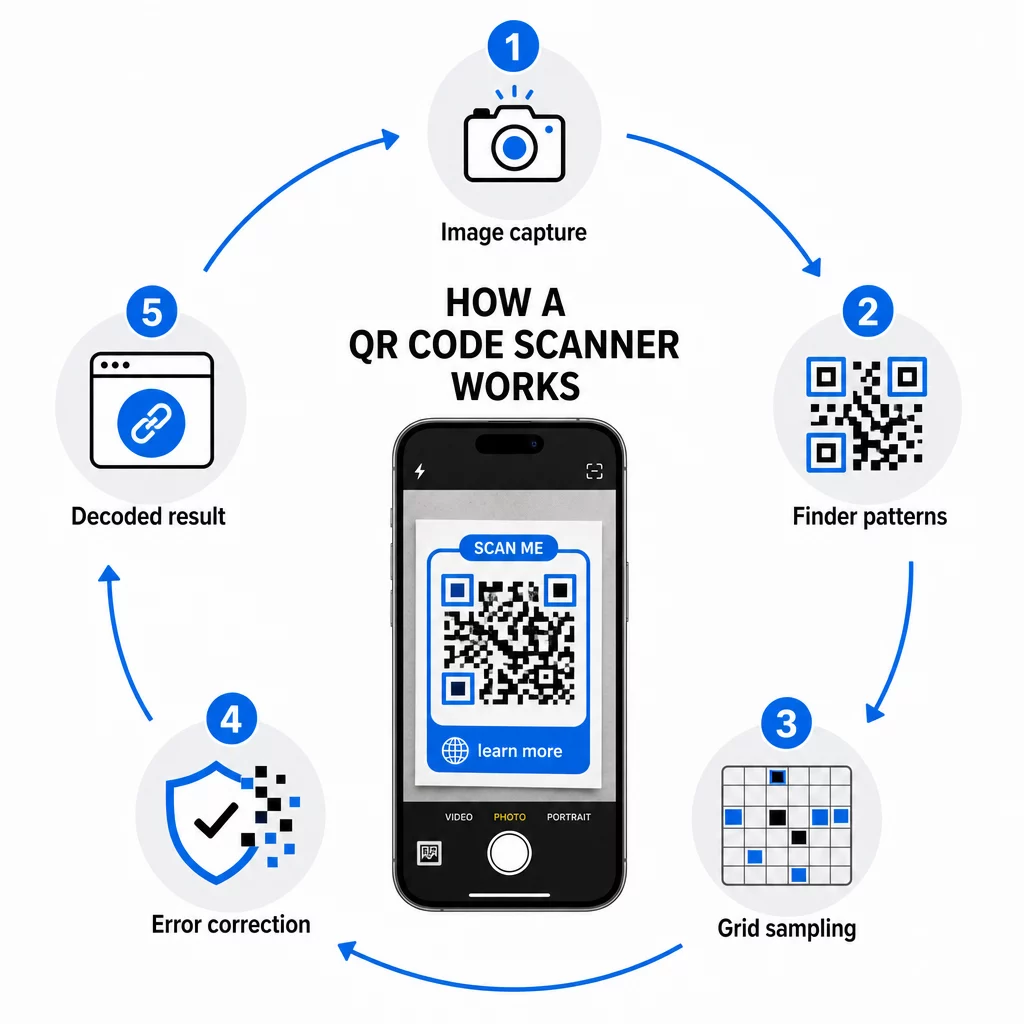
Trin 1: Billedoptagelse
Kameraet optager det todimensionale gitter som et visuelt billede. Dette er det rå input – et fotografi af det sort-hvide mønster. De fleste moderne smartphonekameraer kan håndtere dette uden en dedikeret scanningsapp. Hvis du vil forstå det fulde udvalg af måder at udløse en scanning på tværs af forskellige enheder, er vejledning til scanning af QR-koder dækker iPhone-, Android-, tablet- og desktop-arbejdsgange i detaljer.
Trin 2: Mønstergenkendelse
Scannerens software bruger mønstergenkendelse til at lokalisere QR-koden i billedet. Den søger efter de tre søgemønstre i hjørnerne. Når de er fundet, bestemmer scanneren:
- Hvor koden er placeret i rammen
- Hvilken retning den er orienteret (selv hvis den er roteret eller let skæv)
- Hvor kodens kanter er
Dette trin er grunden til, at QR-koder forbliver læsbare i en vinkel – søgemønstrene giver algoritmen tilstrækkelig geometri til at korrigere for forvrængning.
Trin 3: Gitterprøvetagning og dataudtræk
Når kodens position og orientering er fastlagt, læser scanneren timingmønstrene og justeringsmarkørerne for at forstå gitterstrukturen. Den sampler derefter hvert modul i en specifik zigzag-sti – højre mod venstre, op derefter ned – startende fra en kendt position og arbejder sig gennem hvert datamodul, indtil slutindikatoren er nået.
Mens den gennemløber denne sti, læser scanneren:
- EN tilstandsindikator (fire moduler), der specificerer kodningstypen – numerisk, alfanumerisk, byte eller Kanji
- EN tegnantalindikator der angiver, hvor mange tegn der er kodet
- De resterende data-codeword indtil slutningen af datastrømmen
Trin 4: Fejlkorrektion
Efter at have læst datamodulerne behandler scanneren fejlkorrektions-codewordene. QR-koder bruger Reed–Solomon fejlkorrektion, som indlejrer redundante data, der gør det muligt at rekonstruere det originale indhold, selv når en del af koden er fysisk beskadiget eller skjult.
Der er fire standardiserede fejlkorrektionsniveauer:
| Niveau | Genoprettelseskapacitet | Bedst egnet til |
|---|---|---|
| L (lav) | ~7% | Rene indendørsmiljøer |
| M (Medium) | ~15% | Generelt markedsføringsmateriale |
| Q (kvartil) | ~25% | Industriel eller udendørs brug |
| H (høj) | ~30% | Koder med logoer, barske forhold |
Højere fejlkorrektion betyder, at koden kan overleve mere skade, men kræver også flere moduler, hvilket gør det samlede symbol tættere. Hvis du tilføjer et logo til en QR-kode eller placerer den et sted, der er udsat for vejr, er valg af niveau H det rigtige. For et dybere kig på, hvordan denne afvejning udspiller sig i praksis, se artiklen om Sådan virker fejlkorrektion i redigerbare QR-koder.
Trin 5: Afkodning til menneskeligt læsbart indhold
Når databitsene er rekonstrueret, afkoder scanneren den binære sekvens i henhold til QR-kodens kodningstilstand. Sorte firkanter bliver ettaller, og hvide firkanter bliver nuller. Den binære streng konverteres derefter til menneskelæsbart indhold – en URL, et telefonnummer, en tekstblok, kontaktoplysninger eller enhver anden datatype, koden oprindeligt blev bygget til at bære.
Hvis koden indeholder en URL, viser din enhed en prompt for at åbne den. Det er det øjeblik, hvor scanningsprocessen overgår til din browser eller app.
Prøv Pageloots gratis QR-kodescanner Har du brug for at afkode en QR-kode direkte fra et billede eller dit webcam? Den Pageloot QR-kodescanner fungerer i enhver moderne browser – ingen app-download påkrævet.
Hvordan QR-scannere adskiller sig fra stregkodescannere
Den underliggende fysik er ens: begge typer scannere belyser et mønster, registrerer reflekteret lys og afkoder resultatet. Men en standard laserstregkodescanner læser i en enkelt vandret linje, hvilket er grunden til, at den kun kan håndtere 1D-stregkoder. Aflæsning af en 2D QR-kode kræver en billedbaseret sensor, der fanger hele mønsteret på én gang.
For en direkte sammenligning af, hvordan disse to formater adskiller sig i kapacitet og anvendelsestilfælde, er stregkodescanner-forklaringen dækker belysningssystemet, sensoren og dekoderkomponenterne i detaljer – og stregkode vs. QR-kode sammenligning nedbryder, hvilket format der giver mest mening for forskellige forretningsapplikationer.
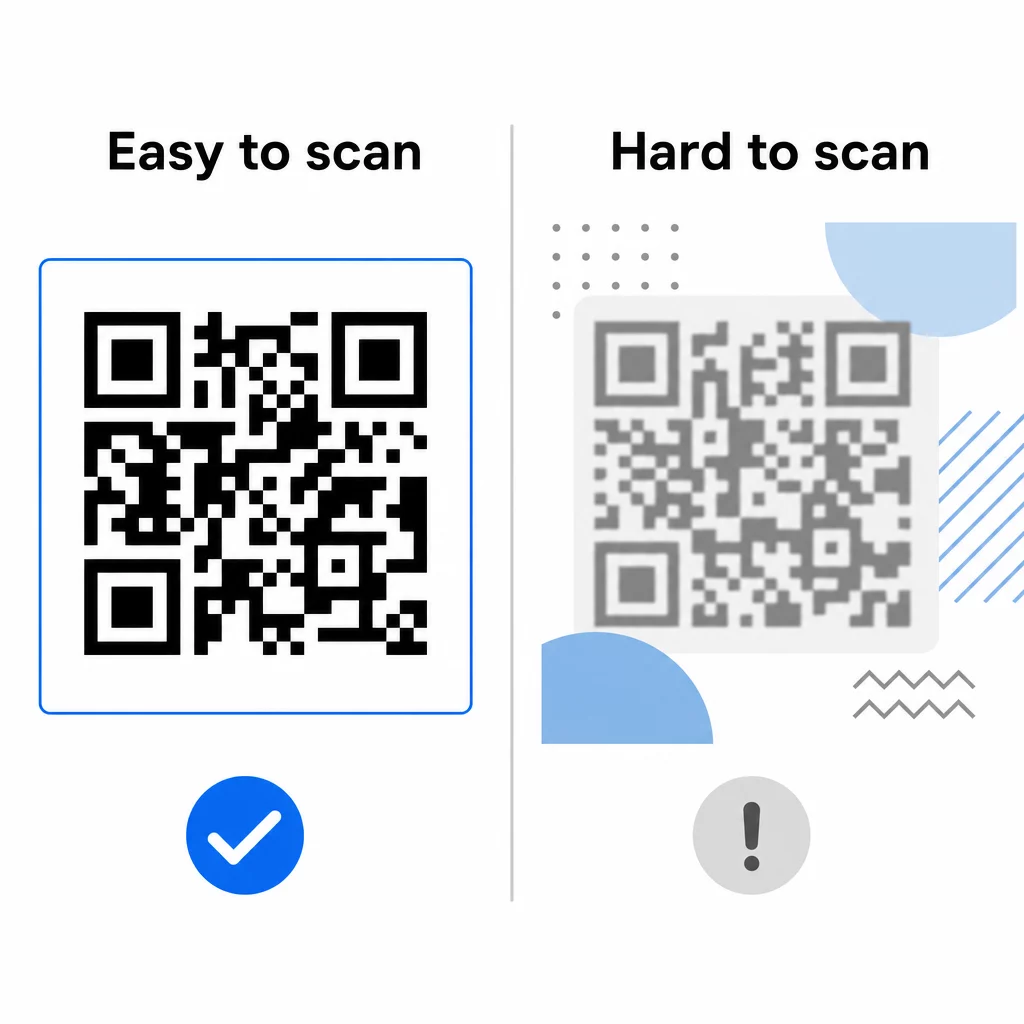
Hvad gør en QR-kode nem (eller svær) at scanne
Forståelse af scanningsprocessen afslører, hvorfor visse designvalg skader læsbarheden:
- Lav kontrast – scanneren skelner moduler ved forskellen i lysrefleksion mellem sorte og hvide områder; en kode trykt i grå på en lys baggrund dumper denne test
- Manglende stille zone – uden en klar hvid margen kan scanneren ikke pålideligt lokalisere kodens kanter, især hvis omgivende tekst eller grafik er tæt på
- For lille til visningsafstanden – en 10:1-regel gælder: for hver 10 cm scanningsafstand skal koden være mindst 1 cm bred; det praktiske minimum for udskrivning på tæt hold er 2×2 cm
- Inverterede eller ukonventionelle farver – lyse moduler på en mørk baggrund kan forvirre mønstergenkendelsen i nogle scannere
- Sløret eller pixeleret output – lavopløselige rasterbilleder falder fra hinanden i printstørrelse; vektorformater som SVG eller EPS forbliver skarpe i enhver størrelse
For omfattende vejledning om størrelse, kontrast, placering og test, artiklen om bedste praksis for læsbarhed af QR-koder dækker hver faktor med specifikke anbefalinger.
Opret koder bygget til at scanne Det Pageloot QR-kodegenerator lader dig bygge, tilpasse og teste QR-koder med den rette fejlkorrektion, kontrast og format til dit specifikke brugsscenarie – og dynamiske koder kan opdateres efter udskrivning uden at generere et nyt billede.
Statiske vs. Dynamiske QR-koder: Hvad scanneren ser
Fra scannerens perspektiv ser hver QR-kode ens ud: en matrix af moduler, der koder en streng af data. Forskellen mellem statiske og dynamiske koder er, hvad disse data indeholder.
EN statisk QR-kode koder den endelige destination direkte – den fulde URL, tekst eller kontaktinformation er indlejret i modulerne ved oprettelsen. Ændring af indholdet betyder generering af en ny kode.
EN dynamisk QR-kode koder en kort omdirigerings-URL, der peger på en server. Når den scannes, videresender denne omdirigering brugeren til den destination, kodeejeren aktuelt har indstillet. Dette betyder, at den fysiske kode aldrig ændres, men dens adfærd kan opdateres øjeblikkeligt. Dynamiske koder muliggør også scanningssporing – hver scanning registrerer et datapunkt, der viser, hvornår og hvor koden blev scannet, på hvilken enhed og hvor ofte.
Hvis en QR-kodekampagne skal være målbar, eller det linkede indhold kan ændre sig, er dynamiske koder det praktiske valg. For virksomheder, der sammenligner hele udvalget af scanner-app-muligheder og hvad man skal kigge efter i et scanningsværktøj, er Sammenligning af QR-kode scanningsapps dækker de vigtigste muligheder.
Ofte stillede spørgsmål
Nej. De fleste smartphones, der kører iOS 11 eller nyere, og moderne Android-enheder kan scanne QR-koder direkte via den indbyggede kamera-app. For mere kontrol – såsom scanning fra et gemt billede eller kontrol af scanningshistorik – fungerer et dedikeret værktøj som Pageloot QR-scanneren fra enhver browser uden installation.
De mest almindelige årsager er lav kontrast, en manglende stillezone, en kode der er for lille til visningsafstanden, eller et billede der er for sløret til at opløse modulerne. Ældre enheder med kameraer med lavere opløsning er mere følsomme over for disse problemer. Test på tværs af flere enheder før udskrivning, og brug af højere fejlkorrektionsniveauer (Q eller H), reducerer risikoen for fejl. Se den fulde liste over årsager og løsninger i guiden til QR-kode der ikke virker.
En Version 40 QR-kode på det laveste fejlkorrektionsniveau kan kode op til 7.089 numeriske tegn, 4.296 alfanumeriske tegn eller 2.953 bytes binære data. I praksis producerer kortere URL'er og enklere indhold mindre tætte koder, der scanner hurtigere og mere pålideligt. Den fulde oversigt over version, kapacitet og afvejninger ved fejlkorrektion er dækket i vejledningen om QR-kodens datagrænser.