A QR code survey is a QR code that opens your survey, feedback form or review page when a customer scans it with a phone camera. To make one, build the form first, paste its link into a QR code generator, download the code and print it where customers already are: on the receipt, the table or the package. This guide covers each step, the best placements, and how to see which codes get scanned.
Why QR Codes Work for Feedback Collection
Paper cards, follow-up emails and printed survey URLs all add steps between “I have an opinion” and “I sent it”. Each extra step costs you responses. A QR code removes most of them: the customer points the camera at the code and the form opens.
The feedback is also more accurate. A guest who scans a code on a restaurant table answers while the meal is still in front of them. An email sent three days later gets weaker answers and fewer of them. QR codes for customer feedback work for any business with a physical place or product: restaurants, shops, clinics, hotels, gyms and events.
Reviews matter for local businesses too. People read reviews before they choose a restaurant, a dentist or a shop, so the easier it is to leave one, the more you collect.
Comparing Feedback Methods
This is how a QR code compares with paper cards and email follow-ups.
| Criteria | Traditional Methods | QR Code Method |
|---|---|---|
| Time to complete | Longer | Starts with one scan |
| Cost | Often high (printing, postage) | Generally low |
| Accessibility | Varies | High, mobile-friendly |
| Scan data (when and where) | No | Yes, with dynamic codes |
| Updatable without reprinting | No | Yes, with dynamic codes |
A dynamic QR code lets you change the destination after the code is printed. If you move your feedback form to another tool, or your review link changes, the printed code keeps working. Static QR codes store the destination inside the pattern, so a change means reprinting. Static is enough when the link will never change and you do not need scan numbers. Dynamic is worth it when you print many codes, want to see which location gets scans, or may switch forms later.
QR Code Survey Types and Feedback You Can Collect
The right format depends on what you want to learn and how much time you can ask of the customer.
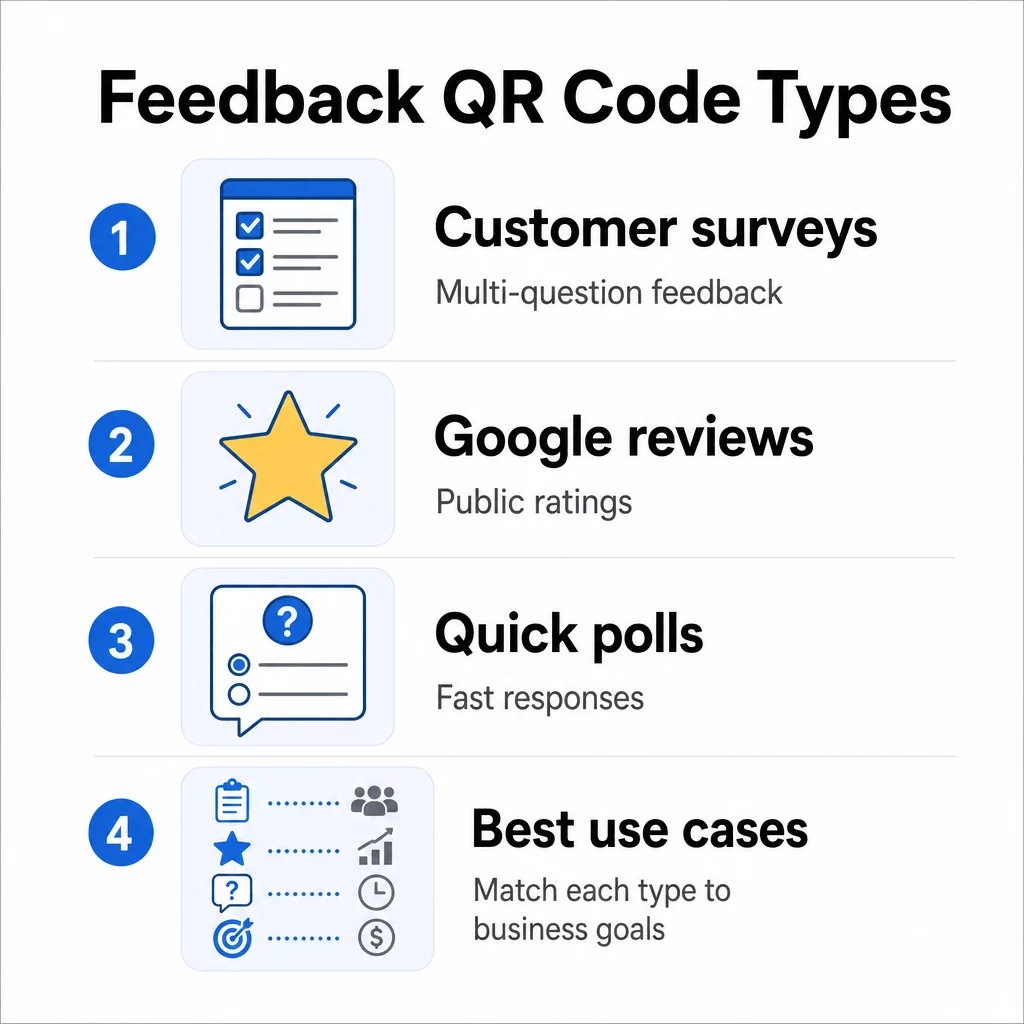
Customer surveys are the most flexible option. Link the code to a Google Form or a similar tool and ask three to five questions about the product, the staff or one specific service. The Google Form QR Code Generator covers this: create the form, copy the share link and generate the code.
Google reviews are public, unlike a private survey. A Google Review QR code sends customers straight to your Google Business review page. This helps local businesses, because the number and freshness of reviews affect how you show up in local search.
Quick polls work when you want one answer in a few seconds. A single question such as “How was your visit today?” with a rating scale is enough. QR code polls fit checkout counters and table service.
How to Create a Feedback QR Code
Making a QR code for a feedback form takes five steps.
- Build the feedback form first. Create a Google Form or Typeform survey, or find your Google Business review link. Keep the form to 3 to 5 questions and open it on your own phone to check that it is easy to complete.
- Generate the QR code. Paste the form or review link into the QR code generator. For any web address, the Link QR Code Generator works. If you want to change the destination later or see scan numbers, choose a dynamic code.
- Add a call to action. Print a short line next to the code, such as “Scan to share your feedback”. A code with no text gets far fewer scans. Add your logo and keep strong contrast, dark code on a light background.
- Test before printing. Scan the code with an iPhone and an Android phone. Check that the form loads and that a test answer is submitted.
- Download and print. Use SVG or PDF for print so the code stays sharp at any size. Use PNG for screens. For printed signs, a code of at least 2 x 2 cm (about 0.8 inch) on a receipt, or 3 to 4 cm (about 1.2 to 1.6 inches) on a table tent, scans reliably.
Code does not scan? The usual causes are low contrast, a code printed too small, a glossy surface that reflects light, or a form link that is set to private. Test the printed copy, not only the screen.
Turn Every Physical Touchpoint Into a Feedback Channel Ready to start? Use the free QR code generator to create a code linked to your survey, review page or poll.
Where to Place Feedback QR Codes
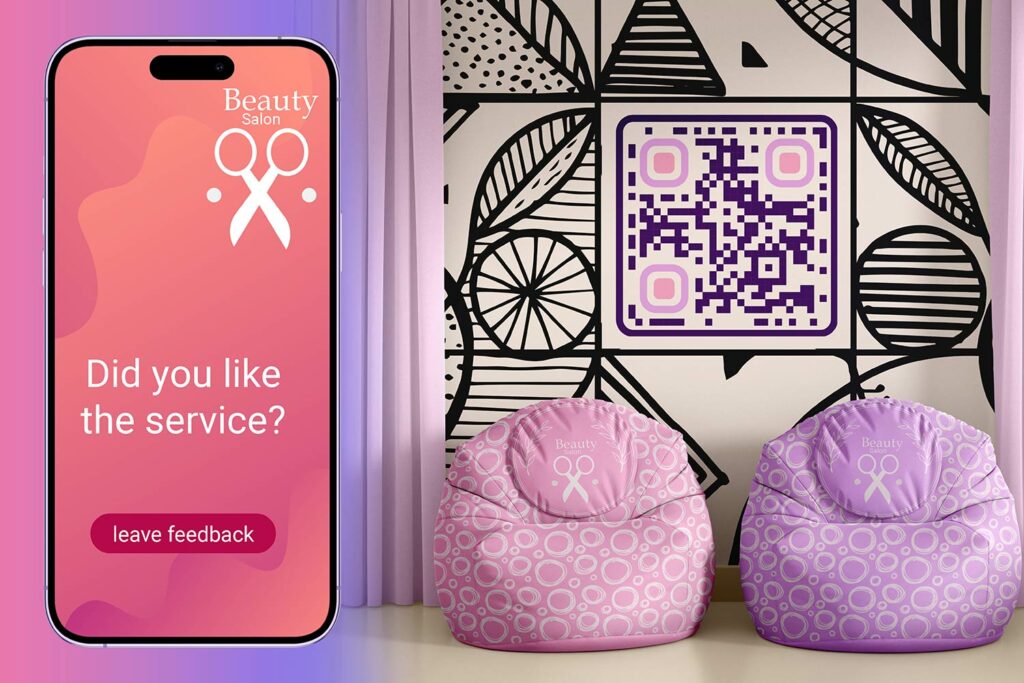
Placement decides how many scans you get. Put the code where the customer is already standing or sitting, at the moment they have an opinion.
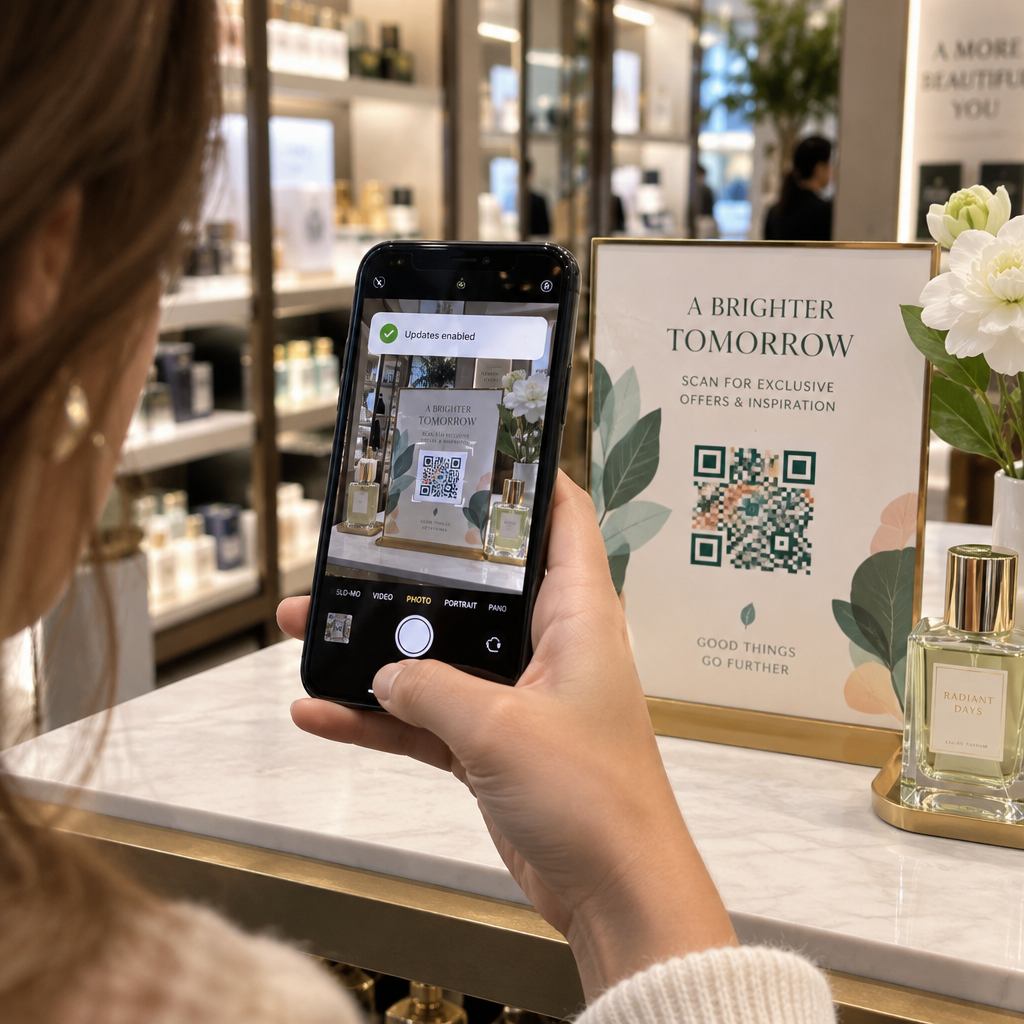
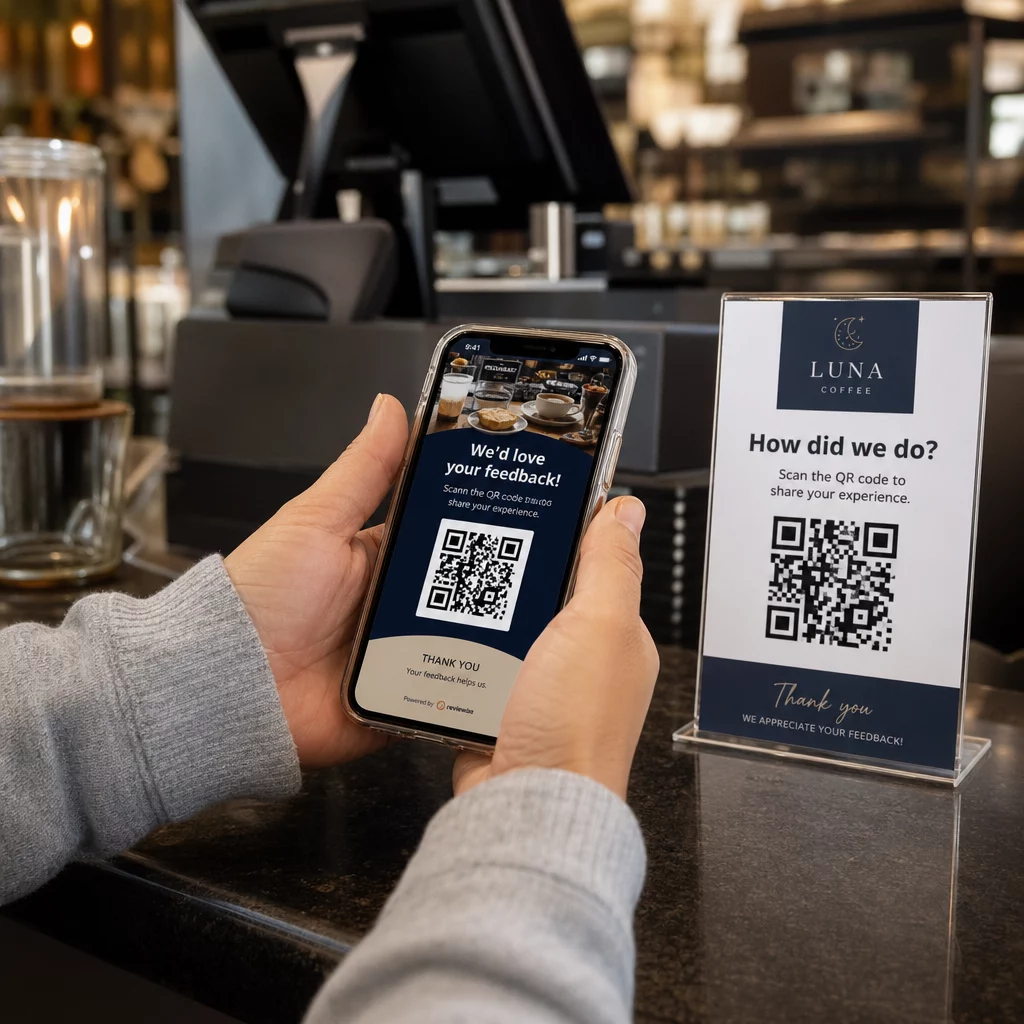
Receipts and checkout areas catch customers at the end of the visit. Print the code at the bottom of the receipt, or put a small sign next to the payment terminal.
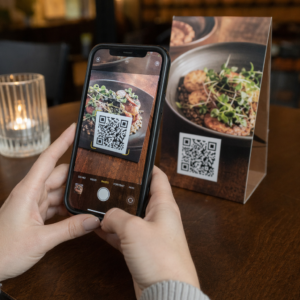
Table tents and menus suit restaurants and cafes. Place the code on the table, on the back of the menu or on the check presenter, so guests can answer before they leave.
Product packaging reaches customers after they have used the product. Add the code to the box, the label or an insert card. This works well for online shops and consumer goods.
Store windows and in-store signs let visitors respond even if they did not buy anything. Use a short question such as which product they came to find.
Waiting areas and service counters are good in clinics, gyms, banks and event venues, where people are standing or sitting and have time to answer.
Tracking and Improving Performance
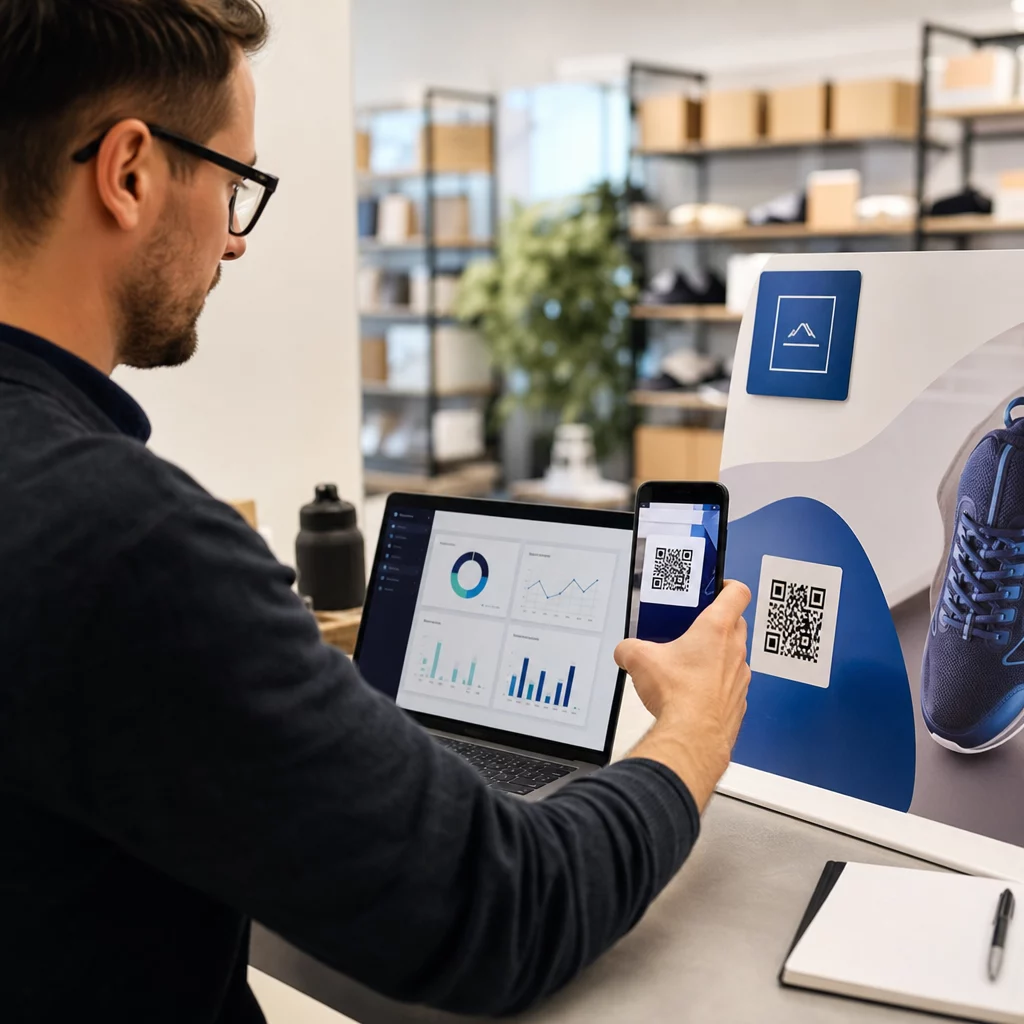
With dynamic QR codes you can track when and where each code is scanned. Give each location its own code, then compare scan counts by place, time of day and device.
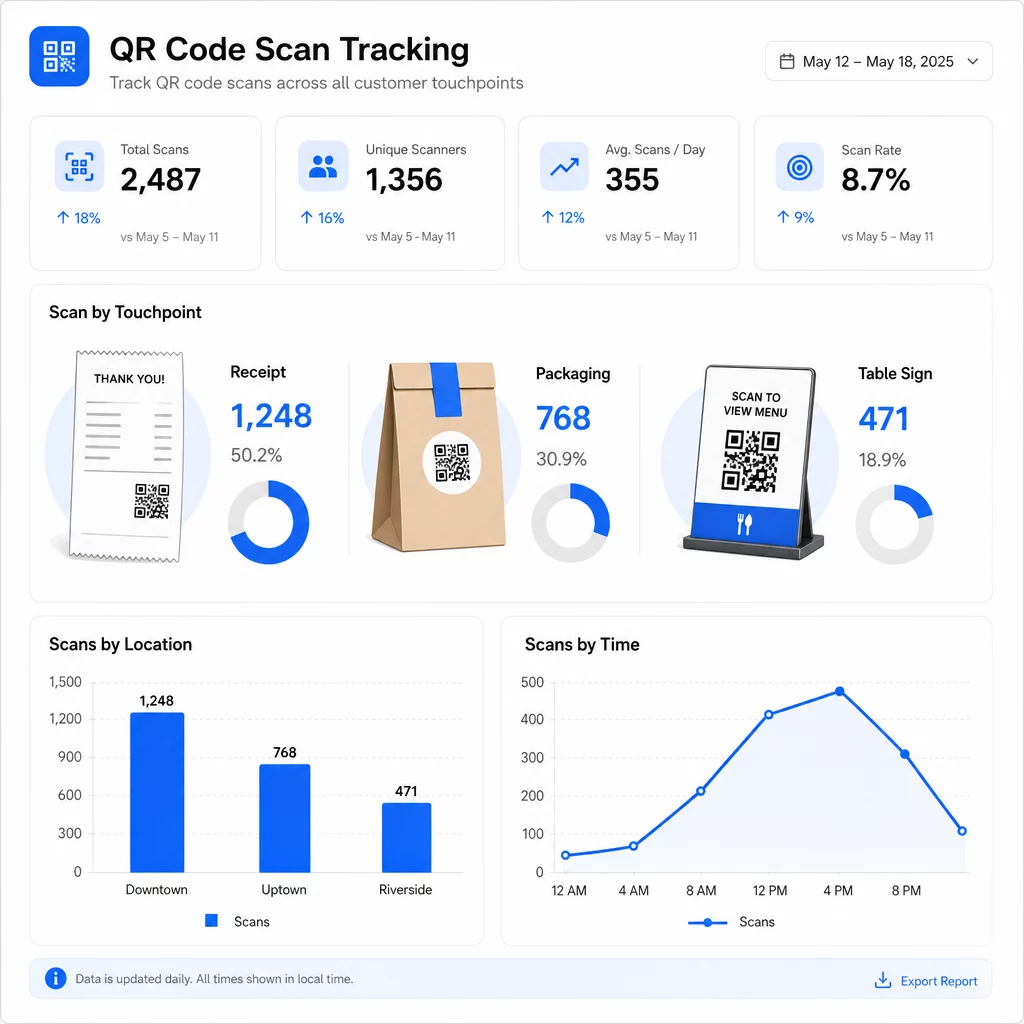
Use the numbers to act. If the receipt code gets many more scans than the packaging code, improve the packaging call to action or move the code. If one location gets almost no scans, move the code or test new wording before you reprint.
Real-time feedback collection also helps you catch problems early. A cluster of low ratings from one location or one shift points you to the cause without waiting for a quarterly survey.
Dynamic codes come with a 14-day free trial, and you can compare plans at pageloot.com/pricing/.
See Which Touchpoints Drive the Most Responses Use QR code tracking to see scan data for all your feedback codes in one place.
Frequently Asked Questions
Yes, if you use a dynamic QR code. A dynamic code points to a short redirect link that you can change at any time, so the printed code stays the same when the destination changes. A static QR code stores the destination permanently, so a new link means reprinting.
A feedback survey QR code links to a private form, such as a Google Form or Typeform, where only you see the responses. A Google Review QR code sends customers to your public Google Business review page, where their feedback is visible to anyone who searches for your business. Many businesses use both: surveys for internal improvement and Google reviews for public reputation.
Placement and wording matter most. Put the code where the experience is fresh, such as on a receipt, at a table or on packaging, and add a short line that says what the customer will do, for example “Scan to rate your visit in 30 seconds”. Keep the survey to a few questions, make sure the form works on a phone, and consider a small incentive such as a discount on the next visit.
Create the form in Google Forms or Typeform, copy its share link, paste the link into a QR code generator, then download the code as PNG, SVG or PDF. Test it with your phone before you print it.
A static QR code never expires, because the link is stored in the pattern itself. A dynamic code keeps working while your plan is active, and scans are unlimited. Dynamic codes on a monthly or yearly plan stop working when the plan ends.