Mã QR của bạn có đang khiến khách hàng gặp rủi ro mà bạn không hề hay biết? Những kẻ lừa đảo đã biến gian lận mã QR thành một mối đe dọa phổ biến, và các doanh nghiệp sử dụng chúng trong các chiến dịch tiếp thị có thể vô tình trở thành phương tiện cho một cuộc tấn công. Hướng dẫn này sẽ chỉ cho bạn những rủi ro bảo mật cụ thể mà bạn cần biết và các bước thực tế để chạy các chiến dịch mà khách hàng của bạn có thể tin tưởng.
Các Mối Đe Dọa Thực Sự Đằng Sau Tiếp Thị Mã QR
Hiểu rõ những gì bạn đang phải đối mặt là bước đầu tiên để bảo vệ các chiến dịch của mình. Mã QR vốn dĩ không minh bạch – người dùng không thể biết chúng dẫn đến đâu cho đến khi họ đã quét chúng. Điều đó khiến chúng trở thành một công cụ hấp dẫn đối với những kẻ xấu.
Can Thiệp và Sao Chép Mã
Một trong những cuộc tấn công đơn giản nhất liên quan đến việc thay thế vật lý một mã QR hợp pháp bằng một mã giả mạo. Tội phạm in các mã giả mạo dạng nhãn dán và dán chúng lên các mã thật ở những địa điểm công cộng – đồng hồ đỗ xe, bàn nhà hàng, màn hình bán lẻ. Khi khách hàng quét một mã trông giống mã của bạn, họ thực sự bị chuyển hướng đến một trang web giả mạo được thiết kế để đánh cắp thông tin thanh toán hoặc thông tin đăng nhập.
Loại tấn công này đặc biệt nguy hiểm vì thương hiệu của bạn phải chịu tổn thất về danh tiếng ngay cả khi bạn là nạn nhân. Khách hàng liên kết trải nghiệm gian lận đó với doanh nghiệp của bạn.
Lừa Đảo Mã QR (“Quishing”)
Quishing là một hình thức gian lận danh tính, trong đó kẻ tấn công nhúng các liên kết độc hại vào mã QR và phân phối chúng qua email, tờ rơi in ấn hoặc biển báo công cộng. Trang đích thường trông hợp pháp – bắt chước một trang đăng nhập hoặc thanh toán thật – nơi nạn nhân được yêu cầu nhập thông tin nhạy cảm.
Các cơ quan thực thi pháp luật liên bang ở Hoa Kỳ đã đặc biệt cảnh báo rằng các cuộc tấn công quishing thường tạo ra cảm giác cấp bách giả để gây áp lực buộc mọi người phải quét và hành động nhanh chóng. Lừa đảo thông tin đăng nhập chiếm phần lớn các mối đe dọa mã QR nâng cao, khiến nó trở thành một trong những rủi ro nghiêm trọng nhất đối với các doanh nghiệp xử lý tài khoản hoặc thanh toán của khách hàng.
Lộ Dữ Liệu Riêng Tư
Mỗi lần quét mã QR có thể thu thập siêu dữ liệu – loại thiết bị, vị trí, dấu thời gian, trình duyệt – tùy thuộc vào cách cấu hình theo dõi của bạn. Nếu không có các biện pháp kiểm soát phù hợp, dữ liệu này có thể bị lộ, xử lý sai hoặc thu thập theo những cách vi phạm quy định về quyền riêng tư. Các doanh nghiệp hoạt động theo GDPR (đối với người dùng EU) hoặc CCPA/CPRA (đối với cư dân California) phải đối mặt với các khoản tiền phạt đáng kể nếu xử lý dữ liệu không đúng cách. Tìm hiểu thêm về các rủi ro riêng tư cụ thể mà mã QR tạo ra và cách giải quyết chúng.
Trải Nghiệm Lỗi Gây Xói Mòn Niềm Tin
Bảo mật không chỉ là về các cuộc tấn công. Một mã QR dẫn đến một liên kết bị hỏng, một trang không thân thiện với thiết bị di động hoặc một trang web tải chậm sẽ tạo ra trải nghiệm tồi tệ làm xói mòn niềm tin của khách hàng. Nếu mã của bạn thỉnh thoảng bị lỗi, khách hàng sẽ ít sẵn lòng quét chúng hơn – và dễ bị thuyết phục bởi lập luận rằng “không thể tin tưởng mã QR.”
Tạo Mã QR An Toàn: Những Điều Cần Làm Đúng Trước Khi Ra Mắt
Sử Dụng Mã QR Động Thay Vì Mã Tĩnh
Quyết định bảo mật có tác động lớn nhất mà bạn có thể đưa ra là chọn mã QR động thay vì mã tĩnh. Đây là lý do tại sao nó quan trọng:
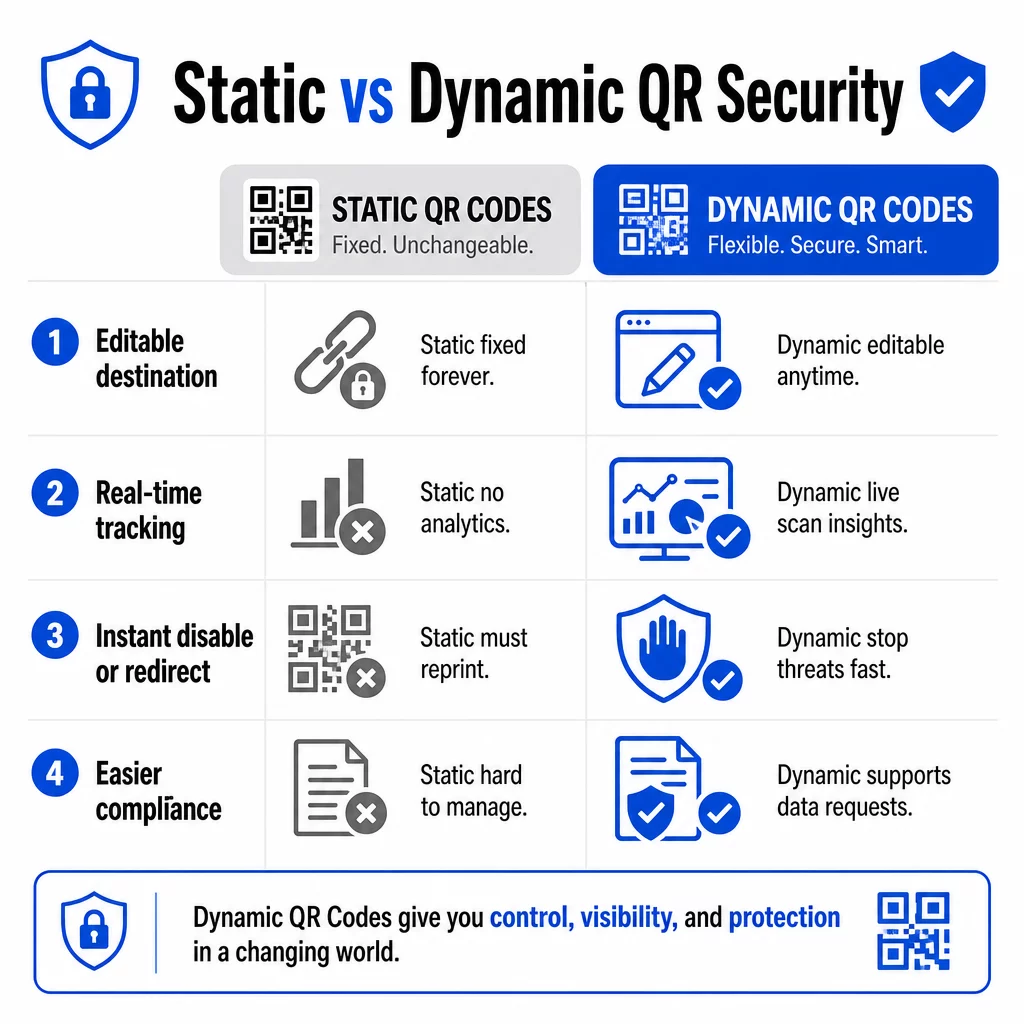
| TÍNH NĂNG | Mã QR tĩnh | Mã QR động |
|---|---|---|
| URL đích | Cố định vĩnh viễn | Có thể chỉnh sửa bất cứ lúc nào |
| Theo dõi quét | Không được hỗ trợ | Bao gồm phân tích đầy đủ |
| Phản ứng với các mối đe dọa | Phải in lại | Vô hiệu hóa hoặc chuyển hướng ngay lập tức |
| Hỗ trợ tuân thủ | Khó khăn | Dễ dàng quản lý các yêu cầu dữ liệu hơn |
| Trị giá | Miễn phí hoặc chi phí thấp | Dựa trên đăng ký |
Mã tĩnh nhúng đích đến trực tiếp vào mẫu. Sau khi in, bạn không thể thay đổi chúng. Nếu một mã tĩnh bị xâm phạm hoặc dẫn đến một nơi có vấn đề, lựa chọn duy nhất của bạn là in lại và phân phối lại mọi tài liệu mà nó xuất hiện.
Mã động sử dụng một URL chuyển hướng ngắn mà bạn kiểm soát từ bảng điều khiển. Nếu bạn phát hiện hoạt động quét đáng ngờ hoặc cần cập nhật đích đến, bạn có thể thực hiện ngay lập tức – mà không cần chạm vào bất kỳ vật phẩm in nào. Đối với bất kỳ chiến dịch đang diễn ra nào, mã động là lựa chọn phù hợp.
Theo dõi và Bảo vệ Chiến dịch của Bạn trong Thời gian Thực Sử dụng Tạo mã QR động để tạo mã mà bạn có thể cập nhật, giám sát và vô hiệu hóa ngay lập tức nếu có bất kỳ điều gì đáng ngờ.
Chỉ liên kết đến các Điểm đến được Bảo mật bằng HTTPS
Mọi URL mà mã QR của bạn trỏ đến đều phải sử dụng mã hóa TLS/SSL – được biểu thị bằng `https://` và biểu tượng ổ khóa trong trình duyệt. Điều này đảm bảo kết nối giữa thiết bị của người dùng và trang web của bạn được mã hóa và trang web đó được chứng nhận và đáng tin cậy.
Tránh liên kết đến các điểm đến HTTP, ngay cả tạm thời. Nếu địa chỉ của một trang thay đổi, hãy cấu hình chuyển hướng đúng cách thay vì để URL gốc bị hỏng. Một liên kết chết là một yếu tố phá vỡ lòng tin; một chuyển hướng đến một trang không bảo mật là một rủi ro bảo mật. Xem lại danh sách kiểm tra đầy đủ về các phương pháp hay nhất để tạo mã QR an toàn.
Thêm Nhận diện Thương hiệu Hiển thị vào Mọi Mã
Một mã QR đen trắng đơn giản không cung cấp cho người dùng bất kỳ tín hiệu nào về nguồn gốc của nó hoặc liệu nó có an toàn hay không. Mã QR có thương hiệu – những mã kết hợp logo, màu sắc thương hiệu và mẫu thiết kế của bạn – khó bị kẻ tấn công sao chép một cách thuyết phục hơn đáng kể, và chúng báo hiệu tính hợp pháp cho khách hàng trước khi họ quét.
Sử dụng màu sắc phù hợp với nhận diện hình ảnh của bạn, duy trì độ tương phản cao để dễ quét và giữ thiết kế gọn gàng. Khi bạn cũng sử dụng một URL bao gồm tên miền của bạn (thay vì một tên miền liên kết rút gọn chung chung), khách hàng có thêm một điểm xác minh.
Áp dụng Kiểm soát Truy cập Dựa trên Vai trò
Nếu nhiều thành viên trong nhóm quản lý các chiến dịch mã QR của bạn, hãy hạn chế những người có thể chỉnh sửa hoặc vô hiệu hóa mã. Các thay đổi trái phép đối với mã đang hoạt động – dù là vô tình hay cố ý – đều tiềm ẩn rủi ro nghiêm trọng. Quản lý tập trung với quyền dựa trên vai trò đảm bảo chỉ những người được ủy quyền mới có thể thực hiện thay đổi, điều này đặc biệt quan trọng đối với các nhóm doanh nghiệp hoặc các đại lý quản lý mã thay mặt cho nhiều khách hàng.
Vị trí Vật lý và Ngăn chặn Can thiệp
Cách thức và nơi bạn hiển thị mã QR ảnh hưởng đến cả khả năng sử dụng và bảo mật. Các quyết định về vị trí cần được chú ý nhiều như chính các mã.
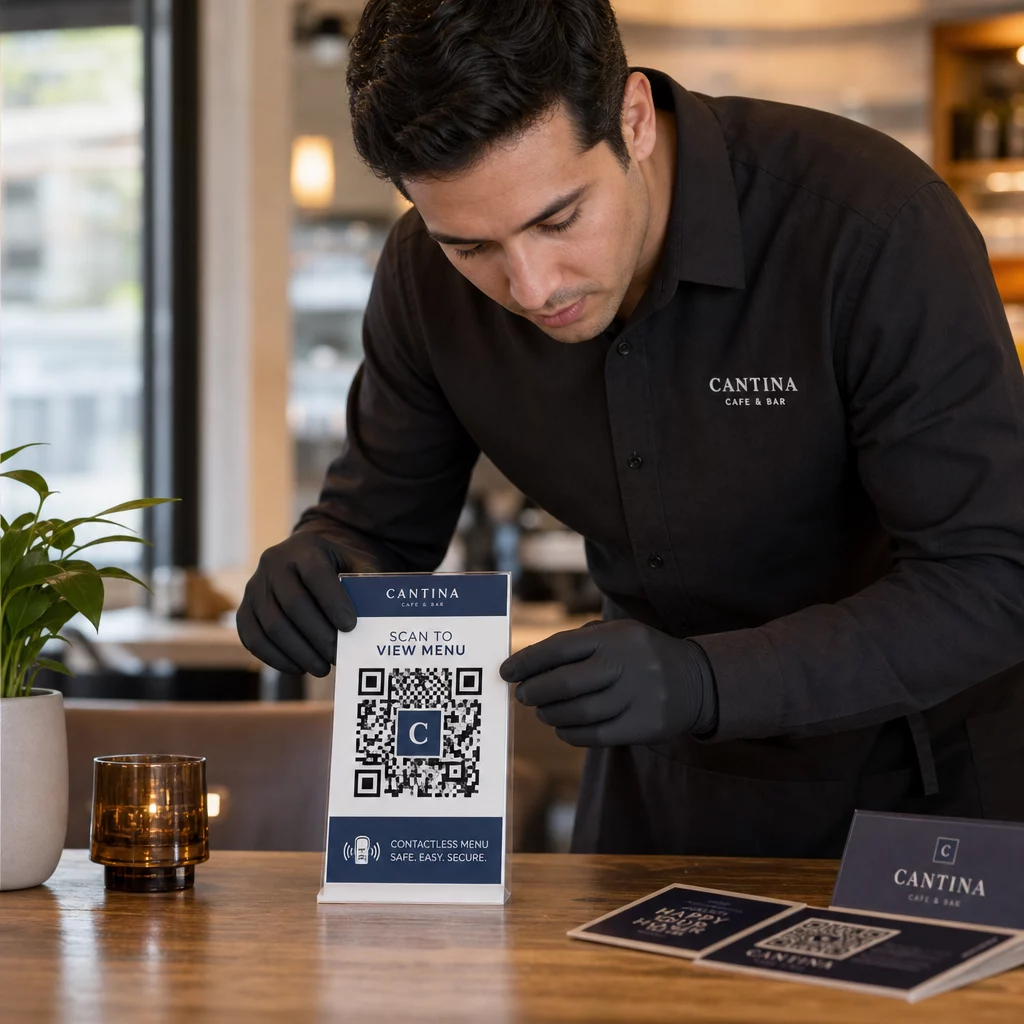
- Sử dụng vật liệu chống giả mạo cho các mã được hiển thị ở nơi công cộng. Mã trên thực đơn, mặt bàn hoặc tường nên được in trực tiếp lên vật liệu thay vì dán dưới dạng nhãn dán có thể tháo rời nếu có thể.
- Kiểm tra mã vật lý thường xuyên, đặc biệt ở những vị trí có nhiều người qua lại. Giữ một hình ảnh tham chiếu về mã hợp lệ của bạn trông như thế nào để nhân viên có thể phát hiện các mã thay thế trái phép.
- Cố định màn hình ở những vị trí cố định. Các mã được đặt dưới kính, ép plastic lên bề mặt hoặc tích hợp vào bảng hiệu sẽ khó bị giả mạo hơn nhiều so với các tờ rơi hoặc tài liệu giấy rời.
- Đặt mã ở tầm mắt thích hợp – thường là từ 3,5 đến 5,5 feet – ở những khu vực đủ ánh sáng với độ tương phản tốt so với nền.
Hướng dẫn của liên bang đặc biệt cảnh báo người tiêu dùng kiểm tra các mã QR vật lý để tìm dấu hiệu giả mạo (chẳng hạn như một nhãn dán được dán chồng lên mã gốc) trước khi quét. Bằng cách làm cho mã của bạn khó thay thế hơn về mặt vật lý, bạn giảm nguy cơ khách hàng gặp phải phiên bản lừa đảo.
Những điều cần nói với khách hàng trước khi họ quét
Khách hàng là tuyến phòng thủ thứ hai của bạn. Khi họ hiểu một tương tác mã QR an toàn trông như thế nào, họ sẽ dễ dàng phát hiện ra điều gì đó bất thường hơn.
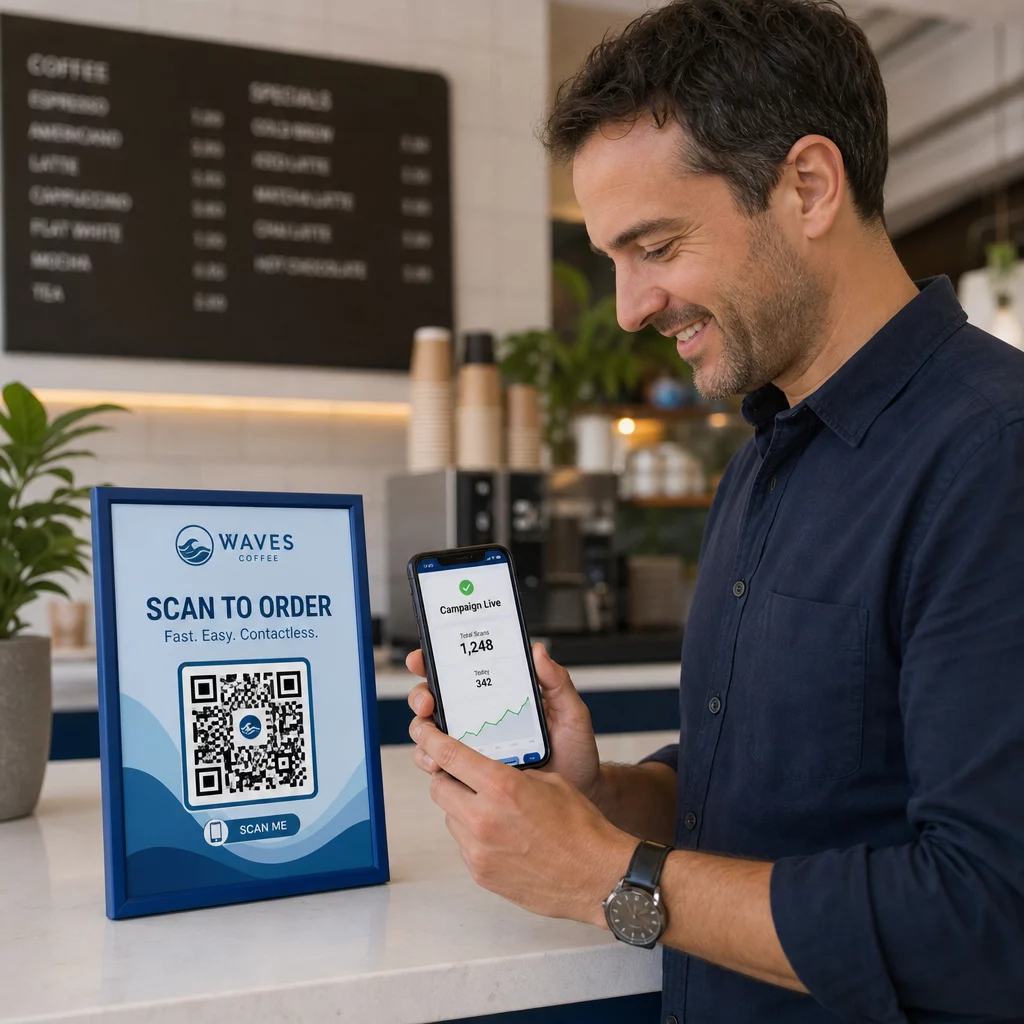
Luôn đặt một lời kêu gọi hành động rõ ràng, cụ thể bên cạnh mỗi mã QR. Các hướng dẫn mơ hồ như “Quét tại đây” không giúp người dùng đánh giá liệu mã có hợp lệ hay không. Thay vào đó, hãy sử dụng các cụm từ như:
- “Quét để xem thực đơn hôm nay”
- “Quét để truy cập hóa đơn của bạn”
- “Quét để xem hướng dẫn cài đặt sản phẩm”
Thông tin ngữ cảnh này cho người dùng biết họ nên mong đợi điều gì sau khi quét – giúp dễ dàng nhận ra khi có điều gì đó không ổn. Một mã QR hứa hẹn hiển thị thực đơn nhưng lại mở ra trang đăng nhập là một dấu hiệu cảnh báo ngay lập tức.
Khuyến khích khách hàng xem trước URL trước khi truy cập. Hầu hết các camera điện thoại thông minh hiện đại đều hiển thị URL đích trước khi khởi chạy trình duyệt. Người dùng nên tìm kiếm tên miền dễ nhận biết của bạn và kiểm tra lỗi chính tả hoặc các ký tự bị thay thế (ví dụ: `paeg1oot.com` thay vì `pageloot.com`).
Khuyên không nên sử dụng các ứng dụng quét QR của bên thứ ba được tải xuống từ các nguồn không xác định. Camera điện thoại thông minh gốc (cả iOS và Android đều có tính năng quét QR tích hợp) là lựa chọn an toàn nhất và hiển thị bản xem trước URL trước khi điều hướng.
Giám sát các chiến dịch để tìm hoạt động đáng ngờ
Tạo mã QR an toàn không phải là hành động một lần. Giám sát chủ động là yếu tố phân biệt một chiến dịch an toàn với một chiến dịch bị khai thác.
Mã QR động cung cấp dữ liệu theo dõi thời gian thực bao gồm số lượt quét, loại thiết bị, hệ điều hành và vị trí địa lý. Dữ liệu này có hai công dụng: đo lường hiệu suất chiến dịch và gắn cờ các bất thường.
Hãy chú ý đến những dấu hiệu cảnh báo này trong dữ liệu quét của bạn:
- Số lượt quét tăng đột biến từ một khu vực địa lý không mong đợi
- Số lượng lớn lượt quét từ một thiết bị hoặc địa chỉ IP duy nhất trong một khoảng thời gian ngắn
- Các mẫu quét không khớp với đối tượng dự kiến của bạn (thiết bị sai, thời gian sai, vị trí sai)
Bất kỳ mẫu nào trong số này có thể cho thấy rằng một mã đang bị khai thác hoặc thử nghiệm bởi các tác nhân xấu. Với mã động, bạn có thể vô hiệu hóa URL bị ảnh hưởng ngay lập tức, chuyển hướng đến một trang đích an toàn và điều tra trước khi quyết định có tiếp tục chiến dịch hay không.
Thiết lập các cuộc kiểm tra định kỳ – cả kỹ thuật số (xem xét phân tích) và vật lý (kiểm tra vị trí mã) – theo một lịch trình xác định. Bạn càng phát hiện ra vấn đề sớm, thiệt hại nó có thể gây ra càng ít.
Xem mọi lượt quét ngay khi chúng xảy ra Bảng điều khiển của Pageloot cung cấp cho bạn cái nhìn toàn diện về hiệu suất quét và các bất thường. Bắt đầu theo dõi các chiến dịch mã QR của bạn với mã động ngay hôm nay.
Tuân thủ các Quy định về Quyền riêng tư Dữ liệu
Nếu mã QR của bạn thu thập bất kỳ dữ liệu người dùng nào – ngay cả chỉ vị trí quét và loại thiết bị – bạn có các nghĩa vụ pháp lý tùy thuộc vào nơi khách hàng của bạn sinh sống.
GDPR áp dụng khi bạn nhắm mục tiêu người dùng ở Liên minh Châu Âu. Nó yêu cầu sự đồng ý rõ ràng trước khi thu thập thông tin cá nhân và quy định rằng người dùng có thể yêu cầu truy cập hoặc xóa dữ liệu của họ. Việc không tuân thủ sẽ bị phạt tới 4% doanh thu hàng năm toàn cầu hoặc 20 triệu euro, tùy theo mức nào lớn hơn.
CCPA/CPRA áp dụng cho cư dân California và cấp cho họ quyền từ chối thu thập dữ liệu. Mặc dù không phải lúc nào cũng yêu cầu sự đồng ý trước, nhưng nó yêu cầu tiết lộ rõ ràng và một cơ chế từ chối dễ tiếp cận. Các vi phạm cố ý có thể bị phạt tới 7.988 đô la cho mỗi sự cố.
Các bước thực tế để duy trì tuân thủ:
- Chỉ thu thập dữ liệu tối thiểu cần thiết cho mục tiêu chiến dịch của bạn
- Đặt chính sách quyền riêng tư của bạn dễ tìm thấy từ bất kỳ trang đích mã QR nào
- Sử dụng nền tảng mã QR hỗ trợ yêu cầu xóa dữ liệu
- Chọn các nền tảng có chứng nhận tuân thủ được công nhận như GDPR, SOC 2 hoặc HIPAA khi thích hợp
Minh bạch về cách bạn xử lý dữ liệu vừa là yêu cầu pháp lý vừa là biện pháp xây dựng lòng tin. Khách hàng hiểu bạn thu thập gì – và tại sao – có nhiều khả năng tương tác với mã của bạn hơn. Khám phá chi tiết hơn cách xây dựng các chiến dịch mã QR tôn trọng quyền riêng tư.
Kiểm tra trước khi triển khai
Không mã QR nào nên được đưa vào sử dụng mà không được kiểm tra trên nhiều thiết bị và điều kiện. Một mã quét hoàn hảo trên điện thoại của bạn có thể không hoạt động trên thiết bị Android cũ hơn, trong điều kiện ánh sáng yếu hoặc khi in ở kích thước nhỏ hơn.
Trước khi triển khai:
- Kiểm tra trên cả thiết bị iOS và Android bằng ứng dụng camera gốc
- Quét trong điều kiện ánh sáng dự kiến tại mỗi vị trí đặt
- Xác minh rằng đích đến tải đúng cách và được tối ưu hóa hoàn toàn cho thiết bị di động
- Xác nhận tốc độ tải trang – các trang chậm làm tăng tỷ lệ bỏ qua và tạo cơ hội cho người dùng thiếu kiên nhẫn bị chuyển hướng sang nơi khác
- Kiểm tra xem URL hiển thị trong bản xem trước trước khi quét có khớp với miền bạn mong đợi không
Đối với Mã QR được đặt trong tài liệu in ấn, hãy sử dụng định dạng vector (SVG, EPS hoặc PDF) để in nhằm tránh bị mờ. Duy trì vùng yên tĩnh – viền trắng xung quanh mã – rộng ít nhất bốn mô-đun ở mỗi cạnh. Kích thước thực tế tối thiểu cho hầu hết các tài liệu tiếp thị là 0,8 × 0,8 inch; đối với danh thiếp được xem ở cự ly gần, ít nhất là 1 × 1 inch.
Đào tạo đội ngũ của bạn
Các biện pháp kiểm soát công nghệ chỉ có tác dụng nhất định. Đội ngũ tiếp thị của bạn cần hiểu một chiến dịch mã QR an toàn trông như thế nào và những dấu hiệu nào cho thấy có điều gì đó không ổn.
Đề cập các lĩnh vực này trong đào tạo nhóm:
- Cách nhận biết mã vật lý bị giả mạo
- Cách diễn giải phân tích quét và xác định các bất thường
- Các bước cần thực hiện khi mã bị nghi ngờ bị xâm phạm (vô hiệu hóa, điều tra, thông báo)
- Cách áp dụng yêu cầu về thương hiệu và HTTPS khi tạo mã mới
- Cách viết các lời kêu gọi hành động hiệu quả cung cấp ngữ cảnh cho người dùng
Các Danh sách kiểm tra tiếp thị mã QR cho doanh nghiệp nhỏ là một tài liệu tham khảo hữu ích để xây dựng các quy trình làm việc này vào quy trình tiêu chuẩn của nhóm bạn.
Câu hỏi thường gặp
Mã QR tĩnh nhúng URL đích vĩnh viễn vào mẫu mã và không thể thay đổi sau khi tạo. Nếu mã tĩnh bị xâm phạm hoặc dẫn đến một trang bị hỏng, bạn phải in lại mọi vật phẩm vật lý mà nó xuất hiện. Mã QR động sử dụng một URL chuyển hướng ngắn mà bạn kiểm soát từ một bảng điều khiển, vì vậy bạn có thể cập nhật đích hoặc vô hiệu hóa mã ngay lập tức mà không cần in lại bất cứ thứ gì. Mã động cũng cung cấp phân tích quét theo thời gian thực, giúp bạn phát hiện hoạt động đáng ngờ. Đối với bất kỳ chiến dịch tiếp thị nào mà bảo mật và tính linh hoạt là quan trọng, mã động là lựa chọn tốt hơn.
Thường xuyên kiểm tra các mã vật lý tại mỗi vị trí đặt và so sánh chúng với hình ảnh tham chiếu của mã hợp lệ. Về mặt kỹ thuật số, hãy theo dõi phân tích quét của bạn để tìm các mẫu bất thường – các đợt tăng đột biến về số lượng không mong muốn, các lượt quét từ các khu vực địa lý không được nhận dạng hoặc tần suất quét cao từ một thiết bị duy nhất. Bởi vì mã QR động theo dõi các chỉ số này theo thời gian thực, bạn có thể phát hiện các bất thường nhanh chóng và vô hiệu hóa chuyển hướng bị ảnh hưởng trước khi thiệt hại đáng kể xảy ra.
Mọi trang đích được liên kết từ mã QR phải sử dụng HTTPS (mã hóa TLS/SSL), tải nhanh trên thiết bị di động và hiển thị rõ ràng nhận diện thương hiệu của bạn để người dùng có thể xác nhận họ đang ở đúng nơi. Đối với các trang thu thập bất kỳ dữ liệu người dùng nào, hãy bao gồm một liên kết rõ ràng đến chính sách quyền riêng tư của bạn và một cơ chế từ chối hoặc đồng ý dễ tiếp cận theo yêu cầu của GDPR hoặc CCPA. Nếu trang xử lý thông tin nhạy cảm như thanh toán hoặc thông tin đăng nhập, hãy cân nhắc thêm xác thực đa yếu tố như một lớp bảo vệ bổ sung.