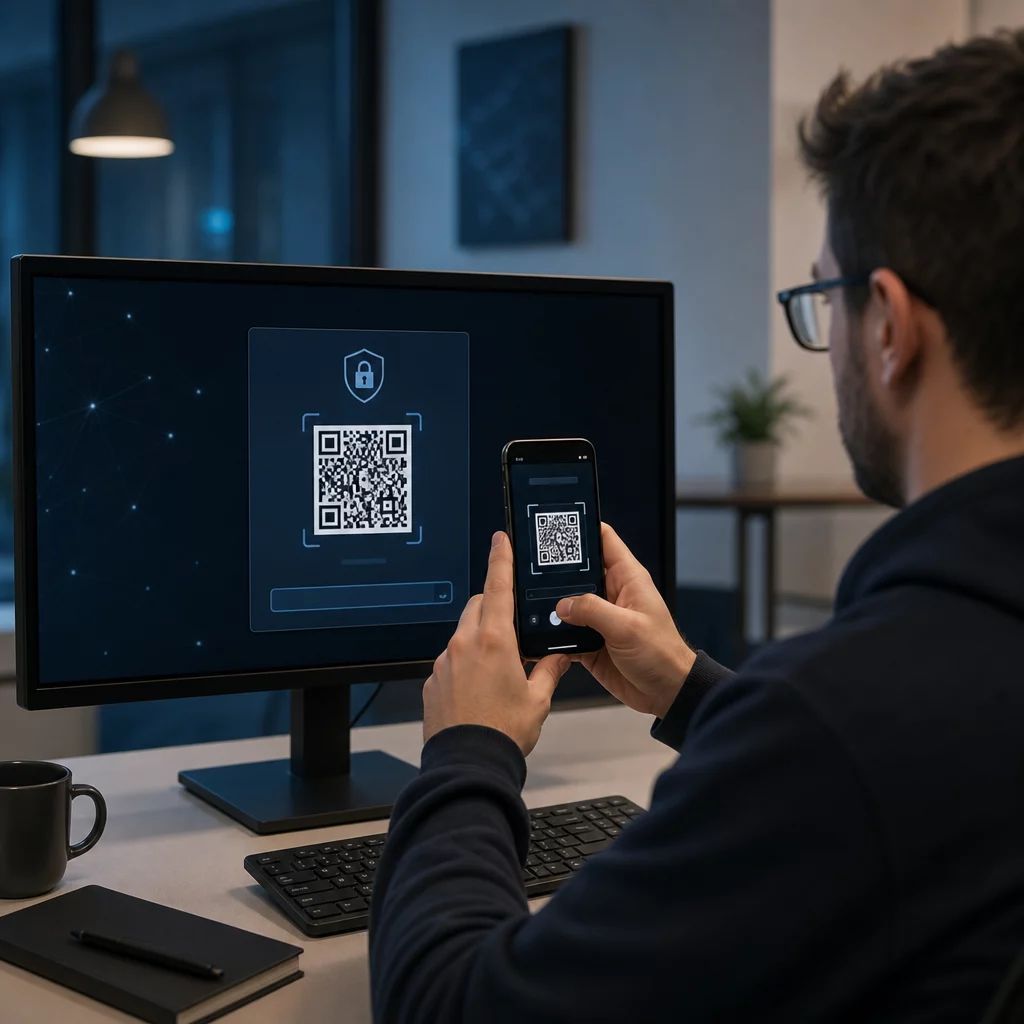
Bạn đang gặp khó khăn trong việc bảo mật các tài khoản đặc quyền mà không gây cản trở cho quản trị viên của mình? Mật khẩu tĩnh và các phương pháp MFA cũ khiến môi trường PAM dễ bị tấn công lừa đảo (phishing), đánh cắp thông tin đăng nhập và chiếm quyền điều khiển phiên (session hijacking). Trang này giải thích cách xác thực dựa trên mã QR giải quyết những lỗ hổng đó – bao gồm bối cảnh mối đe dọa, cách thức đăng ký hoạt động, cơ chế TOTP và các thực hành bảo mật mà nhóm của bạn cần triển khai đúng cách.
Tại sao xác thực PAM truyền thống không hiệu quả
Các hệ thống Quản lý truy cập đặc quyền (PAM) bảo vệ các tài khoản nhạy cảm nhất trong tổ chức của bạn. Khi các tài khoản đó dựa vào mật khẩu tĩnh, thông tin đăng nhập dùng chung hoặc MFA dựa trên SMS, kẻ tấn công có những con đường đã được ghi nhận rõ ràng để khai thác chúng.
Lừa đảo (Phishing) và đánh cắp thông tin đăng nhập vẫn là điểm xâm nhập phổ biến nhất. Người dùng đặc quyền bị nhắm mục tiêu chính xác vì tài khoản của họ mở khóa các hệ thống quan trọng. Ngay cả các quản trị viên có kinh nghiệm cũng có thể bị lừa bởi các trang đăng nhập giả mạo thuyết phục, đặc biệt khi kẻ tấn công sử dụng kỹ thuật xã hội để mạo danh nhà cung cấp hoặc bộ phận hỗ trợ CNTT. Sau khi thông tin đăng nhập bị đánh cắp, kẻ tấn công di chuyển ngang, leo thang đặc quyền và duy trì quyền truy cập liên tục.
Tài khoản dùng chung làm trầm trọng thêm vấn đề. Khi nhiều quản trị viên sử dụng cùng một thông tin đăng nhập, trách nhiệm cá nhân sẽ biến mất. Các cuộc điều tra vi phạm bị đình trệ, việc giám sát tuân thủ bị phá vỡ và một mật khẩu bị xâm phạm duy nhất sẽ mở khóa quyền truy cập trên nhiều hệ thống.
Chiếm quyền điều khiển phiên (Session hijacking) đặt ra rủi ro lớn thứ ba. Sau một sự kiện xác thực hợp lệ, kẻ tấn công có thể chặn các mã thông báo phiên (session tokens), khai thác cookie hoặc sử dụng các kỹ thuật tấn công xen giữa (man-in-the-middle) để mạo danh người dùng đã xác thực – tất cả mà không cần biết mật khẩu gốc. Các mã thông báo phiên liên tục khiến các cuộc tấn công này đặc biệt khó phát hiện, vì kẻ tấn công hòa lẫn vào lưu lượng truy cập quản trị thông thường.
Những lỗ hổng này có chung một nguyên nhân gốc rễ: xác thực phụ thuộc vào các bí mật tĩnh, có thể tái sử dụng. Xác thực dựa trên mã QR giải quyết trực tiếp vấn đề này.
Cách xác thực mã QR hoạt động trong PAM
Xác thực mã QR thay thế thông tin đăng nhập tĩnh bằng các mã động, dành riêng cho thiết bị. Thay vì nhập mật khẩu, quản trị viên quét mã QR bằng thiết bị di động đã đăng ký. Thiết bị đọc mã, áp dụng các khóa bảo mật được lưu trữ trong phần cứng và hoàn tất xác thực trong vài giây.
Việc triển khai phổ biến nhất trong môi trường PAM doanh nghiệp là kết hợp mã QR với TOTP (Mật khẩu dùng một lần dựa trên thời gian) như được định nghĩa trong RFC 6238. Dưới đây là cách luồng đó hoạt động:
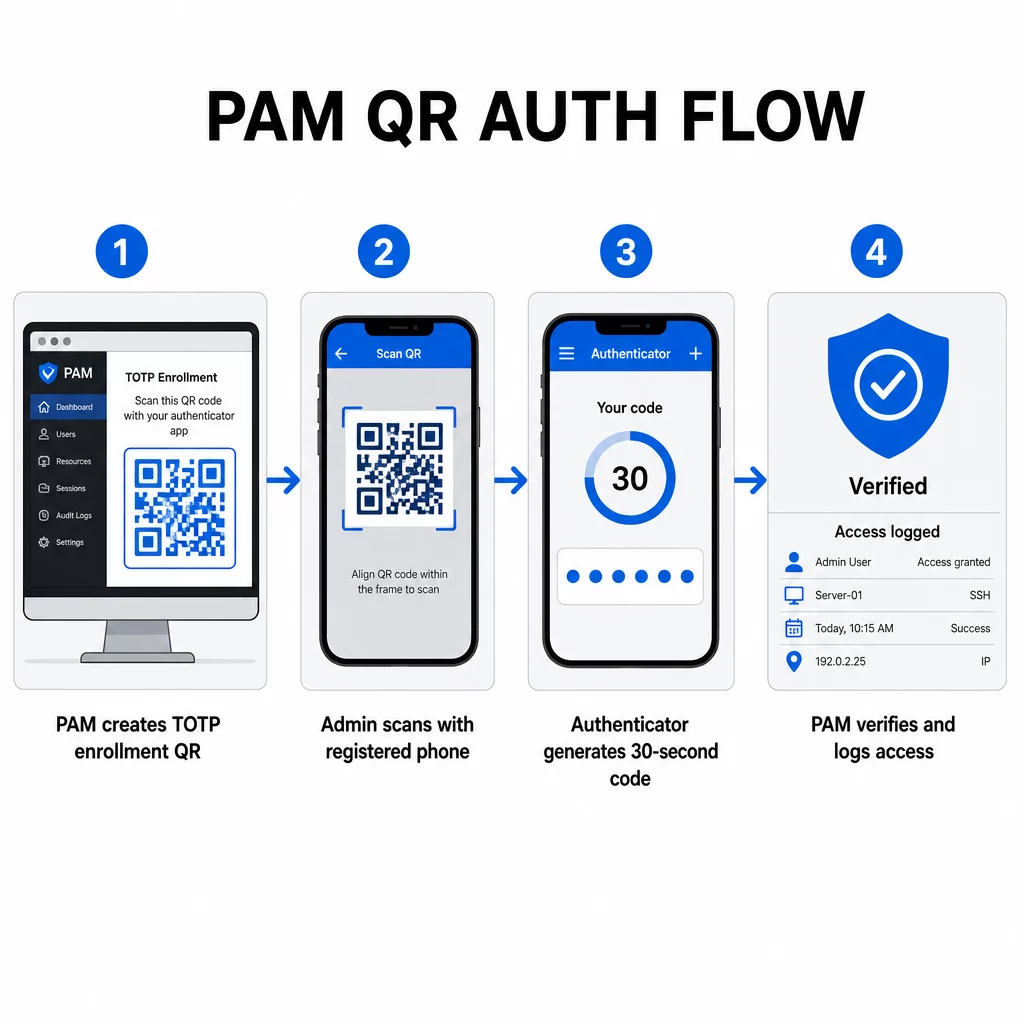
- Trong quá trình đăng ký, hệ thống tạo một khóa bí mật dùng chung và mã hóa nó thành mã QR dưới dạng URI có định dạng như `otpauth://totp/LABEL?secret=SECRET&issuer=ISSUER`
- Người dùng quét mã QR này bằng một ứng dụng xác thực (như Google Authenticator, Microsoft Authenticator hoặc Okta Verify), ứng dụng này lưu trữ bí mật cục bộ trên thiết bị
- Khi đăng nhập, ứng dụng áp dụng thuật toán HOTP cho một bộ đếm dựa trên thời gian được lấy từ thời gian Unix hiện tại, tạo ra một mật mã dùng một lần có giá trị trong 30 giây theo mặc định
- Máy chủ thực hiện cùng một phép tính một cách độc lập và chấp nhận các mã từ bước thời gian hiện tại và ngay trước đó để tính đến sự trôi lệch đồng hồ
Bởi vì mật mã được tạo ra từ thời gian và một bí mật gắn liền với thiết bị – không được truyền qua mạng – việc chặn nó trong quá trình truyền không mang lại giá trị lâu dài. Mỗi mã trở nên vô dụng trong vòng 30 giây.
Các nền tảng như CyberArk triển khai mô hình này trực tiếp. Quản trị viên bật tính năng đăng ký người dùng dựa trên mã QR trong mục Cài đặt → Xác thực → Nền tảng → Cài đặt bảo mật → Tùy chọn xác thực, sau đó định nghĩa các chính sách MFA kích hoạt trình hướng dẫn đăng ký khi đăng nhập lần đầu. Ứng dụng di động CyberArk Identity cũng hỗ trợ tùy chọn “Đăng ký bằng QR”, nơi người dùng quét mã được hiển thị trên cổng Identity để kích hoạt thiết bị của họ làm yếu tố MFA.
Thiết lập đăng ký MFA bằng mã QR
Đối với các kỹ sư DevOps cấu hình MFA dựa trên QR trong môi trường PAM, quy trình đăng ký chung tuân theo các bước sau bất kể nền tảng cụ thể:
- Bật đăng ký QR trong cài đặt xác thực của nền tảng. Hầu hết các hệ thống PAM doanh nghiệp hiển thị tùy chọn này dưới dạng một nút bật/tắt trong các tùy chọn cấu hình xác thực hoặc bảo mật.
- Định nghĩa một chính sách MFA xác định người dùng hoặc vai trò nào yêu cầu MFA, khi nào nó được thực thi và điều gì xảy ra khi đăng nhập lần đầu.
- Hiển thị mã QR đăng ký cho người dùng trong phiên xác thực đầu tiên của họ. Mã này mã hóa bí mật TOTP được chia sẻ theo định dạng URI `otpauth://`.
- Hướng dẫn người dùng quét mã bằng ứng dụng xác thực đã đăng ký của họ. Cung cấp phương án nhập thủ công (khóa bí mật thô) cho các trường hợp camera không thể đọc mã.
- Xác minh việc đăng ký bằng cách yêu cầu người dùng gửi mã TOTP trước khi hoàn tất thiết lập, xác nhận khóa bí mật đã được chuyển giao chính xác.
- Tạo và lưu trữ mã khôi phục dự phòng để người dùng không bị khóa tài khoản nếu họ mất thiết bị.
Đối với các nhóm quản lý triển khai quy mô lớn, việc kết hợp quy trình đăng ký này với một Tạo mã QR động cho phép bạn cập nhật, theo dõi và thu hồi mã đăng ký một cách tập trung – điều quan trọng khi thông tin xác thực cần được xoay vòng hoặc khi một thiết bị được báo cáo là bị mất.
Theo dõi và Quản lý Mã QR Xác thực ở Quy mô Lớn Cần cấp, cập nhật hoặc thu hồi mã QR cho một nhóm phân tán? Sử dụng Tạo mã QR động để tạo mã có thể chỉnh sửa với phân tích thời gian thực và quản lý tập trung.
Mã QR Động so với Mã QR Tĩnh trong Môi trường PAM
Việc lựa chọn giữa mã QR tĩnh và động có ý nghĩa bảo mật trực tiếp đối với các quy trình làm việc của PAM.
| TÍNH NĂNG | Mã QR tĩnh | Mã QR động |
|---|---|---|
| Nội dung sau khi tạo | Cố định, không thể thay đổi | Có thể chỉnh sửa bất cứ lúc nào |
| Thu hồi | Yêu cầu cấp lại và phân phối lại | Tức thì, từ một bảng điều khiển trung tâm |
| THỐNG KÊ | Không có | Quét dấu thời gian, loại thiết bị, vị trí |
| Rủi ro tấn công phát lại | Cao hơn (mã là vĩnh viễn) | Thấp hơn (tùy chọn hết hạn và sử dụng một lần) |
| Trường hợp sử dụng tốt nhất | Nội dung rủi ro thấp, dùng một lần | Quyền truy cập đặc quyền, quy trình làm việc nhạy cảm |
Đối với xác thực PAM và đăng ký MFA, mã QR động được ưu tiên mạnh mẽ. Nếu một thiết bị bị báo mất, quản trị viên có thể hủy kích hoạt mã đăng ký liên quan ngay lập tức. Mã có giới hạn thời gian ngăn chặn các cuộc tấn công phát lại bằng cách làm cho bất kỳ mã bị chặn nào trở nên vô dụng trong chốc lát. Và phân tích quét cung cấp một dấu vết kiểm toán hỗ trợ các yêu cầu tuân thủ.
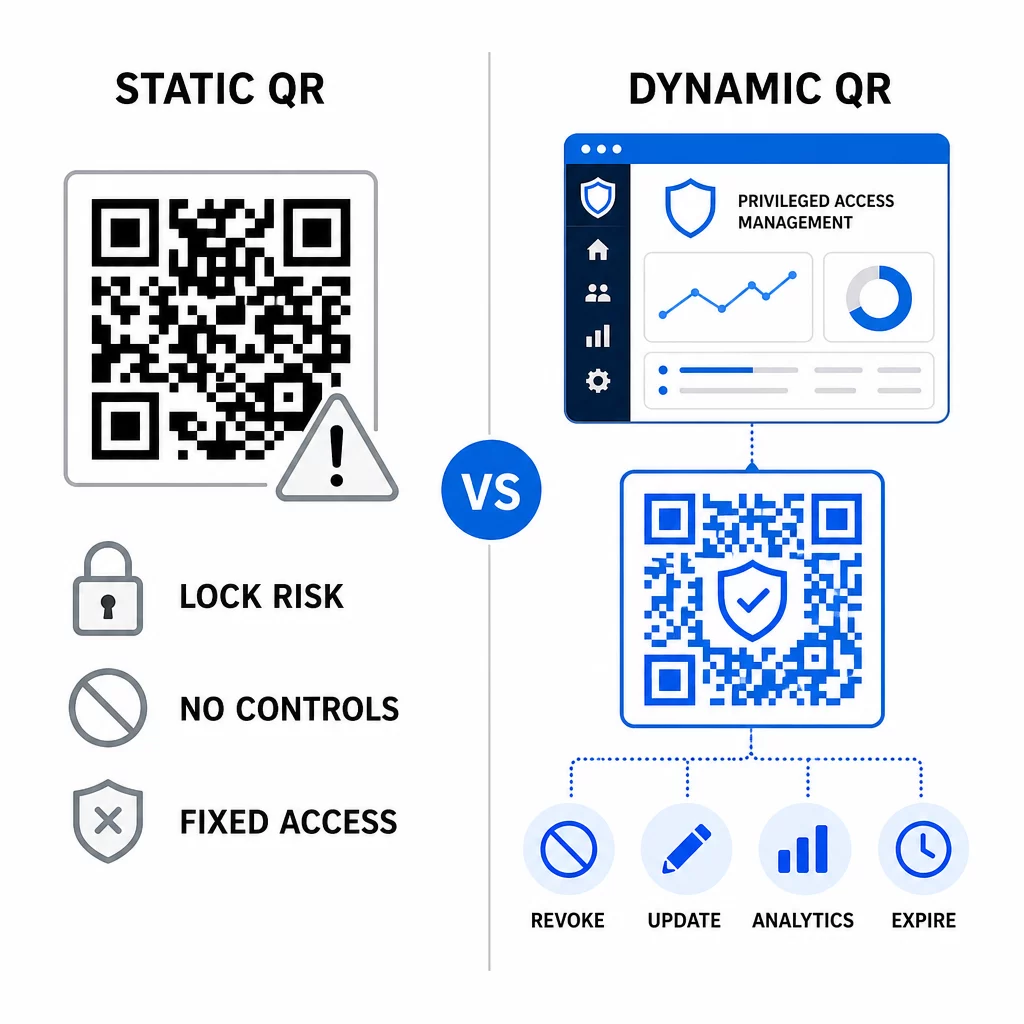
Mã QR tĩnh vẫn có thể đóng vai trò trong các trường hợp sử dụng nội bộ rủi ro thấp hơn – chẳng hạn như liên kết đến tài liệu hoặc tài nguyên chỉ đọc – nhưng chúng không nên được sử dụng cho các luồng xác thực liên quan đến quyền truy cập đặc quyền.
Các cân nhắc bảo mật chính cho xác thực PAM dựa trên QR
Việc triển khai xác thực mã QR trong môi trường PAM tạo ra bề mặt tấn công riêng. Hiểu rõ những rủi ro này và giảm thiểu chúng là điều cần thiết trước khi triển khai vào sản xuất.
Lỗ hổng mã QR đăng ký. Bí mật chia sẻ được mã hóa trong mã QR đăng ký TOTP không tự hết hạn. Nếu mã đó bị chụp màn hình, chuyển tiếp qua email hoặc lưu trữ trong bản sao lưu, kẻ tấn công có thể sử dụng nó sau này để đăng ký lại thiết bị và tạo mã TOTP hợp lệ vô thời hạn. Biện pháp giảm thiểu rất đơn giản: cấu hình mã đăng ký hết hạn sau một lần quét thành công duy nhất. Kiểm tra và xóa bất kỳ mã QR đăng ký lịch sử nào được lưu trữ trong hệ thống email hoặc bản sao lưu, và đăng ký lại người dùng bị ảnh hưởng bằng mã dùng một lần mới.
Lừa đảo mã QR (quishing). Kẻ tấn công đã ghi nhận các chiến dịch mà họ mạo danh quy trình đăng ký MFA, gửi email hướng dẫn người dùng quét mã QR độc hại dẫn đến trang thu thập thông tin đăng nhập. Huấn luyện người dùng của bạn cảnh giác với các yêu cầu quét QR không mong muốn, tự xác minh người gửi trước khi quét và sử dụng các ứng dụng xác thực xử lý tải trọng `otpauth://` trong môi trường hộp cát thay vì mở các URL tùy ý. Để được hướng dẫn sâu hơn, hãy xem Xác minh danh tính bằng mã QR trong an ninh mạng.
Ngừng sử dụng SMS. Hướng dẫn về danh tính kỹ thuật số của NIST khuyến cáo rõ ràng không nên sử dụng SMS và cuộc gọi thoại để xác thực ngoài băng tần do các rủi ro như hoán đổi SIM, hoán đổi thiết bị và chuyển đổi số. Đăng ký QR dựa trên TOTP với các ứng dụng xác thực là một giải pháp thay thế mạnh mẽ hơn mà NIST công nhận là một cơ chế ngoài băng tần hợp lệ khi được gửi qua một kênh phụ an toàn.
Ràng buộc thiết bị và sinh trắc học. Liên kết xác thực mã QR với các thiết bị đã đăng ký trước sẽ bổ sung một lớp phần cứng mà SMS không thể cung cấp. Thêm xác minh sinh trắc học – nhận dạng vân tay hoặc khuôn mặt – tạo ra mô hình ba yếu tố: thứ bạn có (thiết bị đã đăng ký), thứ bạn là (sinh trắc học) và mã giới hạn thời gian (phụ thuộc vào ngữ cảnh). Đối với các hoạt động rủi ro cao, hãy cấu hình cửa sổ TOTP ngắn hơn hoặc yêu cầu các bước xác minh bổ sung.
Kiểm tra trước khi triển khai. Luôn luôn kiểm tra các luồng xác thực mã QR trên nhiều thiết bị, hệ điều hành và ứng dụng xác thực trước khi đưa vào sản xuất. Xác minh rằng mã đăng ký hết hạn sau khi sử dụng, rằng việc thu hồi hoạt động như mong đợi và rằng các đường dẫn nhập dự phòng hoạt động chính xác.
Để có cái nhìn toàn diện về việc tăng cường bảo mật triển khai mã QR của bạn, hãy xem các phương pháp hay nhất về bảo mật mã QR trong phòng thủ mạng và các phương pháp hay nhất để tạo mã QR an toàn.
Tích hợp xác thực QR với MFA và SSO hiện có
Mã QR hoạt động tốt cùng với cơ sở hạ tầng xác thực hiện có thay vì thay thế hoàn toàn. Trong các thiết lập MFA, TOTP dựa trên QR hoạt động như yếu tố “thứ bạn có”, bổ sung cho mật khẩu hoặc sinh trắc học. Trong môi trường SSO, mã QR có thể đóng vai trò là bước thử thách-phản hồi xác nhận quyền sở hữu thiết bị trước khi cấp mã thông báo phiên. Để so sánh chi tiết các phương pháp này, hãy xem Mã QR so với mật khẩu trong SSO.
Mẫu đăng ký cũng mở rộng ra ngoài PAM. Các nhóm đã sử dụng trình quản lý mật khẩu như LastPass có thể tuân theo quy trình thiết lập quét QR gần như giống hệt – quét để liên kết, xác nhận bằng mã TOTP, lưu trữ mã khôi phục – làm cho quy trình làm việc quen thuộc với những người dùng đã thiết lập MFA ở nơi khác. Xem hướng dẫn thiết lập mã QR của LastPass để tham khảo từng bước.
Mỗi lần xác thực trong một hệ thống được cấu hình tốt sẽ tạo ra một mục nhật ký ghi lại mã định danh QR, thông tin thiết bị, kết quả sinh trắc học nếu có, dấu thời gian và vị trí địa lý. Các nhật ký này rất quan trọng cho việc kiểm tra tuân thủ, phát hiện bất thường và ứng phó sự cố.
Các tính năng nâng cao: Phân tích, Tùy chỉnh và Kiểm soát thời gian thực
Các nền tảng mã QR cấp doanh nghiệp bổ sung các khả năng vượt xa việc tạo mã cơ bản, có liên quan trực tiếp đến các hoạt động PAM.
Thống kê theo thời gian thực cho phép các nhóm bảo mật giám sát các mẫu xác thực khi chúng xảy ra. Các chỉ số đáng theo dõi bao gồm dấu thời gian quét, loại thiết bị, vị trí địa lý và đường cơ sở hành vi người dùng. Các thuật toán gắn cờ các sai lệch – một loại thiết bị bất thường, một lần quét từ một quốc gia không mong muốn, một sự gia tăng trong các lần thử không thành công – có thể kích hoạt xác thực tăng cường hoặc cảnh báo tự động. Để biết thêm về cách các chỉ số này trông như thế nào trong thực tế, hãy xem cách mã QR đơn giản hóa xác thực đa yếu tố.
Mã xác thực có thương hiệu phục vụ một chức năng bảo mật thực tế ngoài tính thẩm mỹ. Khi tổ chức của bạn sử dụng các mã QR có thương hiệu nhất quán với logo công ty và bảng màu, người dùng sẽ phát triển một đường cơ sở trực quan cho các yêu cầu xác thực hợp lệ. Một mã khác biệt so với đường cơ sở đó sẽ trở thành một dấu hiệu cảnh báo. Đảm bảo độ tương phản màu sắc đủ – tỷ lệ ít nhất 4.5:1 – cũng giúp mã có thể quét được một cách đáng tin cậy trên các thiết bị và điều kiện ánh sáng khác nhau.
Kiểm soát động là tính năng trực tiếp nhất giúp giảm rủi ro vận hành. Khi một nhân viên nghỉ việc, bạn hủy kích hoạt mã của họ ngay lập tức từ một bảng điều khiển trung tâm mà không cần chờ đợi chu kỳ xoay vòng thông tin xác thực. Khi một sự cố bảo mật được phát hiện, bạn thu hồi và cấp lại mà không cần in lại. Tính năng Tạo mã QR động trên Pageloot hỗ trợ tất cả các quy trình làm việc này, với tính năng theo dõi quét thời gian thực và các đích đến có thể chỉnh sửa được tích hợp sẵn.
Đối với các nhóm xử lý thông tin xác thực được mã hóa hoặc dữ liệu mã thông báo trong tải trọng QR, hãy xem mã QR được mã hóa cho các nền tảng xác thực để được hướng dẫn về các phương pháp mã hóa AES và RSA.
Ứng dụng trong ngành
Mô hình PAM dựa trên QR tương tự áp dụng cho các ngành công nghiệp với các hồ sơ truy cập đặc quyền khác nhau.
Trong ngân hàng và dịch vụ tài chính, các quản trị viên sử dụng mã QR có thời hạn để truy cập các hệ thống ngân hàng cốt lõi, nền tảng giao dịch và cơ sở dữ liệu khách hàng. Mỗi phiên đặc quyền được ghi lại theo mã cụ thể đã sử dụng, cung cấp một dấu vết kiểm toán rõ ràng để tuân thủ quy định.
Trong phát triển phần mềm, các nhóm phân tán sử dụng mã QR để truy cập hệ thống sản xuất, kho mã và quy trình triển khai mà không cần thông tin xác thực tĩnh. Mã động giúp tăng tốc quá trình giới thiệu và làm cho quá trình thôi việc diễn ra ngay lập tức – không cần chờ đợi việc thay đổi mật khẩu được lan truyền.
Trong chăm sóc sức khỏe, nhân viên lâm sàng di chuyển giữa các máy trạm có thể xác thực nhanh chóng bằng cách quét thay vì gõ, giảm ma sát khi đăng nhập trong khi vẫn duy trì các dấu vết kiểm toán theo yêu cầu của HIPAA.
Mô hình này nhất quán: mã QR kết hợp với quản lý và phân tích động mang lại cho các nhóm bảo mật quyền kiểm soát mà họ cần mà không làm chậm người dùng phụ thuộc vào quyền truy cập nhanh chóng, đáng tin cậy. Xác thực mã QR không phải là sự thay thế cho một chiến lược PAM trưởng thành – đó là một cơ chế tăng cường một trong những thành phần dễ bị tổn thương nhất của PAM. Bằng cách thay thế thông tin xác thực tĩnh bằng mã giới hạn thời gian, giới hạn thiết bị, thực thi đăng ký một lần và giám sát mọi sự kiện xác thực, bạn sẽ đóng lại các lỗ hổng lừa đảo và đánh cắp thông tin xác thực mà các phương pháp cũ để lại. Bắt đầu bằng cách bật đăng ký QR trong cài đặt xác thực của nền tảng PAM của bạn, xác định các chính sách MFA của bạn và sử dụng mã động với nền tảng quản lý tập trung để duy trì quyền kiểm soát truy cập theo thời gian thực.
Tạo và Quản lý Mã QR cho Quy trình Xác thực của Bạn Sử dụng Trình tạo mã QR để bắt đầu, hoặc khám phá Tạo mã QR động đối với các mã đăng ký mà bạn có thể cập nhật, theo dõi và thu hồi từ một bảng điều khiển duy nhất.
Câu hỏi thường gặp
Trong quá trình đăng ký, hệ thống PAM tạo ra một khóa bí mật chia sẻ và mã hóa nó thành mã QR bằng cách sử dụng định dạng URI `otpauth://totp/`. Người dùng quét mã này bằng một ứng dụng xác thực, ứng dụng này lưu trữ khóa bí mật trên thiết bị. Khi đăng nhập, ứng dụng và máy chủ độc lập tính toán một mật mã có giá trị trong 30 giây từ khóa bí mật đó và thời gian hiện tại. Bởi vì mã này bị giới hạn thời gian và giới hạn thiết bị, việc chặn nó khi đang truyền không mang lại giá trị lâu dài cho kẻ tấn công.
Lỗ hổng mã QR đăng ký là rủi ro thường bị bỏ qua nhất. Mã bí mật TOTP được nhúng trong mã QR đăng ký không tự hết hạn, vì vậy bất kỳ ảnh chụp màn hình, email chuyển tiếp hoặc bản sao lưu nào của mã đó vẫn có thể sử dụng vô thời hạn. Khắc phục điều này bằng cách cấu hình mã đăng ký hết hạn sau một lần quét thành công duy nhất, và kiểm tra hệ thống email và sao lưu của bạn để xóa bất kỳ mã đăng ký lịch sử nào đã lưu trữ.
Luôn ưu tiên mã QR động cho các luồng xác thực và đăng ký MFA. Mã động có thể bị thu hồi ngay lập tức nếu thiết bị bị mất, được cập nhật mà không cần phân phối lại tài liệu vật lý và được giám sát bằng phân tích thời gian thực. Mã tĩnh chỉ phù hợp cho nội dung chỉ đọc, rủi ro thấp, nơi không yêu cầu thu hồi ngay lập tức và ghi nhật ký kiểm tra.