Adakah anda cuba menilai ke mana hala tuju pembayaran kod QR di pasaran membangun? Jawapan tersebut membentuk strategi pelaburan, keputusan produk, dan masa kemasukan pasaran. Artikel ini menghuraikan pemacu penerimaan, rangka kerja kawal selia, dan ramalan pertumbuhan yang anda perlukan untuk memahami ruang yang bergerak pantas ini.
Mengapa Ekonomi Membangun Mendahului Penerimaan Pembayaran QR
Pembayaran kod QR telah berkembang lebih pantas di pasaran membangun berbanding di pasaran maju – dan sebabnya adalah struktur, bukan kebetulan.
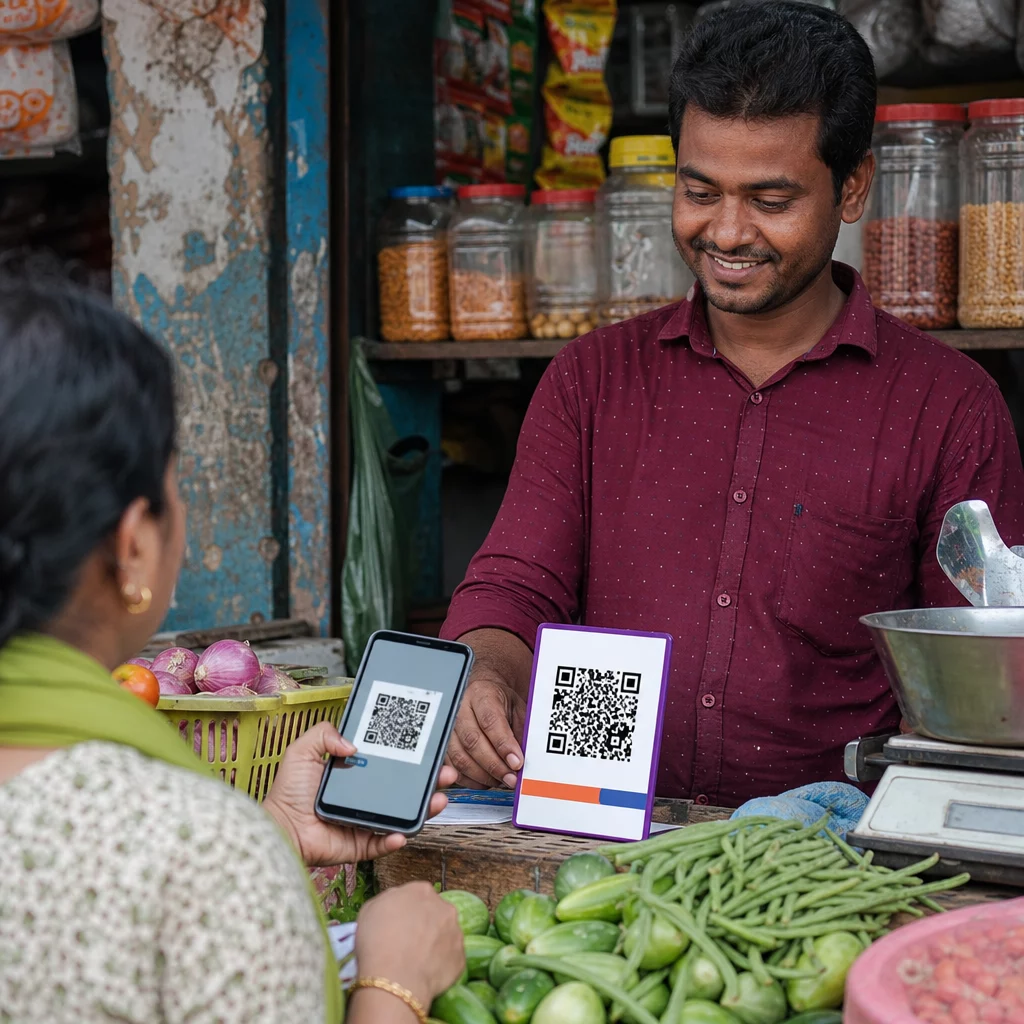
Di banyak ekonomi membangun, infrastruktur perbankan tradisional adalah nipis. Terminal titik jualan mahal, rangkaian kad mempunyai jangkauan terhad, dan sebahagian besar penduduk kekal tidak mempunyai akaun bank. Kod QR menyelesaikan beberapa masalah ini sekaligus. Seorang peniaga hanya memerlukan kod bercetak atau skrin telefon pintar untuk menerima pembayaran digital – tiada pembaca kad, tiada perkakasan mahal, tiada proses pendaftaran yang rumit.
Pembayaran kod QR dilihat sebagai alat utama untuk keterangkuman kewangan dalam ekonomi membangun tepat kerana ia membolehkan peniaga kecil dan mikro menerima pembayaran digital dengan infrastruktur minimum, sambil menghubungkan populasi yang tidak mempunyai akaun bank kepada perkhidmatan kewangan formal melalui dompet mudah alih. Anda boleh melihat bagaimana ini berlaku dalam amalan melalui Penyelesaian kod QR tersedia untuk bank dan institusi kewangan.
China menawarkan bukti konsep yang paling jelas. Penyelidikan menggambarkan “penerimaan besar-besaran” kod QR oleh peniaga dan pengguna dalam transaksi harian, didorong oleh telefon pintar yang berpatutan, liputan internet mudah alih yang lebih luas, dan ekosistem digital yang menyokong. Model ini telah direplikasi dan disesuaikan di seluruh Asia Selatan dan Tenggara, Amerika Latin, dan Afrika Sub-Sahara.
Pemacu Utama Penerimaan Pembayaran QR
Beberapa kuasa berbeza mempercepatkan penggunaan pembayaran QR di seluruh pasaran membangun. Ini tidak beroperasi secara berasingan – ia saling mengukuhkan.
Penembusan telefon pintar dan kemudahan penggunaan
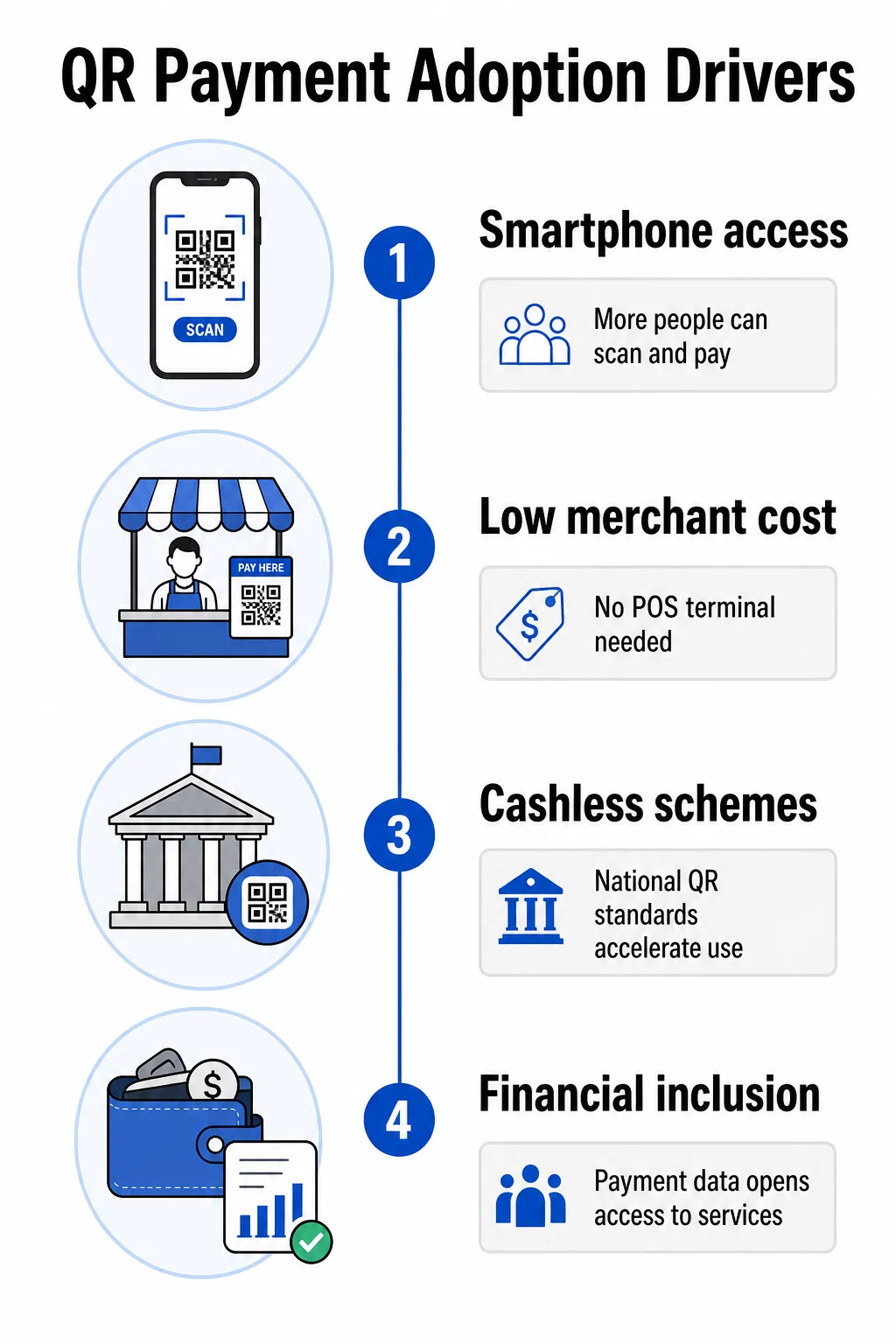
Apabila kos telefon pintar menurun, lebih ramai pengguna di negara berpendapatan rendah dan sederhana membawa peranti yang mampu mengimbas kod QR tanpa aplikasi khusus. Apabila pembayaran hanya memerlukan pembukaan aplikasi kamera, geseran yang biasanya melambatkan penerimaan teknologi pembayaran akan hilang.
Kos peniaga yang lebih rendah
Berbanding dengan terminal POS tradisional, penerimaan berasaskan QR mempunyai kos permulaan yang jauh lebih rendah. Bagi peniaga kecil yang beroperasi dengan margin tipis – penjual jalanan, gerai pasar, kedai kecil – perbezaan kos ini adalah penentu. kod QR untuk pembayaran memungkinkan mana-mana peniaga untuk mencipta dan memaparkan kod pembayaran yang berfungsi dalam beberapa minit, tanpa peralatan pakar.
Inisiatif tanpa tunai yang disokong kerajaan
Kerajaan negara dan bank pusat di beberapa ekonomi membangun telah secara aktif mempromosikan pembayaran QR sebagai sebahagian daripada agenda dasar tanpa tunai yang lebih luas. BharatQR India, QRIS Indonesia, LankaQR Sri Lanka, Bangla QR Bangladesh, GhQR Ghana, CoDi Mexico, dan Pix Brazil semuanya adalah contoh sistem yang disokong kerajaan yang direka untuk mempercepatkan penerimaan secara besar-besaran – terutamanya di kalangan peniaga sektor tidak formal dan pengguna berpendapatan rendah.
Inklusi kewangan sebagai matlamat dasar
Selain kemudahan, pembayaran QR mencipta sesuatu yang berharga dari masa ke masa: sejarah transaksi. Bagi individu dan peniaga yang sebelum ini tidak mempunyai akaun bank, jejak data ini akhirnya boleh membuka akses kepada kredit, insurans, dan perkhidmatan kewangan formal lain. Seperti yang dinyatakan oleh CGAP, peluang pembayaran digital yang mudah dan meluas “boleh membawa perubahan tingkah laku yang berkekalan dan mendalam dalam kalangan pelanggan dan peniaga berpendapatan rendah, menjadikan pembayaran formal sebahagian daripada kehidupan seharian mereka.”
Pertumbuhan dompet mudah alih dan ekosistem digital
Kebangkitan dompet mudah alih – Alipay dan WeChat Pay di China, Paytm di India, GoPay dan OVO di Indonesia, derivatif M-Pesa di seluruh Afrika – telah mewujudkan pangkalan pengguna sedia ada untuk pembayaran QR. Memahami bagaimana Integrasi kod QR Alipay dan WeChat Pay berfungsi dalam amalan memberikan anda titik rujukan yang berguna tentang bagaimana ekosistem pembayaran QR yang matang berfungsi.
Pengaruh sosial dan kepercayaan
Penyelidikan mengenai penggunaan pembayaran QR di Kemboja mengenal pasti kepercayaan, kualiti perkhidmatan, pengaruh sosial, dan risiko yang dirasakan sebagai pemacu peringkat pengguna yang signifikan. Di pasaran di mana wang tunai kekal dominan secara budaya, penggunaan rakan sebaya yang ketara dan kredibiliti institusi mempunyai lebih berat berbanding di pasaran di mana pembayaran digital sudah menjadi norma.
Saiz Pasaran dan Ramalan Pertumbuhan
Angka di sebalik pertumbuhan pembayaran QR adalah cukup besar untuk menuntut perhatian serius daripada pelabur dan ahli strategi.
- Pasaran pembayaran kod QR global dianggarkan kira-kira USD 12.5 bilion pada tahun 2024 dan dijangka mencapai USD 61.7 bilion menjelang 2033, mewakili kadar pertumbuhan tahunan kompaun sekitar 20%.
- Ramalan berasingan mengunjurkan bahawa jumlah perbelanjaan pembayaran kod QR akan meningkat daripada USD 5.4 trilion pada 2025 kepada USD 8 trilion pada 2029 – peningkatan 48% dalam tempoh empat tahun.
- Unjuran awal menganggarkan pertumbuhan daripada USD 8.07 bilion pada 2020 kepada USD 35.07 bilion menjelang 2030 pada CAGR 16.1%.
Asia-Pasifik, yang mengandungi banyak ekonomi sedang pesat membangun terbesar di dunia, dijangka memegang bahagian terbesar pertumbuhan global sepanjang tempoh ramalan. China, India, dan negara-negara Asia Tenggara adalah penyumbang utama, disokong oleh kedua-dua pengembangan dompet mudah alih yang didorong pasaran dan inisiatif tanpa tunai kerajaan yang disengajakan.
Walaupun angka-angka ini adalah global dan bukannya khusus pasaran sedang pesat membangun, pemacu asas tertumpu di ekonomi membangun. Pertumbuhan di pasaran matang seperti Amerika Syarikat adalah lebih perlahan secara perbandingan. Apabila lebih ramai peniaga mengguna pakai pilihan pembayaran kod QR untuk menjadikan transaksi lebih pantas, lebih selamat dan lebih mudah diakses, penumpuan itu berkemungkinan akan semakin mendalam.
Landskap Kawal Selia: Piawaian, Kebolehoperasian, dan Pengawasan
Peraturan dalam ruang ini bukanlah penghalang tetapi lebih kepada seni bina. Bagaimana bank pusat dan kerajaan menyusun skim pembayaran QR membentuk siapa yang boleh mengambil bahagian, bagaimana kos diagihkan, dan seberapa cepat penggunaan boleh berskala.
Piawaian QR nasional dan kebolehoperasian
Perkembangan kawal selia yang paling penting dalam ekonomi sedang pesat membangun ialah percambahan piawaian QR nasional yang boleh beroperasi. Skim-skim ini – dibangunkan dan sering dimiliki oleh bank pusat atau pihak berkuasa pembayaran nasional – menggunakan piawaian EMVCo untuk memastikan bahawa satu kod QR boleh menerima pembayaran daripada pelbagai penyedia. Ini sangat penting untuk penerimaan peniaga: seorang peniaga kecil yang menerima satu skim QR secara berkesan menerima semua dompet dan bank yang mengambil bahagian.
| Negara | Skim | Pengendali |
|---|---|---|
| India | BharatQR | Bank Rizab India / NPCI |
| Indonesia | QRIS | Bank Indonesia |
| Sri Lanka | LankaQR | Bank Pusat Sri Lanka |
| Bangladesh | Bangla QR | Bangladesh Bank |
| Ghana | GhQR | Sistem Pembayaran dan Penyelesaian Antara Bank Ghana |
| Mexico | CoDi | Banco de México |
| Brazil | Pix | Banco Central do Brasil |
| Kyrgyzstan | ELQR | Sistem Pembayaran Nasional |
LankaQR, diperkenalkan pada 2018, secara eksplisit dikehendaki mematuhi piawaian EMV global – pilihan reka bentuk yang membolehkan mana-mana bank atau penyedia pembayaran menerima pembayaran melalui kod bersatu, tanpa penguncian proprietari.
Kebolehoperasian rentas sempadan
Sistem Pembayaran Kod QR Bersepadu ASEAN menghubungkan skim QR nasional merentasi negara-negara yang mengambil bahagian di bawah Rangka Kerja Transaksi Mata Wang Tempatan ASEAN. Inisiatif dasar ini menyokong pembayaran QR rentas sempadan dalam mata wang tempatan, mengurangkan kebergantungan kepada perantara mata wang asing untuk transaksi serantau. Bagi perniagaan dan pelabur dengan tumpuan serantau dan bukannya satu negara, integrasi ini secara signifikan meluaskan pasaran yang boleh ditangani.
Perlindungan pengguna dan privasi
OECD mengesyorkan agar inisiatif literasi kewangan digital berjalan seiring dengan rangka kerja perlindungan pengguna kewangan. Dalam amalan, peraturan mengenai pembayaran QR bukan sahaja perlu mewajibkan piawaian keselamatan teknikal tetapi juga memastikan pengguna mempunyai akses kepada maklumat yang telus dan mekanisme yang berkesan untuk melaporkan penipuan. Bagi perniagaan yang beroperasi merentasi pelbagai bidang kuasa, memahami bagaimana Undang-undang privasi kod QR dan peraturan utama terpakai kepada data pembayaran adalah pertimbangan pematuhan yang penting.
Ini semakin relevan kerana pertumbuhan pembayaran QR telah menghasilkan corak penipuan baharu di beberapa negara. Kod QR pedagang statik sangat terdedah kepada serangan penggantian fizikal – di mana penipu meletakkan kod palsu di atas kod yang sah. Panduan mengenai risiko kod QR dalam pembayaran dan cara mengurangkannya meliputi vektor ancaman utama yang dihadapi perniagaan.
Had data kawal selia yang tersedia
Sumber awam menyediakan penerangan peringkat tinggi tentang peranan bank pusat dan piawaian EMV, tetapi peruntukan statutori yang terperinci, mengikut negara, yang secara khusus mengawal pembayaran kod QR tidak didokumenkan dengan baik. Pelabur dan ahli strategi yang menjalankan usaha wajar di pasaran tertentu perlu melengkapkan rangka kerja ini dengan analisis undang-undang tempatan.
Inklusi Kewangan: Kes Strategik Jangka Panjang
Bagi pelabur dan ahli strategi yang berfokuskan pembangunan, dimensi keterangkuman kewangan pembayaran QR boleh dikatakan sebagai trend jangka panjang yang paling penting.
Kod QR mewujudkan titik masuk kos rendah ke dalam ekonomi digital formal untuk dua kumpulan yang secara sejarahnya telah dikecualikan: peniaga kecil dan pengguna berpendapatan rendah. Apabila penggunaan QR merebak dalam segmen ini, ia menjana sejarah transaksi yang boleh berfungsi sebagai data kredit alternatif. Dari masa ke masa, jejak data ini mewujudkan laluan kepada kredit, insurans, dan perkhidmatan kewangan lain – produk yang mewakili pasaran yang boleh ditangani secara besar-besaran dengan sendirinya.
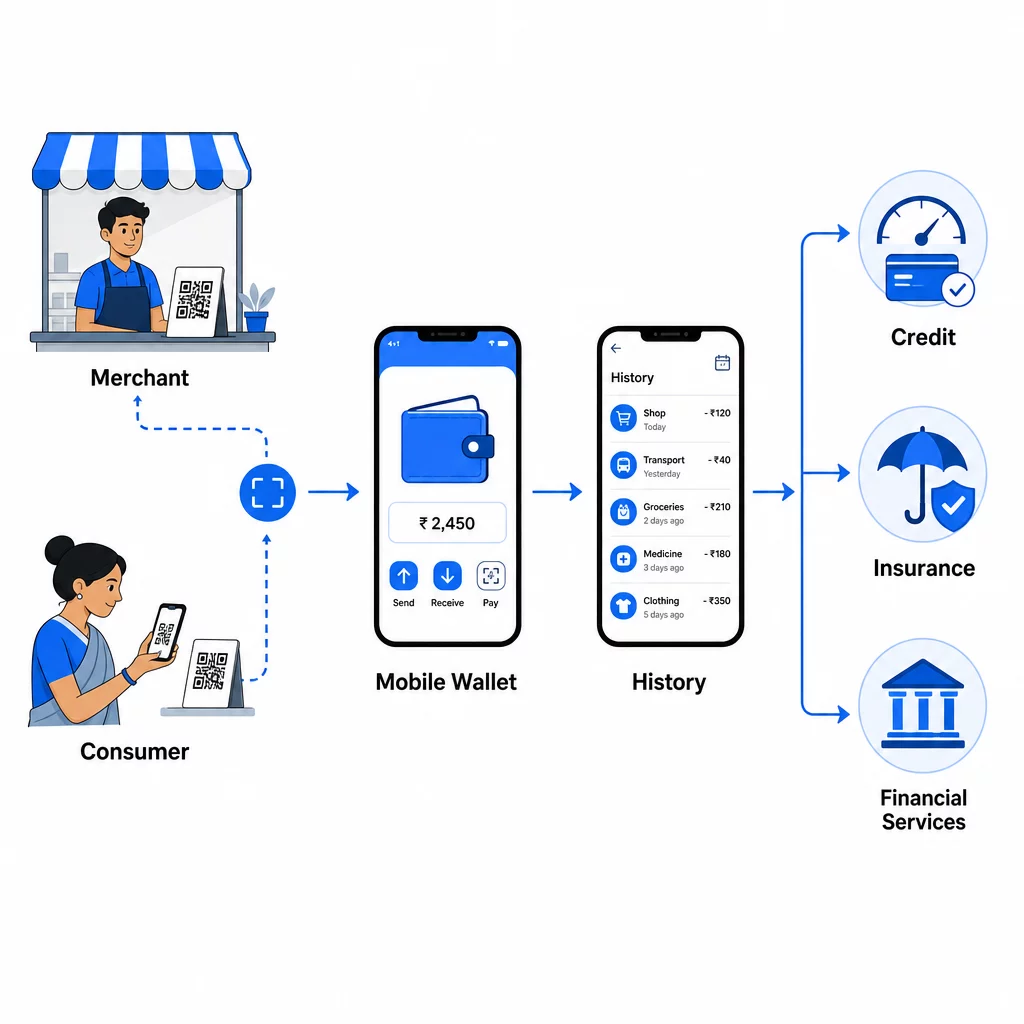
CGAP merangka ini dengan jelas: kod QR adalah “cara yang menjanjikan untuk mendigitalkan pembayaran di peniaga berpendapatan rendah dan membuat pelanggan beralih ke digital,” dan sejarah transaksi yang mereka hasilkan “boleh membawa akses kepada kredit dan perkhidmatan kewangan formal lain, mewujudkan gerbang kepada keterangkuman kewangan.”
Pengalaman dari Asia Timur mengukuhkan perkara ini. Apabila pembayaran mudah alih berasaskan QR menggantikan tunai, bank boleh mengurangkan kos yang berkaitan dengan perkhidmatan tunai – membebaskan modal untuk pinjaman dan aktiviti penambahan nilai lain. Kes keterangkuman kewangan ini bukan semata-mata teori; ia disokong oleh perubahan tingkah laku yang boleh diperhatikan secara besar-besaran.
Risiko dan Halangan untuk Diperhatikan
Kes pertumbuhan adalah kukuh, tetapi tiada analisis pasaran yang jujur mengabaikan cabaran.
Penipuan dan kelemahan keselamatan
Kod QR statik boleh diusik secara fizikal, dan ketidakupayaan kebanyakan pengguna untuk mengesahkan destinasi kod sebelum mengimbas mewujudkan risiko penipuan yang berterusan. Apabila penggunaan meningkat, corak penipuan cenderung meningkat bersamanya. The kelebihan keselamatan dan kelajuan pembayaran kod QR adalah nyata, tetapi ia bergantung pada pilihan pelaksanaan – terutamanya penggunaan kod dinamik berbanding kod statik – bukan teknologi semata-mata.
Jurang kepercayaan dan literasi digital
Penyelidikan dari Kemboja dan konteks pasaran baru muncul lain secara konsisten mengenal pasti kepercayaan sebagai penghalang utama kepada penggunaan. Di mana pengguna kurang keyakinan terhadap sistem digital – atau di mana pengalaman penipuan sebelumnya telah merosakkan kepercayaan – penggunaan terhenti tanpa mengira kualiti infrastruktur. Inisiatif literasi digital yang disokong kerajaan adalah sebahagian daripada tindak balas dasar, tetapi kemajuannya tidak sekata.
Risiko fragmentasi
Walaupun piawaian nasional yang boleh beroperasi mengurangkan fragmentasi dalam negara, kebolehoperasian rentas sempadan masih tidak lengkap. Perniagaan yang beroperasi di beberapa pasaran baru muncul menghadapi cabaran praktikal untuk mengemudi skim, piawaian, dan persekitaran kawal selia yang berbeza. Usaha integrasi ASEAN adalah langkah maju yang bermakna, tetapi ia meliputi set negara yang terhad.
Ketergantungan infrastruktur
Pembayaran QR memerlukan sambungan internet mudah alih yang boleh dipercayai. Di kawasan luar bandar dan zon bandar berpendapatan rendah – tepatnya populasi yang paling relevan dengan matlamat keterangkuman kewangan – sambungan boleh menjadi tidak konsisten. Kekangan ini mengehadkan seberapa cepat penggunaan QR dapat mencapai segmen yang paling kurang mendapat perkhidmatan.
Apa Maksud Ini untuk Perniagaan yang Beroperasi di Pasaran Ini
Bagi syarikat yang sudah menerima atau merancang untuk menerima pembayaran kod QR di seluruh ekonomi sedang pesat membangun, beberapa pertimbangan praktikal menyusul daripada analisis ini.
- Reka bentuk penerimaan pembayaran berdasarkan skim tempatan yang dominan. Penerimaan pedagang QRIS di Indonesia atau QR yang dikaitkan dengan UPI di India mencapai pangkalan pelanggan yang jauh lebih luas daripada hanya menerima satu dompet proprietari. Piawaian boleh kendali wujud tepat untuk menghapuskan jenis penguncian itu.
- Gunakan kod QR dinamik dan bukannya yang statik. Kod dinamik membolehkan anda mengemas kini destinasi pembayaran, memantau aktiviti imbasan untuk anomali, dan menyahaktifkan kod jika penipuan dikesan – semuanya tanpa mencetak semula. Bagi perniagaan yang menguruskan pembayaran di pelbagai lokasi, kawalan berpusat ini adalah penting dari segi operasi. The panduan kod QR untuk dompet mudah alih menerangkan perbezaan praktikal antara pendekatan dinamik dan statik dalam konteks pembayaran.
- Anggap analitik sebagai fungsi teras, bukan sesuatu yang difikirkan kemudian. Memahami bila dan di mana kod diimbas – dan menandakan corak luar biasa – adalah sama relevan untuk pencegahan penipuan seperti untuk pengoptimuman pemasaran. Perniagaan yang menggunakan kod QR untuk pembayaran rakan sebaya secara berkesan cenderung memantau data imbasan secara aktif dan bukannya secara reaktif.
- Bina untuk masa depan yang boleh kendali. Integrasi pembayaran QR rentas sempadan semakin berkembang. Perniagaan yang melabur sekarang dalam infrastruktur penerimaan yang fleksibel dan tidak bergantung kepada skim berada dalam kedudukan yang lebih baik untuk berkembang apabila rangka kerja serantau seperti sistem ASEAN matang.
Mula Menerima Pembayaran QR Tanpa Kerumitan Perlu membuat kod QR pembayaran yang berfungsi di semua lokasi perniagaan anda? Gunakan the Penjana Kod Pageloot QR untuk membina kod dinamik, boleh dijejak – atau Buat QR untuk pembayaran PayPal untuk memaut terus ke akaun pembayaran anda tanpa perkakasan diperlukan.
Trajektori Jelas, Butiran Masih Dalam Penulisan
Pembayaran kod QR dalam ekonomi sedang membangun bukanlah trend spekulatif – ia adalah realiti infrastruktur yang disokong oleh mandat bank pusat, penerimaan yang terbukti secara besar-besaran, dan kadar pertumbuhan yang mengatasi kebanyakan segmen industri pembayaran. Pasaran diunjurkan berkembang pada kira-kira 20% setiap tahun sehingga 2033, dengan Asia-Pasifik menerajui dan Amerika Latin, Afrika, serta Asia Selatan menyumbang secara signifikan.
Persoalan strategik bagi pelabur dan pemimpin perniagaan bukanlah sama ada pembayaran QR akan mendominasi perdagangan digital dalam ekonomi sedang membangun, tetapi seberapa cepat tadbir urus penipuan, kebolehoperasian rentas sempadan, dan literasi digital akan matang untuk menyokong dominasi tersebut. Mereka yang memahami seni bina kawal selia – dan meletakkan diri mereka dalam piawaian nasional yang boleh beroperasi yang sedang giat dipromosikan oleh bank pusat – berada pada kedudukan terbaik untuk merebut peluang.
Bagi perniagaan yang membina keupayaan pembayaran QR hari ini, terokai penyelesaian kod QR yang tersedia merentasi industri untuk mencari pendekatan yang tepat untuk sektor anda.
Soalan lazim
Pasaran baru muncul mempunyai infrastruktur pembayaran kad sedia ada yang kurang, kadar populasi yang tidak mempunyai akaun bank yang lebih tinggi, dan kos telefon pintar yang lebih rendah berbanding kos terminal POS. Kod QR menghapuskan keperluan untuk perkakasan mahal, membolehkan mana-mana peniaga dengan kod bercetak atau telefon pintar menerima pembayaran digital. Inisiatif tanpa tunai yang disokong kerajaan dan piawaian QR nasional yang boleh saling beroperasi juga telah mempercepatkan penerimaan dalam cara yang tiada persamaan langsung di kebanyakan pasaran maju.
Bank pusat di banyak ekonomi sedang membangun telah mengambil peranan langsung dalam membangunkan dan mewajibkan skim QR nasional yang boleh beroperasi bersama – contohnya termasuk BharatQR di India, QRIS di Indonesia, LankaQR di Sri Lanka, dan Pix di Brazil. Skim-skim ini menggunakan piawaian EMVCo untuk memastikan bahawa satu kod QR boleh menerima pembayaran daripada pelbagai penyedia, mengurangkan fragmentasi dan menyokong penerimaan di kalangan peniaga kecil dan pengguna berpendapatan rendah. Ini adalah pelaburan infrastruktur yang didorong oleh dasar, bukan semata-mata hasil pasaran.
Risiko yang paling biasa ialah pengubahan kod QR fizikal (di mana penipu menggantikan kod yang sah dengan kod palsu yang mengalihkan pembayaran ke akaun mereka sendiri) dan serangan pancingan data yang meniru halaman pembayaran yang sah.