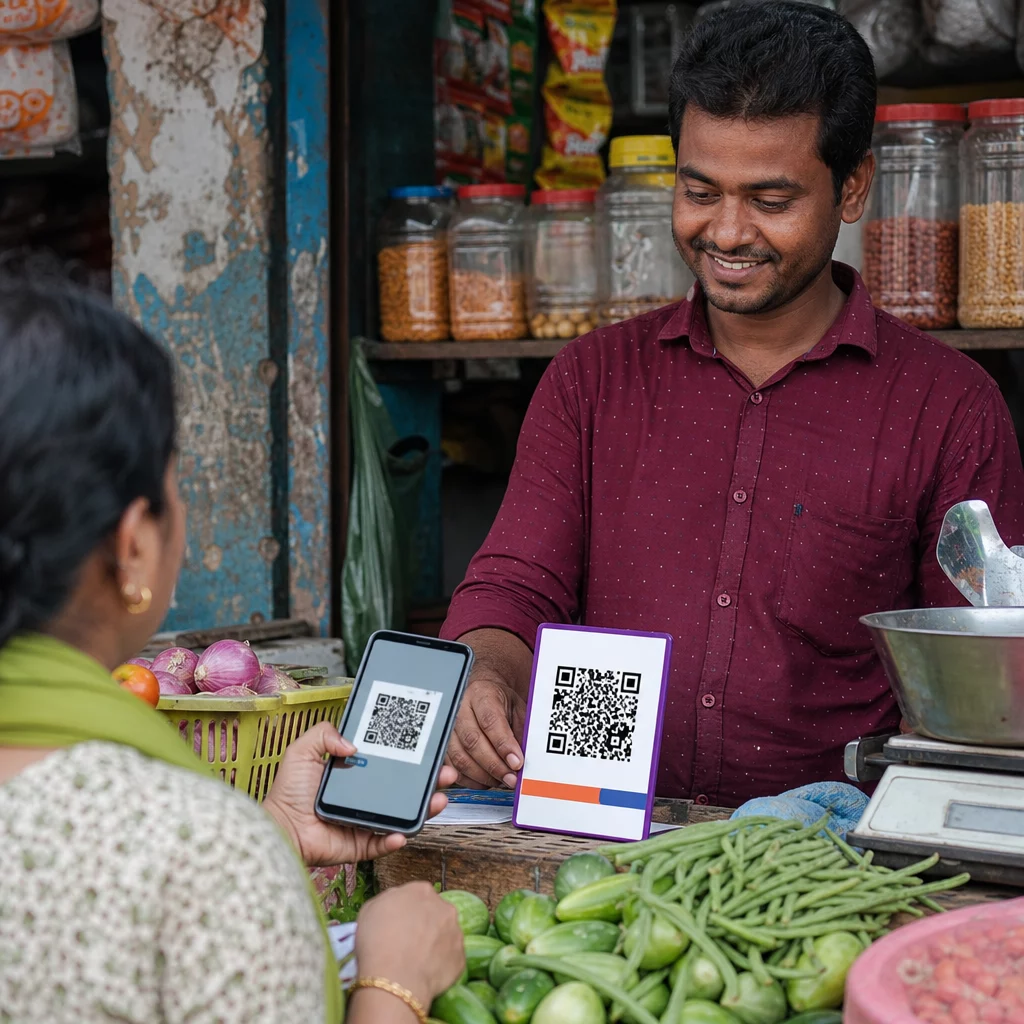
Cherchez-vous à évaluer la direction que prennent les paiements par code QR sur les marchés en développement ? La réponse façonne la stratégie d'investissement, les décisions relatives aux produits et le calendrier d'entrée sur le marché. Cet article analyse les moteurs d'adoption, les cadres réglementaires et les prévisions de croissance dont vous avez besoin pour comprendre cet espace en évolution rapide.
Pourquoi les économies émergentes sont en tête de l'adoption des paiements par QR
Les paiements par code QR ont connu une croissance plus rapide sur les marchés émergents que sur les marchés développés – et les raisons sont structurelles, non fortuites.
Dans de nombreuses économies en développement, l'infrastructure bancaire traditionnelle est limitée. Les terminaux de point de vente sont coûteux, les réseaux de cartes ont une portée limitée et une grande partie de la population reste non bancarisée. Les codes QR résolvent plusieurs de ces problèmes à la fois. Un commerçant n'a besoin que d'un code imprimé ou d'un écran de smartphone pour accepter les paiements numériques – pas de lecteur de carte, pas de matériel coûteux, pas d'intégration complexe.
Les paiements par code QR sont considérés comme un outil clé pour l'inclusion financière dans les économies émergentes précisément parce qu'ils permettent aux petits et micro-commerçants d'accepter les paiements numériques avec une infrastructure minimale, tout en connectant les populations non bancarisées aux services financiers formels via les portefeuilles mobiles. Vous pouvez voir comment cela se manifeste dans la pratique à travers les solutions de code QR disponibles pour les banques et les institutions financières.
La Chine offre la preuve de concept la plus claire. La recherche décrit une “ adoption massive ” des codes QR par les commerçants et les consommateurs dans les transactions quotidiennes, stimulée par des smartphones abordables, une couverture internet mobile plus large et un écosystème numérique favorable. Le modèle a depuis été reproduit et adapté en Asie du Sud et du Sud-Est, en Amérique latine et en Afrique subsaharienne.
Principaux moteurs de l'adoption des paiements par QR
Plusieurs forces distinctes accélèrent l'adoption des paiements par QR sur les marchés émergents. Celles-ci n'opèrent pas de manière isolée – elles se renforcent mutuellement.
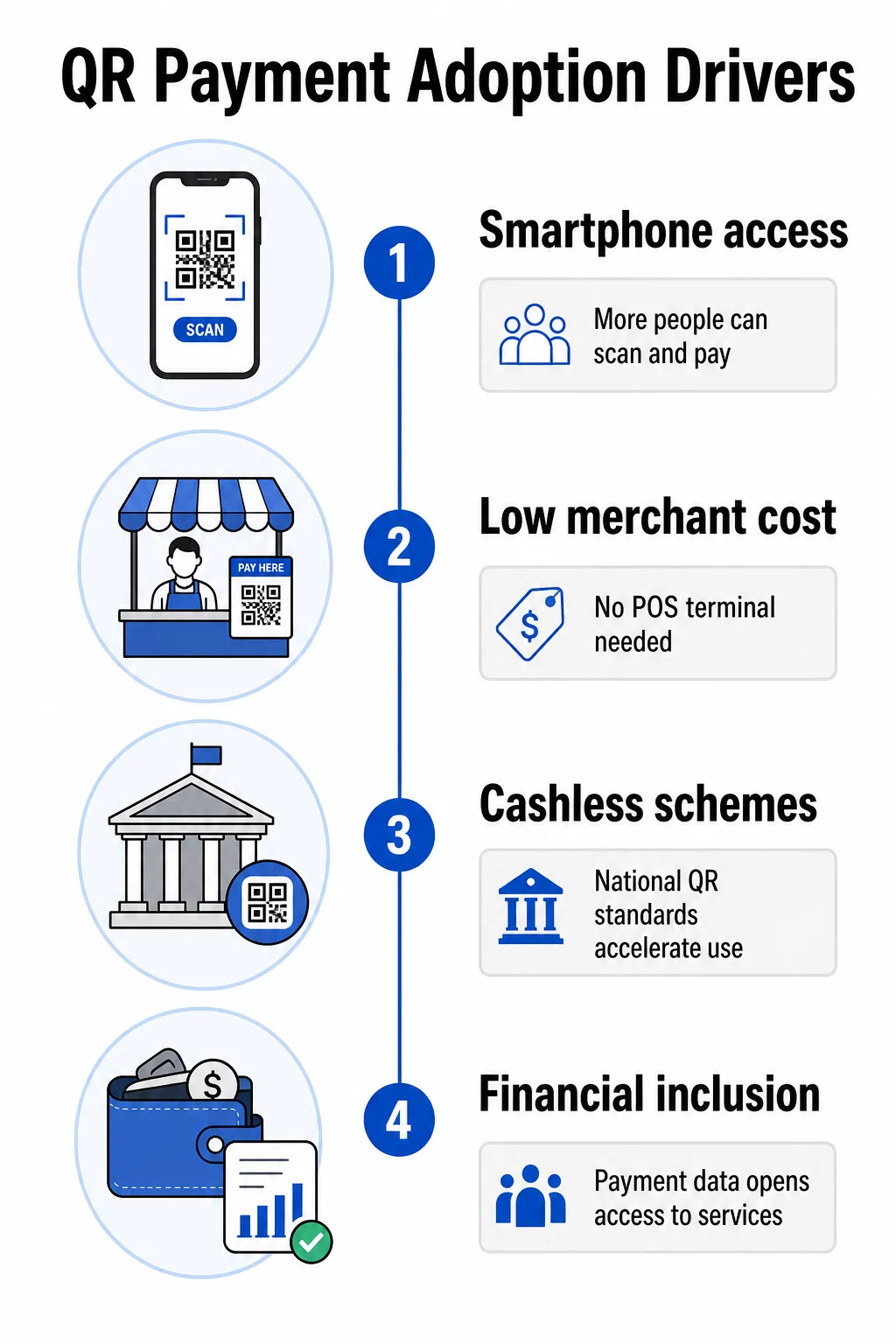
Pénétration des smartphones et facilité d'utilisation
À mesure que les coûts des smartphones diminuent, de plus en plus de consommateurs dans les pays à revenu faible et intermédiaire possèdent des appareils capables de scanner des codes QR sans application dédiée. Lorsque le paiement ne nécessite rien de plus que l'ouverture d'une application appareil photo, la friction qui ralentit généralement l'adoption de la technologie de paiement disparaît.
Coûts marchands réduits
Comparée aux terminaux de point de vente traditionnels, l'acceptation basée sur les codes QR a un coût d'entrée considérablement plus bas. Pour les petits commerçants opérant avec de faibles marges – vendeurs de rue, étals de marché, petites boutiques – cette différence de coût est décisive. les codes QR pour les paiements permettent à tout commerçant de créer et d'afficher un code de paiement fonctionnel en quelques minutes, sans équipement spécialisé.
Initiatives gouvernementales en faveur du paiement sans espèces
Les gouvernements nationaux et les banques centrales de plusieurs économies émergentes ont activement promu les paiements par QR dans le cadre de programmes plus larges de politique de paiement sans espèces. Le BharatQR de l'Inde, le QRIS de l'Indonésie, le LankaQR du Sri Lanka, le Bangla QR du Bangladesh, le GhQR du Ghana, le CoDi du Mexique et le Pix du Brésil sont tous des exemples de systèmes soutenus par l'État conçus pour accélérer l'adoption à grande échelle – en particulier parmi les commerçants du secteur informel et les consommateurs à faible revenu.
Inclusion financière comme objectif politique
Au-delà de la commodité, les paiements par QR créent quelque chose de précieux au fil du temps : un historique de transactions. Pour les particuliers et les commerçants auparavant non bancarisés, cette trace de données peut éventuellement débloquer l'accès au crédit, à l'assurance et à d'autres services financiers formels. Comme le note le CGAP, les opportunités de paiement numérique faciles et généralisées “ peuvent entraîner un changement de comportement durable et profond chez les clients et les commerçants à faible revenu, faisant des paiements formels une partie de leur vie quotidienne. ”
Croissance des portefeuilles mobiles et écosystèmes numériques
L'essor des portefeuilles mobiles – Alipay et WeChat Pay en Chine, Paytm en Inde, GoPay et OVO en Indonésie, les dérivés de M-Pesa à travers l'Afrique – a créé des bases d'utilisateurs prêtes à l'emploi pour les paiements par QR. Comprendre comment l'intégration des codes QR d'Alipay et WeChat Pay fonctionne en pratique vous donne un point de référence utile pour comprendre le fonctionnement des écosystèmes de paiement par QR matures.
Influence sociale et confiance
Des recherches sur l'adoption des paiements par QR au Cambodge ont identifié la confiance, la qualité du service, l'influence sociale et le risque perçu comme des facteurs déterminants au niveau de l'utilisateur. Dans les marchés où l'argent liquide reste culturellement dominant, l'adoption visible par les pairs et la crédibilité institutionnelle ont plus de poids que dans les marchés où les paiements numériques sont déjà la norme.
Taille du marché et prévisions de croissance
Les chiffres derrière la croissance des paiements par QR sont suffisamment importants pour exiger une attention sérieuse de la part des investisseurs et des stratèges.
- Le marché mondial des paiements par code QR a été estimé à environ 12,5 milliards USD en 2024 et devrait atteindre 61,7 milliards USD d'ici 2033, représentant un taux de croissance annuel composé d'environ 20 %.
- Une prévision distincte projette que les dépenses totales de paiement par code QR passeront de 5,4 billions USD en 2025 à 8 billions USD en 2029 – une augmentation de 48 % sur quatre ans.
- Une projection antérieure estimait une croissance de 8,07 milliards USD en 2020 à 35,07 milliards USD d'ici 2030, avec un TCAC de 16,1 %.
Asie-Pacifique, qui regroupe un grand nombre des plus grandes économies émergentes du monde, devrait détenir la plus grande part de la croissance mondiale tout au long de la période de prévision. La Chine, l'Inde et les nations d'Asie du Sud-Est sont les principaux contributeurs, soutenues à la fois par l'expansion des portefeuilles mobiles axée sur le marché et par des initiatives gouvernementales délibérées visant à réduire l'utilisation des espèces.
Bien que ces chiffres soient mondiaux plutôt que spécifiques aux marchés émergents, les facteurs sous-jacents sont concentrés dans les économies en développement. La croissance dans les marchés matures comme les États-Unis a été comparativement plus lente. À mesure que davantage de commerçants adoptent les options de paiement par code QR pour rendre les transactions plus rapides, plus sûres et plus accessibles, cette concentration est susceptible de s'accentuer.
Le paysage réglementaire : normes, interopérabilité et surveillance
La réglementation dans cet espace n'est pas tant une barrière qu'une architecture. La manière dont les banques centrales et les gouvernements structurent les systèmes de paiement par QR détermine qui peut participer, comment les coûts sont répartis et à quelle vitesse l'adoption peut s'étendre.
Normes QR nationales et interopérabilité
Le développement réglementaire le plus significatif dans les économies émergentes est la prolifération des normes QR nationales interopérables. Ces systèmes – développés et souvent détenus par les banques centrales ou les autorités nationales de paiement – utilisent les normes EMVCo pour garantir qu'un seul code QR peut accepter les paiements de plusieurs fournisseurs. Cela est extrêmement important pour l'adoption par les commerçants : un petit commerçant qui accepte un système QR accepte de fait tous les portefeuilles et banques participants.
| De campagne | Système | Opérateur |
|---|---|---|
| Inde | BharatQR | Banque de réserve de l'Inde / NPCI |
| Indonésie | QRIS | Bank Indonesia |
| Sri Lanka | LankaQR | Banque centrale du Sri Lanka |
| Bangladesh | Bangla QR | Bangladesh Bank |
| Ghana | GhQR | Systèmes interbancaires de paiement et de règlement du Ghana |
| Mexique | CoDi | Banco de México |
| Brésil | Pix | Banco Central do Brasil |
| Kyrgyzstan | ELQR | Système national de paiement |
LankaQR, introduit en 2018, est explicitement tenu de se conformer aux normes mondiales EMV – un choix de conception qui permet à toute banque ou fournisseur de paiement d'accepter des paiements via un code unifié, sans verrouillage propriétaire.
Interopérabilité transfrontalière
Le système de paiement par code QR intégré de l'ASEAN relie les systèmes nationaux de QR dans les pays participants dans le cadre du Cadre de transactions en monnaie locale de l'ASEAN. Cette initiative politique soutient les paiements QR transfrontaliers en monnaies locales, réduisant la dépendance vis-à-vis des intermédiaires en devises étrangères pour les transactions régionales. Pour les entreprises et les investisseurs ayant une approche régionale plutôt que centrée sur un seul pays, cette intégration élargit considérablement le marché adressable.
Protection des consommateurs et confidentialité
L'OCDE recommande que les initiatives d'éducation financière numérique soient menées parallèlement aux cadres de protection des consommateurs financiers. En pratique, les réglementations concernant les paiements QR devraient non seulement exiger des normes de sécurité techniques, mais aussi garantir que les consommateurs aient accès à des informations transparentes et à des mécanismes efficaces pour signaler la fraude. Pour les entreprises opérant dans plusieurs juridictions, comprendre comment Lois sur la confidentialité des codes QR et réglementations clés s'appliquent aux données de paiement est une considération importante en matière de conformité.
Cela est de plus en plus pertinent car la croissance des paiements QR a produit de nouveaux schémas de fraude dans certains pays. Les codes QR statiques des commerçants sont particulièrement vulnérables aux attaques de remplacement physique – où un fraudeur place un faux code sur un code légitime. Le guide sur les risques liés aux codes QR dans les paiements et comment les atténuer couvre les principaux vecteurs de menace auxquels les entreprises sont confrontées.
Les limites des données réglementaires disponibles
Les sources publiques fournissent des descriptions de haut niveau des rôles des banques centrales et des normes EMV, mais les dispositions légales granulaires, pays par pays, régissant spécifiquement les paiements par code QR ne sont pas bien documentées. Les investisseurs et les stratèges menant une diligence raisonnable sur des marchés spécifiques devront compléter ces cadres par une analyse juridique locale.
Inclusion financière : Le cas stratégique à long terme
Pour les investisseurs et les stratèges axés sur le développement, la dimension d'inclusion financière des paiements par QR est sans doute la tendance à long terme la plus importante.
Les codes QR créent un point d'entrée à faible coût dans l'économie numérique formelle pour deux groupes historiquement exclus : les petits commerçants et les consommateurs à faible revenu. À mesure que l'adoption des QR se répand dans ces segments, elle génère des historiques de transactions qui peuvent servir de données de crédit alternatives. Au fil du temps, cette trace de données crée des voies d'accès au crédit, à l'assurance et à d'autres services financiers – des produits qui représentent des marchés adressables substantiels à part entière.
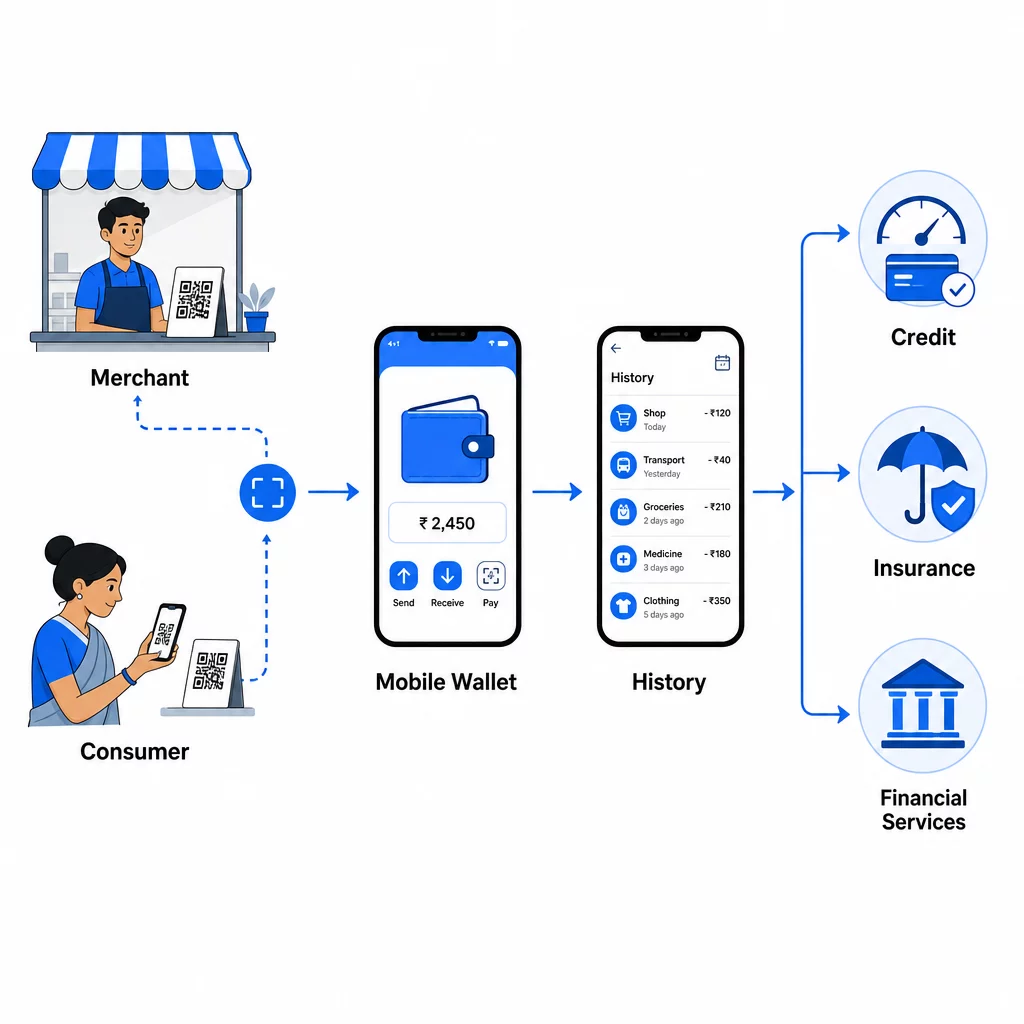
Le CGAP l'exprime clairement : les codes QR sont “ un moyen prometteur de numériser les paiements chez les commerçants à faible revenu et d'inciter les clients à passer au numérique ”, et les historiques de transactions qu'ils génèrent “ peuvent donner accès au crédit et à d'autres services financiers formels, créant ainsi une passerelle vers l'inclusion financière. ”
L'expérience de l'Asie de l'Est renforce ce point. À mesure que les paiements mobiles basés sur les QR se substituent à l'argent liquide, les banques peuvent réduire les coûts associés aux services en espèces – libérant ainsi du capital pour les prêts et d'autres activités à valeur ajoutée. Le cas de l'inclusion financière n'est pas purement théorique ; il est étayé par des changements de comportement observables à grande échelle.
Risques et obstacles à surveiller
Le potentiel de croissance est fort, mais aucune analyse de marché honnête n'ignore les vents contraires.
Fraude et vulnérabilités de sécurité
Les codes QR statiques peuvent être physiquement altérés, et l'incapacité de la plupart des utilisateurs à vérifier la destination d'un code avant de le scanner crée un risque de fraude continu. À mesure que l'adoption s'intensifie, les schémas de fraude ont tendance à s'intensifier avec elle. Les avantages en termes de sécurité et de rapidité des paiements par code QR sont réels, mais ils dépendent des choix de mise en œuvre – en particulier l'utilisation de codes dynamiques plutôt que statiques – et non de la technologie seule.
Lacunes en matière de confiance et de littératie numérique
Les recherches menées au Cambodge et dans d'autres contextes de marchés émergents identifient constamment la confiance comme un obstacle majeur à l'adoption. Lorsque les consommateurs manquent de confiance dans les systèmes numériques – ou lorsque des expériences de fraude antérieures ont entamé la confiance – l'adoption stagne quelle que soit la qualité de l'infrastructure. Les initiatives de littératie numérique soutenues par le gouvernement font partie de la réponse politique, mais les progrès sont inégaux.
Risques de fragmentation
Bien que les normes nationales interopérables réduisent la fragmentation au sein des pays, l'interopérabilité transfrontalière reste incomplète. Les entreprises opérant sur plusieurs marchés émergents sont confrontées au défi pratique de naviguer entre différents systèmes, normes et environnements réglementaires. L'effort d'intégration de l'ASEAN est un pas en avant significatif, mais il ne couvre qu'un ensemble limité de pays.
Dépendances infrastructurelles
Les paiements par QR nécessitent une connectivité internet mobile fiable. Dans les zones rurales et les zones urbaines à faible revenu – précisément les populations les plus pertinentes pour les objectifs d'inclusion financière – la connectivité peut être incohérente. Cette contrainte limite la rapidité avec laquelle l'adoption des QR peut atteindre les segments les plus mal desservis.
Ce que cela signifie pour les entreprises opérant sur ces marchés
Pour les entreprises qui acceptent déjà ou prévoient d'accepter les paiements par code QR dans les économies émergentes, quelques considérations pratiques découlent de cette analyse.
- Concevez l'acceptation des paiements autour du système local dominant. L'acceptation par les commerçants de QRIS en Indonésie ou de QR lié à UPI en Inde atteint une clientèle bien plus large que l'acceptation d'un seul portefeuille propriétaire. Les normes interopérables existent précisément pour éliminer ce type de verrouillage.
- Utilisez des codes QR dynamiques plutôt que statiques. Les codes dynamiques vous permettent de mettre à jour les destinations de paiement, de surveiller l'activité de scan pour détecter les anomalies et de désactiver les codes si une fraude est détectée – le tout sans réimpression. Pour les entreprises gérant des paiements sur plusieurs sites, ce contrôle centralisé est opérationnellement significatif. Le guide des codes QR pour les portefeuilles mobiles explique les différences pratiques entre les approches dynamiques et statiques dans un contexte de paiement.
- Traitez l'analyse comme une fonction essentielle, et non comme une réflexion après coup. Comprendre quand et où les codes sont scannés – et signaler les schémas inhabituels – est aussi pertinent pour la prévention de la fraude que pour l'optimisation marketing. Les entreprises qui utilisent les codes QR pour les paiements entre pairs ont tendance à surveiller activement les données de scan plutôt que réactivement.
- Construisez pour l'avenir interopérable. L'intégration des paiements QR transfrontaliers est en expansion. Les entreprises qui investissent maintenant dans une infrastructure d'acceptation flexible et indépendante des systèmes sont mieux placées pour évoluer à mesure que les cadres régionaux comme le système de l'ASEAN mûrissent.
Commencez à accepter les paiements QR sans la complexité Besoin de créer des codes QR de paiement qui fonctionnent sur tous vos sites commerciaux ? Utilisez le Générateur de code QR Pageloot pour créer des codes dynamiques et traçables – ou le Générateur de QR code PayPal pour lier directement à votre compte de paiement sans aucun matériel requis.
La Trajectoire Est Claire, les Détails Sont Encore en Cours d'Écriture
Les paiements par code QR dans les économies émergentes ne sont pas une tendance spéculative – ils sont une réalité infrastructurelle soutenue par les mandats des banques centrales, une adoption démontrée à grande échelle et un taux de croissance qui dépasse la plupart des segments de l'industrie des paiements. Le marché devrait croître d'environ 20 % par an jusqu'en 2033, l'Asie-Pacifique étant en tête et l'Amérique latine, l'Afrique et l'Asie du Sud contribuant de manière significative.
La question stratégique pour les investisseurs et les chefs d'entreprise n'est pas de savoir si les paiements par QR domineront le commerce numérique dans les économies émergentes, mais à quelle vitesse la gouvernance de la fraude, l'interopérabilité transfrontalière et la littératie numérique mûriront pour soutenir cette domination. Ceux qui comprennent l'architecture réglementaire – et se positionnent au sein des normes nationales interopérables que les banques centrales promeuvent activement – sont les mieux placés pour saisir l'opportunité.
Pour les entreprises développant des capacités de paiement par QR aujourd'hui, explorez les solutions de code QR disponibles dans toutes les industries pour trouver la bonne approche pour votre secteur.
Questions fréquentes
Les marchés émergents ont moins d'infrastructures de paiement par carte existantes, des proportions plus élevées de populations non bancarisées et des coûts de smartphone inférieurs par rapport aux coûts des terminaux de point de vente. Les codes QR éliminent le besoin de matériel coûteux, permettant à tout commerçant disposant d'un code imprimé ou d'un smartphone d'accepter les paiements numériques. Les initiatives gouvernementales en faveur du paiement sans espèces et les normes nationales de QR interopérables ont également accéléré l'adoption d'une manière qui n'a pas d'équivalent direct dans la plupart des marchés développés.
Les banques centrales de nombreuses économies émergentes ont joué un rôle direct dans le développement et l'imposition de systèmes nationaux de QR interopérables – des exemples incluent BharatQR en Inde, QRIS en Indonésie, LankaQR au Sri Lanka et Pix au Brésil. Ces systèmes utilisent les normes EMVCo pour garantir qu'un seul code QR peut accepter les paiements de plusieurs fournisseurs, réduisant ainsi la fragmentation et favorisant l'adoption chez les petits commerçants et les consommateurs à faible revenu. Il s'agit d'un investissement d'infrastructure dicté par des politiques, et non d'un simple résultat du marché.
Les risques les plus courants sont la falsification physique des codes QR (où les fraudeurs remplacent un code légitime par un faux redirigeant les paiements vers leur propre compte) et les attaques de phishing qui imitent des pages de paiement légitimes. L'utilisation de codes QR dynamiques – qui peuvent être surveillés pour détecter une activité de scan inhabituelle et désactivés s'ils sont compromis – réduit considérablement ces risques par rapport aux codes statiques. Pour une analyse complète des menaces et des stratégies d'atténuation, consultez le guide sur les risques des codes QR dans les paiements.