Penjana Kod QR WiFi
This WiFi QR code generator makes a code from your network name, password and encryption type. Guests scan it with the phone camera and join your WiFi without typing the password. Design it here and download the static code as a PNG for free. Print-ready SVG, PDF and EPS files come with a free 14-day Pageloot trial.

Gaya


Bingkai
Teks

Warna bingkai

Warna latar belakang

Warna teks
Badan


Warna badan
Tepi
Jenis bingkai


Warna bingkai tepi
Jenis bola


Warna bola tepi


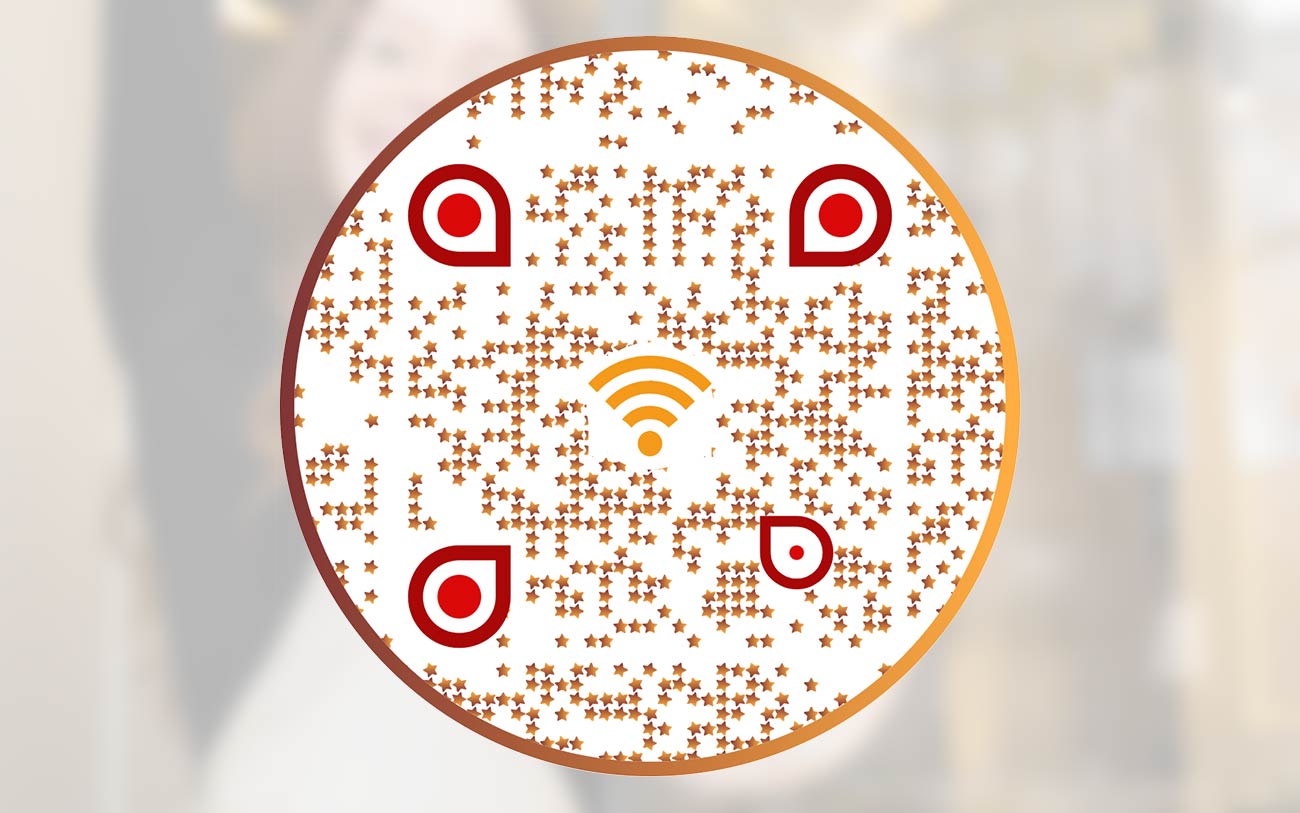
Buat Kod QR WiFi Contoh
Ketik pada imej untuk mengezum masuk
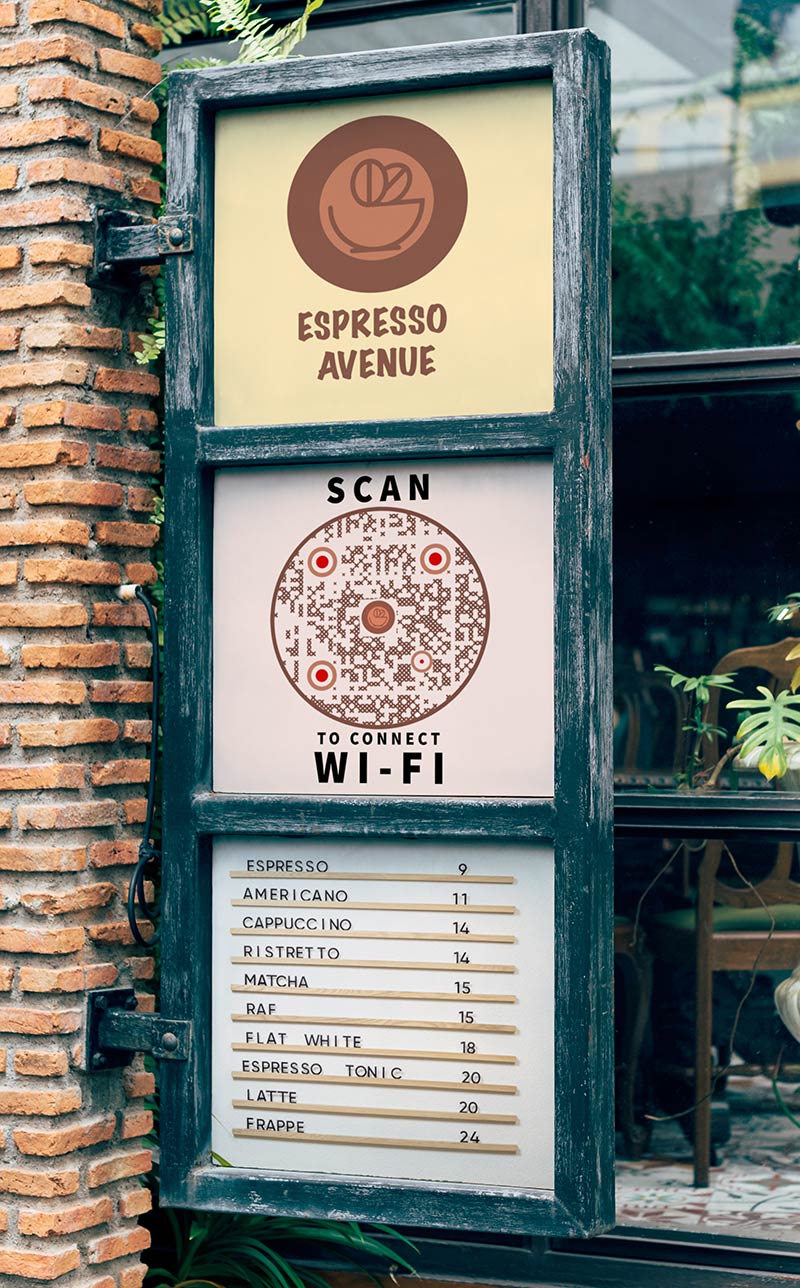

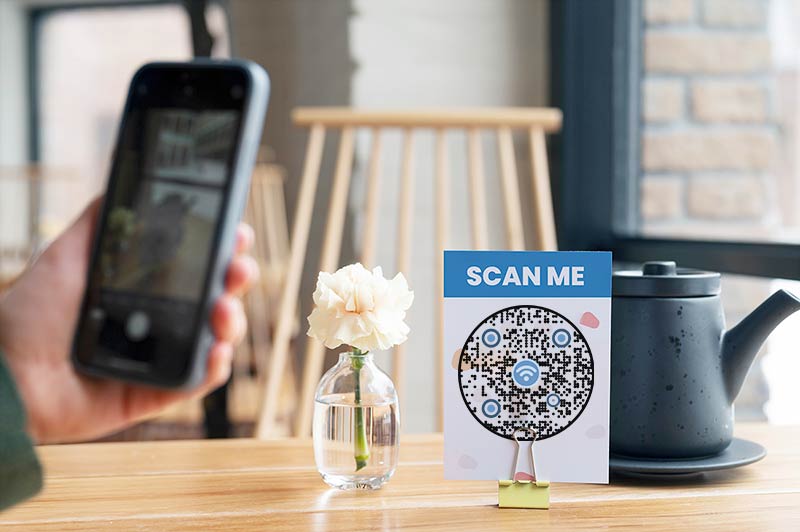
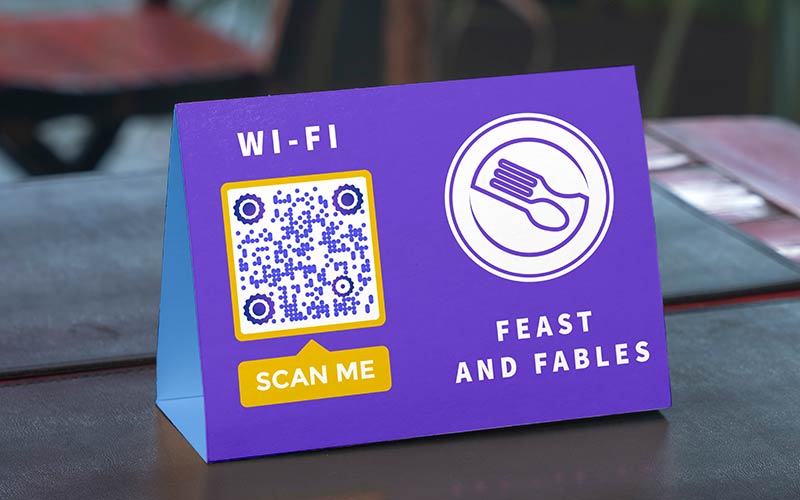
Apakah kod QR WiFi?
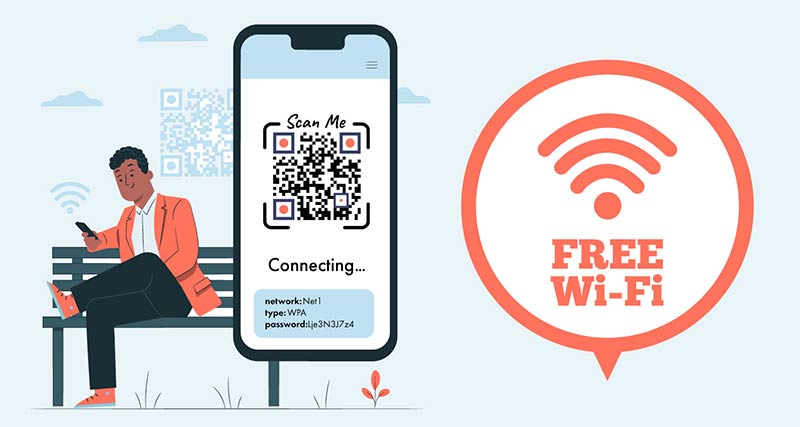
A WiFi QR code is a QR code that holds your WiFi login. When someone scans it with a phone camera, the phone offers to join the network. Nobody has to find the network in a list or type a long password.
A Wi-Fi network QR code generator, also called a WiFi QR code maker, builds that code from three details: the network name (SSID), the password and the encryption type. They are stored as plain text, , in a format like WIFI:T:WPA;S:MyNetwork;P:MyPassword;;. The phone reads that text and connects. Because everything is inside the code, a WiFi QR code is static by nature: it has no link behind it that you can change later. If you change the password, you make a new code.
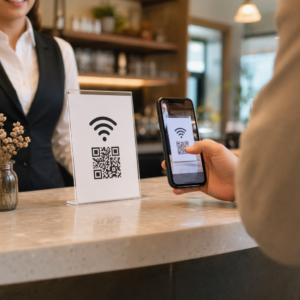
Use it at home for guests, and in cafes, offices, rentals and waiting rooms. If you are tired of being asked for the WiFi password, a printed code answers the question for you.
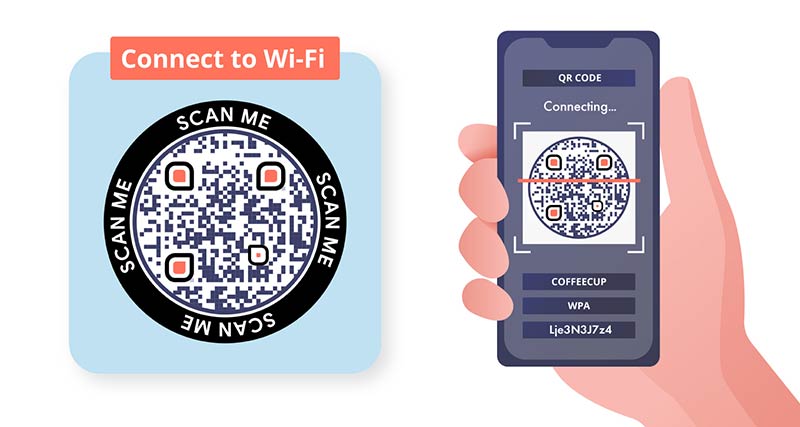
Bagaimanakah kod QR WiFi berfungsi?
Enter the network name, password and encryption type in the free QR code generator for WiFi above. Add a frame, colors or a logo if you like, then download the static code as a PNG for free.
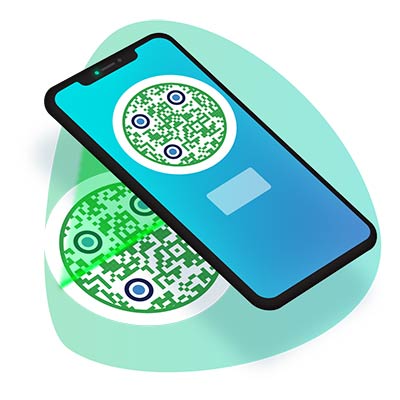
A guest opens the phone camera and points it at the code. iPhone and most Android phones (Android 10 and newer) show a prompt to join the network. No extra app is needed.
The guest taps the prompt and the phone joins the network with the saved name, password and encryption type. Nothing is typed.

The code only works while the network name and password stay the same. When you change either one, make a new code and swap the printed copy.
How to create a QR code for a WiFi password

Gunakan penjana kod QR WiFi percuma kami untuk mencipta kod QR bagi kata laluan WiFi anda. Masukkan nama rangkaian anda (SSID), pilih jenis keselamatan dan jana kod QR untuk akses WiFi segera.
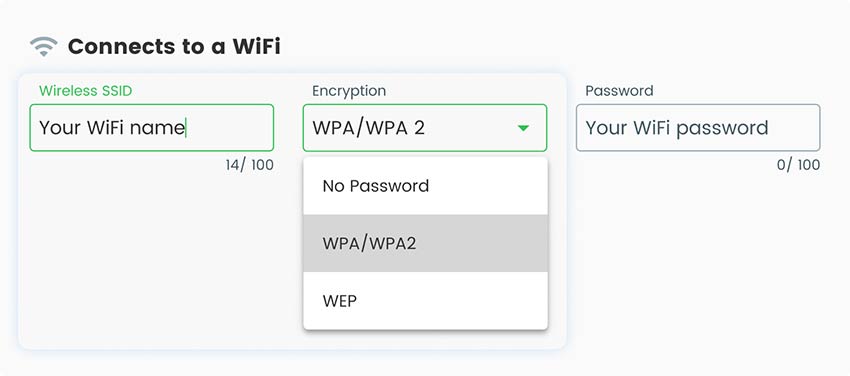

Sekarang, masukkan kata laluan rangkaian WiFi anda dalam medan "Kata Laluan".
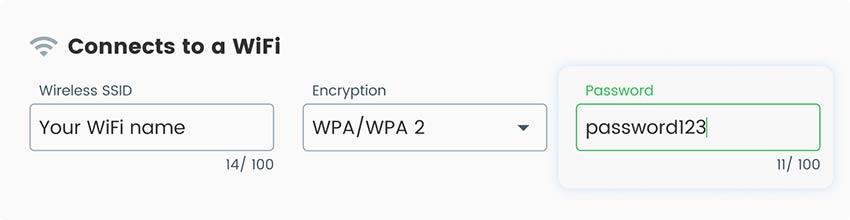

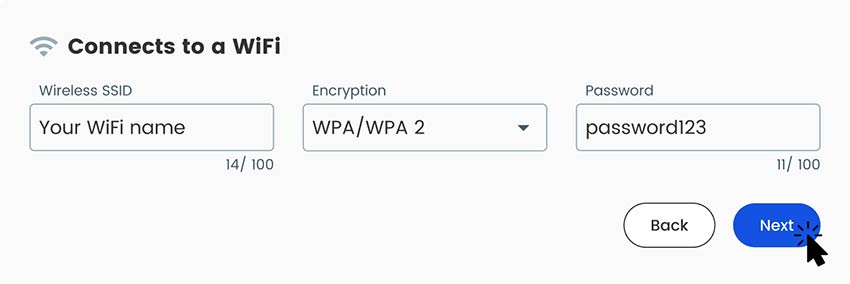
Klik butang "Seterusnya" untuk membuat kod QR.

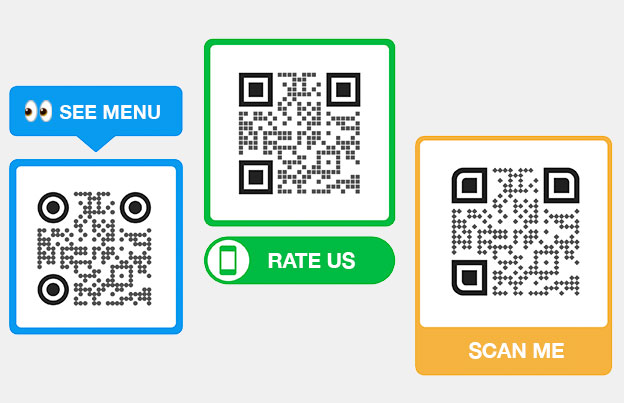
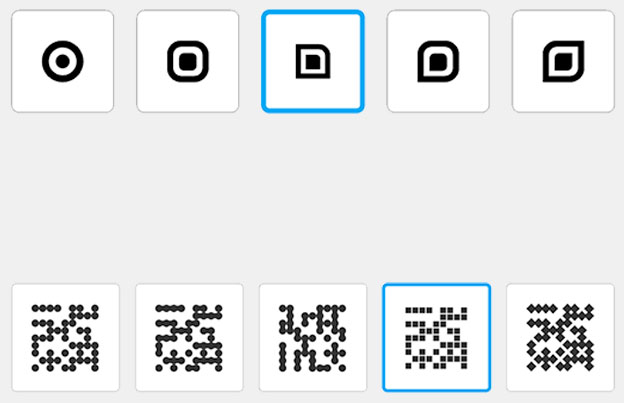
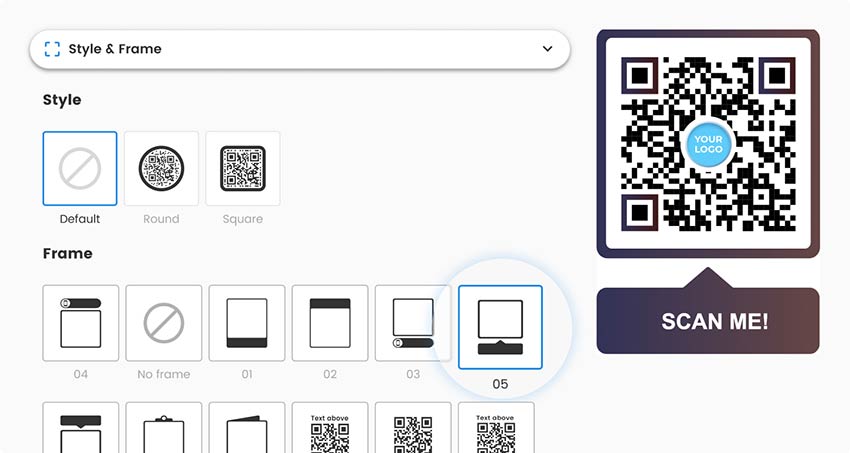
Sesuaikan kod QR untuk diri sendiri, menggunakan warna, bentuk dan saiz.

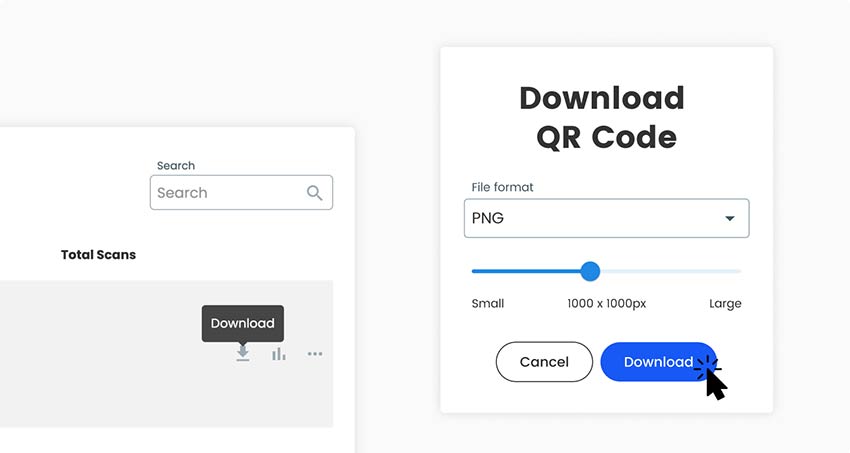
Muat turun kod dalam format fail yang mudah untuk anda pilih, dan itu sahaja.

Where to find your WiFi name and password
Before you create a QR code for WiFi, you need the exact network name (SSID) and password. Both are case sensitive, so “Home-WiFi” and “home-wifi” are different networks.
On the router
Most routers have a label on the back or bottom with the network name and the default password. If you changed the password, open the router settings page (the address is often on the same label) and look under Wireless atau WiFi.
On a phone that is already connected
iPhone: on iOS 16 and newer, go to Settings > Wi-Fi, tap the i next to the network and tap Kata Laluan. You confirm with Face ID, Touch ID or your passcode.
Android: pergi ke Settings > Network & internet > Wi-Fi, tap the gear icon next to the connected network and choose Berkongsi. Many Android phones show the password under the QR code. Menu names change a little between brands.
On a computer that is already connected
Windows: open Command Prompt and run netsh wlan show profile name=”NetworkName” key=clear. The password is shown as Key Content.
Mac: buka Keychain Access, search for the network name, double-click it, tick Show password and enter your Mac password.
Any QR code WiFi generator needs the password typed in. It cannot read it from a network you are connected to. Android’s Share option above makes a code on its own, but you cannot add a logo or frame to it. For a branded, print-ready code, find the password first and enter it in the generator.
Setting up for a business? Common places are kafe, hotel dan pejabat.
Encryption types and hidden networks
The encryption type tells the phone how to log in. Pick the same type your router uses. The wrong type is the most common reason a WiFi QR code does not connect.
- WPA / WPA2 / WPA3: a password-protected network. This is the setting on almost every router sold in the last ten years. WPA3 is the newest and WPA2 is still very common. In the generator, choose WPA / WPA2 for all of them. If you are not sure, this is the right choice.
- WEP: an old, weak type. Use it only if your router cannot do anything else, and think about replacing the router. Many new phones no longer join WEP networks.
- None: an open network with no password. Anyone in range can join and the traffic is not encrypted. Choose this only for a network that is meant to be public. Leave the password empty.
Hidden networks
A hidden network does not show its name in the list of WiFi networks. The QR code format has a flag for this (H:true), and the phone needs it to find the network. Hiding your network name adds little real security, so the simpler fix is to keep the name visible and use a strong password.
How iPhone and Android join
On an iPhone, the Camera app shows a banner such as “Join Network”. Tap it, then tap Join. On Android 10 and newer, the camera or Google Lens shows a “Connect to Wi-Fi” prompt. Tap it. On older Android phones, install a QR scanner app. A Pengimbas kod QR that reads WiFi codes also works.
Enterprise networks that ask for a username and a password (WPA2-Enterprise) cannot be put in a standard WiFi QR code.
Soalan lazim
WiFi to QR code takes under a minute. Open the QR code generator WiFi tool at the top of this page, enter your network name (SSID), choose the encryption type, and type the password. Click Next, change the colors or add a logo if you like, then download the static code as a PNG for free. Print-ready SVG, PDF and EPS files come with the free 14-day Pageloot trial. Test it with your phone before you print.
No. A generator has to be given the password, because the password goes inside the code. To find it, look on the router label, in the router settings, or on a connected phone or computer: on iPhone go to Settings, Wi-Fi, tap the i next to the network, then Password; on Android tap the gear next to the network and choose Share. The generator needs the password typed in. It cannot read it from a connected network.
A WiFi code is static. The network name, password and encryption type are stored inside the code itself, so there is nothing to edit later. If you change the password or the network name, make a new code and replace the printed one.
Choose WPA/WPA2 for any password-protected network, including WPA3 and mixed WPA2/WPA3 routers. Choose WEP only for an old router that cannot use anything else. To generate a WiFi QR code without a password, choose None. That makes an open network, which anyone nearby can join.
Open the camera and point it at the code. On an iPhone, tap the banner that says Join Network. On Android 10 and newer, tap the Connect to Wi-Fi prompt. On older Android phones, use a QR scanner app that supports WiFi codes.
Yes. The WiFi code format has a hidden flag (H:true) that tells the phone to look for a network that does not show its name. Without that flag, a phone may not find the network. Hiding the name adds little security, so keeping it visible with a strong password is usually simpler.
The password is stored in the code as plain text, so anyone who scans or photographs the code can read it. Put your guest network on the code, not your main network, and change the guest password when you need to. Join networks from codes only in places you trust.
Yes. The static code is free to make and download as a PNG, with a frame, colors, shapes and a logo. Print-ready SVG, PDF and EPS files come with the free 14-day Pageloot trial. Keep the logo small and test the code, because a large logo can make it harder to scan.

Hubungi kami dan kami dengan senang hati akan membantu!
Penilaian 4.86 / 5 bintang



Di mana hendak menggunakan kod QR WiFi? Contoh
Ketik pada imej untuk mengezum masuk
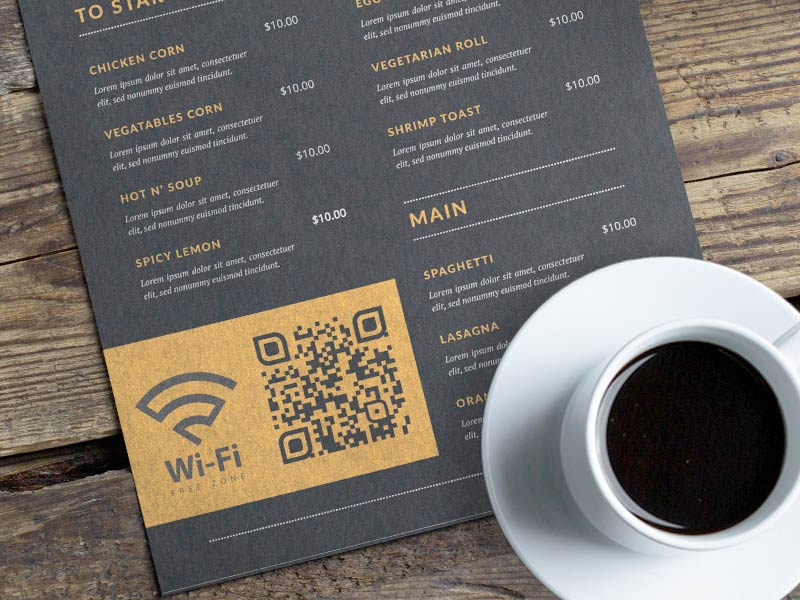
Cafes and restaurants
Print the code on table cards, the menu or the receipt, so staff stop answering “what is the WiFi password?” all day. Put a short line next to it: “Scan to join WiFi”. Use a guest network, not the one your till runs on.

Acara
Show the code on the registration desk, on the welcome sign and on the first slide. Create a separate network for the event, so you can switch it off or change its password afterwards.
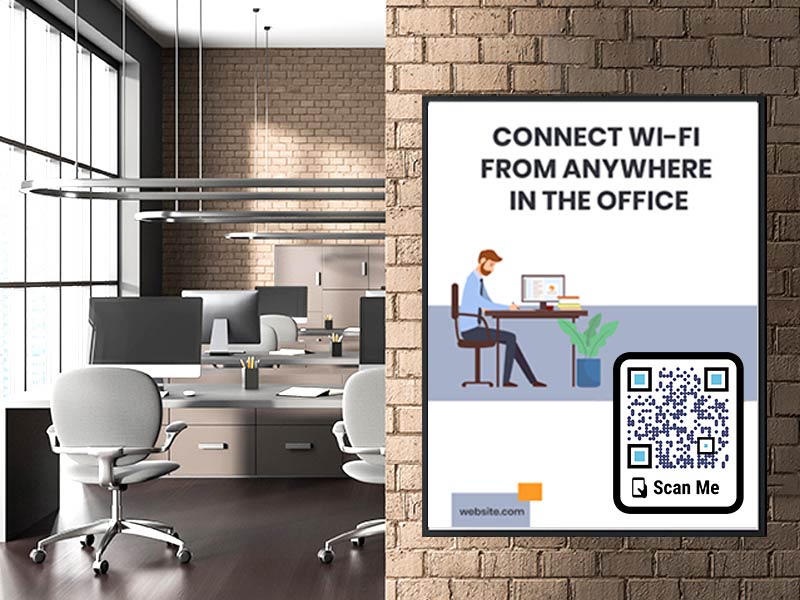
Offices and reception
Put a guest WiFi code at reception and in meeting rooms, so visitors do not need your staff password or an IT ticket. Staff keep using the main network, which stays off the printed code.
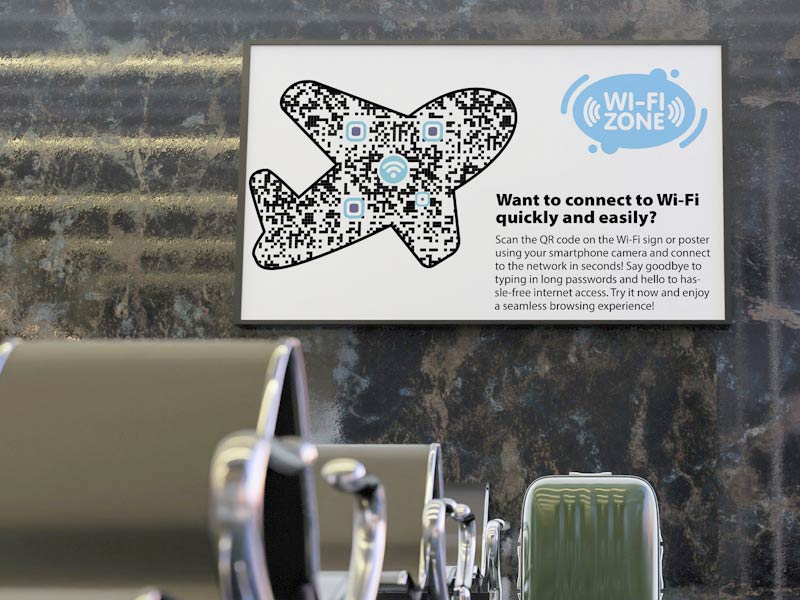
Home and guests
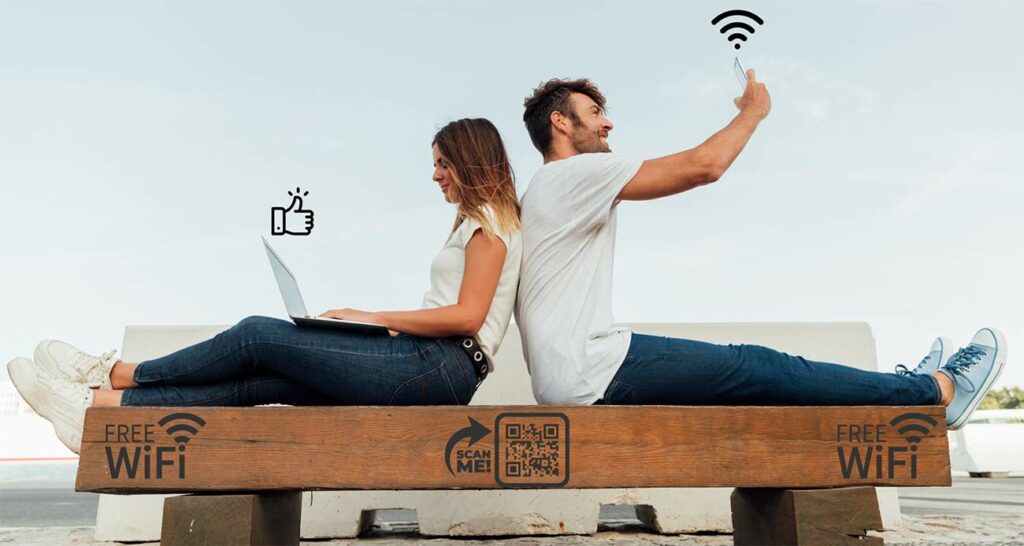
Stick a code on the fridge or in the guest room, or keep one in your phone photos. Friends and family scan once and are online. When you change your router password, print a new one.
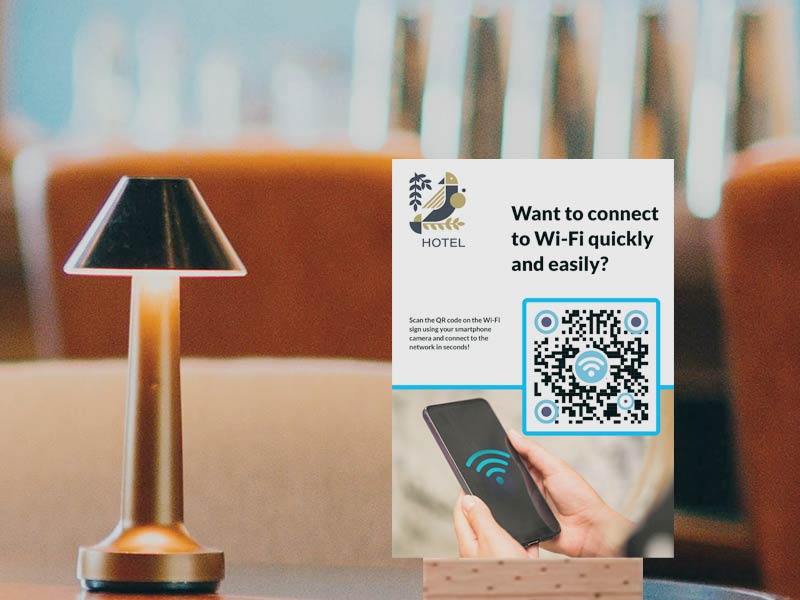
Hotels and Airbnb
Add the code to the welcome sheet, the guest book or a frame by the door, with the network name printed next to it in case a guest’s phone cannot scan. Guests are online within seconds of arrival. Change the guest password between stays if you want to, then replace the printed sheet.
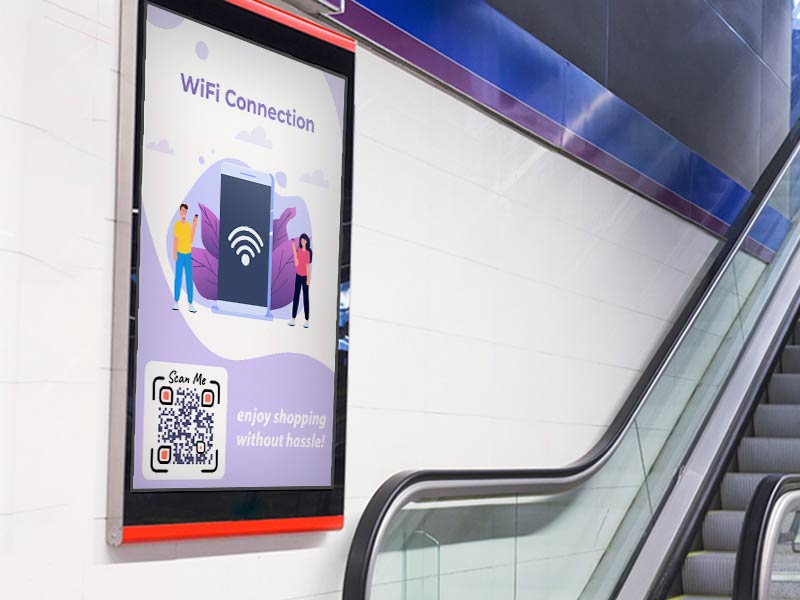
Shops and waiting rooms
Clinics, salons, coworking spaces and shops use a code on the counter or the wall of the waiting area. People wait online without using their mobile data, and a guest network keeps them away from your payment and office devices.
Where to put your WiFi QR code so people use it
-
Put it where people wait or sit
Reception desks, table cards, the welcome sheet in a rental, the wall of a waiting room. People look for WiFi when they sit down, so place the code at eye level or flat on the table. -
Print the network name next to it
Add the network name and one line such as "Scan with your phone camera to join WiFi". A guest with an old phone can still type the name and password by hand.
-
Print it big enough and keep it flat
Use a dark code on a light background, at least 2 x 2 cm (0.8 in) for a table card, and larger for a wall. Avoid glossy paper under bright lights, and keep a white border around the code. -
Protect it from wear
Table codes get wet and scratched. Laminate them or use a small sign holder, and replace a damaged code before it stops scanning.
WiFi QR code not working? Check these first
Check the encryption type against your router, and check the password for typos, capital letters and spaces at the end. If the phone says it cannot join, open the WiFi settings on a computer that is connected and compare the name and password character by character.

Characters such as ; , : ” \ have a special meaning inside the WiFi code format and must be escaped. A good generator does this for you, but some scanners still read them wrong. If a code fails only on one phone, change the password to letters, numbers and a few simple symbols, and make a new code.
The code names a network, not a band. If your router uses one name for both 2.4 GHz and 5 GHz, the phone picks the band. If the two bands have separate names, the code joins only the one you entered. Old devices and some smart-home gadgets can join only 2.4 GHz.
If your router uses MAC filtering (an allowed-devices list), a new phone is blocked even with the right password. Add the phone to the list or switch the filter off. Phones that use a private or random WiFi address can also fail on such a list.
Some networks show a login page after you connect, for example “accept the terms” or a room number (a captive portal). The QR code gets the guest onto the network, but the guest must still finish that page in the browser. A code cannot skip it. If many guests complain, ask your network provider whether a login page is switched on.
Guest network advice and security for WiFi QR codes

Most routers can run a second, guest network. Put the guest network on the QR code, not your main one. Guests get internet, and your computers, cameras, printers and storage stay out of their reach.
Do not print the code for the network your own devices use. Anyone who photographs a code gets the password, even if they never visit you.
The password is inside the code, so the code cannot follow a change. Change the guest password after an event or when a guest has left, then print a new code. Keep the old print out of sight.

Scan the code with one iPhone and one Android phone, from the distance people will use. Check that each phone joins the right network and loads a web page.

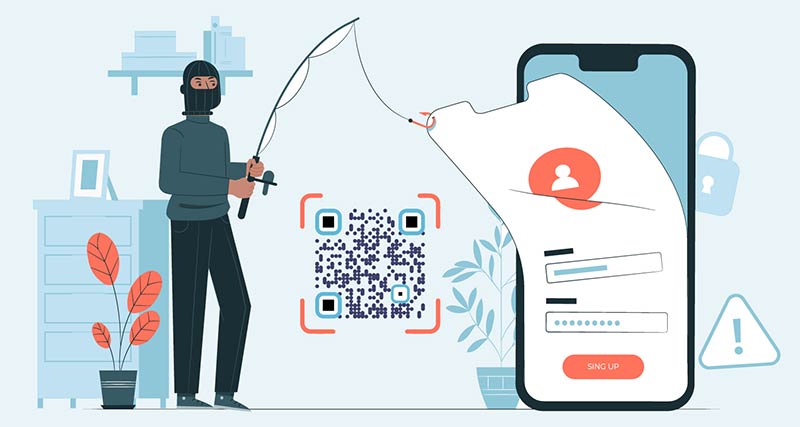
A WiFi code can send your phone to any network the maker chose. Join only from codes in places you know, such as a friend’s home, a hotel desk or an office reception.
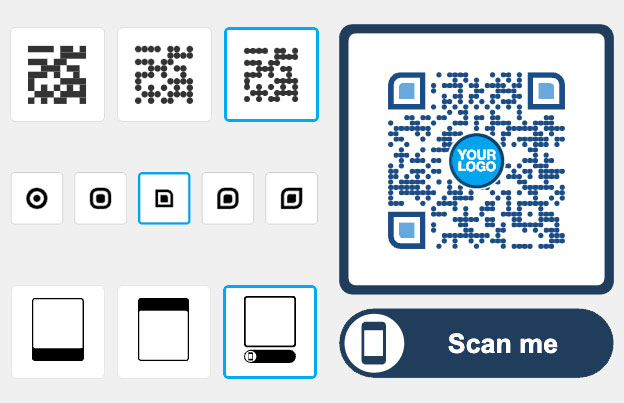
Add a frame, colors or a small logo so the code looks like part of your sign or menu. Keep a logo small and test the code after adding it, since a big logo can make it harder to scan. Download the PNG for free for screens and everyday printing. SVG, PDF and EPS files for sharp printing come with the free 14-day Pageloot trial.
Ketahui lebih lanjut tentang kod QR Wi-Fi