Da li pokušavate da procenite kuda idu plaćanja QR kodom na tržištima u razvoju? Odgovor oblikuje strategiju ulaganja, odluke o proizvodu i vreme ulaska na tržište. Ovaj članak raščlanjuje pokretače usvajanja, regulatorne okvire i prognoze rasta koje su vam potrebne da biste razumeli ovaj prostor koji se brzo menja.
Zašto ekonomije u razvoju prednjače u usvajanju QR plaćanja
Plaćanja QR kodom su rasla brže na tržištima u razvoju nego na razvijenim – a razlozi su strukturni, a ne slučajni.
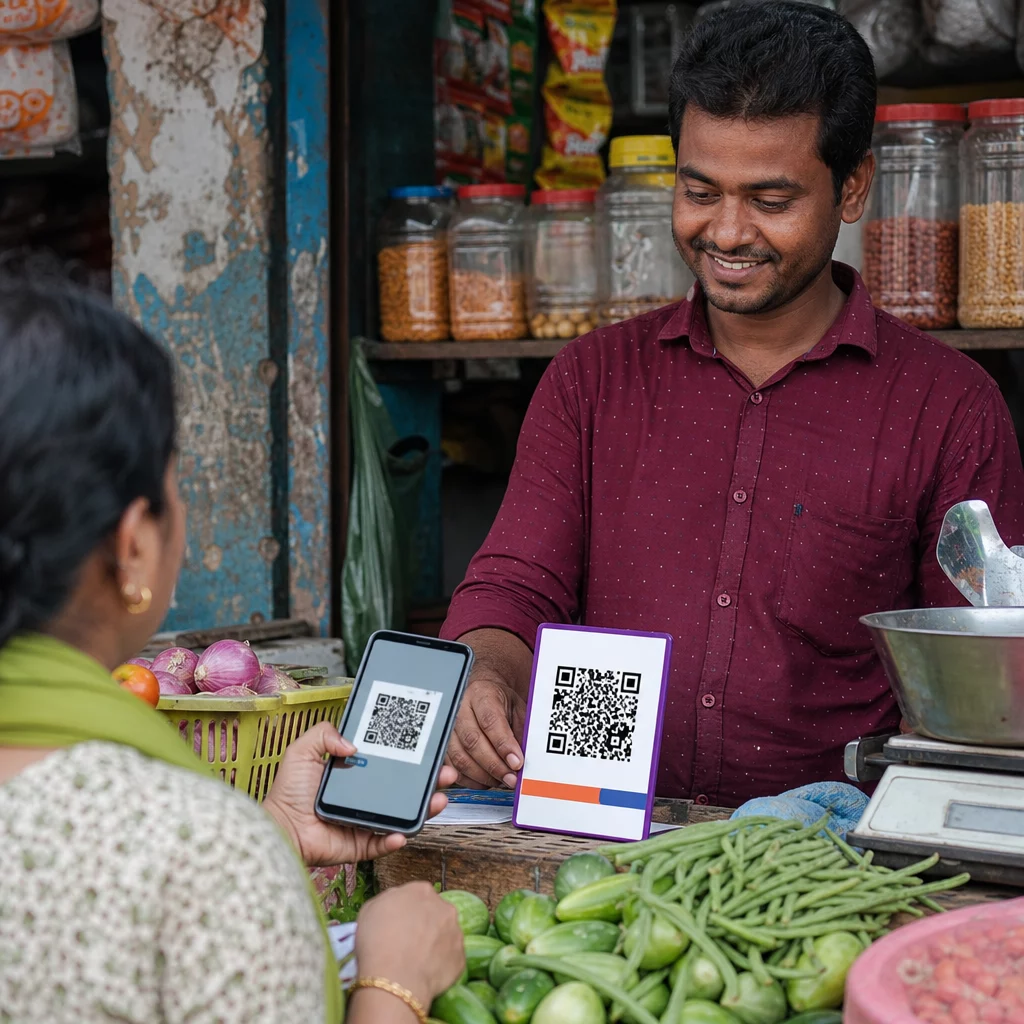
U mnogim ekonomijama u razvoju, tradicionalna bankarska infrastruktura je slaba. POS terminali su skupi, kartične mreže imaju ograničen domet, a veliki delovi stanovništva ostaju bez bankovnih usluga. QR kodovi rešavaju nekoliko ovih problema odjednom. Trgovcu je potreban samo odštampan kod ili ekran pametnog telefona da bi prihvatio digitalna plaćanja – bez čitača kartica, bez skupe opreme, bez složenog procesa registracije.
Plaćanja QR kodom se smatraju ključnim alatom za finansijsku inkluziju u ekonomijama u razvoju upravo zato što omogućavaju malim i mikro-trgovcima da prihvataju digitalna plaćanja sa minimalnom infrastrukturom, dok povezuju stanovništvo bez bankovnih usluga sa formalnim finansijskim uslugama putem mobilnih novčanika. Možete videti kako se ovo primenjuje u praksi kroz Rešenja QR koda dostupna bankama i finansijskim institucijama.
Kina nudi najjasniji dokaz koncepta. Istraživanja opisuju “masovno usvajanje” QR kodova od strane trgovaca i potrošača u svakodnevnim transakcijama, podstaknuto pristupačnim pametnim telefonima, širom pokrivenošću mobilnim internetom i podržavajućim digitalnim ekosistemom. Model je od tada repliciran i prilagođen širom Južne i Jugoistočne Azije, Latinske Amerike i podsaharske Afrike.
Ključni pokretači usvajanja QR plaćanja
Nekoliko različitih sila ubrzava usvajanje QR plaćanja na tržištima u razvoju. One ne deluju izolovano – one se međusobno pojačavaju.
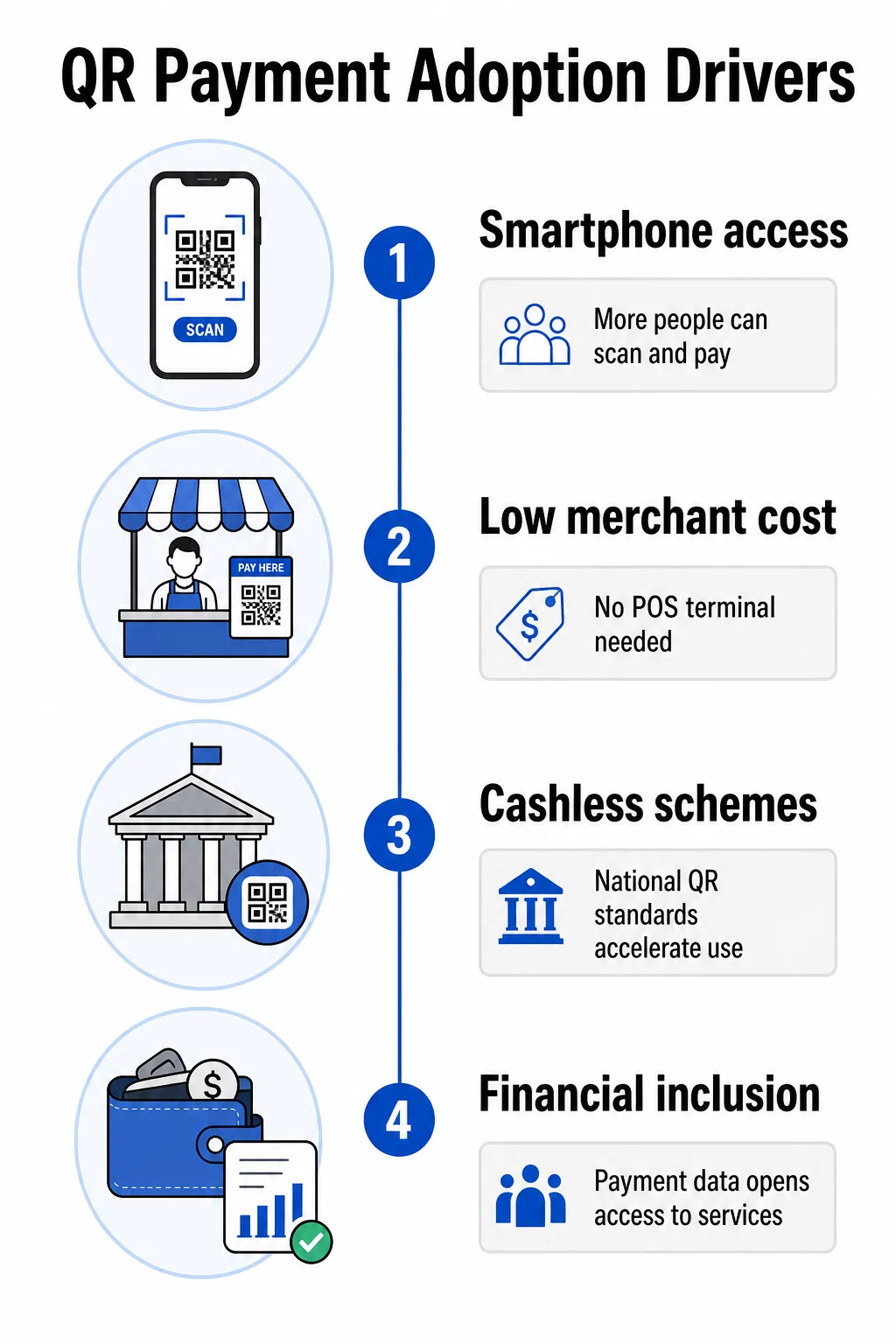
Penetracija pametnih telefona i jednostavnost upotrebe
Kako troškovi pametnih telefona padaju, sve više potrošača u zemljama sa niskim i srednjim prihodima nosi uređaje sposobne za skeniranje QR kodova bez namenske aplikacije. Kada plaćanje ne zahteva ništa više od otvaranja aplikacije kamere, trenje koje obično usporava usvajanje tehnologije plaćanja nestaje.
Niži troškovi za trgovce
U poređenju sa tradicionalnim POS terminalima, prihvatanje zasnovano na QR kodovima ima dramatično niže troškove ulaska. Za male trgovce koji posluju sa tankim maržama – ulične prodavce, tezge na pijaci, male prodavnice – ova razlika u troškovima je odlučujuća. QR kodovi za plaćanja omogućavaju svakom trgovcu da kreira i prikaže funkcionalan kod za plaćanje za nekoliko minuta, bez specijalističke opreme.
Inicijative za bezgotovinsko plaćanje podržane od strane vlade
Nacionalne vlade i centralne banke u nekoliko ekonomija u razvoju aktivno su promovisale QR plaćanja kao deo širih politika za bezgotovinsko plaćanje. Indijski BharatQR, indonežanski QRIS, šrilankanski LankaQR, bangladeški Bangla QR, ganski GhQR, meksički CoDi i brazilski Pix su svi primeri sistema podržanih od strane države, dizajniranih da ubrzaju usvajanje u velikom obimu – posebno među trgovcima u neformalnom sektoru i potrošačima sa niskim primanjima.
Finansijska inkluzija kao politički cilj
Pored pogodnosti, QR plaćanja vremenom stvaraju nešto vredno: istoriju transakcija. Za pojedince i trgovce koji ranije nisu imali bankovne račune, ovaj trag podataka može na kraju otključati pristup kreditu, osiguranju i drugim formalnim finansijskim uslugama. Kao što CGAP napominje, lake i široko rasprostranjene mogućnosti digitalnog plaćanja “mogu doneti trajne i duboke promene u ponašanju među korisnicima i trgovcima sa niskim primanjima, čineći formalna plaćanja delom njihovog svakodnevnog života.”
Rast mobilnih novčanika i digitalni ekosistemi
Uspon mobilnih novčanika – Alipay i WeChat Pay u Kini, Paytm u Indiji, GoPay i OVO u Indoneziji, M-Pesa derivati širom Afrike – stvorio je gotove korisničke baze za QR plaćanja. Razumevanje kako Integracija QR koda Alipay i WeChat Pay funkcioniše u praksi daje vam korisnu referentnu tačku za to kako funkcionišu zreli ekosistemi QR plaćanja.
Društveni uticaj i poverenje
Istraživanje o usvajanju QR plaćanja u Kambodži identifikovalo je poverenje, kvalitet usluge, društveni uticaj i percipirani rizik kao značajne pokretače na nivou korisnika. Na tržištima gde gotovina ostaje kulturno dominantna, vidljivo usvajanje od strane vršnjaka i institucionalni kredibilitet imaju veću težinu nego na tržištima gde su digitalna plaćanja već norma.
Veličina tržišta i prognoze rasta
Brojke iza rasta QR plaćanja su dovoljno značajne da zahtevaju ozbiljnu pažnju investitora i stratega.
- Globalno tržište plaćanja QR kodom procenjeno je na približno 12,5 milijardi USD u 2024. godini i predviđa se da će dostići 61,7 milijardi USD do 2033. godine, što predstavlja složenu godišnju stopu rasta od oko 20%.
- Posebna prognoza predviđa da će ukupna potrošnja na plaćanja QR kodom porasti sa 5,4 biliona USD u 2025. na 8 biliona USD u 2029. – što je povećanje od 48% tokom četiri godine.
- Ranija projekcija procenila je rast sa 8,07 milijardi USD u 2020. na 35,07 milijardi USD do 2030. po složenoj godišnjoj stopi rasta (CAGR) od 16,1%.
Azijsko-pacifički region, koji sadrži mnoge od najvećih svetskih ekonomija u razvoju, očekuje se da će držati najveći udeo u globalnom rastu tokom celog prognoziranog perioda. Kina, Indija i nacije jugoistočne Azije su primarni doprinosioci, podržani kako tržišno vođenim širenjem mobilnih novčanika, tako i namernim vladinim inicijativama za bezgotovinsko plaćanje.
Iako su ove brojke globalne, a ne specifične za tržišta u razvoju, osnovni pokretači su koncentrisani u ekonomijama u razvoju. Rast na zrelim tržištima poput Sjedinjenih Država bio je relativno sporiji. Kako sve više trgovaca usvaja opcije plaćanja QR kodom kako bi transakcije bile brže, sigurnije i pristupačnije, ta koncentracija će se verovatno produbiti.
Regulatorni pejzaž: Standardi, Interoperabilnost i Nadzor
Regulacija u ovom prostoru nije toliko prepreka koliko arhitektura. Način na koji centralne banke i vlade strukturiraju šeme plaćanja QR kodom oblikuje ko može da učestvuje, kako se troškovi raspodeljuju i koliko brzo se usvajanje može proširiti.
Nacionalni QR standardi i interoperabilnost
Najznačajniji regulatorni razvoj u ekonomijama u razvoju je širenje interoperabilnih nacionalnih QR standarda. Ove šeme – razvijene i često u vlasništvu centralnih banaka ili nacionalnih platnih autoriteta – koriste EMVCo standarde kako bi osigurale da jedan QR kod može prihvatiti plaćanja od više pružalaca usluga. Ovo je izuzetno važno za usvajanje od strane trgovaca: mali trgovac koji prihvata jednu QR šemu efektivno prihvata sve učestvujuće novčanike i banke.
| Цоунтри | Šema | Operator |
|---|---|---|
| Indija | БхаратКР | Centralna banka Indije / NPCI |
| Indonezija | QRIS | Banka Indonezije |
| Šri Lanka | LankaQR | Centralna banka Šri Lanke |
| Bangladeš | Bangla QR | Banka Bangladeša |
| Gana | GhQR | Ganski međubankarski sistemi plaćanja i poravnanja |
| Meksiko | CoDi | Banka Meksika |
| Brazil | Pix | Centralna banka Brazila |
| Kirgistan | ELQR | Nacionalni platni sistem |
LankaQR, uveden 2018. godine, eksplicitno mora da bude usklađen sa globalnim EMV standardima – izbor dizajna koji omogućava bilo kojoj banci ili pružaocu platnih usluga da prihvata plaćanja putem jedinstvenog koda, bez vlasničkog zaključavanja.
Prekogranična interoperabilnost
Integrisani sistem plaćanja QR kodom ASEAN-a povezuje nacionalne QR šeme u zemljama učesnicama u okviru ASEAN okvira za transakcije u lokalnoj valuti. Ova politička inicijativa podržava prekogranična QR plaćanja u lokalnim valutama, smanjujući zavisnost od posrednika u stranoj valuti za regionalne transakcije. Za preduzeća i investitore sa regionalnim, a ne fokusom na jednu zemlju, ova integracija značajno proširuje dostupno tržište.
Zaštita potrošača i privatnost
OECD preporučuje da se inicijative za digitalnu finansijsku pismenost sprovode uporedo sa okvirima za zaštitu finansijskih potrošača. U praksi, propisi o QR plaćanjima ne bi trebalo samo da nalažu tehničke bezbednosne standarde, već i da obezbede potrošačima pristup transparentnim informacijama i efikasnim mehanizmima za prijavljivanje prevara. Za preduzeća koja posluju u više jurisdikcija, razumevanje kako 7. Zakoni o privatnosti QR kodova i ključne regulative se primenjuju na podatke o plaćanju je važno razmatranje usklađenosti.
Ovo je sve relevantnije jer je rast QR plaćanja proizveo nove obrasce prevara u nekim zemljama. Statički QR kodovi trgovaca su posebno ranjivi na napade fizičke zamene – gde prevarant postavlja lažni kod preko legitimnog. Vodič o rizicima QR kodova u plaćanjima i kako ih ublažiti pokriva glavne vektore pretnji sa kojima se preduzeća suočavaju.
Ograničenja dostupnih regulatornih podataka
Javni izvori pružaju opise uloge centralnih banaka i EMV standarda na visokom nivou, ali detaljne, zakonske odredbe po zemljama koje se specifično odnose na plaćanja QR kodom nisu dobro dokumentovane. Investitori i stratezi koji sprovode dubinsku analizu na specifičnim tržištima moraće da dopune ove okvire lokalnom pravnom analizom.
Finansijska inkluzija: Dugoročni strateški slučaj
Za investitore i stratege fokusirane na razvoj, dimenzija finansijske inkluzije QR plaćanja je verovatno najznačajniji dugoročni trend.
QR kodovi stvaraju jeftinu ulaznu tačku u formalnu digitalnu ekonomiju za dve grupe koje su istorijski bile isključene: male trgovce i potrošače sa niskim primanjima. Kako se usvajanje QR kodova širi u ovim segmentima, ono generiše istorije transakcija koje mogu služiti kao alternativni kreditni podaci. Vremenom, ovaj trag podataka stvara puteve ka kreditu, osiguranju i drugim finansijskim uslugama – proizvodima koji sami po sebi predstavljaju značajna tržišta.
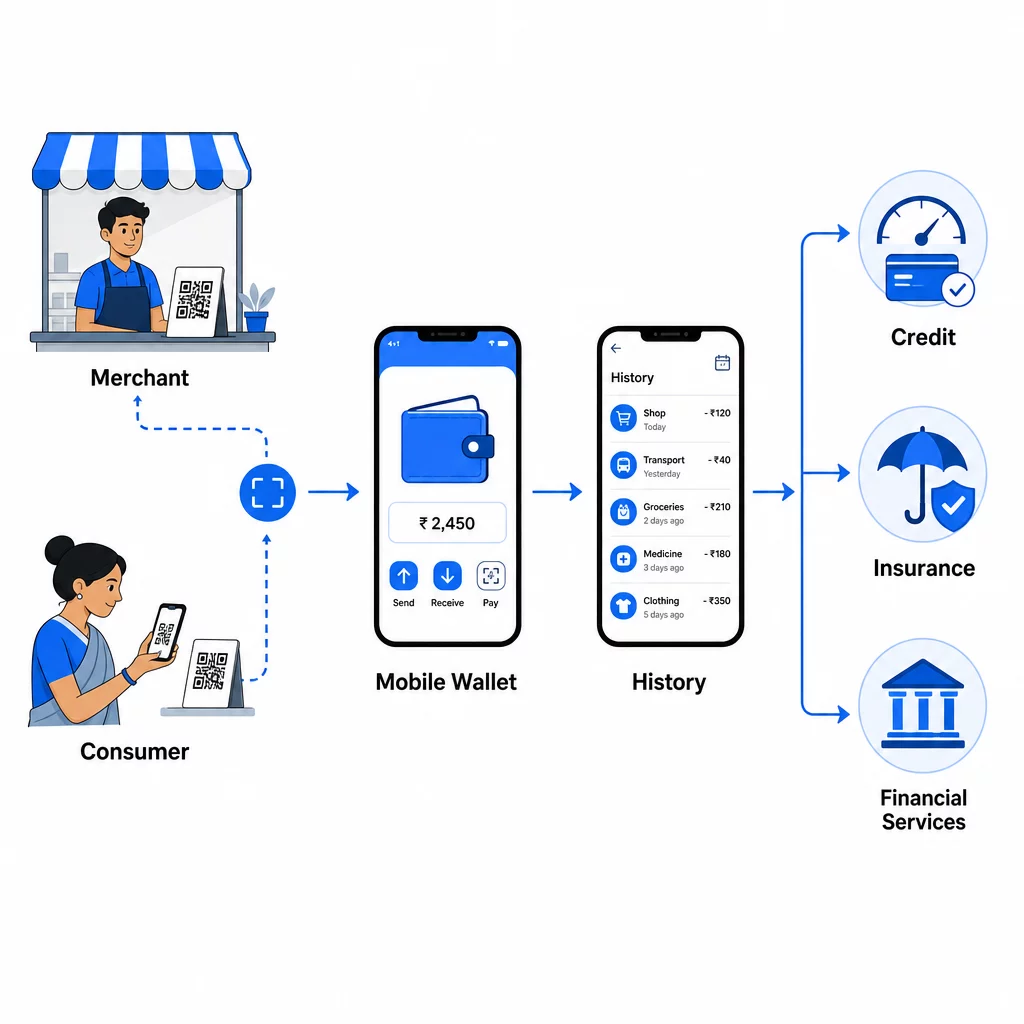
CGAP to jasno formuliše: QR kodovi su “obećavajući način da se digitalizuju plaćanja kod trgovaca sa niskim primanjima i da se kupci prebace na digitalno”, a istorije transakcija koje generišu “mogu doneti pristup kreditu i drugim formalnim finansijskim uslugama, stvarajući kapiju ka finansijskoj inkluziji.”
Iskustvo iz Istočne Azije potvrđuje ovu tačku. Kako mobilna plaćanja zasnovana na QR kodovima zamenjuju gotovinu, banke mogu smanjiti troškove povezane sa gotovinskim uslugama – oslobađajući kapital za kreditiranje i druge aktivnosti koje dodaju vrednost. Slučaj finansijske inkluzije nije čisto teorijski; podržan je uočljivom promenom ponašanja na velikoj skali.
Rizici i prepreke na koje treba obratiti pažnju
Slučaj rasta je snažan, ali nijedna iskrena analiza tržišta ne ignoriše prepreke.
Prevare i sigurnosne ranjivosti
Statički QR kodovi mogu biti fizički menjani, a nemogućnost većine korisnika da provere odredište koda pre skeniranja stvara stalni rizik od prevare. Kako se usvajanje širi, obrasci prevara teže da se šire sa njim. sigurnosne i brzinske prednosti plaćanja QR kodom su stvarne, ali zavise od izbora implementacije – posebno od upotrebe dinamičkih kodova umesto statičkih – a ne samo od tehnologije.
Poverenje i nedostaci u digitalnoj pismenosti
Istraživanja iz Kambodže i drugih konteksta tržišta u razvoju dosledno identifikuju poverenje kao primarnu prepreku usvajanju. Tamo gde potrošači nemaju poverenja u digitalne sisteme – ili gde su prethodna iskustva sa prevarama narušila poverenje – usvajanje stagnira bez obzira na kvalitet infrastrukture. Vladine inicijative za digitalnu pismenost su deo političkog odgovora, ali napredak je neujednačen.
Rizici fragmentacije
Dok interoperabilni nacionalni standardi smanjuju fragmentaciju unutar zemalja, prekogranična interoperabilnost ostaje nepotpuna. Preduzeća koja posluju na više tržišta u razvoju suočavaju se sa praktičnim izazovom navigacije kroz različite šeme, standarde i regulatorna okruženja. Napori za integraciju ASEAN-a su značajan korak napred, ali pokrivaju ograničen skup zemalja.
Zavisnosti od infrastrukture
QR plaćanja zahtevaju pouzdanu mobilnu internet konekciju. U ruralnim područjima i urbanim zonama sa nižim primanjima – upravo populacijama najrelevantnijim za ciljeve finansijske inkluzije – povezanost može biti nedosledna. Ovo ograničenje ograničava brzinu kojom usvajanje QR kodova može dostići najviše nedovoljno opslužene segmente.
Šta ovo znači za preduzeća koja posluju na ovim tržištima
Za kompanije koje već prihvataju ili planiraju da prihvate plaćanja QR kodom u ekonomijama u razvoju, iz ove analize proizilazi nekoliko praktičnih razmatranja.
- Dizajnirajte prihvatanje plaćanja oko dominantne lokalne šeme. Prihvatanje QRIS-a od strane trgovaca u Indoneziji ili QR-a povezanog sa UPI-jem u Indiji dostiže mnogo širu bazu korisnika nego prihvatanje samo jednog vlasničkog novčanika. Interoperabilni standardi postoje upravo da bi eliminisali takvu vrstu zaključavanja.
- Koristite dinamičke QR kodove umesto statičkih. Dinamički kodovi vam omogućavaju da ažurirate destinacije plaćanja, pratite aktivnost skeniranja radi anomalija i deaktivirate kodove ako se otkrije prevara – sve to bez ponovnog štampanja. Za preduzeća koja upravljaju plaćanjima na više lokacija, ova centralizovana kontrola je operativno značajna. The vodič za QR kodove za mobilne novčanike objašnjava praktične razlike između dinamičkih i statičkih pristupa u kontekstu plaćanja.
- Tretirajte analitiku kao osnovnu funkciju, a ne kao naknadnu misao. Razumevanje kada i gde se kodovi skeniraju – i označavanje neobičnih obrazaca – jednako je relevantno za prevenciju prevara kao i za optimizaciju marketinga. Preduzeća koja koriste QR kodove za plaćanja među korisnicima efikasno teže da aktivno prate podatke o skeniranju, a ne reaktivno.
- Gradite za interoperabilnu budućnost. Prekogranična integracija QR plaćanja se širi. Preduzeća koja sada investiraju u fleksibilnu infrastrukturu za prihvatanje, nezavisnu od šeme, bolje su pozicionirana da se skaliraju kako regionalni okviri poput ASEAN sistema sazrevaju.
Počnite da prihvatate QR plaćanja bez složenosti Treba da kreirate QR kodove za plaćanje koji funkcionišu na svim vašim poslovnim lokacijama? Koristite Пагелоот генератор КР кодова za izgradnju dinamičkih kodova koji se mogu pratiti – ili the PayPal QR kod generator za direktno povezivanje sa vašim platnim računom bez potrebe za hardverom.
Putanja je jasna, detalji se još uvek pišu
Plaćanja QR kodom u ekonomijama u razvoju nisu spekulativni trend – ona su infrastrukturna realnost podržana mandatima centralnih banaka, dokazanom masovnom primenom i stopom rasta koja nadmašuje većinu segmenata platne industrije. Predviđa se da će tržište rasti za otprilike 20% godišnje do 2033. godine, pri čemu će Azijsko-pacifički region prednjačiti, a Latinska Amerika, Afrika i Južna Azija značajno doprineti.
Strateško pitanje za investitore i poslovne lidere nije da li će QR plaćanja dominirati digitalnom trgovinom u ekonomijama u razvoju, već koliko brzo će sazreti upravljanje prevarama, prekogranična interoperabilnost i digitalna pismenost kako bi podržali tu dominaciju. Oni koji razumeju regulatornu arhitekturu – i pozicioniraju se unutar interoperabilnih nacionalnih standarda koje centralne banke aktivno promovišu – najbolje su pozicionirani da iskoriste priliku.
Za preduzeća koja danas razvijaju mogućnosti QR plaćanja, istražite rešenja QR koda dostupna u svim industrijama kako biste pronašli pravi pristup za vaš sektor.
Često postavljana pitanja
Tržišta u razvoju imaju manje postojeće infrastrukture za plaćanje karticama, veći udeo stanovništva bez bankovnih računa i niže troškove pametnih telefona u odnosu na troškove POS terminala. QR kodovi eliminišu potrebu za skupim hardverom, omogućavajući svakom trgovcu sa odštampanim kodom ili pametnim telefonom da prihvati digitalna plaćanja. Inicijative za bezgotovinsko plaćanje koje podržava vlada i interoperabilni nacionalni QR standardi takođe su ubrzali usvajanje na načine koji nemaju direktan ekvivalent na većini razvijenih tržišta.
Centralne banke u mnogim ekonomijama u razvoju preuzele su direktnu ulogu u razvoju i propisivanju interoperabilnih nacionalnih QR šema – primeri uključuju BharatQR u Indiji, QRIS u Indoneziji, LankaQR u Šri Lanki i Pix u Brazilu. Ove šeme koriste EMVCo standarde kako bi osigurale da jedan QR kod može prihvatiti plaćanja od više pružalaca usluga, smanjujući fragmentaciju i podržavajući usvajanje među malim trgovcima i potrošačima sa niskim primanjima. Ovo je infrastrukturna investicija vođena politikom, a ne samo tržišni ishod.
Najčešći rizici su fizička manipulacija QR kodom (gde prevaranti zamene legitiman kod lažnim koji preusmerava plaćanja na njihov sopstveni račun) i fišing napadi koji imitiraju legitimne stranice za plaćanje. Korišćenje dinamičkih QR kodova – koji se mogu pratiti zbog neobične aktivnosti skeniranja i deaktivirati ako su kompromitovani – značajno smanjuje ove rizike u poređenju sa statičkim kodovima. Za potpunu analizu pretnji i strategija ublažavanja, pogledajte vodič o rizicima QR kodova u plaćanjima.