Está a tentar avaliar para onde se dirigem os pagamentos por código QR nos mercados em desenvolvimento? A resposta molda a estratégia de investimento, as decisões de produto e o momento de entrada no mercado. Este artigo detalha os impulsionadores da adoção, os quadros regulamentares e as previsões de crescimento de que necessita para compreender este espaço em rápida evolução.
Por Que as Economias Emergentes Estão a Liderar a Adoção de Pagamentos QR
Os pagamentos por código QR cresceram mais rapidamente nos mercados emergentes do que nos desenvolvidos – e as razões são estruturais, não coincidentes.
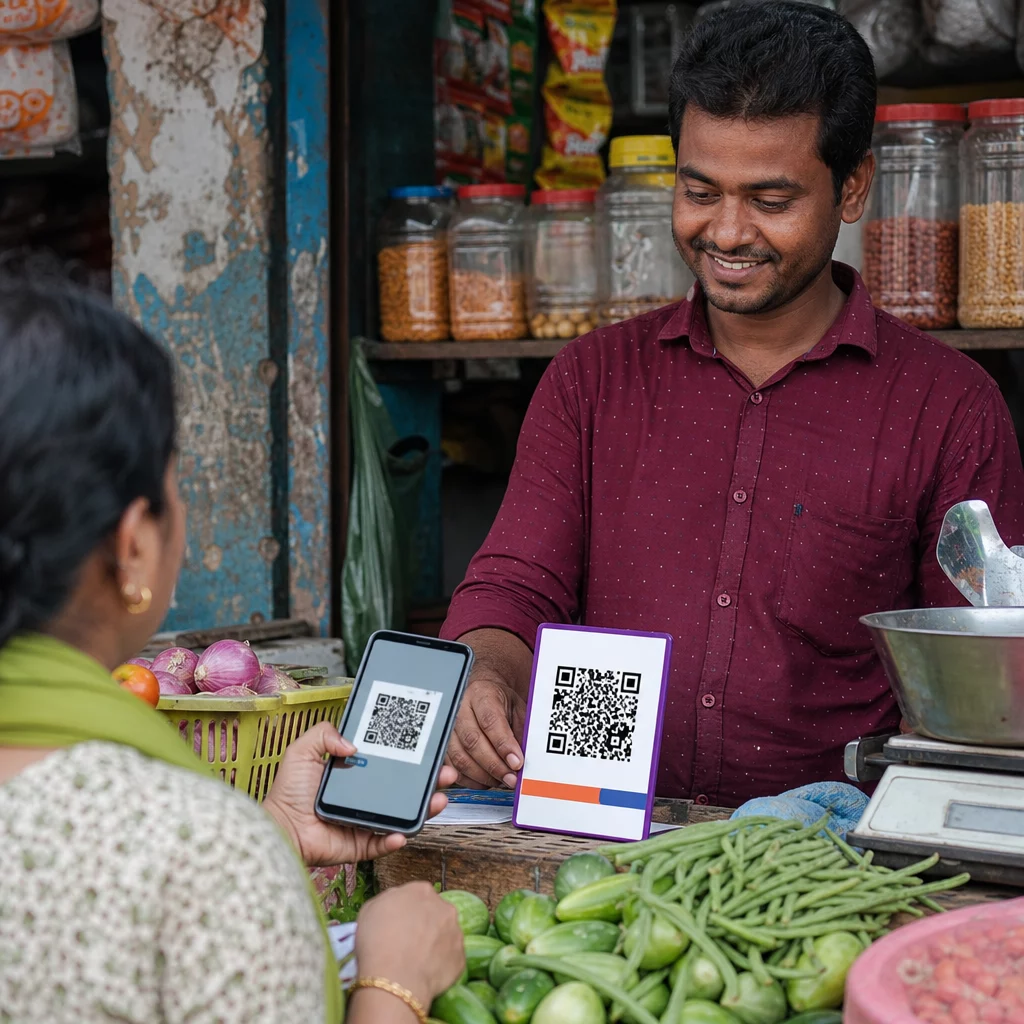
Em muitas economias em desenvolvimento, a infraestrutura bancária tradicional é escassa. Os terminais de ponto de venda são caros, as redes de cartões têm um alcance limitado e grandes porções da população permanecem sem acesso a serviços bancários. Os códigos QR resolvem vários destes problemas de uma só vez. Um comerciante precisa apenas de um código impresso ou de um ecrã de smartphone para aceitar pagamentos digitais – sem leitor de cartões, sem hardware caro, sem integração complexa.
Os pagamentos por código QR são vistos como uma ferramenta fundamental para a inclusão financeira nas economias emergentes precisamente porque permitem que pequenos e micro-comerciantes aceitem pagamentos digitais com infraestrutura mínima, ao mesmo tempo que conectam populações sem acesso a serviços bancários a serviços financeiros formais através de carteiras móveis. Pode ver como isto se desenrola na prática através das soluções de código QR disponíveis para bancos e instituições financeiras.
A China oferece a prova de conceito mais clara. A pesquisa descreve a “adoção massiva” de códigos QR por comerciantes e consumidores em transações diárias, impulsionada por smartphones acessíveis, maior cobertura de internet móvel e um ecossistema digital de apoio. O modelo foi desde então replicado e adaptado em toda a Ásia do Sul e Sudeste, América Latina e África Subsaariana.
Principais Impulsionadores da Adoção de Pagamentos QR
Várias forças distintas estão a acelerar a adoção de pagamentos QR nos mercados emergentes. Estas não operam isoladamente – elas reforçam-se mutuamente.
Penetração de smartphones e facilidade de uso
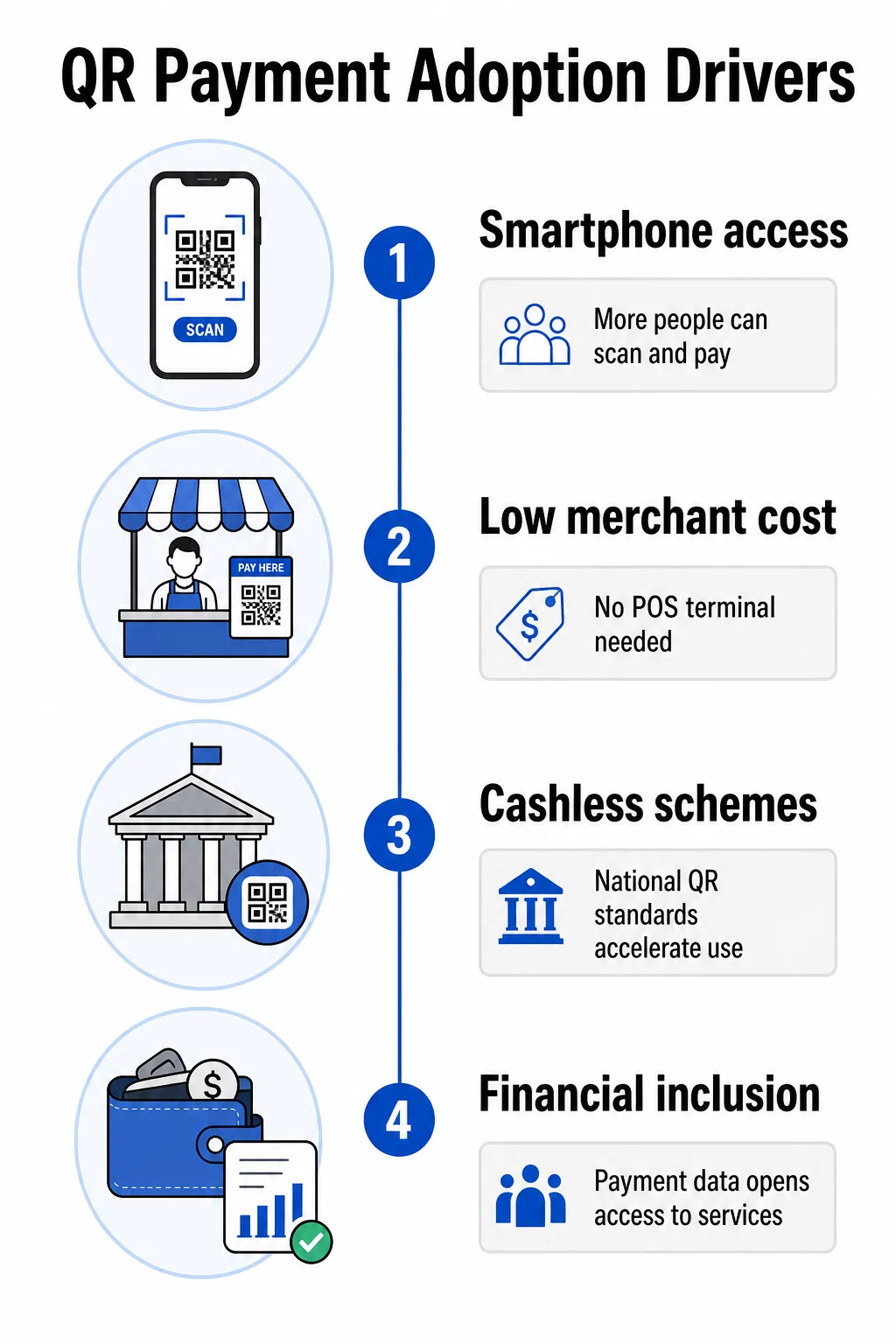
À medida que os custos dos smartphones diminuem, mais consumidores em países de baixo e médio rendimento possuem dispositivos capazes de digitalizar códigos QR sem uma aplicação dedicada. Quando pagar não exige mais do que abrir uma aplicação de câmara, a fricção que tipicamente atrasa a adoção da tecnologia de pagamento desaparece.
Custos mais baixos para os comerciantes
Comparado com os terminais POS tradicionais, a aceitação baseada em QR tem um custo de entrada dramaticamente mais baixo. Para pequenos comerciantes que operam com margens apertadas – vendedores ambulantes, bancas de mercado, pequenas lojas – esta diferença de custo é decisiva. códigos QR para pagamentos tornam possível a qualquer comerciante criar e exibir um código de pagamento funcional em minutos, sem equipamento especializado.
Iniciativas de desmaterialização de dinheiro apoiadas pelo governo
Governos nacionais e bancos centrais em várias economias emergentes têm promovido ativamente os pagamentos QR como parte de agendas políticas mais amplas de desmaterialização de dinheiro. O BharatQR da Índia, o QRIS da Indonésia, o LankaQR do Sri Lanka, o Bangla QR do Bangladesh, o GhQR do Gana, o CoDi do México e o Pix do Brasil são todos exemplos de sistemas apoiados pelo estado concebidos para acelerar a adoção em larga escala – particularmente entre comerciantes do setor informal e consumidores de baixo rendimento.
Inclusão financeira como objetivo político
Além da conveniência, os pagamentos QR criam algo valioso ao longo do tempo: um histórico de transações. Para indivíduos e comerciantes anteriormente não bancarizados, este rasto de dados pode eventualmente desbloquear o acesso a crédito, seguros e outros serviços financeiros formais. Como o CGAP observa, oportunidades de pagamento digital fáceis e generalizadas “podem trazer uma mudança de comportamento duradoura e profunda entre clientes e comerciantes de baixa renda, tornando os pagamentos formais parte de suas vidas diárias.”
Crescimento de carteiras móveis e ecossistemas digitais
O surgimento de carteiras móveis – Alipay e WeChat Pay na China, Paytm na Índia, GoPay e OVO na Indonésia, derivados do M-Pesa em toda a África – criou bases de utilizadores prontas para pagamentos QR. Compreender como integração de códigos QR Alipay e WeChat Pay funciona na prática oferece um ponto de referência útil para como os ecossistemas de pagamento QR maduros funcionam.
Influência social e confiança
Pesquisas sobre a adoção de pagamentos QR no Camboja identificaram confiança, qualidade do serviço, influência social e risco percebido como impulsionadores significativos ao nível do utilizador. Em mercados onde o dinheiro permanece culturalmente dominante, a adoção visível por pares e a credibilidade institucional têm mais peso do que em mercados onde os pagamentos digitais já são a norma.
Tamanho do Mercado e Previsões de Crescimento
Os números por trás do crescimento dos pagamentos QR são substanciais o suficiente para exigir séria atenção de investidores e estrategistas.
- O mercado global de pagamentos por código QR foi estimado em aproximadamente USD 12,5 bilhões em 2024 e está projetado para atingir USD 61,7 bilhões até 2033, representando uma taxa de crescimento anual composta de cerca de 20%.
- Uma previsão separada projeta que o gasto total com pagamentos por código QR aumentará de USD 5.4 trilhões em 2025 para USD 8 trilhões em 2029 – um aumento de 48% em quatro anos.
- Uma projeção anterior estimou um crescimento de USD 8,07 bilhões em 2020 para USD 35,07 bilhões até 2030 a uma CAGR de 16,1%.
Ásia-Pacífico, que contém muitas das maiores economias emergentes do mundo, deverá deter a maior fatia do crescimento global durante todo o período de previsão. China, Índia e nações do Sudeste Asiático são os principais contribuintes, apoiados tanto pela expansão de carteiras móveis impulsionada pelo mercado quanto por iniciativas governamentais deliberadas para pagamentos sem dinheiro.
Embora esses números sejam globais e não específicos de mercados emergentes, os impulsionadores subjacentes estão concentrados em economias em desenvolvimento. O crescimento em mercados maduros como os Estados Unidos tem sido comparativamente mais lento. À medida que mais comerciantes adotam opções de pagamento por código QR para tornar as transações mais rápidas, seguras e acessíveis, essa concentração provavelmente se aprofundará.
O Cenário Regulatório: Padrões, Interoperabilidade e Supervisão
A regulamentação neste espaço não é tanto uma barreira, mas uma arquitetura. A forma como os bancos centrais e os governos estruturam os esquemas de pagamento QR molda quem pode participar, como os custos são distribuídos e quão rapidamente a adoção pode escalar.
Padrões QR nacionais e interoperabilidade
O desenvolvimento regulatório mais significativo nas economias emergentes é a proliferação de padrões QR nacionais interoperáveis. Esses esquemas – desenvolvidos e frequentemente de propriedade de bancos centrais ou autoridades de pagamento nacionais – usam os padrões EMVCo para garantir que um único código QR possa aceitar pagamentos de múltiplos provedores. Isso é enormemente importante para a adoção por comerciantes: um pequeno comerciante que aceita um esquema QR efetivamente aceita todas as carteiras e bancos participantes.
| País | Esquema | Operador |
|---|---|---|
| Índia | BharatQR | Banco de Reserva da Índia / NPCI |
| Indonésia | QRIS | Banco da Indonésia |
| Sri Lanka | LankaQR | Banco Central do Sri Lanka |
| Bangladesh | Bangla QR | Banco de Bangladesh |
| Gana | GhQR | Sistemas de Pagamento e Liquidação Interbancários de Gana |
| México | CoDi | Banco do México |
| Brasil | Pix | Banco Central do Brasil |
| Quirguistão | ELQR | Sistema Nacional de Pagamentos |
O LankaQR, introduzido em 2018, é explicitamente exigido para cumprir os padrões globais EMV – uma escolha de design que permite a qualquer banco ou provedor de pagamentos aceitar pagamentos através de um código unificado, sem dependência de tecnologia proprietária.
Interoperabilidade transfronteiriça
O Sistema Integrado de Pagamento por Código QR da ASEAN liga os esquemas nacionais de QR em todos os países participantes sob a Estrutura de Transações em Moeda Local da ASEAN. Esta iniciativa política apoia pagamentos QR transfronteiriços em moedas locais, reduzindo a dependência de intermediários de moeda estrangeira para transações regionais. Para empresas e investidores com foco regional, em vez de um único país, esta integração expande significativamente o mercado endereçável.
Proteção do consumidor e privacidade
A OCDE recomenda que as iniciativas de literacia financeira digital funcionem em conjunto com os quadros de proteção do consumidor financeiro. Na prática, as regulamentações sobre pagamentos QR não devem apenas exigir padrões técnicos de segurança, mas também garantir que os consumidores tenham acesso a informações transparentes e mecanismos eficazes para denunciar fraudes. Para empresas que operam em várias jurisdições, entender como Leis de privacidade de códigos QR e regulamentações chave se aplicam aos dados de pagamento é uma importante consideração de conformidade.
Isso é cada vez mais relevante porque o crescimento dos pagamentos QR produziu novos padrões de fraude em alguns países. Os códigos QR estáticos de comerciantes são particularmente vulneráveis a ataques de substituição física – onde um fraudador coloca um código falso sobre um legítimo. O guia sobre riscos de códigos QR em pagamentos e como mitigá-los abrange os principais vetores de ameaça que as empresas enfrentam.
Os limites dos dados regulatórios disponíveis
Fontes públicas fornecem descrições de alto nível dos papéis dos bancos centrais e dos padrões EMV, mas as disposições estatutárias granulares, país a país, que regem especificamente os pagamentos por código QR não estão bem documentadas. Investidores e estrategistas que realizam due diligence em mercados específicos precisarão complementar esses quadros com análises jurídicas locais.
Inclusão Financeira: O Caso Estratégico de Longo Prazo
Para investidores e estrategistas focados no desenvolvimento, a dimensão de inclusão financeira dos pagamentos QR é, sem dúvida, a tendência de longo prazo mais significativa.
Os códigos QR criam um ponto de entrada de baixo custo na economia digital formal para dois grupos que foram historicamente excluídos: pequenos comerciantes e consumidores de baixa renda. À medida que a adoção de QR se espalha nesses segmentos, ela gera históricos de transações que podem servir como dados de crédito alternativos. Com o tempo, esse rastro de dados cria caminhos para crédito, seguro e outros serviços financeiros – produtos que representam mercados endereçáveis substanciais por si só.
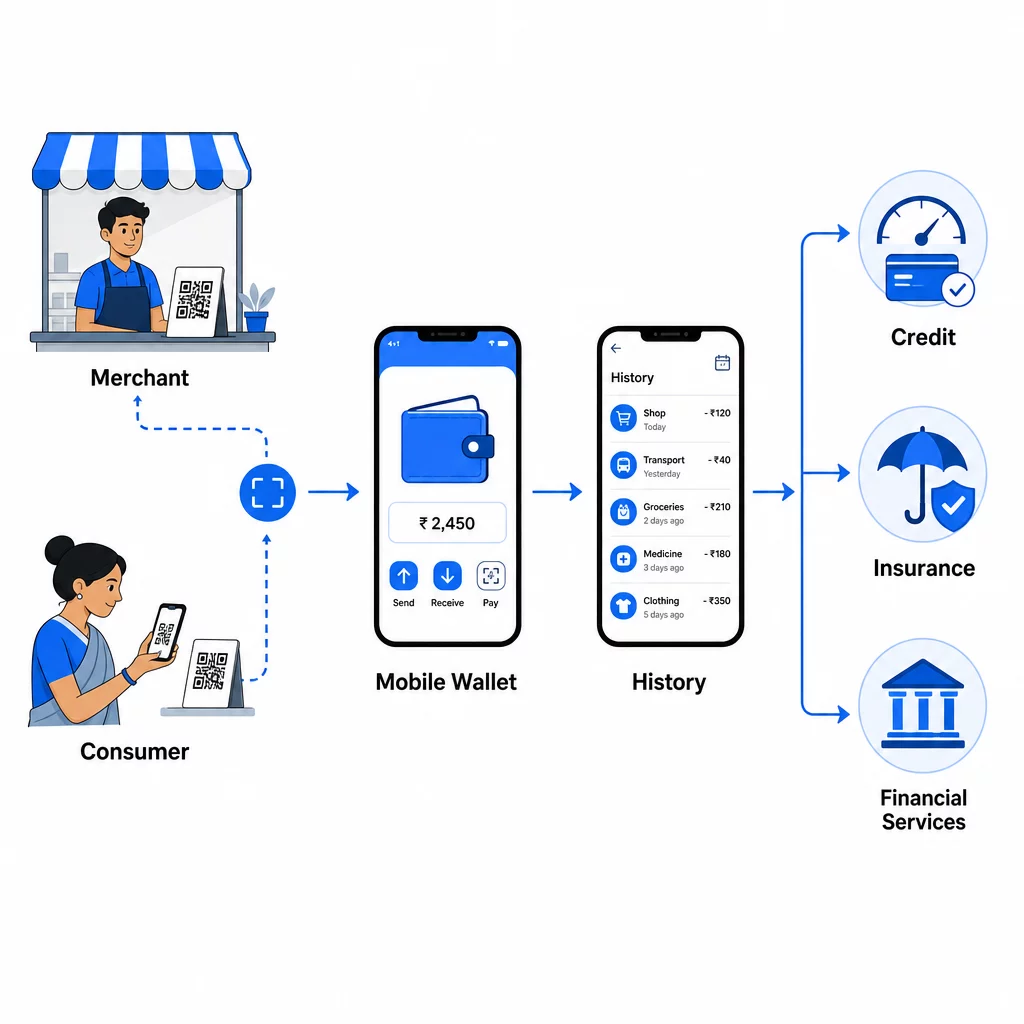
O CGAP enquadra isso claramente: os códigos QR são “uma forma promissora de digitalizar pagamentos em comerciantes de baixa renda e fazer com que os clientes se tornem digitais”, e os históricos de transações que eles geram “podem trazer acesso a crédito e outros serviços financeiros formais, criando uma porta de entrada para a inclusão financeira.”
A experiência do Leste Asiático reforça este ponto. À medida que os pagamentos móveis baseados em QR substituem o dinheiro, os bancos podem reduzir os custos associados aos serviços de caixa – liberando capital para empréstimos e outras atividades de agregação de valor. O caso da inclusão financeira não é puramente teórico; é apoiado por mudanças de comportamento observáveis em escala.
Riscos e Barreiras a Observar
O caso de crescimento é forte, mas nenhuma análise de mercado honesta ignora os ventos contrários.
Fraude e vulnerabilidades de segurança
Códigos QR estáticos podem ser fisicamente adulterados, e a incapacidade da maioria dos usuários de verificar o destino de um código antes de escanear cria um risco contínuo de fraude. À medida que a adoção aumenta, os padrões de fraude tendem a aumentar com ela. As vantagens de segurança e velocidade dos pagamentos por código QR são reais, mas dependem de escolhas de implementação – particularmente o uso de códigos dinâmicos em vez de estáticos – e não apenas da tecnologia.
Lacunas de confiança e literacia digital
Pesquisas do Camboja e de outros contextos de mercados emergentes identificam consistentemente a confiança como uma barreira primária à adoção. Onde os consumidores carecem de confiança em sistemas digitais – ou onde experiências anteriores de fraude danificaram a confiança – a adoção estagna independentemente da qualidade da infraestrutura. Iniciativas de literacia digital apoiadas pelo governo fazem parte da resposta política, mas o progresso é desigual.
Riscos de fragmentação
Embora os padrões nacionais interoperáveis reduzam a fragmentação dentro dos países, a interoperabilidade transfronteiriça permanece incompleta. Empresas que operam em vários mercados emergentes enfrentam o desafio prático de navegar por diferentes esquemas, padrões e ambientes regulatórios. O esforço de integração da ASEAN é um passo significativo, mas abrange um conjunto limitado de países.
Dependências de infraestrutura
Os pagamentos QR exigem conectividade móvel à internet confiável. Em áreas rurais e zonas urbanas de baixa renda – precisamente as populações mais relevantes para os objetivos de inclusão financeira – a conectividade pode ser inconsistente. Essa restrição limita a rapidez com que a adoção de QR pode atingir os segmentos mais carentes.
O que isto significa para empresas que operam nestes mercados
Para empresas que já aceitam ou planeiam aceitar pagamentos por código QR em economias emergentes, algumas considerações práticas decorrem desta análise.
- Desenhe a aceitação de pagamentos em torno do esquema local dominante. A aceitação por comerciantes de QRIS na Indonésia ou QR vinculado ao UPI na Índia atinge uma base de clientes muito mais ampla do que aceitar apenas uma carteira proprietária. Padrões interoperáveis existem precisamente para eliminar esse tipo de bloqueio.
- Use códigos QR dinâmicos em vez de estáticos. Os códigos dinâmicos permitem-lhe atualizar destinos de pagamento, monitorizar a atividade de leitura para anomalias e desativar códigos se for detetada fraude – tudo sem reimprimir. Para empresas que gerem pagamentos em vários locais, este controlo centralizado é operacionalmente significativo. O guia para códigos QR para carteiras móveis explica as diferenças práticas entre abordagens dinâmicas e estáticas num contexto de pagamento.
- Trate a análise como uma função central, não como um complemento. Compreender quando e onde os códigos estão a ser lidos – e sinalizar padrões incomuns – é tão relevante para a prevenção de fraudes quanto para a otimização de marketing. Empresas que usam códigos QR para pagamentos entre pares tendem a monitorizar os dados de leitura de forma ativa, em vez de reativa.
- Construa para o futuro interoperável. A integração de pagamentos QR transfronteiriços está a expandir-se. Empresas que investem agora em infraestruturas de aceitação flexíveis e agnósticas a esquemas estão melhor posicionadas para escalar à medida que os quadros regionais, como o sistema ASEAN, amadurecem.
Comece a Aceitar Pagamentos QR Sem a Complexidade Precisa de criar códigos QR de pagamento que funcionem em todos os seus locais de negócio? Use o Gerador de Código QR Pageloot para construir códigos dinâmicos e rastreáveis – ou o Gerador de QR Code do PayPal para vincular diretamente à sua conta de pagamento sem necessidade de hardware.
A Trajetória É Clara, os Detalhes Ainda Estão Sendo Escritos
Pagamentos por código QR em economias emergentes não são uma tendência especulativa – são uma realidade de infraestrutura apoiada por mandatos de bancos centrais, adoção demonstrada em escala e uma taxa de crescimento que supera a maioria dos segmentos da indústria de pagamentos. O mercado está projetado para crescer aproximadamente 20% anualmente até 2033, com a Ásia-Pacífico na liderança e a América Latina, África e Sul da Ásia contribuindo significativamente.
A questão estratégica para investidores e líderes de negócios não é se os pagamentos QR dominarão o comércio digital em economias emergentes, mas quão rapidamente a governança de fraudes, a interoperabilidade transfronteiriça e a alfabetização digital amadurecerão para apoiar essa dominância. Aqueles que entendem a arquitetura regulatória – e se posicionam dentro dos padrões nacionais interoperáveis que os bancos centrais estão promovendo ativamente – estão mais bem posicionados para capturar a oportunidade.
Para empresas que estão construindo capacidades de pagamento QR hoje, explore as soluções de código QR disponíveis em diversos setores para encontrar a abordagem certa para o seu setor.
Perguntas frequentes
Mercados emergentes têm menos infraestrutura de pagamento com cartão existente, maiores proporções de populações sem conta bancária e custos de smartphones mais baixos em relação aos custos de terminais POS. Os códigos QR eliminam a necessidade de hardware caro, permitindo que qualquer comerciante com um código impresso ou smartphone aceite pagamentos digitais. Iniciativas governamentais de desmaterialização do dinheiro e padrões nacionais de QR interoperáveis também aceleraram a adoção de maneiras que não têm equivalente direto na maioria dos mercados desenvolvidos.
Bancos centrais em muitas economias emergentes assumiram um papel direto no desenvolvimento e na imposição de esquemas nacionais de QR interoperáveis – exemplos incluem o BharatQR na Índia, o QRIS na Indonésia, o LankaQR no Sri Lanka e o Pix no Brasil. Esses esquemas usam padrões EMVCo para garantir que um único código QR possa aceitar pagamentos de múltiplos provedores, reduzindo a fragmentação e apoiando a adoção entre pequenos comerciantes e consumidores de baixa renda. Este é um investimento em infraestrutura impulsionado por políticas, não simplesmente um resultado de mercado.
Os riscos mais comuns são a adulteração física de códigos QR (onde fraudadores substituem um código legítimo por um falso, redirecionando pagamentos para a sua própria conta) e ataques de phishing que imitam páginas de pagamento legítimas. A utilização de códigos QR dinâmicos – que podem ser monitorizados quanto a atividades de leitura incomuns e desativados se comprometidos – reduz significativamente estes riscos em comparação com códigos estáticos. Para uma análise completa das ameaças e estratégias de mitigação, consulte o guia sobre riscos de códigos QR em pagamentos.