Versuchen Sie zu beurteilen, wohin sich QR-Code-Zahlungen in Entwicklungsmärkten entwickeln? Die Antwort prägt die Anlagestrategie, Produktentscheidungen und den Zeitpunkt des Markteintritts. Dieser Artikel beleuchtet die Akzeptanztreiber, regulatorischen Rahmenbedingungen und Wachstumsprognosen, die Sie benötigen, um diesen sich schnell entwickelnden Bereich zu verstehen.
Warum Schwellenländer bei der Einführung von QR-Zahlungen führend sind
QR-Code-Zahlungen sind in Schwellenländern schneller gewachsen als in entwickelten Ländern – und die Gründe dafür sind strukturell, nicht zufällig.
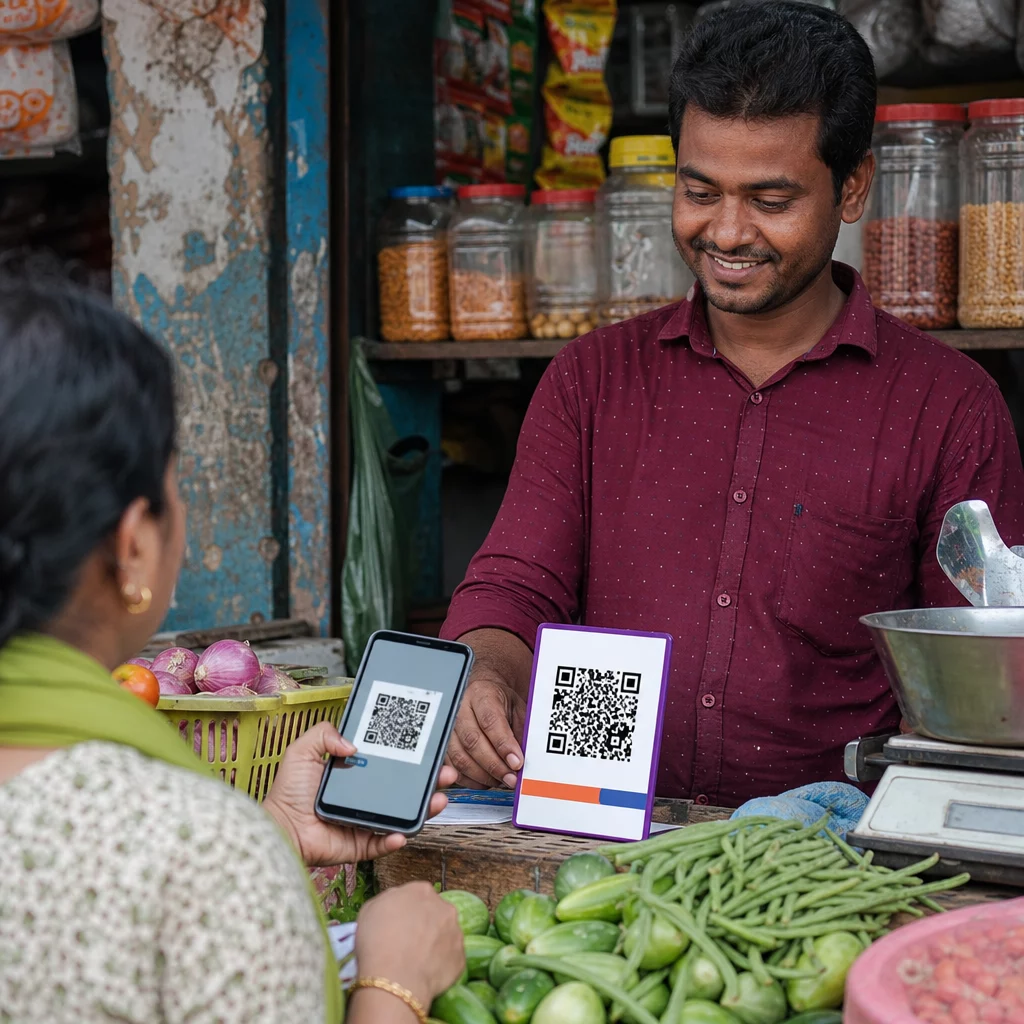
In vielen Entwicklungsländern ist die traditionelle Bankeninfrastruktur dünn. Point-of-Sale-Terminals sind teuer, Kartennetzwerke haben eine begrenzte Reichweite, und große Teile der Bevölkerung bleiben ohne Bankkonto. QR-Codes lösen mehrere dieser Probleme auf einmal. Ein Händler benötigt lediglich einen gedruckten Code oder einen Smartphone-Bildschirm, um digitale Zahlungen zu akzeptieren – kein Kartenleser, keine teure Hardware, kein komplexes Onboarding.
QR-Code-Zahlungen werden in Schwellenländern als wichtiges Instrument für die finanzielle Inklusion angesehen, gerade weil sie kleinen und Kleinsthändlern ermöglichen, digitale Zahlungen mit minimaler Infrastruktur zu akzeptieren, während sie gleichzeitig Bevölkerungsgruppen ohne Bankkonto über mobile Geldbörsen an formelle Finanzdienstleistungen anbinden. Wie dies in der Praxis aussieht, können Sie anhand der QR-Code-Lösungen für Banken und Finanzinstitute.
China bietet den klarsten Machbarkeitsnachweis. Studien beschreiben eine “massive Akzeptanz” von QR-Codes durch Händler und Verbraucher bei alltäglichen Transaktionen, angetrieben durch erschwingliche Smartphones, eine breitere mobile Internetabdeckung und ein unterstützendes digitales Ökosystem. Das Modell wurde seitdem in Süd- und Südostasien, Lateinamerika und Subsahara-Afrika repliziert und angepasst.
Haupttreiber der Einführung von QR-Zahlungen
Mehrere unterschiedliche Kräfte beschleunigen die Einführung von QR-Zahlungen in den Schwellenländern. Diese wirken nicht isoliert – sie verstärken sich gegenseitig.
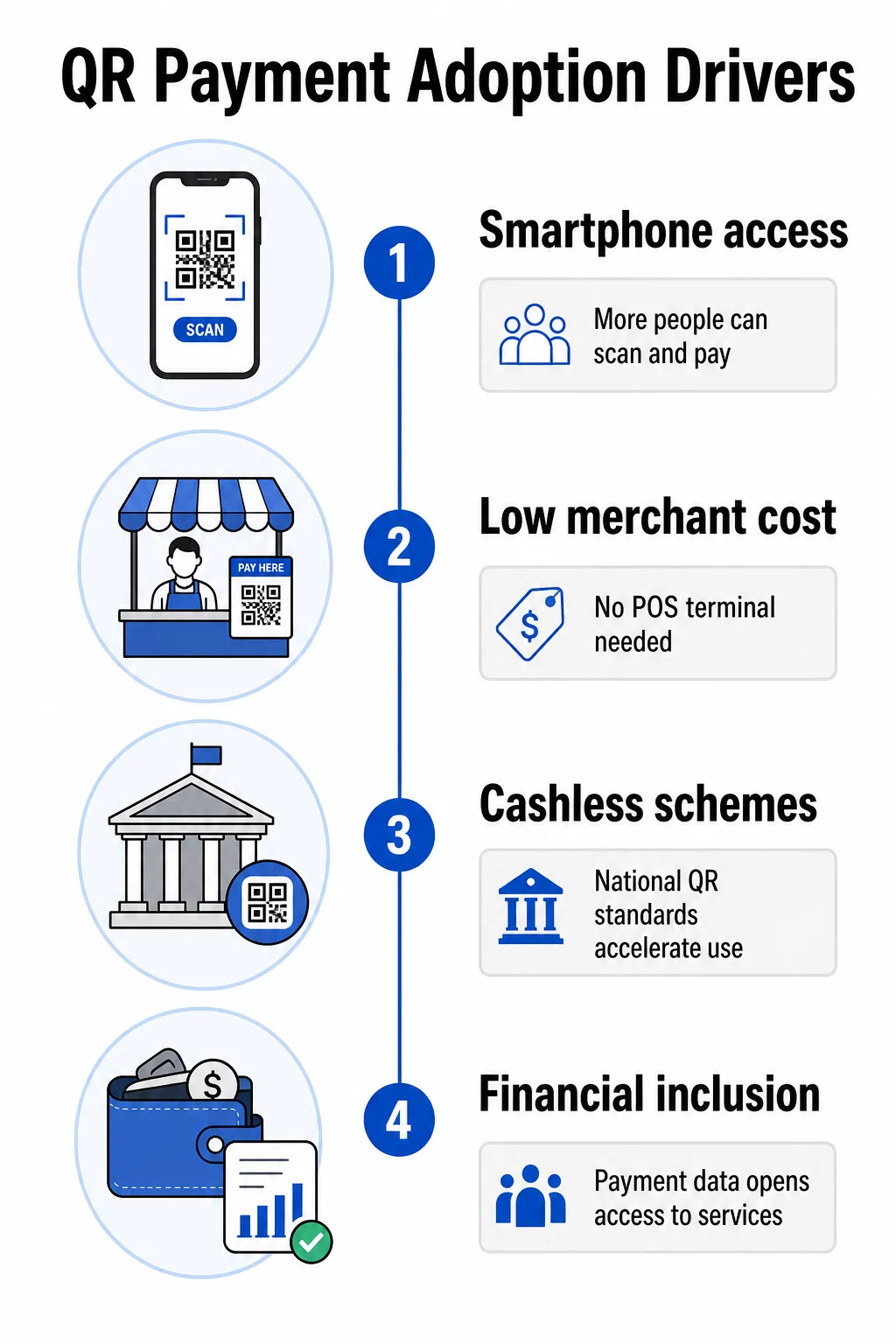
Smartphone-Penetration und Benutzerfreundlichkeit
Da die Kosten für Smartphones sinken, besitzen mehr Verbraucher in Ländern mit niedrigem und mittlerem Einkommen Geräte, die QR-Codes ohne eine spezielle App scannen können. Wenn das Bezahlen nichts weiter erfordert als das Öffnen einer Kamera-App, verschwindet die Reibung, die die Einführung von Zahlungstechnologien typischerweise verlangsamt.
Geringere Händlerkosten
Im Vergleich zu herkömmlichen POS-Terminals haben QR-basierte Akzeptanzlösungen dramatisch geringere Einstiegskosten. Für kleine Händler, die mit geringen Margen arbeiten – Straßenhändler, Marktstände, kleine Geschäfte – ist dieser Kostenunterschied entscheidend. QR-Codes für Zahlungen ermöglichen es jedem Händler, in wenigen Minuten einen funktionierenden Zahlungscode zu erstellen und anzuzeigen, ohne spezielle Ausrüstung.
Staatlich unterstützte bargeldlose Initiativen
Nationale Regierungen und Zentralbanken in mehreren Schwellenländern haben QR-Zahlungen aktiv als Teil umfassenderer bargeldloser Politikagenden gefördert. Indiens BharatQR, Indonesiens QRIS, Sri Lankas LankaQR, Bangladeschs Bangla QR, Ghanas GhQR, Mexikos CoDi und Brasiliens Pix sind allesamt Beispiele für staatlich unterstützte Systeme, die darauf abzielen, die Akzeptanz in großem Maßstab zu beschleunigen – insbesondere bei Händlern des informellen Sektors und Verbrauchern mit niedrigem Einkommen.
Finanzielle Inklusion als politisches Ziel
Über die Bequemlichkeit hinaus schaffen QR-Zahlungen im Laufe der Zeit etwas Wertvolles: eine Transaktionshistorie. Für zuvor nicht bankgebundene Personen und Händler kann diese Datenspur schließlich den Zugang zu Krediten, Versicherungen und anderen formellen Finanzdienstleistungen ermöglichen. Wie CGAP feststellt, können einfache und weit verbreitete digitale Zahlungsmöglichkeiten “dauerhafte und tiefgreifende Verhaltensänderungen bei einkommensschwachen Kunden und Händlern bewirken und formelle Zahlungen zu einem Teil ihres Alltags machen.”
Wachstum von mobilen Geldbörsen und digitalen Ökosystemen
Der Aufstieg mobiler Geldbörsen – Alipay und WeChat Pay in China, Paytm in Indien, GoPay und OVO in Indonesien, M-Pesa-Derivate in ganz Afrika – hat vorgefertigte Nutzerbasen für QR-Zahlungen geschaffen. Zu verstehen, wie die QR-Code-Integration von Alipay und WeChat Pay in der Praxis funktioniert, liefert einen nützlichen Referenzpunkt dafür, wie ausgereifte QR-Zahlungsökosysteme funktionieren.
Sozialer Einfluss und Vertrauen
Forschung zur Akzeptanz von QR-Zahlungen in Kambodscha identifizierte Vertrauen, Servicequalität, sozialen Einfluss und wahrgenommenes Risiko als signifikante Treiber auf Nutzerebene. In Märkten, in denen Bargeld kulturell dominant bleibt, haben sichtbare Akzeptanz durch Gleichgesinnte und institutionelle Glaubwürdigkeit mehr Gewicht als in Märkten, in denen digitale Zahlungen bereits die Norm sind.
Marktgröße und Wachstumsprognosen
Die Zahlen hinter dem Wachstum von QR-Zahlungen sind substanziell genug, um ernsthafte Aufmerksamkeit von Investoren und Strategen zu fordern.
- Der globale QR-Code-Zahlungsmarkt wurde auf etwa 12,5 Milliarden USD im Jahr 2024 geschätzt und wird voraussichtlich 61,7 Milliarden USD bis 2033 erreichen, was einer durchschnittlichen jährlichen Wachstumsrate von rund 20% entspricht.
- Eine separate Prognose geht davon aus, dass die gesamten Ausgaben für QR-Code-Zahlungen von 5,4 Billionen USD im Jahr 2025 auf 8 Billionen USD im Jahr 2029 – ein Anstieg von 48 % über vier Jahre.
- Eine frühere Prognose schätzte ein Wachstum von 8,07 Milliarden USD im Jahr 2020 auf 35,07 Milliarden USD bis 2030 bei einer CAGR von 16,1 %.
Asien-Pazifik, der viele der größten Schwellenländer der Welt umfasst, wird voraussichtlich den größten Anteil am globalen Wachstum während des gesamten Prognosezeitraums halten. China, Indien und südostasiatische Nationen sind die Hauptakteure, unterstützt sowohl durch marktorientierte Mobile-Wallet-Expansion als auch durch gezielte staatliche bargeldlose Initiativen.
Während diese Zahlen global und nicht spezifisch für Schwellenländer sind, konzentrieren sich die zugrunde liegenden Treiber in Entwicklungsländern. Das Wachstum in reifen Märkten wie den Vereinigten Staaten war vergleichsweise langsamer. Da immer mehr Händler QR-Code-Zahlungsoptionen einführen, um Transaktionen schneller, sicherer und zugänglicher zu machen, wird sich diese Konzentration voraussichtlich vertiefen.
Die Regulierungslandschaft: Standards, Interoperabilität und Aufsicht
Regulierung in diesem Bereich ist weniger eine Barriere als vielmehr eine Architektur. Wie Zentralbanken und Regierungen QR-Zahlungssysteme strukturieren, prägt, wer teilnehmen kann, wie Kosten verteilt werden und wie schnell die Akzeptanz skaliert werden kann.
Nationale QR-Standards und Interoperabilität
Die bedeutendste regulatorische Entwicklung in Schwellenländern ist die Verbreitung interoperabler nationaler QR-Standards. Diese Systeme – entwickelt und oft im Besitz von Zentralbanken oder nationalen Zahlungsbehörden – verwenden EMVCo-Standards, um sicherzustellen, dass ein einziger QR-Code Zahlungen von mehreren Anbietern akzeptieren kann. Dies ist für die Akzeptanz bei Händlern von enormer Bedeutung: Ein kleiner Händler, der ein QR-System akzeptiert, akzeptiert effektiv alle teilnehmenden Wallets und Banken.
| Land | System | Betreiber |
|---|---|---|
| Indien | BharatQR | Reserve Bank of India / NPCI |
| Indonesien | QRIS | Bank Indonesia |
| Sri Lanka | LankaQR | Zentralbank von Sri Lanka |
| Bangladesch | Bangla QR | Bangladesh Bank |
| Ghana | GhQR | Ghana Interbank Zahlungs- und Abwicklungssysteme |
| Mexiko | CoDi | Banco de México |
| Brasilien | Pix | Banco Central do Brasil |
| Kirgisistan | ELQR | Nationales Zahlungssystem |
LankaQR, 2018 eingeführt, muss explizit globale EMV-Standards einhalten – eine Designentscheidung, die es jeder Bank oder jedem Zahlungsanbieter ermöglicht, Zahlungen über einen einheitlichen Code zu akzeptieren, ohne proprietäre Bindung.
Grenzüberschreitende Interoperabilität
Das integrierte ASEAN QR-Code-Zahlungssystem verbindet nationale QR-Systeme in den teilnehmenden Ländern unter dem ASEAN-Rahmen für Transaktionen in lokaler Währung. Diese politische Initiative unterstützt grenzüberschreitende QR-Zahlungen in lokalen Währungen und reduziert die Abhängigkeit von Fremdwährungsintermediären für regionale Transaktionen. Für Unternehmen und Investoren mit einem regionalen statt einem länderbezogenen Fokus erweitert diese Integration den adressierbaren Markt erheblich.
Verbraucherschutz und Datenschutz
Die OECD empfiehlt, dass Initiativen zur digitalen Finanzkompetenz parallel zu Rahmenwerken für den Finanzverbraucherschutz laufen. In der Praxis sollten Vorschriften für QR-Zahlungen nicht nur technische Sicherheitsstandards vorschreiben, sondern auch sicherstellen, dass Verbraucher Zugang zu transparenten Informationen und effektiven Mechanismen zur Betrugsmeldung haben. Für Unternehmen, die in mehreren Gerichtsbarkeiten tätig sind, ist es wichtig zu verstehen, wie Datenschutzgesetze und wichtige Vorschriften für QR-Codes auf Zahlungsdaten anzuwenden sind, eine wichtige Compliance-Überlegung.
Dies ist zunehmend relevant, da das Wachstum von QR-Zahlungen in einigen Ländern neue Betrugsmuster hervorgebracht hat. Statische Händler-QR-Codes sind besonders anfällig für physische Austauschangriffe – bei denen ein Betrüger einen gefälschten Code über einen legitimen platziert. Der Leitfaden zu QR-Code-Risiken bei Zahlungen und wie man sie mindert behandelt die wichtigsten Bedrohungsvektoren, denen Unternehmen ausgesetzt sind.
Die Grenzen der verfügbaren Regulierungsdaten
Öffentliche Quellen bieten allgemeine Beschreibungen der Rollen von Zentralbanken und EMV-Standards, aber detaillierte, länderspezifische gesetzliche Bestimmungen, die speziell QR-Code-Zahlungen regeln, sind nicht gut dokumentiert. Investoren und Strategen, die in bestimmten Märkten eine Due Diligence durchführen, müssen diese Rahmenwerke durch lokale Rechtsanalysen ergänzen.
Finanzielle Inklusion: Der langfristige strategische Fall
Für Investoren und entwicklungsfokussierte Strategen ist die Dimension der finanziellen Inklusion von QR-Zahlungen wohl der bedeutsamste langfristige Trend.
QR-Codes schaffen einen kostengünstigen Zugang zur formellen digitalen Wirtschaft für zwei Gruppen, die historisch ausgeschlossen waren: Kleinunternehmer und einkommensschwache Verbraucher. Wenn sich die QR-Nutzung in diesen Segmenten verbreitet, generiert sie Transaktionshistorien, die als alternative Kreditdaten dienen können. Im Laufe der Zeit schafft diese Datenspur Wege zu Krediten, Versicherungen und anderen Finanzdienstleistungen – Produkte, die für sich genommen erhebliche adressierbare Märkte darstellen.
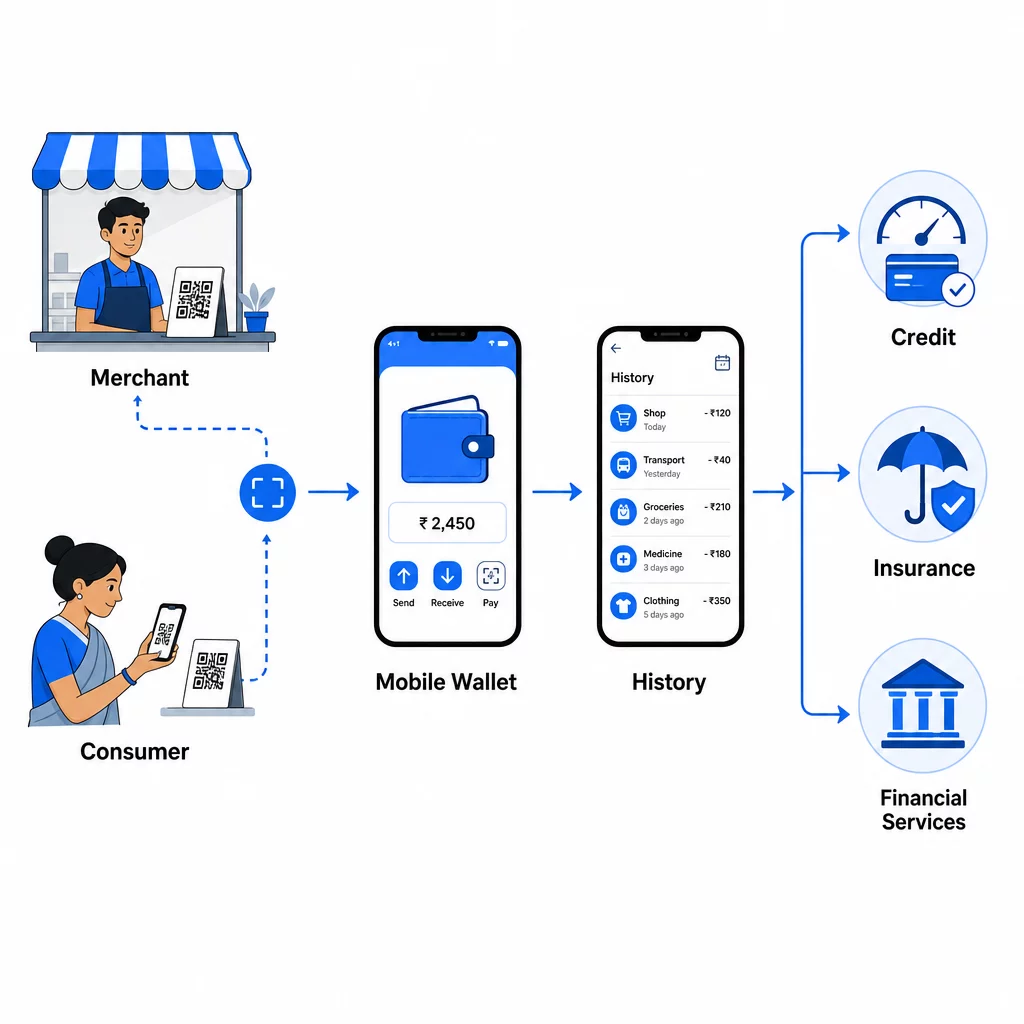
CGAP formuliert dies klar: QR-Codes sind “ein vielversprechender Weg, Zahlungen bei einkommensschwachen Händlern zu digitalisieren und Kunden dazu zu bringen, digital zu werden”, und die von ihnen generierten Transaktionshistorien “können Zugang zu Krediten und anderen formellen Finanzdienstleistungen ermöglichen und so ein Tor zur finanziellen Inklusion schaffen.”
Erfahrungen aus Ostasien untermauern diesen Punkt. Da QR-basierte mobile Zahlungen Bargeld ersetzen, können Banken die mit Bargelddienstleistungen verbundenen Kosten senken – und so Kapital für die Kreditvergabe und andere wertschöpfende Aktivitäten freisetzen. Der Fall der finanziellen Inklusion ist nicht rein theoretisch; er wird durch beobachtbare Verhaltensänderungen in großem Maßstab gestützt.
Risiken und Hindernisse, die es zu beachten gilt
Der Wachstumsfall ist stark, aber keine ehrliche Marktanalyse ignoriert die Gegenwinde.
Betrug und Sicherheitslücken
Statische QR-Codes können physisch manipuliert werden, und die Unfähigkeit der meisten Benutzer, das Ziel eines Codes vor dem Scannen zu überprüfen, birgt ein anhaltendes Betrugsrisiko. Mit zunehmender Verbreitung nehmen auch die Betrugsmuster zu. Die Sicherheits- und Geschwindigkeitsvorteile von QR-Code-Zahlungen sind real, hängen aber von Implementierungsentscheidungen ab – insbesondere der Verwendung dynamischer Codes gegenüber statischen – nicht allein von der Technologie.
Vertrauens- und Digitalkompetenzlücken
Studien aus Kambodscha und anderen Schwellenmärkten identifizieren Vertrauen durchweg als primäres Akzeptanzhindernis. Wo Verbraucher kein Vertrauen in digitale Systeme haben – oder wo frühere Betrugserfahrungen das Vertrauen beschädigt haben – stagniert die Akzeptanz unabhängig von der Infrastrukturqualität. Von der Regierung unterstützte Initiativen zur digitalen Kompetenz sind Teil der politischen Antwort, aber der Fortschritt ist ungleichmäßig.
Fragmentierungsrisiken
Während interoperable nationale Standards die Fragmentierung innerhalb von Ländern reduzieren, bleibt die grenzüberschreitende Interoperabilität unvollständig. Unternehmen, die in mehreren Schwellenländern tätig sind, stehen vor der praktischen Herausforderung, sich in verschiedenen Systemen, Standards und regulatorischen Umgebungen zurechtzufinden. Die ASEAN-Integrationsbemühungen sind ein bedeutsamer Schritt nach vorn, decken aber nur eine begrenzte Anzahl von Ländern ab.
Infrastrukturabhängigkeiten
QR-Zahlungen erfordern eine zuverlässige mobile Internetverbindung. In ländlichen Gebieten und städtischen Zonen mit geringerem Einkommen – genau den Bevölkerungsgruppen, die für die Ziele der finanziellen Inklusion am relevantesten sind – kann die Konnektivität inkonsistent sein. Diese Einschränkung begrenzt, wie schnell die QR-Akzeptanz die am stärksten unterversorgten Segmente erreichen kann.
Was dies für Unternehmen bedeutet, die in diesen Märkten tätig sind
Für Unternehmen, die bereits QR-Code-Zahlungen in Schwellenländern akzeptieren oder planen, dies zu tun, ergeben sich aus dieser Analyse einige praktische Überlegungen.
- Gestalten Sie die Zahlungsakzeptanz rund um das dominante lokale Schema. Die Akzeptanz von QRIS in Indonesien oder UPI-verknüpften QR-Codes in Indien durch Händler erreicht eine weitaus größere Kundenbasis, als nur eine proprietäre Wallet zu akzeptieren. Interoperable Standards existieren genau, um diese Art von Anbieterbindung zu eliminieren.
- Verwenden Sie dynamische QR-Codes anstelle von statischen. Dynamische Codes ermöglichen es Ihnen, Zahlungsziele zu aktualisieren, Scan-Aktivitäten auf Anomalien zu überwachen und Codes bei Betrugserkennung zu deaktivieren – alles ohne Neudruck. Für Unternehmen, die Zahlungen an mehreren Standorten verwalten, ist diese zentralisierte Kontrolle betrieblich bedeutsam. Der Leitfaden zu QR-Codes für mobile Wallets erklärt die praktischen Unterschiede zwischen dynamischen und statischen Ansätzen im Zahlungskontext.
- Behandeln Sie Analysen als Kernfunktion, nicht als nachträglichen Einfall. Zu verstehen, wann und wo Codes gescannt werden – und ungewöhnliche Muster zu kennzeichnen – ist für die Betrugsprävention ebenso relevant wie für die Marketingoptimierung. Unternehmen, die QR-Codes für Peer-Zahlungen verwenden neigen dazu, Scandaten aktiv statt reaktiv zu überwachen.
- Bauen Sie für die interoperable Zukunft. Die grenzüberschreitende Integration von QR-Zahlungen nimmt zu. Unternehmen, die jetzt in eine flexible, schema-agnostische Akzeptanzinfrastruktur investieren, sind besser positioniert, um zu skalieren, wenn regionale Rahmenwerke wie das ASEAN-System reifen.
Beginnen Sie mit der Akzeptanz von QR-Zahlungen ohne Komplexität Müssen Sie Zahlungs-QR-Codes erstellen, die an all Ihren Geschäftsstandorten funktionieren? Verwenden Sie den Pageloot QR-Code-Generator um dynamische, nachverfolgbare Codes zu erstellen – oder die PayPal QR-Code Generator um direkt mit Ihrem Zahlungskonto zu verknüpfen, ohne dass Hardware erforderlich ist.
Die Entwicklung ist klar, die Details werden noch ausgearbeitet
QR-Code-Zahlungen in Schwellenländern sind kein spekulativer Trend – sie sind eine infrastrukturelle Realität, gestützt durch Mandate der Zentralbanken, nachgewiesene Akzeptanz in großem Maßstab und eine Wachstumsrate, die die meisten Segmente der Zahlungsbranche übertrifft. Der Markt wird voraussichtlich bis 2033 jährlich um etwa 20% wachsen, wobei der asiatisch-pazifische Raum führend ist und Lateinamerika, Afrika und Südasien maßgeblich dazu beitragen.
Die strategische Frage für Investoren und Unternehmensführer ist nicht, ob QR-Zahlungen den digitalen Handel in Schwellenländern dominieren werden, sondern wie schnell Betrugsbekämpfung, grenzüberschreitende Interoperabilität und digitale Kompetenz reifen werden, um diese Dominanz zu unterstützen. Diejenigen, die die regulatorische Architektur verstehen – und sich innerhalb der interoperablen nationalen Standards positionieren, die Zentralbanken aktiv fördern – sind am besten positioniert, um die Chance zu nutzen.
Für Unternehmen, die heute QR-Zahlungsfunktionen entwickeln, erkunden Sie die QR-Code-Lösungen, die branchenübergreifend verfügbar sind um den richtigen Ansatz für Ihren Sektor zu finden.
Häufig gestellte Fragen
Schwellenländer verfügen über weniger bestehende Karten Zahlungsinfrastruktur, höhere Anteile an Menschen ohne Bankkonto und niedrigere Smartphone-Kosten im Verhältnis zu den Kosten für POS-Terminals. QR-Codes machen teure Hardware überflüssig und ermöglichen es jedem Händler mit einem gedruckten Code oder Smartphone, digitale Zahlungen zu akzeptieren. Von der Regierung unterstützte bargeldlose Initiativen und interoperable nationale QR-Standards haben die Akzeptanz auch auf Weisen beschleunigt, die in den meisten entwickelten Märkten kein direktes Äquivalent haben.
Zentralbanken in vielen Schwellenländern haben eine direkte Rolle bei der Entwicklung und Vorschreibung interoperabler nationaler QR-Systeme übernommen – Beispiele hierfür sind BharatQR in Indien, QRIS in Indonesien, LankaQR in Sri Lanka und Pix in Brasilien. Diese Systeme verwenden EMVCo-Standards, um sicherzustellen, dass ein einziger QR-Code Zahlungen von mehreren Anbietern akzeptieren kann, wodurch die Fragmentierung reduziert und die Akzeptanz bei kleinen Händlern und einkommensschwachen Verbrauchern gefördert wird. Dies ist eine politikgesteuerte Infrastrukturinvestition, nicht einfach ein Marktergebnis.
Die häufigsten Risiken sind physische QR-Code-Manipulation (bei der Betrüger einen legitimen Code durch einen gefälschten ersetzen, der Zahlungen auf ihr eigenes Konto umleitet) und Phishing-Angriffe, die legitime Zahlungsseiten nachahmen. Die Verwendung dynamischer QR-Codes – die auf ungewöhnliche Scan-Aktivitäten überwacht und bei Kompromittierung deaktiviert werden können – reduziert diese Risiken im Vergleich zu statischen Codes erheblich. Eine vollständige Aufschlüsselung der Bedrohungen und Minderungsstrategien finden Sie im Leitfaden zu QR-Code-Risiken bei Zahlungen.