คุณกำลังพยายามประเมินว่าการชำระเงินด้วย QR โค้ดจะไปในทิศทางใดในตลาดกำลังพัฒนาหรือไม่? คำตอบนี้จะกำหนดกลยุทธ์การลงทุน การตัดสินใจเกี่ยวกับผลิตภัณฑ์ และช่วงเวลาในการเข้าสู่ตลาด บทความนี้จะวิเคราะห์ปัจจัยขับเคลื่อนการนำไปใช้ กรอบการกำกับดูแล และการคาดการณ์การเติบโตที่คุณต้องใช้เพื่อทำความเข้าใจพื้นที่ที่เคลื่อนไหวอย่างรวดเร็วนี้.
เหตุใดเศรษฐกิจเกิดใหม่จึงเป็นผู้นำในการนำการชำระเงินด้วย QR มาใช้
การชำระเงินด้วย QR โค้ดเติบโตเร็วกว่าในตลาดเกิดใหม่เมื่อเทียบกับตลาดพัฒนาแล้ว และเหตุผลนั้นเป็นเชิงโครงสร้าง ไม่ใช่เรื่องบังเอิญ.
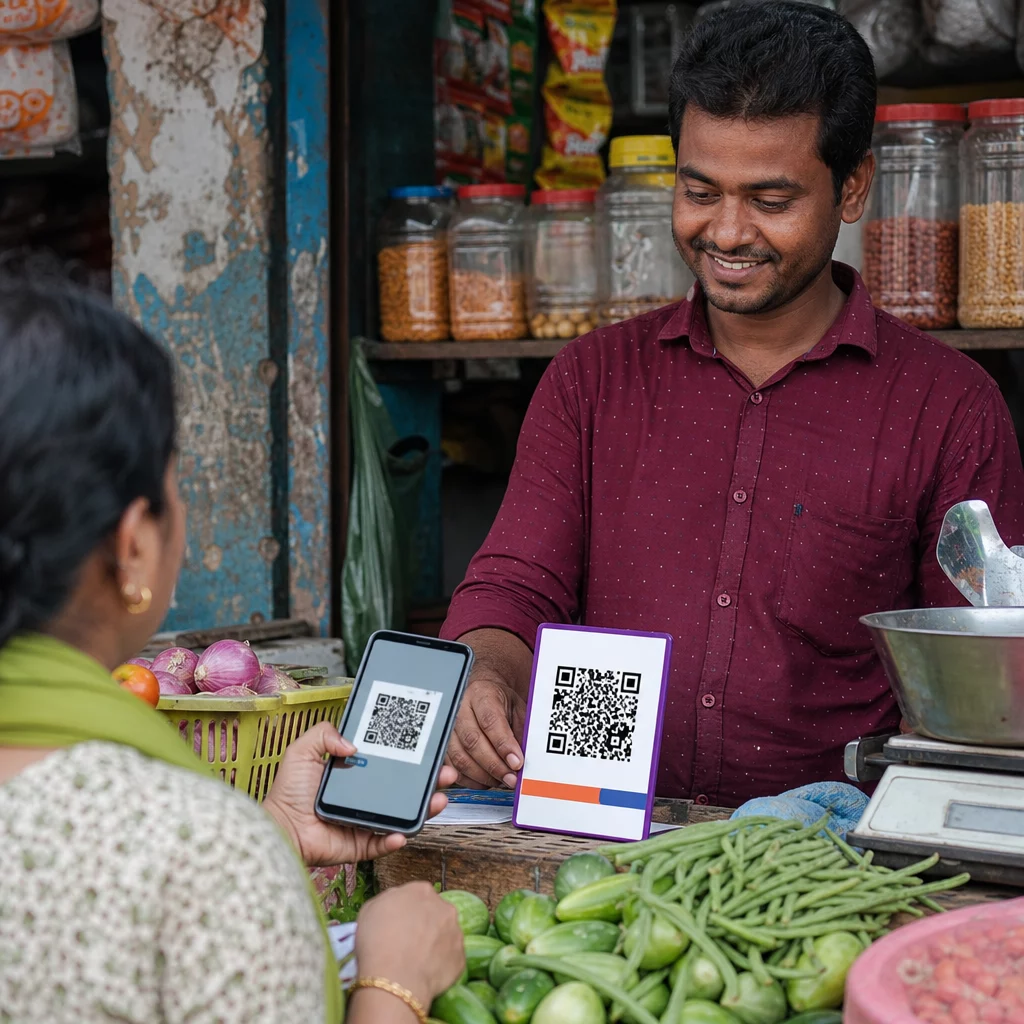
ในหลายประเทศกำลังพัฒนา โครงสร้างพื้นฐานด้านการธนาคารแบบดั้งเดิมยังไม่ครอบคลุม เครื่องรับชำระเงิน ณ จุดขายมีราคาแพง เครือข่ายบัตรมีขอบเขตจำกัด และประชากรจำนวนมากยังคงไม่มีบัญชีธนาคาร QR โค้ดช่วยแก้ปัญหาเหล่านี้ได้หลายอย่างพร้อมกัน ผู้ค้าต้องการเพียงรหัสที่พิมพ์ออกมาหรือหน้าจอสมาร์ทโฟนเพื่อรับชำระเงินดิจิทัล โดยไม่ต้องใช้เครื่องอ่านบัตร ไม่ต้องใช้อุปกรณ์ฮาร์ดแวร์ราคาแพง และไม่ต้องมีขั้นตอนการลงทะเบียนที่ซับซ้อน.
การชำระเงินด้วย QR โค้ดถูกมองว่าเป็นเครื่องมือสำคัญสำหรับการเข้าถึงบริการทางการเงินในประเทศเศรษฐกิจเกิดใหม่ เนื่องจากช่วยให้ผู้ค้าขนาดเล็กและรายย่อยสามารถรับชำระเงินดิจิทัลได้ด้วยโครงสร้างพื้นฐานที่น้อยที่สุด ขณะเดียวกันก็เชื่อมโยงประชากรที่ไม่มีบัญชีธนาคารเข้ากับบริการทางการเงินอย่างเป็นทางการผ่านกระเป๋าเงินมือถือ คุณสามารถดูว่าสิ่งนี้เกิดขึ้นจริงได้อย่างไรผ่าน โซลูชัน QR โค้ดสำหรับธนาคารและสถาบันการเงิน.
จีนนำเสนอหลักฐานแนวคิดที่ชัดเจนที่สุด งานวิจัยอธิบายถึง “การนำ QR โค้ดมาใช้ในวงกว้าง” โดยผู้ค้าและผู้บริโภคในการทำธุรกรรมประจำวัน ซึ่งขับเคลื่อนโดยสมาร์ทโฟนราคาไม่แพง การครอบคลุมอินเทอร์เน็ตมือถือที่กว้างขึ้น และระบบนิเวศดิจิทัลที่สนับสนุน รูปแบบนี้ได้ถูกนำไปใช้และปรับเปลี่ยนในเอเชียใต้และเอเชียตะวันออกเฉียงใต้ ละตินอเมริกา และแอฟริกาใต้สะฮารา.
ปัจจัยขับเคลื่อนหลักในการนำการชำระเงินด้วย QR มาใช้
มีหลายปัจจัยที่แตกต่างกันกำลังเร่งการนำการชำระเงินด้วย QR มาใช้ในตลาดเกิดใหม่ ปัจจัยเหล่านี้ไม่ได้ทำงานแยกกัน แต่เสริมซึ่งกันและกัน.
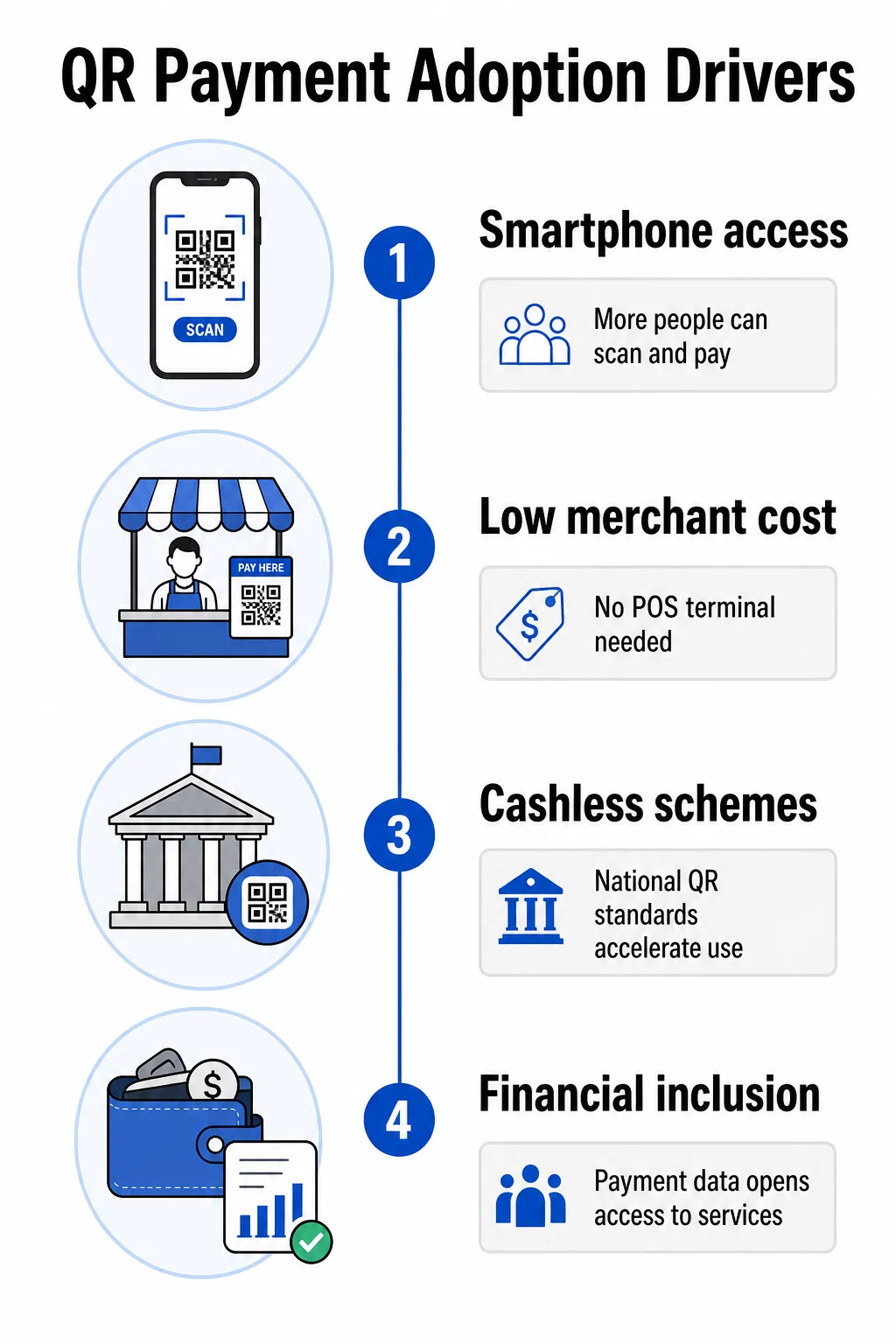
การแพร่หลายของสมาร์ทโฟนและความง่ายในการใช้งาน
เมื่อต้นทุนสมาร์ทโฟนลดลง ผู้บริโภคจำนวนมากขึ้นในประเทศที่มีรายได้น้อยถึงปานกลางก็มีอุปกรณ์ที่สามารถสแกน QR โค้ดได้โดยไม่ต้องใช้แอปพลิเคชันเฉพาะ เมื่อการชำระเงินไม่จำเป็นต้องทำอะไรมากไปกว่าการเปิดแอปกล้อง ความยุ่งยากที่มักจะชะลอการนำเทคโนโลยีการชำระเงินมาใช้ก็จะหายไป.
ต้นทุนผู้ค้าที่ต่ำลง
เมื่อเทียบกับเครื่องรับชำระเงิน ณ จุดขายแบบดั้งเดิม การรับชำระเงินด้วย QR มีต้นทุนเริ่มต้นที่ต่ำกว่ามาก สำหรับผู้ค้ารายย่อยที่ดำเนินธุรกิจด้วยกำไรน้อย เช่น ผู้ค้าหาบเร่แผงลอย แผงขายของในตลาด ร้านค้าขนาดเล็ก ความแตกต่างของต้นทุนนี้มีความสำคัญอย่างยิ่ง. QR โค้ดสำหรับการชำระเงิน ทำให้ผู้ค้าทุกคนสามารถสร้างและแสดงรหัสการชำระเงินที่ใช้งานได้ภายในไม่กี่นาที โดยไม่ต้องใช้อุปกรณ์พิเศษ.
โครงการริเริ่มสังคมไร้เงินสดที่ได้รับการสนับสนุนจากรัฐบาล
รัฐบาลและธนาคารกลางในหลายประเทศเศรษฐกิจเกิดใหม่ได้ส่งเสริมการชำระเงินด้วย QR อย่างแข็งขัน ซึ่งเป็นส่วนหนึ่งของวาระนโยบายสังคมไร้เงินสดที่กว้างขึ้น BharatQR ของอินเดีย, QRIS ของอินโดนีเซีย, LankaQR ของศรีลังกา, Bangla QR ของบังกลาเทศ, GhQR ของกานา, CoDi ของเม็กซิโก และ Pix ของบราซิล ล้วนเป็นตัวอย่างของระบบที่ได้รับการสนับสนุนจากรัฐบาล ซึ่งออกแบบมาเพื่อเร่งการนำไปใช้ในวงกว้าง โดยเฉพาะอย่างยิ่งในหมู่ผู้ค้าในภาคส่วนที่ไม่เป็นทางการและผู้บริโภคที่มีรายได้น้อย.
การเข้าถึงบริการทางการเงินเป็นเป้าหมายเชิงนโยบาย
นอกเหนือจากความสะดวกสบาย การชำระเงินด้วย QR สร้างสิ่งที่มีคุณค่าเมื่อเวลาผ่านไป: ประวัติการทำธุรกรรม สำหรับบุคคลและร้านค้าที่ไม่เคยมีบัญชีธนาคารมาก่อน เส้นทางข้อมูลนี้สามารถปลดล็อกการเข้าถึงสินเชื่อ ประกันภัย และบริการทางการเงินที่เป็นทางการอื่นๆ ได้ในที่สุด ตามที่ CGAP ระบุ โอกาสในการชำระเงินดิจิทัลที่ง่ายและแพร่หลาย “สามารถนำมาซึ่งการเปลี่ยนแปลงพฤติกรรมที่ยั่งยืนและลึกซึ้งในหมู่ลูกค้าและร้านค้าที่มีรายได้น้อย ทำให้การชำระเงินที่เป็นทางการเป็นส่วนหนึ่งของชีวิตประจำวันของพวกเขา”
การเติบโตของกระเป๋าเงินมือถือและระบบนิเวศดิจิทัล
การเพิ่มขึ้นของกระเป๋าเงินมือถือ – Alipay และ WeChat Pay ในจีน, Paytm ในอินเดีย, GoPay และ OVO ในอินโดนีเซีย, M-Pesa และอนุพันธ์ทั่วแอฟริกา – ได้สร้างฐานผู้ใช้ที่พร้อมสำหรับการชำระเงินด้วย QR การทำความเข้าใจว่า การรวมรหัส QR ของ Alipay และ WeChat Pay ทำงานในทางปฏิบัติอย่างไร จะให้ข้อมูลอ้างอิงที่เป็นประโยชน์เกี่ยวกับวิธีการทำงานของระบบนิเวศการชำระเงินด้วย QR ที่สมบูรณ์.
อิทธิพลทางสังคมและความไว้วางใจ
การวิจัยเกี่ยวกับการนำการชำระเงินด้วย QR มาใช้ในกัมพูชาได้ระบุความไว้วางใจ คุณภาพบริการ อิทธิพลทางสังคม และความเสี่ยงที่รับรู้ว่าเป็นปัจจัยขับเคลื่อนที่สำคัญในระดับผู้ใช้ ในตลาดที่เงินสดเป็นที่นิยมทางวัฒนธรรม การนำไปใช้โดยเพื่อนร่วมงานที่เห็นได้ชัดและความน่าเชื่อถือของสถาบันมีน้ำหนักมากกว่าในตลาดที่การชำระเงินดิจิทัลเป็นเรื่องปกติอยู่แล้ว.
ขนาดตลาดและการคาดการณ์การเติบโต
ตัวเลขเบื้องหลังการเติบโตของการชำระเงินด้วย QR มีนัยสำคัญมากพอที่จะเรียกร้องความสนใจอย่างจริงจังจากนักลงทุนและนักวางกลยุทธ์.
- ตลาดการชำระเงินด้วยรหัส QR ทั่วโลกคาดการณ์อยู่ที่ประมาณ 12.5 พันล้านดอลลาร์สหรัฐในปี 2024 และคาดว่าจะสูงถึง 61.7 พันล้านดอลลาร์สหรัฐภายในปี 2033, ซึ่งแสดงถึงอัตราการเติบโตต่อปีแบบทบต้นประมาณ 20%.
- การคาดการณ์แยกต่างหากระบุว่ายอดใช้จ่ายรวมในการชำระเงินด้วยรหัส QR จะเพิ่มขึ้นจาก 5.4 ล้านล้านดอลลาร์สหรัฐในปี 2025 เป็น 8 ล้านล้านดอลลาร์สหรัฐในปี 2029 – เพิ่มขึ้น 48% ในช่วงสี่ปี.
- การคาดการณ์ก่อนหน้านี้ประเมินการเติบโตจาก 8.07 พันล้านดอลลาร์สหรัฐในปี 2020 เป็น 35.07 พันล้านดอลลาร์สหรัฐภายในปี 2030 ด้วยอัตราการเติบโตเฉลี่ยต่อปี (CAGR) ที่ 16.1%.
เอเชียแปซิฟิก, ซึ่งประกอบด้วยประเทศเศรษฐกิจเกิดใหม่ที่ใหญ่ที่สุดหลายแห่งของโลก คาดว่าจะครองส่วนแบ่งการเติบโตทั่วโลกที่ใหญ่ที่สุดตลอดช่วงเวลาคาดการณ์ จีน อินเดีย และประเทศในเอเชียตะวันออกเฉียงใต้เป็นผู้มีส่วนร่วมหลัก โดยได้รับการสนับสนุนทั้งจากการขยายตัวของกระเป๋าเงินมือถือที่ขับเคลื่อนด้วยตลาด และโครงการริเริ่มสังคมไร้เงินสดของรัฐบาล.
แม้ว่าตัวเลขเหล่านี้จะเป็นตัวเลขทั่วโลกมากกว่าที่จะเจาะจงตลาดเกิดใหม่ แต่ปัจจัยขับเคลื่อนพื้นฐานกลับกระจุกตัวอยู่ในประเทศเศรษฐกิจกำลังพัฒนา การเติบโตในตลาดที่พัฒนาแล้ว เช่น สหรัฐอเมริกา ค่อนข้างช้าลง เนื่องจากผู้ค้าจำนวนมากขึ้นนำตัวเลือกการชำระเงินด้วยรหัส QR มาใช้เพื่อทำให้การทำธุรกรรมเร็วขึ้น ปลอดภัยขึ้น และเข้าถึงได้ง่ายขึ้น การกระจุกตัวนั้นมีแนวโน้มที่จะลึกซึ้งยิ่งขึ้น.
ภูมิทัศน์ด้านกฎระเบียบ: มาตรฐาน, การทำงานร่วมกัน, และการกำกับดูแล
กฎระเบียบในพื้นที่นี้ไม่ใช่สิ่งกีดขวางมากเท่ากับโครงสร้าง สถาบันการเงินกลางและรัฐบาลกำหนดโครงสร้างโครงการชำระเงินด้วย QR อย่างไร จะส่งผลต่อผู้ที่สามารถเข้าร่วม วิธีการกระจายต้นทุน และความเร็วในการขยายการใช้งาน.
มาตรฐาน QR ระดับชาติและการทำงานร่วมกัน
การพัฒนาด้านกฎระเบียบที่สำคัญที่สุดในประเทศเศรษฐกิจเกิดใหม่คือการแพร่หลายของมาตรฐาน QR ระดับชาติที่สามารถทำงานร่วมกันได้ โครงการเหล่านี้ – ซึ่งพัฒนาและมักเป็นเจ้าของโดยธนาคารกลางหรือหน่วยงานชำระเงินแห่งชาติ – ใช้มาตรฐาน EMVCo เพื่อให้แน่ใจว่ารหัส QR เดียวสามารถรับการชำระเงินจากผู้ให้บริการหลายรายได้ สิ่งนี้มีความสำคัญอย่างยิ่งต่อการยอมรับของผู้ค้า: ผู้ค้ารายย่อยที่ยอมรับโครงการ QR หนึ่งโครงการ เท่ากับยอมรับกระเป๋าเงินและธนาคารที่เข้าร่วมทั้งหมด.
| ประเทศ | โครงการ | ผู้ดำเนินการ |
|---|---|---|
| อินเดีย | BharatQR | ธนาคารกลางอินเดีย / NPCI |
| อินโดนีเซีย | QRIS | ธนาคารกลางอินโดนีเซีย |
| ศรีลังกา | LankaQR | ธนาคารกลางศรีลังกา |
| บังกลาเทศ | Bangla QR | ธนาคารกลางบังกลาเทศ |
| กานา | GhQR | ระบบการชำระเงินและหักบัญชีระหว่างธนาคารของกานา |
| เม็กซิโก | CoDi | ธนาคารกลางเม็กซิโก |
| บราซิล | Pix | ธนาคารกลางแห่งบราซิล |
| คีร์กีซสถาน | ELQR | ระบบการชำระเงินแห่งชาติ |
LankaQR ซึ่งเปิดตัวในปี 2018 ถูกกำหนดให้ต้องปฏิบัติตามมาตรฐาน EMV ระดับโลกอย่างชัดเจน ซึ่งเป็นการออกแบบที่ช่วยให้ธนาคารหรือผู้ให้บริการชำระเงินใดๆ สามารถรับชำระเงินผ่านรหัสเดียว โดยไม่มีการผูกขาดเฉพาะผู้ให้บริการรายใดรายหนึ่ง.
การทำงานร่วมกันข้ามพรมแดน
ระบบการชำระเงินด้วยรหัส QR แบบบูรณาการของอาเซียนเชื่อมโยงโครงการ QR ระดับชาติในประเทศที่เข้าร่วมภายใต้กรอบการทำธุรกรรมสกุลเงินท้องถิ่นของอาเซียน ความริเริ่มด้านนโยบายนี้สนับสนุนการชำระเงินด้วย QR ข้ามพรมแดนในสกุลเงินท้องถิ่น ลดการพึ่งพาตัวกลางสกุลเงินต่างประเทศสำหรับการทำธุรกรรมในภูมิภาค สำหรับธุรกิจและนักลงทุนที่มุ่งเน้นภูมิภาคมากกว่าประเทศเดียว การบูรณาการนี้ช่วยขยายตลาดเป้าหมายได้อย่างมาก.
การคุ้มครองผู้บริโภคและความเป็นส่วนตัว
OECD แนะนำว่าโครงการริเริ่มด้านความรู้ทางการเงินดิจิทัลควรดำเนินควบคู่ไปกับกรอบการคุ้มครองผู้บริโภคทางการเงิน ในทางปฏิบัติ กฎระเบียบเกี่ยวกับการชำระเงินด้วย QR ไม่เพียงแต่ควรกำหนดมาตรฐานความปลอดภัยทางเทคนิคเท่านั้น แต่ยังต้องมั่นใจว่าผู้บริโภคสามารถเข้าถึงข้อมูลที่โปร่งใสและกลไกที่มีประสิทธิภาพในการรายงานการฉ้อโกง สำหรับธุรกิจที่ดำเนินงานในหลายเขตอำนาจศาล การทำความเข้าใจว่า กฎหมายความเป็นส่วนตัวของรหัส QR และข้อบังคับที่สำคัญ นำไปใช้กับข้อมูลการชำระเงินเป็นข้อพิจารณาที่สำคัญในการปฏิบัติตามกฎระเบียบ.
สิ่งนี้มีความเกี่ยวข้องมากขึ้นเรื่อยๆ เนื่องจากอัตราการเติบโตของการชำระเงินด้วย QR ได้สร้างรูปแบบการฉ้อโกงใหม่ๆ ในบางประเทศ รหัส QR ของร้านค้าแบบคงที่เสี่ยงต่อการถูกโจมตีด้วยการเปลี่ยนทางกายภาพเป็นพิเศษ ซึ่งผู้ฉ้อโกงจะวางรหัสปลอมทับรหัสที่ถูกต้อง คู่มือเกี่ยวกับ ความเสี่ยงของรหัส QR ในการชำระเงินและวิธีลดความเสี่ยง ครอบคลุมถึงช่องทางภัยคุกคามหลักที่ธุรกิจต้องเผชิญ.
ข้อจำกัดของข้อมูลกฎระเบียบที่มีอยู่
แหล่งข้อมูลสาธารณะให้คำอธิบายระดับสูงเกี่ยวกับบทบาทของธนาคารกลางและมาตรฐาน EMV แต่บทบัญญัติทางกฎหมายที่ละเอียดและแยกตามประเทศที่ควบคุมการชำระเงินด้วยรหัส QR โดยเฉพาะนั้นยังไม่มีการบันทึกไว้อย่างดี นักลงทุนและนักวางกลยุทธ์ที่ทำการตรวจสอบสถานะในตลาดเฉพาะจะต้องเสริมกรอบการทำงานเหล่านี้ด้วยการวิเคราะห์ทางกฎหมายในท้องถิ่น.
การเข้าถึงบริการทางการเงิน: กรณีเชิงกลยุทธ์ระยะยาว
สำหรับนักลงทุนและนักยุทธศาสตร์ที่มุ่งเน้นการพัฒนา มิติของการเข้าถึงบริการทางการเงินของการชำระเงินด้วย QR โค้ด ถือเป็นแนวโน้มระยะยาวที่สำคัญที่สุด.
QR โค้ดสร้างจุดเริ่มต้นที่มีต้นทุนต่ำในการเข้าสู่ระบบเศรษฐกิจดิจิทัลอย่างเป็นทางการสำหรับสองกลุ่มที่เคยถูกกีดกันในอดีต: ผู้ค้ารายย่อยและผู้บริโภคที่มีรายได้น้อย เมื่อการใช้งาน QR แพร่หลายในกลุ่มเหล่านี้ จะสร้างประวัติการทำธุรกรรมที่สามารถใช้เป็นข้อมูลเครดิตทางเลือกได้ เมื่อเวลาผ่านไป ข้อมูลเหล่านี้จะสร้างช่องทางในการเข้าถึงสินเชื่อ ประกันภัย และบริการทางการเงินอื่น ๆ ซึ่งเป็นผลิตภัณฑ์ที่แสดงถึงตลาดขนาดใหญ่ที่มีศักยภาพในตัวของมันเอง.
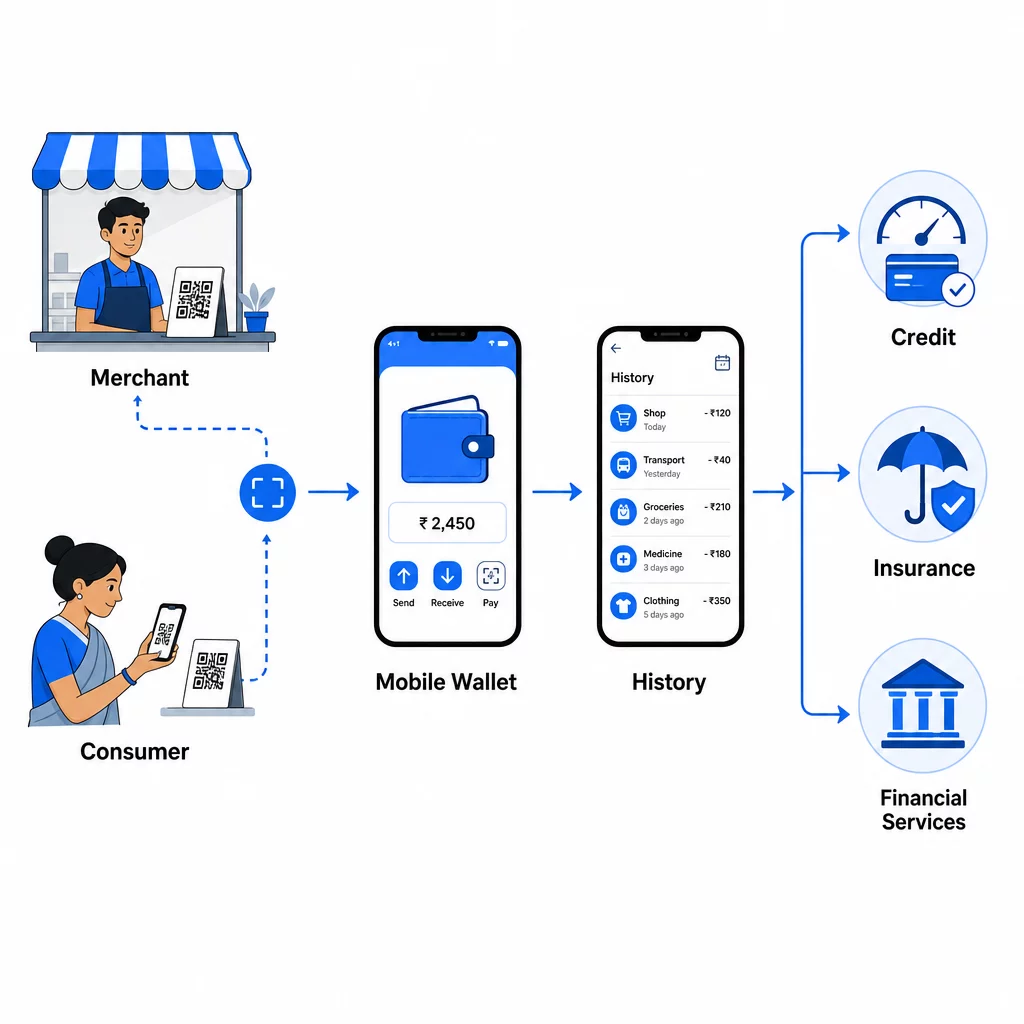
CGAP ระบุไว้อย่างชัดเจนว่า: QR โค้ดเป็น “วิธีที่มีแนวโน้มดีในการเปลี่ยนการชำระเงินของผู้ค้ารายได้น้อยให้เป็นดิจิทัล และกระตุ้นให้ลูกค้าหันมาใช้ระบบดิจิทัล” และประวัติการทำธุรกรรมที่สร้างขึ้น “สามารถนำไปสู่การเข้าถึงสินเชื่อและบริการทางการเงินอย่างเป็นทางการอื่น ๆ ซึ่งเป็นการสร้างประตูสู่การเข้าถึงบริการทางการเงิน”
ประสบการณ์จากเอเชียตะวันออกตอกย้ำประเด็นนี้ เมื่อการชำระเงินผ่านมือถือด้วย QR โค้ดเข้ามาแทนที่เงินสด ธนาคารสามารถลดต้นทุนที่เกี่ยวข้องกับบริการเงินสด ซึ่งเป็นการปลดปล่อยเงินทุนสำหรับการให้สินเชื่อและกิจกรรมที่เพิ่มมูลค่าอื่น ๆ กรณีของการเข้าถึงบริการทางการเงินไม่ใช่แค่ทฤษฎีเท่านั้น แต่ได้รับการสนับสนุนจากการเปลี่ยนแปลงพฤติกรรมที่สังเกตเห็นได้ในวงกว้าง.
ความเสี่ยงและอุปสรรคที่ต้องจับตา
กรณีการเติบโตนั้นแข็งแกร่ง แต่ไม่มีการวิเคราะห์ตลาดที่ซื่อสัตย์ใดที่จะละเลยอุปสรรค.
การฉ้อโกงและช่องโหว่ด้านความปลอดภัย
QR โค้ดแบบคงที่สามารถถูกดัดแปลงทางกายภาพได้ และการที่ผู้ใช้ส่วนใหญ่ไม่สามารถตรวจสอบปลายทางของโค้ดก่อนสแกน ทำให้เกิดความเสี่ยงในการฉ้อโกงอย่างต่อเนื่อง เมื่อการใช้งานขยายตัว รูปแบบการฉ้อโกงก็มักจะขยายตัวตามไปด้วย ข้อดีด้านความปลอดภัยและความเร็วของการชำระเงินด้วย QR โค้ด เป็นเรื่องจริง แต่ขึ้นอยู่กับทางเลือกในการนำไปใช้ โดยเฉพาะอย่างยิ่งการใช้โค้ดแบบไดนามิกแทนโค้ดแบบคงที่ ไม่ใช่แค่เทคโนโลยีเพียงอย่างเดียว.
ช่องว่างด้านความเชื่อมั่นและความรู้ดิจิทัล
งานวิจัยจากกัมพูชาและบริบทตลาดเกิดใหม่อื่น ๆ ระบุอย่างสม่ำเสมอว่าความเชื่อมั่นเป็นอุปสรรคหลักในการนำไปใช้ ในกรณีที่ผู้บริโภคขาดความมั่นใจในระบบดิจิทัล หรือในกรณีที่ประสบการณ์การฉ้อโกงก่อนหน้านี้ได้ทำลายความเชื่อมั่น การนำไปใช้จะหยุดชะงักไม่ว่าคุณภาพโครงสร้างพื้นฐานจะเป็นอย่างไร โครงการริเริ่มด้านความรู้ดิจิทัลที่ได้รับการสนับสนุนจากรัฐบาลเป็นส่วนหนึ่งของการตอบสนองเชิงนโยบาย แต่ความคืบหน้ายังไม่สม่ำเสมอ.
ความเสี่ยงจากการแตกแยก
แม้ว่ามาตรฐานระดับชาติที่ทำงานร่วมกันได้จะช่วยลดการแตกแยกภายในประเทศ แต่การทำงานร่วมกันข้ามพรมแดนยังไม่สมบูรณ์ ธุรกิจที่ดำเนินงานในตลาดเกิดใหม่หลายแห่งเผชิญกับความท้าทายในทางปฏิบัติในการจัดการกับโครงการ มาตรฐาน และสภาพแวดล้อมด้านกฎระเบียบที่แตกต่างกัน ความพยายามในการรวมกลุ่มของอาเซียนเป็นก้าวสำคัญ แต่ครอบคลุมเพียงไม่กี่ประเทศ.
การพึ่งพาโครงสร้างพื้นฐาน
การชำระเงินด้วย QR โค้ดต้องอาศัยการเชื่อมต่ออินเทอร์เน็ตมือถือที่เชื่อถือได้ ในพื้นที่ชนบทและเขตเมืองที่มีรายได้น้อย ซึ่งเป็นกลุ่มประชากรที่เกี่ยวข้องกับเป้าหมายการเข้าถึงบริการทางการเงินมากที่สุด การเชื่อมต่ออาจไม่สม่ำเสมอ ข้อจำกัดนี้จำกัดความเร็วในการนำ QR โค้ดไปใช้ในกลุ่มที่ยังไม่ได้รับบริการอย่างเต็มที่.
สิ่งนี้มีความหมายอย่างไรต่อธุรกิจที่ดำเนินงานในตลาดเหล่านี้
สำหรับบริษัทที่รับหรือวางแผนที่จะรับชำระเงินด้วย QR โค้ดในประเทศเศรษฐกิจเกิดใหม่ มีข้อควรพิจารณาเชิงปฏิบัติบางประการจากการวิเคราะห์นี้.
- ออกแบบการรับชำระเงินให้สอดคล้องกับระบบหลักในท้องถิ่น. การที่ร้านค้ารับ QRIS ในอินโดนีเซีย หรือ QR ที่เชื่อมโยงกับ UPI ในอินเดีย สามารถเข้าถึงฐานลูกค้าได้กว้างกว่าการรับเพียงกระเป๋าเงินดิจิทัลเฉพาะของตนเอง มาตรฐานที่ทำงานร่วมกันได้มีอยู่เพื่อกำจัดการผูกขาดในลักษณะนั้นโดยเฉพาะ.
- ใช้ QR โค้ดแบบไดนามิกแทนแบบคงที่. โค้ดแบบไดนามิกช่วยให้คุณอัปเดตปลายทางการชำระเงิน ตรวจสอบกิจกรรมการสแกนเพื่อหาความผิดปกติ และปิดใช้งานโค้ดหากตรวจพบการฉ้อโกง – ทั้งหมดนี้โดยไม่ต้องพิมพ์ซ้ำ สำหรับธุรกิจที่จัดการการชำระเงินในหลายสถานที่ การควบคุมแบบรวมศูนย์นี้มีความสำคัญในการดำเนินงาน The คู่มือ QR โค้ดสำหรับกระเป๋าเงินมือถือ อธิบายความแตกต่างในทางปฏิบัติระหว่างวิธีการแบบไดนามิกและแบบคงที่ในบริบทของการชำระเงิน.
- ถือว่าการวิเคราะห์เป็นฟังก์ชันหลัก ไม่ใช่สิ่งที่จะทำทีหลัง. การทำความเข้าใจว่ามีการสแกนโค้ดเมื่อใดและที่ไหน – และการแจ้งเตือนรูปแบบที่ผิดปกติ – มีความเกี่ยวข้องกับการป้องกันการฉ้อโกงพอๆ กับการเพิ่มประสิทธิภาพทางการตลาด ธุรกิจที่ ใช้ QR โค้ดสำหรับการชำระเงินระหว่างบุคคล มีแนวโน้มที่จะตรวจสอบข้อมูลการสแกนอย่างกระตือรือร้นมากกว่าการตอบสนอง.
- สร้างเพื่ออนาคตที่ทำงานร่วมกันได้. การรวมระบบการชำระเงินด้วย QR ข้ามพรมแดนกำลังขยายตัว ธุรกิจที่ลงทุนในโครงสร้างพื้นฐานการรับชำระเงินที่ยืดหยุ่นและไม่ขึ้นกับระบบใดๆ ในตอนนี้ จะอยู่ในตำแหน่งที่ดีกว่าในการขยายขนาดเมื่อกรอบการทำงานระดับภูมิภาค เช่น ระบบอาเซียน เติบโตเต็มที่.
เริ่มรับชำระเงินด้วย QR โดยไม่ต้องยุ่งยาก ต้องการสร้าง QR โค้ดสำหรับการชำระเงินที่ใช้งานได้ทั่วทุกสาขาธุรกิจของคุณหรือไม่? ใช้ Pageloot เครื่องสร้างรหัส QR เพื่อสร้างรหัสแบบไดนามิกที่สามารถติดตามได้ – หรือ PayPal QR Code เพื่อเชื่อมโยงโดยตรงกับบัญชีชำระเงินของคุณโดยไม่ต้องใช้อุปกรณ์ใดๆ.
ทิศทางชัดเจน รายละเอียดยังคงอยู่ระหว่างการเขียน
การชำระเงินด้วยรหัส QR ในประเทศเศรษฐกิจเกิดใหม่ไม่ใช่แนวโน้มที่คาดเดาได้ – แต่เป็นความจริงด้านโครงสร้างพื้นฐานที่ได้รับการสนับสนุนจากข้อกำหนดของธนาคารกลาง การนำไปใช้ในวงกว้างที่แสดงให้เห็นแล้ว และอัตราการเติบโตที่แซงหน้าส่วนใหญ่ของอุตสาหกรรมการชำระเงิน ตลาดคาดว่าจะเติบโตประมาณ 20% ต่อปีจนถึงปี 2033 โดยมีเอเชียแปซิฟิกเป็นผู้นำ และละตินอเมริกา แอฟริกา และเอเชียใต้มีส่วนร่วมอย่างมีความหมาย.
คำถามเชิงกลยุทธ์สำหรับนักลงทุนและผู้นำธุรกิจไม่ใช่ว่าการชำระเงินด้วย QR จะครองการค้าดิจิทัลในประเทศเศรษฐกิจเกิดใหม่หรือไม่ แต่เป็นเรื่องที่ว่าการกำกับดูแลการฉ้อโกง การทำงานร่วมกันข้ามพรมแดน และความรู้ดิจิทัลจะเติบโตเต็มที่เร็วแค่ไหนเพื่อสนับสนุนการครอบงำนั้น ผู้ที่เข้าใจโครงสร้างการกำกับดูแล – และวางตำแหน่งตนเองภายในมาตรฐานแห่งชาติที่ทำงานร่วมกันได้ซึ่งธนาคารกลางกำลังส่งเสริมอย่างแข็งขัน – จะอยู่ในตำแหน่งที่ดีที่สุดในการคว้าโอกาส.
สำหรับธุรกิจที่กำลังสร้างความสามารถในการชำระเงินด้วย QR ในวันนี้ สำรวจ โซลูชันรหัส QR ที่มีอยู่ทั่วทั้งอุตสาหกรรม เพื่อค้นหาวิธีการที่เหมาะสมสำหรับภาคส่วนของคุณ.
คำถามที่พบบ่อย
ตลาดเกิดใหม่มีโครงสร้างพื้นฐานการชำระเงินด้วยบัตรที่มีอยู่น้อยกว่า มีสัดส่วนประชากรที่ไม่มีบัญชีธนาคารสูงกว่า และมีต้นทุนสมาร์ทโฟนที่ต่ำกว่าเมื่อเทียบกับต้นทุนเครื่องรับชำระเงิน ณ จุดขาย (POS) รหัส QR ช่วยลดความจำเป็นในการใช้อุปกรณ์ฮาร์ดแวร์ราคาแพง ทำให้ร้านค้าใดๆ ที่มีรหัสที่พิมพ์ออกมาหรือสมาร์ทโฟนสามารถรับชำระเงินดิจิทัลได้ โครงการริเริ่มสังคมไร้เงินสดที่ได้รับการสนับสนุนจากรัฐบาลและมาตรฐาน QR ระดับชาติที่สามารถทำงานร่วมกันได้ยังช่วยเร่งการนำไปใช้ในลักษณะที่ไม่มีสิ่งใดเทียบเท่าโดยตรงในตลาดพัฒนาแล้วส่วนใหญ่.
ธนาคารกลางในหลายประเทศเศรษฐกิจเกิดใหม่มีบทบาทโดยตรงในการพัฒนาและกำหนดให้มีโครงการ QR ระดับชาติที่ทำงานร่วมกันได้ – ตัวอย่างเช่น BharatQR ในอินเดีย, QRIS ในอินโดนีเซีย, LankaQR ในศรีลังกา และ Pix ในบราซิล โครงการเหล่านี้ใช้มาตรฐาน EMVCo เพื่อให้แน่ใจว่ารหัส QR เดียวสามารถรับชำระเงินจากผู้ให้บริการหลายรายได้ ลดการแตกแยกและสนับสนุนการนำไปใช้ในหมู่ผู้ค้าขนาดเล็กและผู้บริโภคที่มีรายได้น้อย นี่คือการลงทุนโครงสร้างพื้นฐานที่ขับเคลื่อนด้วยนโยบาย ไม่ใช่เพียงผลลัพธ์ของตลาด.
ความเสี่ยงที่พบบ่อยที่สุดคือการปลอมแปลงรหัส QR ทางกายภาพ (ที่มิจฉาชีพเปลี่ยนรหัสที่ถูกต้องด้วยรหัสปลอมเพื่อเปลี่ยนเส้นทางการชำระเงินไปยังบัญชีของตนเอง) และการโจมตีแบบฟิชชิ่งที่เลียนแบบหน้าการชำระเงินที่ถูกต้อง การใช้รหัส QR แบบไดนามิก – ซึ่งสามารถตรวจสอบกิจกรรมการสแกนที่ผิดปกติได้และสามารถปิดใช้งานได้หากถูกบุกรุก – ช่วยลดความเสี่ยงเหล่านี้ได้อย่างมากเมื่อเทียบกับรหัสแบบคงที่ สำหรับรายละเอียดทั้งหมดของภัยคุกคามและกลยุทธ์การบรรเทาผลกระทบ โปรดดูคู่มือเกี่ยวกับความเสี่ยงของรหัส QR ในการชำระเงิน.