Bạn đang cố gắng đánh giá xem thanh toán bằng mã QR sẽ đi đến đâu ở các thị trường đang phát triển? Câu trả lời định hình chiến lược đầu tư, quyết định sản phẩm và thời điểm gia nhập thị trường. Bài viết này phân tích các yếu tố thúc đẩy việc áp dụng, khuôn khổ pháp lý và dự báo tăng trưởng mà bạn cần để hiểu rõ về không gian đang phát triển nhanh chóng này.
Tại sao các nền kinh tế mới nổi đang dẫn đầu việc áp dụng thanh toán QR
Thanh toán bằng mã QR đã phát triển nhanh hơn ở các thị trường mới nổi so với các thị trường phát triển – và những lý do này mang tính cấu trúc, không phải ngẫu nhiên.
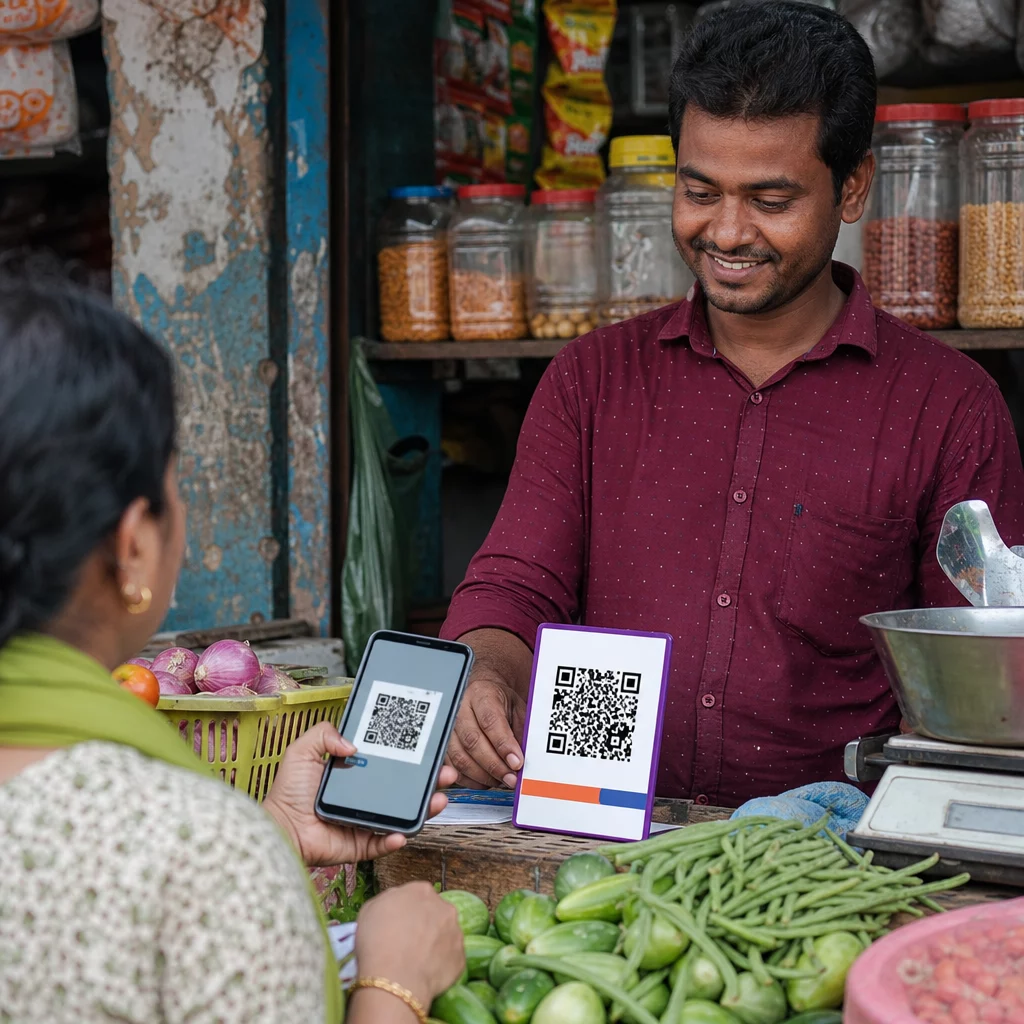
Ở nhiều nền kinh tế đang phát triển, cơ sở hạ tầng ngân hàng truyền thống còn mỏng. Các thiết bị đầu cuối điểm bán hàng đắt đỏ, mạng lưới thẻ có phạm vi hạn chế và một phần lớn dân số vẫn chưa có tài khoản ngân hàng. Mã QR giải quyết một số vấn đề này cùng một lúc. Một người bán chỉ cần một mã in hoặc màn hình điện thoại thông minh để chấp nhận thanh toán kỹ thuật số – không cần đầu đọc thẻ, không cần phần cứng đắt tiền, không cần quy trình giới thiệu phức tạp.
Thanh toán bằng mã QR được coi là một công cụ quan trọng để hòa nhập tài chính ở các nền kinh tế mới nổi chính xác vì chúng cho phép các tiểu thương và siêu thương chấp nhận thanh toán kỹ thuật số với cơ sở hạ tầng tối thiểu, đồng thời kết nối những người chưa có tài khoản ngân hàng với các dịch vụ tài chính chính thức thông qua ví di động. Bạn có thể thấy điều này diễn ra trong thực tế thông qua Các giải pháp mã QR dành cho ngân hàng và tổ chức tài chính.
Trung Quốc đưa ra bằng chứng rõ ràng nhất về khái niệm này. Nghiên cứu mô tả việc “áp dụng rộng rãi” mã QR của các thương nhân và người tiêu dùng trong các giao dịch hàng ngày, được thúc đẩy bởi điện thoại thông minh giá cả phải chăng, vùng phủ sóng internet di động rộng hơn và một hệ sinh thái kỹ thuật số hỗ trợ. Mô hình này sau đó đã được nhân rộng và điều chỉnh trên khắp Nam và Đông Nam Á, Châu Mỹ Latinh và Châu Phi cận Sahara.
Các yếu tố chính thúc đẩy việc áp dụng thanh toán QR
Một số lực lượng riêng biệt đang thúc đẩy việc áp dụng thanh toán QR trên khắp các thị trường mới nổi. Những yếu tố này không hoạt động riêng lẻ – chúng củng cố lẫn nhau.
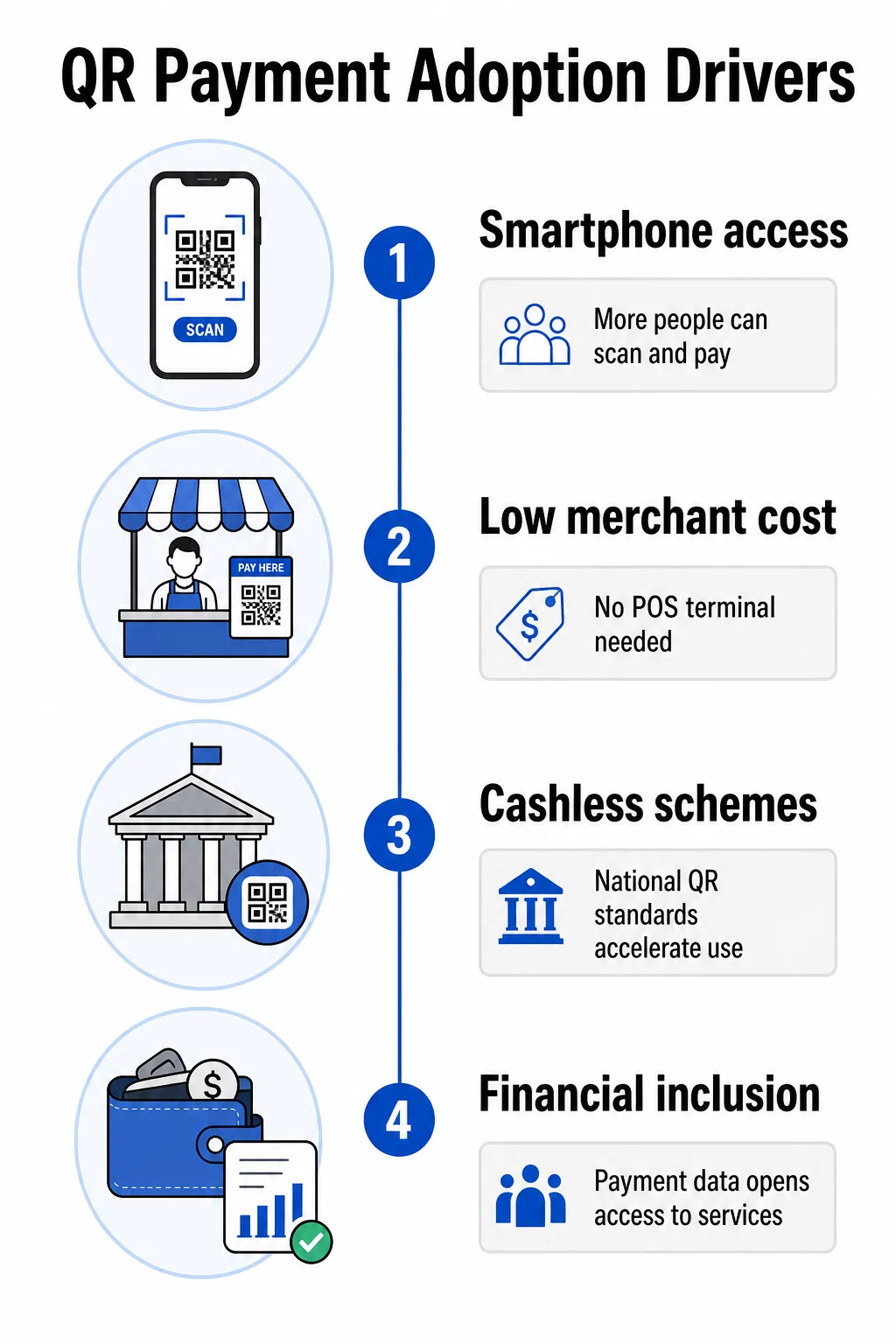
Mức độ thâm nhập của điện thoại thông minh và dễ sử dụng
Khi chi phí điện thoại thông minh giảm, nhiều người tiêu dùng ở các quốc gia có thu nhập thấp và trung bình sở hữu các thiết bị có khả năng quét mã QR mà không cần ứng dụng chuyên dụng. Khi việc thanh toán chỉ cần mở ứng dụng máy ảnh, thì rào cản thường làm chậm việc áp dụng công nghệ thanh toán sẽ biến mất.
Chi phí thấp hơn cho người bán
So với các thiết bị đầu cuối POS truyền thống, việc chấp nhận thanh toán dựa trên QR có chi phí gia nhập thấp hơn đáng kể. Đối với các tiểu thương hoạt động với biên lợi nhuận mỏng – người bán hàng rong, quầy hàng chợ, cửa hàng nhỏ – sự khác biệt về chi phí này là yếu tố quyết định. mã QR để thanh toán giúp bất kỳ người bán nào cũng có thể tạo và hiển thị mã thanh toán hoạt động chỉ trong vài phút, mà không cần thiết bị chuyên dụng.
Các sáng kiến không dùng tiền mặt được chính phủ hỗ trợ
Chính phủ các quốc gia và ngân hàng trung ương ở một số nền kinh tế mới nổi đã tích cực thúc đẩy thanh toán QR như một phần của chương trình nghị sự chính sách không dùng tiền mặt rộng lớn hơn. BharatQR của Ấn Độ, QRIS của Indonesia, LankaQR của Sri Lanka, Bangla QR của Bangladesh, GhQR của Ghana, CoDi của Mexico và Pix của Brazil đều là những ví dụ về các hệ thống do nhà nước hỗ trợ được thiết kế để đẩy nhanh việc áp dụng trên quy mô lớn – đặc biệt là trong số các thương nhân khu vực phi chính thức và người tiêu dùng có thu nhập thấp.
Hòa nhập tài chính như một mục tiêu chính sách
Ngoài sự tiện lợi, thanh toán QR tạo ra một thứ có giá trị theo thời gian: lịch sử giao dịch. Đối với các cá nhân và người bán trước đây chưa có tài khoản ngân hàng, dấu vết dữ liệu này cuối cùng có thể mở ra quyền tiếp cận tín dụng, bảo hiểm và các dịch vụ tài chính chính thức khác. Như CGAP lưu ý, các cơ hội thanh toán kỹ thuật số dễ dàng và phổ biến “có thể mang lại sự thay đổi hành vi lâu dài và sâu sắc cho khách hàng và người bán có thu nhập thấp, biến các khoản thanh toán chính thức thành một phần trong cuộc sống hàng ngày của họ.”
Tăng trưởng ví di động và hệ sinh thái kỹ thuật số
Sự trỗi dậy của ví di động – Alipay và WeChat Pay ở Trung Quốc, Paytm ở Ấn Độ, GoPay và OVO ở Indonesia, các sản phẩm phái sinh của M-Pesa trên khắp châu Phi – đã tạo ra cơ sở người dùng sẵn có cho thanh toán QR. Hiểu cách tích hợp mã QR của Alipay và WeChat Pay hoạt động trong thực tế mang lại cho bạn một điểm tham chiếu hữu ích về cách các hệ sinh thái thanh toán QR trưởng thành hoạt động.
Ảnh hưởng xã hội và lòng tin
Nghiên cứu về việc áp dụng thanh toán QR ở Campuchia đã xác định lòng tin, chất lượng dịch vụ, ảnh hưởng xã hội và rủi ro nhận thức là những yếu tố thúc đẩy quan trọng ở cấp độ người dùng. Tại các thị trường mà tiền mặt vẫn chiếm ưu thế về văn hóa, việc áp dụng rõ ràng của đồng nghiệp và uy tín của tổ chức có trọng lượng hơn so với các thị trường mà thanh toán kỹ thuật số đã trở thành tiêu chuẩn.
Quy mô thị trường và dự báo tăng trưởng
Các con số đằng sau sự tăng trưởng của thanh toán QR đủ lớn để đòi hỏi sự chú ý nghiêm túc từ các nhà đầu tư và chiến lược gia.
- Thị trường thanh toán mã QR toàn cầu được ước tính vào khoảng 12,5 tỷ USD vào năm 2024 và được dự kiến sẽ đạt 61,7 tỷ USD vào năm 2033, đại diện cho tốc độ tăng trưởng kép hàng năm khoảng 20%.
- Một dự báo riêng biệt dự kiến tổng chi tiêu thanh toán mã QR sẽ tăng từ 5,4 nghìn tỷ USD vào năm 2025 lên 8 nghìn tỷ USD vào năm 2029 – tăng 48% trong bốn năm.
- Một dự báo trước đó ước tính tăng trưởng từ 8,07 tỷ USD vào năm 2020 lên 35,07 tỷ USD vào năm 2030 với tốc độ CAGR là 16,1%.
Châu Á – Thái Bình Dương, khu vực bao gồm nhiều nền kinh tế mới nổi lớn nhất thế giới, dự kiến sẽ chiếm thị phần lớn nhất trong tăng trưởng toàn cầu trong suốt giai đoạn dự báo. Trung Quốc, Ấn Độ và các quốc gia Đông Nam Á là những đóng góp chính, được hỗ trợ bởi cả việc mở rộng ví di động theo định hướng thị trường và các sáng kiến không dùng tiền mặt có chủ đích của chính phủ.
Mặc dù những con số này mang tính toàn cầu chứ không phải dành riêng cho thị trường mới nổi, nhưng các động lực cơ bản lại tập trung ở các nền kinh tế đang phát triển. Tăng trưởng ở các thị trường trưởng thành như Hoa Kỳ tương đối chậm hơn. Khi ngày càng nhiều người bán áp dụng các tùy chọn thanh toán bằng mã QR để thực hiện giao dịch nhanh hơn, an toàn hơn và dễ tiếp cận hơn, sự tập trung đó có thể sẽ sâu sắc hơn.
Bối cảnh pháp lý: Tiêu chuẩn, Khả năng tương tác và Giám sát
Quy định trong lĩnh vực này không phải là rào cản mà là một kiến trúc. Cách các ngân hàng trung ương và chính phủ cấu trúc các chương trình thanh toán QR định hình những người có thể tham gia, cách phân bổ chi phí và tốc độ mở rộng quy mô áp dụng.
Tiêu chuẩn QR quốc gia và khả năng tương tác
Sự phát triển quy định quan trọng nhất ở các nền kinh tế mới nổi là sự phổ biến của các tiêu chuẩn QR quốc gia có khả năng tương tác. Các chương trình này – được phát triển và thường thuộc sở hữu của các ngân hàng trung ương hoặc cơ quan thanh toán quốc gia – sử dụng tiêu chuẩn EMVCo để đảm bảo rằng một mã QR duy nhất có thể chấp nhận thanh toán từ nhiều nhà cung cấp. Điều này có ý nghĩa rất lớn đối với việc người bán chấp nhận: một tiểu thương chấp nhận một chương trình QR thực tế chấp nhận tất cả các ví và ngân hàng tham gia.
| Quốc gia | Chương trình | Nhà điều hành |
|---|---|---|
| Ấn Độ | BharatQR | Ngân hàng Dự trữ Ấn Độ / NPCI |
| Indonesia | QRIS | Ngân hàng Indonesia |
| Sri Lanka | LankaQR | Ngân hàng Trung ương Sri Lanka |
| Bangladesh | Bangla QR | Ngân hàng Bangladesh |
| Ghana | GhQR | Hệ thống Thanh toán và Quyết toán Liên ngân hàng Ghana |
| Mexico | CoDi | Ngân hàng Mexico |
| Brazil | Pix | Ngân hàng Trung ương Brazil |
| Kyrgyzstan | ELQR | Hệ thống thanh toán quốc gia |
LankaQR, được giới thiệu vào năm 2018, được yêu cầu rõ ràng phải tuân thủ các tiêu chuẩn EMV toàn cầu – một lựa chọn thiết kế cho phép bất kỳ ngân hàng hoặc nhà cung cấp dịch vụ thanh toán nào chấp nhận thanh toán thông qua một mã thống nhất, không bị ràng buộc bởi độc quyền.
Khả năng tương tác xuyên biên giới
Hệ thống thanh toán mã QR tích hợp ASEAN liên kết các chương trình QR quốc gia giữa các quốc gia tham gia theo Khuôn khổ giao dịch bằng đồng tiền địa phương của ASEAN. Sáng kiến chính sách này hỗ trợ thanh toán QR xuyên biên giới bằng đồng tiền địa phương, giảm sự phụ thuộc vào các trung gian ngoại tệ cho các giao dịch trong khu vực. Đối với các doanh nghiệp và nhà đầu tư có trọng tâm khu vực thay vì chỉ một quốc gia, sự tích hợp này mở rộng đáng kể thị trường tiềm năng.
Bảo vệ người tiêu dùng và quyền riêng tư
OECD khuyến nghị rằng các sáng kiến về kiến thức tài chính số nên được thực hiện song song với các khuôn khổ bảo vệ người tiêu dùng tài chính. Trên thực tế, các quy định về thanh toán QR không chỉ nên bắt buộc các tiêu chuẩn bảo mật kỹ thuật mà còn phải đảm bảo người tiêu dùng có quyền tiếp cận thông tin minh bạch và các cơ chế hiệu quả để báo cáo gian lận. Đối với các doanh nghiệp hoạt động trên nhiều khu vực pháp lý, việc hiểu cách Luật riêng tư mã QR và các quy định chính áp dụng cho dữ liệu thanh toán là một yếu tố quan trọng cần cân nhắc về tuân thủ.
Điều này ngày càng trở nên phù hợp vì sự tăng trưởng của thanh toán QR đã tạo ra các hình thức gian lận mới ở một số quốc gia. Mã QR tĩnh của người bán đặc biệt dễ bị tấn công thay thế vật lý – nơi kẻ gian lận đặt một mã giả lên trên một mã hợp pháp. Hướng dẫn về rủi ro mã QR trong thanh toán và cách giảm thiểu chúng bao gồm các vectơ đe dọa chính mà các doanh nghiệp phải đối mặt.
Giới hạn của dữ liệu quy định hiện có
Các nguồn công khai cung cấp mô tả cấp cao về vai trò của ngân hàng trung ương và các tiêu chuẩn EMV, nhưng các quy định pháp luật chi tiết, theo từng quốc gia, đặc biệt điều chỉnh thanh toán mã QR lại không được ghi chép đầy đủ. Các nhà đầu tư và chiến lược gia thực hiện thẩm định tại các thị trường cụ thể sẽ cần bổ sung các khuôn khổ này bằng phân tích pháp lý địa phương.
Tài chính toàn diện: Trường hợp chiến lược dài hạn
Đối với các nhà đầu tư và chiến lược gia tập trung vào phát triển, khía cạnh hòa nhập tài chính của thanh toán QR được cho là xu hướng dài hạn quan trọng nhất.
Mã QR tạo ra một điểm vào chi phí thấp vào nền kinh tế số chính thức cho hai nhóm đối tượng đã bị loại trừ trong lịch sử: các tiểu thương và người tiêu dùng có thu nhập thấp. Khi việc áp dụng QR lan rộng trong các phân khúc này, nó tạo ra lịch sử giao dịch có thể dùng làm dữ liệu tín dụng thay thế. Theo thời gian, dấu vết dữ liệu này tạo ra các con đường tiếp cận tín dụng, bảo hiểm và các dịch vụ tài chính khác – những sản phẩm đại diện cho các thị trường tiềm năng đáng kể theo đúng nghĩa của chúng.
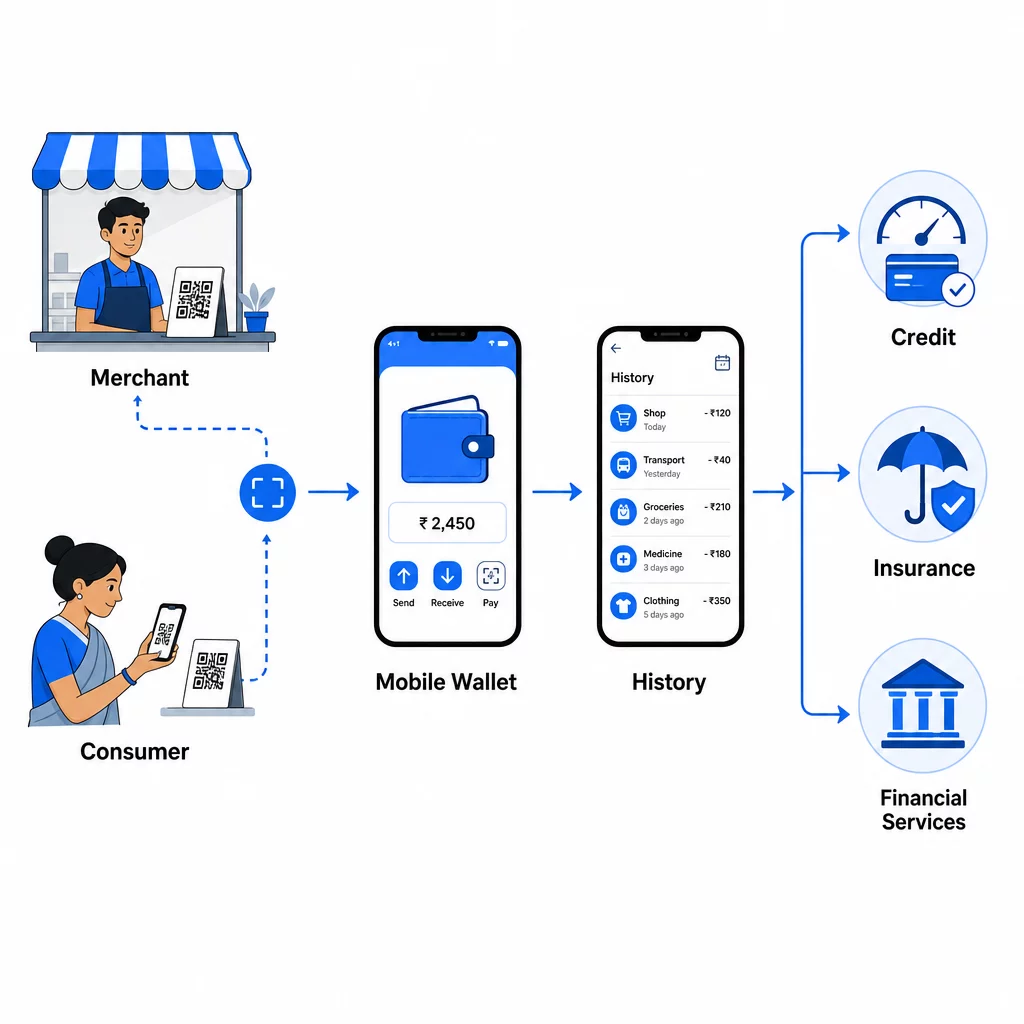
CGAP trình bày rõ ràng điều này: mã QR là “một cách đầy hứa hẹn để số hóa thanh toán tại các tiểu thương có thu nhập thấp và giúp khách hàng chuyển sang kỹ thuật số,” và lịch sử giao dịch mà chúng tạo ra “có thể mang lại khả năng tiếp cận tín dụng và các dịch vụ tài chính chính thức khác, tạo ra một cánh cổng dẫn đến hòa nhập tài chính.”
Kinh nghiệm từ Đông Á củng cố quan điểm này. Khi thanh toán di động dựa trên QR thay thế tiền mặt, các ngân hàng có thể giảm chi phí liên quan đến dịch vụ tiền mặt – giải phóng vốn cho vay và các hoạt động gia tăng giá trị khác. Trường hợp hòa nhập tài chính không chỉ thuần túy là lý thuyết; nó được hỗ trợ bởi sự thay đổi hành vi có thể quan sát được trên quy mô lớn.
Rủi ro và Rào cản cần theo dõi
Trường hợp tăng trưởng là mạnh mẽ, nhưng không có phân tích thị trường trung thực nào bỏ qua những trở ngại.
Gian lận và các lỗ hổng bảo mật
Mã QR tĩnh có thể bị can thiệp vật lý, và việc hầu hết người dùng không thể xác minh đích đến của mã trước khi quét tạo ra rủi ro gian lận liên tục. Khi việc áp dụng mở rộng quy mô, các mô hình gian lận cũng có xu hướng mở rộng theo. Các lợi thế về bảo mật và tốc độ của thanh toán mã QR là có thật, nhưng chúng phụ thuộc vào các lựa chọn triển khai – đặc biệt là việc sử dụng mã động thay vì mã tĩnh – chứ không phải chỉ riêng công nghệ.
Khoảng cách về niềm tin và trình độ kỹ thuật số
Nghiên cứu từ Campuchia và các bối cảnh thị trường mới nổi khác luôn xác định niềm tin là rào cản chính đối với việc áp dụng. Nơi người tiêu dùng thiếu tự tin vào các hệ thống kỹ thuật số – hoặc nơi các trải nghiệm gian lận trước đây đã làm tổn hại niềm tin – việc áp dụng sẽ bị đình trệ bất kể chất lượng cơ sở hạ tầng. Các sáng kiến về trình độ kỹ thuật số do chính phủ hỗ trợ là một phần của phản ứng chính sách, nhưng tiến độ không đồng đều.
Rủi ro phân mảnh
Mặc dù các tiêu chuẩn quốc gia có khả năng tương tác giúp giảm phân mảnh trong nội bộ các quốc gia, khả năng tương tác xuyên biên giới vẫn chưa hoàn chỉnh. Các doanh nghiệp hoạt động trên nhiều thị trường mới nổi phải đối mặt với thách thức thực tế là điều hướng các sơ đồ, tiêu chuẩn và môi trường pháp lý khác nhau. Nỗ lực hội nhập ASEAN là một bước tiến có ý nghĩa, nhưng nó chỉ bao gồm một số quốc gia hạn chế.
Phụ thuộc vào cơ sở hạ tầng
Thanh toán QR yêu cầu kết nối internet di động đáng tin cậy. Ở các khu vực nông thôn và các khu vực đô thị có thu nhập thấp hơn – chính xác là những nhóm dân cư liên quan nhất đến các mục tiêu hòa nhập tài chính – kết nối có thể không nhất quán. Hạn chế này giới hạn tốc độ áp dụng QR có thể tiếp cận các phân khúc kém được phục vụ nhất.
Điều này có ý nghĩa gì đối với các doanh nghiệp hoạt động tại các thị trường này
Đối với các công ty đã hoặc đang có kế hoạch chấp nhận thanh toán bằng mã QR trên khắp các nền kinh tế mới nổi, một vài cân nhắc thực tế sau đây rút ra từ phân tích này.
- Thiết kế hệ thống chấp nhận thanh toán xoay quanh chương trình địa phương chiếm ưu thế. Việc các nhà bán lẻ chấp nhận QRIS ở Indonesia hoặc QR liên kết với UPI ở Ấn Độ tiếp cận được lượng khách hàng rộng lớn hơn nhiều so với việc chỉ chấp nhận một ví điện tử độc quyền. Các tiêu chuẩn tương tác tồn tại chính xác để loại bỏ kiểu khóa chặt đó.
- Sử dụng mã QR động thay vì mã tĩnh. Mã động cho phép bạn cập nhật điểm đến thanh toán, giám sát hoạt động quét để phát hiện bất thường và hủy kích hoạt mã nếu phát hiện gian lận – tất cả mà không cần in lại. Đối với các doanh nghiệp quản lý thanh toán trên nhiều địa điểm, việc kiểm soát tập trung này có ý nghĩa quan trọng về mặt vận hành. The hướng dẫn về mã QR cho ví di động giải thích sự khác biệt thực tế giữa các phương pháp động và tĩnh trong bối cảnh thanh toán.
- Coi phân tích là một chức năng cốt lõi, không phải là một yếu tố bổ sung. Hiểu được thời điểm và địa điểm mã được quét – và gắn cờ các mẫu bất thường – có liên quan đến việc phòng chống gian lận cũng như tối ưu hóa tiếp thị. Các doanh nghiệp sử dụng mã QR để thanh toán ngang hàng có xu hướng giám sát dữ liệu quét một cách chủ động thay vì phản ứng.
- Xây dựng cho tương lai tương tác. Tích hợp thanh toán QR xuyên biên giới đang mở rộng. Các doanh nghiệp đầu tư ngay bây giờ vào cơ sở hạ tầng chấp nhận linh hoạt, không phụ thuộc vào chương trình sẽ có vị thế tốt hơn để mở rộng quy mô khi các khuôn khổ khu vực như hệ thống ASEAN trưởng thành.
Bắt đầu chấp nhận thanh toán QR mà không phức tạp Cần tạo mã QR thanh toán hoạt động trên tất cả các địa điểm kinh doanh của bạn? Sử dụng the Trình tạo mã QR Pageloot để xây dựng các mã động, có thể theo dõi – hoặc Mã QR PayPal để liên kết trực tiếp với tài khoản thanh toán của bạn mà không cần phần cứng.
Quỹ Đạo Đã Rõ Ràng, Các Chi Tiết Vẫn Đang Được Viết
Thanh toán bằng mã QR ở các nền kinh tế mới nổi không phải là một xu hướng đầu cơ – chúng là một thực tế hạ tầng được hỗ trợ bởi các chỉ thị của ngân hàng trung ương, sự chấp nhận đã được chứng minh ở quy mô lớn và tốc độ tăng trưởng vượt trội so với hầu hết các phân khúc của ngành thanh toán. Thị trường được dự báo sẽ tăng trưởng khoảng 20% hàng năm đến năm 2033, với châu Á-Thái Bình Dương dẫn đầu và Mỹ Latinh, châu Phi, Nam Á đóng góp đáng kể.
Câu hỏi chiến lược cho các nhà đầu tư và lãnh đạo doanh nghiệp không phải là liệu thanh toán QR có thống trị thương mại kỹ thuật số ở các nền kinh tế mới nổi hay không, mà là tốc độ quản lý gian lận, khả năng tương tác xuyên biên giới và trình độ kỹ thuật số sẽ trưởng thành nhanh đến mức nào để hỗ trợ sự thống trị đó. Những người hiểu kiến trúc pháp lý – và định vị mình trong các tiêu chuẩn quốc gia có khả năng tương tác mà các ngân hàng trung ương đang tích cực thúc đẩy – sẽ có vị trí tốt nhất để nắm bắt cơ hội.
Đối với các doanh nghiệp đang xây dựng khả năng thanh toán QR ngày nay, hãy khám phá các giải pháp mã QR có sẵn trên các ngành để tìm ra cách tiếp cận phù hợp cho lĩnh vực của bạn.
Câu hỏi thường gặp
Các thị trường mới nổi có ít cơ sở hạ tầng thanh toán thẻ hiện có hơn, tỷ lệ dân số không có tài khoản ngân hàng cao hơn và chi phí điện thoại thông minh thấp hơn so với chi phí thiết bị đầu cuối POS. Mã QR loại bỏ nhu cầu về phần cứng đắt tiền, cho phép bất kỳ người bán nào có mã in hoặc điện thoại thông minh chấp nhận thanh toán kỹ thuật số. Các sáng kiến không dùng tiền mặt do chính phủ hậu thuẫn và các tiêu chuẩn QR quốc gia có khả năng tương tác cũng đã thúc đẩy việc áp dụng theo những cách không có sự tương đương trực tiếp ở hầu hết các thị trường phát triển.
Các ngân hàng trung ương ở nhiều nền kinh tế mới nổi đã đóng vai trò trực tiếp trong việc phát triển và bắt buộc các chương trình QR quốc gia có khả năng tương tác – các ví dụ bao gồm BharatQR ở Ấn Độ, QRIS ở Indonesia, LankaQR ở Sri Lanka và Pix ở Brazil. Các chương trình này sử dụng tiêu chuẩn EMVCo để đảm bảo rằng một mã QR duy nhất có thể chấp nhận thanh toán từ nhiều nhà cung cấp, giảm sự phân mảnh và hỗ trợ việc áp dụng trong số các thương nhân nhỏ và người tiêu dùng có thu nhập thấp. Đây là một khoản đầu tư cơ sở hạ tầng theo định hướng chính sách, không đơn thuần là kết quả của thị trường.
Các rủi ro phổ biến nhất là giả mạo mã QR vật lý (nơi kẻ gian thay thế mã hợp pháp bằng mã giả mạo chuyển hướng thanh toán đến tài khoản của chúng) và các cuộc tấn công lừa đảo (phishing) bắt chước các trang thanh toán hợp pháp. Việc sử dụng mã QR động – có thể được giám sát để phát hiện hoạt động quét bất thường và vô hiệu hóa nếu bị xâm phạm – giúp giảm đáng kể các rủi ro này so với mã tĩnh. Để biết phân tích đầy đủ về các mối đe dọa và chiến lược giảm thiểu, hãy xem hướng dẫn về rủi ro mã QR trong thanh toán.