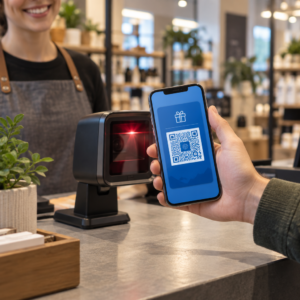
Προσπαθείτε να αξιολογήσετε πού οδεύουν οι πληρωμές με κωδικούς QR στις αναπτυσσόμενες αγορές; Η απάντηση διαμορφώνει την επενδυτική στρατηγική, τις αποφάσεις προϊόντων και τον χρόνο εισόδου στην αγορά. Αυτό το άρθρο αναλύει τους παράγοντες υιοθέτησης, τα ρυθμιστικά πλαίσια και τις προβλέψεις ανάπτυξης που χρειάζεστε για να κατανοήσετε αυτόν τον ταχέως κινούμενο χώρο.
Γιατί οι Αναδυόμενες Οικονομίες Ηγούνται στην Υιοθέτηση Πληρωμών QR
Οι πληρωμές με κωδικούς QR έχουν αναπτυχθεί ταχύτερα στις αναδυόμενες αγορές από ό,τι στις ανεπτυγμένες – και οι λόγοι είναι δομικοί, όχι συμπτωματικοί.
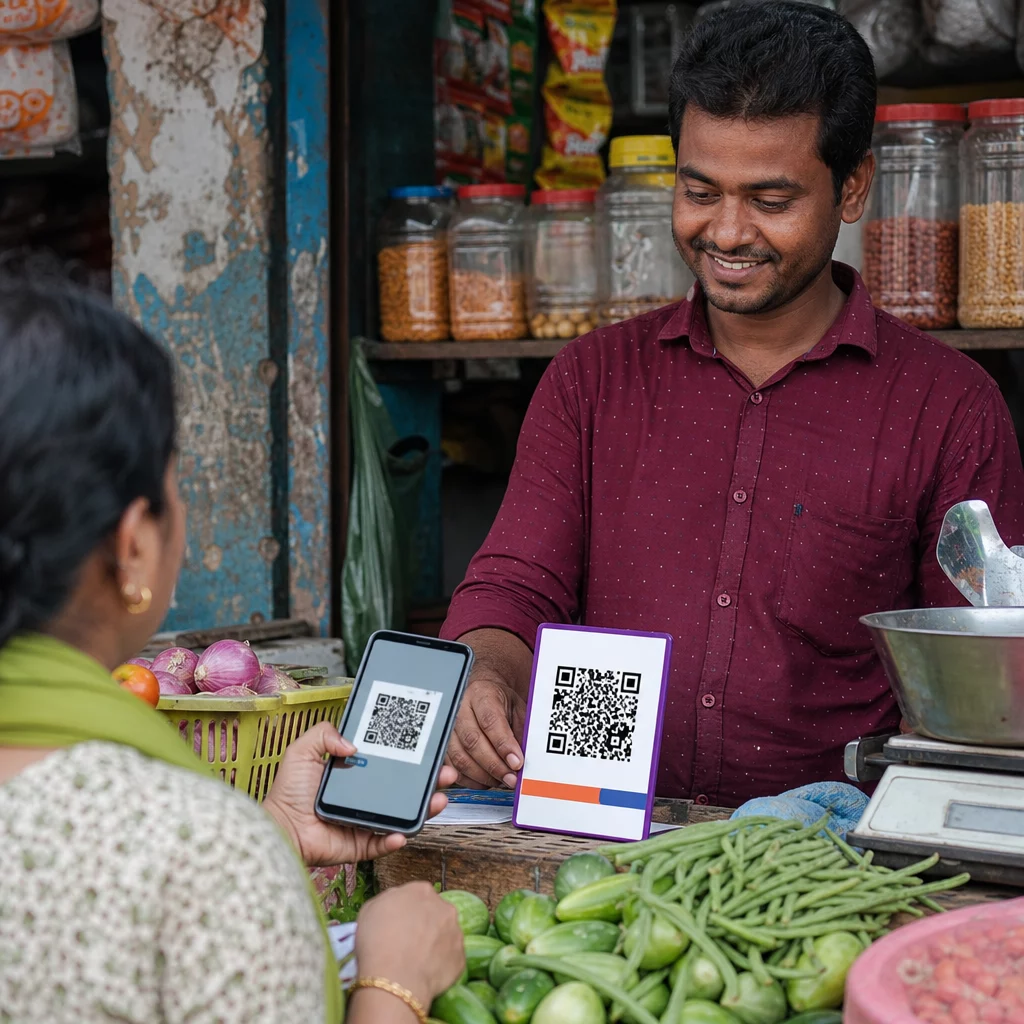
Σε πολλές αναπτυσσόμενες οικονομίες, η παραδοσιακή τραπεζική υποδομή είναι ανεπαρκής. Τα τερματικά σημείων πώλησης είναι ακριβά, τα δίκτυα καρτών έχουν περιορισμένη εμβέλεια και μεγάλα τμήματα του πληθυσμού παραμένουν χωρίς τραπεζικό λογαριασμό. Οι κωδικοί QR επιλύουν πολλά από αυτά τα προβλήματα ταυτόχρονα. Ένας έμπορος χρειάζεται μόνο έναν εκτυπωμένο κωδικό ή μια οθόνη smartphone για να δεχτεί ψηφιακές πληρωμές – χωρίς συσκευή ανάγνωσης καρτών, χωρίς ακριβό υλικό, χωρίς περίπλοκη διαδικασία ένταξης.
Οι πληρωμές με κωδικούς QR θεωρούνται βασικό εργαλείο για την οικονομική ένταξη στις αναδυόμενες οικονομίες ακριβώς επειδή επιτρέπουν σε μικρούς και πολύ μικρούς εμπόρους να δέχονται ψηφιακές πληρωμές με ελάχιστη υποδομή, ενώ συνδέουν τους πληθυσμούς χωρίς τραπεζικό λογαριασμό με επίσημες χρηματοοικονομικές υπηρεσίες μέσω κινητών πορτοφολιών. Μπορείτε να δείτε πώς λειτουργεί αυτό στην πράξη μέσω των λύσεων κωδικών QR που είναι διαθέσιμες για τράπεζες και χρηματοπιστωτικά ιδρύματα.
Η Κίνα προσφέρει την πιο σαφή απόδειξη της ιδέας. Έρευνες περιγράφουν “μαζική υιοθέτηση” κωδικών QR από εμπόρους και καταναλωτές σε καθημερινές συναλλαγές, που οφείλεται στα οικονομικά smartphones, την ευρύτερη κάλυψη κινητού διαδικτύου και ένα υποστηρικτικό ψηφιακό οικοσύστημα. Το μοντέλο έχει έκτοτε αναπαραχθεί και προσαρμοστεί σε όλη τη Νότια και Νοτιοανατολική Ασία, τη Λατινική Αμερική και την Υποσαχάρια Αφρική.
Βασικοί Παράγοντες Υιοθέτησης Πληρωμών QR
Αρκετές διακριτές δυνάμεις επιταχύνουν την υιοθέτηση πληρωμών QR στις αναδυόμενες αγορές. Αυτές δεν λειτουργούν μεμονωμένα – αλληλοενισχύονται.
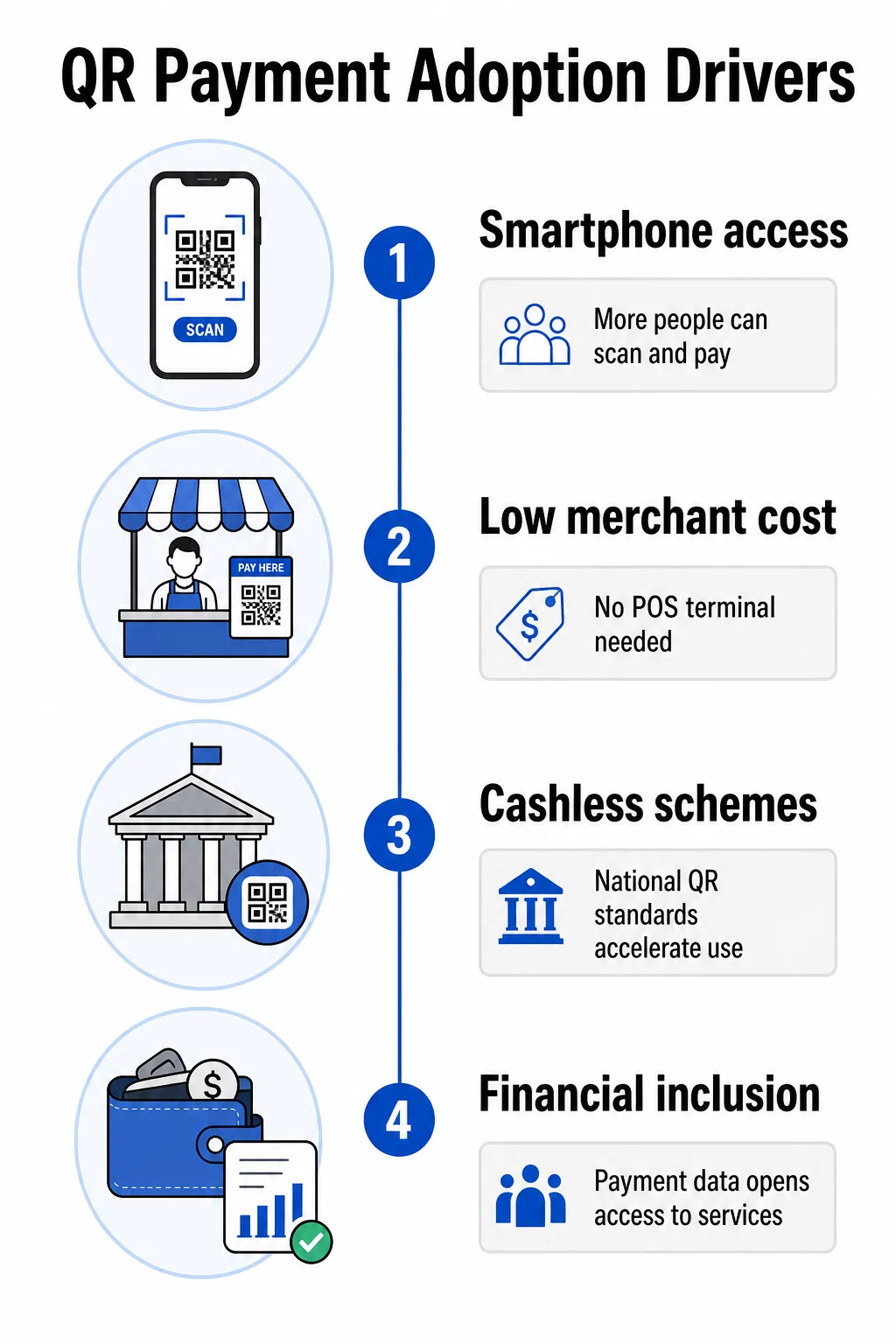
Διείσδυση smartphone και ευκολία χρήσης
Καθώς το κόστος των smartphone μειώνεται, περισσότεροι καταναλωτές σε χώρες χαμηλού και μεσαίου εισοδήματος διαθέτουν συσκευές ικανές να σαρώνουν κωδικούς QR χωρίς ειδική εφαρμογή. Όταν η πληρωμή απαιτεί μόνο το άνοιγμα μιας εφαρμογής κάμερας, η τριβή που συνήθως επιβραδύνει την υιοθέτηση της τεχνολογίας πληρωμών εξαφανίζεται.
Χαμηλότερο κόστος για τους εμπόρους
Σε σύγκριση με τα παραδοσιακά τερματικά POS, η αποδοχή μέσω QR έχει δραματικά χαμηλότερο κόστος εισόδου. Για τους μικρούς εμπόρους που λειτουργούν με μικρά περιθώρια κέρδους – πλανόδιους πωλητές, πάγκους αγοράς, μικρά καταστήματα – αυτή η διαφορά κόστους είναι καθοριστική. οι κωδικοί QR για πληρωμές καθιστούν δυνατή για οποιονδήποτε έμπορο τη δημιουργία και εμφάνιση ενός λειτουργικού κωδικού πληρωμής μέσα σε λίγα λεπτά, χωρίς εξειδικευμένο εξοπλισμό.
Κυβερνητικές πρωτοβουλίες για πληρωμές χωρίς μετρητά
Εθνικές κυβερνήσεις και κεντρικές τράπεζες σε αρκετές αναδυόμενες οικονομίες έχουν προωθήσει ενεργά τις πληρωμές QR ως μέρος ευρύτερων πολιτικών για πληρωμές χωρίς μετρητά. Τα BharatQR της Ινδίας, QRIS της Ινδονησίας, LankaQR της Σρι Λάνκα, Bangla QR του Μπαγκλαντές, GhQR της Γκάνας, CoDi του Μεξικού και Pix της Βραζιλίας είναι όλα παραδείγματα κρατικά υποστηριζόμενων συστημάτων που έχουν σχεδιαστεί για να επιταχύνουν την υιοθέτηση σε μεγάλη κλίμακα – ιδιαίτερα μεταξύ των εμπόρων του άτυπου τομέα και των καταναλωτών χαμηλού εισοδήματος.
Οικονομική ένταξη ως στόχος πολιτικής
Πέρα από την ευκολία, οι πληρωμές QR δημιουργούν κάτι πολύτιμο με την πάροδο του χρόνου: ένα ιστορικό συναλλαγών. Για άτομα και εμπόρους που προηγουμένως δεν είχαν πρόσβαση σε τραπεζικές υπηρεσίες, αυτό το ίχνος δεδομένων μπορεί τελικά να ξεκλειδώσει την πρόσβαση σε πίστωση, ασφάλιση και άλλες επίσημες χρηματοοικονομικές υπηρεσίες. Όπως σημειώνει η CGAP, οι εύκολες και ευρέως διαδεδομένες ευκαιρίες ψηφιακών πληρωμών “μπορούν να επιφέρουν διαρκή και βαθιά αλλαγή συμπεριφοράς μεταξύ πελατών και εμπόρων χαμηλού εισοδήματος, καθιστώντας τις επίσημες πληρωμές μέρος της καθημερινότητάς τους”.”
Ανάπτυξη ψηφιακών πορτοφολιών και ψηφιακά οικοσυστήματα
Η άνοδος των ψηφιακών πορτοφολιών – Alipay και WeChat Pay στην Κίνα, Paytm στην Ινδία, GoPay και OVO στην Ινδονησία, παράγωγα M-Pesa σε όλη την Αφρική – έχει δημιουργήσει έτοιμες βάσεις χρηστών για πληρωμές QR. Η κατανόηση του πώς η ενσωμάτωση κωδικών QR Alipay και WeChat Pay λειτουργεί στην πράξη σας δίνει ένα χρήσιμο σημείο αναφοράς για το πώς λειτουργούν τα ώριμα οικοσυστήματα πληρωμών QR.
Κοινωνική επιρροή και εμπιστοσύνη
Έρευνα σχετικά με την υιοθέτηση πληρωμών QR στην Καμπότζη προσδιόρισε την εμπιστοσύνη, την ποιότητα των υπηρεσιών, την κοινωνική επιρροή και τον αντιληπτό κίνδυνο ως σημαντικούς παράγοντες σε επίπεδο χρήστη. Σε αγορές όπου τα μετρητά παραμένουν πολιτισμικά κυρίαρχα, η ορατή υιοθέτηση από ομοτίμους και η θεσμική αξιοπιστία έχουν μεγαλύτερο βάρος από ό,τι σε αγορές όπου οι ψηφιακές πληρωμές είναι ήδη ο κανόνας.
Μέγεθος Αγοράς και Προβλέψεις Ανάπτυξης
Τα στοιχεία πίσω από την ανάπτυξη των πληρωμών QR είναι αρκετά σημαντικά ώστε να απαιτούν σοβαρή προσοχή από επενδυτές και στρατηγικούς αναλυτές.
- Η παγκόσμια αγορά πληρωμών με κωδικό QR εκτιμήθηκε σε περίπου 12,5 δισεκατομμύρια USD το 2024 και προβλέπεται να φτάσει τα 61,7 δισεκατομμύρια USD έως το 2033, αντιπροσωπεύοντας έναν σύνθετο ετήσιο ρυθμό ανάπτυξης περίπου 20%.
- Μια ξεχωριστή πρόβλεψη εκτιμά ότι οι συνολικές δαπάνες πληρωμών με κωδικό QR θα αυξηθούν από 5,4 τρισεκατομμύρια δολάρια ΗΠΑ το 2025 σε 8 τρισεκατομμύρια δολάρια ΗΠΑ το 2029 – αύξηση 48% σε τέσσερα χρόνια.
- Μια προηγούμενη πρόβλεψη εκτιμούσε ανάπτυξη από 8,07 δισεκατομμύρια δολάρια ΗΠΑ το 2020 σε 35,07 δισεκατομμύρια δολάρια ΗΠΑ έως το 2030 με σύνθετο ετήσιο ρυθμό ανάπτυξης (CAGR) 16,1%.
Ασία-Ειρηνικός, η οποία περιλαμβάνει πολλές από τις μεγαλύτερες αναδυόμενες οικονομίες του κόσμου, αναμένεται να κατέχει το μεγαλύτερο μερίδιο της παγκόσμιας ανάπτυξης καθ' όλη τη διάρκεια της περιόδου πρόβλεψης. Η Κίνα, η Ινδία και τα έθνη της Νοτιοανατολικής Ασίας είναι οι κύριοι συντελεστές, υποστηριζόμενοι τόσο από την επέκταση των κινητών πορτοφολιών που καθοδηγείται από την αγορά όσο και από τις στοχευμένες κυβερνητικές πρωτοβουλίες για συναλλαγές χωρίς μετρητά.
Ενώ αυτά τα στοιχεία είναι παγκόσμια και όχι ειδικά για τις αναδυόμενες αγορές, οι υποκείμενοι παράγοντες συγκεντρώνονται στις αναπτυσσόμενες οικονομίες. Η ανάπτυξη σε ώριμες αγορές όπως οι Ηνωμένες Πολιτείες ήταν συγκριτικά πιο αργή. Καθώς περισσότεροι έμποροι υιοθετούν επιλογές πληρωμής με κωδικό QR για να κάνουν τις συναλλαγές ταχύτερες, ασφαλέστερες και πιο προσβάσιμες, αυτή η συγκέντρωση είναι πιθανό να ενταθεί.
Το Ρυθμιστικό Τοπίο: Πρότυπα, Διαλειτουργικότητα και Εποπτεία
Η ρύθμιση σε αυτόν τον χώρο δεν αποτελεί τόσο εμπόδιο όσο μια αρχιτεκτονική. Ο τρόπος με τον οποίο οι κεντρικές τράπεζες και οι κυβερνήσεις δομούν τα συστήματα πληρωμών QR διαμορφώνει το ποιος μπορεί να συμμετέχει, πώς κατανέμονται τα κόστη και πόσο γρήγορα μπορεί να κλιμακωθεί η υιοθέτηση.
Εθνικά πρότυπα QR και διαλειτουργικότητα
Η πιο σημαντική ρυθμιστική εξέλιξη στις αναδυόμενες οικονομίες είναι η διάδοση διαλειτουργικών εθνικών προτύπων QR. Αυτά τα συστήματα – που αναπτύσσονται και συχνά ανήκουν σε κεντρικές τράπεζες ή εθνικές αρχές πληρωμών – χρησιμοποιούν τα πρότυπα EMVCo για να διασφαλίσουν ότι ένας ενιαίος κωδικός QR μπορεί να δέχεται πληρωμές από πολλούς παρόχους. Αυτό έχει τεράστια σημασία για την υιοθέτηση από τους εμπόρους: ένας μικρός έμπορος που δέχεται ένα σύστημα QR ουσιαστικά δέχεται όλα τα συμμετέχοντα πορτοφόλια και τράπεζες.
| Χώρα | Σύστημα | Φορέας Λειτουργίας |
|---|---|---|
| Ινδία | BharatQR | Κεντρική Τράπεζα της Ινδίας / NPCI |
| Ινδονησία | QRIS | Τράπεζα της Ινδονησίας |
| Σρι Λάνκα | LankaQR | Κεντρική Τράπεζα της Σρι Λάνκα |
| Μπαγκλαντές | Bangla QR | Τράπεζα του Μπαγκλαντές |
| Γκάνα | GhQR | Συστήματα Διατραπεζικών Πληρωμών και Εκκαθάρισης της Γκάνας |
| Μεξικό | CoDi | Τράπεζα του Μεξικού |
| Βραζιλία | Pix | Κεντρική Τράπεζα της Βραζιλίας |
| Κιργιστάν | ELQR | Εθνικό Σύστημα Πληρωμών |
Το LankaQR, που εισήχθη το 2018, απαιτείται ρητά να συμμορφώνεται με τα παγκόσμια πρότυπα EMV – μια σχεδιαστική επιλογή που επιτρέπει σε οποιαδήποτε τράπεζα ή πάροχο πληρωμών να δέχεται πληρωμές μέσω ενός ενιαίου κωδικού, χωρίς ιδιοκτησιακό περιορισμό.
Διασυνοριακή διαλειτουργικότητα
Το Ολοκληρωμένο Σύστημα Πληρωμών με Κωδικό QR της ASEAN συνδέει τα εθνικά συστήματα QR σε όλες τις συμμετέχουσες χώρες στο πλαίσιο του Πλαισίου Συναλλαγών σε Τοπικό Νόμισμα της ASEAN. Αυτή η πρωτοβουλία πολιτικής υποστηρίζει τις διασυνοριακές πληρωμές QR σε τοπικά νομίσματα, μειώνοντας την εξάρτηση από ενδιάμεσους ξένου νομίσματος για περιφερειακές συναλλαγές. Για επιχειρήσεις και επενδυτές με περιφερειακή εστίαση αντί για εστίαση σε μία μόνο χώρα, αυτή η ενσωμάτωση επεκτείνει σημαντικά την αγορά-στόχο.
Προστασία καταναλωτών και ιδιωτικότητα
Ο ΟΟΣΑ συνιστά οι πρωτοβουλίες ψηφιακής χρηματοοικονομικής παιδείας να λειτουργούν παράλληλα με τα πλαίσια προστασίας των χρηματοοικονομικών καταναλωτών. Στην πράξη, οι κανονισμοί σχετικά με τις πληρωμές QR θα πρέπει όχι μόνο να επιβάλλουν τεχνικά πρότυπα ασφαλείας, αλλά και να διασφαλίζουν ότι οι καταναλωτές έχουν πρόσβαση σε διαφανείς πληροφορίες και αποτελεσματικούς μηχανισμούς αναφοράς απάτης. Για επιχειρήσεις που δραστηριοποιούνται σε πολλαπλές δικαιοδοσίες, η κατανόηση του τρόπου Νόμοι περί απορρήτου κωδικών QR και βασικοί κανονισμοί εφαρμογής στα δεδομένα πληρωμών αποτελεί σημαντικό ζήτημα συμμόρφωσης.
Αυτό είναι ολοένα και πιο σημαντικό επειδή η ανάπτυξη των πληρωμών QR έχει δημιουργήσει νέα πρότυπα απάτης σε ορισμένες χώρες. Οι στατικοί κωδικοί QR εμπόρων είναι ιδιαίτερα ευάλωτοι σε επιθέσεις φυσικής αντικατάστασης – όπου ένας απατεώνας τοποθετεί έναν ψεύτικο κωδικό πάνω από έναν νόμιμο. Ο οδηγός για τους κινδύνους των κωδικών QR στις πληρωμές και πώς να τους μετριάσετε καλύπτει τους κύριους φορείς απειλών που αντιμετωπίζουν οι επιχειρήσεις.
Τα όρια των διαθέσιμων ρυθμιστικών δεδομένων
Οι δημόσιες πηγές παρέχουν περιγραφές υψηλού επιπέδου των ρόλων των κεντρικών τραπεζών και των προτύπων EMV, αλλά οι λεπτομερείς, ανά χώρα, νομοθετικές διατάξεις που διέπουν ειδικά τις πληρωμές με κωδικό QR δεν είναι καλά τεκμηριωμένες. Οι επενδυτές και οι στρατηγικοί αναλυτές που διενεργούν δέουσα επιμέλεια σε συγκεκριμένες αγορές θα πρέπει να συμπληρώσουν αυτά τα πλαίσια με τοπική νομική ανάλυση.
Χρηματοοικονομική Ένταξη: Η Μακροπρόθεσμη Στρατηγική Περίπτωση
Για επενδυτές και στρατηγικούς με επίκεντρο την ανάπτυξη, η διάσταση της χρηματοοικονομικής ένταξης των πληρωμών QR είναι αναμφισβήτητα η πιο σημαντική μακροπρόθεσμη τάση.
Οι κωδικοί QR δημιουργούν ένα σημείο εισόδου χαμηλού κόστους στην επίσημη ψηφιακή οικονομία για δύο ομάδες που ιστορικά έχουν αποκλειστεί: μικρούς εμπόρους και καταναλωτές χαμηλού εισοδήματος. Καθώς η υιοθέτηση των QR κωδικών εξαπλώνεται σε αυτά τα τμήματα, δημιουργεί ιστορικά συναλλαγών που μπορούν να χρησιμεύσουν ως εναλλακτικά δεδομένα πιστοληπτικής ικανότητας. Με την πάροδο του χρόνου, αυτό το ίχνος δεδομένων δημιουργεί μονοπάτια προς την πίστωση, την ασφάλιση και άλλες χρηματοοικονομικές υπηρεσίες – προϊόντα που αντιπροσωπεύουν σημαντικές δυνητικές αγορές από μόνα τους.
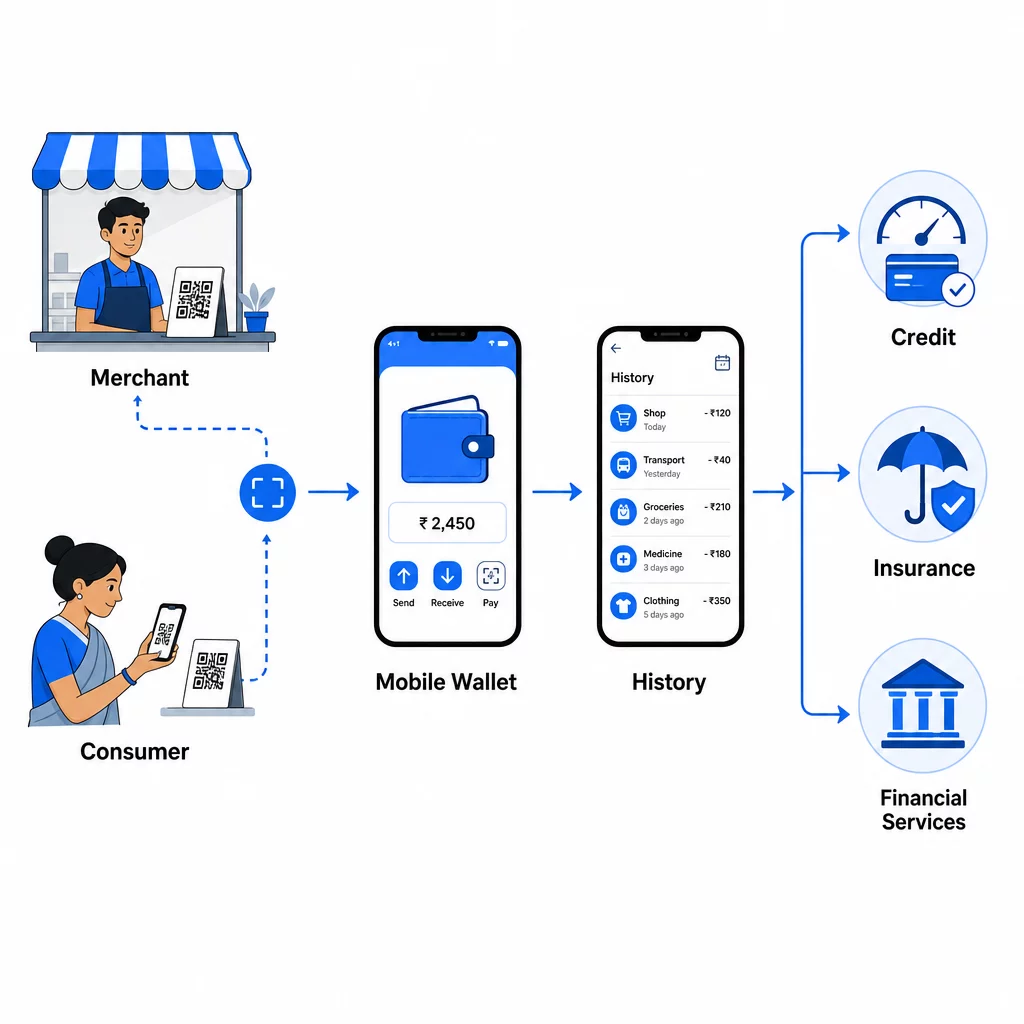
Το CGAP το διατυπώνει ξεκάθαρα: οι κωδικοί QR είναι “ένας πολλά υποσχόμενος τρόπος για την ψηφιοποίηση πληρωμών σε εμπόρους χαμηλού εισοδήματος και για να ωθήσουν τους πελάτες να γίνουν ψηφιακοί”, και τα ιστορικά συναλλαγών που δημιουργούν “μπορούν να φέρουν πρόσβαση σε πίστωση και άλλες επίσημες χρηματοοικονομικές υπηρεσίες, δημιουργώντας μια πύλη προς τη χρηματοοικονομική ένταξη”.”
Η εμπειρία από την Ανατολική Ασία ενισχύει αυτό το σημείο. Καθώς οι πληρωμές μέσω κινητού τηλεφώνου που βασίζονται σε QR αντικαθιστούν τα μετρητά, οι τράπεζες μπορούν να μειώσουν τα κόστη που σχετίζονται με τις υπηρεσίες μετρητών – απελευθερώνοντας κεφάλαια για δανεισμό και άλλες δραστηριότητες προστιθέμενης αξίας. Η περίπτωση της χρηματοοικονομικής ένταξης δεν είναι αμιγώς θεωρητική· υποστηρίζεται από παρατηρήσιμη αλλαγή συμπεριφοράς σε μεγάλη κλίμακα.
Κίνδυνοι και Εμπόδια προς Παρακολούθηση
Η περίπτωση ανάπτυξης είναι ισχυρή, αλλά καμία ειλικρινής ανάλυση αγοράς δεν αγνοεί τους αντίθετους ανέμους.
Απάτη και τρωτά σημεία ασφαλείας
Οι στατικοί κωδικοί QR μπορούν να παραβιαστούν φυσικά, και η αδυναμία των περισσότερων χρηστών να επαληθεύσουν τον προορισμό ενός κωδικού πριν από τη σάρωση δημιουργεί συνεχή κίνδυνο απάτης. Καθώς η υιοθέτηση κλιμακώνεται, τα πρότυπα απάτης τείνουν να κλιμακώνονται μαζί της. Τα πλεονεκτήματα ασφάλειας και ταχύτητας των πληρωμών με κωδικούς QR είναι πραγματικά, αλλά εξαρτώνται από τις επιλογές υλοποίησης – ιδιαίτερα τη χρήση δυναμικών κωδικών έναντι στατικών – και όχι μόνο από την τεχνολογία.
Κενά εμπιστοσύνης και ψηφιακού γραμματισμού
Έρευνες από την Καμπότζη και άλλα πλαίσια αναδυόμενων αγορών αναγνωρίζουν σταθερά την εμπιστοσύνη ως πρωταρχικό εμπόδιο στην υιοθέτηση. Όπου οι καταναλωτές στερούνται εμπιστοσύνης στα ψηφιακά συστήματα – ή όπου προηγούμενες εμπειρίες απάτης έχουν βλάψει την εμπιστοσύνη – η υιοθέτηση σταματά ανεξάρτητα από την ποιότητα της υποδομής. Οι πρωτοβουλίες ψηφιακού γραμματισμού που υποστηρίζονται από την κυβέρνηση αποτελούν μέρος της πολιτικής απάντησης, αλλά η πρόοδος είναι άνιση.
Κίνδυνοι κατακερματισμού
Ενώ τα διαλειτουργικά εθνικά πρότυπα μειώνουν τον κατακερματισμό εντός των χωρών, η διασυνοριακή διαλειτουργικότητα παραμένει ελλιπής. Οι επιχειρήσεις που δραστηριοποιούνται σε πολλές αναδυόμενες αγορές αντιμετωπίζουν την πρακτική πρόκληση της πλοήγησης σε διαφορετικά συστήματα, πρότυπα και ρυθμιστικά περιβάλλοντα. Η προσπάθεια ενσωμάτωσης της ASEAN είναι ένα σημαντικό βήμα προς τα εμπρός, αλλά καλύπτει ένα περιορισμένο σύνολο χωρών.
Εξαρτήσεις υποδομής
Οι πληρωμές QR απαιτούν αξιόπιστη σύνδεση κινητού διαδικτύου. Σε αγροτικές περιοχές και αστικές ζώνες χαμηλότερου εισοδήματος – ακριβώς οι πληθυσμοί που είναι πιο σχετικοί με τους στόχους χρηματοοικονομικής ένταξης – η συνδεσιμότητα μπορεί να είναι ασυνεπής. Αυτός ο περιορισμός περιορίζει το πόσο γρήγορα μπορεί η υιοθέτηση των QR να φτάσει στα πιο υποεξυπηρετούμενα τμήματα.
Τι σημαίνει αυτό για τις επιχειρήσεις που δραστηριοποιούνται σε αυτές τις αγορές
Για τις εταιρείες που ήδη δέχονται ή σχεδιάζουν να δεχτούν πληρωμές με κωδικό QR σε αναδυόμενες οικονομίες, προκύπτουν ορισμένες πρακτικές σκέψεις από αυτή την ανάλυση.
- Σχεδιάστε την αποδοχή πληρωμών γύρω από το κυρίαρχο τοπικό σύστημα. Η αποδοχή του QRIS στην Ινδονησία ή του QR που συνδέεται με το UPI στην Ινδία από τους εμπόρους φτάνει σε μια πολύ ευρύτερη πελατειακή βάση από την αποδοχή μόνο ενός ιδιόκτητου πορτοφολιού. Τα διαλειτουργικά πρότυπα υπάρχουν ακριβώς για να εξαλείψουν αυτού του είδους τον εγκλωβισμό.
- Χρησιμοποιήστε δυναμικούς κωδικούς QR αντί για στατικούς. Οι δυναμικοί κωδικοί σάς επιτρέπουν να ενημερώνετε προορισμούς πληρωμών, να παρακολουθείτε τη δραστηριότητα σάρωσης για ανωμαλίες και να απενεργοποιείτε κωδικούς εάν εντοπιστεί απάτη – όλα αυτά χωρίς επανεκτύπωση. Για επιχειρήσεις που διαχειρίζονται πληρωμές σε πολλές τοποθεσίες, αυτός ο κεντρικός έλεγχος είναι επιχειρησιακά σημαντικός. Ο οδηγός για κωδικούς QR για κινητά πορτοφόλια εξηγεί τις πρακτικές διαφορές μεταξύ δυναμικών και στατικών προσεγγίσεων σε ένα πλαίσιο πληρωμών.
- Αντιμετωπίστε τα αναλυτικά στοιχεία ως βασική λειτουργία, όχι ως κάτι δευτερεύον. Η κατανόηση του πότε και πού σαρώνονται οι κωδικοί – και η επισήμανση ασυνήθιστων μοτίβων – είναι εξίσου σημαντική για την πρόληψη της απάτης όσο και για τη βελτιστοποίηση του μάρκετινγκ. Οι επιχειρήσεις που χρησιμοποιούν κωδικούς QR για πληρωμές μεταξύ ομοτίμων αποτελεσματικά τείνουν να παρακολουθούν τα δεδομένα σάρωσης ενεργά και όχι αντιδραστικά.
- Χτίστε για το διαλειτουργικό μέλλον. Η διασυνοριακή ενσωμάτωση πληρωμών QR επεκτείνεται. Οι επιχειρήσεις που επενδύουν τώρα σε ευέλικτες υποδομές αποδοχής ανεξάρτητες από το σύστημα είναι καλύτερα τοποθετημένες για να κλιμακωθούν καθώς ωριμάζουν τα περιφερειακά πλαίσια όπως το σύστημα ASEAN.
Ξεκινήστε να δέχεστε πληρωμές QR χωρίς την πολυπλοκότητα Χρειάζεται να δημιουργήσετε κωδικούς QR πληρωμής που λειτουργούν σε όλες τις τοποθεσίες της επιχείρησής σας; Χρησιμοποιήστε το Δημιουργία κώδικα Pageloot QR για να δημιουργήσετε δυναμικούς, ανιχνεύσιμους κωδικούς – ή το Δημιουργία QR code για PayPal για να συνδεθείτε απευθείας στον λογαριασμό πληρωμών σας χωρίς να απαιτείται υλικό.
Η Τροχιά Είναι Σαφής, οι Λεπτομέρειες Ακόμα Γράφονται
Οι πληρωμές με κωδικούς QR στις αναδυόμενες οικονομίες δεν είναι μια κερδοσκοπική τάση – είναι μια πραγματικότητα υποδομής που υποστηρίζεται από εντολές κεντρικών τραπεζών, αποδεδειγμένη υιοθέτηση σε μεγάλη κλίμακα και ρυθμό ανάπτυξης που ξεπερνά τα περισσότερα τμήματα της βιομηχανίας πληρωμών. Η αγορά προβλέπεται να αναπτυχθεί κατά περίπου 20% ετησίως έως το 2033, με την Ασία-Ειρηνικό να ηγείται και τη Λατινική Αμερική, την Αφρική και τη Νότια Ασία να συμβάλλουν σημαντικά.
Το στρατηγικό ερώτημα για τους επενδυτές και τους ηγέτες επιχειρήσεων δεν είναι αν οι πληρωμές QR θα κυριαρχήσουν στο ψηφιακό εμπόριο στις αναδυόμενες οικονομίες, αλλά πόσο γρήγορα θα ωριμάσουν η διακυβέρνηση της απάτης, η διασυνοριακή διαλειτουργικότητα και ο ψηφιακός γραμματισμός για να υποστηρίξουν αυτή την κυριαρχία. Όσοι κατανοούν το ρυθμιστικό πλαίσιο – και τοποθετούνται εντός των διαλειτουργικών εθνικών προτύπων που προωθούν ενεργά οι κεντρικές τράπεζες – βρίσκονται στην καλύτερη θέση για να εκμεταλλευτούν την ευκαιρία.
Για επιχειρήσεις που αναπτύσσουν δυνατότητες πληρωμών QR σήμερα, εξερευνήστε τις λύσεις κωδικών QR διαθέσιμες σε όλους τους κλάδους για να βρείτε την κατάλληλη προσέγγιση για τον τομέα σας.
Συχνές ερωτήσεις
Οι αναδυόμενες αγορές έχουν λιγότερη υπάρχουσα υποδομή πληρωμών με κάρτα, υψηλότερα ποσοστά πληθυσμών χωρίς πρόσβαση σε τραπεζικές υπηρεσίες και χαμηλότερο κόστος smartphone σε σχέση με το κόστος των τερματικών POS. Οι κωδικοί QR καταργούν την ανάγκη για ακριβό υλικό, επιτρέποντας σε οποιονδήποτε έμπορο με έναν εκτυπωμένο κωδικό ή smartphone να δέχεται ψηφιακές πληρωμές. Κυβερνητικές πρωτοβουλίες για πληρωμές χωρίς μετρητά και διαλειτουργικά εθνικά πρότυπα QR έχουν επίσης επιταχύνει την υιοθέτηση με τρόπους που δεν έχουν άμεσο αντίστοιχο στις περισσότερες ανεπτυγμένες αγορές.
Οι κεντρικές τράπεζες σε πολλές αναδυόμενες οικονομίες έχουν αναλάβει άμεσο ρόλο στην ανάπτυξη και την επιβολή διαλειτουργικών εθνικών σχημάτων QR – παραδείγματα περιλαμβάνουν το BharatQR στην Ινδία, το QRIS στην Ινδονησία, το LankaQR στη Σρι Λάνκα και το Pix στη Βραζιλία. Αυτά τα σχήματα χρησιμοποιούν πρότυπα EMVCo για να διασφαλίσουν ότι ένας ενιαίος κωδικός QR μπορεί να δεχτεί πληρωμές από πολλούς παρόχους, μειώνοντας τον κατακερματισμό και υποστηρίζοντας την υιοθέτηση μεταξύ μικρών εμπόρων και καταναλωτών χαμηλού εισοδήματος. Πρόκειται για μια επένδυση υποδομής που καθοδηγείται από την πολιτική, και όχι απλώς ένα αποτέλεσμα της αγοράς.
Οι πιο συνηθισμένοι κίνδυνοι είναι η φυσική παραποίηση κωδικών QR (όπου απατεώνες αντικαθιστούν έναν νόμιμο κωδικό με έναν ψεύτικο, ανακατευθύνοντας πληρωμές στον δικό τους λογαριασμό) και οι επιθέσεις phishing που μιμούνται νόμιμες σελίδες πληρωμών. Η χρήση δυναμικών κωδικών QR – οι οποίοι μπορούν να παρακολουθούνται για ασυνήθιστη δραστηριότητα σάρωσης και να απενεργοποιηθούν εάν παραβιαστούν – μειώνει σημαντικά αυτούς τους κινδύνους σε σύγκριση με τους στατικούς κωδικούς. Για μια πλήρη ανάλυση των απειλών και των στρατηγικών μετριασμού, δείτε τον οδηγό για τους κινδύνους των κωδικών QR στις πληρωμές.