Are you losing prospective clients to long email threads when scheduling appointments? Requiring contacts to manually copy or type web links creates unnecessary friction that leads to dropped bookings. Connecting a QR code directly to your Calendly booking page allows anyone to scan and schedule a meeting instantly.
How to Retrieve Your Calendly Scheduling Link
Before generating your QR code, you need to locate your specific booking URL within your account. Make sure your availability, meeting buffers, minimum notice rules, and custom invitee questions are properly configured so your scheduling page is ready for visitors.
- Share a specific event type: Log in to your Calendly account, navigate to the Scheduling dashboard, hover over the card for your desired meeting type (such as a 30-minute consultation), and click Copia link.
- Share your main landing page: Go to the Scheduling dashboard, select the three dots in the top-right corner, and click Copia link to share a central page displaying all your available event types.
Generate Your Calendly QR Code
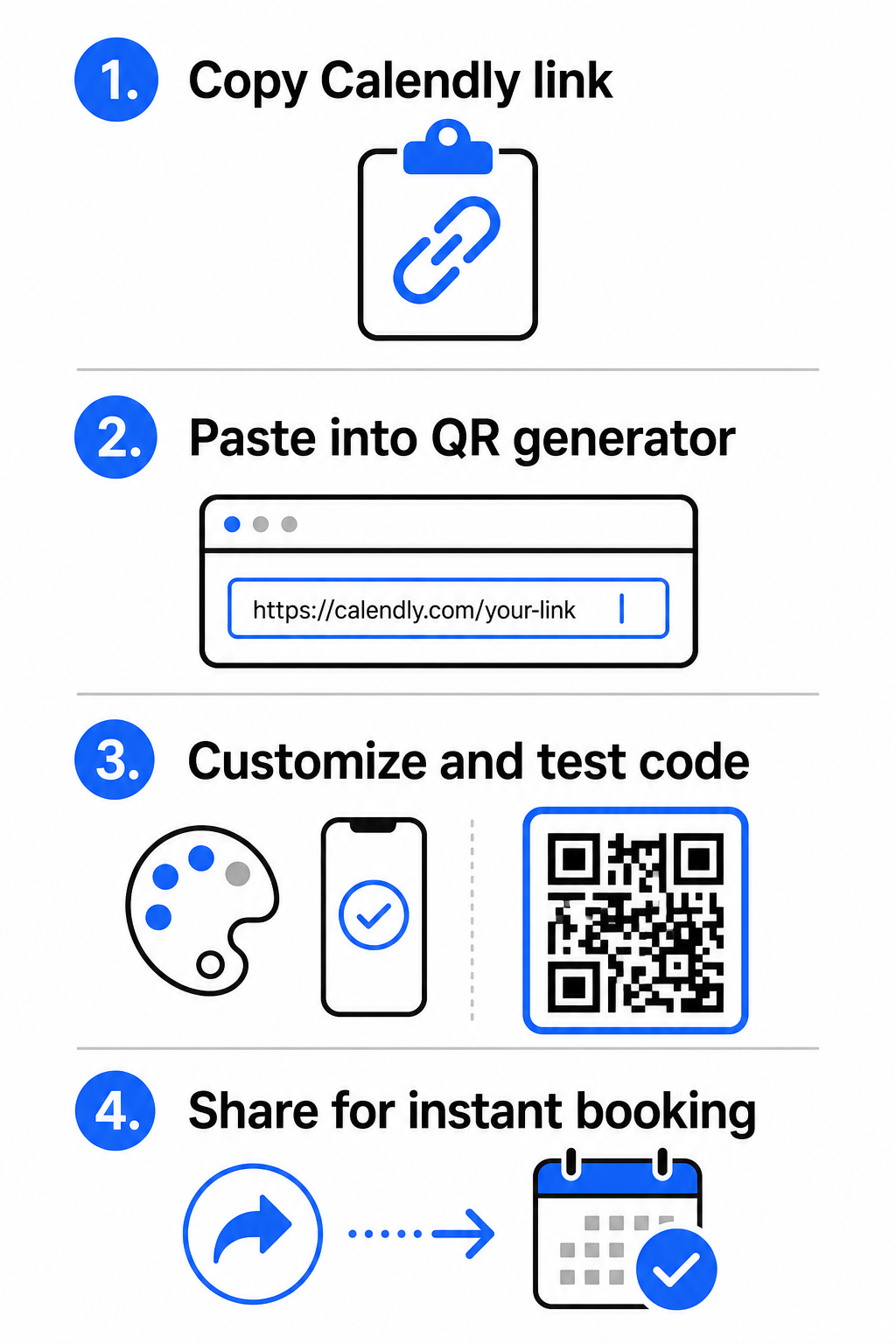
Once you have copied your URL, you can convert it into a scannable image that opens your calendar upon scanning.
- Aprire il generatore di codici QR di link in your web browser.
- Paste your copied Calendly URL directly into the destination input field.
- Click Avanti to build your initial QR code pattern.
Create Your Custom Booking QR Code Simplify your scheduling workflow today by converting your Calendly link with our generatore di codici QR di link.
Customize Visual Design for High Scannability
Customizing your QR code integrates your branding while preserving rapid camera detection. Light sensors inside smartphone cameras depend on clear geometric patterns to decode embedded data quickly.
- Maintain high contrast: Use a dark foreground color on a light background, such as black on white. Avoid low-contrast pairings like yellow on white or light blue on gray, which prevent optical sensors from reading the matrix.
- Incorporate your brand logo: Add your company logo to the center of the QR code to build visual trust and encourage users to scan.
- Proteggere la zona di silenzio: Maintain an unobstructed border around the outer edges of the code that is at least four modules wide (approximately 0.15 inches for a 1-inch code). Keep this space entirely free of text, background patterns, or visual elements.
Optimize Sizing, Materials, and Print Quality
Testing your code across physical materials and screen environments ensures reliable performance before distributing your materials to clients.
- Adhere to minimum print dimensions: Keep physical codes at a minimum size of 0,8 × 0,8 pollici (2 × 2 cm) for close-range scanning, following our detailed guida alle dimensioni dei codici QR.
- Apply the distance ratio: Use the 10:1 scanning ratio rule for signage and banners, ensuring a code designed to be scanned from a distance of 10 feet measures at least 1 foot wide.
- Select non-reflective print materials: Choose matte paper finishes or dull vinyl covers over glossy surfaces to prevent light reflections, and learn more about how printing techniques impact QR code scannability.
- Perform live device testing: Test your physical print prototypes using both iOS and Android camera apps under bright and low-light conditions to confirm immediate loading.
Where to Place Your Booking QR Code
Positioning your QR code across key offline and online touchpoints turns everyday communications into direct meeting opportunities.
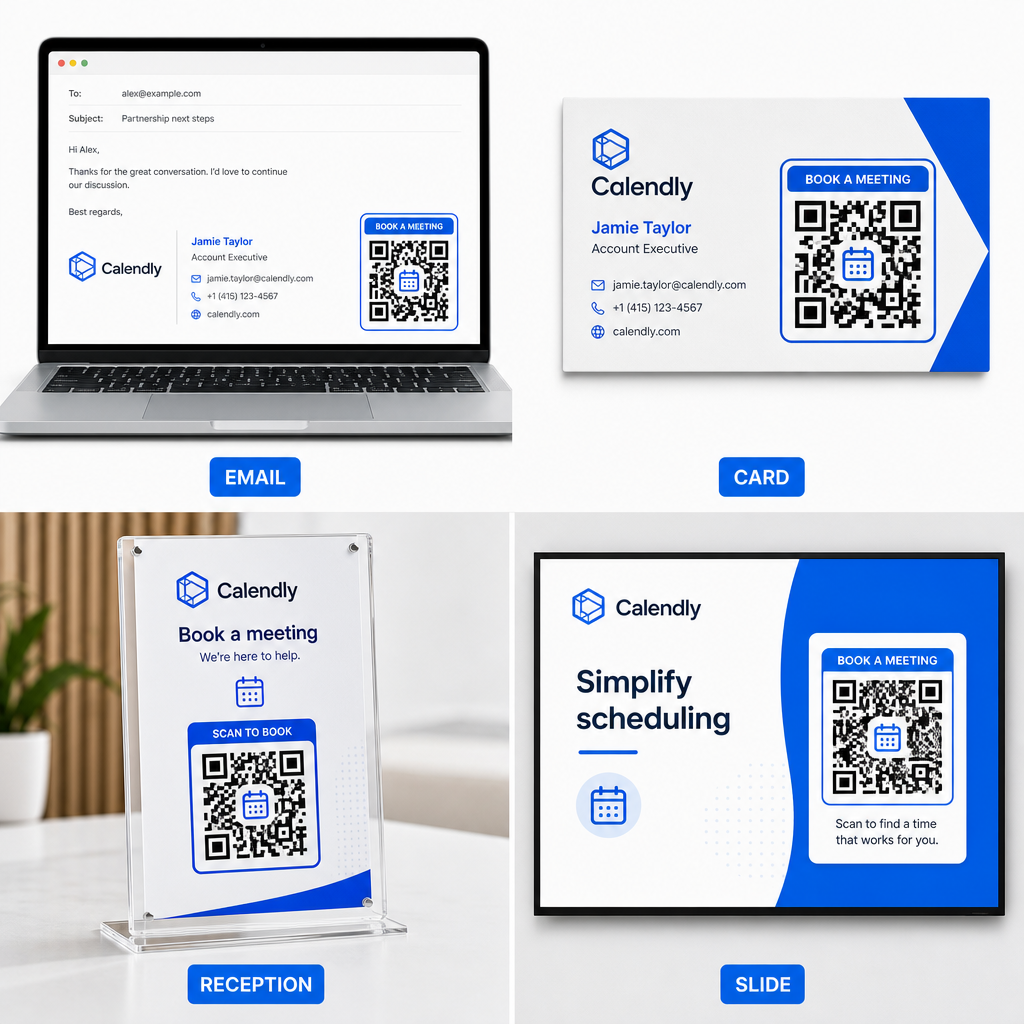
- Firme e-mail: Place a scheduling code beneath your contact details, following our practical guide on setting up a QR code for email signature.
- Biglietti da visita: Provide prospects with a direct booking shortcut immediately after networking events or trade shows.
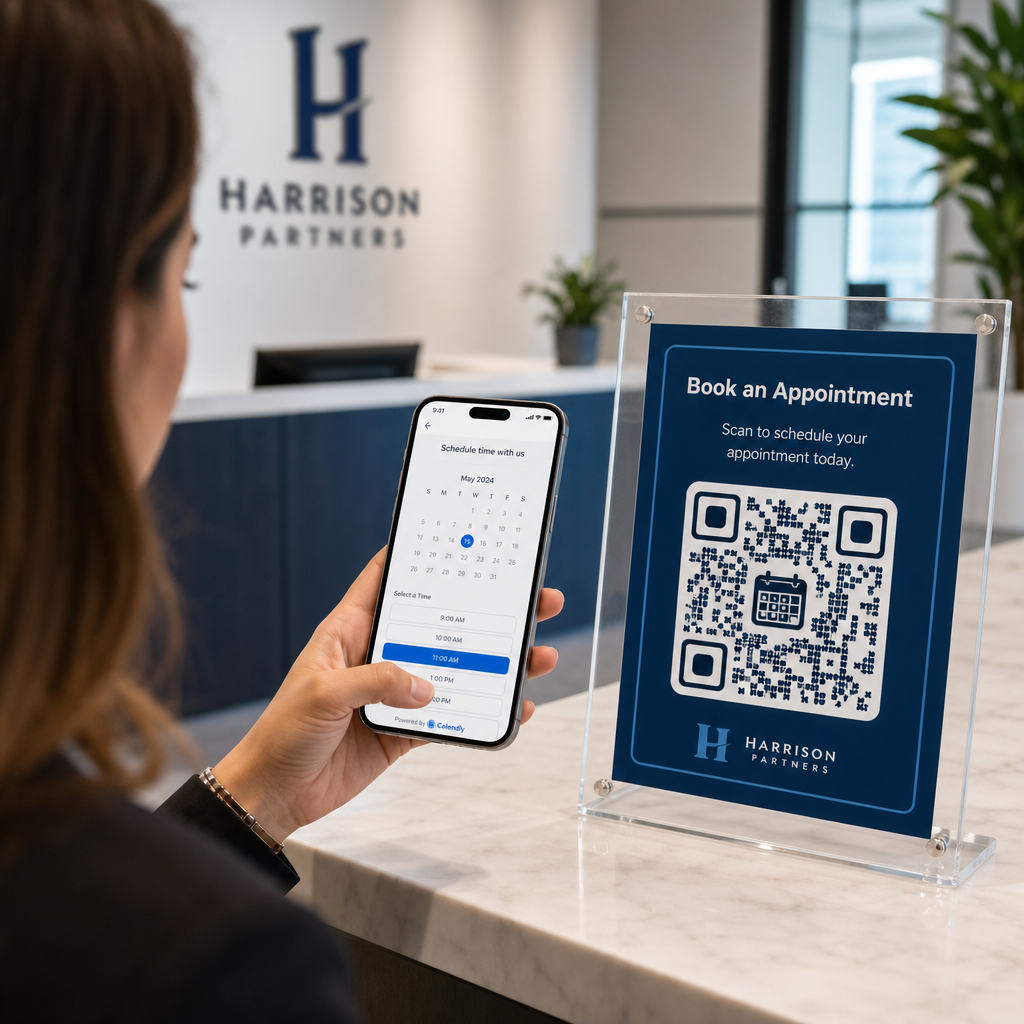
- Reception Displays: Frame QR codes on office counters so clients and patients can schedule follow-up appointments before leaving.
- Presentation Slides: Feature your QR code on the final slide of your decks so audience members can book follow-up consultations while your talk is top of mind.
Advantages of Using Dynamic QR Codes
While static QR codes permanently embed a single destination URL into their pixel matrix, using a generatore di codici QR dinamici routes scanners through an editable redirect link.
- Update destination links without reprinting: If you update your Calendly username or switch scheduling software, you can update the destination URL inside your management dashboard without replacing your printed collateral. Review our guide on how to edit QR codes for step-by-step instructions.
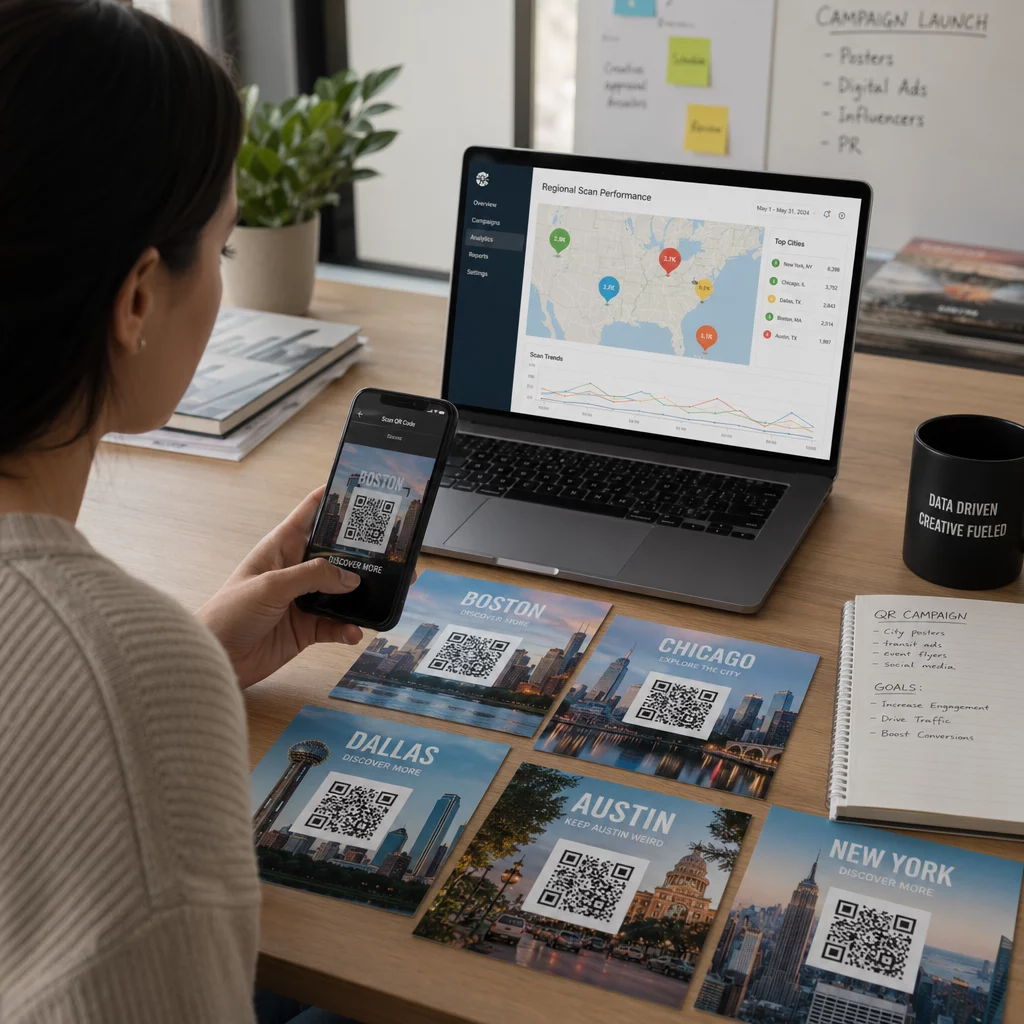
- Track scan analytics: Dynamic codes capture real-time engagement data, including scan counts and geographic locations, helping you discover which marketing channels convert best.
Streamline Your Appointment Scheduling
Replacing long URLs with a direct QR code removes booking friction and connects clients directly to your calendar. Build your personalized dynamic code with Pageloot to track engagement, update destination links easily, and automate your appointment workflow.
Domande Frequenti
Yes, provided you use a dynamic QR code. Dynamic codes point to a short redirect URL, allowing you to update your target Calendly link inside your management dashboard at any time without reprinting physical materials.
For close-range scanning on business cards or flyers, print your QR code at least 0.8 × 0.8 inches (2 × 2 cm). For larger displays, scale the code using a 10:1 ratio based on the expected scanning distance.
Scanning failures usually stem from low color contrast, missing space in the quiet zone, broken destination links, or surface glare on glossy printed materials.