Need to generate hundreds – or thousands – of QR codes without building each one manually? Creating them one at a time is impractical at scale and introduces inconsistency across your campaigns. This guide walks you through the fastest, most reliable methods for bulk QR code creation, from CSV uploads to enterprise-level automation.
Why Bulk QR Code Creation Matters
When you’re running a product launch, managing event registrations, or labeling inventory, individual QR code creation simply doesn’t scale. Even at 50 codes, manual generation consumes hours of repetitive work – and that’s before accounting for design consistency, file organization, or tracking setup.
Bulk QR code tools solve this by letting you define all your codes in a structured file – typically a CSV or spreadsheet – and generate the entire batch in one workflow. The result is a consistent, download-ready set of codes that can be deployed immediately.
The use cases span nearly every industry:
- Retail and e-commerce: unique product codes per SKU linking to specs, reviews, or purchase pages
- 大事记: per-attendee codes for check-in, session access, or digital programs
- 酒店业: table-by-table menu codes or room-specific information links
- Logistics and inventory: asset tags linking to maintenance records or location data
- Marketing agencies: campaign-specific codes with individual tracking per placement
What You Need Before You Start
Before generating your batch, a few decisions will shape your workflow significantly.
Static vs. dynamic codes: Static QR codes encode the destination directly into the pattern. Once printed, they cannot be changed. Dynamic QR codes use a short redirect URL managed by the platform, which means you can update the destination at any time – even after the codes are already printed and distributed. For bulk campaigns where content may evolve, 动态二维码 are the better choice.
Your data file: Bulk generation tools typically accept a CSV or spreadsheet with one row per QR code. At minimum, each row needs the destination URL or content. Depending on the platform, you can also include fields for the code’s name, folder assignment, UTM parameters, or design template.
Design consistency: If your codes need to carry brand colors, logos, or specific frame styles, confirm that the tool allows you to apply a shared design template across the entire batch rather than configuring each code individually.
Volume: Know your scale before selecting a tool. Some platforms cap bulk generation at a few hundred codes per batch; enterprise-grade platforms like Pageloot support up to 100,000 QR codes via a single CSV upload.
How to Create QR Codes in Bulk Using a CSV Upload
CSV-based bulk generation is the most common method. Here’s how the process works on a platform like Pageloot.
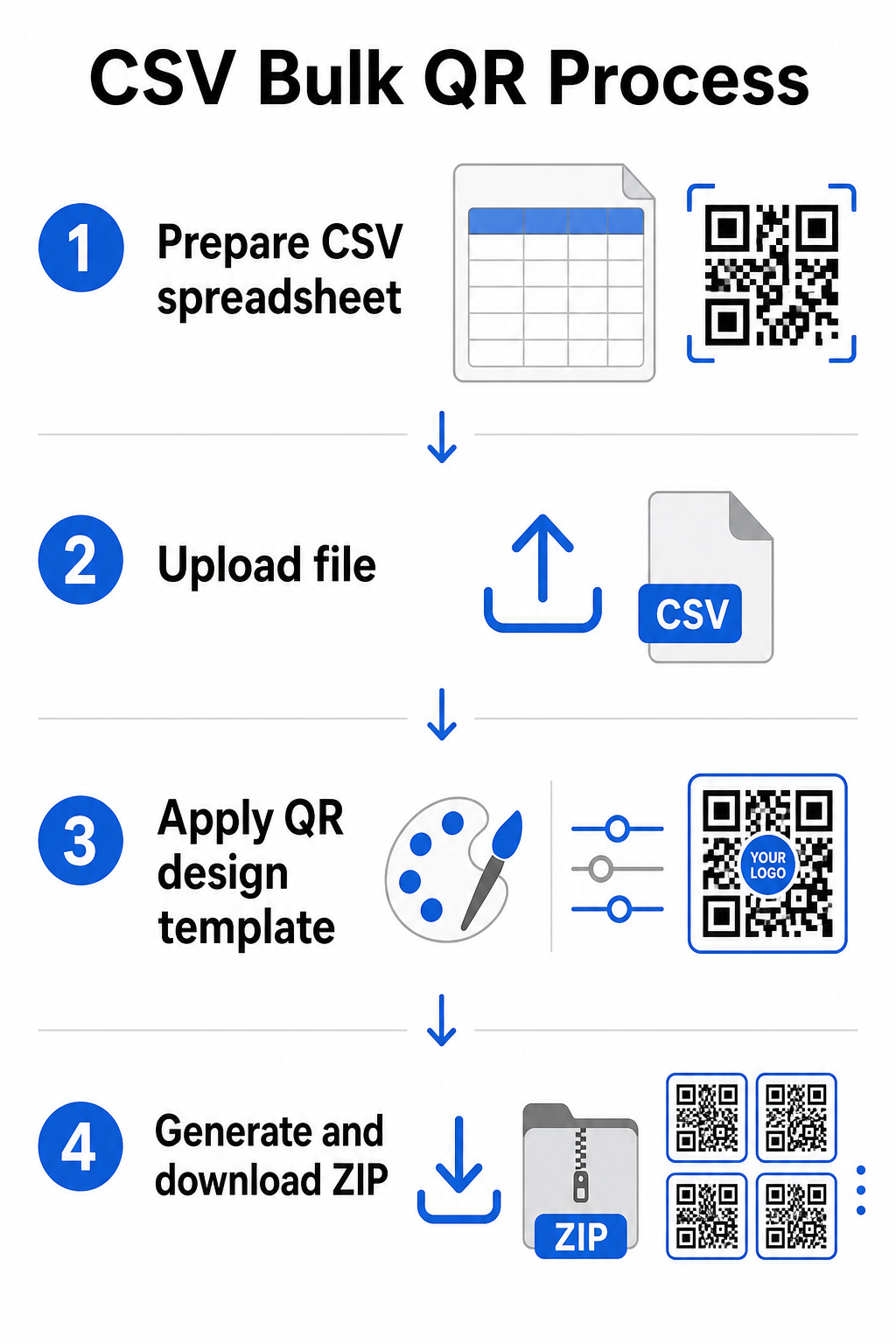
Step 1: Prepare your spreadsheet
Open a spreadsheet tool – Excel, Google Sheets, or any CSV editor – and structure your data. Each row represents one QR code. Include at minimum:
- The destination URL or content for each code
- A name or label for each code (this helps with organization later)
- Any campaign or folder identifiers you want to use
Export the file as a CSV (comma-separated values) when you’re ready to upload.
Step 2: Upload the CSV to the bulk generator
Log into your Pageloot account and navigate to the bulk creation section. Upload your CSV file. The platform will parse each row and queue the codes for generation. Review the preview to confirm the mapping is correct – destination URLs should match the intended rows.
Step 3: Apply a design template
Rather than styling each code manually, select a shared design template to apply across the entire batch. This is where you add your brand logo, choose colors, and configure frame styles. Applying a consistent design at this stage ensures all codes look uniform across packaging, print materials, or signage.
Step 4: Generate and download
Initiate the batch. The platform generates all codes simultaneously and packages them for download, typically as a ZIP file containing individual image files (PNG, SVG, PDF, or EPS depending on your output needs). File names usually correspond to the code names from your spreadsheet, making it straightforward to match each code to its intended use.
Generate Your Entire Batch at Once Skip the manual work and create hundreds or thousands of QR codes from a single spreadsheet. Use the 二维码生成器 or explore Dynamic QR Code options to get started with bulk creation today.
Using Google Sheets for Bulk Static QR Codes
If your team already works in Google Sheets, Pageloot supports direct integration for generating multiple static QR codes from spreadsheet data. This approach is particularly convenient for teams that maintain live data in Sheets – product catalogs, event attendee lists, or location directories – where the source data is already structured and updated collaboratively.
The process mirrors the CSV method, but instead of exporting and re-uploading, you connect your Sheet directly. Each row in the designated column becomes the input for one QR code. This reduces friction for teams who don’t want to manage separate CSV exports every time the source data changes.
Organizing Large Batches After Generation
Generating codes is only part of the challenge. At volume, keeping them organized becomes its own task. A few practices help significantly.
Use folders to sort codes by campaign, project, client, or product line. Pageloot’s QR code folder feature makes it easy to keep dozens of active campaigns separated so team members can navigate without confusion. Establish a clear naming convention in your CSV before you upload – something like `campaign-nameplacementvariant` – so that individual codes are easy to locate and match to their analytics data later. Finally, group by use case from the start: keep event codes, product codes, and marketing codes in separate folders so that performance reporting stays clean and actionable.
Bulk QR Codes with Dynamic Updating
One significant limitation of static bulk QR codes is that any destination change requires reprinting. If you generate 5,000 product labels and the linked landing page URL changes, those codes become outdated the moment they’re distributed.
Dynamic bulk QR codes eliminate this problem. Each code in your batch points to a short redirect URL maintained by Pageloot. You can update the destination for individual codes – or push changes across an entire batch – without touching the physical code itself. This is particularly valuable for seasonal campaigns where landing pages change, product packaging where information pages are updated post-print, and event materials prepared in advance before final URLs are confirmed.
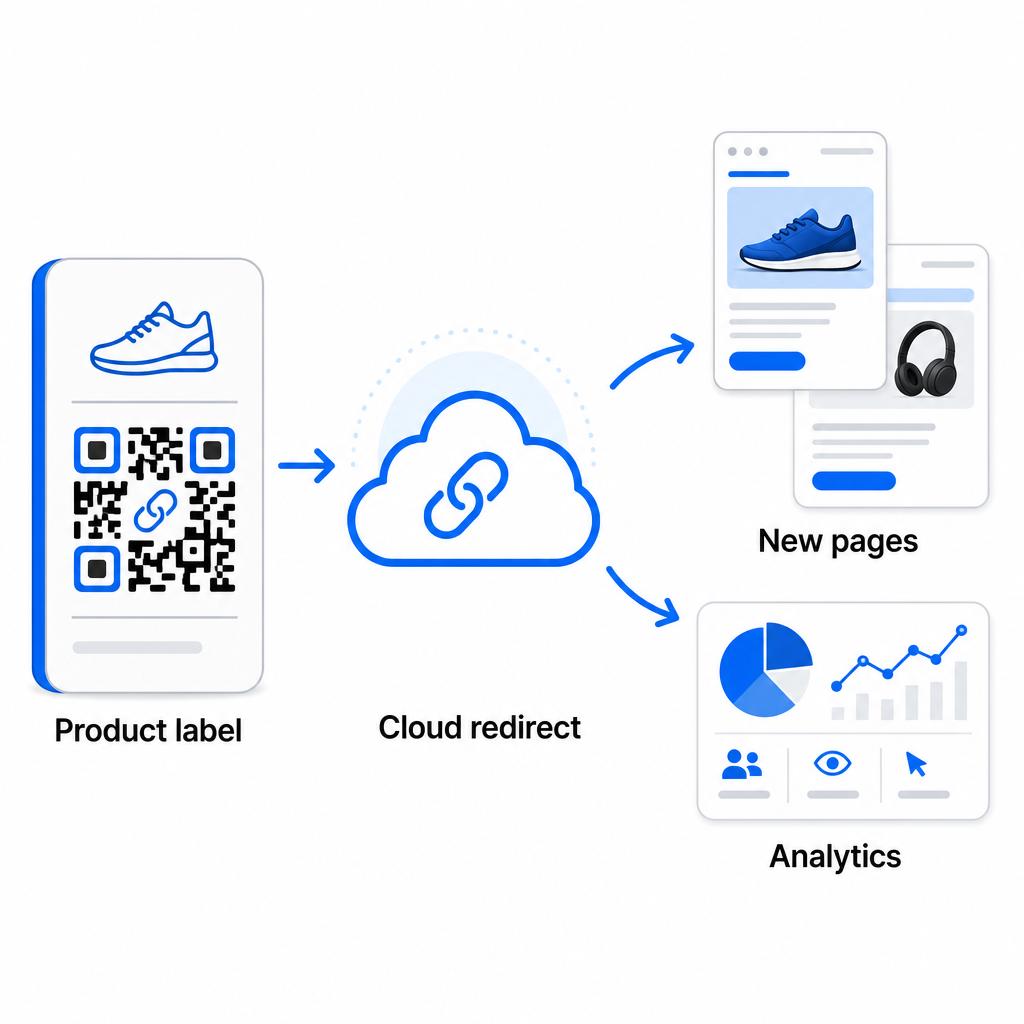
Beyond flexibility, dynamic codes also unlock detailed scan analytics: number of scans, scan times, geographic locations, device types, browser and OS data, and GPS-based location tracking. For any bulk deployment where performance matters, this data gives you a direct view into which codes are working and where engagement is highest. You can learn more about how dynamic QR codes support marketing campaigns and why that flexibility matters at scale.
Track Every Scan Across Your Entire Batch Dynamic QR codes let you update destinations and monitor performance in real time – across every code in your campaign. Explore the 动态二维码生成器 to create trackable bulk codes with a full analytics dashboard.
Scaling to Enterprise Volume
For organizations generating tens of thousands of codes – think large retail chains, enterprise logistics operations, or national marketing campaigns – the workflow needs to be more robust than a single CSV upload.
Pageloot 的 enterprise QR code platform supports batch generation at scale, with CSV-based workflows capable of producing up to 100,000 QR codes in a single operation. At this level, additional considerations come into play.
API integration removes manual steps entirely by automating code generation directly from internal systems such as CRMs, inventory management platforms, or e-commerce backends. API-based workflows allow you to generate, update, and retire codes programmatically as your data changes. For a deeper look at how this works in practice, see the guide on API-based QR code management.
Role-based access becomes important for large teams, allowing different users to manage specific campaigns or clients without accessing unrelated data.
White-label options are especially relevant for agencies managing bulk QR deployments on behalf of clients. With white-label features, QR codes resolve to client domains and dashboards carry client branding – keeping the client experience seamless and professional.
Common Mistakes to Avoid in Bulk Generation
A few issues appear repeatedly when teams generate QR codes at volume, and most of them are easy to prevent with a little planning upfront.
Not testing before printing is the most costly mistake. Always scan a representative sample from your batch before committing to a print run. A single formatting error in your CSV can propagate to hundreds of broken codes. Similarly, using static codes for content that might change is a risk that dynamic codes eliminate entirely – if there’s any chance a destination URL or landing page will be updated, build that flexibility in from the start.
File format requirements also matter more than teams often expect. Print production needs vector formats (SVG, EPS, PDF) for sharp output at any size, while PNG files work for digital use but can degrade when scaled up for large-format printing. Skipping organization before generation creates management headaches quickly – set up your folder structure and naming convention before the batch runs, not after. Finally, inconsistent design across a large batch looks unprofessional and undermines brand credibility; applying a shared template at generation time is far more efficient than editing codes individually afterward.
常见问题
Most bulk QR code tools, including Pageloot, accept CSV (comma-separated values) files. You can prepare your data in Excel or Google Sheets and export as CSV. Each row in your file becomes one QR code. Pageloot also supports direct Google Sheets integration for static bulk generation without needing to export a separate file.
Static QR codes encode the destination permanently – once generated and printed, the destination cannot be changed. Dynamic QR codes use a redirect URL managed by the platform, so you can update the destination at any time without reprinting. For large batches where content may change – such as product pages, event details, or campaign landing pages – dynamic codes are strongly recommended. They also provide detailed scan analytics that static codes cannot offer.
This depends on the platform and plan. Pageloot’s enterprise-level tools support generating up to 100,000 QR codes from a single CSV upload, making it suitable for large-scale retail, logistics, and marketing operations. For smaller batches, standard plans accommodate typical business needs such as events, product lines, or location-specific campaigns.