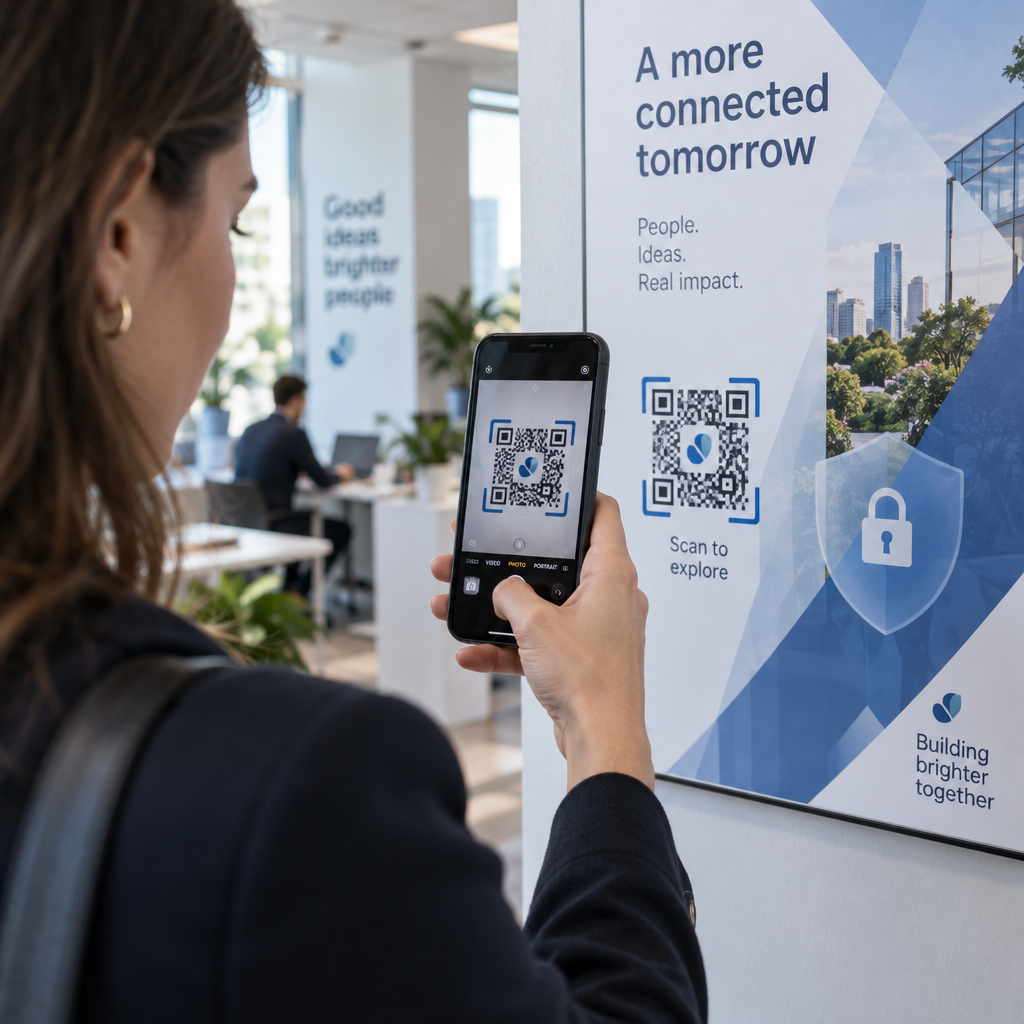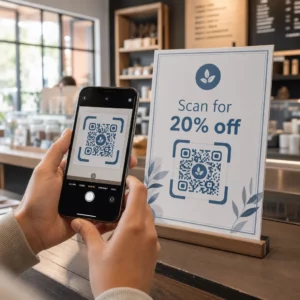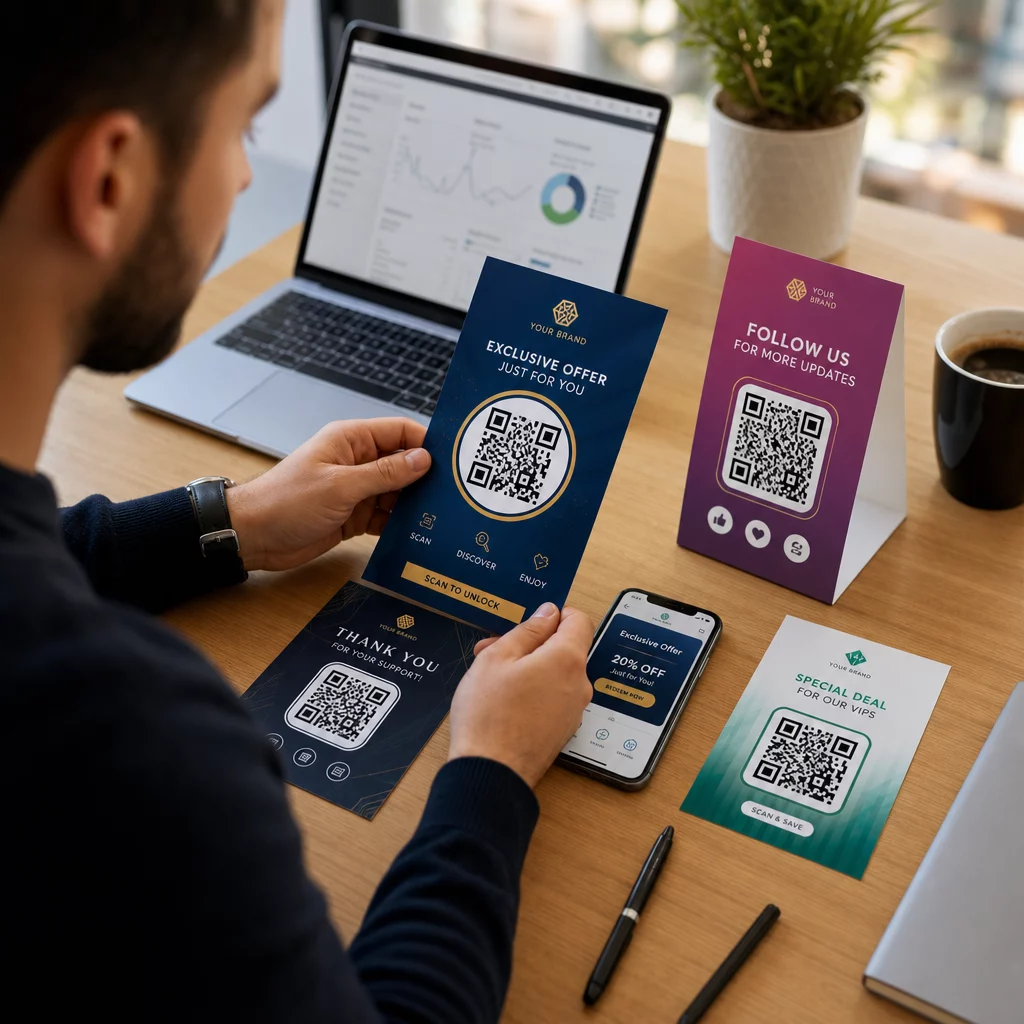
Are your marketing campaigns delivering the same message to everyone, regardless of who they are or where they found you? Generic outreach wastes budget and frustrates customers. This guide shows you how to use QR codes to deliver targeted, trackable experiences that match your audience’s context and intent.
Why Personalization Depends on Connecting Physical and Digital Touchpoints
Personalized marketing has moved from a nice-to-have to a business priority. Research from Contentful shows that 89% of marketing decision-makers consider personalization essential for success over the next three years, and 80% of businesses report increased consumer spending – averaging 38% more – when experiences are personalized. Meanwhile, 77% of customers say they feel frustrated by irrelevant promotional notifications.
The challenge is that most personalization tools work in purely digital environments. Email platforms segment by open behavior. Ad networks target by browsing history. But what happens when your customer is holding a product in a store, attending a live event, or reading a direct mail piece? That’s where the physical-to-digital gap opens up – and where QR codes close it.
A QR code printed on a flyer, package, or display acts as a bridge. Scan it, and the customer instantly lands on a digital experience you’ve designed specifically for them. The key is making sure that experience reflects who they are, where they came from, and what they’re likely to want next.
Understanding Segmentation Before You Personalize
Effective personalization starts with segmentation – identifying groups of customers who share relevant characteristics so you can speak to each group differently. Segmentation typically draws on behavioral, demographic, geographic, psychographic, and technographic criteria. The important principle is that segmentation should come before personalization: it tells you whether and how to market to a customer in the first place, then personalization shapes the message.
In QR code terms, segmentation means creating different codes for different audience groups, campaign contexts, or physical locations – then pointing each code to content tailored for that segment. Here’s how that plays out in practice:
- By audience type: A retail brand places separate QR codes on in-store signage and direct mail. In-store scanners land on a loyalty rewards page; direct mail recipients land on a first-purchase discount.
- By location: A regional campaign uses distinct QR codes for each city. Each code links to a landing page referencing local promotions, nearby store locations, or region-specific offers.
- By channel: An event company uses one QR code on tickets and another on social media posts. The ticket version links to a personalized attendee schedule; the social version links to a public event page.
- By customer stage: A SaaS company prints QR codes in welcome packets for new customers and renewal notices for existing ones. Each links to entirely different onboarding or upgrade content.
The more clearly you define your segments before building your codes, the more relevant each scan experience becomes.
Dynamic QR Codes: The Foundation of Personalized Campaigns
Not all QR codes support personalization equally. Static QR codes encode a fixed URL that can never change. Once printed, they’re locked – and they provide no scan data whatsoever. That makes them unsuitable for any campaign where you want to adjust content, run tests, or measure results.
Kode QR dinamis work differently. The code itself points to a short redirect link managed through your QR code platform. You can update that destination at any time – even after the code is printed and distributed – without generating or reprinting anything. This redirect layer is also what enables tracking: every scan passes through the platform, logging data before sending the user to their destination.
For personalized campaigns, dynamic codes give you four critical capabilities:
| Capability | Why It Matters for Personalization |
|---|---|
| Editable destination | Update landing page content for each segment without reprinting materials |
| Pelacakan pemindaian | Know how many people from each segment engaged, and when |
| Location and device data | Understand geographic patterns and optimize for mobile experience |
| A/B testing | Test different landing pages for the same audience segment |
For a deeper look at when to use each code type, choosing the right QR code for your campaign covers the tradeoffs in detail. The short version: if your campaign involves personalization, tracking, or any content you might want to update, dynamic codes are the right choice. You can also explore the 5 manfaat kode QR dinamis untuk pemasaran for a fuller picture of what they make possible.
Start Tracking Your Personalized Campaign Create dynamic QR codes for each audience segment and monitor scan data in real time. Try the Generator Kode QR Dinamis and access full analytics from your dashboard.
Building Segmented QR Code Campaigns Step by Step
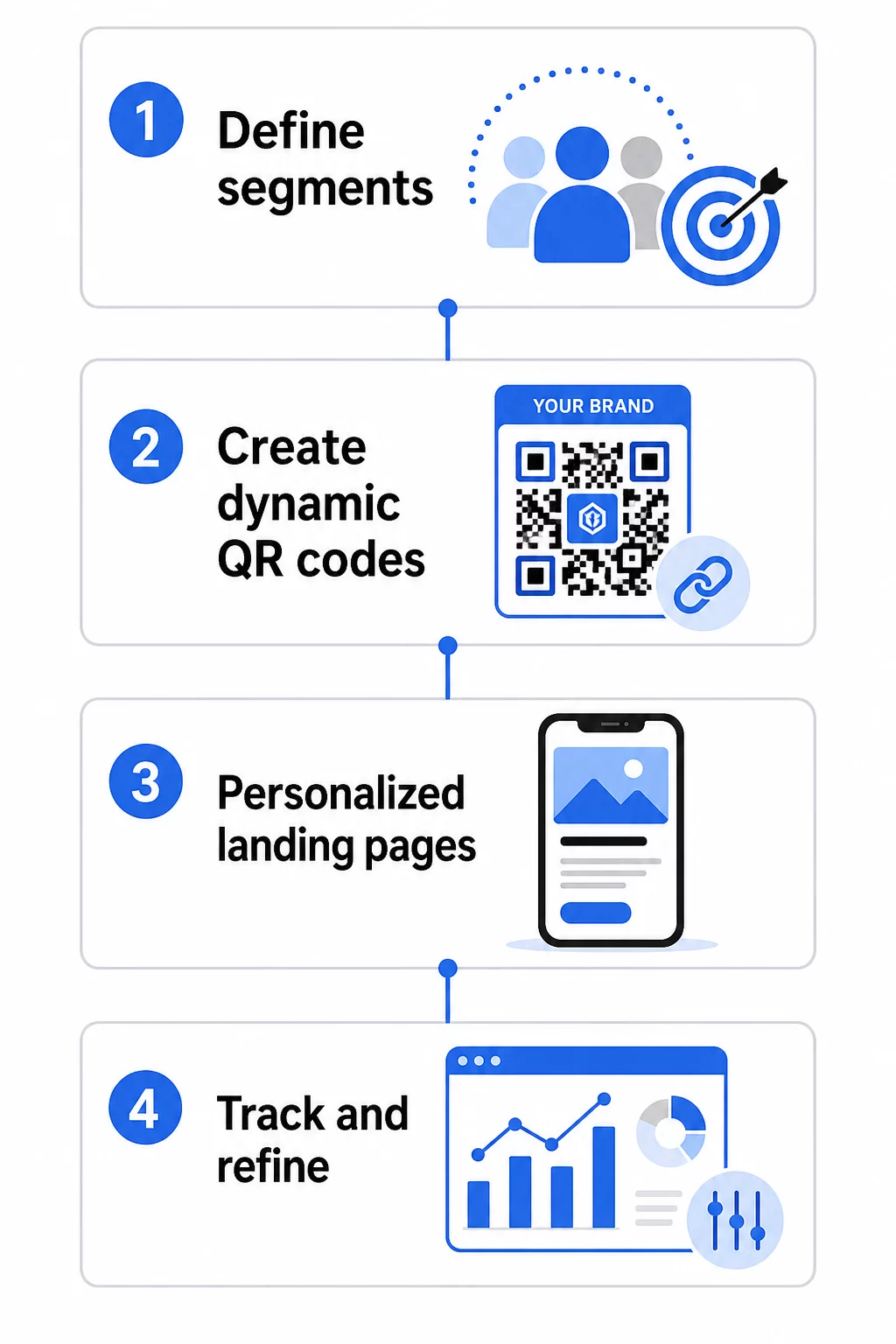
1. Define Your Segments and Goals
Start with your audience before you touch any tools. Which customer groups are you trying to reach? What action do you want each group to take? Your campaign goals should be specific and measurable – for example, “increase redemption rate on direct mail offers to lapsed customers by 20%,” not just “boost engagement.”
Once you know your segments and goals, plan a separate QR code and landing page for each meaningful combination. A campaign targeting three customer segments across two physical placements might need six distinct codes.
2. Create Unique Codes for Each Segment
Using a platform like the Pembuat kode QR Pageloot, generate a separate dynamic code for each segment. Give each code a clear internal name that identifies the segment, campaign, and placement – this discipline pays off when you’re analyzing results across dozens of codes.
If your campaign uses printed materials, customize each code’s appearance to fit the design. QR codes with logos and brand colors reinforce trust and signal that scanning is intentional, not incidental. Branded QR codes also stand out visually in cluttered environments, which directly affects whether someone stops to scan.
3. Build Personalized Landing Pages for Each Segment
The QR code is only as valuable as the experience it leads to. A first-time visitor landing on your homepage after scanning a direct mail piece is not a personalized experience – it’s a missed opportunity.
Each segment should land on a page that:
- Acknowledges the context (“Welcome, [City] shoppers” or “Exclusive offer for loyalty members”)
- Presents a clear, segment-relevant offer or message
- Includes a single, focused call to action
- Loads quickly and works well on mobile
Since most QR scans happen on smartphones, mobile optimization is non-negotiable. Test every landing page on both iOS and Android before launching.
4. Add UTM Parameters for Full Analytics Integration
Dynamic QR codes provide native scan data – counts, timestamps, device types, and locations. But you can layer even deeper insight by adding UTM parameters to your landing page URLs. This connects QR scan traffic to Google Analytics, letting you measure post-scan behavior like time on page, bounce rate, and conversion events alongside your scan data.
A UTM-tagged URL for a direct mail campaign targeting lapsed customers in Chicago might look like:
“`
https://yoursite.com/reactivate?utmsource=directmailchicago&utmmedia=qrcode&utmcampaign=reactivation_q3
“`
For a detailed walkthrough of UTM setup and Google Analytics integration, see UTM parameters for QR codes: Google Analytics tips.
5. Place Codes Strategically for Each Segment
Where a QR code appears influences who scans it and in what context. Match placement to your segment’s behavior:
- Direct mail: Include the code prominently near the offer, with a short instruction like “Scan for your exclusive discount.” Direct mail recipients have enough time to engage deliberately.
- Product packaging: Add codes to labels, thank-you cards, or shipping inserts to re-engage customers post-purchase.
- In-store signage: Position codes at eye level near the relevant product or department. Add a visible CTA so shoppers understand what they’ll get.
- Events and conferences: Use QR codes on badges, tickets, or printed schedules to direct attendees to personalized content like session details or speaker bios.
- Stickers and tags: For smaller physical touchpoints, a well-placed code with a clear CTA can drive engagement from an audience that’s already holding your product.
Itu Daftar periksa pemasaran kode QR untuk usaha kecil covers additional placement and setup considerations if you’re launching your first campaign.
Using QR Code Data to Refine Your Segments
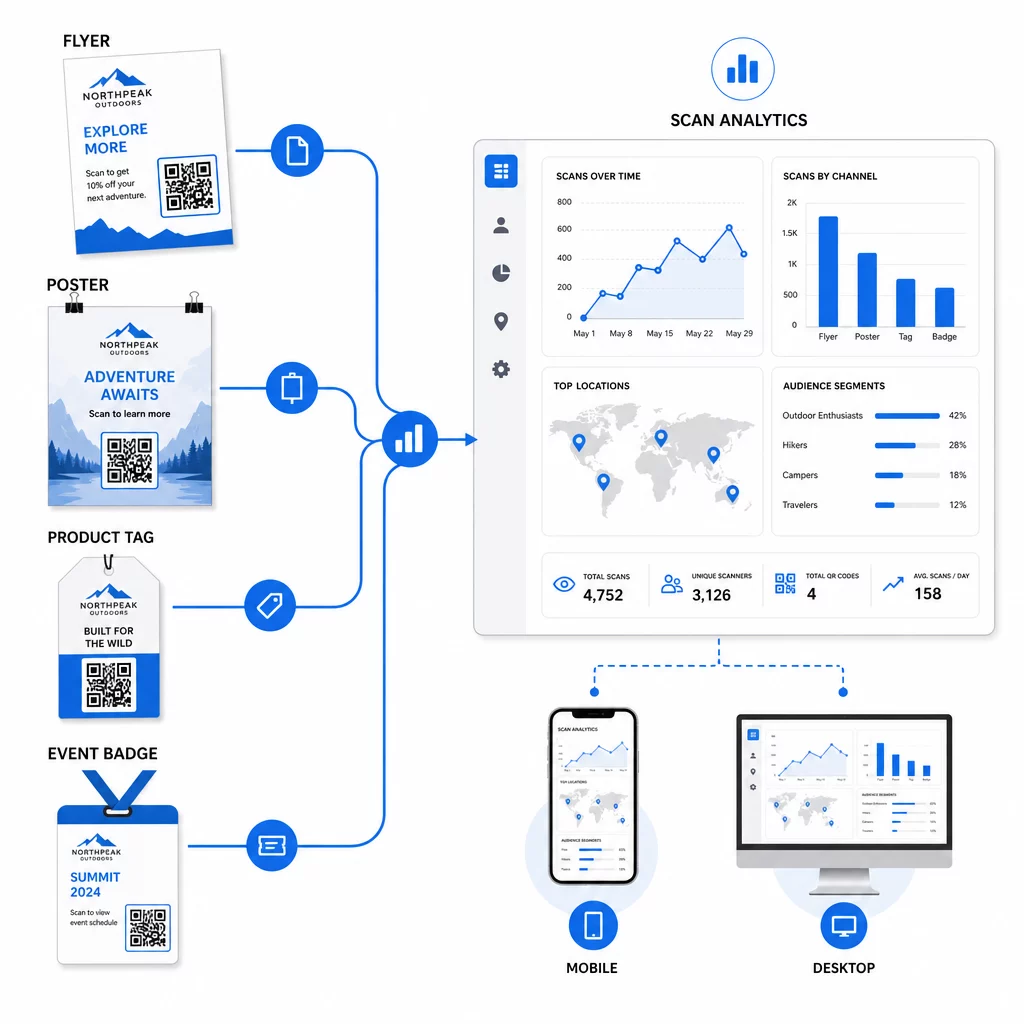
The data your dynamic QR codes generate is itself a personalization asset. Every scan gives you a signal about who responded to which message, when, and from where. Over time, this builds a clearer picture of which segments are most responsive and which placements are driving the most qualified traffic.
Key metrics to monitor per segment:
- Scan count and unique scans: Indicates overall reach and whether the same people are returning
- Scan time patterns: Reveals when each segment is most active, useful for timing follow-up communication
- Geographic distribution: Shows whether your campaign is reaching the intended regions – useful for tracking QR code campaigns by region and adjusting local spend
- Device type: If one segment skews heavily toward a particular device, you can optimize the landing page experience for that platform
- Post-scan conversions: Tracked via UTM parameters in Google Analytics, this tells you which segment-and-placement combinations are actually driving the outcomes you care about
For a structured approach to testing different variables within a segment, see the panduan untuk pengujian A/B kampanye kode QR. Dynamic codes are particularly well-suited to A/B testing because you can swap landing page destinations without touching the printed code.
You can also use scan location and device data as inputs for deeper personalization – for example, redirecting scanners from different cities to region-specific landing pages, or adjusting content based on whether the device is iOS or Android. The guide to QR codes for data-driven personalization covers these techniques in detail.
See Which Segments Are Engaging Most Menggunakan Generator Kode QR Dinamis to create separate trackable codes for each audience segment and compare performance across placements in one dashboard.
Privacy Considerations for Personalized QR Campaigns
QR codes collect first-party data – information generated by your audience’s own interaction with your materials. This is increasingly valuable as third-party tracking methods face regulatory pressure and consumer scrutiny. However, data collection through QR codes still carries obligations.
U.S. privacy law is fragmented across federal sector-specific statutes and a growing body of comprehensive state privacy laws, many of which govern how personal information is collected and used for marketing. Best practice is to be transparent about what data your QR codes collect and why.
Practical steps to stay compliant:
- Display a brief notice near each QR code or on the initial landing page explaining what data is tracked (e.g., scan location, device type)
- Provide a link to your privacy policy on any page that collects personal information
- Avoid collecting personally identifiable information passively without disclosure
- Use data you collect only for the purposes you’ve communicated to users
Transparency also builds scan confidence. Over 80% of U.S.-based QR code users say they consider QR codes safe, but a clear CTA and recognizable branded design go a long way toward reassuring anyone who hesitates.
Common Personalization Tactics by Channel
| Channel | Personalization Tactic | QR Code Role |
|---|---|---|
| Direct mail | Unique code per recipient segment with personalized offer | Links to segment-specific landing page |
| Kemasan produk | Post-purchase re-engagement by product type | Links to how-to content, upsell, or review request |
| Papan nama di dalam toko | Location-based promotions | Links to local offers or nearest service page |
| Acara | Attendee type (speaker, sponsor, general) | Links to role-specific schedules or content |
| Social media ads | Audience interest or retargeting segment | Links to content matching the ad creative |
Each of these use cases benefits from the same underlying approach: one unique dynamic code per segment, each pointing to a targeted destination, each tracked independently so you can measure results and iterate.
For a broader look at how QR codes fit into your overall marketing toolkit, the Pageloot features overview covers the full range of QR code types and capabilities available for campaign use.
Putting It Into Practice
Personalized QR code campaigns don’t require complex infrastructure – they require clarity about your segments, discipline in creating separate codes for each, and a platform that gives you the tracking data to act on what you learn. Start with one campaign, two or three segments, and a clear conversion goal. Use the scan data to understand what’s working, then scale the approach across more channels and audience groups.
Itu pembuat kode QR tautan is a good starting point if you’re connecting segments to specific URLs. When you’re ready for full tracking, updating, and campaign management, the Generator Kode QR Dinamis gives you the flexibility to run, adjust, and measure personalized campaigns without reprinting a single material.
Pertanyaan yang Sering Diajukan
A static QR code encodes a fixed URL that cannot be changed after creation and provides no scan data. A dynamic QR code points to a redirect link you can update at any time, and it logs scan metrics including count, location, device type, and timestamp. For personalized marketing – where you need to track performance per segment and potentially update landing pages – dynamic codes are the appropriate choice.
You need one unique QR code for each meaningful combination of audience segment and placement. For example, if you’re targeting three customer groups across two physical materials, you’d create six codes. Using a platform like Pageloot, you can manage all of them from a single dashboard, which makes tracking and updating straightforward even for larger campaigns.
Add UTM parameters to the destination URL before encoding it into your QR code. Use descriptive values for utmsource (e.g., “directmailnyc”), a consistent utmmedium (e.g., “qr_code”), and a campaign name that identifies the specific campaign. Once users scan and land on your page, Google Analytics records the session under those parameters, letting you measure traffic, engagement, and conversions per segment. Dynamic QR codes make this especially flexible because you can update the UTM-tagged URL without reprinting the code.