Generator kode QR kartu nama
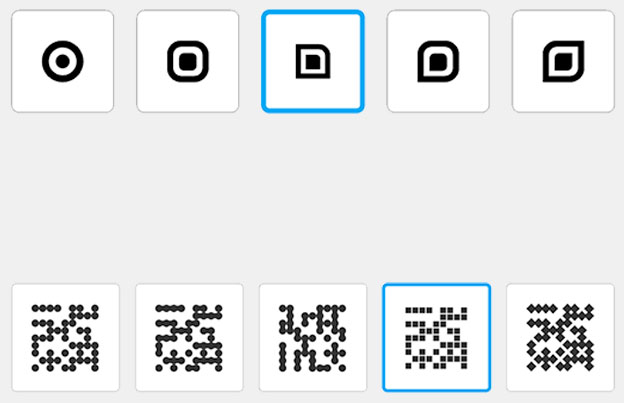
Gaya
Bingkai
Teks di atas
Warna latar belakang
Teks di atas warna
Tubuh
Warna tubuh
Tepi
Jenis bingkai
Warna bingkai tepi
Jenis bola
Warna bola tepi
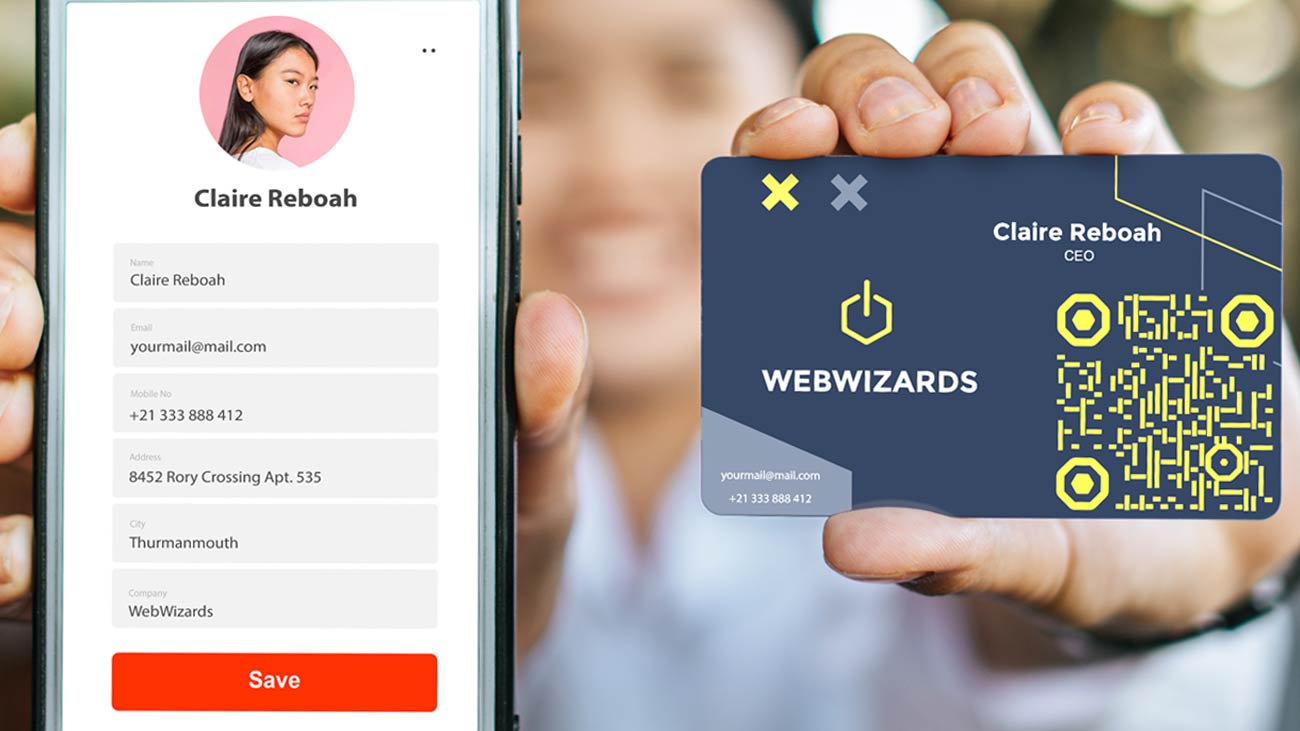
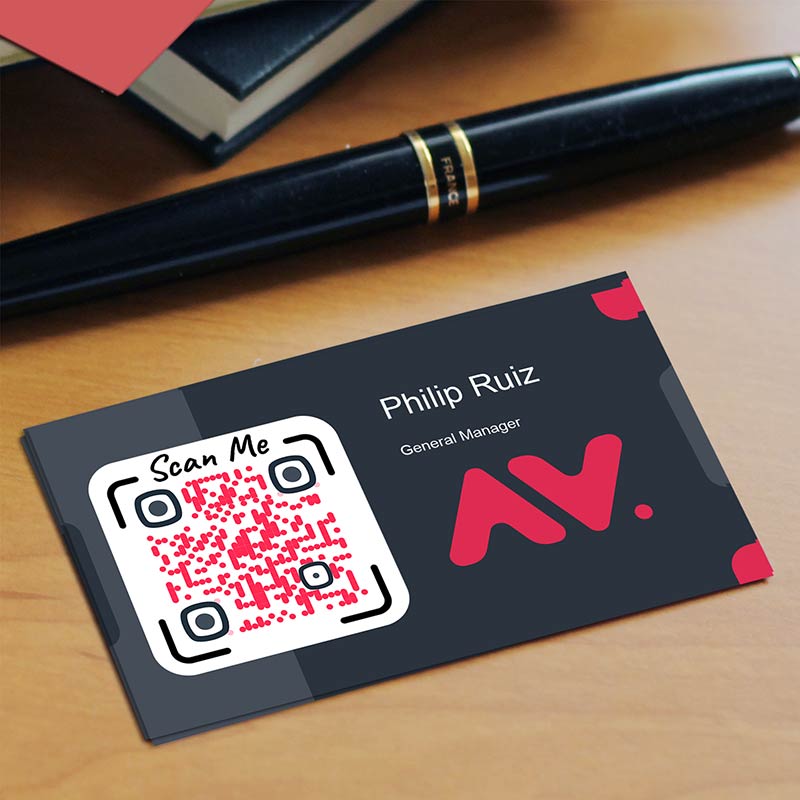
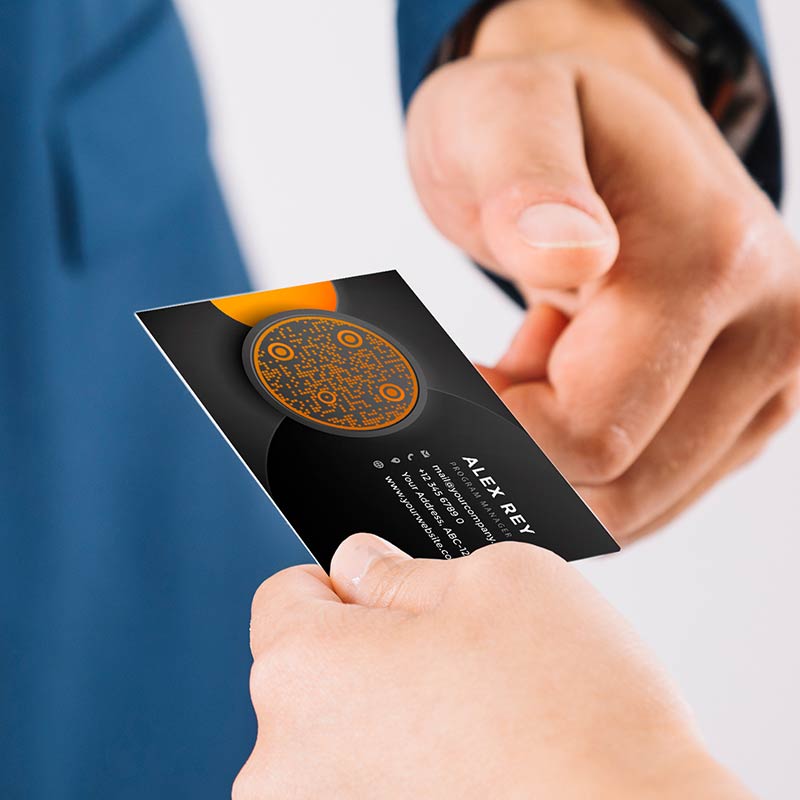
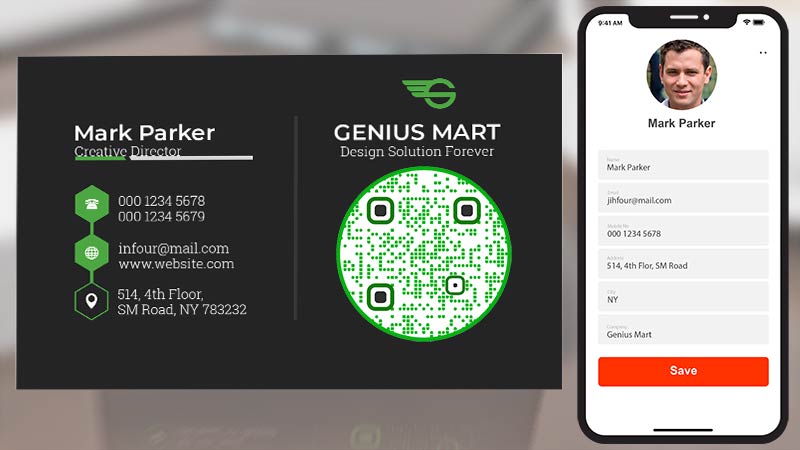
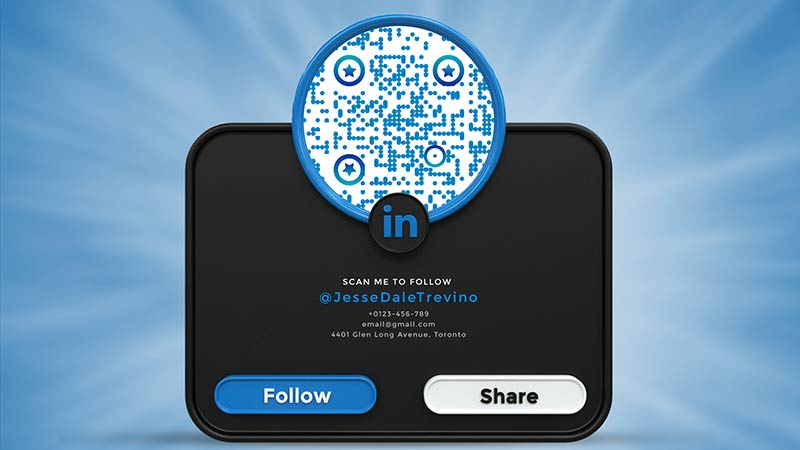
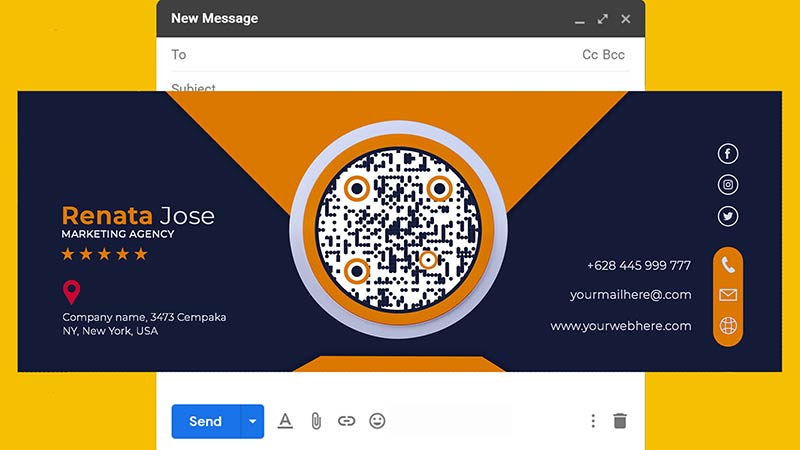
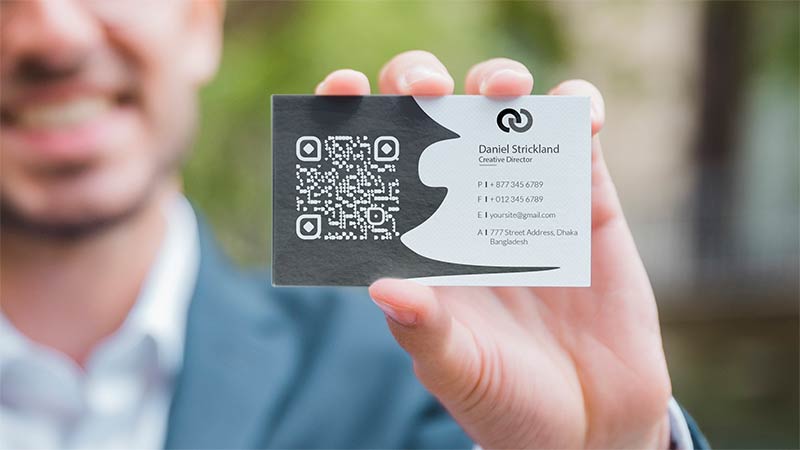
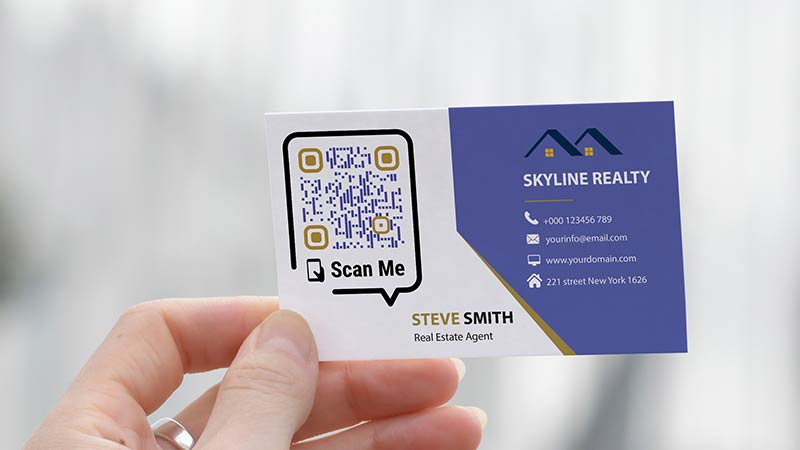
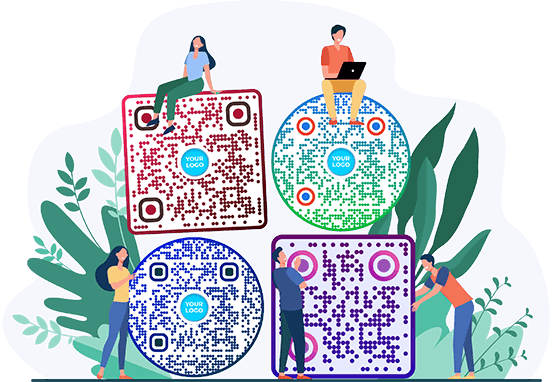
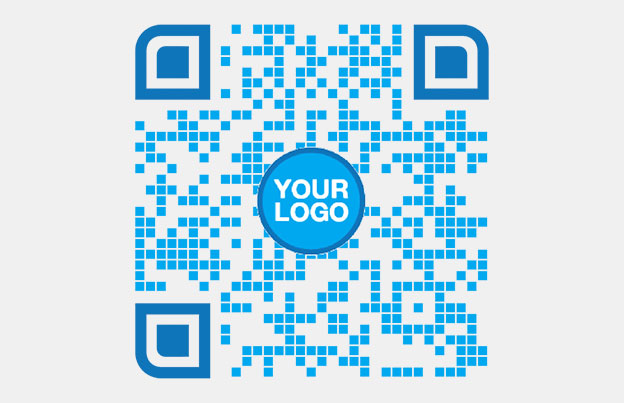
Create a QR code for a business card: examples
Ketuk pada gambar untuk memperbesar
Apa yang dimaksud dengan kartu nama kode QR?
A QR code business card is a business card with a QR code printed on it. When someone scans the code with their phone camera, they get your details without typing anything. You may also see it called a QR business card, a business card with QR code, a QR code visiting card or a name card QR code. People who search for scan code business cards or QR business cards mean the same thing.
The generator on this page makes a vCard QR code. A vCard is the standard file format for a contact. Enter your name, job title, company, phone, email and website, and the code holds all of it. When a phone scans the code, it shows your details and offers to save you as a new contact. The exact wording depends on the phone.
A QR business card can also open a page instead, such as your website, portfolio or digital business card. For that, choose the Link option at the top of the generator and paste your address. The section below explains which of the two fits your card.


Bagaimana cara kerja kartu nama kode QR?


Enter your details in the generator on this page and choose colors and a shape. Then download the static code as a PNG for free. Print-ready SVG, PDF and EPS files come with a free 14-day Pageloot trial.


Add the file to your card design, or send it to your designer or printer. Make the code at least 1 inch (2.5 cm) wide.


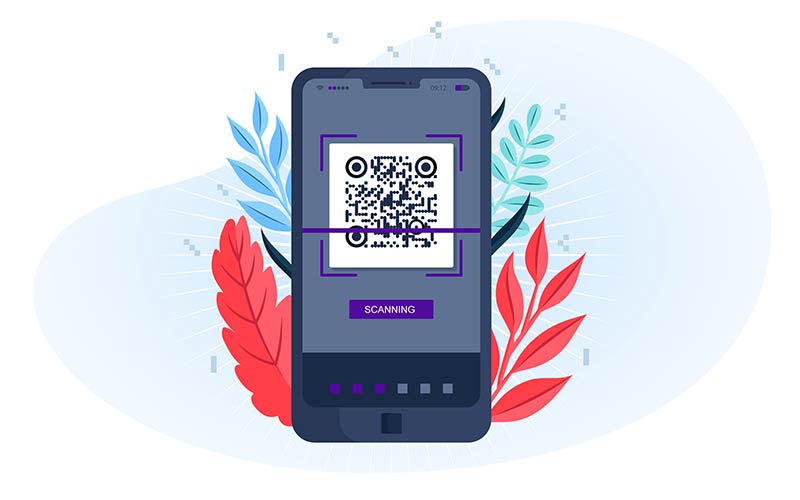
Your contact points their phone camera at the code. A vCard code shows your details with an option to save them. A link code opens your page.


Your details are now in their phone, not in a drawer. With a dynamic code you can also see how many people scanned your card, and when and where.
Bagaimana cara membuat kode QR untuk kartu nama?
Menggunakan generator kode QR kartu nama gratis di halaman ini. Masukkan informasi yang diperlukan di kolom kosong, seperti nama, jabatan, nama perusahaan, nomor telepon, alamat email, dan situs web.
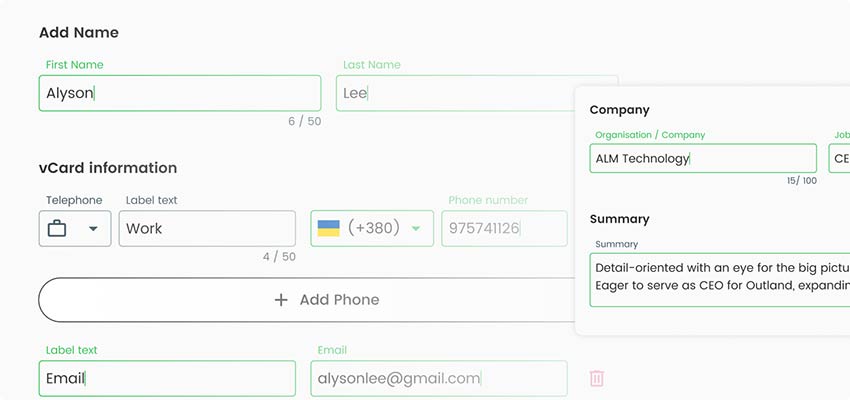

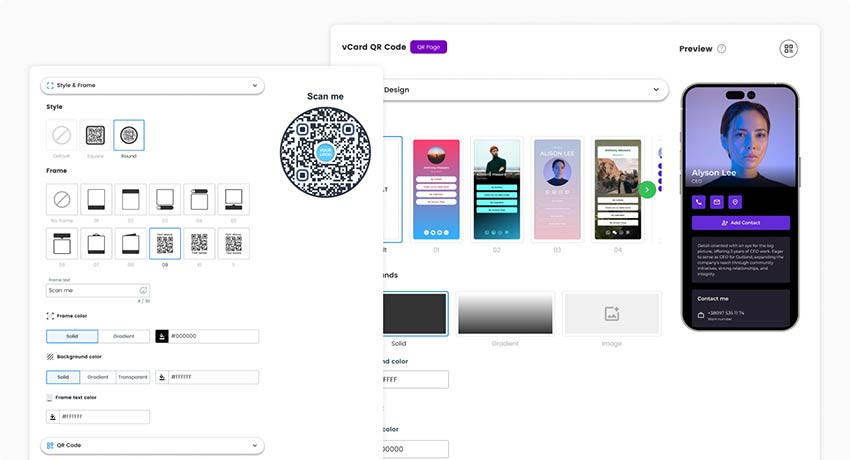
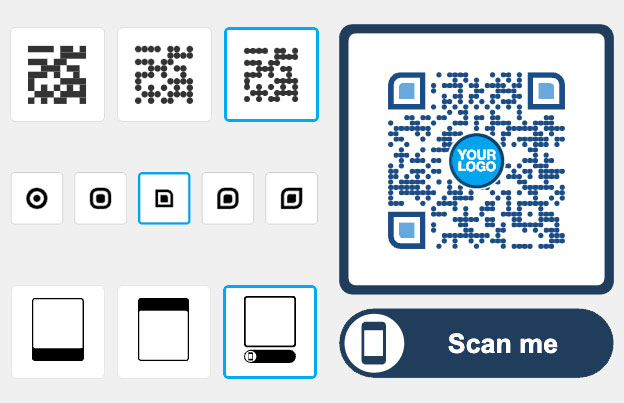
Sesuaikan kartu bisnis dengan desain kode QR. Anda dapat memilih opsi seperti memilih templat kartu nama kode QR atau mengunggah desain Anda, menyesuaikan warna, menambahkan gambar atau logo, dan memilih bentuk dan ukuran kode QR.

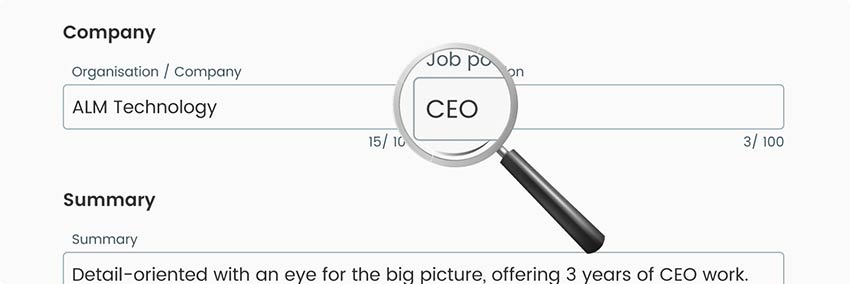
Periksa apakah semua yang Anda masukkan sudah benar.

Klik tombol "Simpan" untuk membuat kode QR untuk kartu nama ...
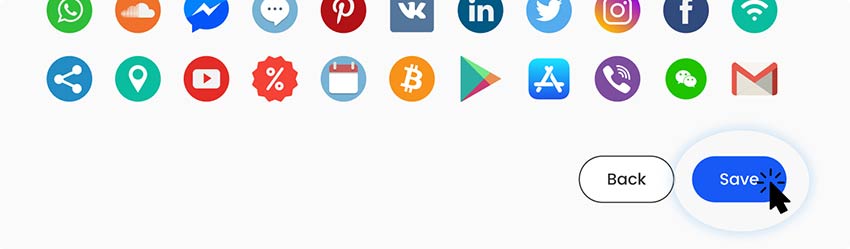

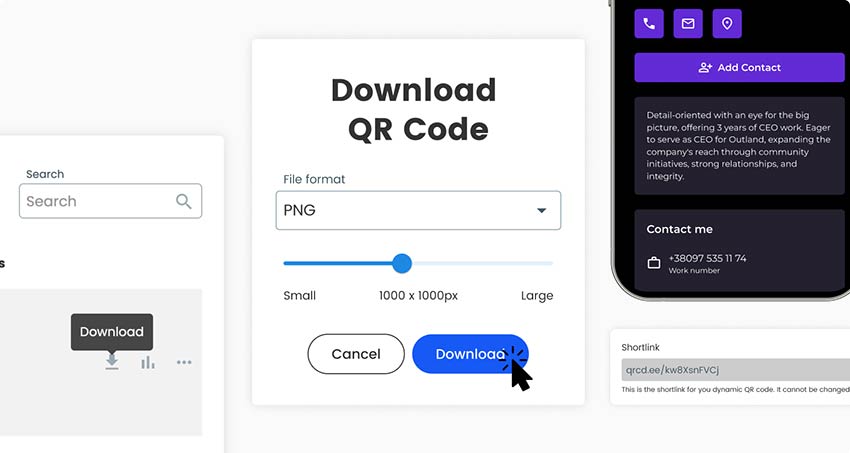
Unduh kode QR atau dapatkan tautan untuk membagikannya secara online.


Mengapa saya memerlukan kode QR untuk kartu nama?


A paper card has little room and goes out of date. A QR code adds as much detail as the other person wants without crowding the card. It also saves them from typing your name, number and email by hand, which is where mistakes happen.
Three things matter most. Your contact lands in their phone in a few seconds, so you are easy to find later. The card stays clean: name, title and one code. And with a dynamic code you can change the page it opens without printing new cards, and see how many people scan it.
A QR code does not replace the card. Some people want paper and some will not scan. Keep your name and one way to reach you as plain text on the card.
Pertanyaan yang sering diajukan
Design your code in the generator, then download the static code as a PNG for free. PNG works in most online card editors. For print, the free 14-day Pageloot trial adds SVG, PDF and EPS files. Place it in your design tool or your printer’s online editor, or send the file to your designer. Make a vCard code at least 1 inch (2.5 cm) wide with a white border, and put it on the back or in a clear corner. Print one proof and scan it before you order the full run.
You can design the code here and download the static code as a PNG for free. The free 14-day Pageloot trial adds print-ready SVG, PDF and EPS files, editing after printing and scan statistics. To keep a dynamic code active after the trial you need a plan, and the Starter plan is EUR 7 per month, billed yearly. Keep a plan active for as long as a dynamic code is printed. Code NEW30 takes 30% off your first purchase.
Yes, if it gives the reader something useful, such as saving your contact or opening your portfolio. Put it on the back so your name stays clean on the front. Skip it if it would crowd the card. Keep your name and phone number as plain text too.
Yes, with a dynamic code. It shows when, where and on which device each scan happened. A plain vCard code cannot be tracked, because the phone reads your details straight from the code and never visits a page. Tick Track scans in the generator to start the free 14-day trial.
A vCard code holds your details in the pattern, so anyone who scans it can read them. Only include what you are happy to give to anyone who gets your card, such as a work phone and work email. Leave out a home address. A link code only exposes the page it opens, and you can edit or remove that page.
Yes. The static code is free to make and download as a PNG, with your logo and colors. The free 14-day Pageloot trial adds print-ready SVG, PDF and EPS files, editing after printing and scan statistics. After the trial you need a plan (Starter is EUR 7 per month, billed yearly) to keep a dynamic code active.
Open your phone camera and point it at the code from about 4 to 12 inches (10 to 30 cm). Hold still for a second, then tap the banner that appears. No app is needed on iPhone or most Android phones. If nothing happens on iPhone, check that Settings > Camera > Scan QR Codes is on. On Android, try Google Lens.
At least 1 x 1 inch (2.5 cm) for a vCard code with name, company, phone, email and website. A short link code can go down to 0.8 x 0.8 inch (2 cm). Leave a white border of about 2 mm around it and keep it away from the trimmed edge.


Hubungi kami dan kami akan dengan senang hati membantu!
4.86 / peringkat 5 bintang


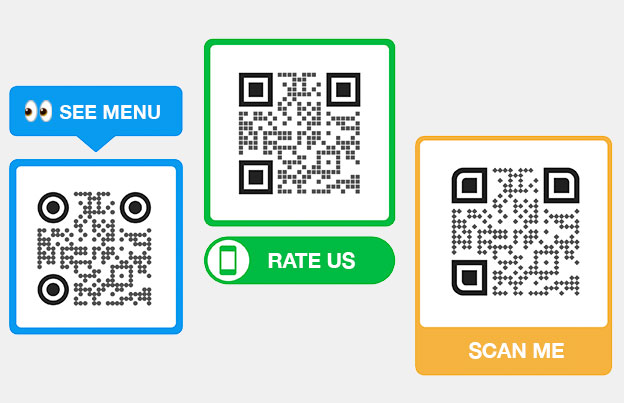
Where to use a QR code on a business card: examples
Ketuk pada gambar untuk memperbesar


A designer or consultant can link the code to a portfolio, case studies or a booking page. A dynamic link code lets you swap in your newest project without reprinting the card.


A plumber, hairdresser or electrician can link the code to a booking form or a Google reviews page. A card can sit in a wallet for months, so the code has to work later. Use a dynamic code if the booking page might move.


At a booth you hand out many cards. A vCard code lets people save you to their phone on the spot. Or link to a landing page with a product demo or sign-up form. A dynamic link code shows which events bring the most scans.


Agents often print two codes: a vCard on the card so buyers save the number, and a link code on flyers that opens current listings.
vCard or link: which digital business card QR code to use
-
vCard: saves your details
The code holds your name, title, company, phone, email and website. The phone offers to save you as a contact. It works without internet and cannot break, because there is no page to go offline. The downside: you cannot change it after printing, and a scan cannot be tracked. -
vCard: keep it short
Every field makes the code denser, and a denser code needs more room on the card. Name, company, phone, email and website is a good set. Add a street address and you will need a bigger code. If the card gets crowded, use a link instead.
-
Link to a profile: small and changeable
A link code holds only a short web address, so it stays easy to scan at a small size. Point it to your website, LinkedIn page, portfolio or digital business card. With a dynamic code you can change that address later and see scan stats. People need internet, and they take one more tap to save your number. -
Which one to pick
Use a vCard if you want your contact saved, your number rarely changes and you hand out cards in person. Use a link if you have a profile page, your details change or you want scan stats. Many people print a link code on the back and keep phone and email as text on the front.
QR code on a business card not working? Check these first
Measure the printed code. If a vCard code is under 1 inch (2.5 cm) wide, make it bigger or remove fields such as the street address. If the code must stay small, use a link code instead. A short web address makes a simple pattern that scans well at 0.8 inch (2 cm).


A code that scans on screen but not on paper usually has pale colors, glossy glare, foil or textured stock. Use a dark code on a light background with a white border. To test, reprint in black on white. Always scan a printed proof with two different phones before you order the full run.
A vCard code should offer to add a contact. If the phone shows plain text, the scanner app may not read vCards, so try the built-in camera first. In the generator, open Menampilkan lebih banyak, switch the vCard version to 3.0, which more phones accept, and print another test.


A link code only works while its page exists. Before printing, open the address in a phone browser without logging in. If your site address changes later, a dynamic code lets you point the same printed code to the new page. A static code needs a reprint.
QR code size and placement on a business card


A vCard code with name, company, phone, email and website needs at least 1 x 1 inch (2.5 cm). A short link code works down to 0.8 x 0.8 inch (2 cm). On a standard 3.5 x 2 inch card, 1 inch is half the card height. Smaller than that, the dots print too fine for many phone cameras.


Keep a plain white border around the code, at least as wide as four of its small squares. On a 1 inch code that is about 2 mm (0.08 inch). Keep text, lines and photo edges out of the border.


The back of the card is best. Your name and title stay clean on the front and the code gets room. Keep it inside the printer’s safe area, usually 2 to 3 mm (0.1 inch) from the trimmed edge, and away from folds and rounded corners.


Dark on light scans best, and black on white is safest. Dark blue or dark green also work. Avoid light colors and white codes on black, because some older scanners cannot read inverted codes.


Matte or uncoated paper is the safest. Glossy paper can reflect light into the camera. Do not put foil, embossing or spot gloss over the code, and avoid thick textured stock. These break up the dots.


A logo in the center is fine on a link code. On a small, dense vCard code, skip it or keep it very small. The logo covers part of the pattern, and the code has little spare room to lose.