I tuoi clienti faticano a trovare aiuto quando ne hanno più bisogno? Nelle telecomunicazioni, un supporto lento o frammentato causa l'abbandono – e il 17% dei clienti ha già lasciato un fornitore a causa di esperienze di self-service scadenti. Questa pagina ti mostra come i codici QR offrono ai clienti accesso istantaneo alle risorse di supporto giuste, riducono il volume dei ticket e migliorano la soddisfazione in ogni punto di contatto.
Perché il Self-Service è Importante nelle Telecomunicazioni
Le aspettative dei clienti si sono spostate decisamente verso il self-service. Circa il 67% dei clienti preferisce risolvere i problemi da solo piuttosto che parlare con un agente, e il 90% si aspetta che i marchi offrano un portale di self-service online. Nelle telecomunicazioni in particolare, la domanda di self-service è cresciuta del 21% dal Covid, e il 69% dei clienti tenta di risolvere problemi tecnici prima di richiedere una visita a domicilio.
Eppure, più del 70% dei clienti che provano i canali di self-service non riesce a risolvere completamente il proprio problema online. Il divario non è una mancanza di interesse – è una mancanza di facile accesso. I clienti abbandonano i flussi di supporto quando la navigazione è confusa, i menu sono nascosti o non riescono a trovare la pagina giusta abbastanza velocemente.
I codici QR colmano questo divario. Una singola scansione collega un cliente direttamente alla risorsa esatta di cui ha bisogno, senza menu, ricerche o tempi di attesa.
Vantaggi Chiave dei Codici QR nel Supporto Telecom
Accesso Più Veloce alle Risorse Giuste
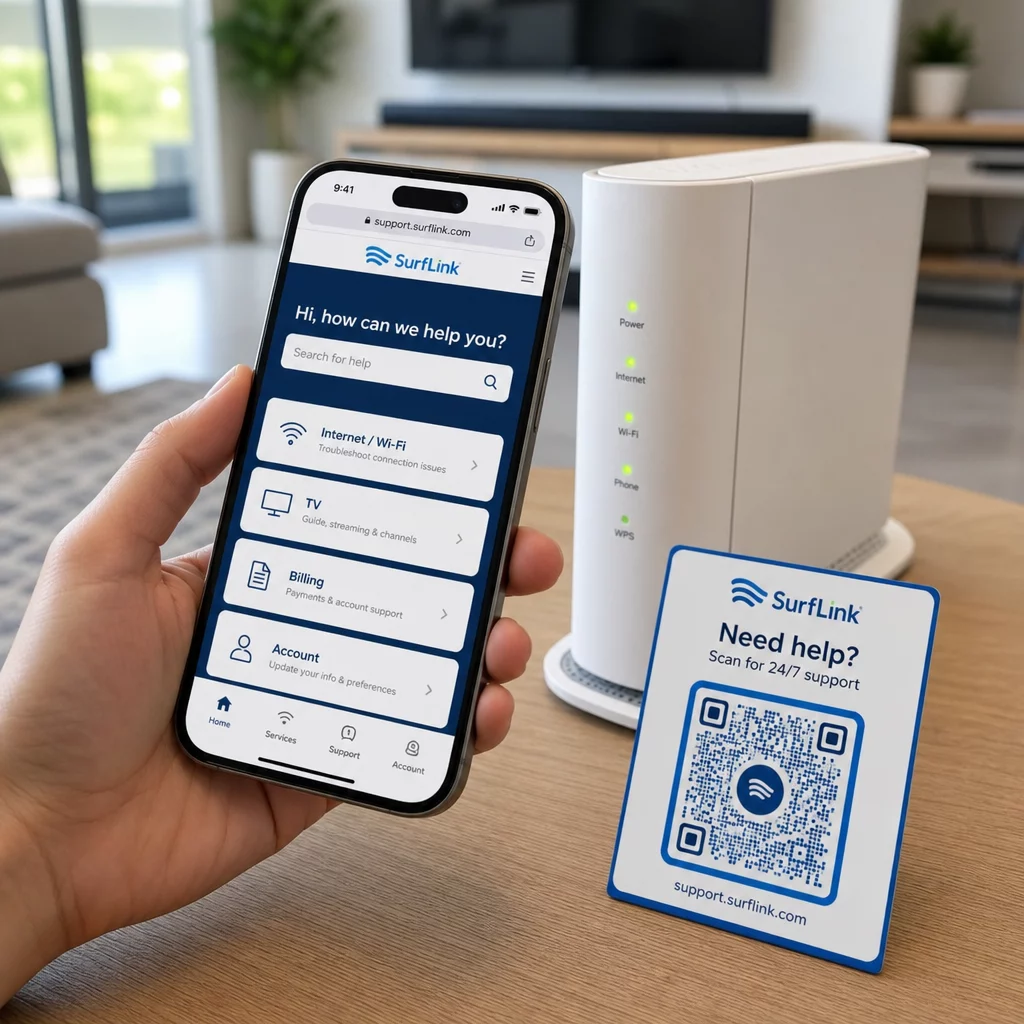
Invece di navigare in complessi menu telefonici o scorrere lunghe pagine di FAQ, una scansione rapida porta i clienti direttamente alla risorsa di supporto di cui hanno bisogno. Le aziende di telecomunicazioni possono posizionare codici QR su imballaggi di prodotti, estratti conto, etichette di apparecchiature e segnaletica al dettaglio – ognuno collegato a una destinazione pertinente come una guida all'installazione, un flusso di risoluzione dei problemi o una chat dal vivo.
Ad esempio, un codice QR stampato sull'etichetta di un router può collegarsi direttamente ai passaggi per la risoluzione dei problemi di rete. Un codice su una bolletta mensile può aprire il portale di gestione dell'account. Questo tipo di accesso contestuale elimina l'attrito e riduce il volume di contatti ripetuti che arrivano alla tua coda di supporto.
Puoi generare questi codici utilizzando il generatore di codici QR Pageloot, che supporta URL, PDF, moduli e oltre 25 altri tipi di contenuto.
Esperienze di Supporto Personalizzate
Le pagine di supporto statiche offrono lo stesso contenuto a ogni cliente. I codici QR dinamici cambiano questo. Poiché l'URL di destinazione è gestito tramite una dashboard centrale, puoi puntare lo stesso codice stampato a contenuti diversi in base al tipo di dispositivo, al piano di servizio, alla regione o all'ora del giorno – senza ristampare una singola etichetta.
UN codice QR dinamico su un pacchetto di schede SIM, ad esempio, può reindirizzare i clienti postpagati a una guida all'attivazione e i clienti prepagati a un portale di ricarica. Se i tuoi orari di supporto cambiano o lanci una nuova funzionalità di self-service, aggiorni la destinazione una volta e ogni codice distribuito riflette immediatamente il cambiamento.
Implementa Link di Supporto Personalizzati su Larga Scala Utilizzare il Generatore di Codici QR Pageloot per le Telecomunicazioni per creare codici dinamici che collegano i clienti alla risorsa giusta ogni volta – senza ristampare materiali.
Raccolta Semplificata di Feedback
Raccogliere il feedback dei clienti è difficile quando il processo è scomodo. I codici QR stampati su bollette, lettere di benvenuto o imballaggi si collegano direttamente a un modulo di feedback, catturando le risposte mentre l'esperienza è ancora fresca.
Utilizzando un Codice QR del modulo Google è un modo pratico per indirizzare i clienti a un sondaggio strutturato. I codici dinamici ti consentono di cambiare la destinazione del modulo in qualsiasi momento – utile quando vuoi ruotare i sondaggi o testare diversi questionari senza ridistribuire materiali. Per uno sguardo più approfondito sull'implementazione, vedi come creare codici QR per la raccolta di feedback.
Costi di Supporto Ridotti Tramite Automazione
Indirizzando i clienti a risorse self-service – reimpostazione password, FAQ sulla fatturazione, guide all'installazione dei dispositivi – i codici QR riducono il volume di chiamate e ticket che raggiungono il tuo team di supporto. Attualmente, il 56% dei problemi dei clienti di telecomunicazioni viene risolto tramite strumenti self-service. I codici QR accelerano questa tendenza rendendo questi strumenti più facili da trovare nel momento in cui sono necessari.
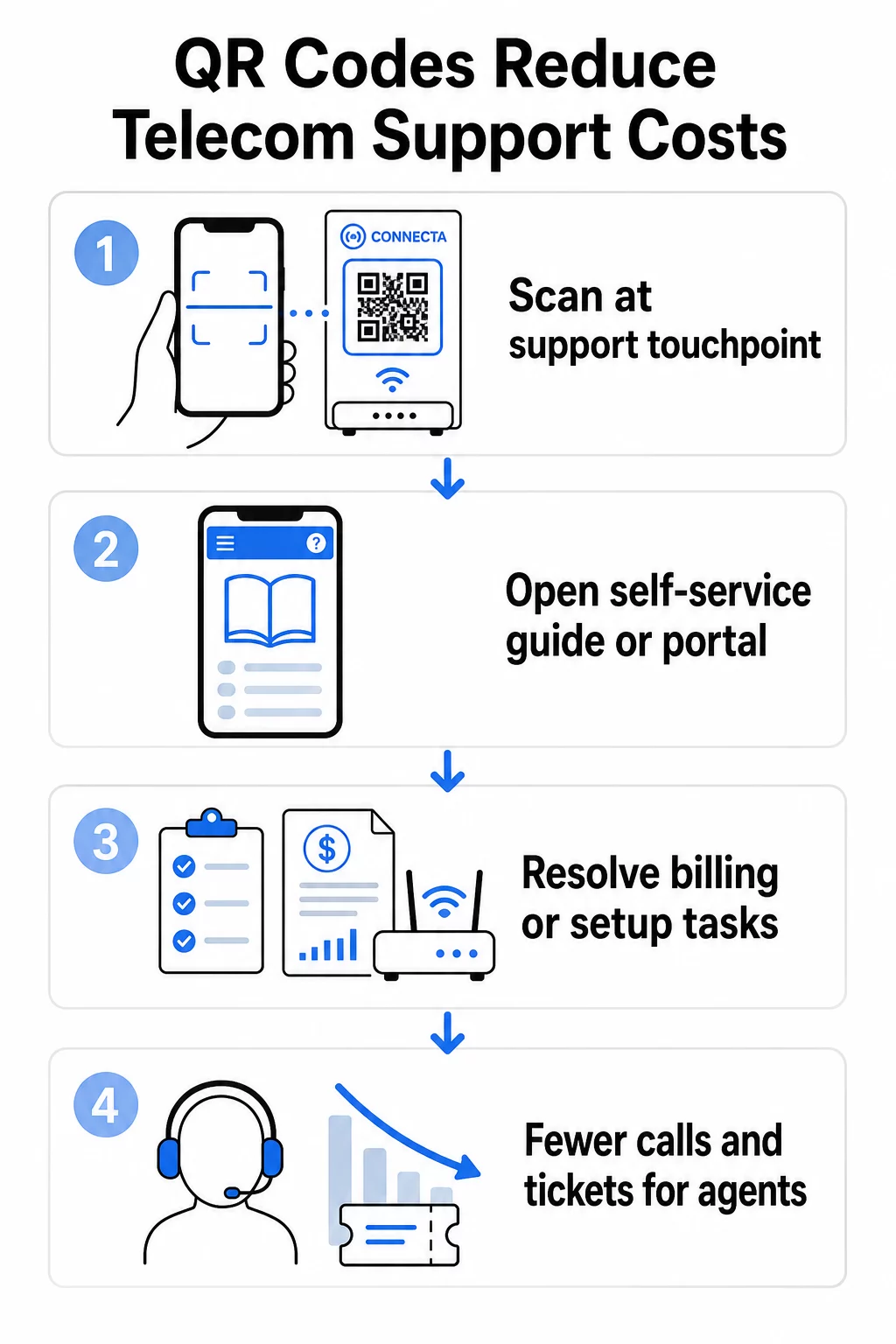
Compiti che in precedenza richiedevano l'intervento di un agente – aggiornamenti account, confronti piani, attivazione servizi – possono essere gestiti tramite portali collegati a QR, liberando il tuo team per problemi complessi che richiedono genuinamente attenzione umana.
Come Implementare i Codici QR per il Supporto Telecom
Identifica i Casi d'Uso Giusti
Inizia mappando i punti di contatto di supporto più comuni e abbinando ciascuno a una destinazione collegata a QR:
- Etichette di imballaggio e attrezzature – collegamento a guide di configurazione specifiche del dispositivo o tutorial video
- Bollette e fatture mensili – collegamento alla gestione dell'account, portali di pagamento o FAQ sulla fatturazione
- Segnaletica per negozi e sportelli di servizio – link alla chat dal vivo o alla pianificazione degli appuntamenti
- Materiali per tecnici sul campo – link alle pagine di stato del servizio o ai moduli di feedback post-visita
- Firme email – link agli articoli del centro assistenza o all'invio di ticket di supporto
Per contenuti che cambiano frequentemente – come avvisi di servizio o guide alla risoluzione dei problemi aggiornate – usa i codici QR dinamici in modo da poter aggiornare le destinazioni senza ristampare. Per risorse permanenti come un manuale utente PDF fisso, un codice statico funziona bene.
Crea e Personalizza i Tuoi Codici
Una volta definiti i tuoi casi d'uso, genera codici che i clienti riconosceranno e di cui si fideranno. Personalizza ogni codice con i colori e il logo del tuo brand per segnalare legittimità – questo è importante in un settore in cui il phishing è una vera preoccupazione. Segui migliori pratiche per la generazione sicura di codici QR, inclusa la connessione sempre a destinazioni HTTPS e l'uso di URL brandizzati.
Per i codici che rimandano a documentazione scaricabile, un Codice PDF QR consente ai clienti di accedere istantaneamente a manuali utente, informazioni sulla garanzia o contratti di servizio. Per i flussi di supporto che consolidano più link – FAQ, chat dal vivo, pagamento delle bollette – considera una pagina di destinazione con codice QR che presenta tutte le opzioni in un'unica interfaccia mobile-friendly.
Scrivi un testo di invito all'azione specifico vicino a ogni codice. Invece di “Scansiona qui”, usa un linguaggio come “Scansiona per risolvere i problemi del tuo dispositivo” o “Scansiona per pagare la bolletta in 30 secondi”. Le istruzioni mirate superano costantemente i suggerimenti generici.
Posiziona i Codici Dove i Clienti Ne Hanno Bisogno
Il posizionamento determina quanti scan ricevi effettivamente. Le posizioni di alto valore includono:
- Imballaggio delle apparecchiature ed etichette dei dispositivi (dove i clienti incontrano difficoltà di configurazione)
- Bollette mensili e notifiche di servizio (dove sorgono domande sulla fatturazione)
- Sportelli del servizio clienti e punti vendita (dove i clienti stanno già cercando aiuto)
- Veicoli e materiali dei tecnici sul campo (per il follow-up post-servizio)
- Superfici digitali come e-mail, dashboard dell'account e il sito web dell'azienda
Per i posizionamenti fisici, seguire le linee guida sulle dimensioni da le migliori pratiche di usabilità dei codici QR: un minimo di 0,8 × 0,8 pollici per la scansione a distanza ravvicinata, con finiture opache per ridurre il riverbero. Posizionare i codici a un'altezza confortevole – circa tre o quattro piedi da terra per i display da pavimento. Per una guida dettagliata sul posizionamento, consultare le linee guida per il posizionamento dei codici QR sui materiali di marketing.
Assicurarsi che ogni destinazione sia ottimizzata per i dispositivi mobili e si carichi rapidamente. I clienti che scansionano da un telefono si aspettano che la pagina funzioni immediatamente – vedere migliori pratiche per le landing page di codici QR mobili per una guida tecnica sulla velocità della pagina e sul design touch-friendly.
Monitorare le prestazioni e perfezionare
Dopo l'implementazione, utilizzare l'analisi per capire come i clienti interagiscono con i codici di supporto. I codici QR dinamici raccolgono il numero di scansioni, i timestamp, i tipi di dispositivo e le posizioni geografiche – dati che rivelano le ore di punta del supporto, le regioni ad alta domanda e quali risorse i clienti utilizzano di più.
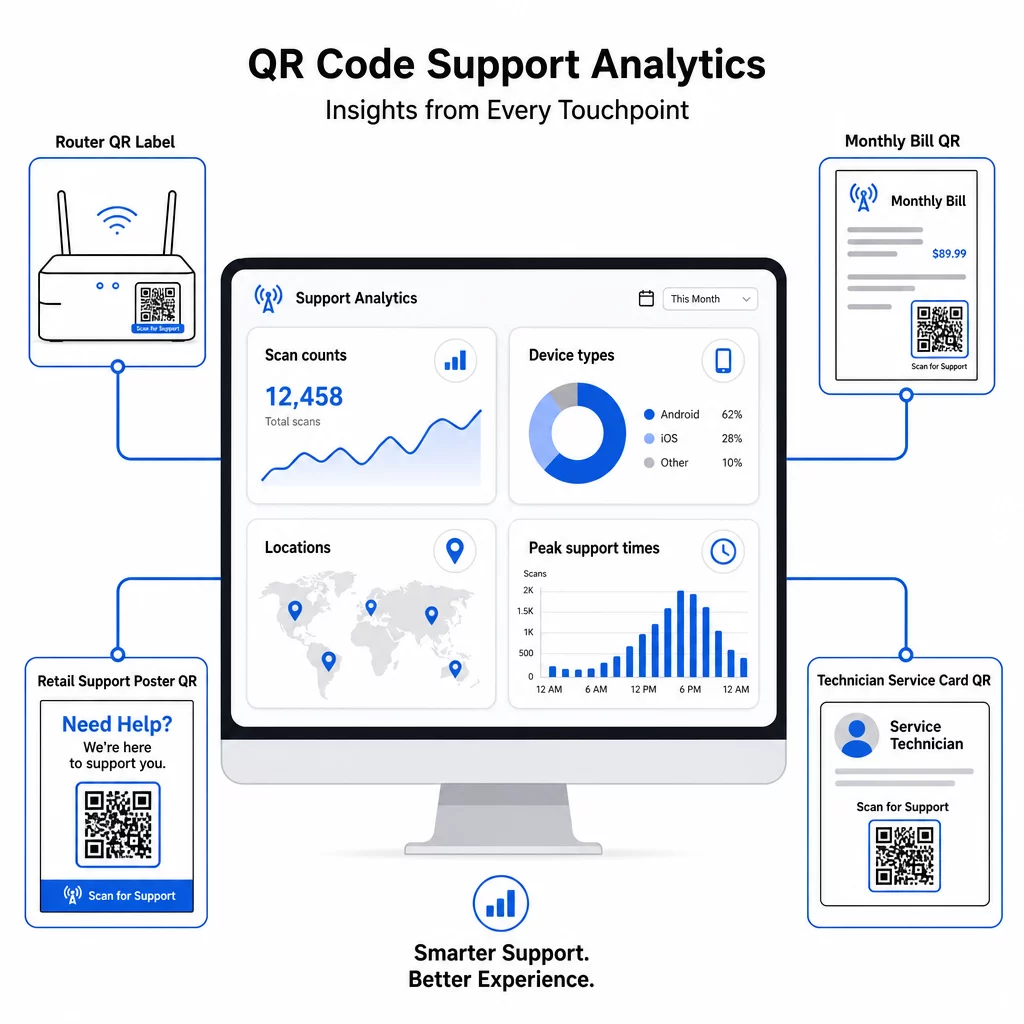
Tracciamento del codice QR consente anche l'analisi delle conversioni: quale percentuale di scansioni relative alle bollette si traduce in un pagamento completato? Quali codici di risoluzione dei problemi portano a problemi risolti rispetto alle escalation? Questi dati ti aiutano a identificare i posizionamenti meno performanti, a migliorare il contenuto della destinazione e ad allocare il personale di supporto alle finestre di punta della domanda.
Molte piattaforme di gestione dei codici QR si integrano anche con strumenti di analisi come Google Analytics, offrendo una visione unificata del comportamento dei clienti sia fisico che digitale.
Vedere esattamente dove e quando i clienti scansionano Monitorare l'attività di scansione su ogni punto di contatto con il Generatore di codici QR Pageloot Link – ottieni dati in tempo reale su tipo di dispositivo, posizione e coinvolgimento per ottimizzare continuamente la tua esperienza di supporto.
Applicazioni Avanzate
Codici Dinamici per il Routing del Supporto Live
I codici QR dinamici possono indirizzare i clienti a sistemi di chat live che mostrano la disponibilità degli agenti in tempo reale, o a strumenti di pianificazione dove i clienti possono prenotare una richiamata. Se i protocolli di emergenza si attivano o gli orari di servizio cambiano, aggiorni la destinazione una volta sola – ogni codice stampato sul campo riflette il cambiamento istantaneamente senza ristampe.
Sicurezza e Protezione dei Dati
Per i codici QR che si collegano a portali di gestione account o sistemi di fatturazione, applica controlli di sicurezza appropriati. I codici protetti da password aggiungono un livello di autenticazione per destinazioni sensibili. Utilizza sempre link HTTPS, verifica che le landing page siano certificate SSL e usa design brandizzati per aiutare i clienti a distinguere i codici legittimi dai tentativi di phishing. Vedi migliori pratiche per la generazione sicura di codici QR per una checklist completa.
I codici QR posizionati in spazi pubblici dovrebbero collegarsi a risorse di supporto generali. I codici su documenti privati come le fatture possono connettersi in sicurezza a strumenti specifici dell'account, poiché l'accesso è già limitato al destinatario.
Integrazione tra i Canali di Supporto
I codici QR funzionano insieme ad altri canali di supporto piuttosto che sostituirli. Una scansione potrebbe aprire un articolo del centro assistenza, ma se il cliente ha ancora bisogno di aiuto, la landing page dovrebbe mostrare un'opzione di chat live o un numero di telefono di supporto. Per uno sguardo più ampio su come questo modello si applica nei contesti di commercio digitale, vedi Codici QR per il supporto nell'e-commerce.
Puoi anche usare flussi di lavoro attivati da QR per inviare messaggi di follow-up automatizzati – un sondaggio di soddisfazione 24 ore dopo una visita di un tecnico, o una guida di configurazione quando un cliente scansiona l'imballaggio di un nuovo dispositivo. Questo tipo di feedback dei clienti tramite codice QR ciclo crea un ciclo di miglioramento continuo senza sforzi manuali aggiuntivi.
Misurare Ciò che Funziona
Tieni traccia di questi indicatori chiave di performance prima e dopo l'implementazione dei codici QR:
- Tasso di risoluzione – percentuale di sessioni di supporto scansionate che risolvono il problema del cliente senza contatto con l'agente
- Tasso di scansione-completamento – percentuale di scansioni che si traducono in un'azione completata (pagamento effettuato, modulo inviato, guida visualizzata)
- Volume dei ticket di supporto – confrontare i totali settimanali prima e dopo l'implementazione per quantificare la deviazione
- Punteggi di soddisfazione del cliente – correlare l'attività di scansione con i risultati dei sondaggi post-interazione
- Orari e luoghi di picco delle scansioni – utilizzare questi dati per allineare il personale e gli aggiornamenti delle risorse con la domanda effettiva
Stabilire metriche di base prima del lancio, quindi rivedere mensilmente. Se un codice non funziona, controllare la visibilità del posizionamento, aggiornare il testo della call-to-action o migliorare la pagina di destinazione. Piccoli aggiustamenti basati su dati di scansione reali superano costantemente le ipotesi su ciò che i clienti desiderano.
I codici QR sono più efficaci se trattati come un sistema vivente – implementati con attenzione, tracciati costantemente e perfezionati in base a ciò che i dati mostrano. I fornitori di telecomunicazioni che adottano questo approccio riducono i costi di supporto, migliorano i tassi di risoluzione e offrono ai clienti l'esperienza rapida e autodiretta che si aspettano.
Iniziare identificando i due o tre punti di contatto di supporto a più alto volume, generare codici QR per ciascuno e misurare l'impatto. Utilizzare gli strumenti per codici QR di Pageloot per le telecomunicazioni per creare codici dinamici, personalizzati e tracciabili che è possibile aggiornare senza ristampare – in modo che la vostra infrastruttura di supporto rimanga aggiornata man mano che i vostri servizi si evolvono.
Domande frequenti
I codici QR per le telecomunicazioni possono collegarsi a quasi qualsiasi risorsa digitale: guide alla risoluzione dei problemi, manuali utente in PDF, portali di gestione dell'account, pagine di pagamento, finestre di chat dal vivo, moduli di feedback, tutorial video e pagine di destinazione ottimizzate per dispositivi mobili che consolidano più opzioni di supporto in un unico luogo. I codici QR dinamici ti permettono di aggiornare la destinazione in qualsiasi momento, così lo stesso codice stampato può collegarsi a contenuti diversi man mano che le tue risorse di supporto cambiano.
I codici QR statici codificano una destinazione fissa che non può essere modificata dopo la creazione del codice. I codici QR dinamici utilizzano un link di reindirizzamento gestito tramite una dashboard centrale, in modo da poter aggiornare la destinazione senza ristampare. Per il supporto telecom, i codici dinamici sono generalmente la scelta migliore perché i contenuti di supporto cambiano frequentemente – le guide alla risoluzione dei problemi vengono aggiornate, gli orari di servizio cambiano e vengono lanciati nuovi strumenti di self-service. I codici dinamici forniscono anche analisi delle scansioni, cosa che i codici statici non supportano.
Collega sempre i codici QR a destinazioni protette da HTTPS e usa design riconoscibili e di marca in modo che i clienti possano distinguere i codici legittimi dai tentativi di phishing. Per i codici che accedono a strumenti specifici dell'account o a portali di fatturazione, la protezione con password aggiunge un livello di autenticazione. Usa codici QR dinamici in modo da poter disattivare o reindirizzare immediatamente un codice compromesso senza ristampare i materiali. Educare i clienti su come appaiono i codici QR legittimi e su come verificare le destinazioni prima di inviare qualsiasi dato è anche un importante livello di protezione.