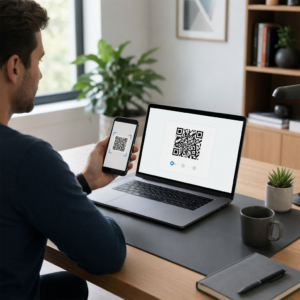
Are your administrative workflows slowing down patient care? Manual data entry and paper-based records often lead to frustrating wait times and a higher risk of medical errors. This guide explains how implementing QR codes can streamline patient check-ins, enhance medication safety, and provide secure access to medical records.
Speeding Up Patient Registration and Check-ins
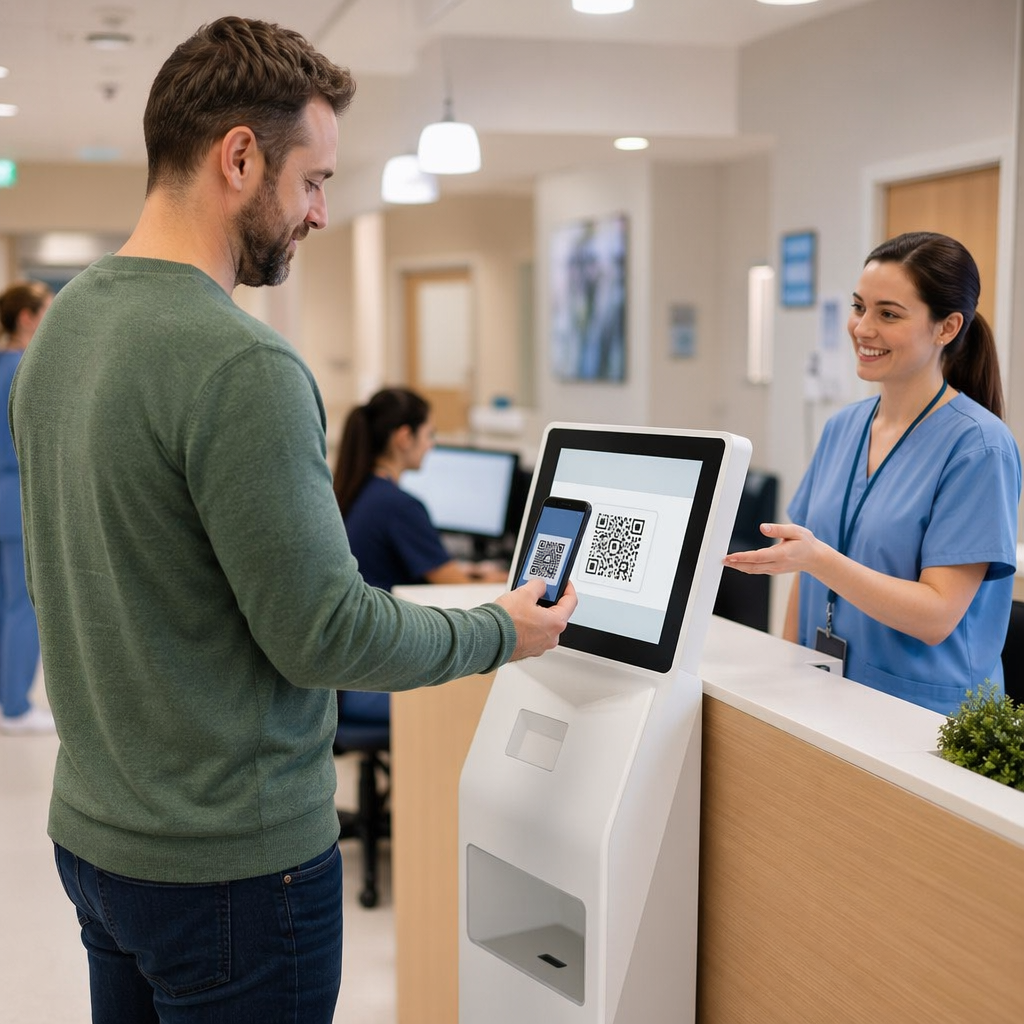
Long queues in the lobby do more than frustrate patients; they increase exposure risks and strain administrative staff. By placing QR codes at hospital entrances, parking lots, or kiosks, you allow patients to complete registration forms on their own devices. For example, some hospitals in New York City have reported that transitioning to digital check-ins reduced registration times by approximately 40%.
This digital approach is particularly effective for high-volume settings. The University Medical Center (UMC) utilized QR-driven workflows to vaccinate between 800 and 1,000 people daily, proving that physical bottlenecks can be minimized through mobile technology. Providers can easily set up these systems using a Google Form QR code generator to collect patient details before they even reach the front desk.
Streamline Your Patient Intake Want to eliminate paper forms and reduce lobby congestion? Use the QR Code Generator to create secure, mobile-friendly registration links for your facility today.
Improving Medication Adherence and Safety
Medication errors remain a significant challenge in clinical environments, with research estimating approximately 37 million administration errors occur annually in English hospitals alone. QR codes help mitigate these risks by providing an additional layer of verification. When a nurse scans a code on a medication package, they can instantly confirm dosage, frequency, and patient-specific instructions.
Beyond the hospital walls, QR codes assist patients with home care. Many pharmacies now include codes on labels that link to video tutorials or multilingual guides explaining how to administer complex prescriptions. This is vital for safety, as statistics show that roughly 50% of patients fail to take medications as prescribed. You can find more detailed examples of these safety applications in the ultimate guide to QR codes for healthcare.
Enhancing Access to Electronic Health Records
Federal mandates, such as the 21st Century Cures Act, require that healthcare organizations provide patients with easy electronic access to their health information. QR codes facilitate this by bridging the gap between physical touchpoints and digital databases. By embedding a code on a patient’s wristband, authorized providers can immediately retrieve vital data such as allergies, current medications, and existing treatment plans.
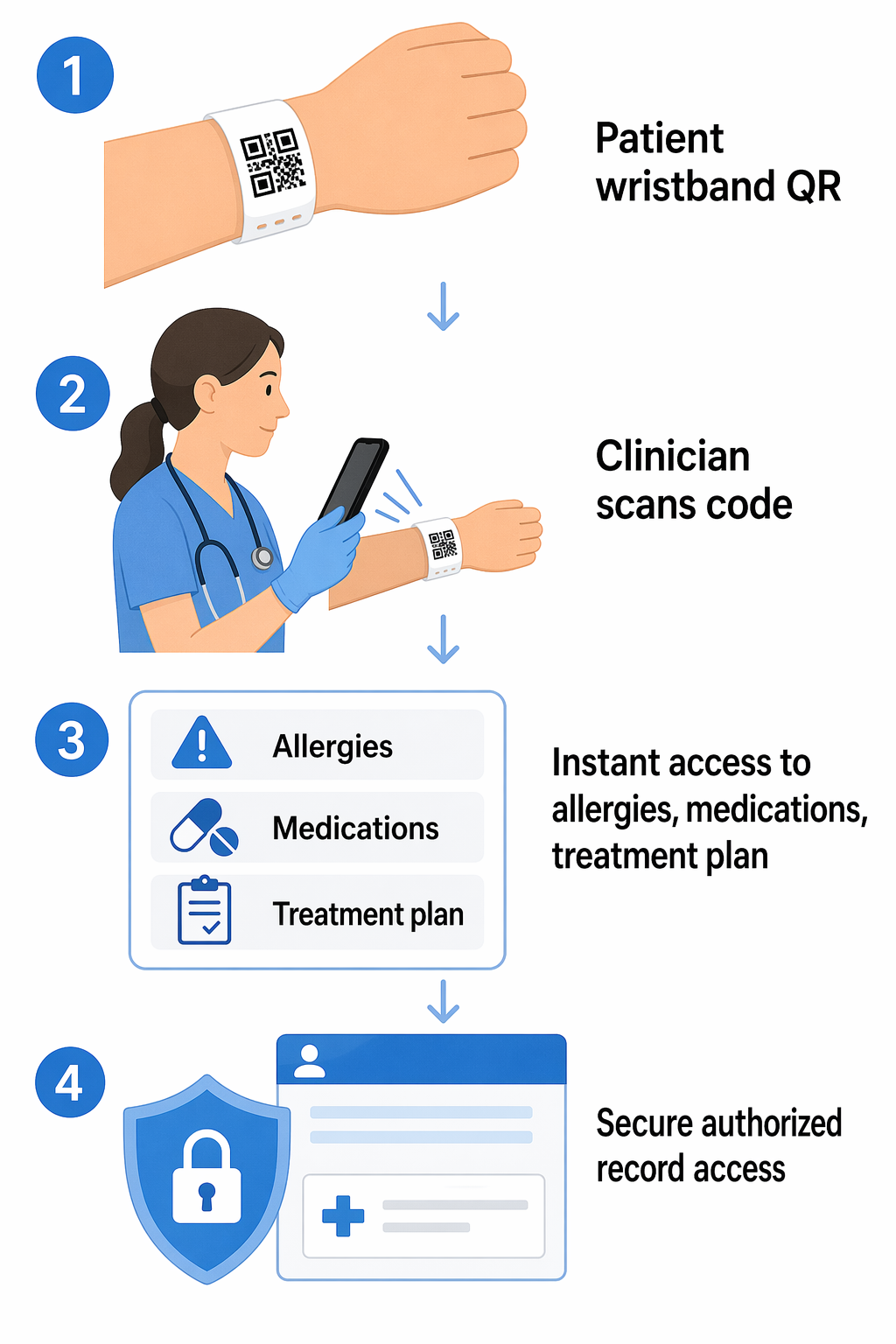
This instant access is also beneficial for coordinating care across departments. Instead of waiting for file transfers, a specialist can scan a code to view the most recent lab results or imaging reports. For more information on maintaining privacy during these transfers, see our guide on secure health data sharing with QR codes.
Optimizing Medical Equipment and Asset Management
Managing a fleet of medical devices – from infusion pumps to ventilators – requires meticulous tracking and maintenance. Traditional manual logs are prone to human error, which can lead to equipment downtime or safety risks. Placing QR codes directly on machinery allows staff to access digital manuals, setup videos, and maintenance schedules instantly.
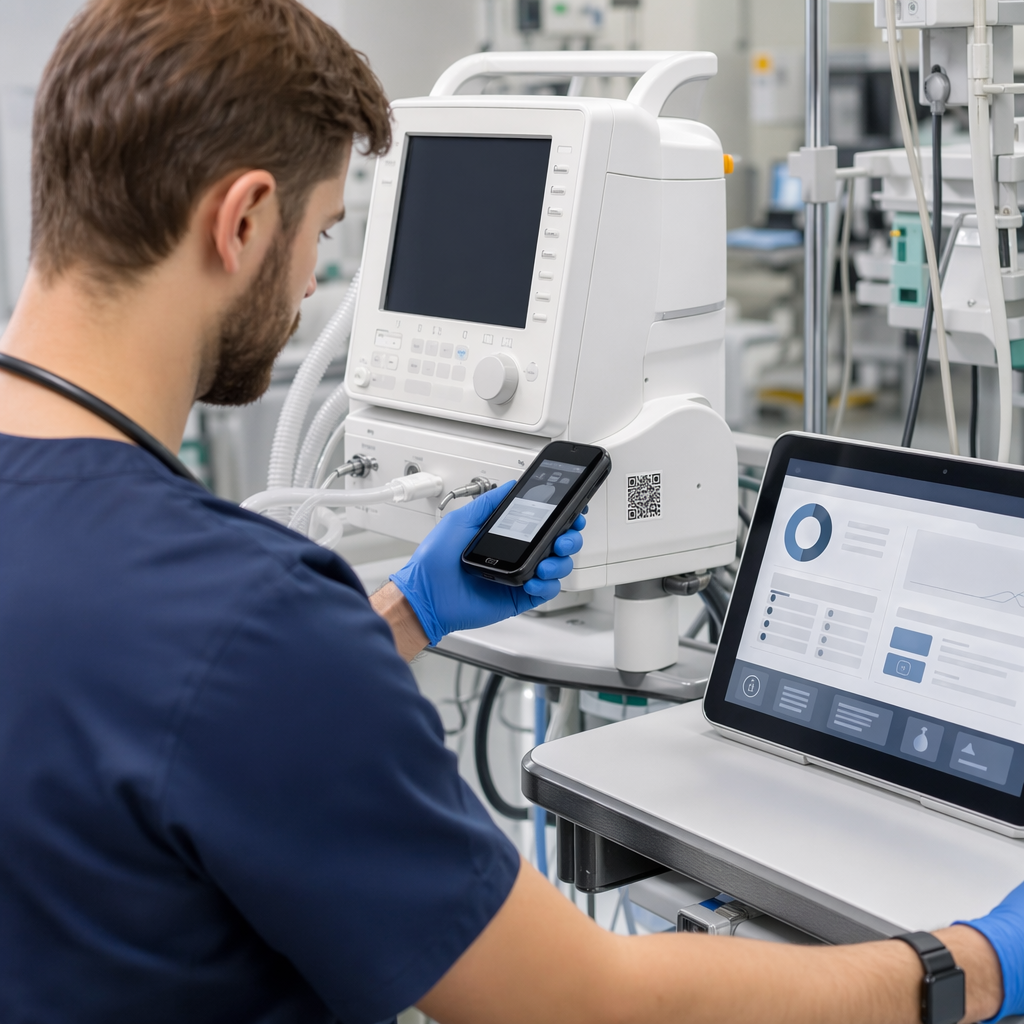
As well as providing instructions, these codes help track the physical location and status of assets across a large campus. When a technician performs a repair, they scan the code to log the service history in real-time. To implement a system that monitors high-value assets effectively, providers should follow tracking medical equipment QR code best practices to ensure codes remain readable in clinical environments.
Ensuring Data Security and HIPAA Compliance
While QR codes offer convenience, protecting patient privacy is a legal and ethical necessity. The HIPAA Security Rule requires administrative and technical safeguards for all electronic health information. This is especially critical given that health data breaches impacted nearly 133 million individuals in 2023, with patient records often being highly targeted.
To secure your implementation, consider the following technical standards:
- Use dynamic QR codes to allow for the revocation of access if a link is compromised or a patient is discharged.
- Implement multi-factor authentication (MFA) for any code that links to sensitive medical records or internal databases.
- Ensure all destination URLs use HTTPS and that data is encrypted both during transmission and at rest.
- Maintain a clear quiet zone around printed codes to ensure they are scannable by various devices, as detailed in the guide on best practices for QR code readability.
By prioritizing these security measures, healthcare administrators can leverage the efficiency of QR technology without compromising the integrity of patient data.
Frequently Asked Questions
QR codes themselves are a delivery mechanism, but they can be part of a HIPAA-compliant workflow. This requires that the linked content is stored on secure, encrypted servers and that access is protected by authentication and audit logs.
Static codes cannot be changed once printed and are best for permanent information like Wi-Fi access or hygiene signs. Dynamic codes allow you to update the destination URL without reprinting the code, making them essential for patient records, schedules, and analytics.
Yes. Many hospitals use a vCard QR code generator to create digital business cards or badges for staff. This allows for quick contact sharing and can be integrated into internal security and onboarding systems.