How do you get people to watch your video when they encounter your physical marketing materials? Manually typing a URL is a significant barrier that often causes potential viewers to lose interest immediately. By creating a video QR code, you can bridge this gap and provide instant access to your content with a single scan.
Connecting Physical Assets to Digital Video
Video QR codes serve as a portal between print media and digital storytelling. In a marketplace where approximately 71% of U.S. consumers find QR codes useful in their daily lives, offering a scannable link to a video can significantly improve engagement. Whether you are placing a code on a product label to show a tutorial or on a concert poster to share a trailer, the goal is to remove friction from the user journey.
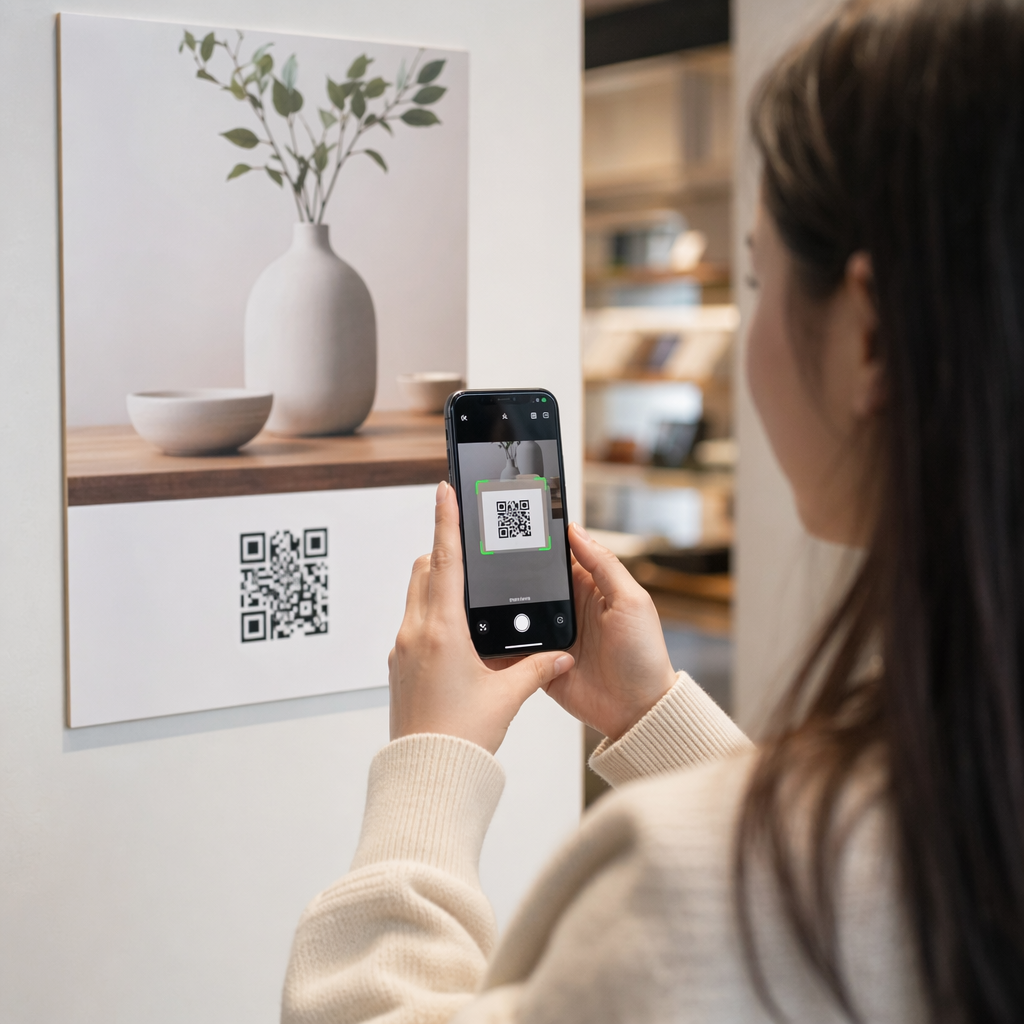
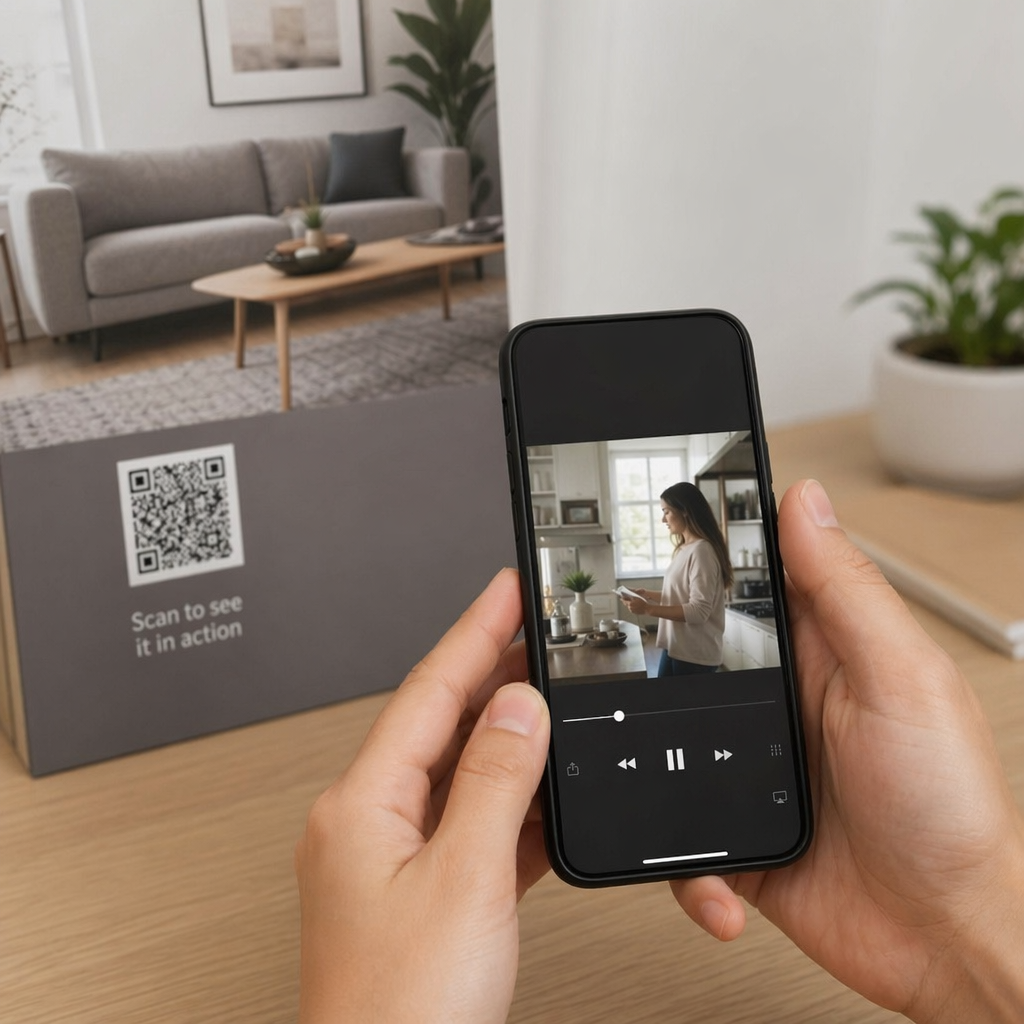
When a user scans the code with their smartphone camera, the device decodes the pattern and automatically prompts them to open the video link. This technology is particularly effective because it capitalizes on the high adoption rate of QR codes; research indicates that nearly 37.5% of U.S. adult smartphone users scanned at least one QR code in 2022. By utilizing a video QR code generator, businesses can transform static advertisements into interactive experiences that drive measurable traffic.
Choosing Your Video Hosting Strategy
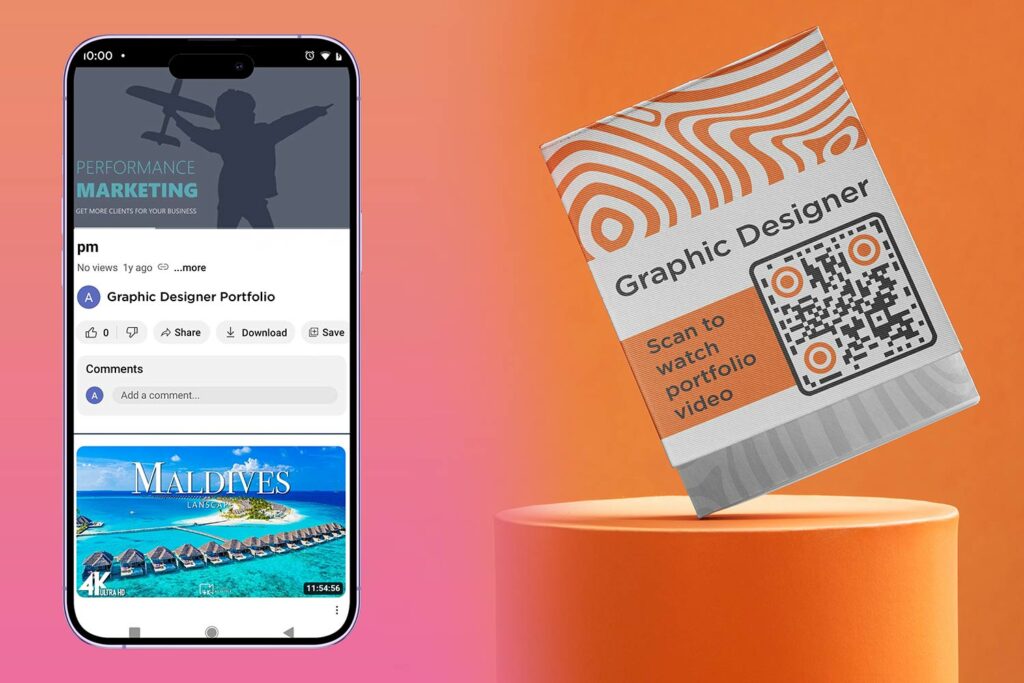
Before generating your code, you must decide where your video will live. The most common approach is linking to established platforms like YouTube or Vimeo. This method is highly reliable because these platforms automatically optimize the video for different devices and connection speeds. If you are sharing a YouTube video, using a dedicated YouTube QR code generator allows you to create a branded entry point that encourages more views and channel subscriptions.
Alternatively, you can host the video file directly or use cloud storage services like Google Drive or Dropbox. If you choose to upload a file directly to a QR tool, MP4 is generally the preferred format due to its excellent balance of high quality and high compression. This ensures that the video loads quickly for mobile users on cellular data, preventing the frustration of long buffering times.
Simplify Your Video Sharing Process Want to turn your YouTube link or MP4 file into a scannable code in seconds? Use the Video QR Code Generator to create a customized experience for your audience today.
Static vs. Dynamic QR Codes for Video
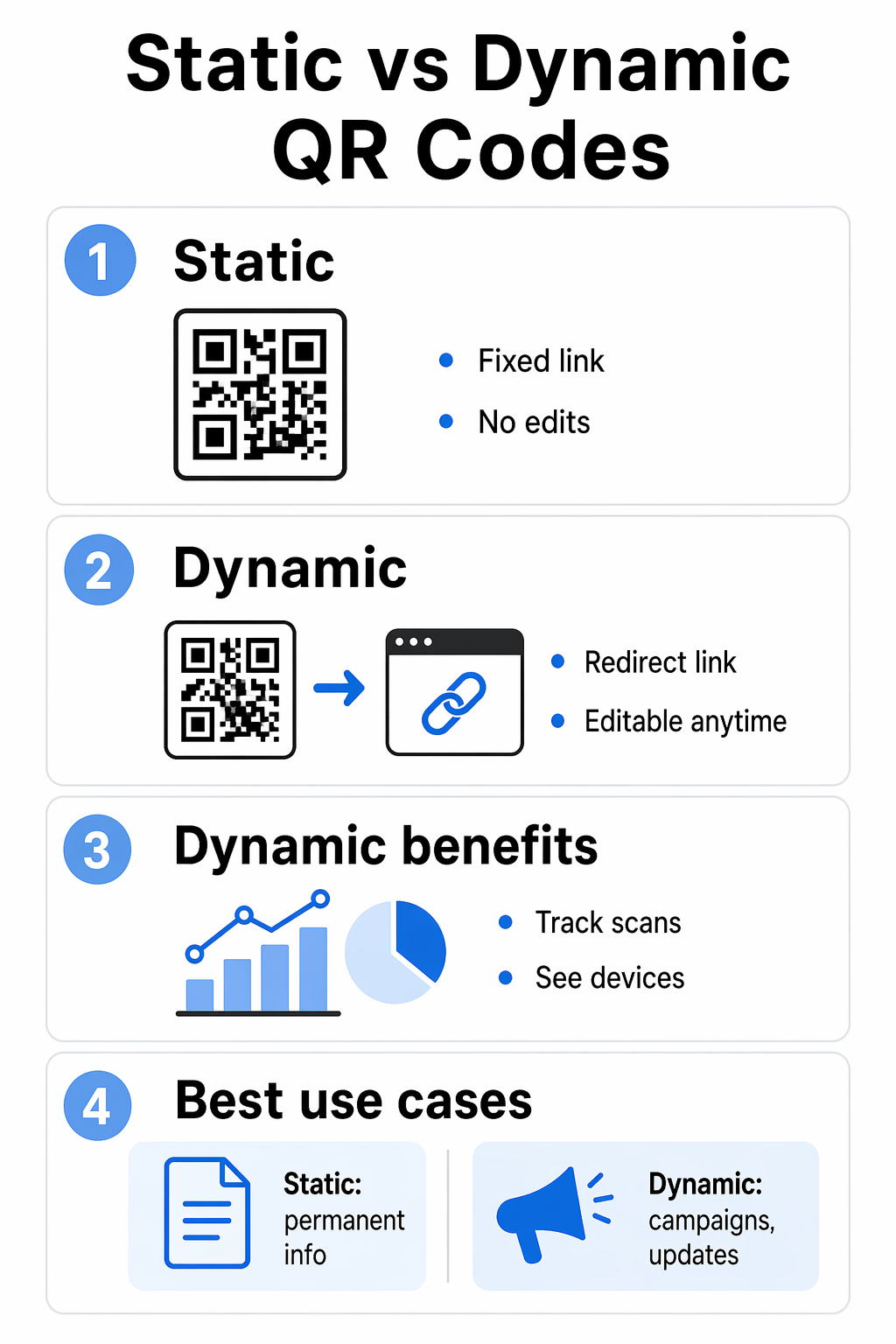
One of the most critical decisions in your campaign is choosing between a static or a dynamic QR code. A static code encodes the data directly into the pattern, meaning the link is permanent and cannot be changed after the code is printed. This is often a free option and works well for permanent information that will never need an update.
However, most professional campaigns benefit from the flexibility of dynamic technology. When you look at the differences between static vs dynamic QR codes, the primary advantage of a dynamic code is its editability. Because dynamic codes use a redirect link, you can update the video destination at any time without reprinting your flyers, posters, or packaging. This is especially valuable for seasonal promotions or instructional videos that may need periodic updates. Furthermore, dynamic codes provide analytics that allow you to track scan frequency, location, and device types to measure your ROI.
Best Practices for Design and Readability
A QR code is only effective if it scans reliably under various conditions. To ensure maximum scannability, you should follow established best practices for QR code readability, such as maintaining a high contrast ratio between the code and its background. Dark patterns on light backgrounds are the standard because they reflect light in a way that smartphone sensors can easily interpret.
Customization is another way to increase engagement, as branded codes can improve scan rates by appearing more trustworthy. Using a QR code generator with logo allows you to place your brand identity in the center of the code. When designing your branded code, keep the following technical guidelines in mind:
- Maintain the 10:1 distance-to-size ratio, ensuring the code’s side length is at least one-tenth of the expected scanning distance.
- Ensure the logo takes up no more than 25% to 30% of the code area to avoid interfering with the data modules.
- Preserve a clear “quiet zone” or border around the code to separate it from other design elements.
- Use high-resolution vector formats like SVG or EPS for printed materials to prevent pixelation.
Testing and Implementation
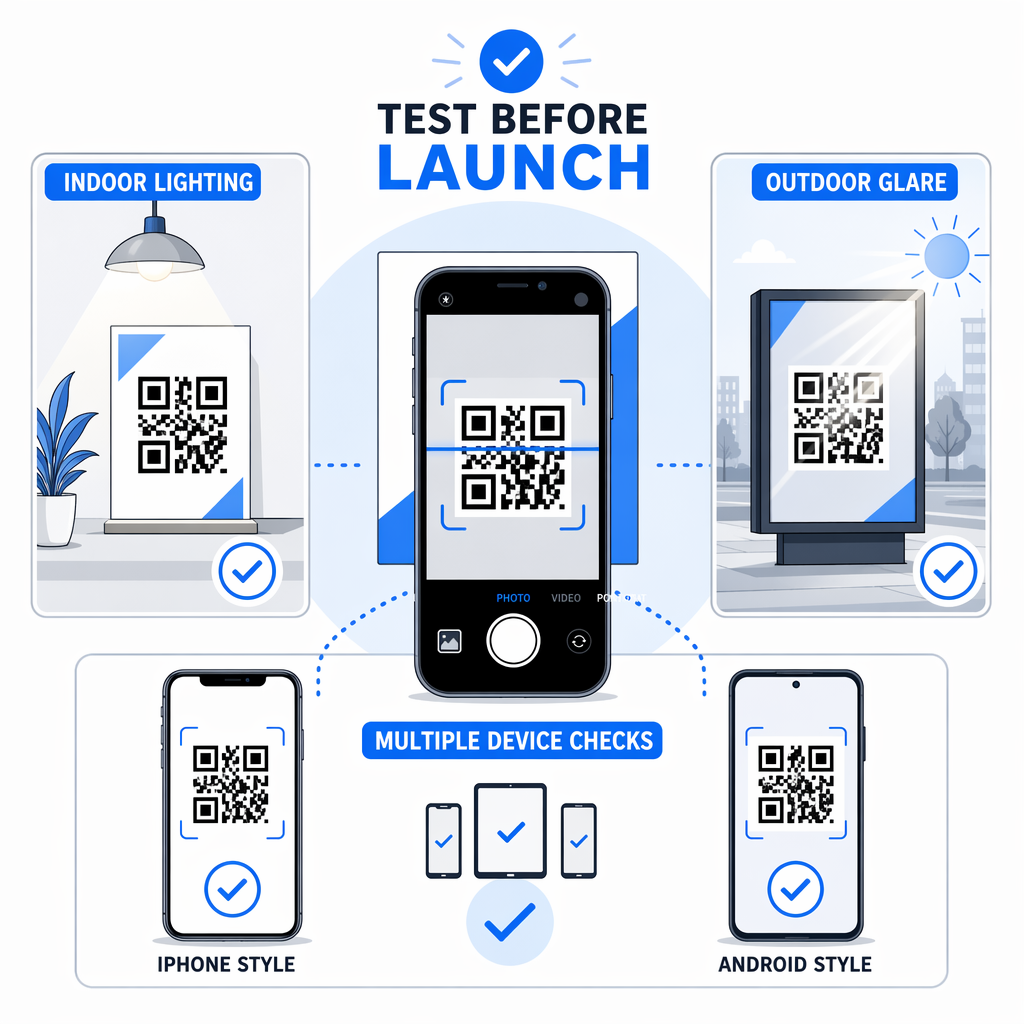
Before launching your campaign, you must test the code across multiple devices and lighting conditions. Simulating a real-world environment is essential; for instance, a code that works under office lights might fail on a reflective outdoor billboard. Referencing a checklist for designing user-friendly QR codes can help you verify that your landing page is mobile-responsive and that the video plays correctly on both iOS and Android platforms.
By combining thoughtful design with the right hosting strategy, you can turn any physical surface into a high-performance marketing channel. Whether you are using QR codes for education, retail, or entertainment, providing instant video access is one of the most effective ways to capture and hold your audience’s attention.
Frequently Asked Questions
You can only change the link if you use a dynamic QR code. These codes use a redirecting URL, allowing you to update the destination video in your dashboard without changing the printed design.
Most generators have specific file size limits for direct uploads. To avoid these restrictions and ensure faster loading, it is often better to host your video on a platform like YouTube and link the QR code to that URL.
Yes, as long as the video is hosted in a mobile-friendly format like MP4 or on a responsive platform like YouTube, any smartphone with a built-in QR scanner will be able to play the video.