Are customers skipping your product registration process because it feels like too much work? Low registration rates mean incomplete ownership data, slower recall responses, and missed opportunities to build post-sale relationships. This page shows you how QR codes remove that friction and turn registration into a quick, seamless scan.
Why Traditional Product Registration Falls Short
Paper warranty cards have a notoriously poor completion rate. Customers receive a card, set it aside, and rarely mail it back. Even web-based forms improve things only slightly if customers have to manually type a long URL or dig through packaging to find a registration link.
The result is a data gap. You ship products but have little visibility into who owns them. When a safety issue or recall arises, direct notification becomes difficult or impossible. For manufacturers of durable infant or toddler products, this is not just a business problem – 16 CFR Part 1130 requires maintaining records of consumer contact information and mandates an electronic registration option specifically because the CPSC recognizes that recall response rates are a documented challenge.
Even outside regulated categories, the operational cost of low registration is real: warranty fraud is harder to detect, service requests are harder to validate, and product lifecycle data stays thin.
How a QR Code Solves the Registration Problem
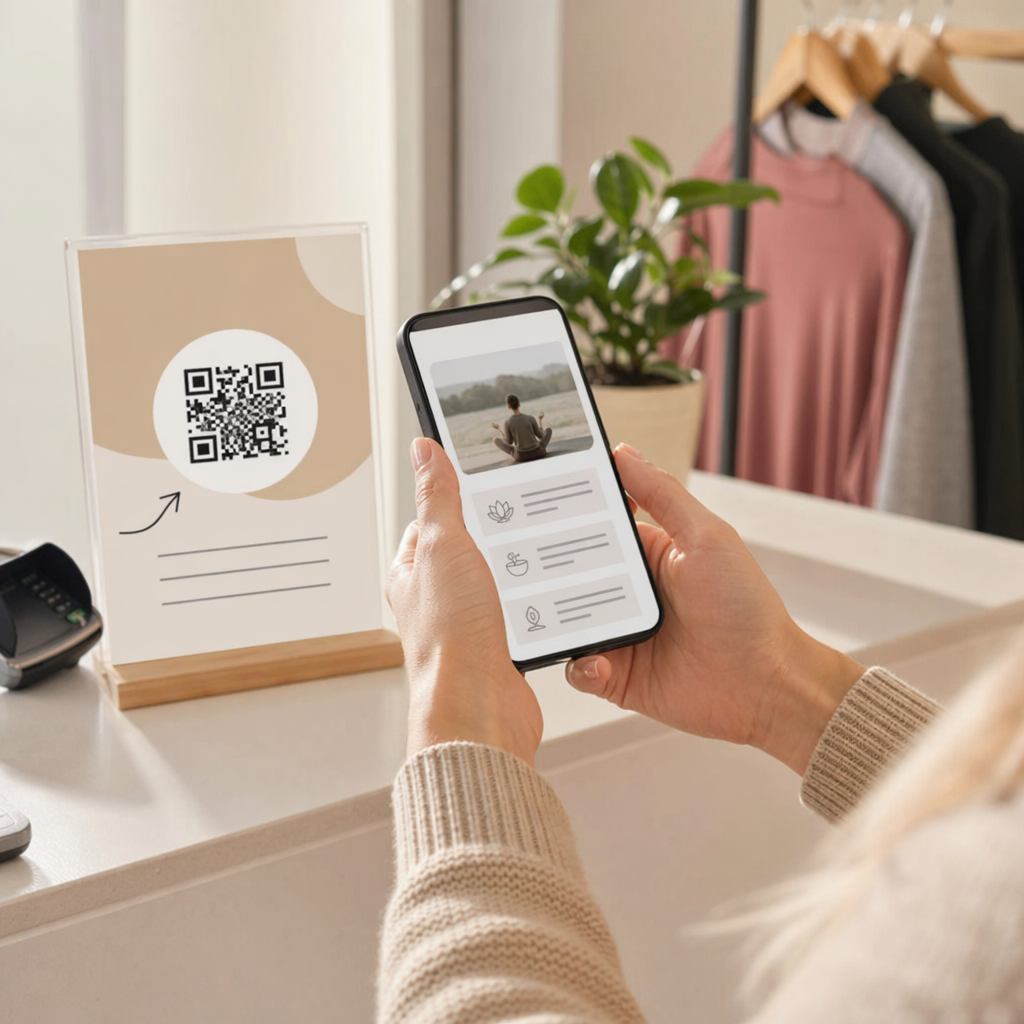
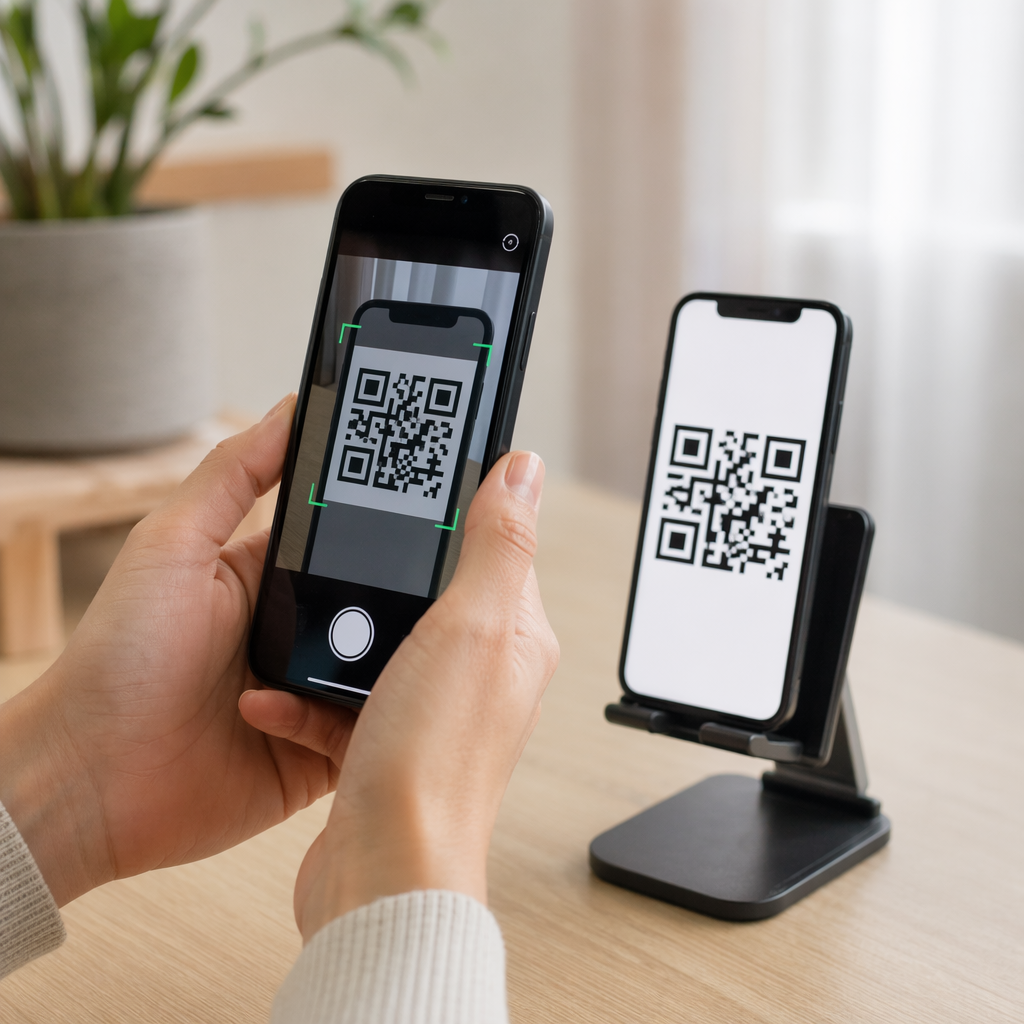
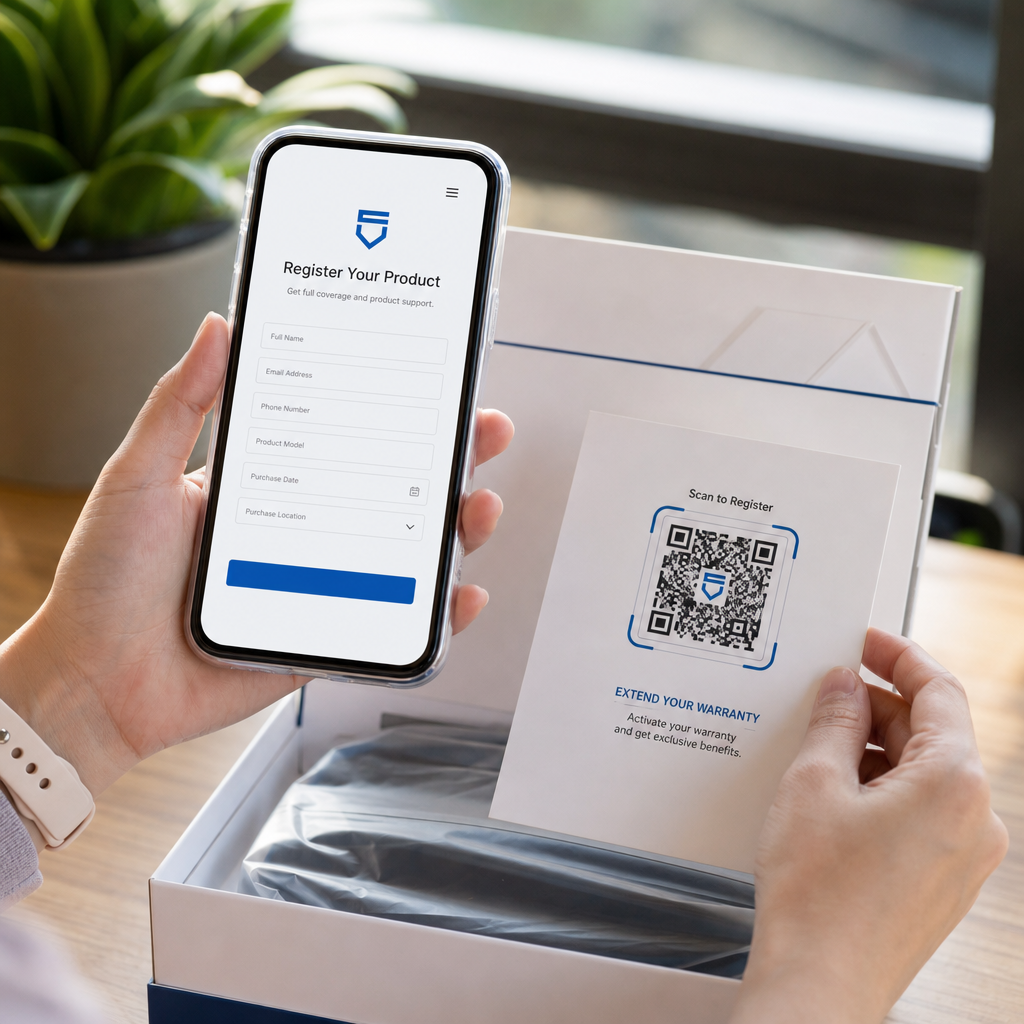
A QR code printed on packaging, an insert card, or the product itself gives customers a frictionless path to register. They open their phone camera, scan the code, and land directly on a registration form or branded landing page – no typing, no searching, no mail.
The moment they submit the form, you receive structured ownership data: name, contact information, purchase date, and any custom fields you configure. That information feeds directly into your records without manual data entry on either side.
This approach aligns with the broader shift in product packaging toward connecting physical items to digital content. Industry-wide recognition that QR codes on packaging can serve as persistent gateways to product information, warranty details, and registration reflects a function that goes well beyond what a traditional barcode can carry. QR codes on product packaging can carry this registration link right to the customer’s hands the moment they open the box.
Ready to Add Registration QR Codes to Your Products? Create trackable, editable QR codes for your packaging or inserts using the Generador de Códigos QR Dinámicos. Update the linked form destination anytime – no reprinting required.
Choosing the Right QR Code Type for Registration
Not all QR codes serve a warranty registration workflow equally well. The critical distinction is between static and dynamic codes.
UNA código QR estático encodes a fixed URL directly into its pattern. Once printed, you cannot change where it points. If your registration form URL changes, the code on thousands of units becomes useless.
UNA código QR dinámico encodes a short redirect URL that you control from a dashboard. You can update the destination anytime without touching the printed code. This matters for warranty registration because registration forms get migrated between platforms, seasonal or product-line-specific pages get swapped out, and you may need to redirect scans to a notice page during a product update or recall.
For product registration, dynamic QR codes are the practical default. The ability to edit destinations after printing – combined with scan analytics – makes them far more useful for ongoing ownership data collection. You can explore the full breakdown of capabilities in the comparison of static vs. dynamic QR codes.
Setting Up a QR Code Registration Workflow
Building a QR-driven registration and warranty activation system is more straightforward than it might seem. The following steps cover the full setup from form selection to post-launch tracking.
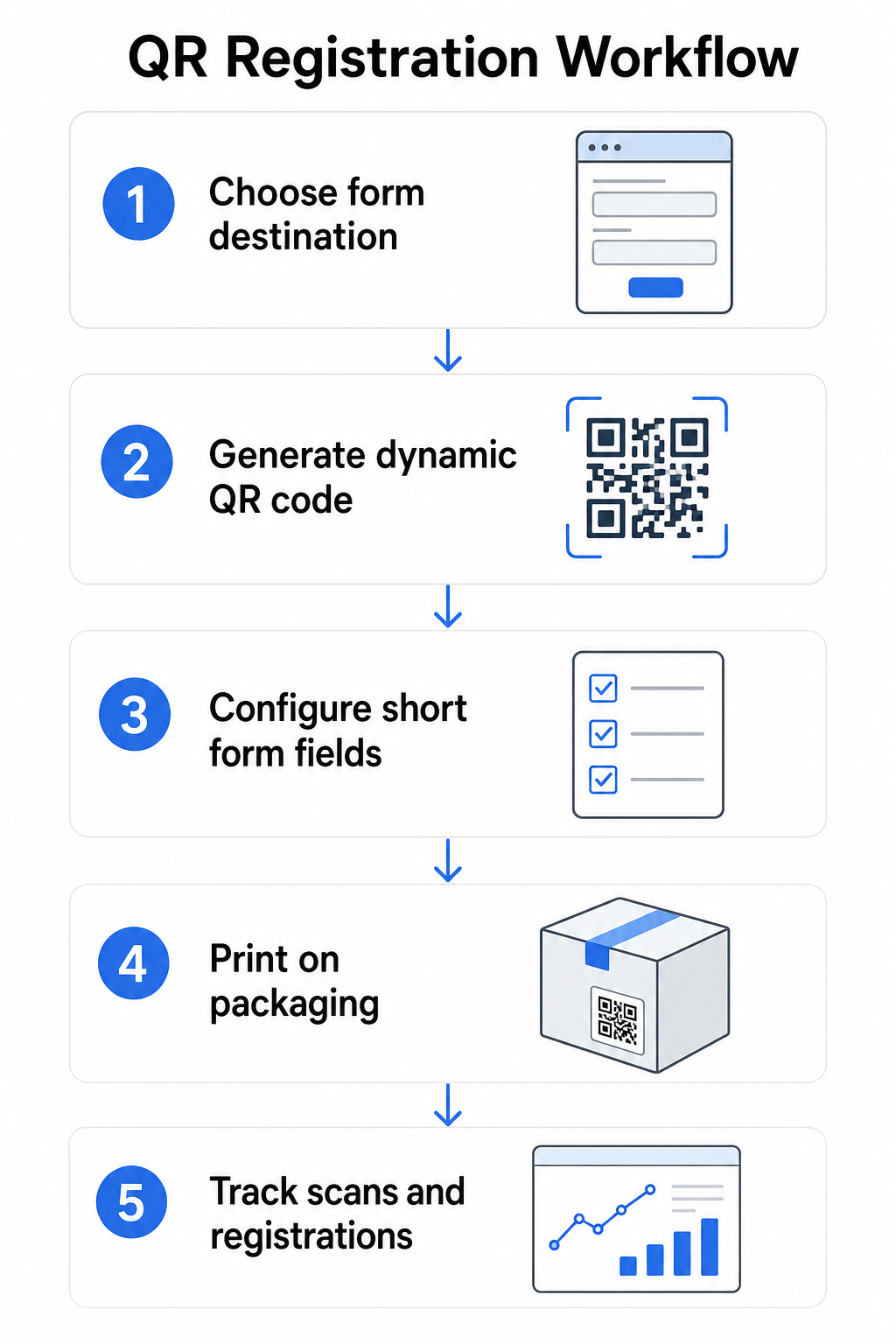
Step 1: Choose your form destination
You have two primary options for what the QR code links to. A Formulario de Google is quick to set up and works well for collecting structured fields. Use the Generador de códigos QR para formularios de Google to convert your form’s share link into a scannable code.
UNA branded landing page is a mobile-optimized page that presents your registration form alongside product details, warranty terms, and brand visuals. Pageloot’s Landing Pages feature lets you build and update these pages without technical help. The landing page option tends to perform better for customer experience because you control the full design, can display warranty terms clearly, and can include multiple links or calls to action – such as a link to the product manual alongside the registration form.
Step 2: Generate a dynamic QR code
Create the QR code using Pageloot’s Generador de Códigos QR Dinámicos and point it to your chosen destination. Add your brand logo and colors to make the code recognizable on packaging. Keep the logo within 30% of the code area to preserve scannability, and use a high error correction level (Q or H) when adding visual branding.
Step 3: Configure the registration form fields
Collect what you actually need for warranty and ownership purposes. Typical fields include:
- Customer name and email address
- Purchase date
- Place of purchase (retailer or channel)
- Product serial number (if not pre-filled)
- Optional: product feedback or preferred contact method
Data minimization is not just a privacy best practice – it also improves completion rates. Shorter forms get more submissions.
Step 4: Place the QR code on packaging or inserts
For reliable scanning, placement on product packaging follows a few consistent principles:
- Size the code at least 1 inch (2.5 cm) wide
- Print on a flat, smooth surface – avoid folds, seams, or curved areas
- Use high contrast (black on white works best; maintain at least a 3:1 contrast ratio)
- Leave a clear quiet zone – an empty margin – around the code
- Test the printed code on the actual substrate before finalizing production runs
For a deeper look at label-specific considerations, see the guide to QR codes on product labels y how to print a QR code on a label.
Step 5: Track registrations and scan data
Once the code is live, your Pageloot dashboard shows scan counts, geographic location of scans, device type, and time of day. This tells you not just how many customers registered, but when and where they engaged – useful for identifying whether packaging placement is working and whether certain markets or channels have lower registration rates than others.
See Who’s Registering – and Who Isn’t Utilice QR code scan tracking to monitor registration engagement by region, device, and time. Spot drop-offs early and update your form destination without reprinting.
What Data You Can Collect – and What You Should
QR codes support two distinct layers of data collection, and understanding the difference helps you set up your program correctly from the start.
Scan-level data is collected automatically when someone scans a dynamic QR code. This includes scan count, scan location (country and region), device type (iOS or Android), and timestamp. This data is collected without the customer providing any personal information – it reflects engagement with the code itself. For a full breakdown of what is captured, see qué datos recopilan los códigos QR dinámicos.
Registration data – names, email addresses, purchase dates, and contact details – is collected only when a customer willingly completes the form on the linked page. This is first-party data, provided directly and with awareness by the customer. Pageloot’s platform supports this model: customers share information through forms or landing pages after scanning, keeping the data collection consent-based and transparent.
For warranty and ownership purposes, you need registration data. For understanding whether your registration program is working at scale, scan-level data provides valuable context.
Privacy and Legal Considerations
Product registration data collection carries compliance obligations that vary by product category and jurisdiction.
Para durable infant or toddler products regulated under 16 CFR Part 1130, the CPSC requires that you:
- Provide a postage-paid physical registration card with each unit
- Offer an electronic registration option (website or email) as a supplement – not a replacement – for the physical card
- Maintain records of registrant names, addresses, and email addresses
- Use registration data only for safety alerts and recalls, not for marketing purposes
A QR code linking to your online registration form satisfies the electronic registration requirement under this framework, but it does not replace the physical card requirement for covered products.
For warranty registration more broadly, the Magnuson-Moss Warranty Act distinguishes between full and limited warranties. Products with a “full” warranty cannot require registration as a condition of coverage. Products with a “limited” warranty may require registration only if the requirement is clearly disclosed before purchase. Any registration condition must appear in warranty terms consumers can access prior to sale.
For data privacy, U.S. businesses collecting personal information via online registration forms should provide a privacy notice at or before the point of collection describing what data is collected, why, and how long it will be retained. Under California’s CPRA, collection and retention must be limited to what is reasonably necessary for the disclosed purpose. If your products may reach families with children under 13, ensure your online form complies with COPPA’s requirements for verifiable parental consent before collecting personal data from that age group.
For more detail on QR code data privacy obligations across jurisdictions, see QR Code Privacy Laws: Key Regulations.
Using QR Codes Across the Product Lifecycle
Warranty registration is one part of a broader opportunity. The same QR code on your product can serve multiple functions across the entire ownership journey:
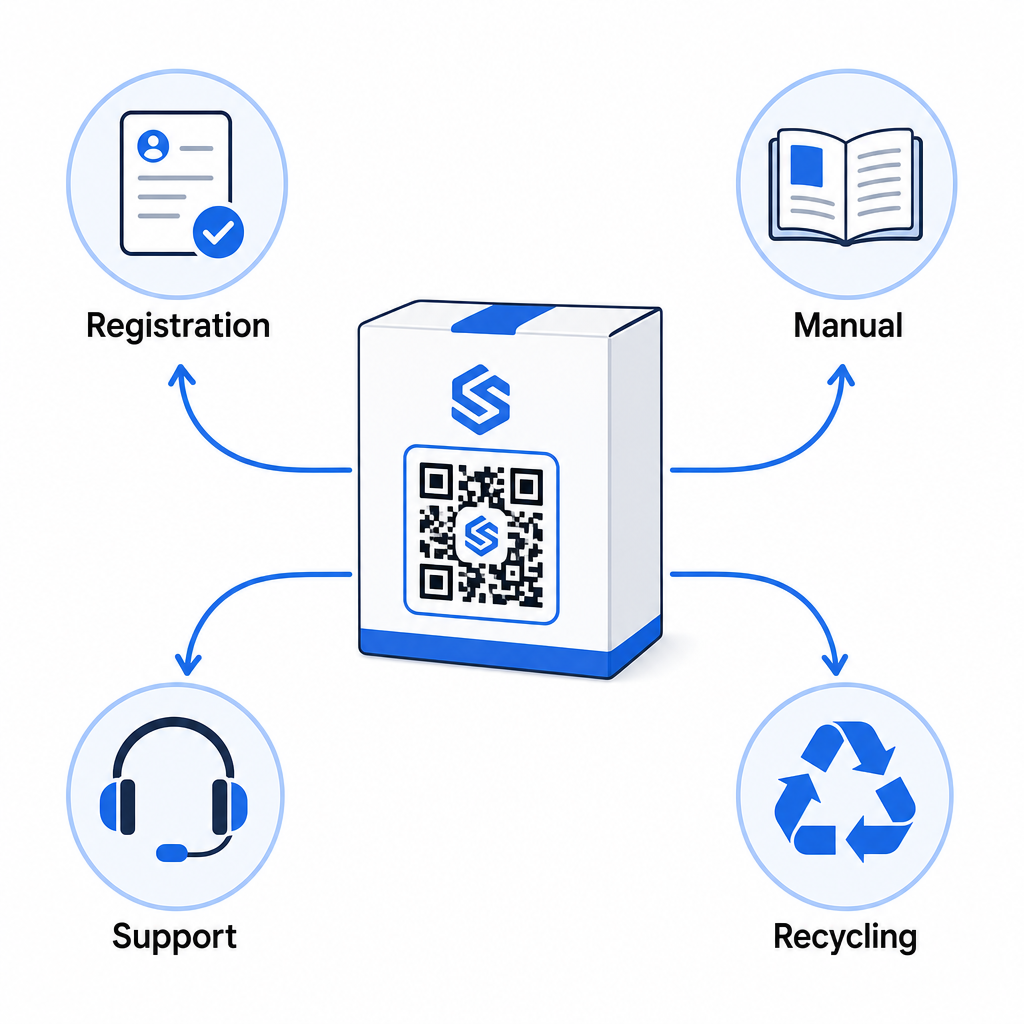
- At unboxing: directs to the registration form and warranty activation
- During ownership: links to the product manual, FAQs, or how-to videos
- For support: connects to a service request form or live chat
- At end of life: provides recycling or trade-in instructions
Because dynamic QR codes let you update the destination without reprinting, you can evolve what the code does over time. A code printed today for registration can later point to a firmware update page, a recall notice, or a loyalty program – without any change to the physical packaging.
This lifecycle approach is explored further in QR Codes for Product Lifecycle Tracking y QR Codes in Manufacturing: Tracking Materials and Products.
For manufacturers managing product registration across multiple SKUs or product lines, a centralized QR code management dashboard becomes essential. See Enterprise QR Code Management Tools for guidance on managing QR codes at scale, including bulk generation and per-code analytics.
Primeros Pasos
A QR code for product registration is not a technical project – it is a packaging decision. You generate a dynamic code, point it to your registration form or landing page, print it on the insert or box, and begin collecting ownership data the moment products reach customers.
The difference between a physical registration card and a QR code is the difference between asking someone to mail a letter and handing them a phone. Customers who would never return a card will scan a code in under 10 seconds.
Start with one product line. Create a dynamic QR code using the Generador de códigos QR de Pageloot, link it to your registration form, and track how scan and submission rates compare to your previous registration method. Once you see the difference in engagement, expanding to your full catalog is straightforward.
Preguntas Frecuentes
No. Under 16 CFR Part 1130, manufacturers and importers of durable infant or toddler products must include a postage-paid physical registration card with each unit. Online registration via a QR code satisfies the required electronic registration option but must supplement the physical card, not replace it. Both are required.
If you use a dynamic QR code, you can update the destination URL from your dashboard at any time without reprinting or modifying the physical code. This is one of the primary reasons dynamic QR codes are recommended for product registration – it protects you from broken links when forms are migrated or updated. Static QR codes cannot be changed after printing.
Collect only what you genuinely need to fulfill the registration purpose – typically customer name, email address, purchase date, place of purchase, and product serial number. Under data minimization principles required by laws like California’s CPRA, collection should be limited to what is reasonably necessary for the stated purpose. Fewer fields also improve form completion rates, so a lean form serves both compliance and business goals.