Have you ever scanned a QR code at a parking meter or on a poster, only to hesitate before tapping the link? Scammers routinely manipulate these black-and-white squares to steal passwords, harvest payment details, or install malware on unsuspecting devices. Learning how to inspect physical codes, verify URL previews, and recognize common scam tactics will help you scan with complete confidence.
How Fake QR Code Scams Work
QR codes are inherently opaque. Unlike standard text links, human eyes cannot decode the black-and-white pixel pattern to see where it leads before scanning. Cybercriminals exploit this blind spot through QR code phishing, often called quishing.
Attackers deploy fake QR codes across several common touchpoints:
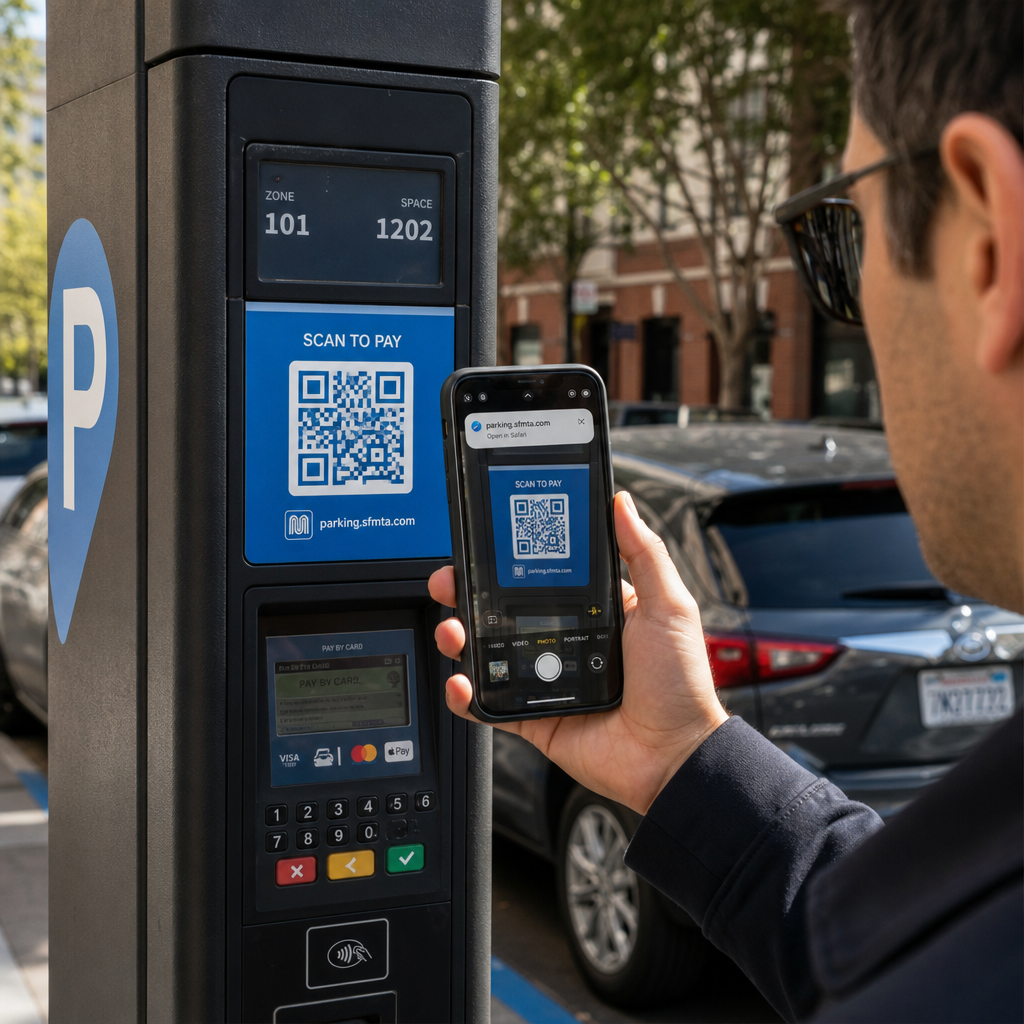
- Placing stickers over legitimate signage: Scammers overlay fake codes onto existing parking meters, ticket machines, or restaurant menus to redirect victims to cloned payment portals. This technique has caused widespread financial losses in recent QR code parking scams.
- Sending unsolicited package notifications: Scammers deliver unexpected packages or physical mail containing QR codes that ask recipients to verify personal details or delivery preferences on fraudulent identity theft sites.
- Embedding codes inside malicious email attachments: Cybercriminals place QR codes within PDF invoices or urgent notification emails to bypass standard email security filters that search for plain text links, introducing serious QR code phishing business risks.
- Distributing fake promotional flyers: Fraudulent flyers offer fake discounts or urgent public notices to pressure users into scanning codes that trigger dangerous file downloads or harvest login credentials.
In every case, attackers exploit the familiarity and speed of standard QR interactions to bypass your normal security caution.
Common Warning Signs of a Malicious QR Code
Spotting a fake QR code requires inspecting both the physical environment where the code appears and the digital link structure behind it.
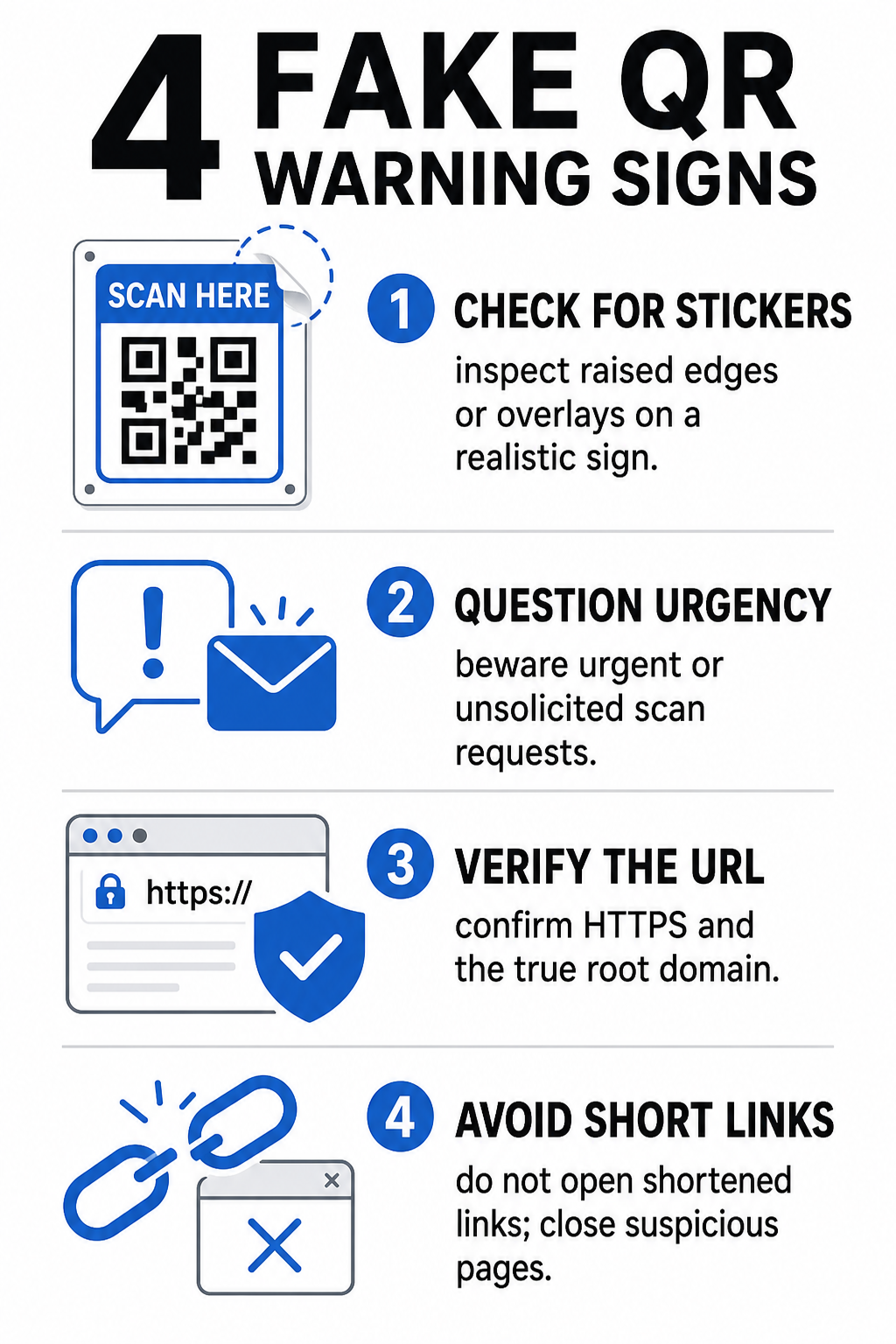
| Risk Category | What to Look For | Potential Threat |
|---|---|---|
| Physical Tampering | Raised sticker edges, peeling labels, or misaligned graphics on physical signs. | Overlay scam directing you away from legitimate parking payment systems. |
| Unsolicited Messages | Urgent emails, texts, or letters demanding immediate payment via QR code. | Phishing attempt designed to trick you into entering credentials under pressure. |
| Unsecured Protocols | URLs starting with unencrypted `http://` rather than secure `https://`. | Data interception or fake login pages harvesting credentials. |
| Domain Spoofing | Misspelled brand names, misplaced letters, or unfamiliar top-level domains. | Spoofed website cloned to imitate authentic company portals. |
| Shortened Links | Generic link shorteners that obscure the real landing page domain. | Hidden destination hiding malware or illicit redirects. |
If you spot any of these red flags, avoid scanning the code or close the browser tab immediately if the link has already opened. Understanding broader riscurile de confidențialitate ale codurilor QR helps clarify how malicious links harvest personal metadata and tracking information.
How to Safely Verify a Destination URL Before Tapping
Taking a few seconds to inspect a QR code’s destination before opening it provides strong protection against phishing attacks.
- Inspect the camera preview or scanner banner: Position your smartphone camera over the code and read the previewed URL domain carefully before tapping to open it.
- Check the root domain for spoofing: Look at the primary domain name before any slashes or subdomains. For instance, `brandname.com.attacker-site.com` is controlled by an attacker, not the official brand. Watch for subtle character swaps, such as replacing a lowercase letter `l` with the number `1`.
- Avoid downloading apps directly from QR redirects: Search for and download applications directly from your device’s official app store rather than trusting a link provided by a QR code.
- Navigate directly to trusted web portals for payments: Avoid entering passwords or credit card information on pages reached through unsolicited QR codes. Instead, open your mobile browser and manually type the official website address.
Test Suspicious Codes Online Want to safely preview and verify destination links before opening them on your smartphone? Use the free Pageloot QR Code Scanner to upload code images and inspect destination content securely.
Practical Steps to Prevent QR Code Scams
Both individual consumers and business owners can implement structured security practices to keep physical and digital touchpoints safe.
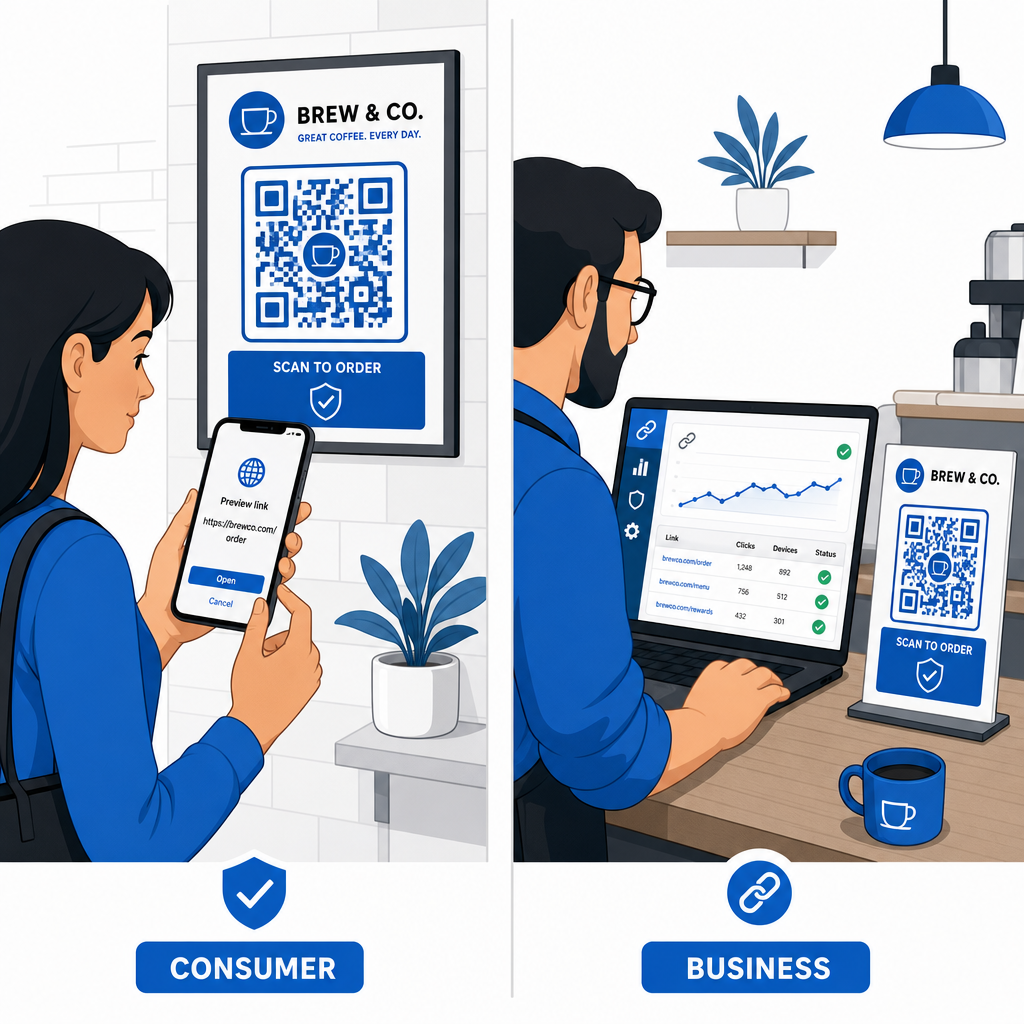
Guidelines for Everyday Consumers
- Check physical signage for overlays: Feel the surface of parking meters, public chargers, or posters to ensure no sticker covers the original code.
- Type web addresses manually for transactions: Open your web browser and type official URL addresses directly when paying utility bills or entering financial credentials.
- Enable two-factor authentication on all accounts: Protect online logins with an extra verification step so stolen passwords alone cannot grant account access.
- Report fraudulent activity to official portals: Submit reports of fraudulent codes or scams to local authorities and official reporting portals like the FBI Internet Crime Complaint Center (IC3) or the Federal Trade Commission (FTC).
Guidelines for Business Owners
- Deploy dynamic QR codes across campaigns: Use dynamic QR codes to maintain full control over destination links, allowing immediate updates or link deactivation if a threat is detected.
- Apply custom branding and visual logos: Customize code designs with company logos and specific brand colors, making your codes significantly harder for scammers to replicate with generic stickers.
- Implement layered security monitoring tools: Combine secure QR management with specialized enterprise security tools to evaluate incoming links and detect phishing threats across corporate channels. You can review dedicated defensive tools in our guide to instrumente specializate pentru a detecta phishing-ul cu coduri QR.
- Audit physical touchpoints routinely: Inspect physical signs, table tents, and kiosks regularly to detect sticker overlays or physical tampering. Combining physical checks with QR code payment security best practices preserves customer trust. For a complete organizational strategy, explore our breakdown on how to protect your business from QR code scams.
Protect Your Digital Interactions with Smart Scanning
Spotting fake QR codes comes down to recognizing physical tampering, verifying destination domains, and avoiding impulsive credential entry or payment submissions. By inspecting URL previews and relying on verified web addresses, you can safely enjoy the convenience of QR codes without compromising your security.
When analyzing unknown QR codes on your smartphone or desktop computer, verify their contents safely before taking action. Use the web-based Pageloot QR Code Scanner to preview encoded destinations and confirm link safety instantly.
Întrebări Frecvente
Scanning a QR code simply reads encoded text, usually a web address. Merely scanning the code rarely infects a device directly; however, tapping the previewed link to visit a malicious website or downloading an untrusted file from that landing page can install malware on your phone.
Immediately change your password on the affected website and any other account sharing those credentials. Turn on two-factor authentication right away, notify your bank if financial details were exposed, and monitor your credit reports for unrecognized activity.
Dynamic QR codes route traffic through a secure management platform rather than embedding fixed destination data. If a destination web page is compromised or requires updating, administrators can modify the destination URL or deactivate the link remotely without replacing physical print materials.