> 블로그 > AR QR 코드로 이벤트 성공 추적하기
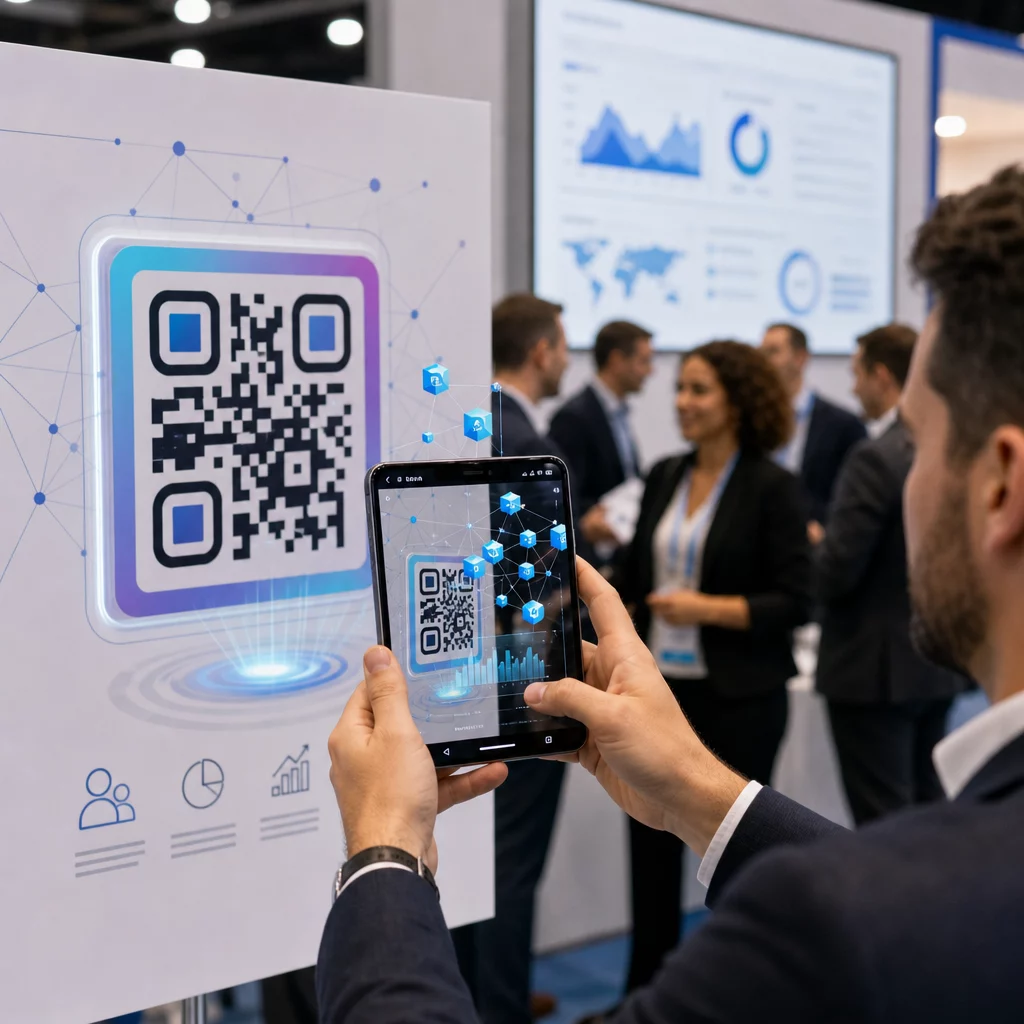
AR QR event scan

AR QR 코드로 이벤트 성공 추적하기

Track event success with AR QR codes by measuring dwell time, scan frequency, and spatial data. Use dynamic codes and UTMs to capture data and optimize event
Updated on 6월 10, 2026
목차

Are you running AR-enabled QR code campaigns at events but struggling to tell what’s actually working? Without the right metrics in place, scan data sits unused while engagement opportunities slip by. This guide walks you through which metrics matter, how to read them, and how to turn that data into better event outcomes.

What Makes AR QR Code Tracking Different

Traditional QR codes tell you how many people scanned a code and, broadly, where they were when they did it. AR-enabled QR codes go further. Because the experience unfolds inside the scan itself – through 3D models, video overlays, spatial elements – there are more meaningful moments to measure.

The core difference is that AR QR codes require tracking both initial engagement (the scan) and immersive interaction (dwell time, 3D object interactions, spatial movement). A standard scan count only tells you someone started the experience. Dwell time, interaction depth, and post-scan behavior tell you whether it resonated.

On average, WebAR campaigns see dwell times between 60 to 120 seconds – far longer than the brief interactions typical of standard QR codes. That extended engagement window creates a richer data trail, but only if you know what to capture.

The Core Metrics to Track

Before setting up any tracking infrastructure, establish what success looks like for your specific event. A brand awareness activation has different KPIs than a lead generation booth. Once your objectives are clear, every metric has a defined role.

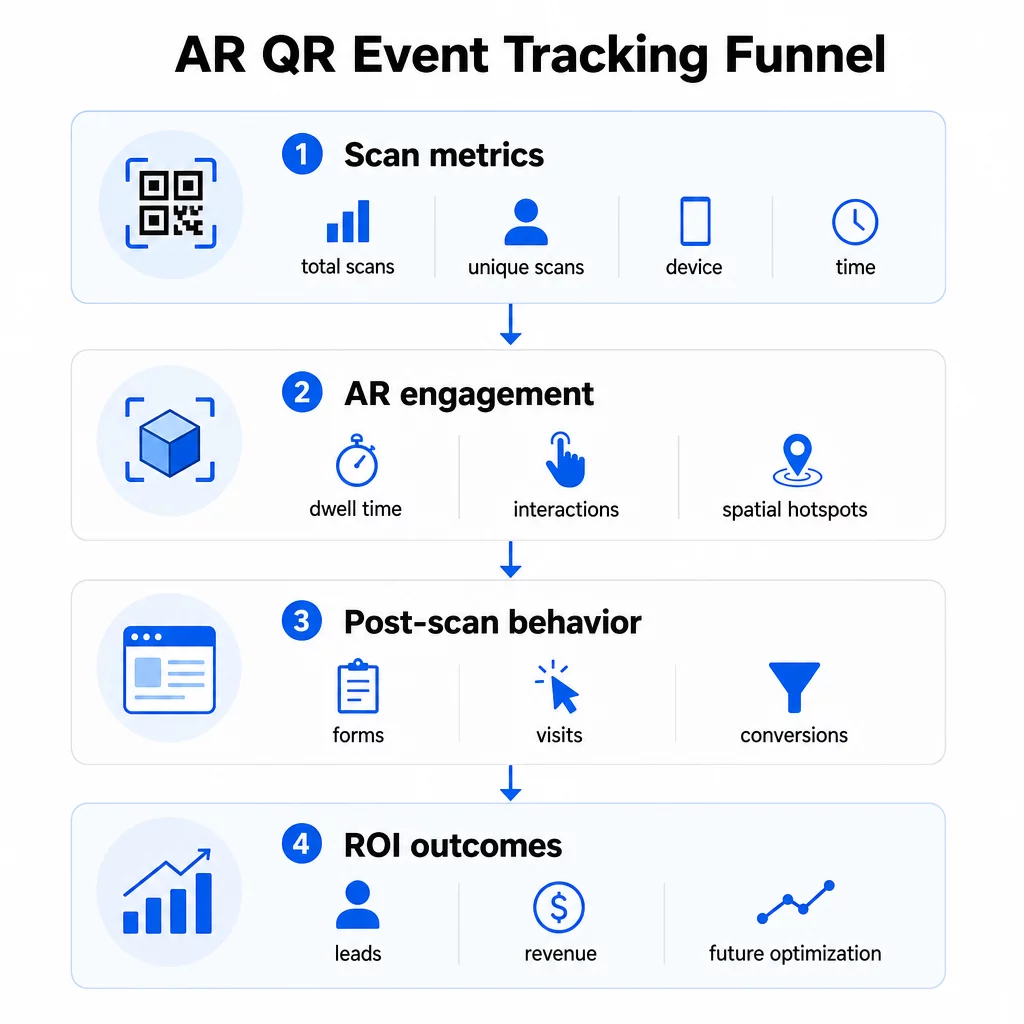
AR QR tracking metrics

Scan-level metrics form the foundation:

  • Total scans – overall reach and engagement volume
  • Unique scans – approximate number of individual attendees who interacted
  • Scan frequency (total ÷ unique) – whether people are returning to the experience, which signals genuine interest
  • Time and date of scan – peak engagement windows help you identify which sessions, booths, or time slots drove the most activity
  • Device and OS data – knowing whether your audience is predominantly on iOS or Android lets you optimize the landing page and AR experience for the dominant device type
  • Geolocation data – city or region-level scan data reveals where engagement is highest, useful for multi-venue events or future event placement decisions

AR-specific metrics go deeper:

  • Dwell time – how long users stay inside the AR experience, not just on the landing page
  • Spatial analytics – which physical areas of your venue or booth generated the most scan activity
  • 3D interaction events – whether users rotated a product model, triggered a video, or completed an interactive element

Post-scan behavior closes the loop:

  • Form submissions, registrations, or downloads that followed the scan
  • Bounce rate and time-on-page for the landing page destination
  • Conversions tied to specific campaign goals (ticket purchases, newsletter sign-ups, demo requests)

For B2B events in particular, the most valuable metrics are new quality leads generated, new accounts engaged, and eventual revenue attributed to the event. Scan data feeds the top of that funnel, but post-scan conversions determine ROI.

모든 스캔을 실시간으로 추적 사용 Pageloot Analytics dashboard to monitor total scans, unique scans, device types, and scan locations as they happen during your event – no technical setup required.

Setting Up Your Tracking Infrastructure

Getting accurate data requires a few decisions before your event goes live.

동적 QR 코드 사용

Static QR codes encode a fixed destination and provide no tracking. Dynamic QR codes route scans through a redirect, which is where scan metadata – time, device, location – gets logged. The 동적 QR 코드 생성기 from Pageloot creates codes that track scan rates, location data, and other metrics automatically, and lets you update the destination URL without reprinting materials. For multi-day events where schedules or calls-to-action may change, this flexibility is essential.

Add UTM Parameters for Post-Scan Tracking

Attaching UTM parameters to your QR code destination URLs allows tools like Google Analytics 4 to distinguish QR-driven traffic from other sources and measure what happens after the scan. A well-structured URL looks like:

`https://yoursite.com/event-page?utmsource=eventbooth&utm매체=qrcode&utmcampaign=conference2025`

Using descriptive `utmsource` values (e.g., `mainstagebooth`, `registrationdesk`) lets you compare performance across different placement locations at the same event. Keep naming conventions consistent – lowercase, underscores instead of spaces – so your GA4 reports stay clean and filterable. The guide on QR 코드용 UTM 매개변수 covers this setup in detail.

Connect Your Attendance Data

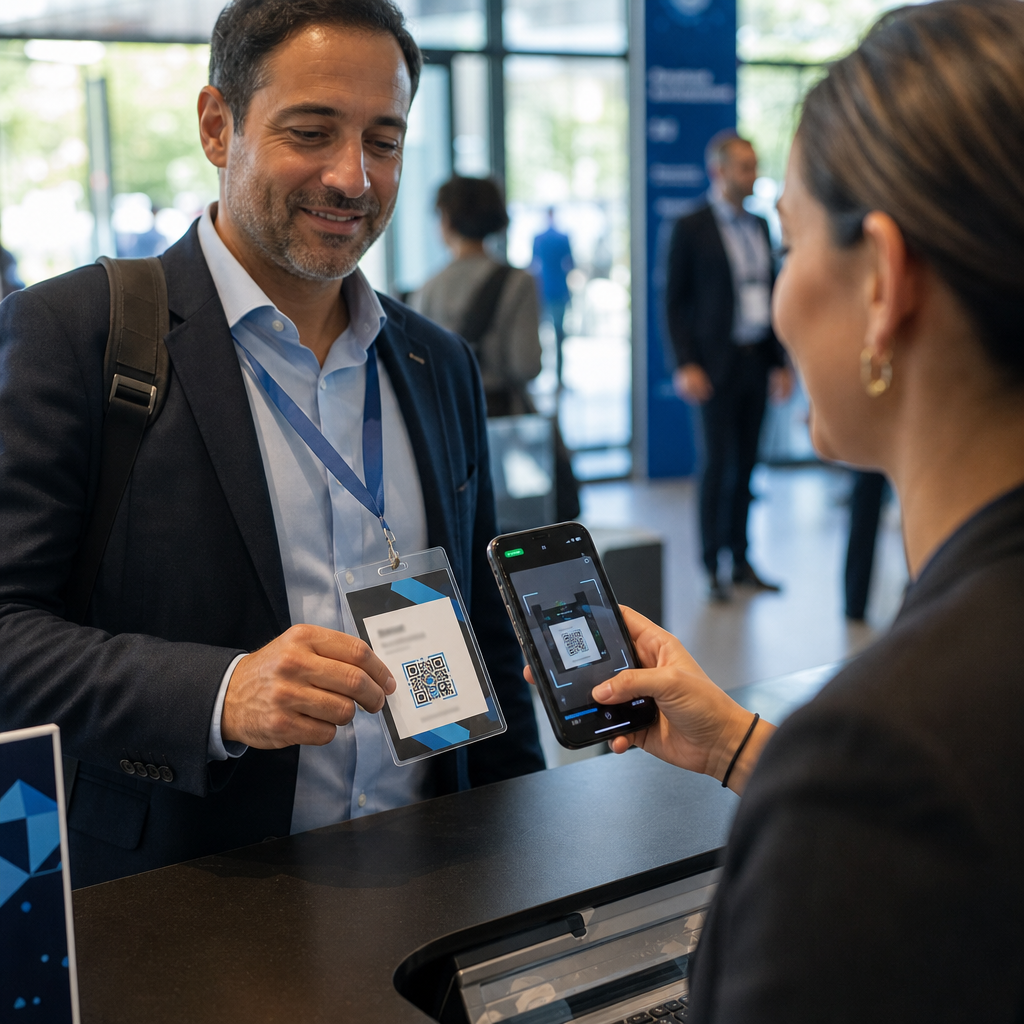
If you’re using QR codes for event check-ins, your attendance data and your engagement data can be read together. The attendance QR code system logs arrivals in real time, which lets you cross-reference who checked in against who scanned your AR experience and completed a post-scan action. This is particularly useful for calculating true conversion rates rather than just scan-to-landing-page rates.

For collecting structured responses – feedback, registrations, post-event surveys – pair your QR codes with Google Forms using the Google 양식 QR 코드 생성기. Form submission data integrates directly with Google Sheets for immediate analysis.

Streamline Event Check-Ins 그만큼 Pageloot 이벤트 QR 코드 생성기 lets you create trackable tickets, interactive schedules, and engagement touchpoints – all manageable from a single dashboard.

How to Interpret Your Scan Data

Collecting metrics is only useful if you know what they’re telling you. Here’s how to read the most common patterns.

Low total scans don’t automatically mean the offer failed. Check placement first – is the code at eye level, printed large enough, with a clear call to action nearby? Poor contrast or an unmarked code is the most common cause of low scan rates, not the content behind it. The guide to QR code engagement with heatmaps explains how to diagnose placement problems using scan density data.

High total scans but low unique scans suggests a small group is scanning repeatedly. This can indicate genuine enthusiasm, or it can mean your QR code is in a location where the same people pass it multiple times. Context matters here.

High unique scans but high bounce rate on the landing page points to a mismatch between the expectation the QR code sets and what users find after scanning. Revisit the landing page content and make sure it matches the context where the code is displayed.

Strong dwell time with low conversion is common in AR experiences where the interaction is enjoyable but the call to action isn’t prominent enough. Review where the CTA appears within the experience and whether users are reaching it before they exit.

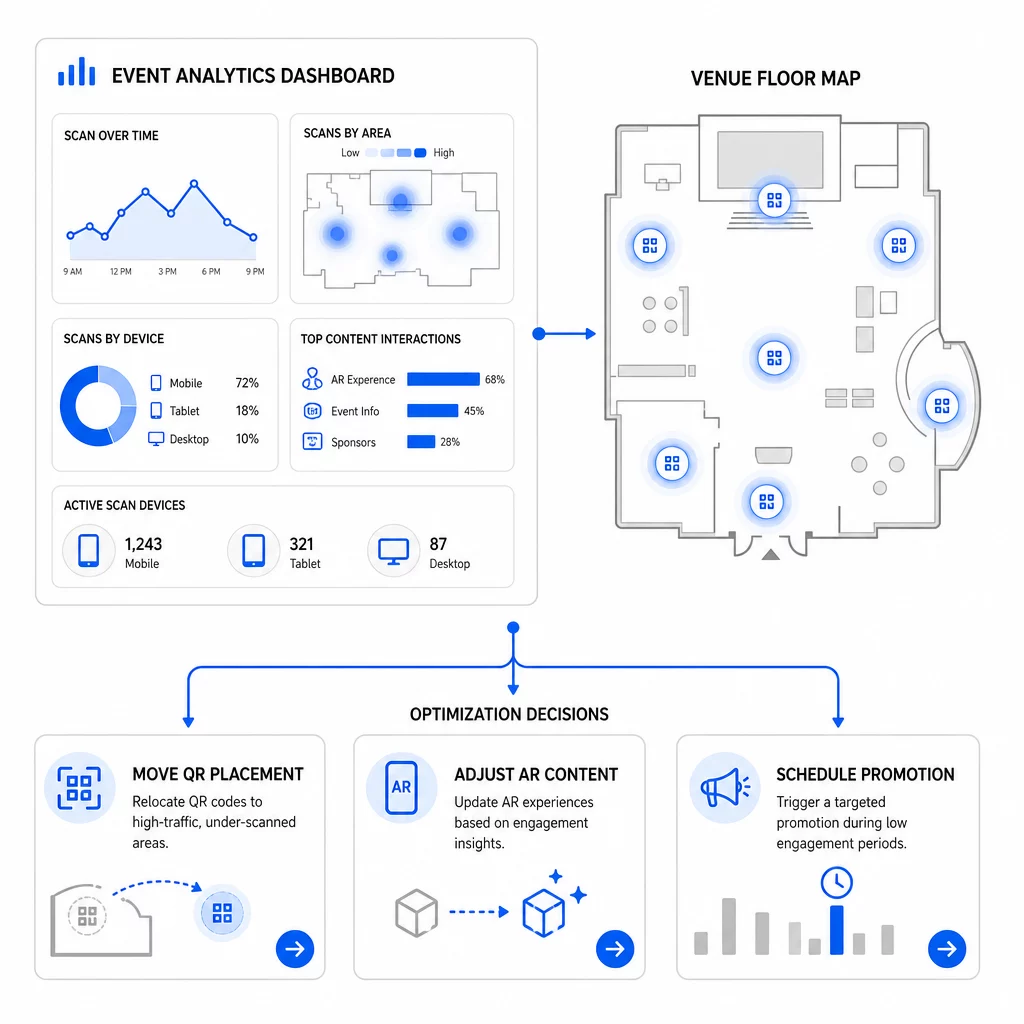
Geographic scan data from your 지리 위치 분석 can reveal which areas of a multi-room venue or trade show floor drove the most activity, helping you decide booth placement and staffing levels for future events.

Time-based scan patterns identify peak engagement windows. If most scans happen during the 20 minutes after a keynote speaker mentions your activation, you have a clear signal about what’s driving traffic. Use that information to time social media posts or staff rotations accordingly.

Choosing Between Pageloot and GA4

Most events benefit from using both tools in combination, with each handling a distinct layer of tracking.

기능 페이지룻 Google Analytics 4
실시간 스캔 분석 Instant scan-level data (geo, device, time) Available via Realtime report; requires UTM setup
AR-specific metrics Dwell time, spatial analytics on supported tiers Limited to web metrics; requires custom events
Unique scan tracking Built-in device deduplication Session/user-based; hard to tie solely to physical scans
Integration effort Low – plug-and-play with dynamic redirects Higher – needs UTM parameters and tracking scripts
가격 $10–$50+/month Free (standard version)

Use Pageloot when you need immediate insight during the event: who is scanning, from where, on which device, and how long they’re engaging. It requires no changes to your website code and is designed around QR-specific metrics including spatial analytics and dwell time.

Use GA4 when you need to understand the downstream customer journey – what users did after they landed on your page, whether they converted, and how the event contributed to longer-term campaign goals. The QR 코드 이벤트 추적을 위한 최고의 도구 page compares platform options in more detail.

For multi-day conferences or networking events, running both in parallel gives you immediate engagement feedback through Pageloot and conversion attribution through GA4.

Privacy Considerations

AR QR code campaigns collect personal data automatically upon scanning – this can include IP addresses, device identifiers, timestamps, and precise location data. Under U.S. state privacy laws such as CCPA and VCPA, you’re required to disclose what data is collected, how it’s used, and offer opt-out mechanisms.

Practically, this means:

  • Update your event privacy notice to describe what happens when a QR code is scanned
  • Disclose any precise geolocation tracking or behavioral targeting by your QR platform
  • Audit your QR code provider’s data practices, including retention periods and third-party sharing
  • Obtain explicit consent before collecting GPS-based location data

그만큼 geolocation analytics guide covers privacy compliance requirements in more detail, including the distinction between IP-based and GPS-based tracking and when each requires user consent.

Using Data to Optimize Future Events

The value of tracking compounds when you use it iteratively. Before your next event, compare performance across placements, time slots, and AR content types to identify what drove the most meaningful engagement – not just the most scans.

Event scan optimization

Specific optimizations to consider:

  • Relocate QR codes from low-scan areas to positions near high-traffic session exits or registration areas
  • Adjust AR content based on which interactive elements showed the highest dwell time
  • Refine your landing page CTA placement based on where users drop off
  • Schedule supporting promotions and staff activations around peak scan windows
  • Focus future event investment on geographic regions where scan-to-conversion rates were strongest

Comparing key metrics before and after each change is the only reliable way to validate whether an optimization actually improved results. The QR code analytics dashboards guide walks through how to structure these comparisons inside a tracking dashboard.

The broader picture on how AR QR codes transform events is worth reviewing if you’re still in the planning stage – particularly around defining objectives before choosing which metrics to prioritize.

Tracking event success with AR QR codes isn’t just about counting scans. It’s about building a clear picture of attendee behavior across the full journey: who engaged, where they did it, how deeply they interacted, and what they did next. Set up dynamic codes with proper UTM tagging before the event, monitor spatial and dwell metrics in real time, and use post-event conversion data to sharpen the next campaign.

Start Tracking Your Event Campaigns Create dynamic, trackable AR QR codes with Pageloot’s full suite of QR features and monitor every scan from a single dashboard. Free 14-day trial, no credit card required.

자주 묻는 질문

What metrics should I track for an AR QR code event campaign?

The most important metrics are total scans, unique scans, scan frequency, time and date of scan, device and OS data, geolocation, and dwell time within the AR experience. Post-scan behavior – bounce rate, time on page, form submissions, and conversions – completes the picture by showing whether scans translated into meaningful outcomes.

Do I need Google Analytics if I’m already using a QR code platform like Pageloot?

The two tools serve different purposes. Pageloot captures scan-level metadata in real time – device type, location, dwell time – without requiring any website code changes. Google Analytics 4 tracks what happens after the scan: page behavior, conversion events, and the broader customer journey. For events where both immediate engagement and downstream conversions matter, using both together gives you the most complete view.

How do dynamic QR codes improve event tracking compared to static ones?

Static QR codes encode a fixed URL and provide no tracking data. Dynamic QR codes route scans through a redirect that logs time, device, and location metadata automatically. They also let you update the destination URL or linked content without reprinting materials – useful for multi-day events where schedules or calls-to-action change. You can learn more about how this works on the dynamic QR code generator page.

작성자 정보

시임 코스타비는 페이지루트의 콘텐츠 책임자입니다. 그는 페이지루트의 혁신적인 QR 코드 생성 서비스에 대한 글을 쓰고 있습니다. 5년 이상 QR 코드 분야에서 쌓아온 깊이 있는 전문 지식을 바탕으로, 시임은 이 분야의 전문가로 인정받고 있습니다. 그는 QR 기술을 활용하여 디지털 상호작용을 간소화하고 향상시키는 데 크게 기여하고 있습니다.

범주
에 대해 자세히 알아보기

온라인으로 QR 코드를 생성해야하는 경우 QR 코드 만들기 무료로 여기!
Pageloot는 #1 Go-To 솔루션 QR 코드를 만들고 스캔합니다.

20,000개 이상의 브랜드로부터 신뢰를 받아 더 많은 매출, 리뷰, 팔로워를 확보했습니다.

클라이언트 로고
최고 브랜드의 신뢰
5 중 4.8 평가

4.86 / 5 별점

휴고 로랑
휴고 로랑
레스토랑 주인
가장 쉽고 안정적인 QR 코드 생성기. PDF 파일을 즉시 업로드할 수 있습니다. 이제 레스토랑 메뉴가 디지털화되었습니다.
루카스 얀센
루카스 얀센
부동산 개발사
이것은 훌륭한 도구이며 QR 코드를 사용하면 원하는 곳으로 이동할 수 있습니다. 우리는 위치 QR 코드만 사용하지만 유용한 기능이 너무 많습니다.

엠마 모레티
엠마 모레티
소매 제품
사용하기 쉽고 빠릅니다. 그것은 훌륭하게 작동하고 완벽한 이미지를 생성하므로 직원들이 내 vCard를 다운로드할 수 있습니다.

휴고 로랑
휴고 로랑
레스토랑 주인
가장 쉽고 안정적인 QR 코드 생성기. PDF 파일을 즉시 업로드할 수 있습니다. 이제 레스토랑 메뉴가 디지털화되었습니다.
루카스 얀센
루카스 얀센
부동산 개발사
이것은 훌륭한 도구이며 QR 코드를 사용하면 원하는 곳으로 이동할 수 있습니다. 우리는 위치 QR 코드만 사용하지만 유용한 기능이 너무 많습니다.
엠마 모레티
엠마 모레티
소매 제품
사용하기 쉽고 빠릅니다. 그것은 훌륭하게 작동하고 완벽한 이미지를 생성하므로 직원들이 내 vCard를 다운로드할 수 있습니다.
더 많은 QR 코드보기
제품 바코드 라벨 스캔
만드는 방법 바코드
무엇이든 디지털 경험으로 전환하세요 3분 이내에.

14일 무료 체험.

신용카드는 필요 없습니다.

첫 구매 시 30% 할인

코드를 사용하세요:

MP3 파일 공유

PDF QR 코드를 생성하려면 가입하세요

필요한 모든 것을 업로드하고 표시합니다.

  • 오디오 파일
  • 팟캐스트
  • 음악

가입 시 14일 무료 체험.
체험 기간 후 QR 코드 만료.

오디오 mp3 QR 코드를 생성하려면 가입하세요

프레임으로 더 많은 스캔 확보

QR 코드에 더 많은 프레임을 추가하려면 가입하세요

클릭 유도 문안 프레임은 고객이 QR 코드와 쉽게 상호 작용할 수 있도록 도와줍니다. 사용해 보세요!

가입 시 14일 무료 체험.
체험 기간 후 QR 코드 만료.

QR 코드에 더 많은 프레임을 추가하려면 가입하세요

도형으로 더 많은 스타일 추가

더 많은 도형을 만들려면 가입하세요

QR 코드는 정사각형일 필요가 없습니다. 브랜드 이미지에 맞게 전환해 보세요.

가입 시 14일 무료 체험.
체험 기간 후 QR 코드 만료.

더 많은 도형을 만들려면 가입하세요

QR 코드에 로고 추가

QR 코드에 로고를 추가하려면 가입하세요

로고와 브랜드를 추가하여 QR 코드를 돋보이게 만드세요.

가입 시 14일 무료 체험.
체험 기간 후 QR 코드 만료.

QR 코드에 로고를 추가하려면 가입하세요

스마트 앱 스토어 리디렉션

앱 스토어 QR 코드를 생성하려면 가입하세요

스마트 앱 스토어 QR 코드에 앱 링크를 추가하세요. 사용자는 장치에 따라 리디렉션됩니다.

가입 시 14일 무료 체험.
체험 기간 후 QR 코드 만료.

앱 스토어 QR 코드를 생성하려면 가입하세요

QR 코드에 이미지 업로드

이미지 QR 코드를 생성하려면 가입하세요

이미지를 쉽게 공유하세요. 몇 초 안에 동적으로 이미지를 변경하십시오.

가입 시 14일 무료 체험.
체험 기간 후 QR 코드 만료.

이미지 QR 코드를 생성하려면 가입하세요

PDF 파일 공유

PDF QR 코드를 생성하려면 가입하세요

필요한 모든 것을 업로드하고 표시합니다.

  • 메뉴 및 가격표
  • 명령
  • 모든 문서

가입 시 14일 무료 체험.
체험 기간 후 QR 코드 만료.

PDF QR 코드를 생성하려면 가입하세요

인쇄 없이 나중에 편집

다시 인쇄하지 않고 QR 코드를 편집하려면 가입하세요

동적 QR 코드를 사용하면 새 QR 코드를 인쇄하지 않고도 QR 코드의 내용을 변경할 수 있습니다.

가입 시 14일 무료 체험.
체험 기간 후 QR 코드 만료.

다시 인쇄하지 않고 QR 코드를 편집하려면 가입하세요

언제? 어디서? QR 코드 스캔 추적

QR 코드를 추적하려면 가입하세요

어떤 QR 코드가 가장 많이 스캔되고 무엇이 고객을 가장 흥분시키는지 알아보십시오.

가입 시 14일 무료 체험.
체험 기간 후 QR 코드 만료.

QR 코드를 추적하려면 가입하세요

인쇄 준비 파일 제공

PDF 및 SVG와 같은 벡터 QR 코드를 생성하려면 가입하세요.

.EPS, .PDF, .SVG

HD 해상도로 QR 코드를 다운로드하고 싶으신가요? 인쇄할 준비가 된 벡터 또는 픽셀 형식을 가져옵니다.

가입 시 14일 무료 체험.
체험 기간 후 QR 코드 만료.

PDF 및 SVG와 같은 벡터 QR 코드를 생성하려면 가입하세요.

기다리세요. 귀하의 QR 코드는 로드 중... 로드 중...

나만의 것으로 만들기

나중을 위해 QR 코드를 저장하려면 가입하세요.

다양한 색상, 로고 및 클릭 유도문안 프레임으로 멋진 QR 코드를 만들어 더 많은 스캔을 받으세요.

가입 시 14일 무료 체험.
체험 기간 후 QR 코드 만료.

나중을 위해 QR 코드를 저장하려면 가입하세요.