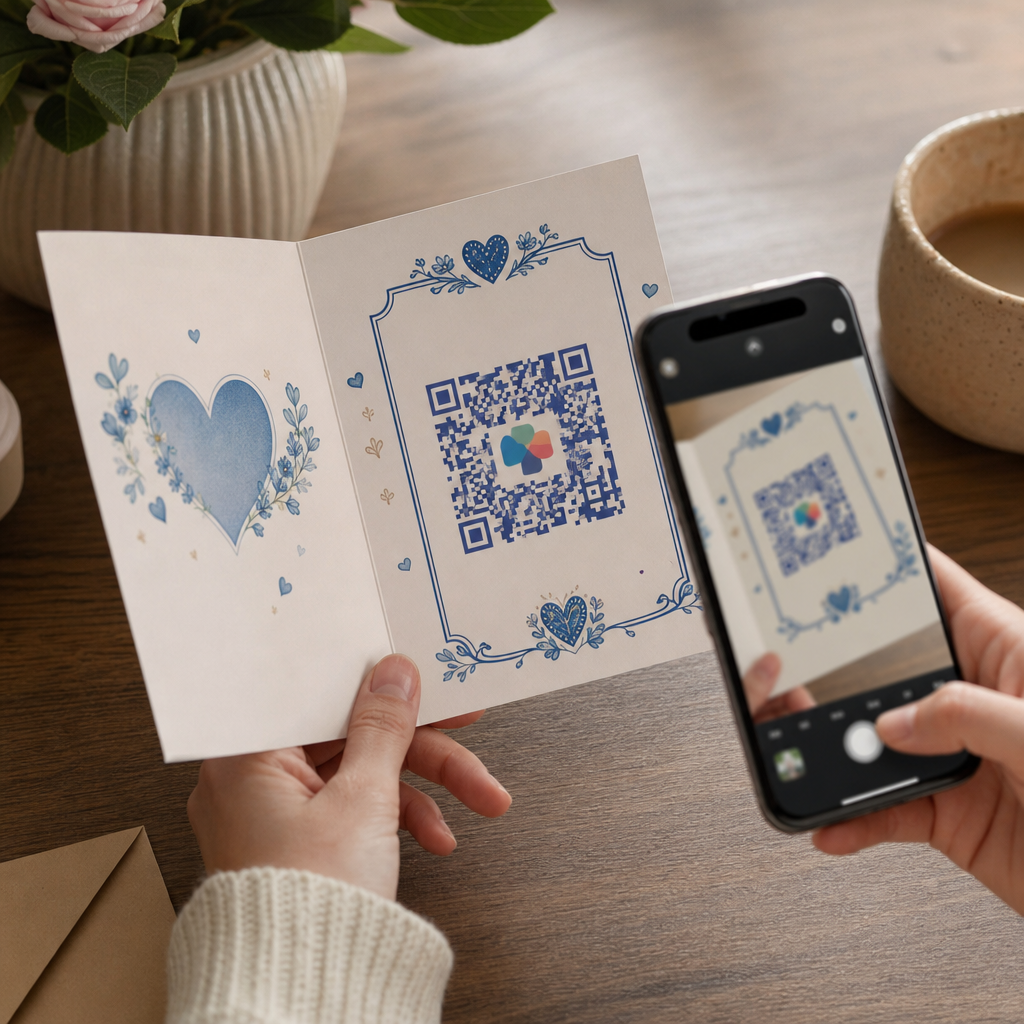
Want to turn a paper greeting card into something a recipient actually plays, watches, or listens to? Static cards get set aside, but a card with a QR code that unlocks a personal video or voice message creates a moment people remember. This page explains how QR codes work on greeting cards and how to create or customize them using Pageloot’s tools.
Why QR Codes Make Greeting Cards More Engaging
Americans purchase approximately 6.5 billion greeting cards each year, with birthday cards alone accounting for more than half of all cards sold. The format is ubiquitous, which is exactly why standing out matters.
A QR code printed inside or on the cover of a card links to any digital content you choose – a YouTube video, a recorded voice message, a song, a photo gallery, or a personalized landing page. When the recipient opens the card and scans the code with their phone camera, that content loads immediately, no app download required.
The key distinction for ongoing use is between स्थिर और गतिशील QR कोड. A static code encodes the destination directly and cannot be changed after printing. A dynamic code uses a short redirect URL, meaning you can update what the code points to at any time without reprinting the card. For one-off personal cards, static works fine. For businesses sending branded cards at volume, dynamic codes give you flexibility and the ability to track engagement.
What Content You Can Link From a Greeting Card QR Code
The content possibilities range from simple to rich. Here are the most common use cases:
- Personal video message – Record a video, upload it to YouTube, and link it using the यूट्यूब क्यूआर कोड जेनरेटर. The code opens the video directly in the YouTube app or browser.
- Voice or audio recording – Convert an MP3 or audio file into a scannable code with the एमपी3 क्यूआर कोड जेनरेटर. You can customize a branded audio landing page with a title, cover image, and brand colors.
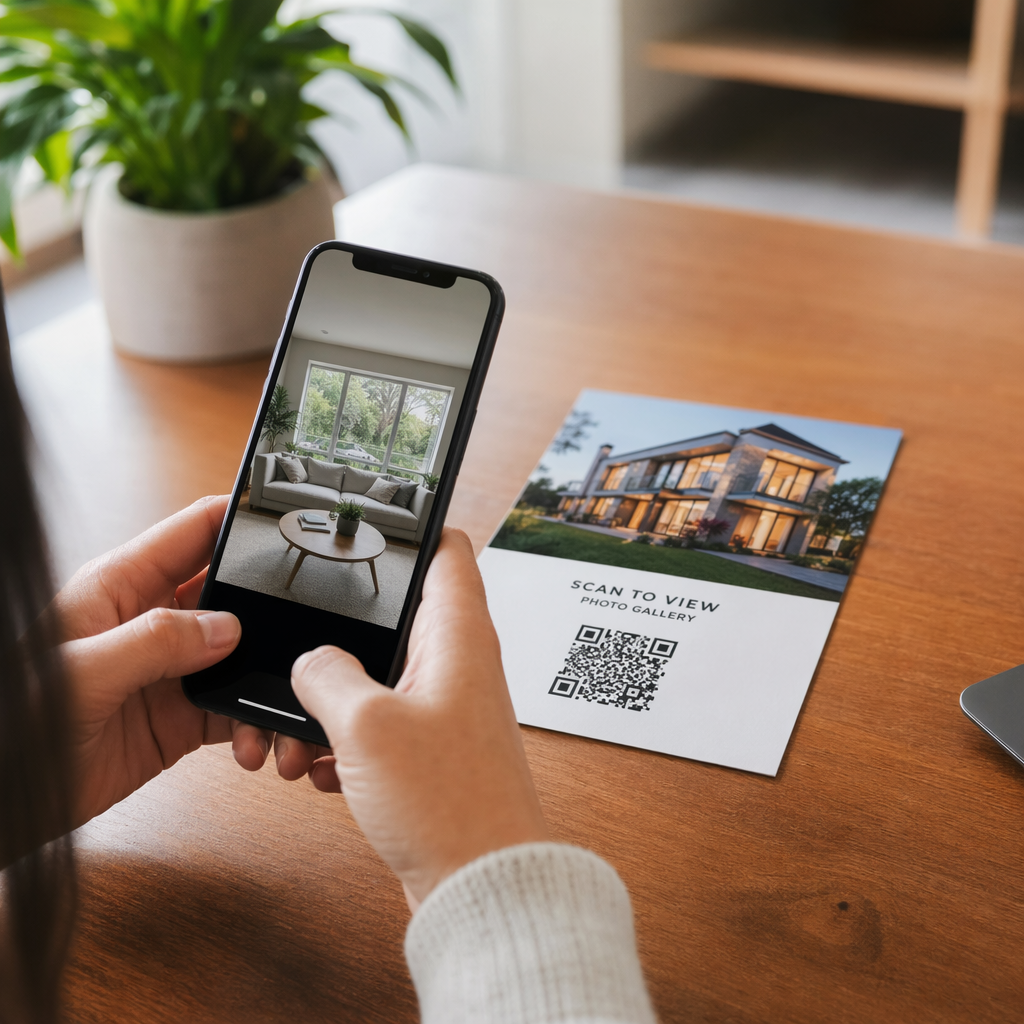
- Photo gallery – Link to a curated image gallery using the छवि क्यूआर कोड जेनरेटर, useful for photo gifts, event recaps, or anniversary cards.
- Song or playlist – Share a meaningful song or playlist via the Spotify QR कोड जनरेटर, which links directly to a track, album, or playlist on Spotify.
- Custom link or landing page – Use the लिंक क्यूआर कोड जनरेटर to point to any URL – a website, a form, an event page, or a personalized digital message.
Each of these generators lets you customize the QR code’s colors, add a logo, choose a frame style, and download a print-ready file.
Create a QR Code for Your Greeting Card Choose your content type and generate a fully branded, scannable QR code in minutes. Start with the पगेलूट क्यूआर कोड जनरेटर – free 14-day trial, no credit card required.
How to Create a QR Code for a Greeting Card
The process takes less than five minutes:
- अपनी सामग्री का प्रकार चुनें।. Decide what you want the card to deliver – video, audio, images, a link, or a song.
- Prepare your content. Upload your video to YouTube, export your audio as an MP3, collect your images, or copy the URL you want to use.
- Open the right generator. Go to the relevant Pageloot generator based on your content type.
- Enter your content details. Paste your URL or upload your file.
- QR कोड को अनुकूलित करें. Adjust colors, add a logo, choose a frame or shape, and add a short call-to-action like “Scan to hear a message.”
- Download your code. Export in a print-ready format – SVG, EPS, or PDF – for the highest quality output.
- Place it on the card. Print the QR code directly on the card design or print it on a sticker to attach inside.
- Test before printing at volume. Scan the code with at least two different smartphones to confirm it resolves correctly.
QR Code Design Guidelines for Cards
Greeting cards are small, so getting the sizing and placement right is critical for reliable scanning.
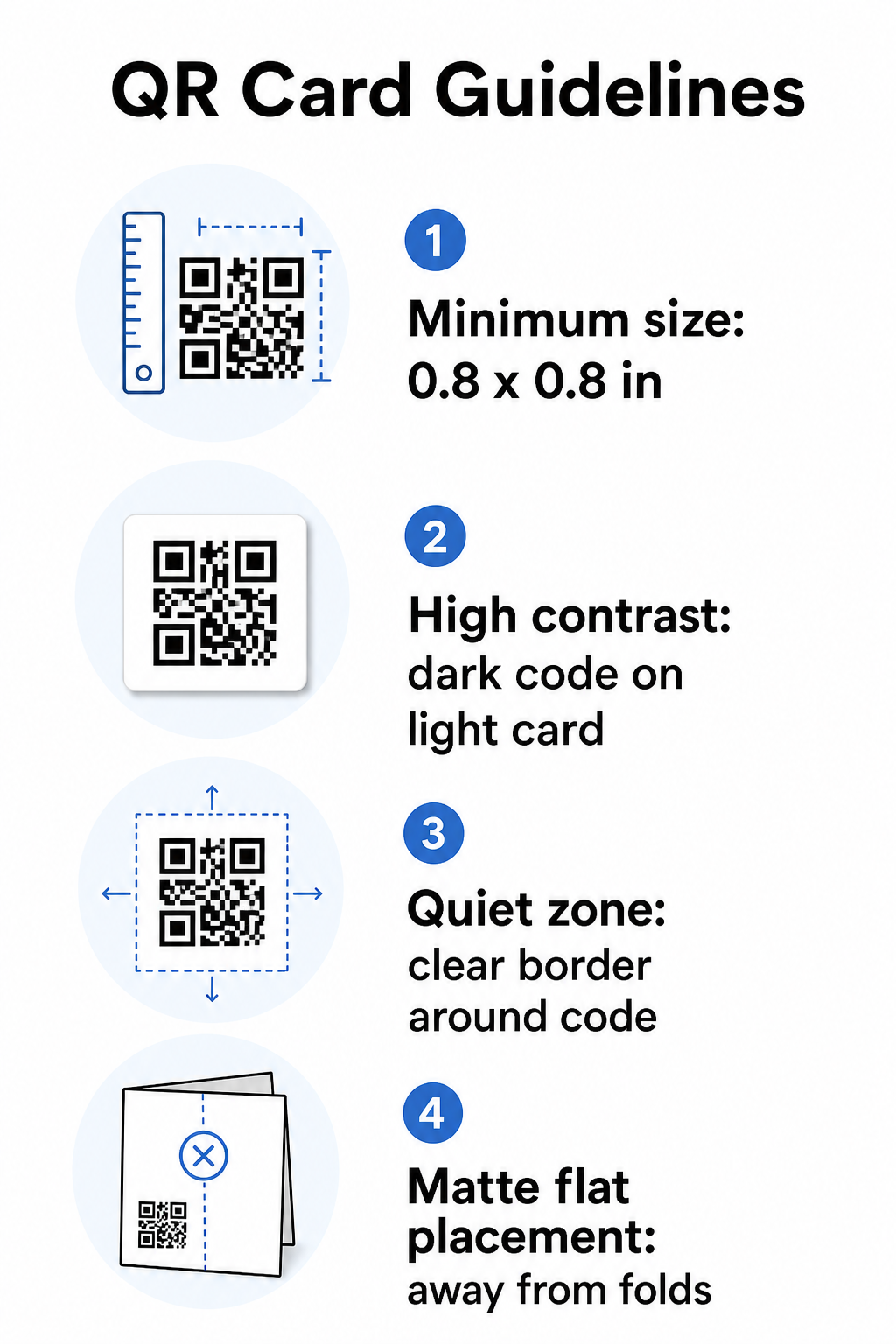
आकार: The minimum recommended size for a QR code on print materials is 0.8 × 0.8 inches (20 × 20 mm). On a standard greeting card scanned at arm’s length, this is sufficient. If you’re adding a logo inside the code, increase the size by 20–30% to compensate for the space the logo occupies. For a full breakdown by material type, see the guide on विभिन्न प्रिंट सामग्रियों के लिए QR कोड का आकार निर्धारण.
कंट्रास्ट: Use dark modules on a light background and never invert that relationship. High contrast is the single most important factor for reliable scanning across different phone models and lighting conditions. For detailed guidance, the क्यूआर कोड पठनीयता के लिए सर्वोत्तम अभ्यास guide covers contrast ratios, color combinations, and common mistakes to avoid.
शांत क्षेत्र: Leave a clear, unprinted border around the QR code on all four sides – at least four modules wide. This buffer zone helps scanners detect the code’s edges. Do not place text, patterns, or decorative elements inside this border.
प्लेसमेंट: Where you position the code on the card matters as much as how you design it.
- Place the QR code on a flat, non-reflective surface and avoid positioning it across a card fold, which can distort the pattern when the card is opened or handled.
- Inside the card is often the safest option – flat, protected from handling, and seen at the moment the card is opened.
- The card’s back panel is another reliable placement if the surface is matte and the background is plain and uncluttered.
- Avoid heavily textured, glossy, or embossed surfaces, which can scatter light and prevent accurate scanning.
For broader placement strategy applicable to print campaigns, the guide to QR code placement in marketing covers surface types, eye-level positioning, and call-to-action framing in detail.
Print quality: Export your QR code as a vector file (SVG or EPS) rather than a low-resolution PNG whenever possible. This keeps the code sharp regardless of the output size. If you’re working with a commercial printer, review प्रिंटिंग तकनीकें QR कोड की स्कैन करने की क्षमता को कैसे प्रभावित करती हैं to understand how method, substrate, and ink choice affect the final result.
Using Dynamic QR Codes for Cards Sent at Volume
If you’re a business sending branded greeting cards for the holidays, client appreciation, or marketing campaigns, dynamic QR codes add meaningful advantages over static ones.
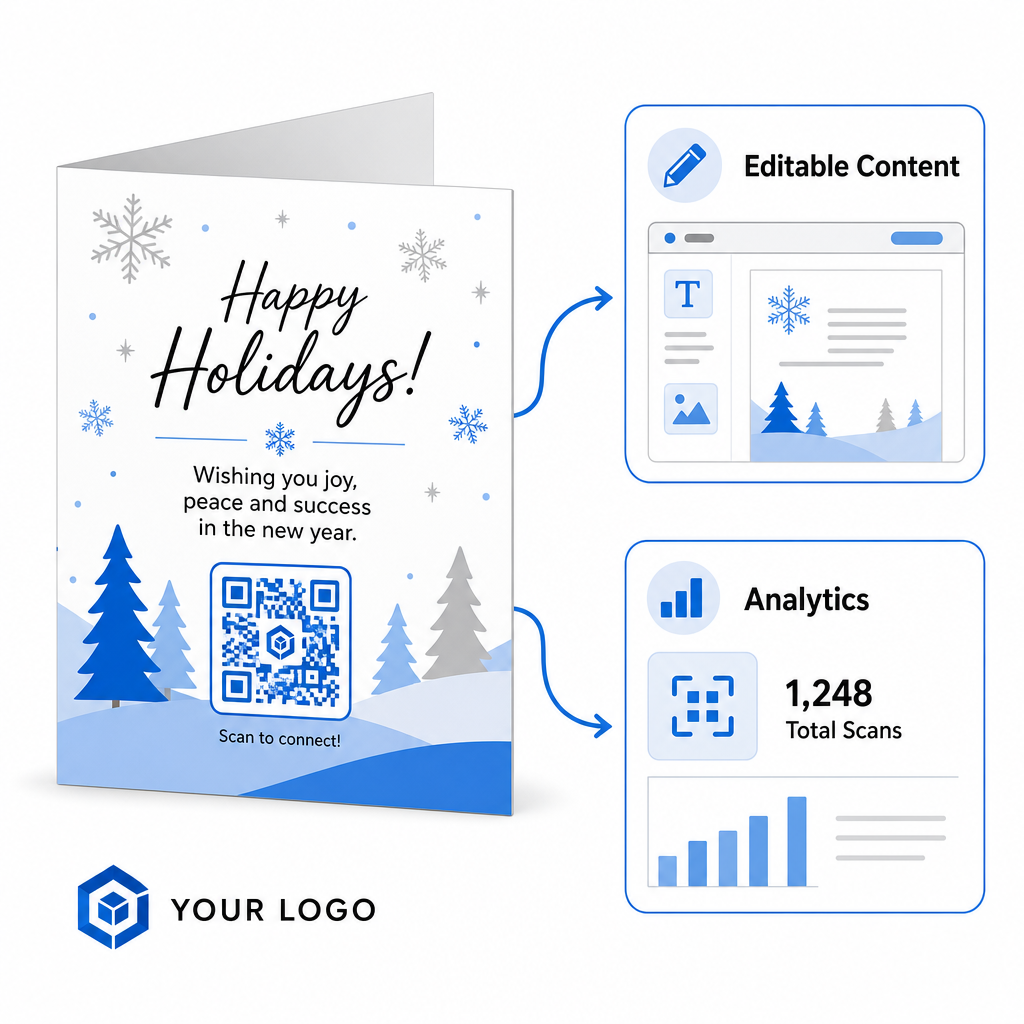
With a dynamic code, you can:
- Update the linked content after printing. If a video URL changes or you want to swap the destination for a new campaign, you make the update in the Pageloot dashboard and the printed code stays valid – no reprinting needed.
- Track scan performance. See total scans, unique scans, scan times, locations by city or region, and device types, all from a single dashboard.
- Reuse the same card design across seasons. Update the destination each campaign cycle without redesigning or reprinting your card stock.
This matters at scale. Christmas accounts for approximately 1.3 billion greeting cards purchased in the U.S. each year, followed by Valentine’s Day at 145 million units and Mother’s Day at 113 million. For businesses operating at those volumes, the ability to edit destinations and monitor engagement without reprinting translates directly into reduced costs and more actionable campaign data.
Track Who Scans Your Greeting Cards Pageloot का उपयोग करें क्यूआर कोड जनरेटर to create updatable, trackable codes for your card campaigns and monitor scan performance from a single dashboard.
A Note on Mailing Cards with QR Codes
Adding a QR code to a card does not affect its mailing classification, provided the card itself meets standard USPS dimensions. Letter-size minimums are 3.5 × 5 inches, and maximums are 6.125 × 11.5 inches. Cards within these dimensions that weigh under 3.5 ounces mail at standard First-Class letter rates.
One exception worth noting: square greeting cards may be subject to a nonmachinable surcharge on top of standard First-Class postage, regardless of whether they contain a QR code. If postage cost is a factor, stick to standard rectangular dimensions.
Adding a QR code to a greeting card is a straightforward upgrade that turns a disposable item into an interactive moment. Keep the code at least 0.8 inches wide, position it on a flat matte surface away from folds, and always test it on multiple devices before printing. For business use, dynamic codes let you update the linked content and measure engagement without touching the card. Use the पगेलूट क्यूआर कोड जनरेटर to build your first card-ready code in minutes.
अक्सर पूछे जाने वाले प्रश्न
It depends on the occasion. Personal video messages and voice recordings tend to have the strongest emotional impact for individual cards. For business greeting cards, linking to a short video message, a curated landing page, or a relevant playlist works well. Pageloot’s YouTube QR Code Generator, MP3 QR Code Generator, and Link QR Code Generator cover the most common formats.
Yes. Generate your QR code in Pageloot, download it as a PNG or SVG, then upload it into your Canva design. For step-by-step guidance, see the Canva QR code generator guide. Make sure the code is at least 0.8 × 0.8 inches in the final printed output to ensure reliable scanning.
Only if you used a dynamic QR code. Dynamic codes use a permanent short redirect URL that can point to any destination you choose, even after the card has been printed and mailed. Static codes encode the destination directly and cannot be changed. For any card campaign where content may evolve or where you want scan analytics, a dynamic code through Pageloot is the right choice.