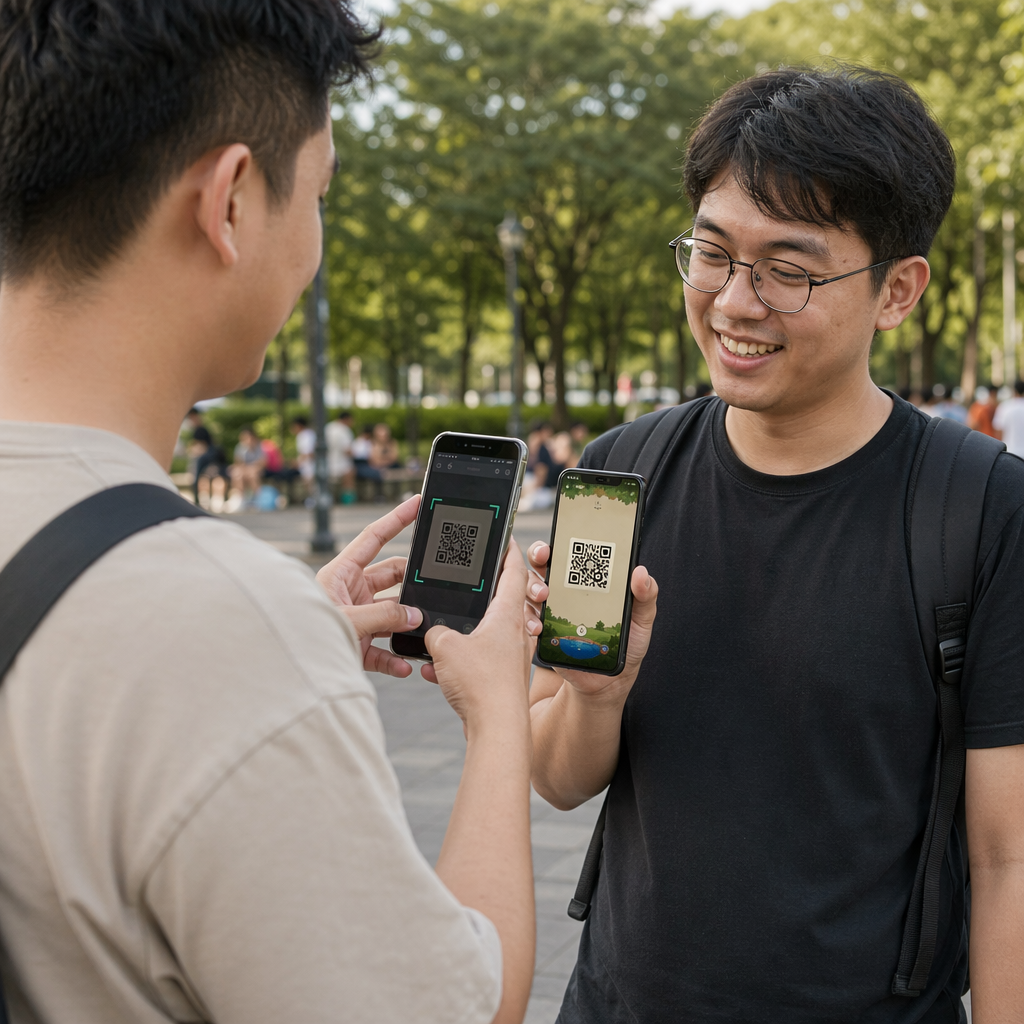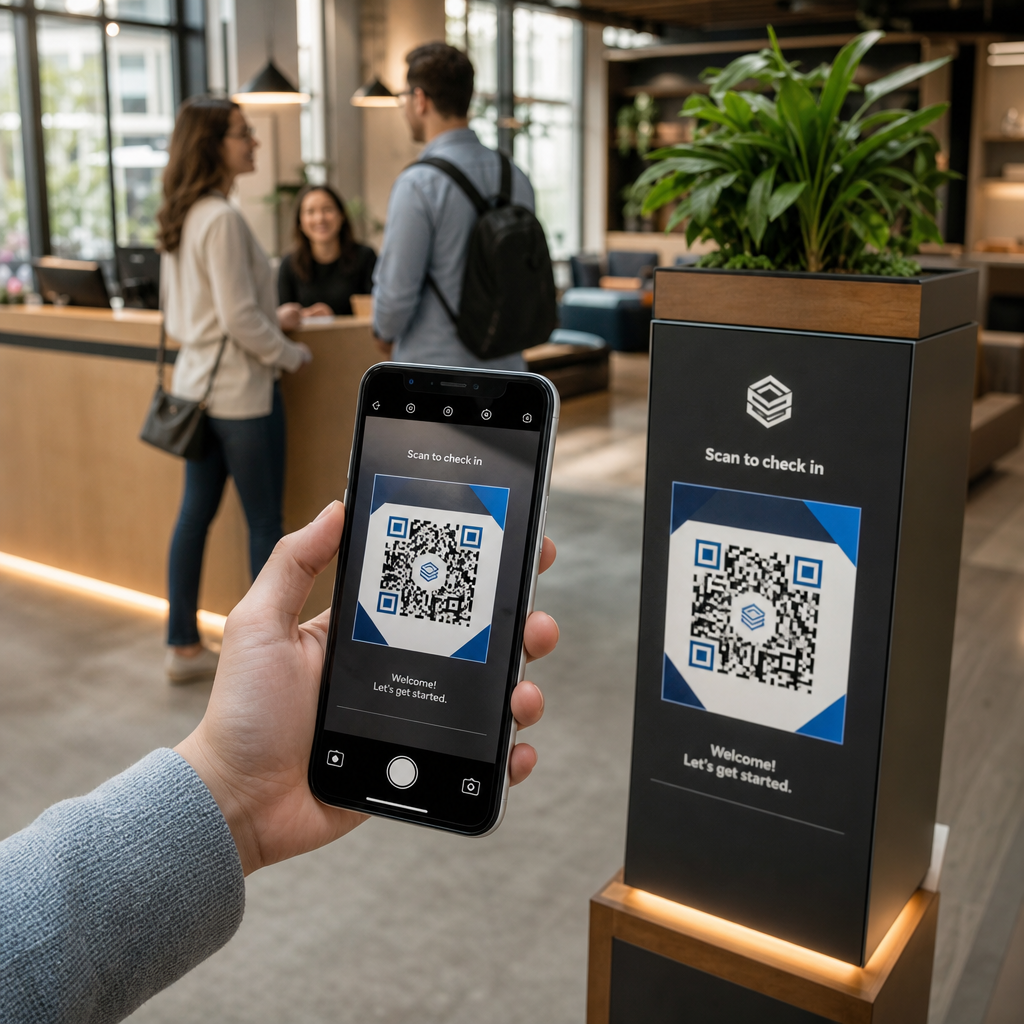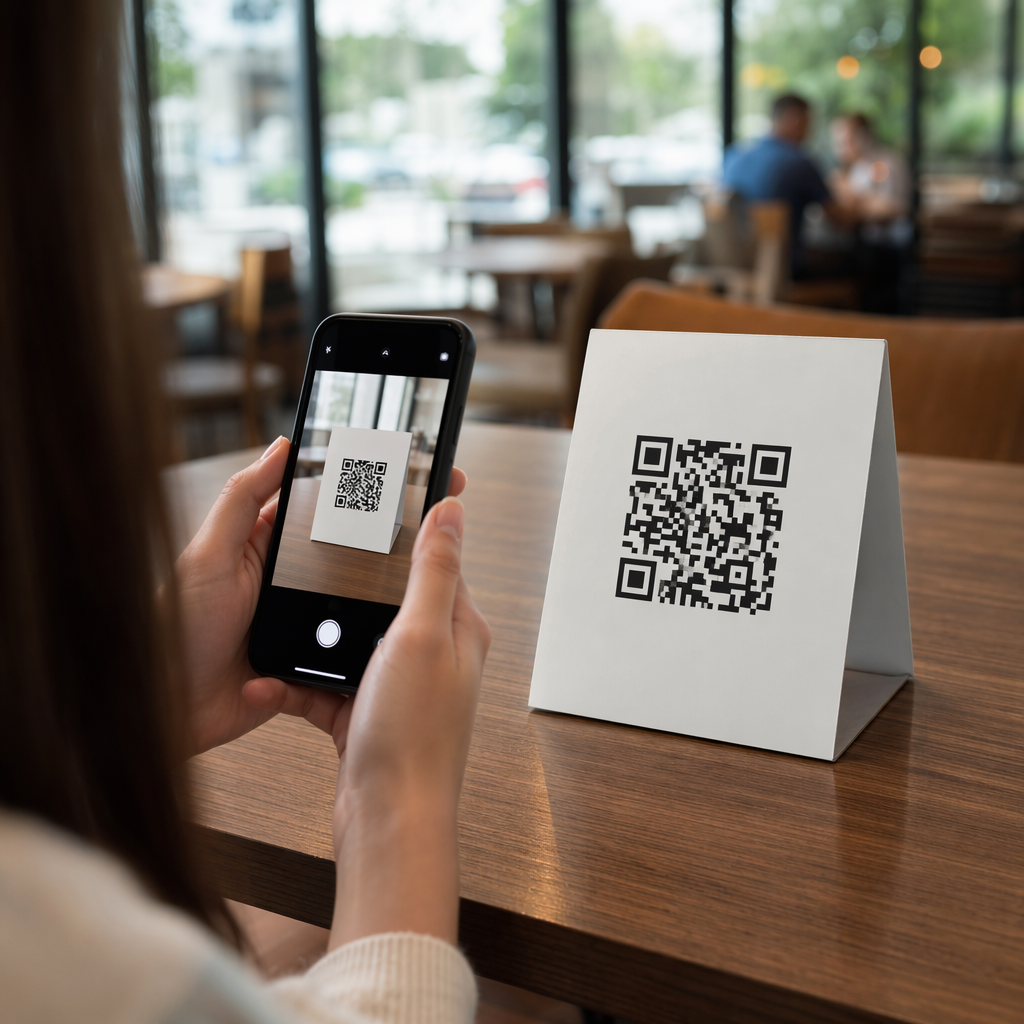
Have you ever lost a potential customer because your physical storefront was too difficult to find? Losing foot traffic due to navigation errors can hurt your bottom line and frustrate visitors. Creating a QR code for directions provides instant, scannable navigation that guides guests directly to your door.
Streamlining Navigation with Location QR Codes
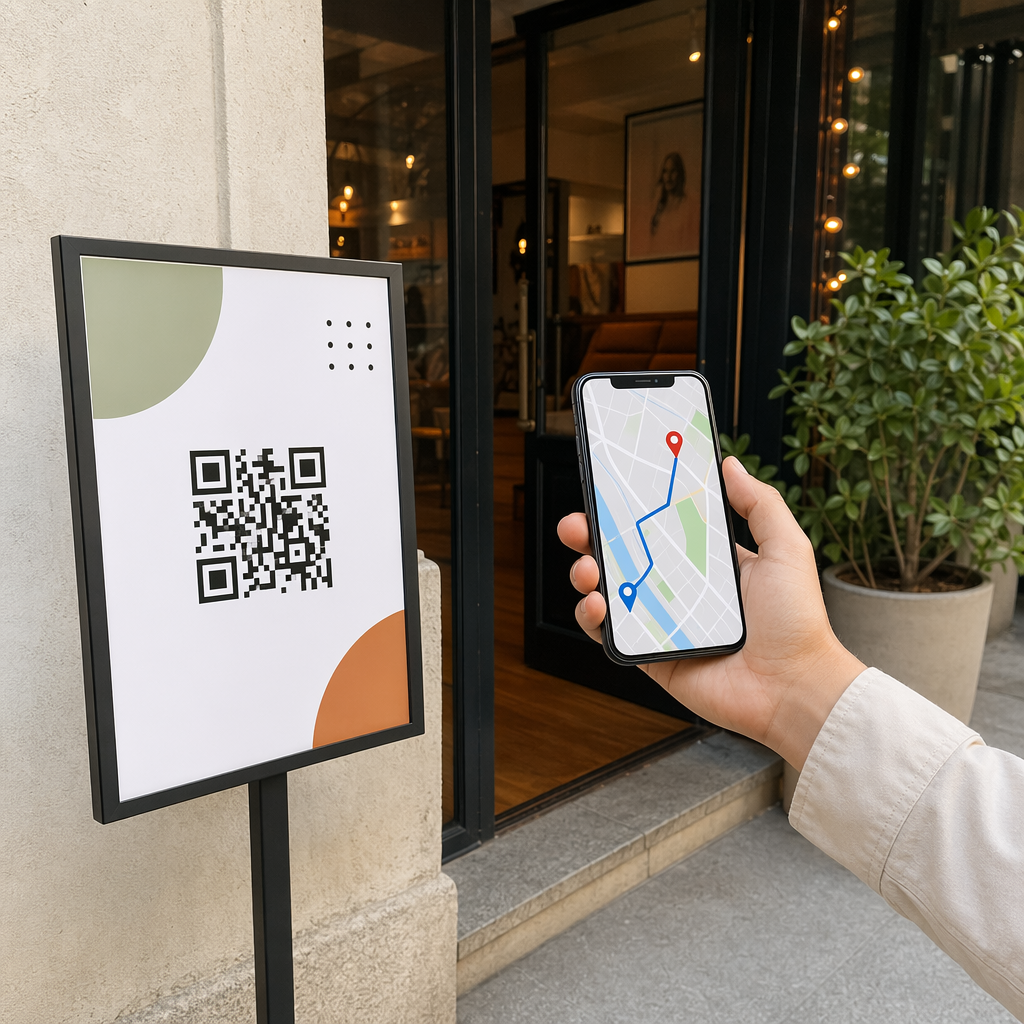
A location QR code acts as a bridge between your physical marketing and a user’s GPS app. Instead of manually typing a complex street address into their phone, a user simply points their camera at the code. This triggers their device to open a map service – like Google Maps or Apple Maps – with your exact coordinates pre-loaded. Think of the QR code as a digital concierge that opens the door for your customers, removing any friction that might prevent them from reaching your business or event.
Why Scannable Directions Matter
Providing instant access to directions improves the customer experience by saving time and eliminating human error. When users are forced to type addresses, they may encounter typos or find themselves at a similarly named street in a different part of town. By using a Google Maps QR code generator, you ensure that every scan leads to the precise pin you intended. This level of accuracy is particularly vital for locations that are difficult to describe, such as booths at a large festival, remote event venues, or new office complexes that do not yet appear in standard text-based searches.
Choosing the Right Map Service for Your QR Code
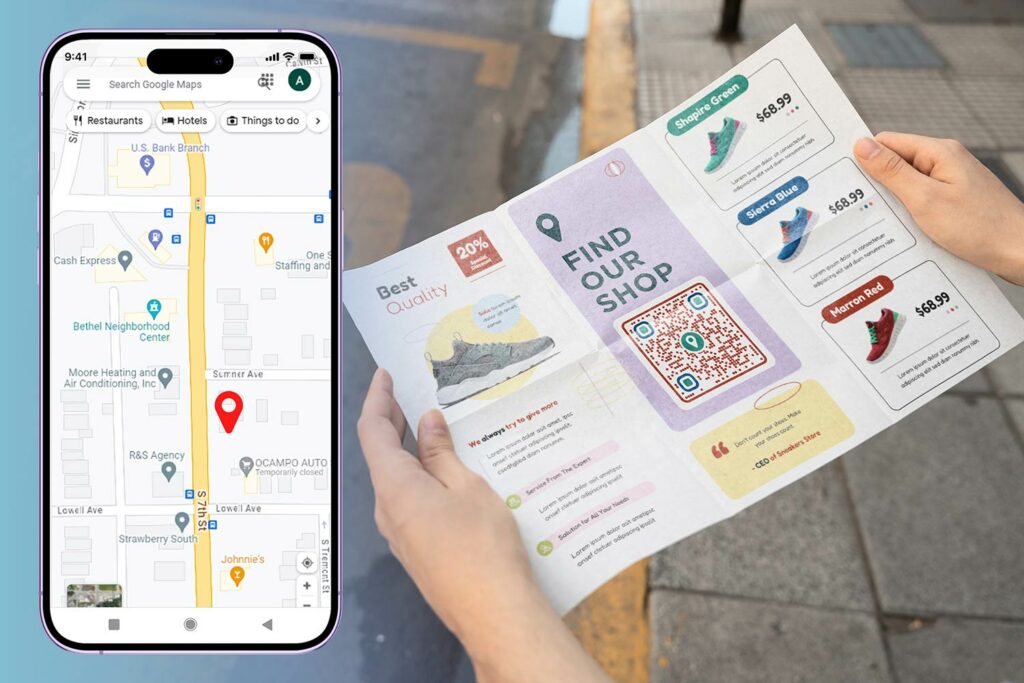
Different platforms offer unique parameters for sharing locations. While Google Maps is the most widely used service, Apple Maps is the default for many mobile users. Most location QR codes simply contain a URL that tells the smartphone which app to launch and where to go.
Google Maps Integration
When creating a code for Google Maps, the URL structure is critical for performance. Official documentation notes that including the “api=1” parameter is a requirement for ensuring the link functions correctly across different devices. Without this, the URL parameters might be ignored, and the scanner may only see a generic map view rather than your specific destination. You can choose to link to a specific search result or provide a direct path for turn-by-turn directions.
Apple Maps and Other Services
Apple Maps utilizes different parameters to handle navigation. For instance, the “daddr” parameter defines the destination, while additional flags can be used to set the preferred transport type, such as driving, walking, or public transit. If a starting point is not defined, the map will automatically use the user’s current location as the “here” point. Other services like Waze or Bing Maps also allow for shareable links that can be encoded into a link QR code generator to serve specific audience preferences.
Simplify Your Customer’s Journey Make it easy for visitors to find you by generating a custom location link. Use the Google Maps QR Code Generator to create a scannable navigation point for your business today.
Enhancing Campaigns with Dynamic Features
Choosing between static vs dynamic QR codes is a vital decision for any business. Static codes have the destination data hard-coded into the pattern, meaning if you move your office or the venue changes, you must reprint all your marketing materials. Dynamic codes, however, use a redirect link. This allows you to update the destination address at any time through a central dashboard without changing the physical code.
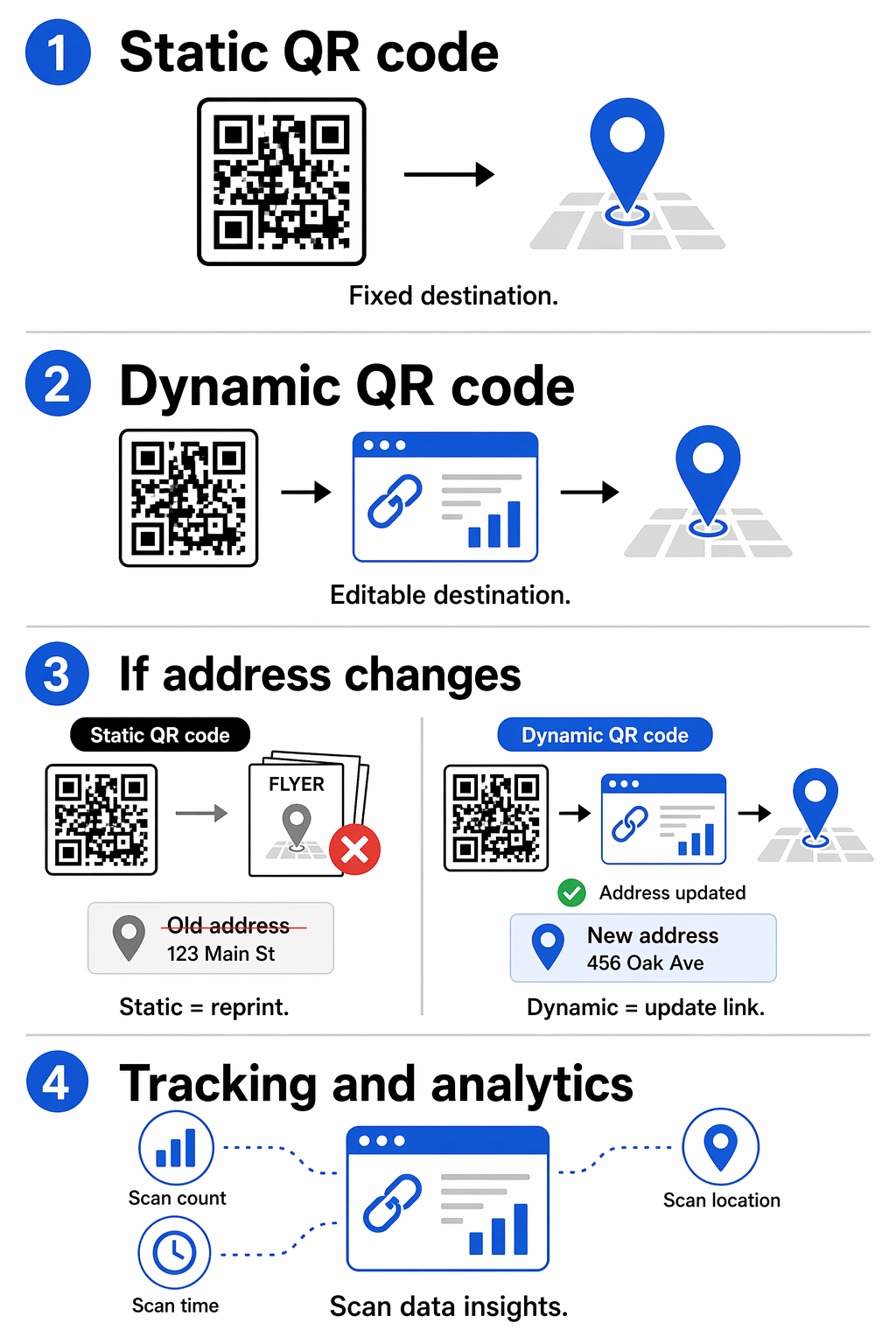
Beyond editability, tracking QR codes provides valuable insights into your marketing performance. Dynamic codes can track how many people scanned for directions, what time they scanned, and their general geographic location. This data helps you understand which marketing placements are driving the most foot traffic to your site.
Strategic Placement for Maximum Scans
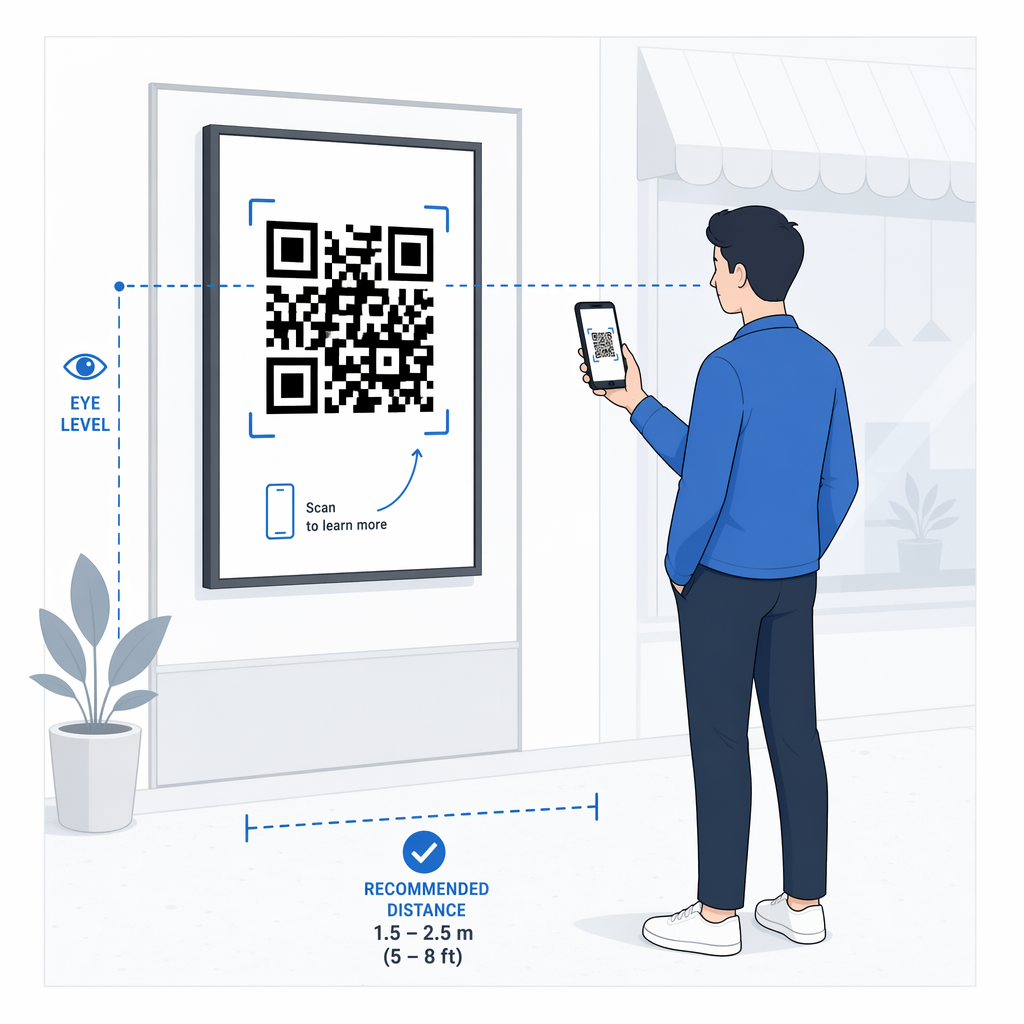
To ensure your code is used, follow established QR code placement guidelines. High visibility is the first priority; codes should be placed at eye level, generally between 3.5 and 5.5 feet from the ground. On smaller items like business cards, ensure the code is large enough to be captured by older smartphone cameras. On larger formats, such as QR codes on posters or banners, the scanning distance should be roughly ten times the width of the code.
Contrast also plays a fundamental role in scannability. Darker colors absorb light while lighter colors reflect it, so using a dark code on a light background ensures the scanner can clearly identify the modules. Avoid placing codes on curved or glossy surfaces where reflections and glare might interfere with the camera’s ability to read the data pattern.
- Use high-contrast designs to improve scanning speed.
- Place codes on flat, matte surfaces to reduce glare.
- Include a clear call-to-action, such as “Scan for Directions.”
- Test the code across different mobile operating systems before printing.
Creating a QR code for directions is a simple yet powerful way to bridge the gap between offline interest and physical attendance. By selecting a dynamic solution, you can maintain flexibility and gather the analytics necessary to refine your marketing strategy. Whether you are guiding guests to a wedding or leading customers to a retail grand opening, a scannable map link ensures no one gets lost along the way.
Frequently Asked Questions
You can only update the address if you use a dynamic QR code. Dynamic codes use a redirect link that allows you to change the destination address in your dashboard without needing to reprint the physical code.
No. Most modern smartphones have a built-in QR scanner within the default camera app. When a user points their camera at the code, a notification will appear to open the location in their preferred map application.
Basic static location QR codes are typically free to create and do not expire. However, advanced features like the ability to edit the link later, custom branding, and scan tracking usually require a subscription to a professional QR management platform.