Você não tem certeza se os códigos QR são seguros o suficiente para compartilhar informações de saúde protegidas? Expor dados de pacientes – mesmo acidentalmente – pode significar violações da HIPAA, multas pesadas e quebra de confiança do paciente. Este guia explica como implementar códigos QR de forma segura em ambientes de saúde, quais requisitos de conformidade se aplicam e quais práticas mantêm os dados do paciente protegidos em cada etapa.
Como os Códigos QR Funcionam para o Compartilhamento de Dados de Saúde
Os códigos QR codificam um link ou token em um padrão escaneável. Quando um membro da equipe ou paciente escaneia o código, seu dispositivo recupera o conteúdo associado – um formulário de admissão do paciente, resultado de laboratório, instrução de alta ou portal seguro – sem exigir entrada manual de dados ou software especializado.
Na área da saúde, isso é importante porque a alternativa é frequentemente uma mistura fragmentada de chamadas telefônicas, transmissões de fax, formulários impressos e e-mail não criptografado. Os códigos QR consolidam esses pontos de contato em uma única interação auditável. O guia de códigos QR para saúde e hospitais os descreve como uma forma de melhorar o acesso do paciente, otimizar a comunicação e aumentar a segurança operacional sem exigir uma equipe de tecnologia dedicada.
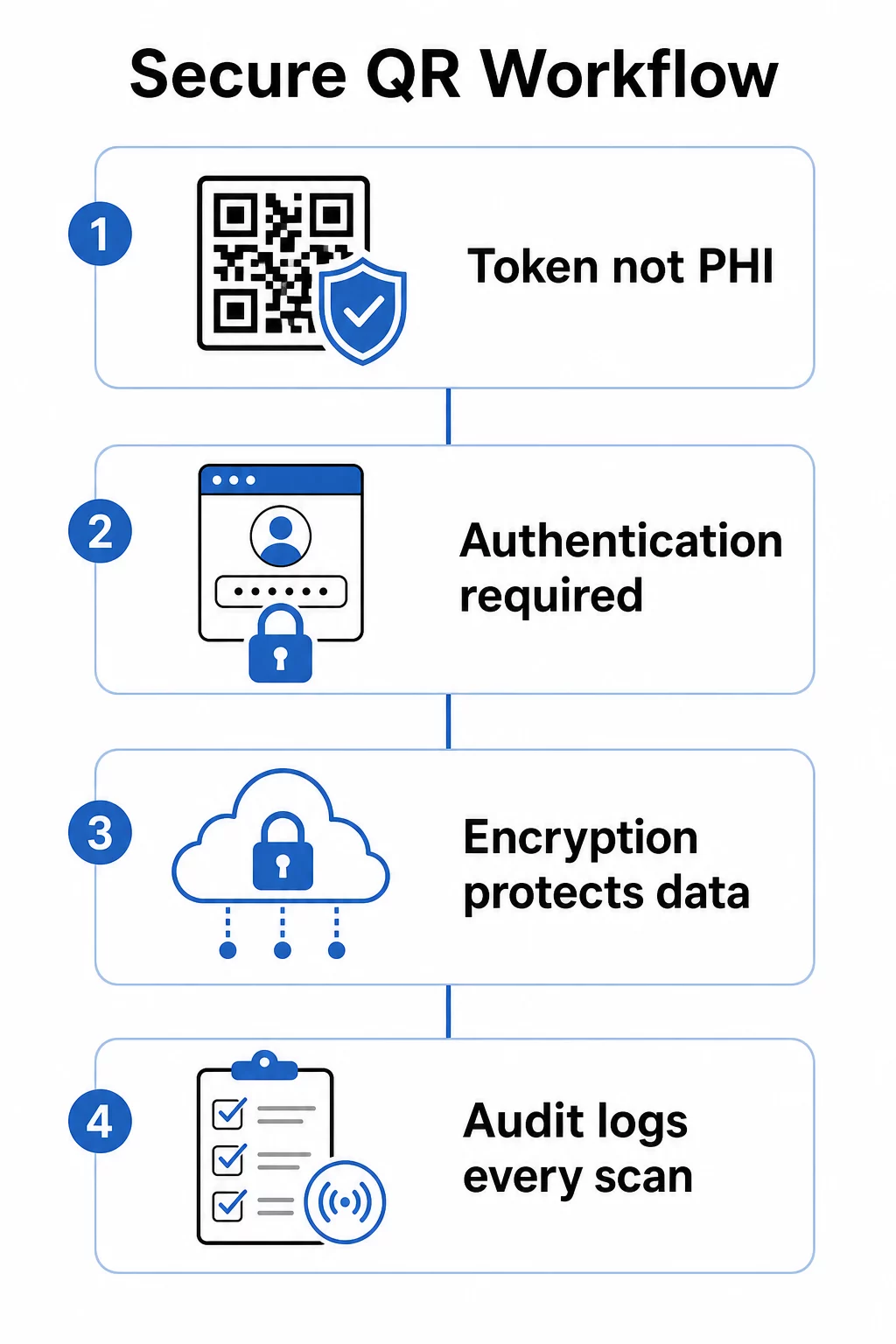
Uma distinção crítica: o próprio código QR nunca deve conter informações de saúde protegidas (PHI). Em vez disso, ele deve codificar um token opaco ou URL assinado que aponta para um sistema de backend onde o ePHI é armazenado e protegido sob salvaguardas adequadas. Isso mantém o código físico seguro para impressão em pulseiras, cartões de consulta ou pacotes de alta sem expor dados sensíveis se o código for fotografado ou interceptado.
Requisitos da HIPAA que se Aplicam aos Sistemas de Código QR
A Regra de Segurança da HIPAA estabelece padrões nacionais para a proteção de informações de saúde eletrônicas protegidas (ePHI). Qualquer sistema de código QR que cria, recebe, mantém ou transmite ePHI deve atender a esses requisitos – e o mesmo se aplica a qualquer fornecedor terceirizado envolvido nesse fluxo de trabalho.
As salvaguardas técnicas da Regra de Segurança cobrem quatro áreas diretamente relevantes para sistemas baseados em QR:
- Controle de acesso: Apenas pessoas ou programas de software autorizados podem acessar sistemas que contêm ePHI. Isso significa que os recursos vinculados a QR devem exigir autenticação antes de exibir dados do paciente.
- Controles de auditoria: Mecanismos devem registrar e examinar a atividade em sistemas que contêm ou usam ePHI. Cada escaneamento, tentativa de acesso e recuperação de dados precisa ser registrado com carimbos de data/hora e identificadores de usuário.
- Segurança de transmissão: Medidas técnicas devem proteger contra acesso não autorizado a ePHI transmitido por redes eletrônicas, incluindo criptografia e controles de integridade.
- Autenticação: Os sistemas devem verificar se os utilizadores são quem afirmam ser antes de conceder acesso.
A Regra de Privacidade adiciona o padrão de mínimo necessário: apenas a informação necessária para um propósito específico deve ser partilhada. Os códigos QR dinâmicos apoiam isto diretamente – pode configurar um código para mostrar apenas a parte relevante de um registo de paciente, não o ficheiro inteiro.
Quando utiliza uma plataforma de código QR de terceiros que lida com ePHI, a HIPAA exige um Acordo de Associado Comercial (BAA). assinado. Este acordo vincula legalmente o fornecedor aos mesmos padrões de proteção de dados e notificação de violação que se aplicam à sua organização. Verifique sempre se um fornecedor assinará um BAA e se os seus controlos de segurança documentados – padrões de encriptação, registo de acesso, procedimentos de resposta a incidentes – cumprem os requisitos da HIPAA antes de implementar as suas ferramentas num fluxo de trabalho clínico.
Partilhe Documentos Médicos de Forma Segura Precisa de dar aos pacientes acesso instantâneo a formulários de consentimento, instruções de alta ou resultados de laboratório? Utilize o Gerador de QR Code de PDF para carregar ficheiros e gerar códigos QR rastreáveis e seguros sem anexos de e-mail ou entregas em papel.
Códigos QR Estáticos vs. Dinâmicos para Cuidados de Saúde
Nem todos os códigos QR oferecem o mesmo nível de controlo, e para uso em cuidados de saúde, a diferença é significativamente importante.
Códigos QR estáticos codificam dados fixos diretamente no código. Uma vez impressos, não podem ser atualizados, revogados ou monitorizados. Se um código estático ligar a um recurso que mais tarde se torne desatualizado ou comprometido, não tem como desativá-lo sem reimprimir. Para aplicações de cuidados de saúde que envolvam qualquer informação específica do paciente, os códigos estáticos introduzem um risco desnecessário.
Códigos QR dinâmicos ligam a um destino no lado do servidor que você controla. Isto significa que pode:
- Atualizar o conteúdo ligado sem reimprimir o código
- Definir datas de expiração ou regras de acesso único no URL
- Revogar o acesso imediatamente se um código for perdido, adulterado ou não for mais necessário
- Monitorizar a atividade de leitura em tempo real – quem acedeu ao recurso, quando e a partir de que dispositivo
Por exemplo, um médico que partilha resultados de exames com um especialista para uma única consulta pode configurar o link para expirar automaticamente após a sessão. Se a lista de medicamentos de um paciente mudar, o código QR no seu cartão de identificação médica continua a funcionar enquanto o conteúdo ligado é atualizado instantaneamente. Esta flexibilidade é o que torna os códigos dinâmicos a escolha apropriada para fluxos de trabalho de saúde sensíveis.
O guia definitivo de códigos QR para saúde recomenda códigos estáticos apenas para informações permanentes e não sensíveis – instruções de higiene, acesso Wi-Fi em salas de espera ou detalhes de contacto fixos – e códigos dinâmicos para qualquer coisa que exija atualizações, rastreamento ou controlos de segurança.
Criar Códigos QR de Saúde Rastreáveis e Editáveis Gerencie todos os seus códigos QR de saúde a partir de um único painel, atualize destinos sem reimprimir e monitorize a atividade de leitura em tempo real com a solução de código QR para saúde da Pageloot.
Controlos de Segurança a Implementar
Cumprir os requisitos de salvaguarda técnica da HIPAA num fluxo de trabalho de código QR requer uma configuração deliberada. Estes são os controlos que mais importam:
Criptografia em trânsito e em repouso
Todos os recursos ligados a QR que lidam com ePHI devem usar apenas conexões TLS com certificados válidos. Os dados armazenados no servidor também devem ser criptografados em repouso. AES-256 é o padrão usado por instituições financeiras e agências governamentais, e satisfaz as especificações de implementação de criptografia da HIPAA. Como a criptografia protege os dados do código QR explica como a criptografia simétrica como AES funciona bem para aplicações QR dadas as restrições de armazenamento do próprio formato do código.
Autenticação e controlo de acesso
Exija que os utilizadores verifiquem a sua identidade antes de visualizar ePHI recuperados através de um código QR. Isso pode incluir single sign-on (SSO), autenticação multifator (MFA) ou tokens de sessão baseados em tempo. O controlo de acesso baseado em funções garante que um administrador de receção e um médico assistente vejam apenas os dados que a sua função exige. A Pageloot suporta o controlo de acesso baseado em funções para utilizadores empresariais, permitindo que as organizações previnam edições não autorizadas e centralizem a governação entre equipas.
Códigos protegidos por senha
Para códigos QR partilhados em contextos semi-públicos – impressos em documentos de alta, afixados em equipamentos ou incluídos em materiais enviados por correio – a proteção por palavra-passe adiciona uma camada de defesa. Mesmo que alguém fotografe o código, não conseguirá aceder ao recurso ligado sem credenciais.
URLs assinados de curta duração
Em vez de emitir links permanentes, gere tokens que expiram após um período definido ou após uma única utilização. Isto limita a janela de exposição se um código for intercetado ou partilhado para além do seu destinatário pretendido.
Registo de auditoria abrangente
Cada tentativa de varredura, acesso bem-sucedido e interação de dados deve ser registrada automaticamente. Os registros devem capturar carimbos de data/hora, identificadores de usuário e os recursos específicos acessados. Esses registros apoiam tanto as revisões de conformidade HIPAA de rotina quanto a resposta a incidentes se uma violação for suspeita. As organizações também podem usar software de proteção de dados para monitorar informações sensíveis, identificar exposição potencial e apoiar uma resposta mais rápida quando surgem problemas de segurança.
Evite encurtadores de URL públicos e rastreadores de terceiros
As páginas ePHI ligadas a QR devem ser alojadas em domínios de saúde próprios e confiáveis. Os encurtadores de URL públicos obscurecem o destino e podem encaminhar o tráfego através de infraestruturas de terceiros que não cumprem os padrões HIPAA. Utilize análises que preservem a privacidade em vez de scripts de rastreamento de terceiros que recolhem metadados desnecessários.
Para uma visão mais ampla das práticas seguras de geração de códigos QR, o guia de melhores práticas para geração segura de códigos QR e o guia de segurança de códigos QR na defesa cibernética cobrem a encriptação, deteção de adulteração e monitorização em detalhe.
Segurança Física: Riscos de Adulteração e Phishing
Os controlos digitais protegem os dados em trânsito, mas os códigos QR em ambientes clínicos também enfrentam ameaças físicas. Phishing de código QR – por vezes chamado de “quishing” – ocorre quando um atacante coloca um código QR fraudulento sobre um legítimo, redirecionando as leituras para um site malicioso concebido para recolher credenciais ou instalar malware. Este risco é real em ambientes de saúde onde os códigos QR aparecem em sinalização de salas de espera, etiquetas de equipamentos e materiais impressos para pacientes.
Mitigar adulteração física por meio de:
- Usar materiais à prova de adulteração para códigos afixados em superfícies físicas
- Incorporar o logotipo e a marca da sua organização diretamente no design do código QR para que códigos alterados pareçam visualmente inconsistentes
- Estabelecer um cronograma de inspeção de rotina para todos os códigos QR colocados, com fotos de referência para comparação
- Treinar a equipe para verificar se os destinos dos códigos QR correspondem às URLs esperadas antes de inserir quaisquer credenciais
A educação de pacientes e funcionários é igualmente importante. Treine sua equipe para reconhecer distribuições suspeitas de QR, usar aplicativos de digitalização que visualizam a URL de destino antes de abri-la e nunca inserir credenciais de login em uma página acessada pela digitalização de um código desconhecido. Leis de privacidade de códigos QR e regulamentações chave descreve o contexto regulatório para esses riscos com mais detalhes.
Casos de Uso na Saúde
Os controles de segurança acima permitem uma série de aplicações práticas em todo o continuum de cuidados:
Registro e check-in de pacientes
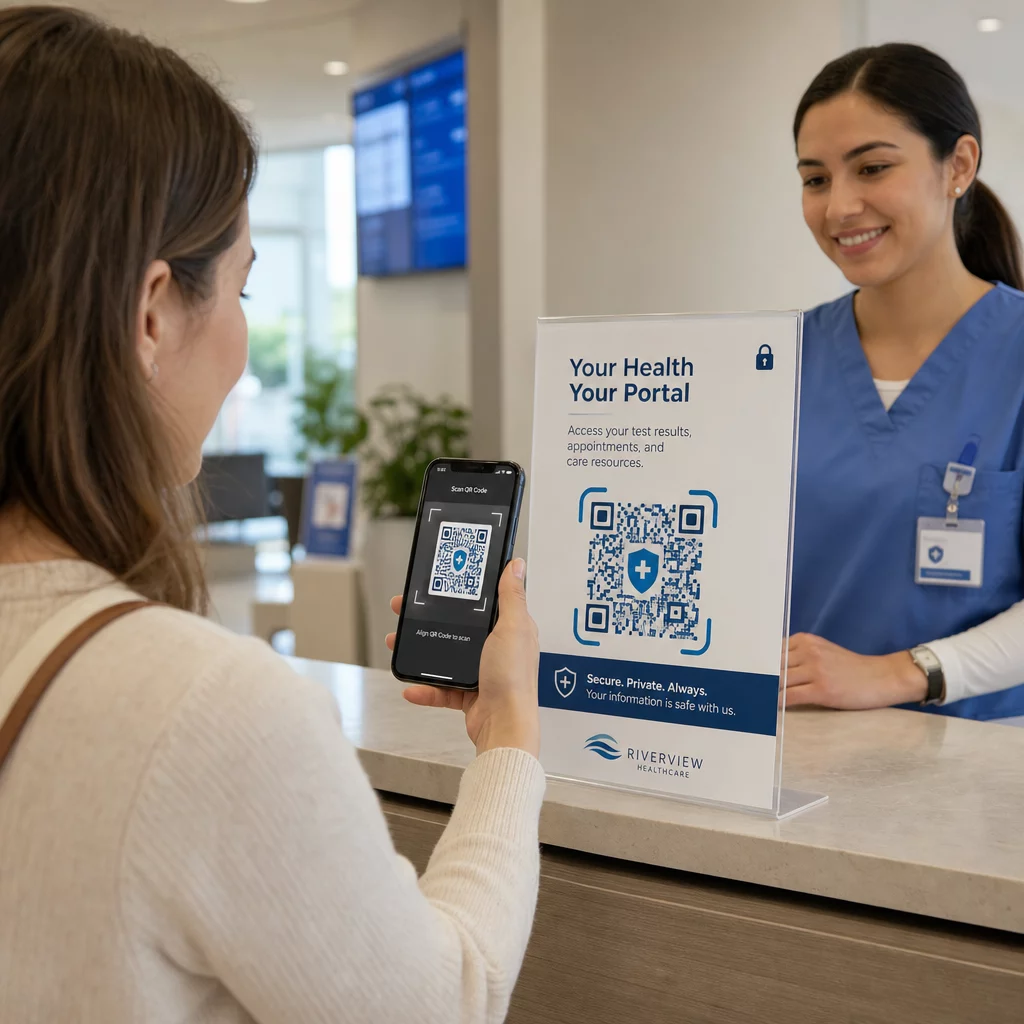
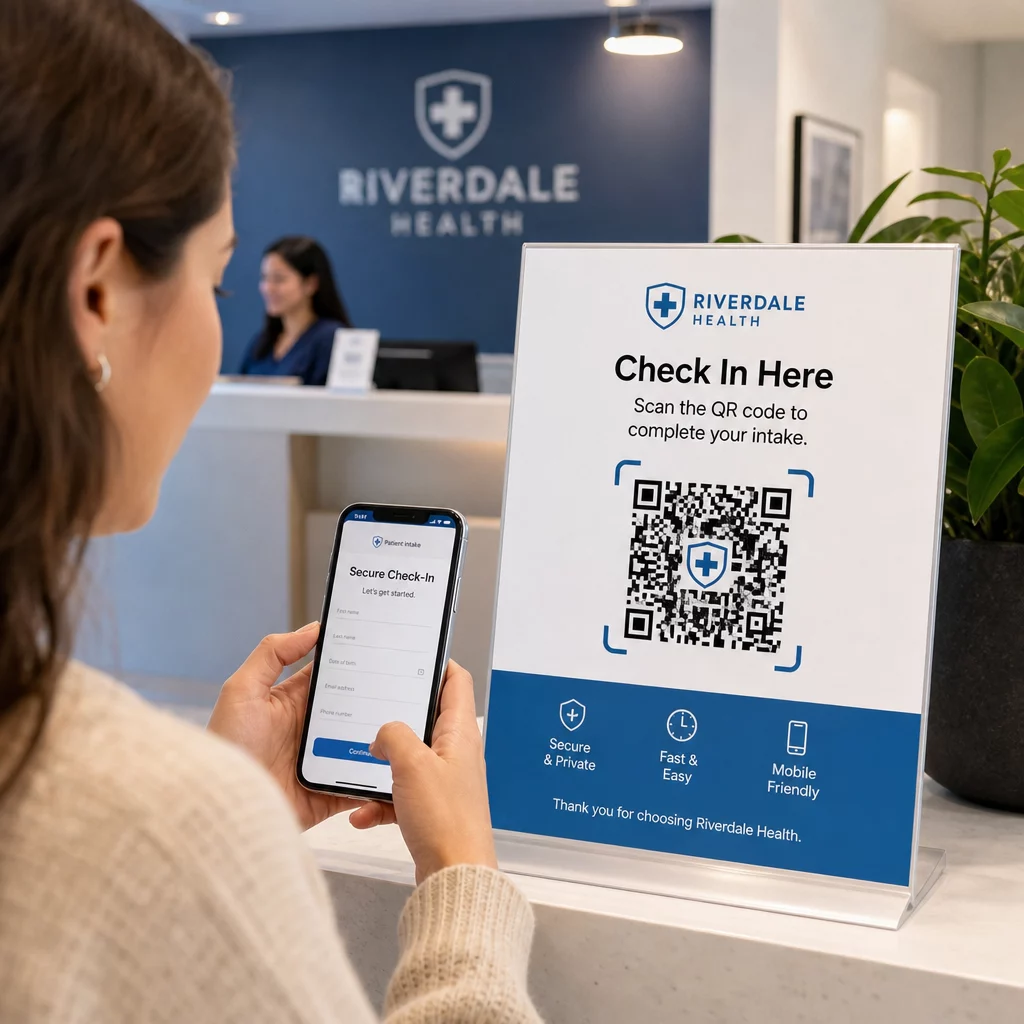
Os pacientes escaneiam um código QR na chegada para acessar um formulário de admissão seguro, atualizar detalhes do seguro ou preencher documentos de consentimento em seu próprio dispositivo. Isso elimina formulários em papel, reduz a carga da recepção e cria um registro digital das submissões. Os fluxos de trabalho de check-in sem contato ganharam ampla adoção durante a COVID-19 e continuam a reduzir os tempos de espera e o risco de infecção.
Distribuição segura de documentos
Resultados de laboratório, relatórios de imagem, planos de tratamento e instruções de pós-cuidado podem ser distribuídos como códigos QR em PDF. Os pacientes acessam os documentos diretamente em seus dispositivos sem a necessidade de login em portal ou material impresso. Quando os resultados são alterados, o código dinâmico reflete o conteúdo atualizado automaticamente. O recurso de upload de arquivo no Pageloot suporta hospedagem segura de PDF exatamente para este caso de uso.
Acesso de emergência a informações críticas de saúde
Pacientes podem carregar códigos QR em cartões de alerta médico ou pulseiras que se ligam a detalhes críticos – alergias, medicamentos atuais, dispositivos implantados, contatos de emergência. Socorristas escaneiam o código para recuperar informações que salvam vidas quando o paciente não consegue se comunicar. Códigos dinâmicos garantem que esses dados permaneçam atualizados sem a necessidade de um novo cartão cada vez que os medicamentos mudam.
Compartilhamento de dados entre provedores
Ao transferir cuidados entre instalações ou consultar especialistas, um provedor remetente gera um código QR com tempo limitado vinculado à parte relevante do prontuário do paciente. O provedor receptor escaneia para acessar os dados com segurança. O acesso expira automaticamente após o período de consulta, reduzindo o risco de acesso futuro não autorizado.
Gerenciamento de medicamentos
Códigos QR em embalagens de prescrição conectam pacientes a instruções de dosagem, recursos multilíngues, ferramentas de lembrete e programas de suporte. Para cuidados domiciliares, os códigos QR podem se vincular a planos de cuidados e horários de medicação atualizados que refletem as prescrições mais recentes sem a necessidade de uma nova impressão.
Rastreamento e manutenção de equipamentos
Códigos QR em dispositivos médicos dão à equipe clínica acesso instantâneo a especificações do dispositivo, cronogramas de manutenção, registros de calibração e alertas de segurança – reduzindo a sobrecarga administrativa e apoiando a conformidade com os requisitos de segurança do equipamento.
Comparando Códigos QR com Outros Métodos de Compartilhamento
| Método | Privacidade e Segurança | Usabilidade | Atualizações em tempo real | Trilha de Auditoria |
|---|---|---|---|---|
| Códigos QR Dinâmicos | Alta (criptografado, acesso controlado) | Excelente (leitura instantânea) | Sim | Sim (registro automático) |
| Códigos QR Estáticos | Média (sem revogação) | Excelente (leitura instantânea) | Não | Limitada |
| Portais do Paciente | Alta (MFA suportado) | Fraca (atrito no login) | Sim | Sim |
| E-mail/Fax | Baixa (frequentemente não criptografado) | Médio | Não | Não |
| Códigos de Barras Tradicionais | Média (criptografia limitada) | Boa (requer scanner) | Não | Não |
Os códigos QR dinâmicos ocupam um meio-termo prático: eles oferecem os controles de segurança de um portal do paciente sem o atrito de login que desencoraja o engajamento do paciente. Eles superam o fax e o e-mail em todas as dimensões de segurança e fornecem os rastros de auditoria que a HIPAA exige – sem o custo de infraestrutura de construir ou manter um sistema de portal dedicado.
Lista de Verificação de Implementação
Antes de implantar códigos QR em qualquer fluxo de trabalho que envolva dados do paciente, verifique se estes controles estão em vigor:
- Os códigos QR codificam tokens opacos, não PHI diretamente
- Todos os recursos vinculados usam HTTPS com certificados válidos
- ePHI é criptografado em trânsito e em repouso
- Autenticação (MFA ou SSO) é necessária antes de exibir dados do paciente
- O acesso é delimitado por função usando princípios de privilégio mínimo
- URLs são de tempo limitado ou de uso único para trocas sensíveis
- Cada evento de digitalização e acesso é registrado automaticamente
- Os registros são revisados regularmente e retidos de acordo com as políticas da sua organização
- Um BAA assinado está em vigor com o seu fornecedor de plataforma de código QR
- Os códigos físicos são personalizados, inspecionados regularmente e usam materiais à prova de violação
- A equipe recebeu treinamento sobre riscos de quishing e comportamento de digitalização seguro
- Os códigos voltados para o paciente linkam apenas para informações mínimas necessárias
Para uma análise mais aprofundada das aplicações de códigos QR em ambientes clínicos, a página de códigos QR para hospitais e saúde cobre identificação de pacientes, rastreamento de equipamentos, transparência de medicamentos e muito mais. Você também pode explorar soluções de código QR por indústria para ver como a mesma tecnologia se adapta a diferentes contextos operacionais.
Os códigos QR funcionam na área da saúde quando a implementação os trata como uma interface segura para sistemas devidamente protegidos – e não como um mecanismo de armazenamento para dados sensíveis. Acerte a arquitetura, imponha a autenticação e o registro, e os códigos QR se tornam uma das maneiras de menor atrito para dar a pacientes e provedores acesso rápido e compatível às informações de que precisam.
Crie um Fluxo de Trabalho de Código QR Compatível com HIPAA Gere códigos QR dinâmicos e personalizados com rastreamento de digitalização integrado, controles de acesso e análises em tempo real. O Gerador de Código QR de Link Pageloot permite criar e gerenciar cada código a partir de um único painel – e atualizar destinos a qualquer momento sem reimprimir.
Perguntas frequentes
Não. O código QR deve codificar apenas um token opaco ou URL assinado que aponta para um sistema de backend seguro. O PHI é armazenado e protegido no lado do servidor sob as salvaguardas adequadas da HIPAA. Desta forma, fotografar ou interceptar o código não expõe nenhum dado do paciente – o acesso ainda requer autenticação no destino vinculado.
Os códigos QR dinâmicos permitem atualizar o conteúdo vinculado, definir datas de expiração, revogar o acesso instantaneamente e monitorar cada tentativa de leitura em tempo real. Os códigos estáticos são permanentes e irrevogáveis – se um recurso vinculado mudar ou surgir um problema de segurança, você não poderá desativar o código sem reimprimi-lo. Para qualquer fluxo de trabalho que envolva informações específicas do paciente ou dados sensíveis ao tempo, os códigos dinâmicos são a escolha apropriada.
Sim, se a plataforma do fornecedor cria, recebe, mantém ou transmite ePHI como parte do seu fluxo de trabalho. A HIPAA exige um BAA assinado com qualquer associado de negócios envolvido no manuseio de informações de saúde protegidas. Antes de selecionar uma plataforma, confirme que o fornecedor assinará um BAA e que seus controles de segurança – padrões de criptografia, registro de acesso, procedimentos de notificação de violação – atendem aos requisitos da HIPAA.