Turvaline terviseandmete jagamine QR-koodidega

Turvaline terviseandmete jagamine QR-koodidega

Explore how QR codes enhance health data sharing, ensuring security, compliance, and improved patient experiences in modern healthcare.
Updated on detsember 17, 2025
Sisukord

QR codes offer a simple and secure way to share health data. They allow patients and providers to access and exchange medical information instantly, without the need for complex systems or lengthy processes. By linking to encrypted data, QR codes ensure privacy and compliance with healthcare regulations like HIPAA. They also reduce errors, save time, and improve patient experiences, especially during emergencies or routine care.

Key Takeaways:

  • Fast Access: Scan a QR code to retrieve patient records in seconds.
  • Improved Accuracy: Eliminates manual data entry errors.
  • Cost-Effective: Requires minimal infrastructure investment.
  • HIPAA Compliance: Protects sensitive data with encryption and access controls.
  • Dynamic Updates: Allows real-time changes to shared information.

Healthcare providers are increasingly using QR codes for tasks like patient registration, secure document sharing, ja emergency access to critical data. With platforms like Pageloot, they can generate HIPAA-compliant QR codes tailored to their needs. This technology bridges the gap between modern healthcare demands and secure data sharing.

How QR Codes Simplify Health Data Sharing

QR codes make sharing health data as easy as a quick scan, working seamlessly across devices without the need for specialized software or complicated login steps. They create a direct link between healthcare providers, patients, and authorized systems, streamlining the process.

Here’s how it works: QR codes encode secure links into a scannable pattern. When scanned, they instantly provide access to important medical information, eliminating the hassle of navigating multiple systems or waiting for file transfers. By bypassing software dependencies, QR codes ensure immediate access to critical data.

Healthcare providers can use QR codes in various ways – whether for patient intake forms, medical histories, secure portals, or encrypted documents, all within their existing electronic health record (EHR) systems. This adaptability allows providers to customize their workflows while maintaining strict security standards.

For patients, QR codes offer a sense of control over their health information. They can easily share medical histories with specialists, provide emergency contacts with vital health details, or temporarily grant access to test results – all without needing technical know-how. You can also add an extra layer of safety by pairing these QR codes with reliable data protection software. This ensures that the information you share remains private and isn’t being used by unauthorized users elsewhere.

Key Benefits of QR Codes in Healthcare

Speed and Efficiency
QR codes cut down the time needed to access patient information from minutes to mere seconds. This is especially valuable during emergencies or busy clinic hours, reducing wait times and giving healthcare providers more time to focus on patient care rather than administrative tasks.

Error Reduction and Reliability
Manual data entry often leads to transcription errors, which can compromise patient safety. QR codes eliminate this risk by offering direct access to digitally stored information. Plus, they work even in areas with limited connectivity or during network outages, ensuring critical data remains accessible.

Improved Patient Experience
With QR codes, patients no longer need to repeatedly provide their medical history or endure long check-in delays. They can also easily share their health data with family members, caregivers, or new providers, simplifying their overall healthcare journey.

Cost Savings
QR codes reduce administrative overhead, minimize duplicate tests, and streamline workflows, resulting in significant savings. Platforms like Pageloot allow healthcare organizations to create HIPAA-compliant QR codes without requiring major infrastructure investments.

These benefits pave the way for efficient and error-free data exchanges, which are explored further in the next section.

Step-by-Step Workflow for QR Code Usage

Here’s how QR codes are applied in healthcare settings:

  • Patient Registration
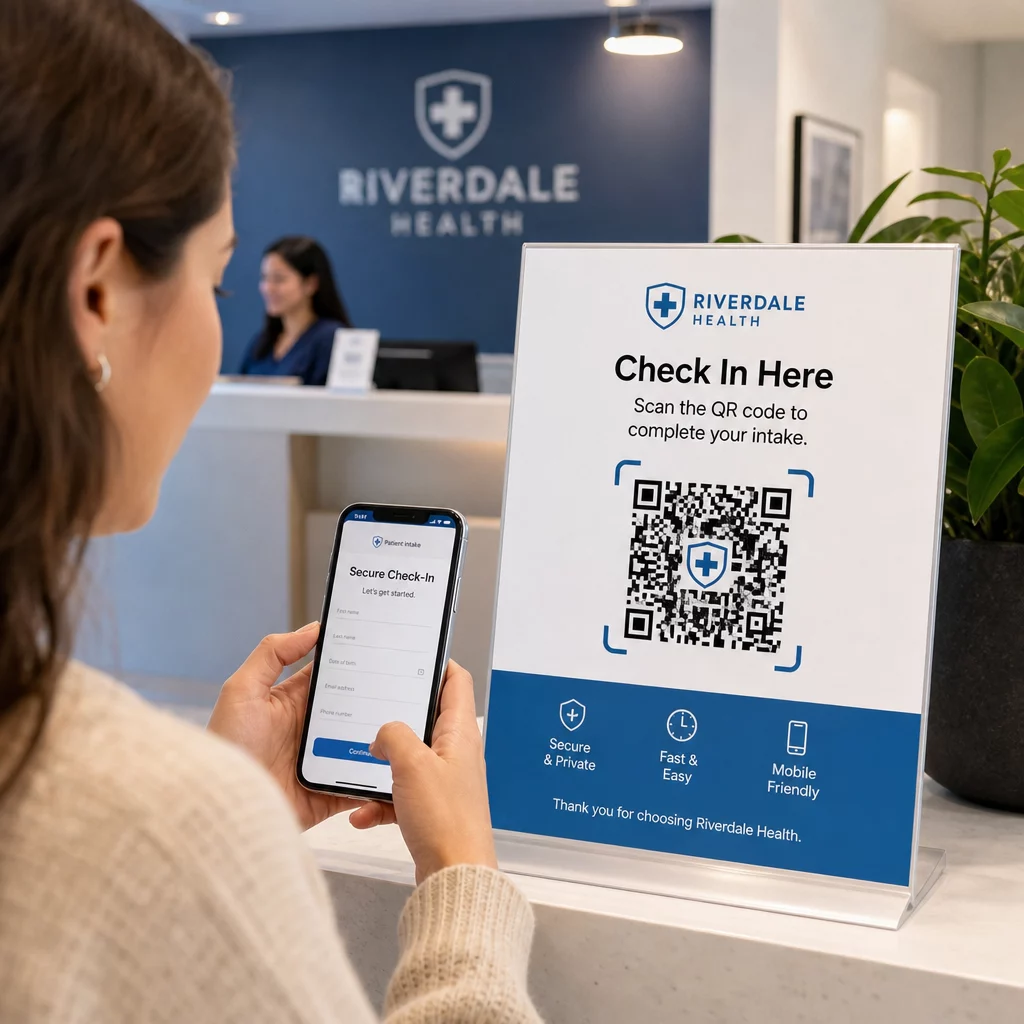
    New patients can scan QR codes to access secure forms for updating personal information, insurance details, or intake questionnaires directly from their devices. QR codes can also link to consent forms, treatment plans, or educational materials through tools like the PDF QR-koodi generaator.
  • Provider-to-Provider Sharing
    When sharing patient data between providers, the sending organization generates a QR code linked to the necessary information. The receiving provider scans the code to securely access the data, whether they’re part of the same hospital system or located in a different network.
  • Emergency Access
    Patients can carry QR codes on medical alert bracelets or cards that link to critical details like allergies, current medications, and emergency contacts. First responders can quickly scan these codes to retrieve life-saving information when patients are unable to communicate.
  • Follow-Up Care Coordination
    After appointments, providers can generate QR codes that give patients secure access to visit summaries, prescription details, or follow-up instructions. Specialists can also use QR codes to share detailed reports with primary care physicians.

This workflow is flexible enough to suit various healthcare environments, from large hospital networks to small private practices. Providers can choose static QR codes for unchanging information or dynamic ones for data that needs regular updates – all while adhering to HIPAA regulations. Additionally, QR codes can be integrated into everyday items like visiitkaardid, offering even more secure touchpoints for sharing health data.

Security and Compliance with QR Code-Based Health Data Sharing

Healthcare organizations must navigate strict regulations when managing patient information, making security a top priority. QR codes provide a secure yet accessible way to share sensitive health data, meeting the demands of modern healthcare.

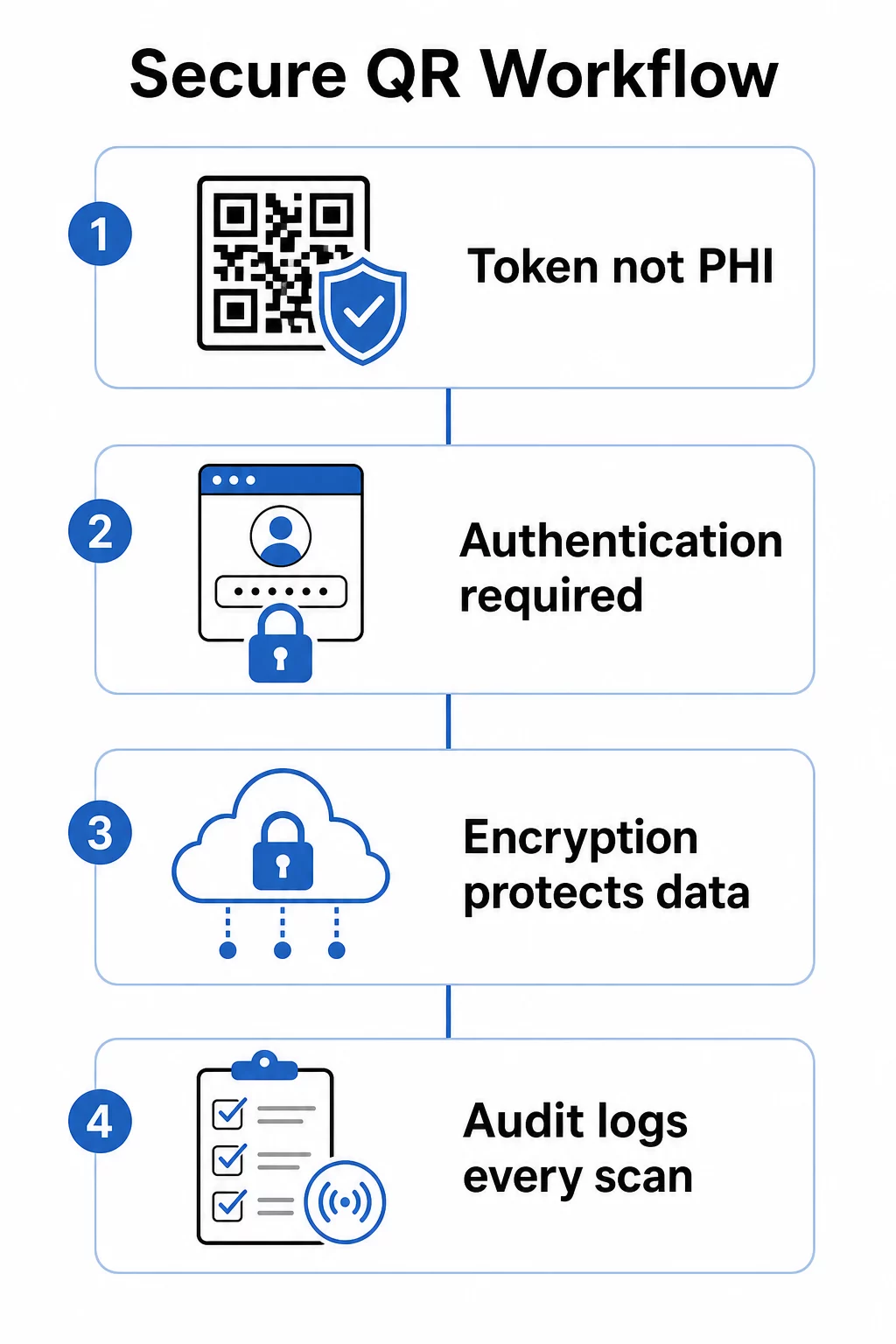
The security of QR code-based health data sharing relies on several protective measures. These include encryption, strict access controls, and detailed audit trails that log every interaction, ensuring data remains safe during transmission and access.

Unlike traditional methods – such as email attachments or unsecured file transfers – that can expose sensitive information, QR codes can be configured to require authentication. This means that even if someone intercepts a QR code, they cannot view the underlying health data without proper credentials.

Dynamic QR Codes for Sensitive Health Data

Dünaamilised QR-koodid offer a more secure solution for healthcare applications compared to static QR codes. While static codes permanently store data within the code itself, dynamic QR codes link to secure servers where the information is stored. This approach allows healthcare providers to update or revoke access to the data without needing to issue new QR codes.

For example, if a patient’s medical records are updated or a security issue arises, administrators can instantly modify the linked content or disable access. Dynamic QR codes also allow for time-based access controls, enabling healthcare providers to limit access to specific periods. A physician might share test results with a specialist for a single consultation, with the link automatically expiring afterward, reducing the risk of unauthorized access.

Additional security measures, such as password protection ja user authentication, add another layer of defense. Healthcare professionals may need to verify their identity before accessing patient data, and some systems even include two-factor authentication – requiring a code sent via SMS or an authenticator app.

For more details on these differences, the static vs dynamic QR codes guide explains why dynamic codes are particularly well-suited for sensitive healthcare applications. Platforms like Pageloot offer these advanced security features while maintaining ease of use for authorized personnel. They also provide comprehensive tracking, logging details like who accessed the information, when, and from which device.

These robust security features ensure healthcare providers can meet stringent regulatory standards while safeguarding sensitive patient data.

Meeting HIPAA Compliance Requirements

Dynamic QR codes not only enhance security but also help healthcare organizations meet the rigorous standards set by the Health Insurance Portability and Accountability Act (HIPAA). To remain compliant, QR code systems must incorporate specific measures to protect patient information.

Data encryption is a cornerstone of HIPAA compliance. All patient data must be encrypted both during transmission and when stored, ensuring that even if communications are intercepted, the data remains unreadable. Many modern QR code platforms use AES-256 encryption, a standard trusted by financial institutions and government agencies.

HIPAA also requires access logging, meaning healthcare organizations must maintain detailed records of every interaction with patient data. QR code systems automatically log each scan attempt, successful access, and data interaction, including timestamps, user IDs, and the specific information accessed.

Another critical requirement is adhering to minimum necessary standards, which ensure that only the information needed for a specific purpose is shared. Dynamic QR codes are particularly effective here, as they allow administrators to create links that reveal only the relevant portions of a patient’s medical record, not the entire file.

Patient consent can also be integrated into QR code workflows. Before accessing sensitive data, users may encounter a consent screen explaining what information they’re about to view. This ensures transparency and creates an audit trail of patient approval.

Healthcare organizations can create HIPAA-compliant QR codes using platforms designed to meet these regulatory demands. Pageloot’s tools include built-in compliance features, such as automatic audit trails and security controls.

When using third-party QR code platforms, business associate agreements (BAAs) may be required. These agreements ensure that the platform provider adheres to the same data protection and compliance standards as the healthcare organization.

Finally, HIPAA’s breach notification requirements also apply to QR code systems. In the event of a breach, organizations must quickly detect the issue, assess its impact, and notify affected patients. Dynamic QR codes with real-time monitoring make it easier to identify and respond to potential security incidents swiftly.

For healthcare providers looking to implement QR codes across their operations, hospital and healthcare solutions offer tailored guidance on maintaining compliance while leveraging the efficiency of QR code technology.

Customization and Analytics for Healthcare QR Codes

Healthcare providers are turning to advanced QR code features to improve patient experiences and streamline operations. Modern QR code platforms offer tools for personalization and detailed analytics, helping organizations build trust and optimize workflows.

Customization Options for Patient Engagement

QR codes can be more than just functional – they can also be a reflection of a healthcare provider’s brand. By incorporating logos, brand colors, and custom messaging frames, healthcare organizations can create QR codes that feel professional and recognizable. This familiarity encourages patients to engage with the codes confidently.

"Patients actually feel more confident scanning our QR codes now because they see our logo and branding. It feels official, secure, and professional, and engagement has gone way up." – Hellen K., Dental Clinic Administrator

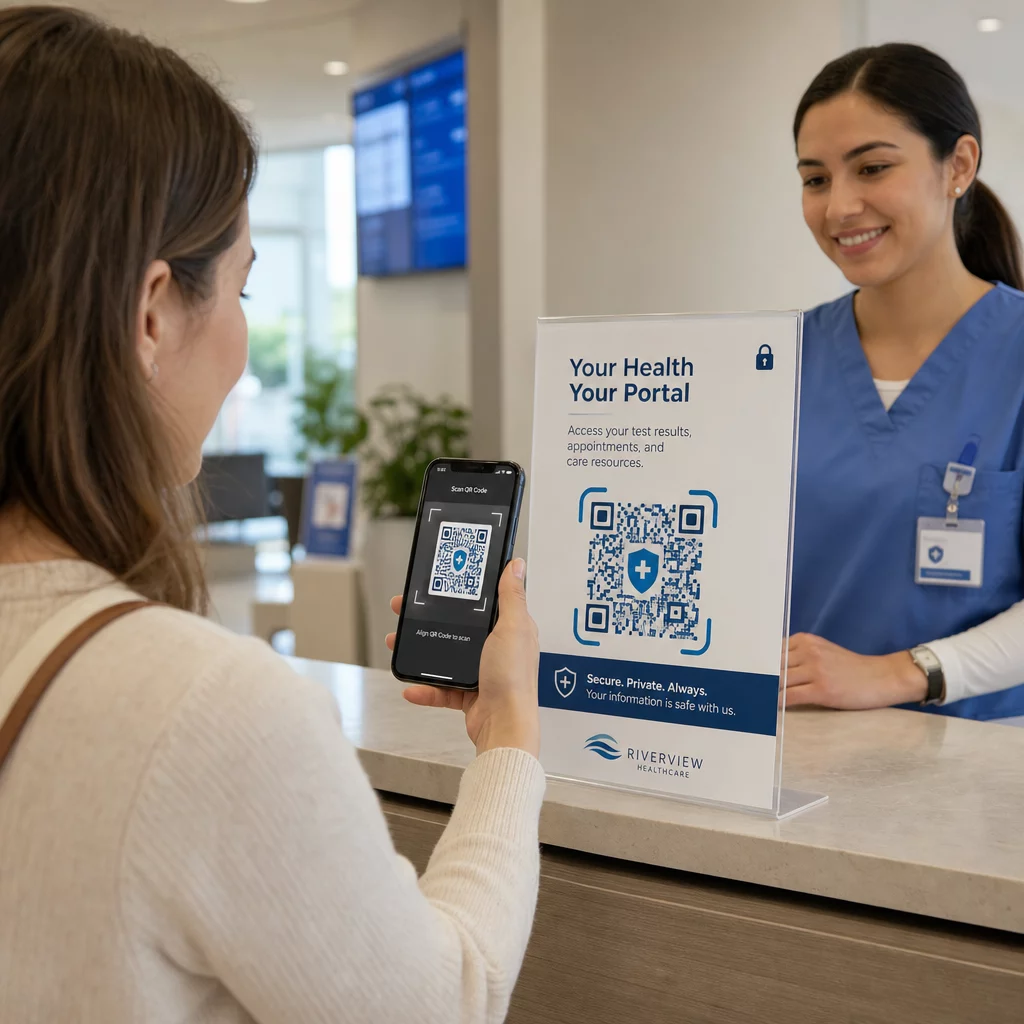
Customization options include logo integration, which embeds a practice’s branding directly into the QR code, and custom frames with messaging that clarify the purpose of the code. For example, frames could include instructions like "Scan for Patient Portal Access" or "View Your Test Results Securely." These small touches make QR codes more intuitive and approachable for patients.

On patient-facing materials like appointment cards or discharge instructions, QR codes can seamlessly blend with professional healthcare communications. For instance, using QR-koodid visiitkaartidel demonstrates how branding can be integrated effectively. Tools like Pageloot’s QR-koodi generaator allow healthcare providers to design personalized, branded QR codes that not only look trustworthy but also boost patient interaction.

Beyond aesthetics, these tailored QR codes also serve a practical purpose by generating data that can inform better decision-making.

Real-Time Analytics for Improved Workflows

QR-koodi analüüsi open up a new level of insight into patient behaviors and operational performance. With real-time tracking capabilities, healthcare providers can monitor how and when patients interact with digital tools, allowing them to refine processes based on actual data.

Key analytics metrics include scan frequency, location, device type, and peak usage times. For example, if patients frequently scan appointment reminder QR codes but rarely complete the linked forms, this signals a need to improve the user experience. These insights allow providers to make data-driven adjustments that enhance engagement and efficiency.

By combining analytics with customization, healthcare organizations can make smarter decisions about patient communication, resource allocation, and technology investments.

Integration with EHR Systems

QR codes also play a crucial role in connecting with existing healthcare systems. They can integrate directly with Electronic Health Record (EHR) systems, simplifying workflows and reducing administrative tasks by enabling direct data transfer from QR code interactions.

SMART Health Cards and Links use FHIR resources to encode and transfer patient data in a standardized format. For instance, during check-in, QR codes can transmit insurance details and medical histories directly into the EHR system. This eliminates the need for paper forms and speeds up data entry processes.

Patient portals can also be linked through QR codes, offering access to personalized tools, health tips, and appointment scheduling. In emergencies, QR codes on medical IDs can connect to detailed health profiles, including medical history, allergies, medications, and emergency contacts, with real-time updates.

Custom APIs further expand the possibilities, allowing QR codes to integrate with CRM systems for better patient follow-ups and engagement. For example, PDF QR-koodi generaator tools can securely share medical documents that align with EHR workflows, while hospital and healthcare solutions provide tailored guidance for healthcare-specific applications.

Pagelooti secure health QR codes ensure compliance with healthcare regulations and enable real-time updates. Looking ahead, Flexpa plans to launch a platform in Fall 2025 that will allow patients to instantly share verified health records with any provider using QR codes based on SMART Health Cards & Links. This highlights the growing adoption of standardized QR code integration in the healthcare industry.

Key use cases for QR codes in healthcare

Healthcare providers are increasingly turning to QR codes as a way to streamline operations and improve patient care. These applications build on the benefits of secure, dynamic QR codes, addressing specific challenges in the industry while adhering to strict security and compliance requirements.

Patient check-in and registration

QR codes have revolutionized patient check-ins by enabling digital registration. Instead of filling out paperwork, patients can scan a code upon arrival to update their information, verify insurance details, and complete forms online. This contactless system, which gained popularity during the COVID-19 pandemic, continues to play a key role in infection control and improving efficiency.

By linking QR codes to secure portals, patients can manage tasks like confirming personal details, answering screening questions, and even making payments. This shift not only speeds up the check-in process but also allows front desk staff to dedicate more time to complex patient needs rather than routine administrative tasks. For practices interested in adopting this technology, hospital and healthcare QR code solutions offer tools tailored for medical settings. Additionally, these systems pave the way for secure digital document sharing.

Secure sharing of medical documents

QR codes provide a secure and efficient way to distribute medical documents such as lab results, imaging reports, and treatment plans. By encoding these files into QR codes, patients can access them directly on their devices, eliminating the need for physical paperwork while maintaining strict privacy controls.

Dynamic QR codes are particularly useful here because they update automatically. If test results are revised or new information is added, the same QR code reflects the latest data without needing to generate a new one. Using a PDF QR-koodi generaator, healthcare providers can securely share detailed medical documents while tracking who accesses them. In emergencies, patients can scan and share critical health information instantly with new providers. Beyond document sharing, QR codes are also transforming the management of medical devices and medications.

Managing medical devices and medications

QR codes are changing the way both patients and providers handle medical devices and medications. For example, MedicAlert Foundation introduced QR Code Medical IDs in 2025. These IDs store vital health details, such as medication lists, allergies, and implanted devices, allowing first responders to access a patient’s full medical profile with a quick scan. Dynamic QR codes make updates seamless – any changes to medications or dosages are instantly reflected without requiring a new ID card.

Between January and October 2024, researchers at the Sixth Medical Center of the Chinese PLA General Hospital developed a QR code–based system to manage Venous Thromboembolism rehabilitation at home. Their system encrypted and compressed electronic health records, including medication names, dosages, and schedules, into QR codes that patients could easily upload to a mobile app. This allowed patients to manage and update their out-of-hospital care independently and securely.

Pharmaceutical companies are also using QR codes on medication packaging to improve patient understanding and adherence. These codes link to resources like FAQs, instructional videos, and support programs, offering patients essential guidance. At the same time, real-time analytics help companies monitor engagement and refine their educational efforts. For medical devices, QR codes on products give healthcare providers instant access to device specs, maintenance schedules, and safety alerts, simplifying the management of complex equipment.

QR codes are proving to be a powerful tool for healthcare organizations, helping them streamline workflows, enhance patient care, and protect sensitive information. With platforms like Pageloot, providers can easily create HIPAA-compliant QR codes with customizable designs and detailed analytics, ensuring they meet the demands of modern healthcare systems.

QR code sharing vs other methods

Healthcare providers have several ways to share sensitive data. Comparing QR codes with traditional methods helps identify the most secure and efficient option.

Traditional barcodes are still widely used in healthcare. However, they can only store 20–25 characters, often requiring multiple scans or database lookups to access complete information. QR codes, on the other hand, can hold over 4,000 characters, allowing them to deliver detailed patient data with just one scan.

Optical Character Recognition (OCR) technology converts printed text into digital formats but struggles with handwritten notes and low-quality documents. This can lead to errors, especially since medical records often include handwritten prescriptions and forms. QR codes bypass these issues by encoding information digitally from the outset, ensuring greater accuracy.

Patient portals provide secure access to data but often come with usability challenges, such as login requirements and complex interfaces. QR codes, in contrast, offer immediate, encrypted access. Many healthcare providers now use secure health QR codes to simplify patient interactions without compromising security.

Email and fax systems are outdated methods for transmitting data. They lack encryption and reliable audit trails, making it difficult to track who accessed sensitive patient information. These limitations highlight the need for more secure alternatives like QR codes.

Pros and cons comparison

Meetod Privacy & Security Usability Kulud Andmete mahutavus Real-time Updates
QR-koode High (encrypted, trackable) Excellent (instant scan) Low (no special hardware) High (4,000+ characters) Yes (dynamic)
Traditional Barcodes Medium (limited encryption) Good (requires scanner) Medium (scanner needed) Very Low (20–25 characters) Ei
OCR Systems Medium (depends on storage) Poor (accuracy issues) High (software licensing) High (full documents) Ei
Patient Portals High (multi-factor auth) Poor (login friction) High (development/maintenance) Very High (unlimited) Jah
Email/Fax Low (unencrypted transmission) Medium (traditional interface) Low (existing infrastructure) Medium (file attachments) Ei

This comparison highlights why QR codes stand out as a practical mix of security, ease of use, and real-time updates. For example, a QR-koodi generaator tailored for healthcare can create HIPAA-compliant codes that ensure both security and accessibility. Dynamic QR codes also allow healthcare providers to update patient data instantly.

In terms of cost, QR codes are a budget-friendly option. Developing patient portals or licensing OCR software can be expensive, while implementing QR codes involves minimal upfront costs. Additionally, since most smartphones can scan QR codes without extra hardware, they eliminate the need for specialized equipment like barcode scanners.

Another standout feature is compliance. QR codes provide detailed analytics to track scans, enabling healthcare organizations to maintain thorough audit trails and meet regulatory standards. With their combination of accessibility, security, and affordability, QR codes are a smart choice for securely sharing health data in today’s fast-paced healthcare environment.

The future of secure health data sharing

The healthcare industry is embracing digital-first solutions that prioritize both security and accessibility. Among these, QR codes stand out as a practical tool for sharing sensitive information without jeopardizing patient privacy or disrupting workflow efficiency.

Their benefits are becoming increasingly apparent, with adoption spreading across major healthcare systems. QR codes provide instant access to patient information while adhering to HIPAA compliance standards, making them a modern alternative to outdated methods like fax machines and paper records. By simplifying data access, healthcare organizations are finding QR codes to be a valuable addition to their operations.

One key advantage is their affordability. Unlike expensive patient portals or OCR software, creating secure health QR codes requires minimal upfront investment. This cost-effective approach makes them accessible to small clinics and large hospital networks alike.

Dynamic QR codes add another layer of functionality. They update in real-time, ensuring that both patients and medical staff always have access to the most current information. This feature is particularly useful for managing chronic conditions or tracking medication updates. For more details, check out our guide on dynamic vs static QR codes, which highlights their enhanced security benefits.

Integration with existing systems further boosts their appeal. QR codes can seamlessly connect with Electronic Health Record (EHR) systems, acting as a bridge between traditional healthcare infrastructure and modern digital workflows. Using a QR-koodi generaator, healthcare providers can create HIPAA-compliant codes that enhance both accessibility and data tracking.

Platforms like Pageloot take it a step further by combining advanced analytics with robust security measures. These tools allow healthcare organizations to track scan activity, identify bottlenecks in workflows, and refine patient interactions based on detailed performance data. This insight helps medical facilities continually improve how they share and manage data.

The growing demand for contactless healthcare solutions has also made QR codes an obvious choice. Patients increasingly prefer digital tools that reduce physical contact while maintaining strict security, and QR codes meet these expectations seamlessly.

As the healthcare industry continues to digitize, QR codes present a scalable solution that evolves with organizational needs. Whether it’s sharing a single document using a PDF QR-koodi generaator or managing complex patient workflows, the technology adapts without requiring major infrastructure changes. Beyond clinical use, QR codes printed on medical device packaging ensure that essential product information is secure and easy to access. This flexibility makes QR codes a sustainable and efficient option for secure health data sharing.

KKK

How can QR codes securely share my health data with healthcare providers?

QR codes offer a reliable and secure method for sharing health information, thanks to encryption and verification techniques. The data embedded in these codes can be encrypted to ensure that only authorized individuals or systems can access it. On top of that, many healthcare QR codes incorporate digital signatures to confirm the data’s authenticity, helping to prevent tampering or unauthorized changes.

However, it’s important to exercise caution. Always scan QR codes from trusted sources, as some could lead to harmful websites or scams. Using dünaamilised QR-koodid provides added flexibility – they allow you to update or revoke access to sensitive information when necessary, giving you more control over how your data is shared and protected.

What is the difference between static and dynamic QR codes, and why are dynamic QR codes better for sharing sensitive health data?

Static QR codes are straightforward – they store fixed information that can’t be altered once created. This makes them a good choice for simple, unchanging data like a website URL or basic contact details.

Dünaamilised QR-koodid, however, bring a whole new level of flexibility. They allow you to update or modify the encoded information without having to recreate the QR code itself. This feature makes them especially valuable in healthcare, where data security and real-time updates are critical.

For instance, dynamic QR codes are perfect for handling sensitive health information. They come with added security features like password protection and the ability to update data instantly. This ensures that medical records or patient details remain accurate and accessible only to those with proper authorization. Plus, healthcare providers can update patient information quickly without the hassle of reprinting or redistributing QR codes, saving both time and resources while ensuring privacy.

How can healthcare providers use QR codes to enhance EHR system workflows?

Healthcare providers can make their EHR system workflows more efficient by using QR-koodid to securely connect patient information and simplify access to vital records. This approach helps medical staff quickly pull up accurate details, minimizing mistakes and speeding up treatment processes.

QR codes can be added to patient wristbands, ID cards, or documents, storing key details like medical history, allergies, or emergency contacts. They also make tasks like health screenings easier, allowing patients to securely fill out forms or view test results without hassle. By leveraging QR codes, providers can streamline operations while ensuring patient data remains protected.

Seotud blogipostitused

Autori kohta

Siim Kostabi on Pagelooti sisujuht. Ta kirjutab meie uuenduslikest QR-koodide generaatori teenustest. Siimil on QR-koodide alal üle poole aastakümne pikkune põhjalik kogemus ja ta on selle valdkonna ekspert. Ta teeb olulisi edusamme QR-tehnoloogia kasutamisel digitaalse suhtluse lihtsustamiseks ja täiustamiseks.

Kategooria
Lisateavet
WeChati QR-koodi skannimine
QR-koodid 8. WeChatis

Kui peate veebis looma QR-koodid, saate seda teha Loo QR-kood siinsamas tasuta!
Pageloot on #1 lähenemisviis QR-koodide loomiseks ja skannimiseks.

BL-0200

Seda usaldab enam kui 20 000 kaubamärki, et saada rohkem müüki, arvustusi ja jälgijaid.

Klientide logod
Usaldatud tippbrändide poolt
Rated 4.8 out of 5

4,86 / 5 tärni hinnang

Hugo Laurent
Hugo Laurent
Restorani omanik
Kõigi aegade kõige lihtsam ja usaldusväärsem QR-koodi generaator. PDF-faile saab kohe üles laadida. Meie restoranimenüüd on nüüd digitaalne.
Lucas Jansen
Lucas Jansen
Kinnisvaraarendaja
See on suurepärane tööriist ja QR-koodid viivad teid just sinna, kuhu soovite. Kasutame ainult asukoha QR-koodi, kuid seal on nii palju kasulikke funktsioone.
Emma Moretti
Emma Moretti
Jaemüügitooted
Lihtne kasutada ja kiire. See töötab suurepäraselt ja loob täiuslikud pildid, nii et töötajad saavad minu vCardi alla laadida.
Hugo Laurent
Hugo Laurent
Restorani omanik
Kõigi aegade kõige lihtsam ja usaldusväärsem QR-koodi generaator. PDF-faile saab kohe üles laadida. Meie restoranimenüüd on nüüd digitaalne.
Lucas Jansen
Lucas Jansen
Kinnisvaraarendaja
See on suurepärane tööriist ja QR-koodid viivad teid just sinna, kuhu soovite. Kasutame ainult asukoha QR-koodi, kuid seal on nii palju kasulikke funktsioone.
Emma Moretti
Emma Moretti
Jaemüügitooted
Lihtne kasutada ja kiire. See töötab suurepäraselt ja loob täiuslikud pildid, nii et töötajad saavad minu vCardi alla laadida.
Vaata veel QR-koode
QR-koodide kasutamine ja kasutamine
QR koodi Kasutamine
looge taskuhäälingusaate jaoks qr-kood
QR-koodid ja Podcastid
QR-koodi skannimine Snapchatiga
QR-koodi lugeja Snapchati
Muutke kõik digitaalseks kogemuseks vähem kui 3 minutiga.

Tasuta 14-päevane prooviperiood.

Krediitkaarti pole vaja.

Saate oma esimesest ostust 30% alla

Kasutage koodi:

Jaga oma MP3-faile

Registreeruge PDF-i QR-koodide loomiseks

Laadige üles ja kuvage kõike, mida vajate:

  • Helifailid
  • Podcastid
  • Muusika

14-päevane tasuta prooviperiood registreerimisega.
QR-koodid aeguvad pärast prooviperioodi.

registreeruge heli mp3 QR-koodi loomiseks

Saa rohkem skaneeringuid raamidega

Registreeruge, et lisada oma QR-koodidele rohkem raame

Tegevusele kutsuvad raamid aitavad teie klientidel QR-koodiga hõlpsalt suhelda. Proovige neid!

14-päevane tasuta prooviperiood registreerimisega.
QR-koodid aeguvad pärast prooviperioodi.

Registreeruge, et lisada oma QR-koodidele rohkem raame

Lisa rohkem stiili kujunditega

Registreeruge, et luua rohkem kujundeid

QR-koodid ei pea olema ruudukujulised. Proovige seda muuta, et see sobiks oma brändi kuvandiga.

14-päevane tasuta prooviperiood registreerimisega.
QR-koodid aeguvad pärast prooviperioodi.

Registreeruge, et luua rohkem kujundeid

Lisa oma QR-koodile logo

Registreeruge, et lisada oma logo QR-koodidele

Muutke oma QR-kood silmapaistvaks, lisades sellele oma logo ja kaubamärgi.

14-päevane tasuta prooviperiood registreerimisega.
QR-koodid aeguvad pärast prooviperioodi.

Registreeruge, et lisada oma logo QR-koodidele

Nutikad rakenduste poe ümbersuunamised

Rakenduste poe QR-koodi loomiseks registreeruge

Lisage oma rakenduse lingid meie nutikale App Store'i QR-koodile. Kasutajad suunatakse ümber nende seadme alusel.

14-päevane tasuta prooviperiood registreerimisega.
QR-koodid aeguvad pärast prooviperioodi.

Rakenduste poe QR-koodi loomiseks registreeruge

Laadi pilt QR-koodile üles

Pildi QR-koodide loomiseks registreeruge

Jagage oma pilte lihtsalt. Muutke pilti dünaamiliselt mõne sekundi jooksul.

14-päevane tasuta prooviperiood registreerimisega.
QR-koodid aeguvad pärast prooviperioodi.

Pildi QR-koodide loomiseks registreeruge

Jaga oma PDF-faile

Registreeruge PDF-i QR-koodide loomiseks

Laadige üles ja kuvage kõike, mida vajate:

  • Menüüd ja hinnakirjad
  • Juhised
  • Kõik dokumendid

14-päevane tasuta prooviperiood registreerimisega.
QR-koodid aeguvad pärast prooviperioodi.

Registreeruge PDF-i QR-koodide loomiseks

Muuda hiljem printimata

Registreeruge oma QR-koodide redigeerimiseks ilma uuesti printimata

Dünaamilised QR-koodid võimaldavad teil QR-koodi sisu muuta, ilma et peaksite uusi printima.

14-päevane tasuta prooviperiood registreerimisega.
QR-koodid aeguvad pärast prooviperioodi.

Registreeruge oma QR-koodide redigeerimiseks ilma uuesti printimata

Millal? Kus? Jälgi oma QR-koodi skaneeringuid

Registreeruge oma QR-koodide jälgimiseks

Avasta, milliseid QR-koode skännitakse kõige rohkem ja mida kliendid eelistavad.

14-päevane tasuta prooviperiood registreerimisega.
QR-koodid aeguvad pärast prooviperioodi.

Registreeruge oma QR-koodide jälgimiseks

Prindivalmis failid saadaval

Registreeruge vektor QR-koodide (nt PDF ja SVG) loomiseks

.EPS, .PDF, .SVG

Kas soovite oma QR-koode HD-eraldusvõimega alla laadida? Hankige vektor- või pikslivormingud, mis on printimiseks valmis.

14-päevane tasuta prooviperiood registreerimisega.
QR-koodid aeguvad pärast prooviperioodi.

Registreeruge vektor QR-koodide (nt PDF ja SVG) loomiseks

Palun oota. Teie QR-kood on laadimine... laadimine...

Tee see omaks

Registreeruge oma QR-koodi hilisemaks salvestamiseks

Hankige rohkem skaneeringuid, luues suurepäraseid QR-koode erinevate värvide, logode ja tegevusele kutsuvate raamidega.

14-päevane tasuta prooviperiood registreerimisega.
QR-koodid aeguvad pärast prooviperioodi.

Registreeruge oma QR-koodi hilisemaks salvestamiseks